Knowing when a rendered wall is due for attention is easier with a few specific things to look for, and none of them require getting close to the elevation. The first is a general loss of depth in the colour. Before anything reads as green or dirty, a colonised wall looks flat, slightly grey and less crisp than it did. Comparing the open elevation with a sheltered area, such as beneath a deep sill, usually reveals the difference immediately. The second is directional variation. Where one elevation of a property looks noticeably different from another, particularly a shaded gable against a sunny frontage, colonisation is well underway on the darker one. The third is streaking. Darker vertical lines running down from sills, bead terminations or any point where water is shed indicate that the concentration areas have established and the general wall is following. The fourth is texture change at low level. A base course that has gone grey or green, or feels different to the touch, is carrying both splashback soiling and growth. The fifth is moss in sheltered corners, which is the point at which the wall is holding water permanently and should be treated sooner rather than later. Our render cleaning services address all five, though the specification differs considerably between an elevation showing only the first and one showing all of them. Render moss removal in particular becomes a materially larger job once growth has reached that stage. Exterior render cleaning carried out at the earlier signs costs less and takes less time than waiting, which is worth knowing on properties around Hagley where colonisation can progress quietly.
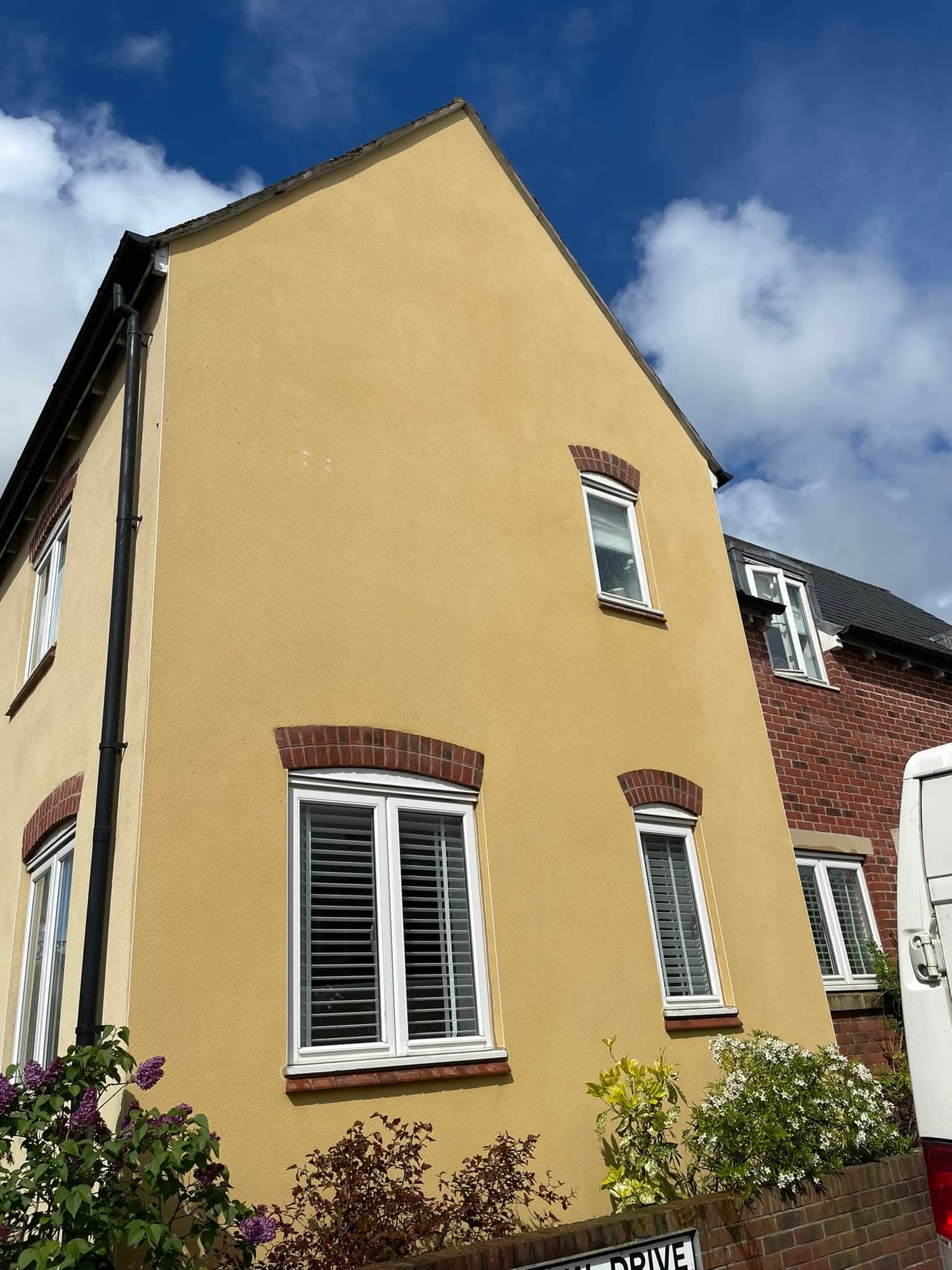
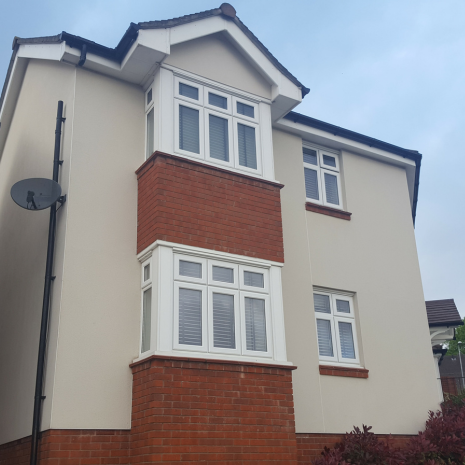

Softwashing UK are asked what happens if silicone render is cleaned badly, and the honest answer is that the consequences are permanent and expensive. Pressure washing is the main culprit. At working pressure it detaches surface material from a textured face and lifts pigment unevenly from a through-coloured render. The wall looks bright immediately and then weathers in patches, because treated and untreated areas now age differently. There is no repair, since the colour runs through the material and cannot be matched or touched up. The remedy is recoating a full elevation. Brushing produces the same damage more locally, leaving smoothed and shiny areas that catch light differently for the life of the coating. Bleach applied at strength can alter tone permanently on coloured render, and damages planting wherever it runs off. Uneven application leaves tonal variation that is visible in raking light for years, even where nothing has been physically removed. Water driven into the coating at pressure works against the water-repellent technology the system was specified for, and where any detail is imperfect it can reach places that will not readily dry. Manufacturer guidance excludes all of it, and damage caused by inappropriate cleaning is not treated as a defect under any warranty we have seen. K Rend cleaning as we carry it out avoids every one of those outcomes by using chemistry and dwell time instead of force. Silicone render cleaning at very low pressure with nothing brushed leaves the coating exactly as it was. House render cleaning done correctly is repeatable indefinitely. Done badly it is a step towards recoating.
What actually damages a monocouche elevation is worth listing plainly, because the finish is more vulnerable than its durability suggests and most damage is avoidable. Pressure is first. The scraped face exposes fine aggregate that is only lightly bound, and water at working pressure detaches it, leaving smoothed patches that reflect light differently and never blend back. Mechanical agitation is second. Brushes, pads and any form of scrubbing do the same thing more locally, and they tend to be used exactly where growth is heaviest, which is where the contrast will be most obvious. Over-concentrated treatment is third. Mixed strong for speed and applied unevenly, it can lift tone inconsistently across a through-coloured wall and leave a permanent shadow. Inconsistent application is fourth. Working an elevation in sections that dry at different rates records the sequence in the finished surface. Ground contact is fifth. Equipment leaned against the wall, ladders footed against the render and hoses dragged across the surface all mark it. None of those is necessary. Monocouche render cleaning achieves everything required chemically: treatment applied at low pressure and in volume so it reaches the base of the texture, a full dwell period so growth is destroyed at root level, then gentle rinsing with nothing touching the wall. Render restoration on an undamaged elevation is repeatable across the life of the coating, which is the argument for protecting the surface on every visit rather than trading it for a faster result. Residential render cleaning that leaves the render exactly as it found it is what keeps render maintenance a simple recurring item.
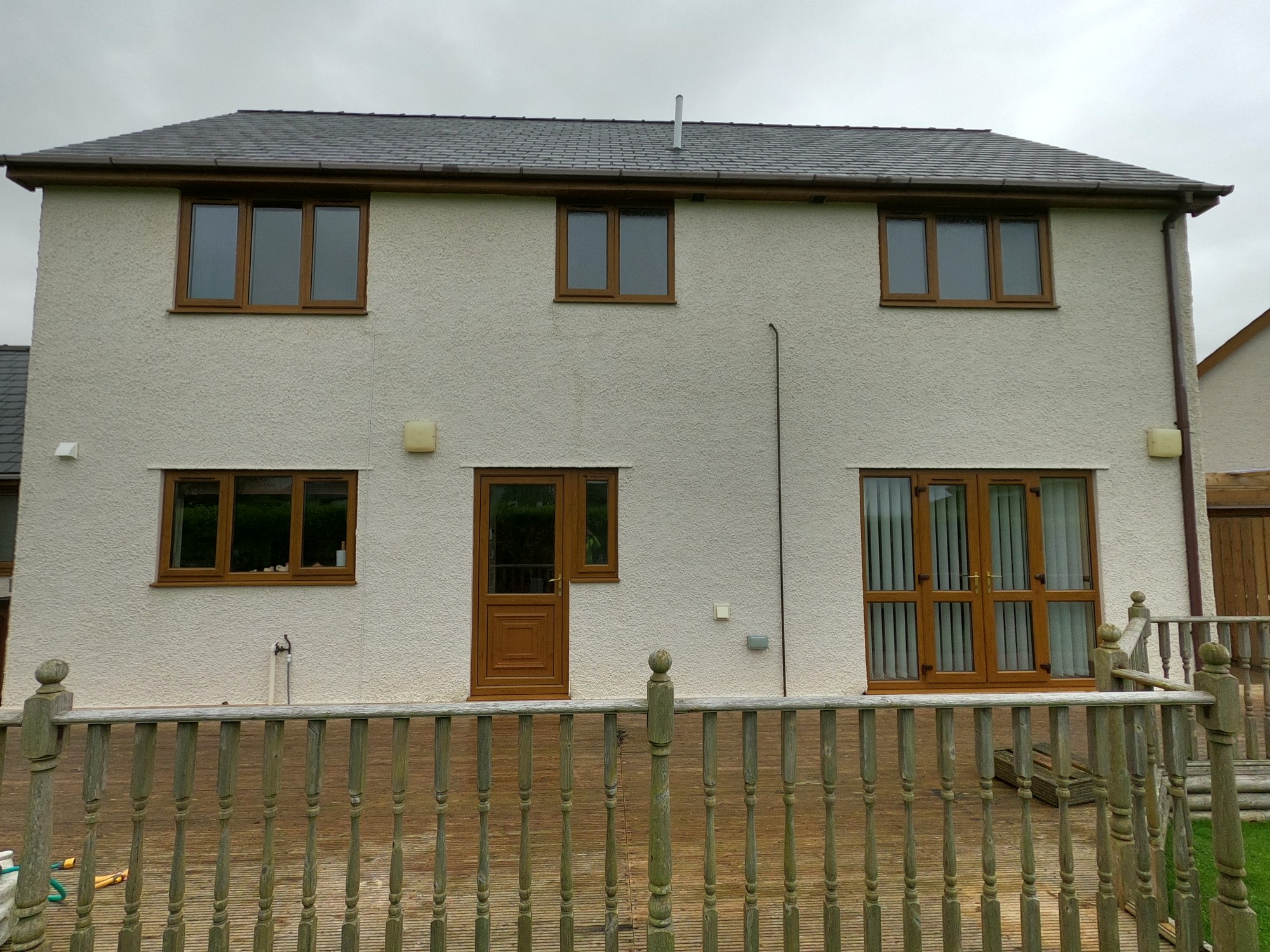
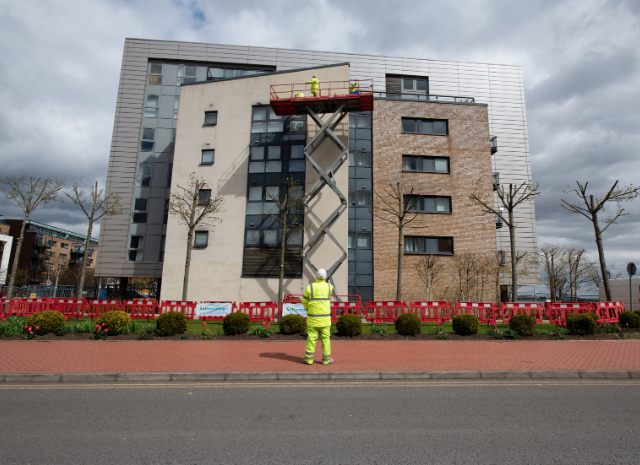

Petrol stations, forecourt shops and roadside service premises with rendered elevations soil faster than almost any other commercial building. Traffic film, exhaust particulate and constant vehicle movement deposit material continuously, and the buildings are seen by very large numbers of people at close range. Commercial render cleaning on these sites is dominated by the operating environment. Forecourts stay live, fuel deliveries arrive on schedule, and pump areas and shop entrances cannot be obstructed. We survey first, phase the work so only one area is affected at a time, and schedule into the quietest available window. Site safety requirements are more stringent here than almost anywhere, and we work entirely within them. Hazardous area restrictions, permit systems and site induction are all completed before attendance, and the low pressure equipment we use produces no ignition source and no high pressure spray across a forecourt. Exclusion zones are agreed and signed, customer routes maintained, and anything within reach of a working elevation protected or moved. Insurance, method statements and risk assessments are supplied ahead of attendance, and operatives hold current working at height certification. Technically, the soiling on these buildings is frequently more atmospheric than biological, which changes the specification. Render stain removal for traffic film and particulate is carried out alongside biocidal treatment for whatever growth is present, since neither alone would clear the elevation. Render facade cleaning holds identical dilution and continuous wet edges across the run so the finished wall reads uniformly. For roadside premises around Hagley, a planned interval is the only realistic way to keep the building presenting properly.
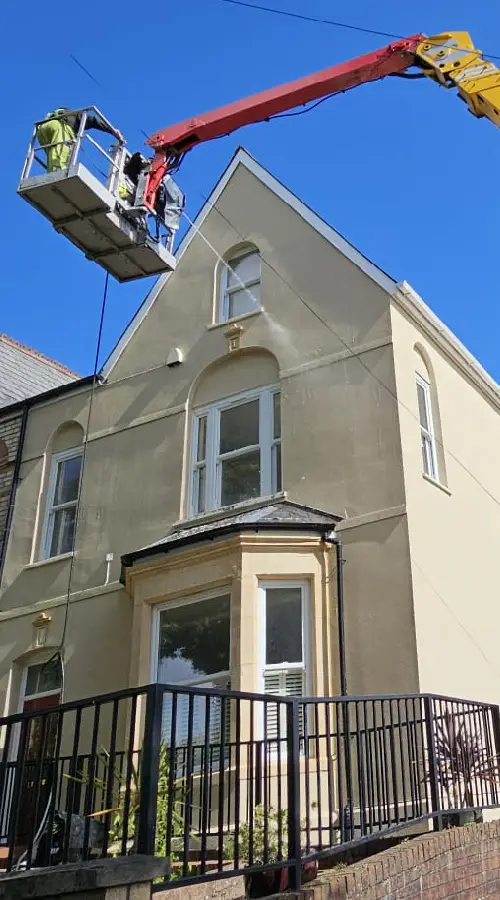
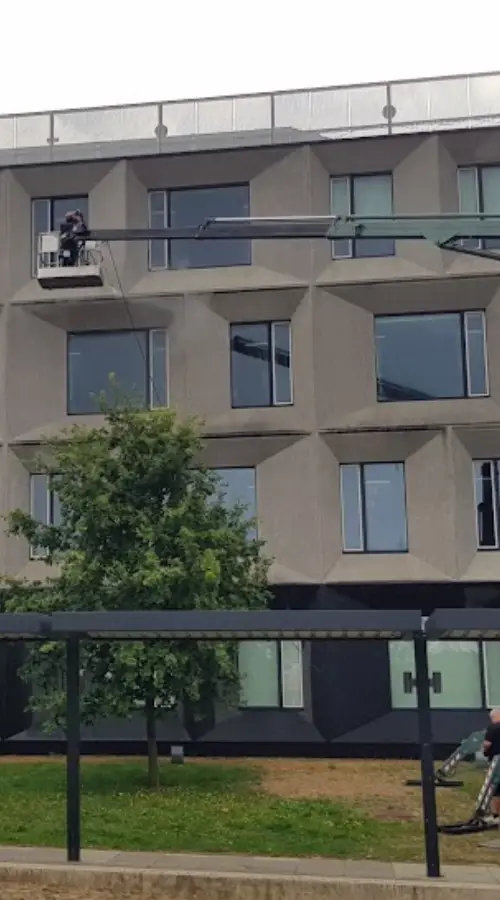
Identifying a coating correctly is the single most consequential thing that happens at a render survey, and getting it wrong is how walls get damaged. The difficulty is that several very different materials look similar from a few metres away. A silicone thin-coat and an acrylic one are visually close but behave differently under treatment. Monocouche can resemble a coarse thin-coat until you look at the depth of the scrape and the way the aggregate sits. An insulated system looks identical to a directly applied render from the front, and only the depth of the reveals and the base detail give it away. Traditional render carrying a modern paint film can pass for a modern finish entirely. Each of those needs a different specification, and two of them are permanently damaged by approaches that would be acceptable on another. Our render cleaning specialists make that identification as a matter of routine, because rendered elevations are the only surfaces we work on. It is based on texture, depth, how the surface handles water, the detailing at openings and base, the age of the property and what evidence there is of previous work. Where identification is genuinely uncertain, we test discreetly in an inconspicuous area rather than proceeding on an assumption. Professional render cleaning follows from that judgement. Render cleaning cost is then quoted against a specification written for the actual material, itemised per elevation and fixed at survey. Anyone gathering quotations is entitled to ask what a contractor thinks is on their wall. An answer that avoids the question is informative in itself.
Coverage takes in Hagley together with Brierley Hill and West Hagley, all on identical terms with no travel loading applied to any of them. Consistent house types are a genuine advantage in this area, and it is worth explaining how that works to a customer’s benefit. Where a road or estate was built at one time, the properties frequently share the same render system, the same texture, the same elevation heights and the same layout. Once we have surveyed one, the specification largely transfers to the others. That shortens both survey and visit, and it reduces mobilisation cost because several properties can be completed in a day without moving between distant locations. We pass that on. Where three or four households on the same road book within the same period, each individual figure is lower than any of them would be alone. It is worth raising when you enquire. Mentioning that others nearby are considering the same work often changes the quotation, and we are happy to survey several properties in one visit. What does not transfer is growth density. Even on identical houses, aspect, shelter and planting differ from plot to plot, and one property can carry considerably heavier colonisation than the house next door. We survey each address rather than applying a single figure across a street, and quote per elevation. Properties in Brierley Hill and West Hagley are covered on exactly the same basis, with the same survey process and no distinction in scheduling. Surveys take around twenty minutes, can be carried out unattended provided all elevations are reachable, and produce an itemised written figure by email.
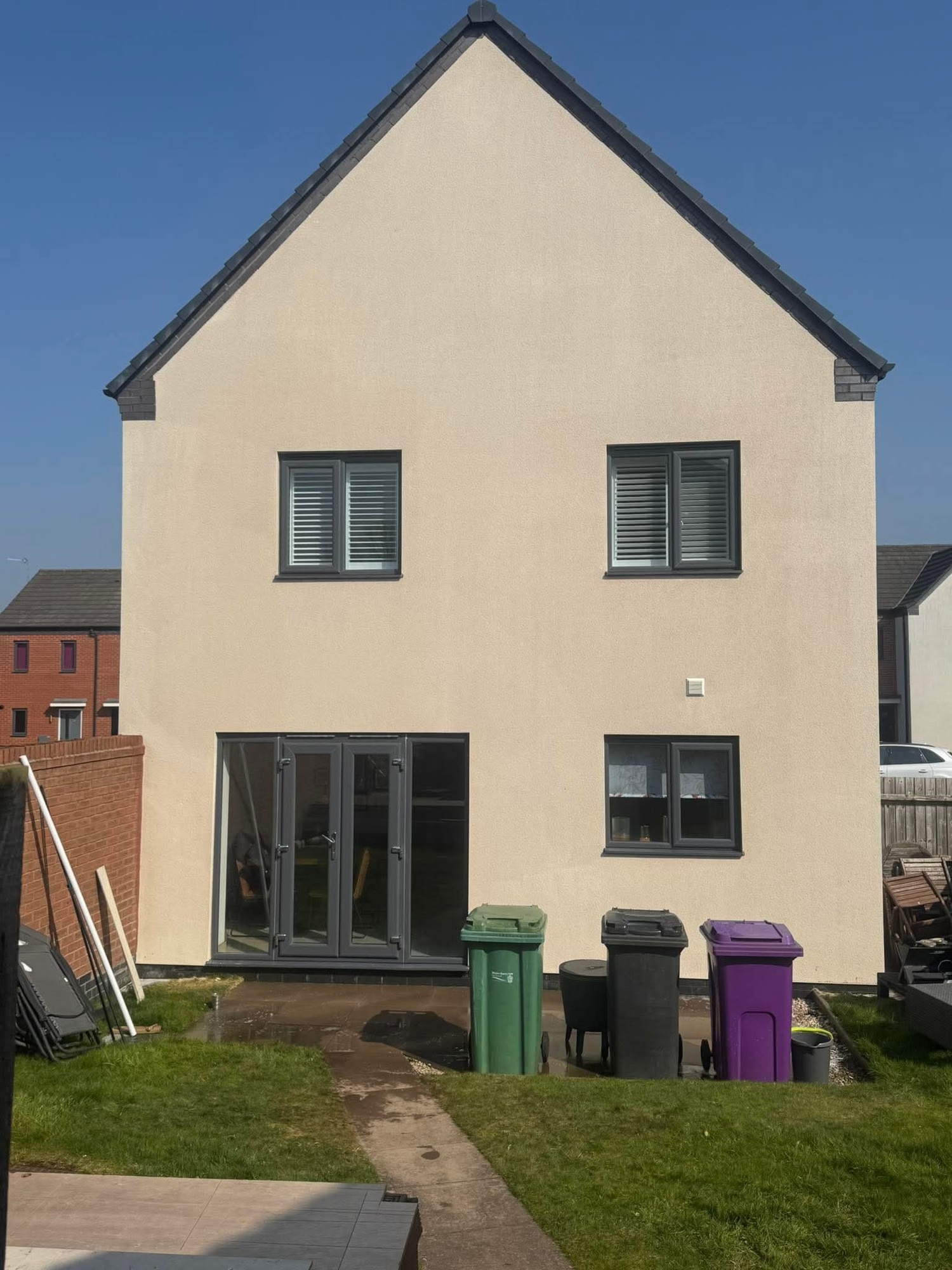
Most properties in Hagley benefit from professional render cleaning every 3 to 5 years, although this depends on the surrounding environment. Properties near trees, woodland, busy roads or coastal areas may require more frequent cleaning due to algae, mould and airborne contaminants. Our soft washing process removes existing growth and helps keep your render cleaner for longer.
Yes. Soft washing is specifically designed for delicate surfaces such as K-Rend, silicone render, monocouche render and painted render. Unlike high-pressure washing, it cleans at low pressure while treating biological growth at its source, reducing the risk of damage to the render finish.
We clean virtually all external render finishes, including K-Rend, Monocouche, Weber, Sto, silicone render, acrylic render, painted render, roughcast and pebble dash. Every cleaning method is tailored to the specific render type to achieve the best possible results.
Yes. Our specialist soft washing treatments are highly effective at removing green algae, red algae, black mould, mildew, lichen and other organic staining. We also apply professional biocide treatments to kill spores and slow down regrowth.
Because our process targets the biological growth rather than simply washing the surface, results typically last much longer than pressure washing alone. The exact lifespan depends on weather conditions, surrounding vegetation and the property’s location.
No. Our soft washing process is specifically designed to clean render safely. We use low-pressure application methods and specialist cleaning solutions that remove contamination without damaging the render surface when carried out by trained professionals.
The UK’s damp climate provides ideal conditions for algae, mould and other biological growth to develop on rendered surfaces. Areas with limited sunlight, nearby trees or persistent moisture are especially susceptible. Professional soft washing safely removes these contaminants and restores your property’s appearance.













































WhatsApp us