We keep a record of every property we treat, and it is worth explaining what goes into it and why it matters to the customer rather than just to us. For each elevation we note the coating identified, the texture grade, the condition of the surface including any defects or previous repairs, which organisms were present and at what density, the dilution and volume applied, the dwell period allowed, the access method used and anything that was excluded or flagged at the time. That record does several things. It makes the next visit quicker and cheaper, because the assessment does not have to be rebuilt from scratch and the specification is already known. It allows us to see whether the interval we predicted was accurate, which improves the advice we give. And it means that if a question arises afterwards, there is a factual account of what was actually done rather than a recollection. It also helps where a property changes hands. New owners frequently have no idea what render they have or when it was last treated, and a record answers both. Our render cleaning services are quoted lower on return visits partly because of this. A maintained property is a known quantity, and there is far less to clear once growth has been eliminated at root level. Render algae removal and render mould removal on a second visit are usually straightforward where the first was done thoroughly. Exterior render cleaning treated as an ongoing relationship rather than a one-off transaction works out considerably cheaper for properties around Hallow over any reasonable period.
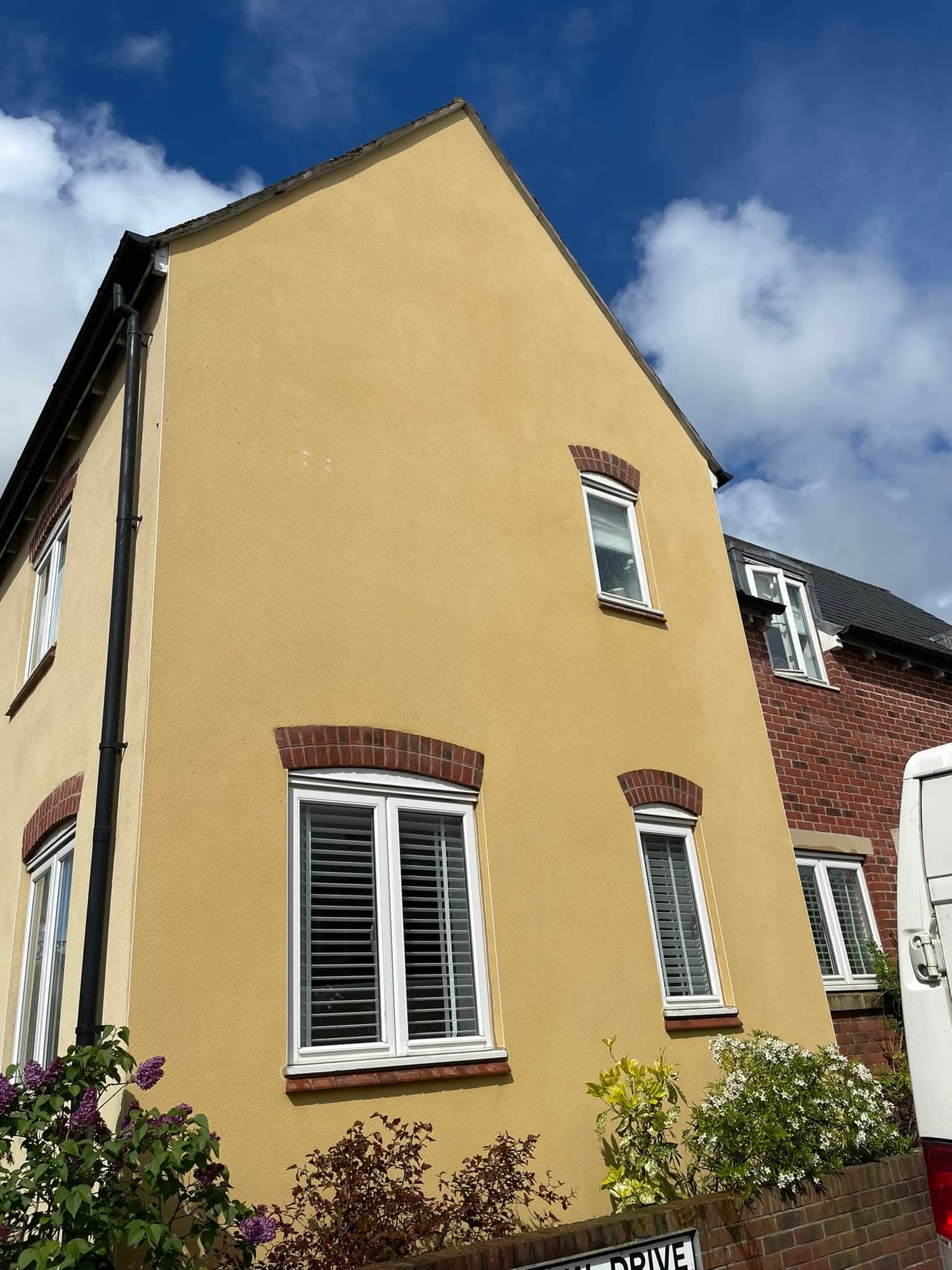
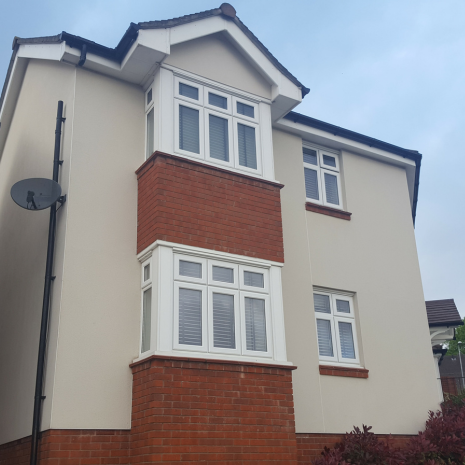

Ground-floor render takes more punishment than anything above it, and on silicone finishes the lower band frequently needs a different specification from the rest of the elevation. Splashback is the main reason. Rain striking hard surfaces rebounds onto the base of the wall repeatedly, driving soil, grit and organic material into the texture. Unlike growth higher up, much of that soiling is mineral rather than biological, so biocidal treatment alone will not clear it. Slow drying compounds the problem. The base of a wall is generally the last part to dry, particularly where a border or path sits directly against it, and where planting is close the local humidity keeps it damp for longer still. Physical contact adds to it. Anything stored against the wall, equipment leaned on it or vegetation touching it holds moisture permanently in place. K Rend cleaning specified properly treats the base band as its own zone, applying a stronger biocidal specification for the heavier colonisation and addressing the mineral soiling with appropriate chemistry alongside. Both are carried out at the same very low pressures used everywhere else, since the colour is integral and abrasion cannot be corrected. Render stain removal at low level frequently produces the most visible improvement on the whole elevation, because that band had degraded furthest from the original tone. Silicone render cleaning that treats a wall as uniform leaves the base course visibly behind once everything dries, which draws attention to it rather than resolving it. House render cleaning judged from the path rather than from the road is where the difference shows.
Planning a monocouche clean properly makes the difference between a straightforward day and a compromised result, and most of the planning happens before anyone arrives. The first decision is sequence. Each elevation must be treated, dwelled and rinsed as a continuous operation, so the order is set at survey with the most heavily colonised generally taken first while the day is longest. The second is resourcing. Enough operatives to keep wet edges live across the full width of each wall, and enough water and product carried to complete every elevation without a change of batch, since dilution drifting mid-wall records itself permanently on a through-coloured finish. The third is access. Every part of each elevation needs to be reachable properly, because a section reached awkwardly receives less product and shorter effective dwell and finishes visibly different. Where telescopic delivery from the ground is insufficient, the equipment required is identified and included. The fourth is zoning. Base courses, reveals, returns, bead lines and areas behind planting are specified separately from the open wall, at appropriate strengths. The fifth is weather. Treatment applied into heavy rain is diluted before it can work, and wind disperses it and makes height work unsafe, so dates move rather than jobs being pushed through. Monocouche render cleaning executed against that plan is undramatic and quick. Treatment at low pressure and in volume, full dwell, gentle rinsing, nothing brushed or agitated. Render restoration follows from the planning rather than from anything done on the wall, and residential render cleaning organised this way is generally a single day.
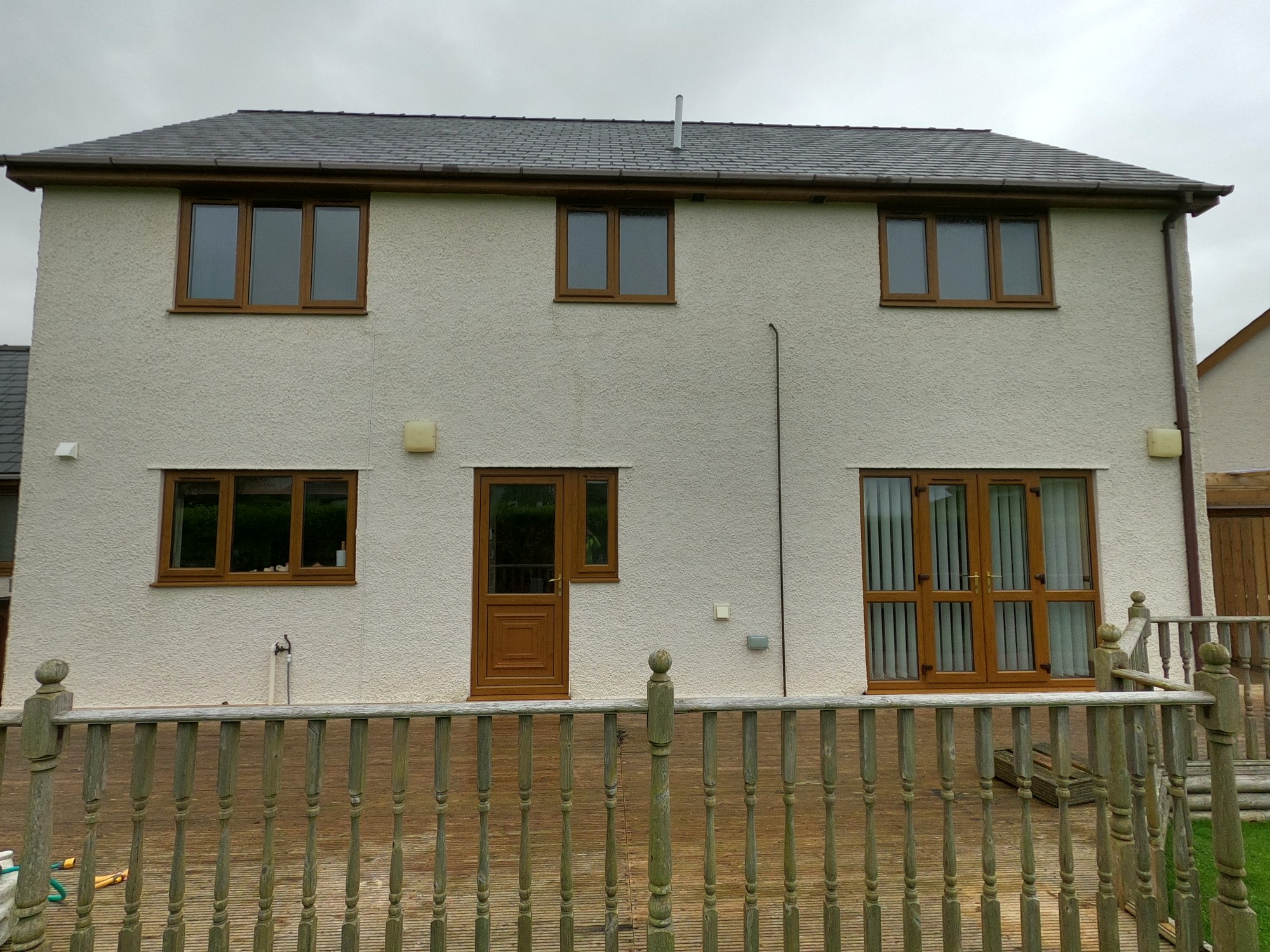
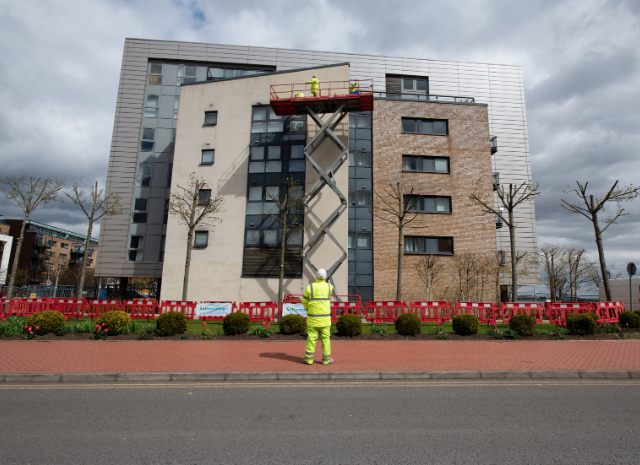

Funeral directors and similar professional premises with rendered elevations need exterior work handled with particular sensitivity, and the scheduling constraints are unlike any other commercial site. Services, visits and arrangements happen throughout the week, often at short notice, and the building must present appropriately at all times. Any activity outside has to be planned so it cannot coincide with those occasions. Softwashing UK approach commercial render cleaning at these premises by working closely with the operator on timing. We survey first, agree which elevations can be treated when, and hold flexibility so that work can be paused or moved at short notice if circumstances require. Most premises of this size are completed within a single visit, which limits the window in which any disruption could occur. The low pressure method matters considerably here. There is no machine running, minimal noise, and no high pressure spray or drifting mist across an entrance or approach. Equipment is unobtrusive and the working area is kept tidy throughout. Exclusion zones are agreed and signed discreetly, entrances stay usable, and anything at ground level within the working area is protected or moved. Insurance, method statements and risk assessments are supplied ahead of attendance, and operatives hold current working at height certification. Technically the requirement is the same as any frontage. Render facade cleaning maintains consistent dilution and live wet edges so the finished elevation reads uniformly rather than showing where the work paused. For professional premises around Hallow, a clean every few years keeps the building presenting as it should at a cost proportionate to the frontage involved.
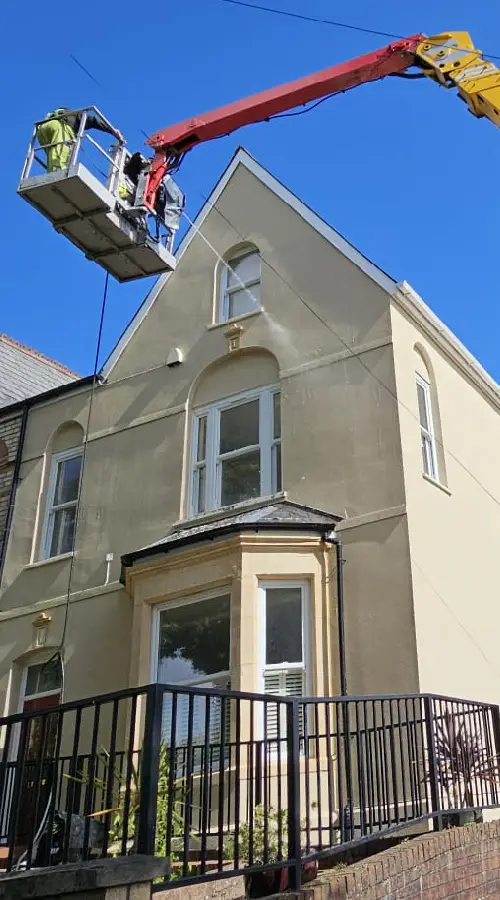
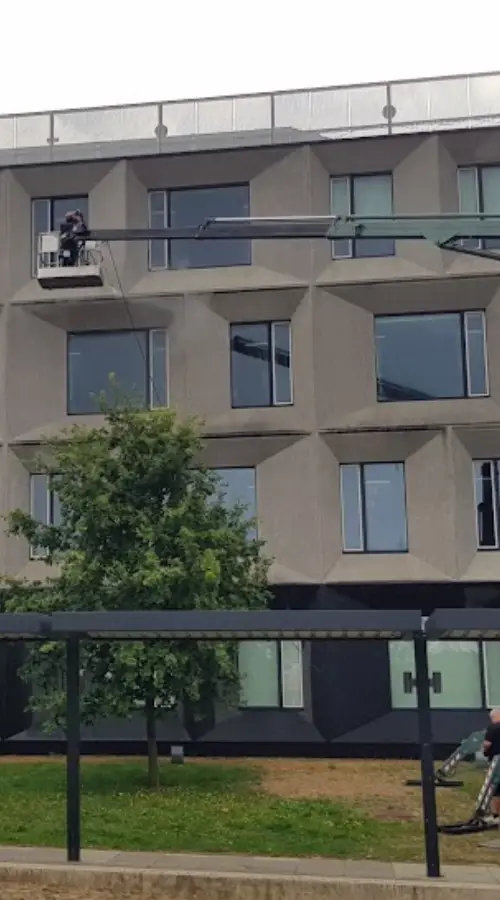
The cheapest quotation is rarely the best value on a rendered elevation, and it is worth being specific about where the difference usually sits. Dwell time is the first place cost gets cut, because it is invisible. Treatment applied and rinsed off quickly looks identical on the day to treatment left to work properly, and the difference only shows when the wall greens over the following spring. A contractor fitting three jobs into a day rather than one is saving time somewhere, and this is usually where. Preparation is the second. Covering planting, sheeting hard surfaces and masking fittings takes real time and produces nothing visible, so it is easy to skip. Product volume is the third. Applying thinly across a textured wall costs less in material and never reaches the base of the profile where the growth actually is. Access is the fourth. Quoting without the equipment needed to reach a gable properly produces a lower figure and an elevation that is partly treated. Insurance is the fifth, and the one that matters most if something goes wrong on your property. Our render cleaning prices include all five properly, quoted per elevation and fixed at survey. Affordable render cleaning means nothing has been quietly omitted rather than simply being the lowest number. Full public liability cover and current working at height certification are available on request before booking. As a local render cleaning company relying on recommendation, a wall that fails within a year is a considerably worse outcome for us than a job we did not win.
Coverage takes in Hallow together with Broadwas, Grimley, Martley, Sinton Green and Wichenford, all on identical terms with no travel loading and no minimum job value. Working across rural settlements requires equipment that does not depend on the property, and ours is specified for exactly that. Water is carried on board in bulk, so we are not reliant on a mains connection, an outside tap or whatever pressure and flow happen to be available. Treatment is dosed and diluted at source rather than mixed by eye, which keeps strength consistent across a whole elevation. Hose runs are long enough to reach elevations at considerable distance, so the vehicle can stay on a road, drive or hard standing while treatment reaches every wall of the building. Nothing is driven across grass, gravel or planted ground, and no equipment is dragged around the property. Telescopic delivery reaches most domestic elevations, including gables at three storeys, from ground level. That removes access equipment from the majority of jobs, which matters more in rural settings where bringing a platform to a property can be genuinely awkward. Rinsing uses purified water, which leaves no mineral deposit as the wall dries. The practical result is that a property with a long approach, restricted parking or no convenient water supply is no more difficult for us than one on a main road, and it is priced no differently. Properties in these settlements are typically individual, so each is surveyed on its own terms and quoted per elevation. Surveys take around twenty minutes and produce an itemised written figure by email.
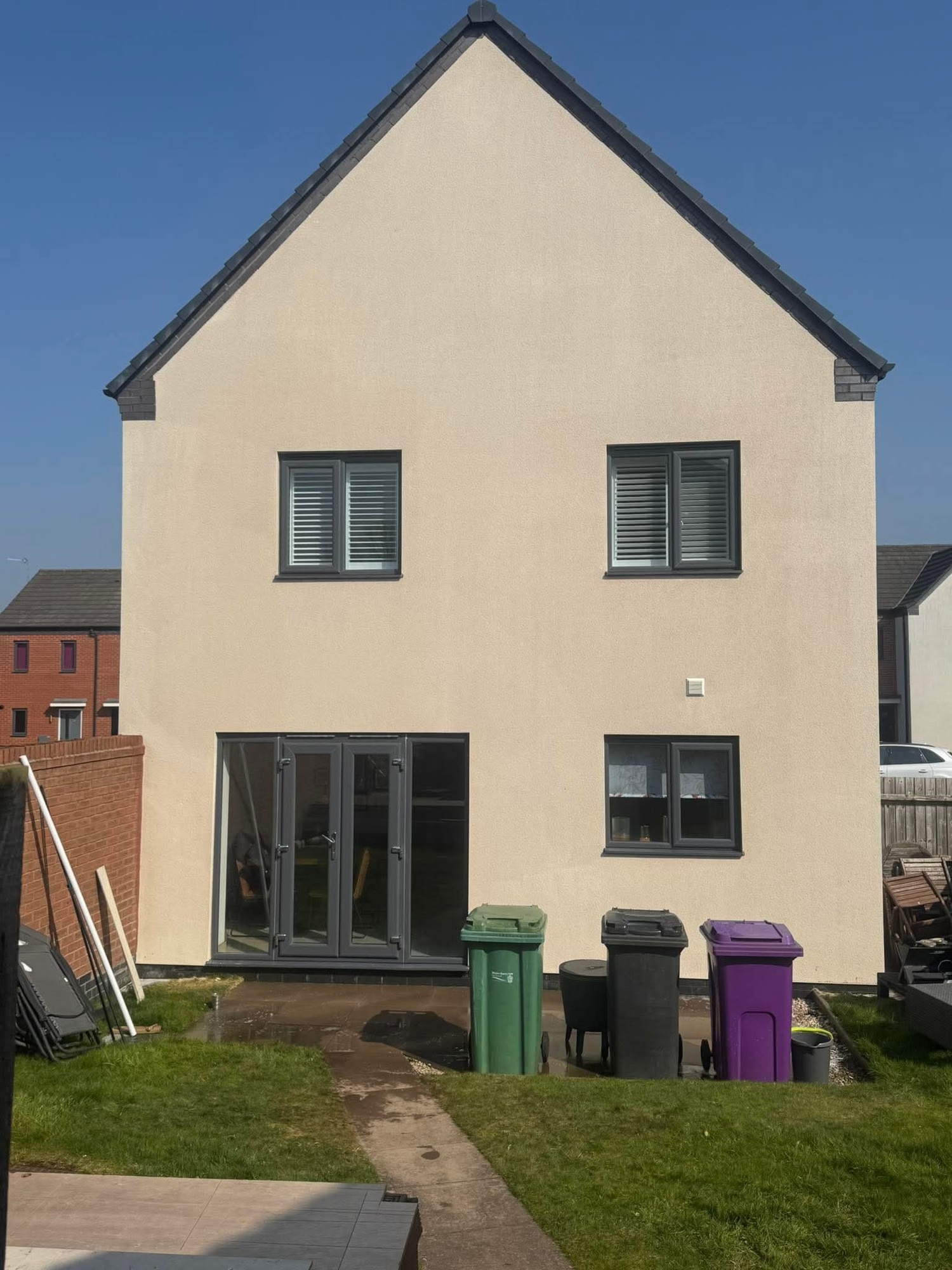
Most properties in Hallow benefit from professional render cleaning every 3 to 5 years, although this depends on the surrounding environment. Properties near trees, woodland, busy roads or coastal areas may require more frequent cleaning due to algae, mould and airborne contaminants. Our soft washing process removes existing growth and helps keep your render cleaner for longer.
Yes. Soft washing is specifically designed for delicate surfaces such as K-Rend, silicone render, monocouche render and painted render. Unlike high-pressure washing, it cleans at low pressure while treating biological growth at its source, reducing the risk of damage to the render finish.
We clean virtually all external render finishes, including K-Rend, Monocouche, Weber, Sto, silicone render, acrylic render, painted render, roughcast and pebble dash. Every cleaning method is tailored to the specific render type to achieve the best possible results.
Yes. Our specialist soft washing treatments are highly effective at removing green algae, red algae, black mould, mildew, lichen and other organic staining. We also apply professional biocide treatments to kill spores and slow down regrowth.
Because our process targets the biological growth rather than simply washing the surface, results typically last much longer than pressure washing alone. The exact lifespan depends on weather conditions, surrounding vegetation and the property’s location.
No. Our soft washing process is specifically designed to clean render safely. We use low-pressure application methods and specialist cleaning solutions that remove contamination without damaging the render surface when carried out by trained professionals.
The UK’s damp climate provides ideal conditions for algae, mould and other biological growth to develop on rendered surfaces. Areas with limited sunlight, nearby trees or persistent moisture are especially susceptible. Professional soft washing safely removes these contaminants and restores your property’s appearance.






































WhatsApp us