Colonisation spreads across an elevation in a fairly predictable order, and recognising the stage a wall has reached tells you a good deal about what it needs. It begins at the concentration points rather than in the middle of the wall. Beneath sills, below bead terminations, at reveals and along the base course, water lingers longest and growth establishes first. At this stage the open wall still looks acceptable and only the lines are darkening. From there it spreads outwards along the paths water takes, producing the vertical streaking that most owners first notice. The general elevation begins to lose depth of colour at the same time, though gradually enough that it goes unremarked. Next comes continuous filming across whichever aspect stays dampest, usually a shaded gable. The wall now reads as clearly discoloured rather than simply dull, and the difference between elevations becomes obvious. Then black spotting establishes within the filming, lichen appears in raised patches on the dampest areas, and moss takes hold at low level and in sheltered corners where water sits. Each stage takes longer to reverse than the one before. Our render cleaning services are specified against the stage reached, and a wall caught at streaking is a materially smaller job than the same wall five years later. Render algae removal, render moss removal and render mould removal are all part of the later stages rather than the earlier ones. Exterior render cleaning on properties around Hanley Swan is cheapest and quickest when the concentration lines are first noticed rather than when the whole elevation has gone.
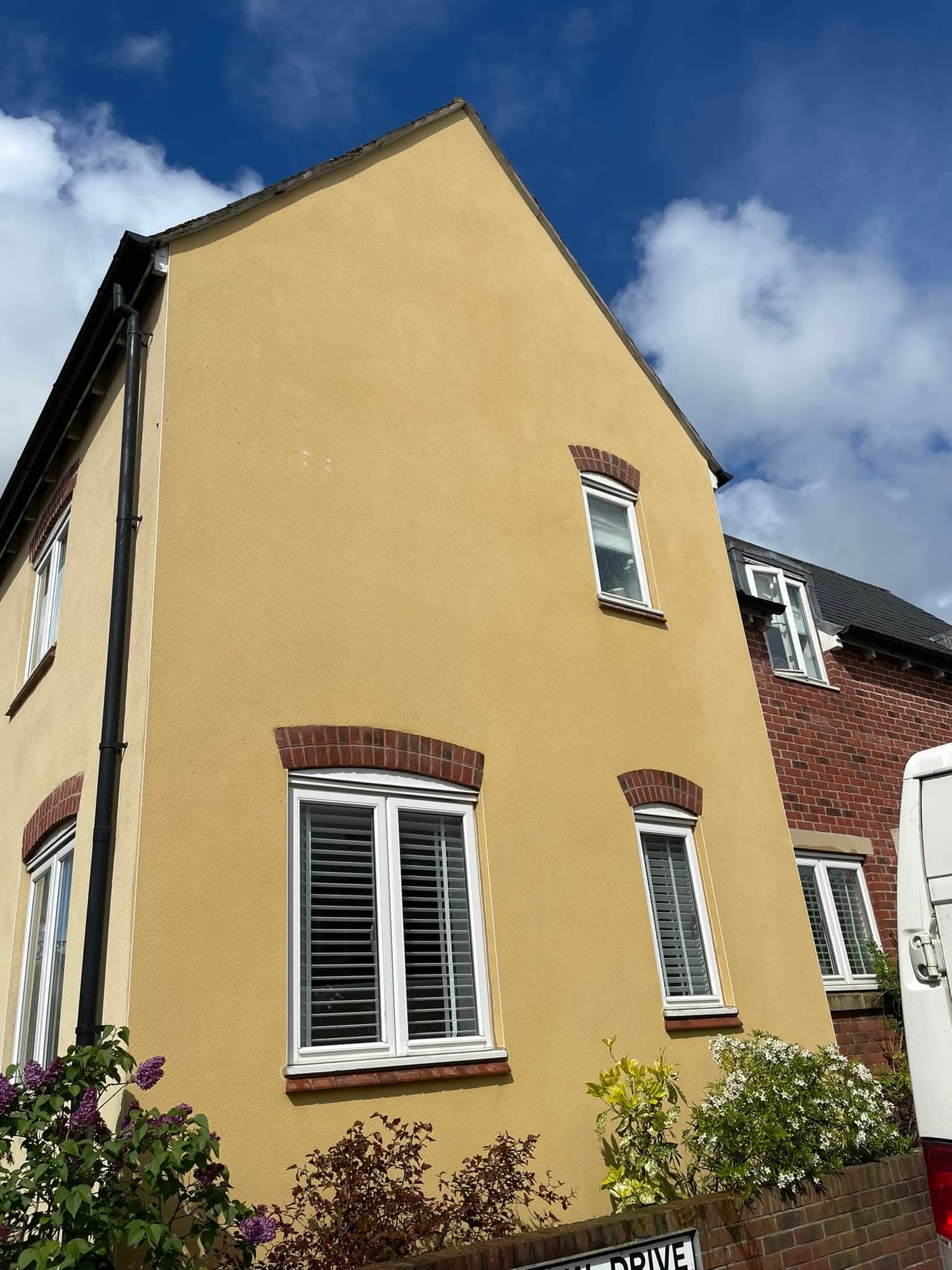
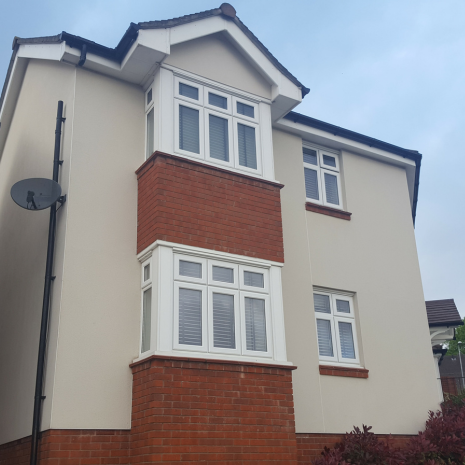

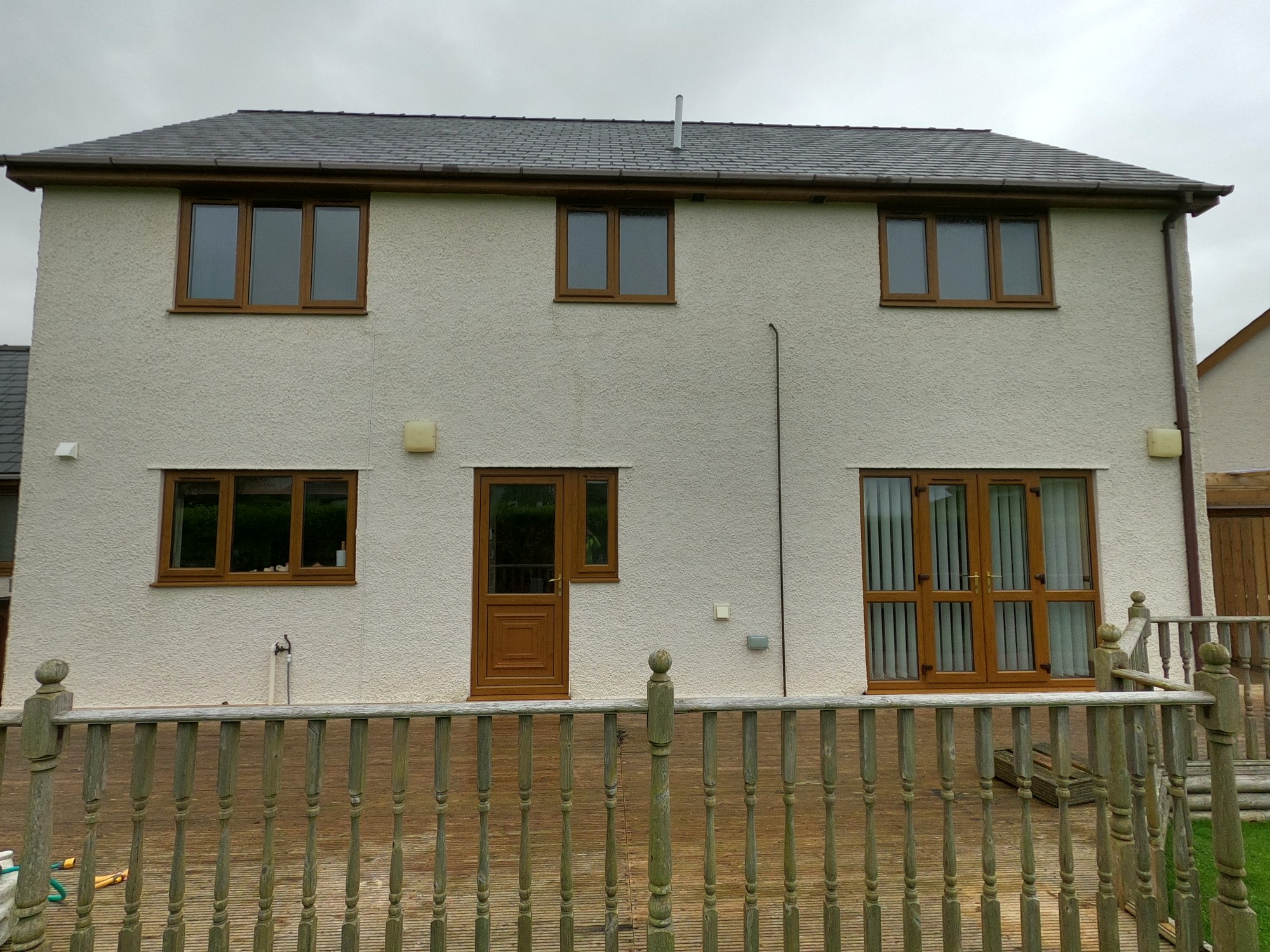
How long results last on silicone render is the question owners most want answered, and it deserves a specific reply rather than a general claim. The honest answer is that it depends on the elevation, and the range is wide. A well-exposed frontage that dries quickly after rain, with no planting close to it and reasonable air movement, will commonly hold four to six years after proper dwell-based treatment. A shaded gable with mature planting nearby, limited air movement and a deeper texture may need attention again in two to three. Two other factors matter. Spore load is the first: a property surrounded by trees and established vegetation receives a continuously higher supply of what lands on the wall than one on an open frontage, and recolonises faster regardless of drying conditions. Previous treatment history is the second: a wall that was pressure washed at some point retains root structures in an opened-up surface and will always green over sooner than one that has only ever been soft washed. K Rend cleaning done properly maximises the interval the elevation is capable of, but it cannot change the elevation itself. We give that advice per wall rather than per property, and where a shaded gable will need doing before the rest of the building we say so at the outset. Silicone render cleaning is chemical throughout, at very low pressure, with dwell periods judged against the organisms present. Render mould removal in particular holds well once fungal root structures have been destroyed, and house render cleaning quoted with realistic intervals is more useful than one quoted with optimistic ones.
Aftercare on monocouche is straightforward, and most of it is about knowing what to expect rather than doing anything. In the first weeks after treatment, the wall continues to change. Dead growth breaks down and weathers off with normal rain and wind over two to four weeks, and heavier lichen can take longer. The elevation should look better at a month than at a week. Nothing needs to be done to assist that, and nothing should be brushed or washed off, since that is exactly what would damage the scraped face. After that, the useful measures are all about keeping the wall dry. Planting that sits hard against the render holds moisture and blocks air movement, so cutting it back a little makes a real difference to how long the result lasts. Where a border runs along the base of the wall, keeping soil level below the render base is worth doing. Anything stored against an elevation should be moved clear. Nothing needs applying to the wall. Monocouche requires no sealer, no coating and no annual treatment, and anyone recommending one immediately after a clean is selling rather than advising. If an area has genuinely not responded after four to six weeks, we return and treat it again at no charge. Render maintenance thereafter is a matter of years rather than seasons. We give an interval per elevation based on what we saw, and residential render cleaning on a maintained property is quicker and cheaper each time because there is far less to clear. Render restoration remains achievable indefinitely provided nothing is ever taken off the surface.
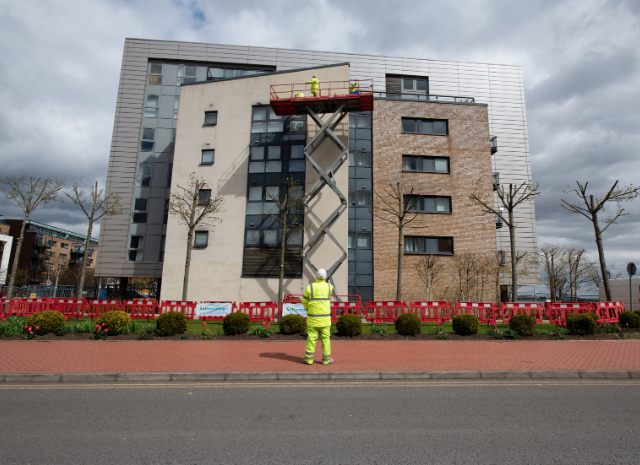

Pharmacies, convenience stores and small high-street premises with rendered frontages trade across long hours in locations where the building is seen constantly and at close range. The frontage does a great deal of the work in establishing whether a business looks well run. Commercial render cleaning at these premises is primarily a scheduling exercise. Opening hours are long, deliveries arrive early, and the pavement outside cannot be obstructed during trading. In practice the work goes into an early morning slot before opening or onto a closing day, and premises of this size are almost always completed within a single visit. Anything on the pavement or forecourt is cleared and protected first, and signage, lighting, alarms and external fittings are masked or isolated. The low pressure method means no machine noise carrying into the premises and no spray drifting across an entrance or across passing pedestrians. Where the premises sit within a continuous run of units, we confirm boundaries and coordinate with the businesses either side, since a single treated frontage in a parade reads differently from those around it and treating several together is usually both better looking and cheaper per unit. Exclusion zones are agreed and signed so passers-by stay clear without the doorway being blocked. Insurance, method statements and risk assessments are provided ahead of attendance, and operatives hold current working at height certification. Render facade cleaning maintains consistent dilution and live wet edges so the elevation reads uniformly. For small commercial premises around Hanley Swan, the cost is modest against the visibility it buys, and a coating kept dry lasts considerably longer.
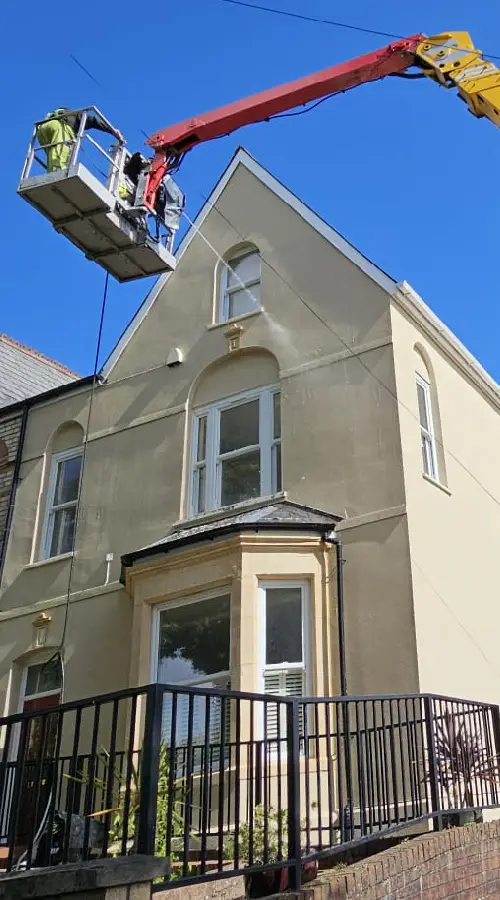
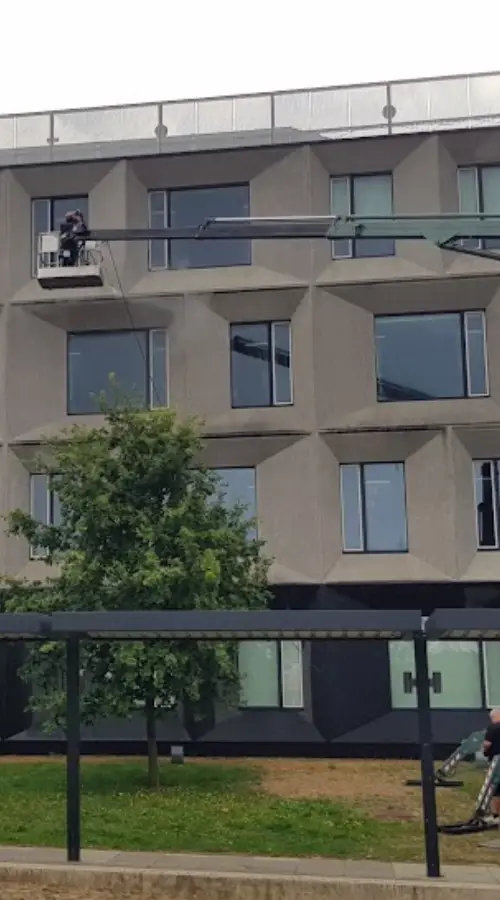
Softwashing UK would rather be judged on one thing than on a list, and that thing is dwell time. Everything else follows from it. The equipment exists to apply treatment evenly at low pressure and then leave it alone. The survey exists to establish how long each elevation needs. The scheduling exists so that a property is not rushed to fit another job in. The pricing reflects a day spent properly rather than three jobs squeezed into one. The reason is that growth on render is a colony with structures extending into the texture and surface pores, not a deposit sitting on top. Treatment has to reach those structures and remain in contact long enough to destroy them. Applied and rinsed off quickly, it takes the visible portion and leaves the base, and the wall regenerates from an established foundation within a season or two. Given proper dwell, the same product sterilises the colonised depth of the coating, and recolonisation has to begin again from airborne spores landing on a clean surface. That is the difference between an interval of months and one of years. It is also invisible. A wall treated properly and a wall treated quickly look identical on the afternoon, which is precisely why the corner is so often cut. Professional render cleaning is largely a matter of not being in a hurry. Render cleaning prices here reflect the time each elevation genuinely needs, quoted per wall and fixed at survey, and our render cleaning specialists work on rendered elevations exclusively so the judgement is made on experience. The best render cleaning service is the one you do not need again for years.
Hanley Swan is covered in full, along with Gilberts End and Palmers Cross, all on identical terms with no travel loading applied. It is worth setting out exactly what the survey covers, since it is where the entire job is decided and it costs nothing. We identify the coating on each elevation, which determines the whole approach. We assess texture grade, since depth governs how much treatment is needed and how long it must dwell. We check condition, looking for cracking, failed sealant, chalking paint film or hollow areas indicating debonding, any of which may mean a wall should not be treated yet. We establish which organisms are present and at what density, elevation by elevation, since algal filming, black spotting, lichen and moss need different strengths and different dwell periods. We measure the areas involved and work out how every part of each wall will be reached safely. We also note what surrounds the building: planting close to elevations, borders at the base, hard surfaces that will produce splashback, drainage points and anything that needs protecting. From that comes an itemised written quotation per elevation, setting out what was found, what is specified and what is excluded. It holds for a stated period and does not change afterwards. The whole visit takes around twenty minutes and does not require anyone to be at home provided every elevation is reachable. Properties in Gilberts End and Palmers Cross are surveyed on exactly the same basis, individually rather than by reference to anything nearby, and quoted per elevation so the figure reflects what each wall genuinely requires.
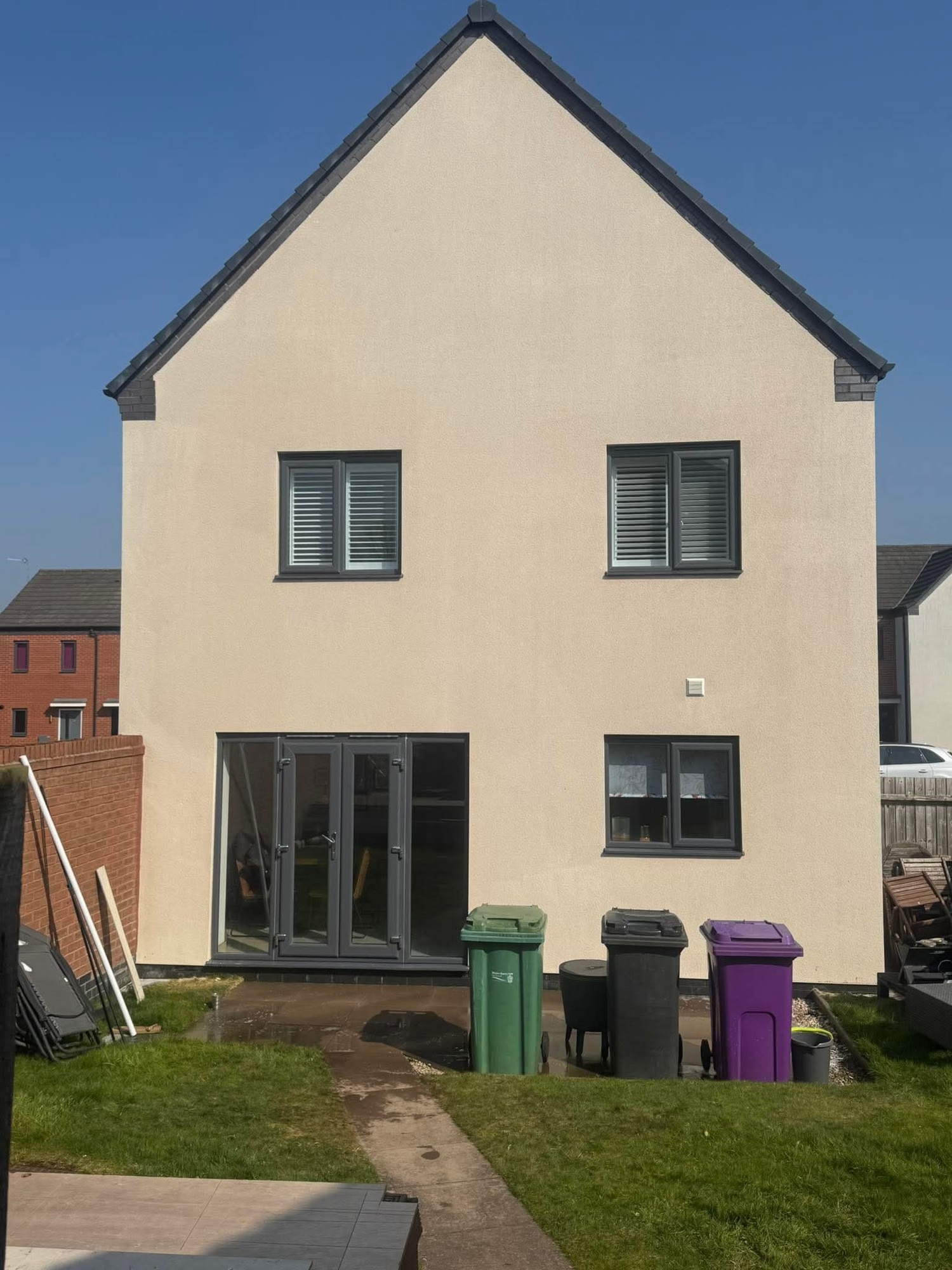
Most properties in Hanley Swan benefit from professional render cleaning every 3 to 5 years, although this depends on the surrounding environment. Properties near trees, woodland, busy roads or coastal areas may require more frequent cleaning due to algae, mould and airborne contaminants. Our soft washing process removes existing growth and helps keep your render cleaner for longer.
Yes. Soft washing is specifically designed for delicate surfaces such as K-Rend, silicone render, monocouche render and painted render. Unlike high-pressure washing, it cleans at low pressure while treating biological growth at its source, reducing the risk of damage to the render finish.
We clean virtually all external render finishes, including K-Rend, Monocouche, Weber, Sto, silicone render, acrylic render, painted render, roughcast and pebble dash. Every cleaning method is tailored to the specific render type to achieve the best possible results.
Yes. Our specialist soft washing treatments are highly effective at removing green algae, red algae, black mould, mildew, lichen and other organic staining. We also apply professional biocide treatments to kill spores and slow down regrowth.
Because our process targets the biological growth rather than simply washing the surface, results typically last much longer than pressure washing alone. The exact lifespan depends on weather conditions, surrounding vegetation and the property’s location.
No. Our soft washing process is specifically designed to clean render safely. We use low-pressure application methods and specialist cleaning solutions that remove contamination without damaging the render surface when carried out by trained professionals.
The UK’s damp climate provides ideal conditions for algae, mould and other biological growth to develop on rendered surfaces. Areas with limited sunlight, nearby trees or persistent moisture are especially susceptible. Professional soft washing safely removes these contaminants and restores your property’s appearance.











































WhatsApp us