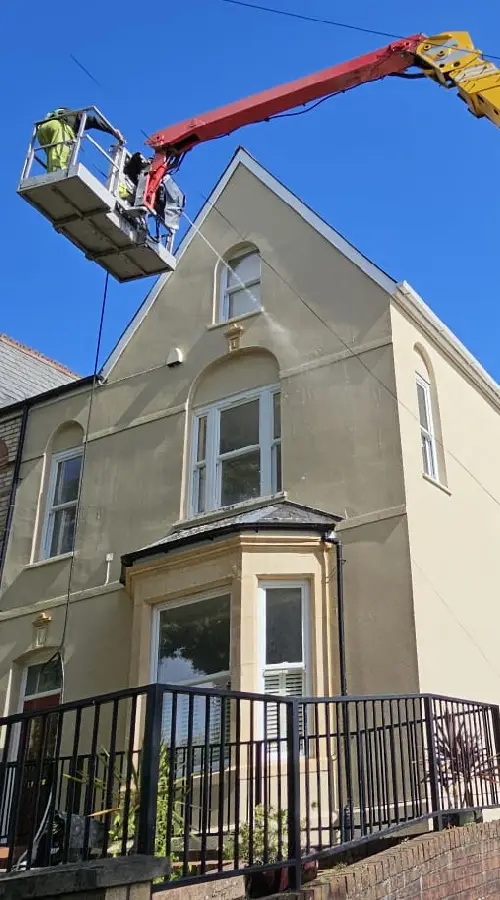
It is worth describing what render cleaning does not involve, because most people expect something far more disruptive than what actually happens. There is no scaffolding on the majority of domestic properties. Telescopic delivery reaches most elevations, including gables at three storeys, from ground level, so nothing is erected, nothing is tied to the building and there is no multi-day set-up. There is no machine running continuously. Soft wash equipment operates at very low pressure and produces little more noise than a garden hose, so the working day is unusually quiet compared with most exterior maintenance. There is no drifting spray across the garden. Application is controlled and directed, and dilution is set to what the growth requires rather than mixed strong, which is what keeps everything at ground level unaffected. There is no need to be at home, provided every elevation can be reached. There is no requirement to move out, cover furniture indoors or make special arrangements. And there is no mess left behind. Protection goes down before anything is mixed, comes up afterwards, hard surfaces are rinsed down and borders are checked before we leave. What there is instead is preparation, a controlled application, a long quiet period while treatment dwells and does the work, and a gentle rinse. Our render cleaning services are undramatic by design. Render algae removal and render moss removal are achieved chemically rather than by force, which is exactly why the coating is left undisturbed. Exterior render cleaning on a property in Harvington is generally a single quiet day, and the wall keeps improving for weeks afterwards.
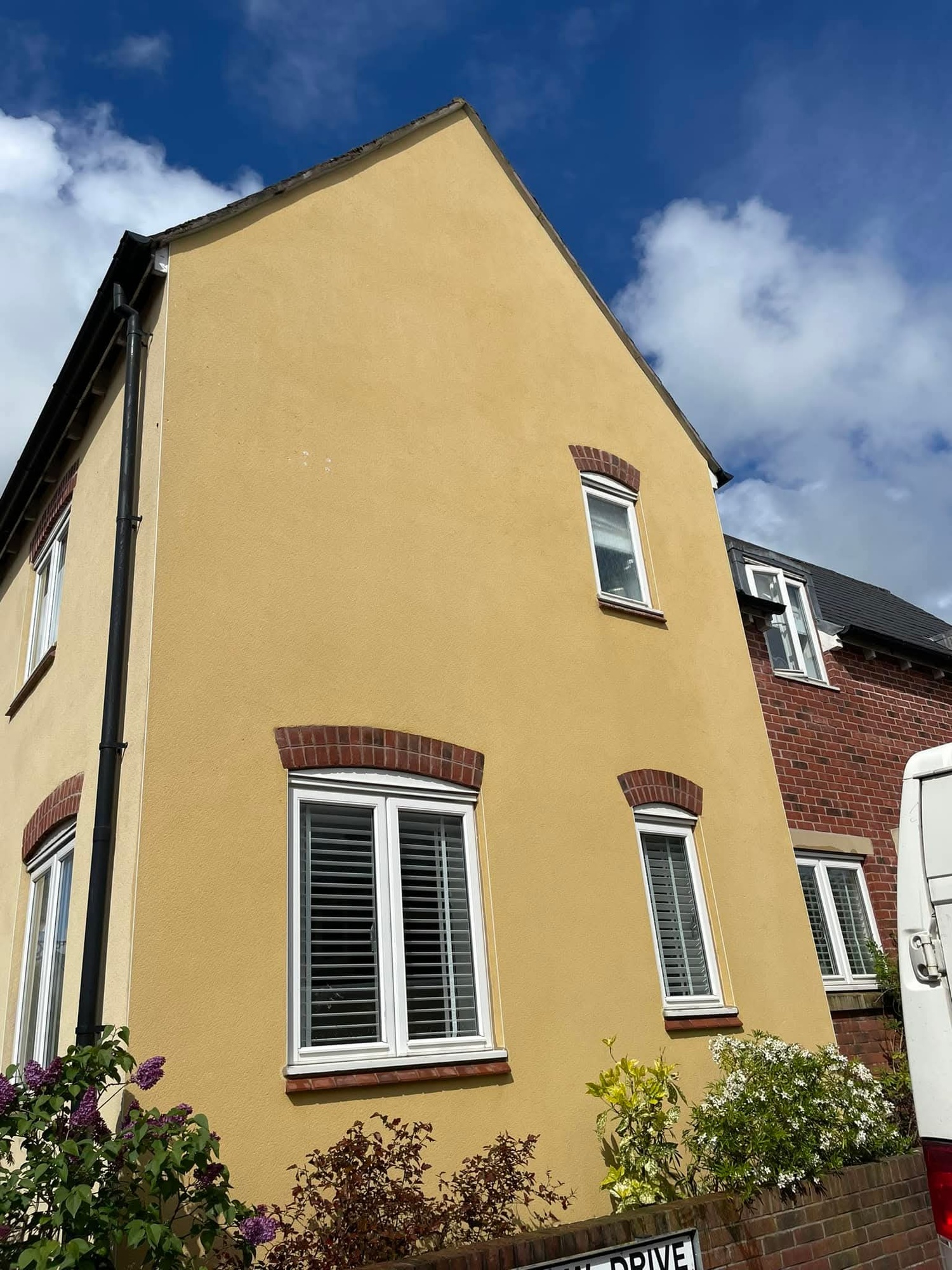
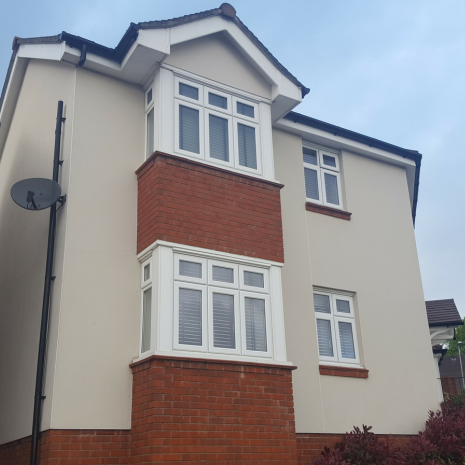

Working out whether a silicone render has been damaged by previous cleaning is worth doing before commissioning any more work, and the signs are reasonably clear once you know them. Look at the surface in raking light, ideally low morning or evening sun across the elevation. Areas that appear smoother or slightly shinier than their surroundings have had surface material removed, usually by pressure or brushing. On a textured finish this shows as patches where the profile is shallower. Look for tonal patchiness that does not correspond to shading or growth. Pigment lifted unevenly leaves lighter areas that follow the pattern of how a lance was worked rather than how the wall weathers. Look at the areas that would have been easiest to reach. Damage concentrates at chest and head height on the front elevation, because that is where a machine gets held longest. Look for banding, particularly horizontal lines at working height or vertical divisions where sections met. Any of these means the coating has been physically altered, and the important point is that cleaning will reveal it rather than correct it. There is no repair, because the colour runs through the material. We identify this at survey and explain plainly what the finished wall will look like. K Rend cleaning by our method adds nothing further to the damage, since it is chemical throughout at very low pressure with nothing brushed or agitated. Silicone render cleaning on a previously damaged elevation still removes the growth and restores what colour remains. House render cleaning quoted honestly says what it cannot do as well as what it can.
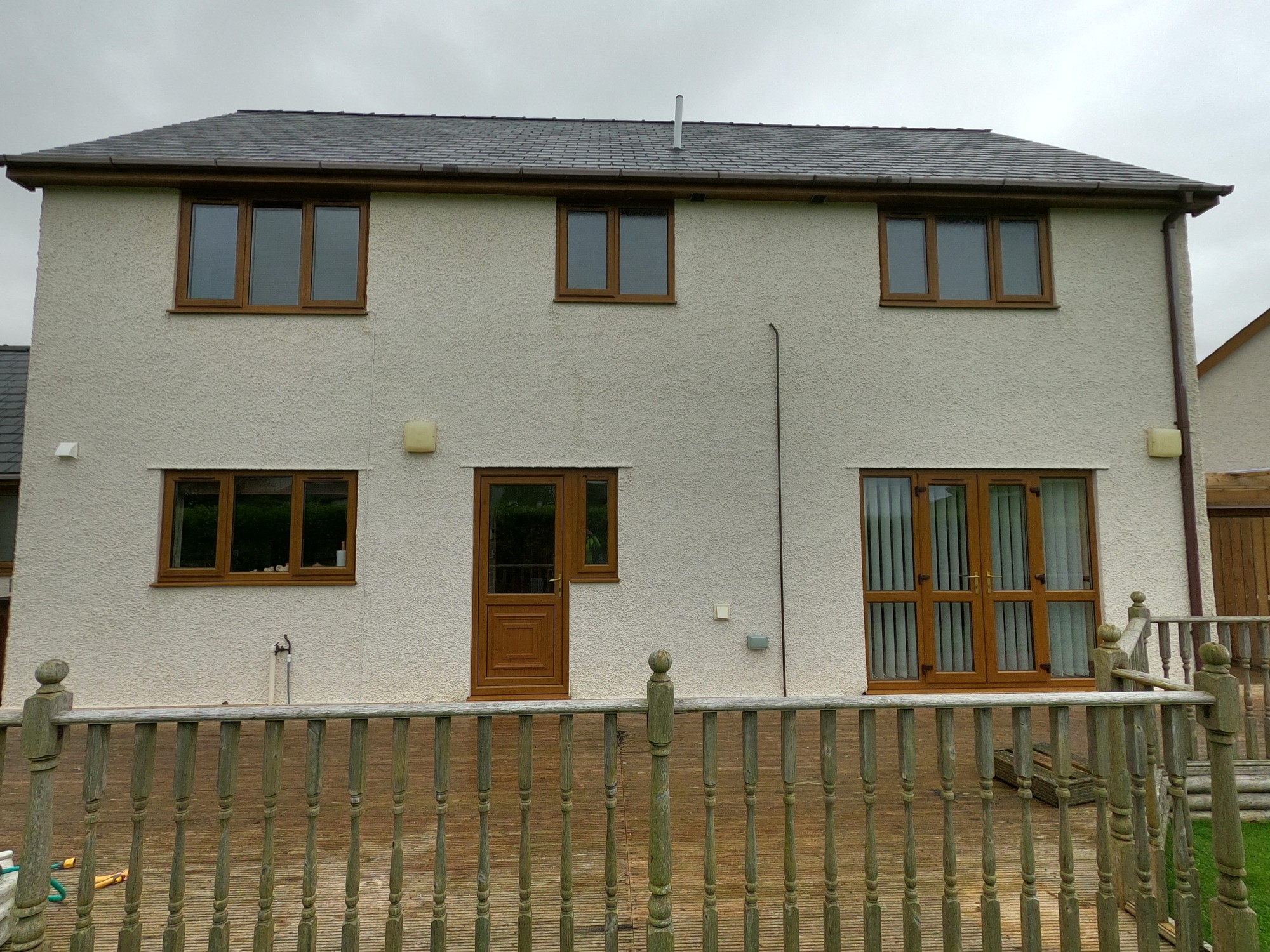
Softwashing UK grade monocouche texture at survey rather than treating the finish as a single specification, because the range within it is wider than most people realise. At the finer end, a lightly scraped monocouche has a shallow granular face. The profile is modest, moisture clears reasonably quickly and growth sits comparatively close to the surface. Treatment applied at a standard rate reaches root level without difficulty. At the coarser end, a heavily scraped finish exposes larger aggregate and produces genuine depth. Effective surface area rises considerably, moisture sits in the profile long after the flat plane has dried, and colonies establish at the base of the texture where nothing casual will reach them. Between the two is a continuous range, and the grade depends on the applicator’s technique as much as the product, so two properties finished in the same material on the same estate can differ noticeably. The practical consequence is that volume applied per square metre and dwell period both rise with texture depth. Applying at a fine-finish rate to a coarse wall bridges the high points, leaves growth alive underneath and produces a result that fails within a season. Monocouche render cleaning specified against the actual grade is therefore one of the reasons two similar houses carry different figures. Everything else stays constant. Low pressure throughout, nothing brushed or agitated, since exposed aggregate detaches permanently under abrasion. Render restoration on a coarse texture takes longer and delivers a more dramatic result, because more had accumulated in the profile. Residential render cleaning quoted per elevation reflects that honestly.
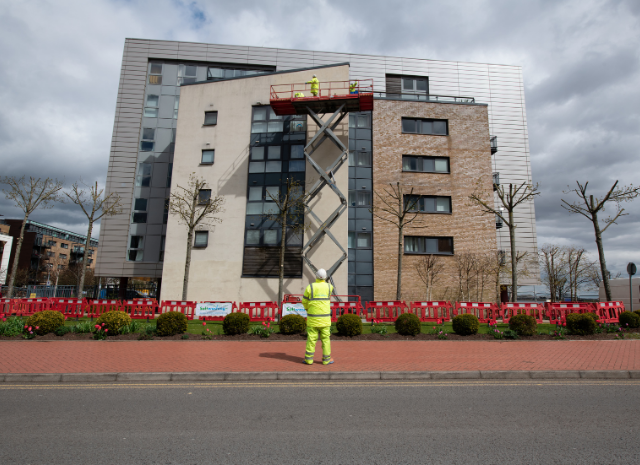

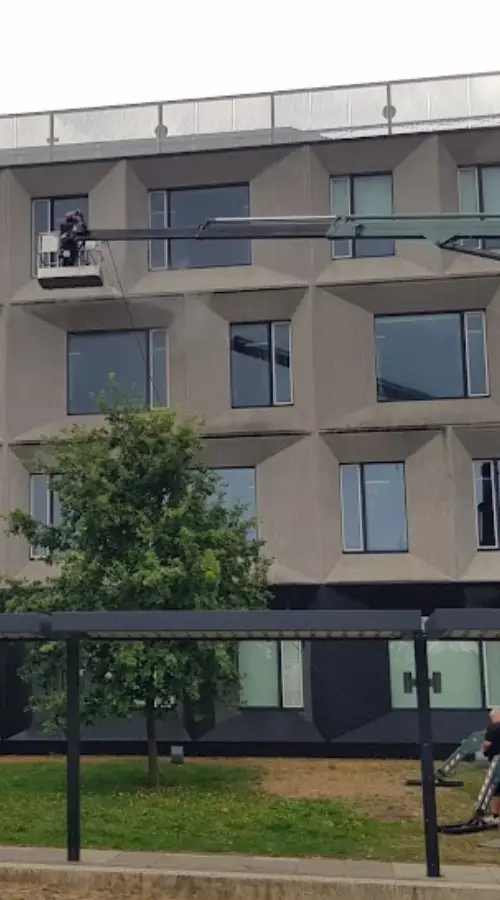
MOT centres, garage workshops and vehicle repair premises with rendered elevations accumulate soiling unusually quickly. Exhaust particulate, brake dust, tyre residue and general traffic film all deposit on the walls, and much of it is atmospheric rather than biological. Commercial render cleaning at these premises therefore needs a dual specification. Biocidal treatment addresses whatever algal filming and black spotting has established, while render stain removal handles the particulate and traffic film that biocide alone will not shift. Treating only one leaves the elevation visibly half done. Operationally, the work fits around the workshop. Bay doors stay usable, customer vehicles keep arriving and departing, and the forecourt cannot be blocked. We survey first, phase the job so only one elevation is affected at a time, and schedule into whatever window causes least interruption, often early morning or a closing day. Vehicles within reach of a working elevation are moved or fully sheeted, and extraction points, vents and external fittings are masked or isolated before anything is applied. Exclusion zones are agreed and signed, and insurance, method statements and risk assessments are supplied ahead of attendance. Operatives hold current working at height certification, and where the site runs a permit system we work through it. Technically these buildings usually present long single-storey or low two-storey elevations. Soft wash render cleaning holds identical dilution and continuous wet edges across the run so the finished wall reads uniformly rather than showing where the work paused. For vehicle premises around Harvington, a planned interval is realistically the only way to keep the building presenting properly given how quickly it soils.
Weather moves dates in this trade, and how a contractor handles that says something about whether they are prioritising the result or the diary. Treatment applied into heavy rain is diluted before it can work. It looks the same going on, the job appears to have been done, and the wall greens over the following spring because the product never reached the strength it needed. Strong wind is the other constraint, dispersing treatment before it reaches the surface and making any work at height unsafe. So occasionally a date has to move. When it does, you hear from us in advance rather than waiting in and wondering, and we offer the next workable slot rather than pushing the job to the back of the queue. A postponed date does not change the quoted figure. What we will not do is proceed in conditions that compromise the outcome in order to keep a booking. It is the easiest corner to cut, because nobody can tell on the day, and it is the reason a proportion of the walls we are called to were treated by somebody else two years earlier. Render cleaning prices are fixed at survey and unaffected by rescheduling. Full public liability cover and current working at height certification are in place, and our render cleaning specialists work on rendered elevations exclusively. Where a deadline genuinely matters, tell us at the enquiry stage and we will build in margin rather than promising a date we may not be able to hold. Professional render cleaning is partly a matter of accepting that some days are not suitable, and being straightforward about it when they are not.
Harvington is covered in full, with the same survey process and pricing basis applied to every property and no travel loading regardless of position. There is no minimum job size, and that is worth stating plainly because a number of contractors in this trade decline smaller work or price it punitively. A single elevation, a modest bungalow frontage or one problem gable is entirely welcome, and it is quoted at the same rates as a full property. The reason we can do that is how the work is programmed. Jobs in the same area are grouped and worked through together, so a short job fits alongside longer ones in the same day rather than carrying the full cost of a separate visit. Mobilisation is shared rather than loaded onto whichever property happens to be smallest. It also reflects how we think about the work. Treating one problem elevation early, before colonisation spreads across the rest of the building, is considerably cheaper than waiting until everything needs doing. Discouraging that with minimum charges would be poor advice dressed up as pricing. So if only one wall is troubling you, that is what we will quote for, and the written figure will say plainly whether the others need attention or not. Flexibility on timing helps with smaller jobs in particular. If you are not working to a deadline, saying so lets the work be fitted into a day already planned nearby, and that is usually reflected in the figure. Surveys take around twenty minutes and produce an itemised written quotation by email.
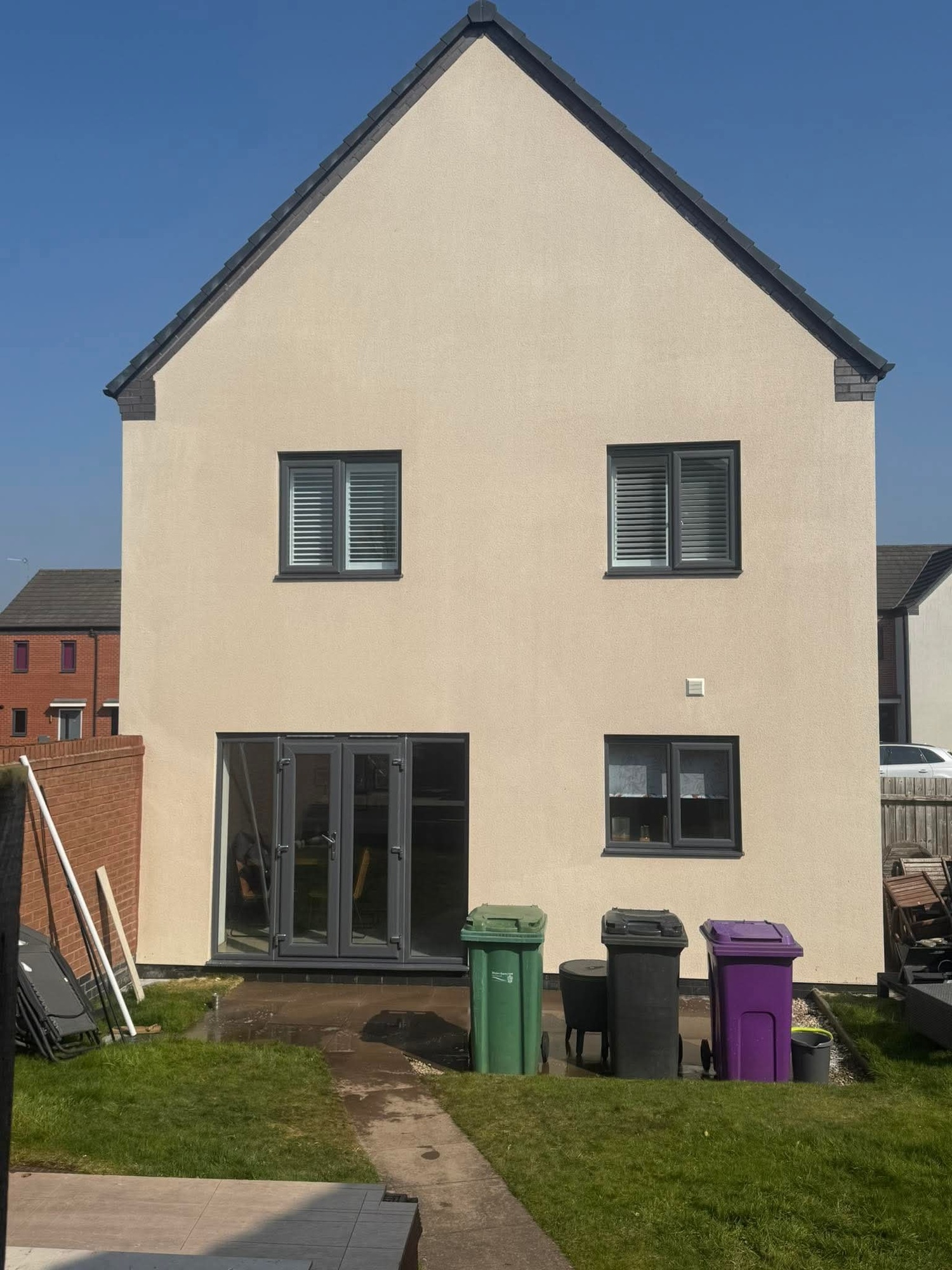
Most properties in Harvington benefit from professional render cleaning every 3 to 5 years, although this depends on the surrounding environment. Properties near trees, woodland, busy roads or coastal areas may require more frequent cleaning due to algae, mould and airborne contaminants. Our soft washing process removes existing growth and helps keep your render cleaner for longer.
Yes. Soft washing is specifically designed for delicate surfaces such as K-Rend, silicone render, monocouche render and painted render. Unlike high-pressure washing, it cleans at low pressure while treating biological growth at its source, reducing the risk of damage to the render finish.
We clean virtually all external render finishes, including K-Rend, Monocouche, Weber, Sto, silicone render, acrylic render, painted render, roughcast and pebble dash. Every cleaning method is tailored to the specific render type to achieve the best possible results.
Yes. Our specialist soft washing treatments are highly effective at removing green algae, red algae, black mould, mildew, lichen and other organic staining. We also apply professional biocide treatments to kill spores and slow down regrowth.
Because our process targets the biological growth rather than simply washing the surface, results typically last much longer than pressure washing alone. The exact lifespan depends on weather conditions, surrounding vegetation and the property’s location.
No. Our soft washing process is specifically designed to clean render safely. We use low-pressure application methods and specialist cleaning solutions that remove contamination without damaging the render surface when carried out by trained professionals.
The UK’s damp climate provides ideal conditions for algae, mould and other biological growth to develop on rendered surfaces. Areas with limited sunlight, nearby trees or persistent moisture are especially susceptible. Professional soft washing safely removes these contaminants and restores your property’s appearance.












































WhatsApp us