The practical logistics of a render clean are worth describing, because the quantities involved surprise most people and they explain why the job takes the time it does. A typical detached house has somewhere between one hundred and two hundred square metres of rendered elevation across all four walls. Treating that properly means applying enough solution to wet the surface thoroughly and, on a textured finish, to flow down into the profile rather than sitting on the high points. That is measured in hundreds of litres rather than tens. Rinsing uses more again, and it has to be purified so that no mineral deposit is left behind as the wall dries. All of it is carried on board, because relying on an outside tap means being limited by whatever pressure and flow happen to be available. Time divides roughly into thirds. Preparation and protection take longer than most people expect, and cover planting, hard surfaces, external fittings and anything moveable within the working area. Application is comparatively quick. Dwell is the longest single period, and it is the part where nothing appears to happen while the treatment works down to root level. Our render cleaning services are quoted against that reality rather than an optimistic pass. Render moss removal in particular raises volumes, since heavy growth absorbs a great deal before the surface beneath is properly wetted. Exterior render cleaning on a property in Holy Cross is generally a single day of steady, quiet work rather than a quick visit, and the quantities involved are the reason. A contractor promising three properties of that size in a day has necessarily shortened one of the three stages, and it is almost always the dwell.
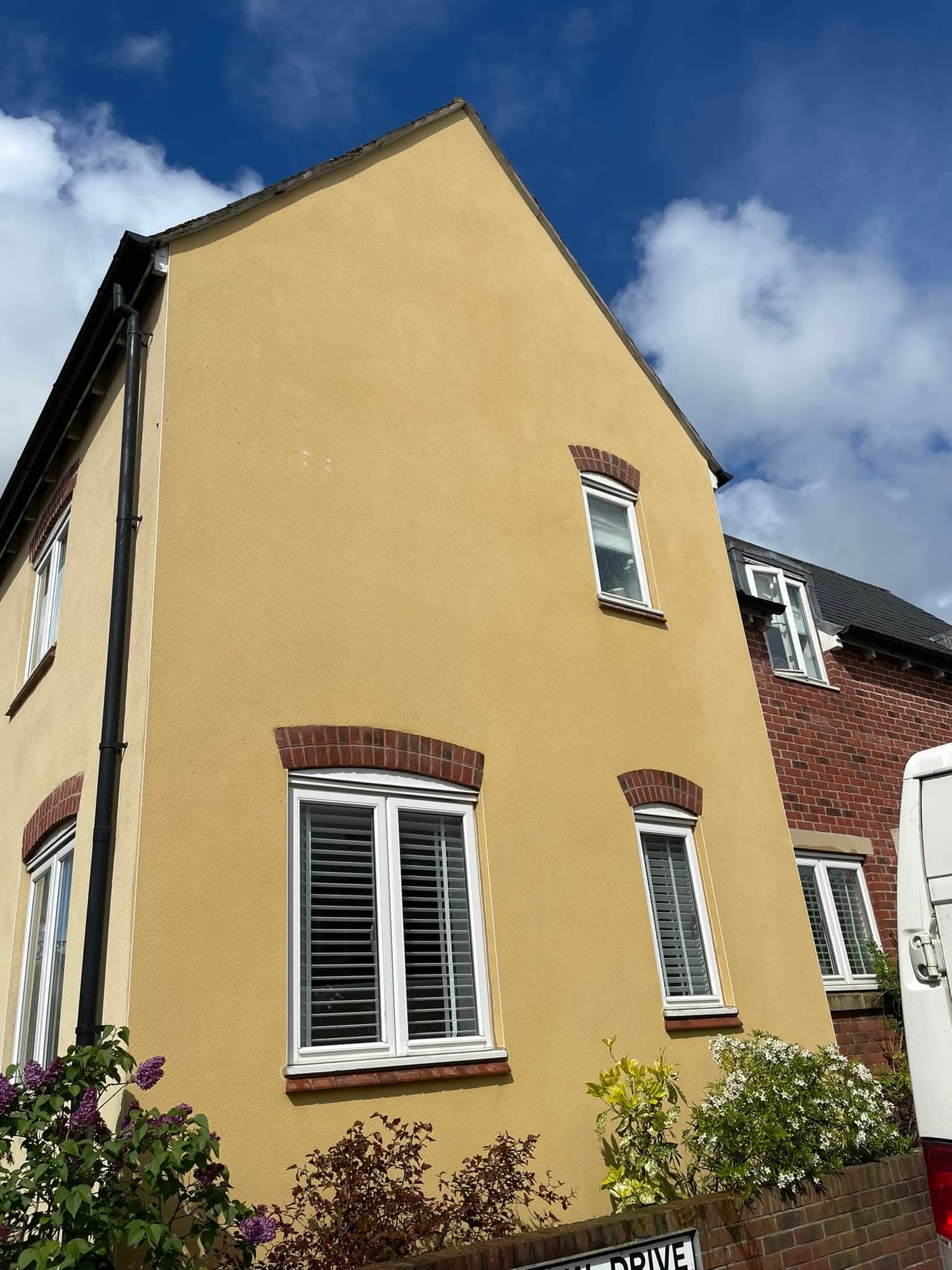
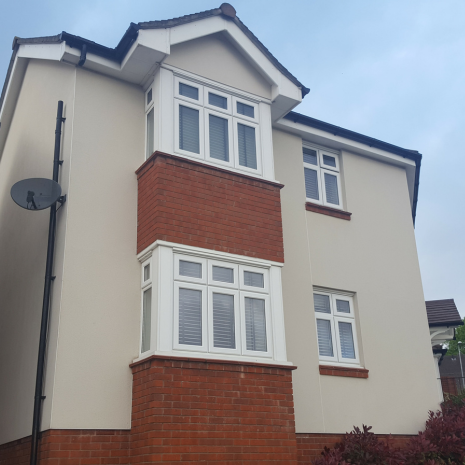

There is a real difference between a first clean and a maintenance clean on silicone render, and understanding it explains why return visits cost less. A first clean on an elevation that has never been treated deals with colonisation that has had years to establish. Growth is dense, rooted deep in the texture, frequently layered with more than one organism, and often accompanied by non-biological soiling at the base course. Treatment has to be applied in volume, at strengths judged for the most resistant organism present, and left to dwell considerably longer than a light case would need. The work takes most of a day on a typical property and the result develops over several weeks afterwards. A maintenance clean on the same wall a few years later is a different job. Because the previous treatment destroyed colonies at root level rather than removing them from view, recolonisation began from airborne spores landing on a sterile surface. What has accumulated is comparatively shallow and recent. Volume, dwell and time on site all reduce, and the wall generally clears within days rather than weeks. K Rend cleaning priced on that basis means a returning property is quoted lower than a new one of identical size. It is not a discount; the work is genuinely smaller. Silicone render cleaning remains identical in method either way: chemical throughout, very low pressure, nothing brushed or agitated, complete elevations worked with live wet edges. Render mould removal on a maintained wall is usually straightforward, which is the practical argument for treating properly the first time and returning at sensible intervals rather than leaving it a decade.
Monocouche ages structurally rather than cosmetically, and separating the two is useful when deciding what a wall actually needs. Cosmetically, very little happens. The pigment is mineral, distributed through the body of the render, and stable across decades. A monocouche elevation that looks tired is almost always carrying growth and atmospheric deposit rather than having faded, and cleaning returns it close to the supplied tone. Structurally, the material does change slowly. Surface absorbency increases gradually as the outermost layer weathers, which means an older monocouche takes up treatment slightly differently from a new one and can need marginally more volume to achieve the same penetration. Hairline crazing can develop, which is generally cosmetic rather than significant but does hold moisture. Sealant at junctions ages and eventually fails, and where it does, water tracks into places it should not. None of that is a reason to avoid cleaning, and most of it is a reason to keep the wall dry. A coating held permanently damp by moss and algae deteriorates faster than one that dries normally between wettings. What we do look for at survey is whether any of it has progressed to the point where treatment is inadvisable. Open cracking, failed sealant at junctions and hollow-sounding areas all mean water should not be introduced until they have been addressed, and we say so. Monocouche render cleaning on a sound older elevation proceeds exactly as on a new one: low pressure, generous volume to reach the base of the texture, full dwell, gentle rinse, nothing brushed. Render maintenance carried out regularly is what gets a coating to its expected life rather than short of it.
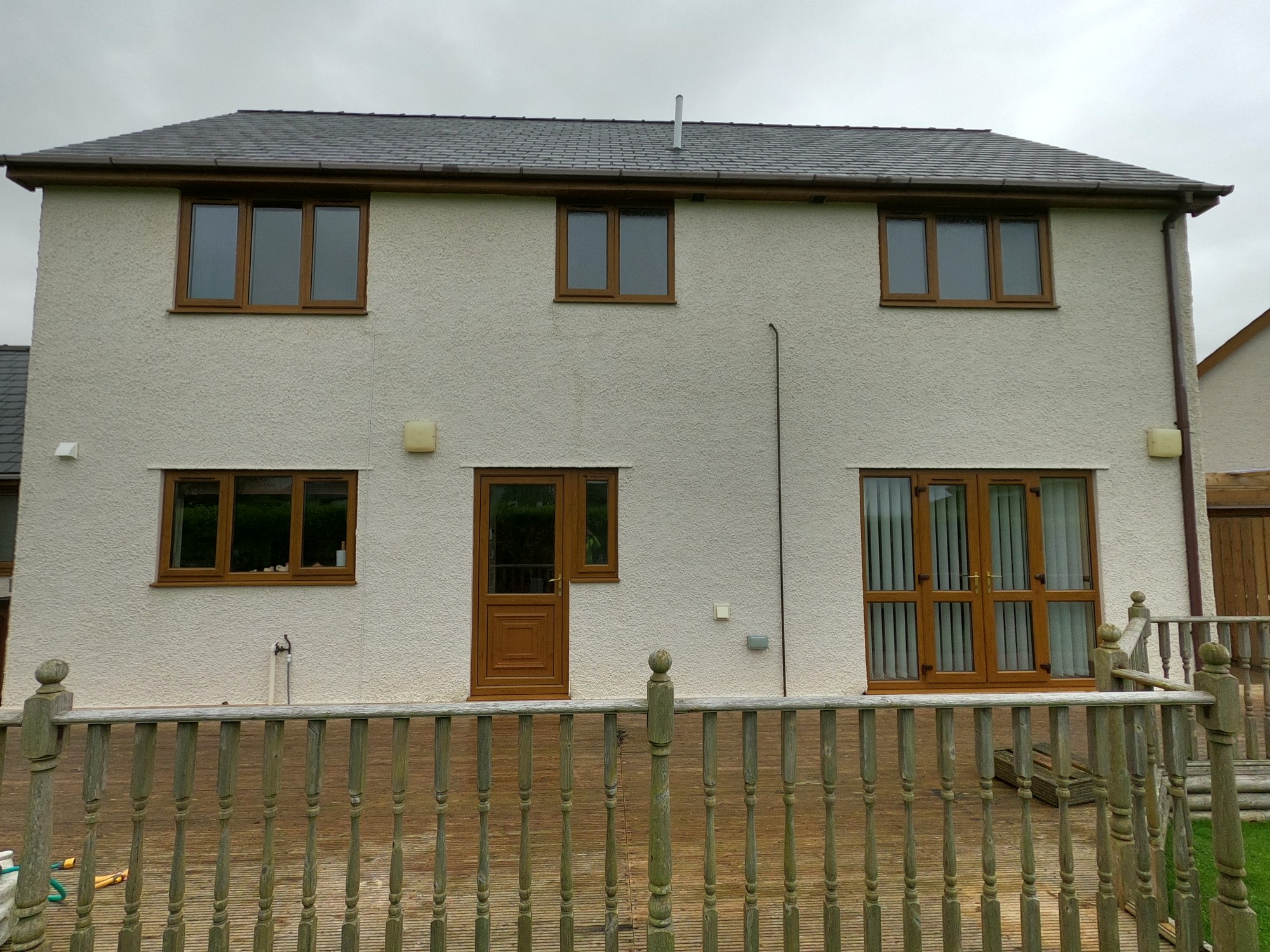
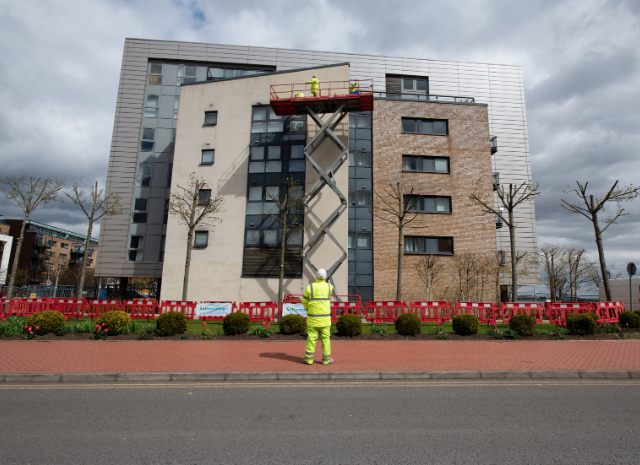

Charity premises, community trusts and voluntary sector buildings with rendered elevations are usually maintained on tight budgets that have to be justified to trustees, and the work needs to be specified accordingly. Softwashing UK approach commercial render cleaning on these buildings by producing something a committee can actually consider: a survey that identifies coatings, grades colonisation per elevation, states access requirements and gives a fixed itemised figure rather than a single total presented on trust. Scheduling works around use, which on community buildings is often busier than a commercial site. Sessions, hires and volunteer activity run across much of the week, and we plan around whatever window the calendar allows, completing the work in as few visits as the size of the building permits. Most premises of this scale can be treated from ground level using telescopic delivery, which removes access equipment from the figure and shortens the visit considerably. Where a hall has a tall gable, the access required is identified at survey and included. The low pressure method suits occupied community buildings well. There is very little noise, no machine running continuously and no spray drifting across an entrance or outdoor area. Insurance, method statements and risk assessments are supplied ahead of attendance, and operatives hold current working at height certification. Where a building is used by children or vulnerable adults, any checks required are completed in advance. Render facade cleaning holds consistent dilution and live wet edges so the finished elevation reads uniformly. For community premises around Holy Cross, a clean every few years is a modest recurring cost that protects a substantial area of coating.
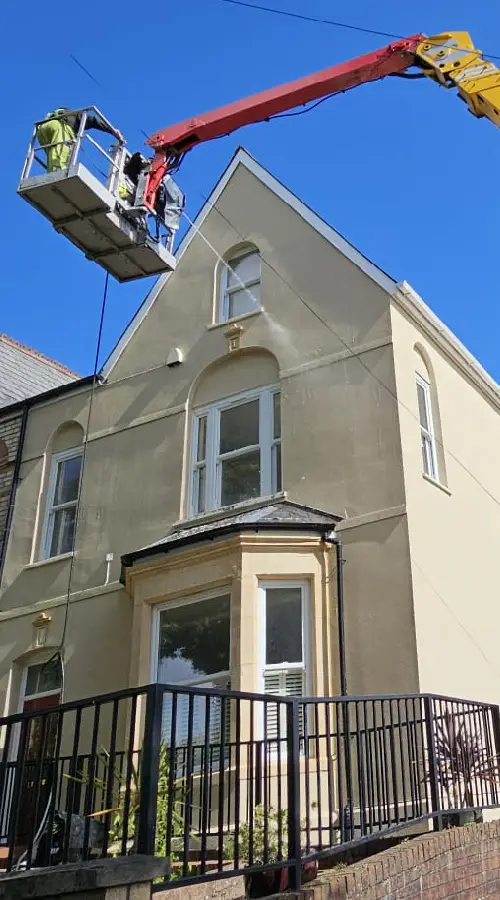
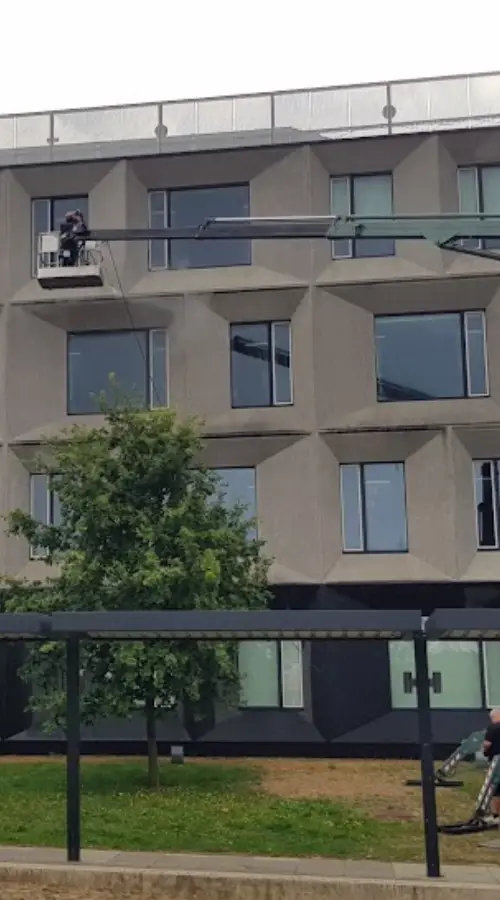
Heavily neglected walls need a different conversation from routine maintenance, and it is better had before the work than after. Where an elevation has gone untreated for a decade or more, the colonisation is not simply thicker. It is layered, with algal filming, established black spotting, lichen in raised patches and moss at low level all present on the same wall, each needing different strengths and different dwell periods. Beneath it there may be surface defects, previous repairs or damage that has been invisible for years and will become apparent once the growth is removed. Two things follow. The first is that the specification has to be fuller: more volume, longer dwell, and frequently a planned second application rather than a single pass. We price that at the outset rather than treating once and returning with a further invoice. The second is that the result develops over a longer period. Dead lichen and moss detach gradually as they degrade, and on a badly neglected wall the elevation can continue visibly improving for six weeks or more. Judging the job on the afternoon would be unfair to it. We describe both plainly in the quotation. Where something will not clear entirely, or where cleaning will reveal previous damage, that is stated rather than discovered. Render cleaning cost on a neglected elevation is higher than on a maintained one, which is itself the argument for not leaving it. Render cleaning prices are fixed at survey and include any return visit we have anticipated. Professional render cleaning on a difficult wall is mostly a matter of accurate expectations and sufficient patience.
Holy Cross is covered in full, with no travel loading, no minimum job size and the same survey and pricing process applied to every property. Where properties on a road share similar construction, there is a practical saving worth knowing about. Houses built at the same time frequently carry the same render system, the same texture grade, similar elevation heights and comparable access. Once one has been surveyed, most of the specification transfers, which shortens both the assessment and the visit for the others. More importantly, several properties treated in the same period share mobilisation. Travel, set-up and equipment positioning are costs incurred once rather than repeated, and we reflect that in the individual figures rather than keeping the saving. So it is genuinely worth mentioning at the enquiry stage if others nearby are considering the same work. We are happy to survey several properties in one visit and quote each separately, and there is no requirement for anyone to commit on behalf of anyone else. What does not transfer between similar houses is growth density. Aspect, shelter and planting vary from plot to plot, and one property can carry considerably heavier colonisation than the house alongside it despite identical construction. Each address is surveyed on its own terms and quoted per elevation. Where a shared or continuous rendered elevation runs between properties, treating them together also produces a better result, since a single cleaned section within a run reads differently from those either side. Surveys take around twenty minutes, can be carried out unattended provided all elevations are reachable, and produce an itemised written quotation by email.
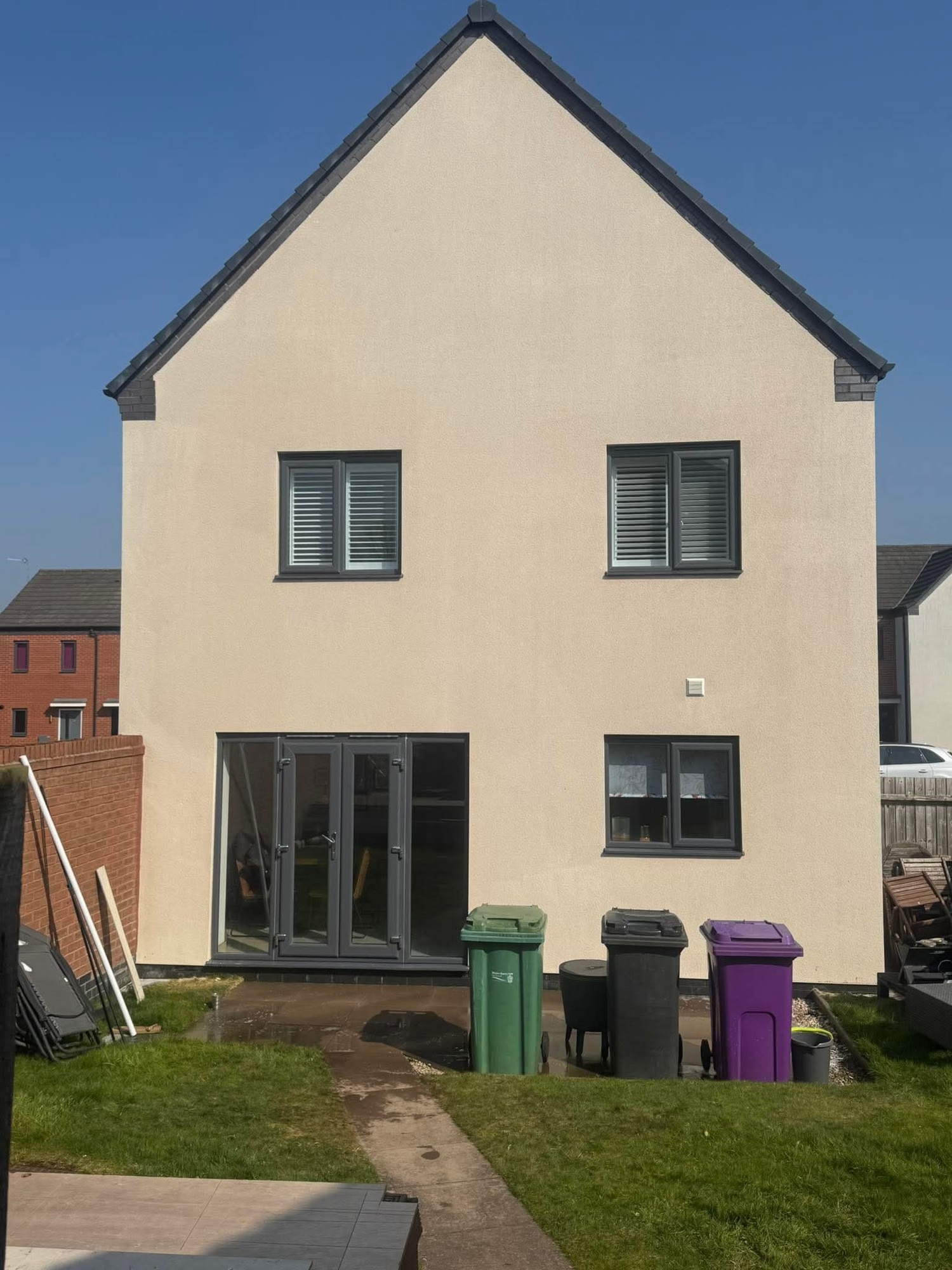
Most properties in Holy Cross benefit from professional render cleaning every 3 to 5 years, although this depends on the surrounding environment. Properties near trees, woodland, busy roads or coastal areas may require more frequent cleaning due to algae, mould and airborne contaminants. Our soft washing process removes existing growth and helps keep your render cleaner for longer.
Yes. Soft washing is specifically designed for delicate surfaces such as K-Rend, silicone render, monocouche render and painted render. Unlike high-pressure washing, it cleans at low pressure while treating biological growth at its source, reducing the risk of damage to the render finish.
We clean virtually all external render finishes, including K-Rend, Monocouche, Weber, Sto, silicone render, acrylic render, painted render, roughcast and pebble dash. Every cleaning method is tailored to the specific render type to achieve the best possible results.
Yes. Our specialist soft washing treatments are highly effective at removing green algae, red algae, black mould, mildew, lichen and other organic staining. We also apply professional biocide treatments to kill spores and slow down regrowth.
Because our process targets the biological growth rather than simply washing the surface, results typically last much longer than pressure washing alone. The exact lifespan depends on weather conditions, surrounding vegetation and the property’s location.
No. Our soft washing process is specifically designed to clean render safely. We use low-pressure application methods and specialist cleaning solutions that remove contamination without damaging the render surface when carried out by trained professionals.
The UK’s damp climate provides ideal conditions for algae, mould and other biological growth to develop on rendered surfaces. Areas with limited sunlight, nearby trees or persistent moisture are especially susceptible. Professional soft washing safely removes these contaminants and restores your property’s appearance.













































WhatsApp us