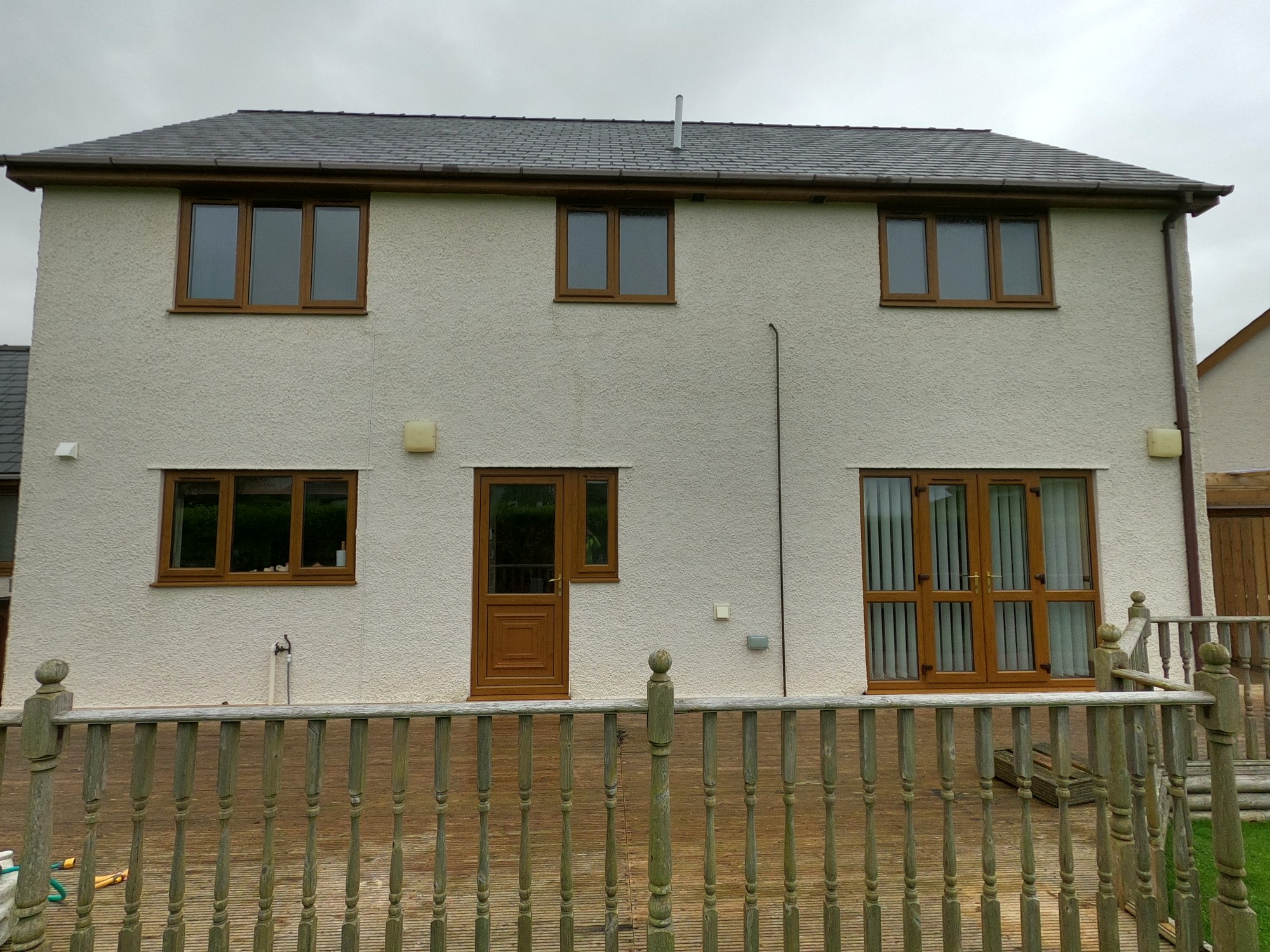
How quickly an elevation dries is the single most useful thing to understand about why some walls stay clean and others do not, and the mechanics are worth setting out. Three factors govern it. Direct sunlight is the first: it raises surface temperature and drives evaporation, so an elevation receiving several hours of it clears retained moisture far faster than one that receives none. Air movement is the second, and it is more important than most people assume, because moving air carries away the saturated layer immediately against the wall and allows evaporation to continue. Still air lets that layer sit, and drying effectively stops. Surface character is the third. A textured face holds water in its profile long after a smooth one has shed it, and a more absorbent coating takes water into the material rather than releasing it from the surface. Combine them and the pattern becomes predictable. A well-lit, exposed, smooth elevation may be dry within an hour of rain stopping. A shaded, sheltered, deeply textured one may not fully dry for days, and through winter it may not dry at all between wettings. That difference is what determines colonisation, far more than how much rain a wall receives. Softwashing UK assess all three at survey and specify per elevation accordingly. Render algae removal on a slow-drying wall needs a fuller specification and a longer dwell than a fast-drying one carrying the same organism. Exterior render cleaning on properties around Kempsey therefore produces different figures for walls of identical size on the same building, and the itemised quotation shows why.
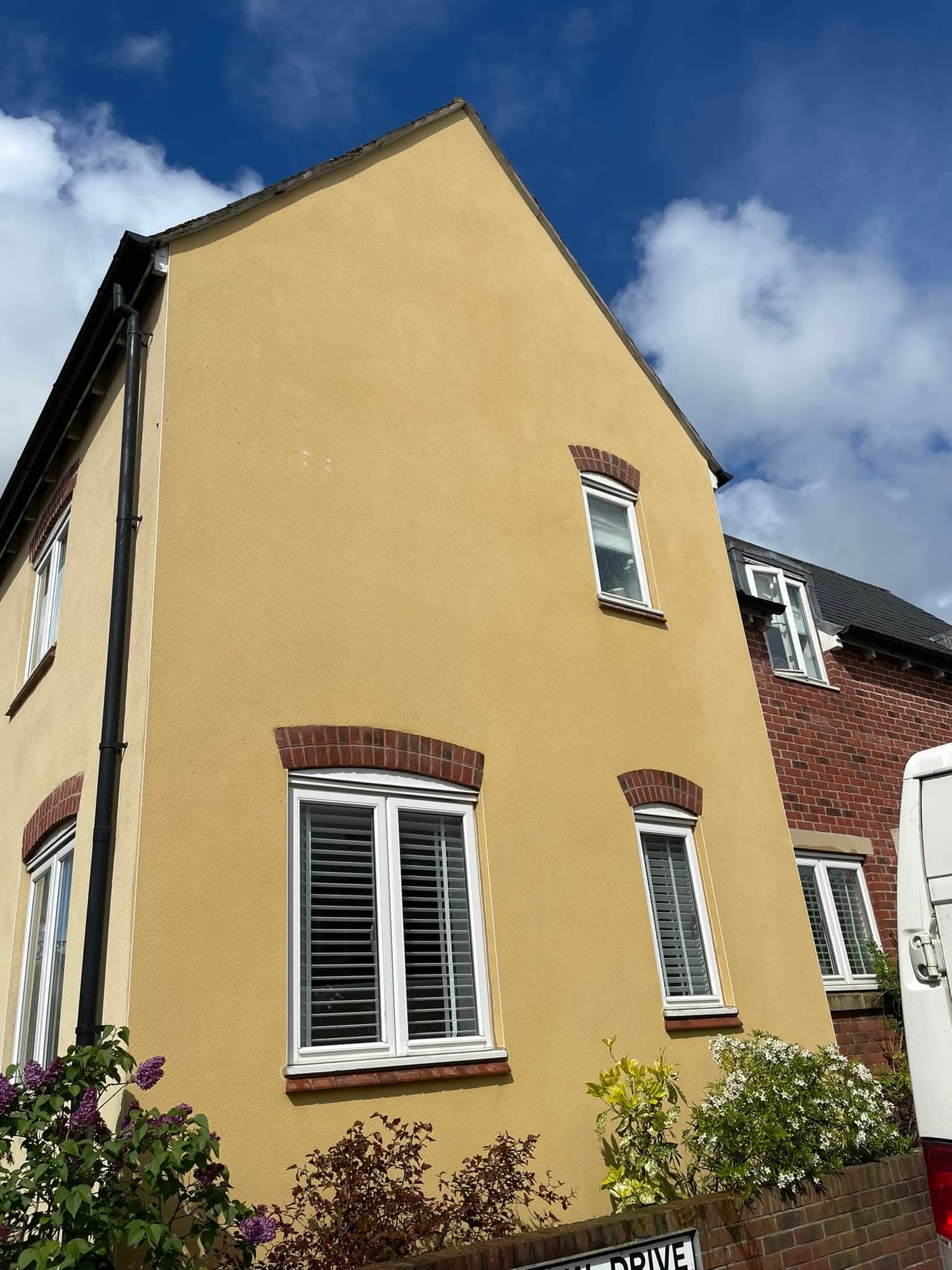
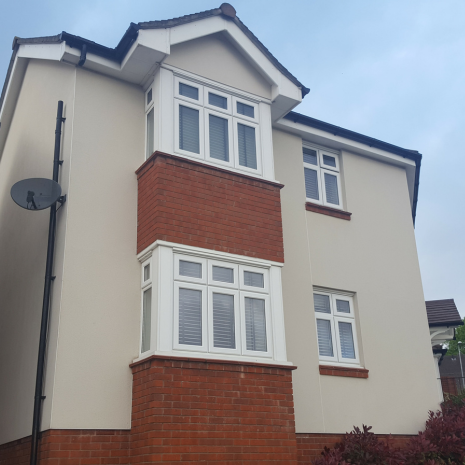

Silicone-rendered properties with mature trees close to them are a recognisable category of job, and the specification differs from an open-frontage house in several respects. Spore load is the first difference. Trees and established planting produce and shelter vastly more of the material that colonises render than open ground does, and a wall downwind of them receives a continuous supply from every direction. Colonisation is denser at any given interval. Shade is the second. Canopy over or beside an elevation removes the direct sunlight that would otherwise drive evaporation, so the wall stays damp far longer after every wetting. On a north-facing elevation already receiving little, the loss is close to total. Restricted air movement is the third, and it compounds the second. Enclosed by planting, an elevation loses the air exchange that carries moisture away, and drying slows further. Organic debris is the fourth. Leaf fall against a wall and material caught behind planting decompose in place, supplying nutrients directly to the surface. K Rend cleaning under these conditions needs treatment applied in greater volume and dwelled longer than the visible growth alone would suggest, because colonisation is deeper than it looks and reinfection pressure afterwards is high. We also give honest interval advice. Three years may be realistic here where five would apply elsewhere, and saying so is more useful than an optimistic figure. Where branches touch the wall, we raise it at survey, since foliage in contact prevents both proper treatment and any subsequent drying. Silicone render cleaning stays chemical throughout: very low pressure, nothing brushed, complete elevations worked with live wet edges at consistent dilution.
Shaded aspects are where monocouche shows its one genuine weakness, and it is worth understanding rather than treating as a defect. The finish is scraped back to expose fine aggregate, producing an open texture with real depth. On a sunlit elevation that texture drains and dries reasonably well, and colonisation proceeds slowly. On a shaded one it behaves differently: moisture sits in the profile with nothing to drive it out, and through winter that section of wall can remain damp more or less continuously. The result is that the shaded elevation of a monocouche property is frequently several stages further advanced than the frontage, and it needs a materially fuller specification rather than the same treatment applied to a dirtier wall. Monocouche render cleaning on a shaded aspect therefore uses greater volume, so treatment reaches the base of the texture rather than bridging the high points, and a longer dwell judged against established colonisation. Where growth has reached the point of visible lichen or moss, a planned second application is sometimes the right answer and is quoted at the outset rather than raised later. The method is otherwise unchanged. Low pressure throughout, gentle rinsing, nothing brushed or agitated, since exposed aggregate detaches permanently under abrasion. Interval advice is given per elevation for exactly this reason. A shaded gable may need attention in half the time the frontage does, and treating the whole building each time simply because it is convenient wastes money on walls that were fine. Render restoration on a long-shaded elevation frequently produces the most striking change of any wall on the property, since it had degraded furthest from the original tone.
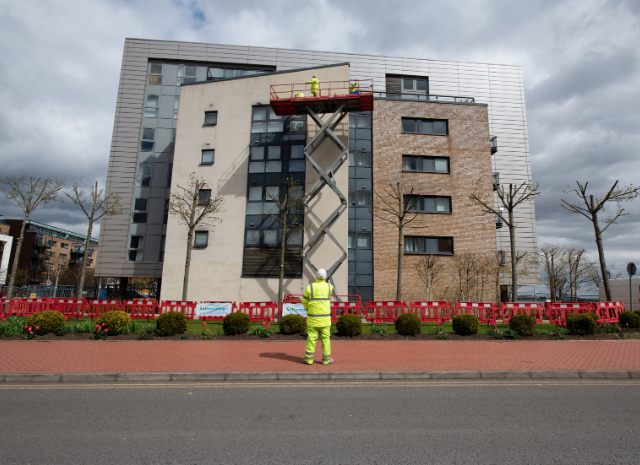

Veterinary practices operating from rendered buildings need exterior work planned with more care than most commercial premises, because the site combines clinical requirements with animals that respond badly to disturbance. Commercial render cleaning here is scheduled around consulting hours and, where the practice has kennelling or recovery facilities, around where animals are housed. We survey first, identify which elevations sit alongside sensitive areas, and phase the work so only one part of the building is affected at a time. The low pressure method matters considerably. There is no machine running continuously, minimal noise, and no high pressure spray, all of which makes a substantial difference to animals in the building. Where a particularly sensitive area cannot be worked without disturbance, we schedule that elevation separately. Ventilation, external plant and any opening on the working wall are masked or isolated before treatment is applied. Run-off is directed away from any area where animals are exercised, and dilutions are controlled to what the growth requires rather than mixed strong. Exclusion zones are agreed and signed so clients arriving with animals are kept clear without entrances being obstructed. Insurance, method statements and risk assessments are supplied ahead of attendance, and operatives hold current working at height certification. Most practices of this size are completed within a single visit, limiting the window of disruption. Render facade cleaning maintains consistent dilution and live wet edges so the finished elevation reads uniformly. For veterinary premises around Kempsey, a clean every few years keeps the building presenting as a clinical environment should while protecting the coating from permanent damp.
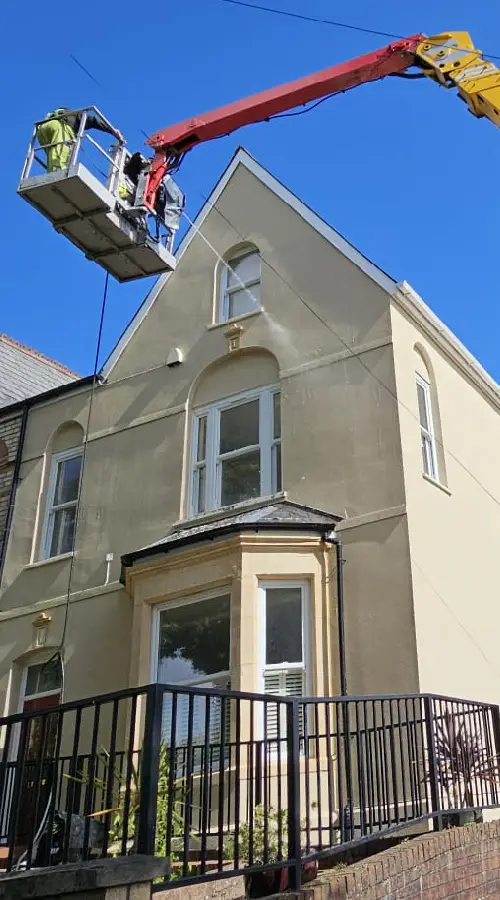
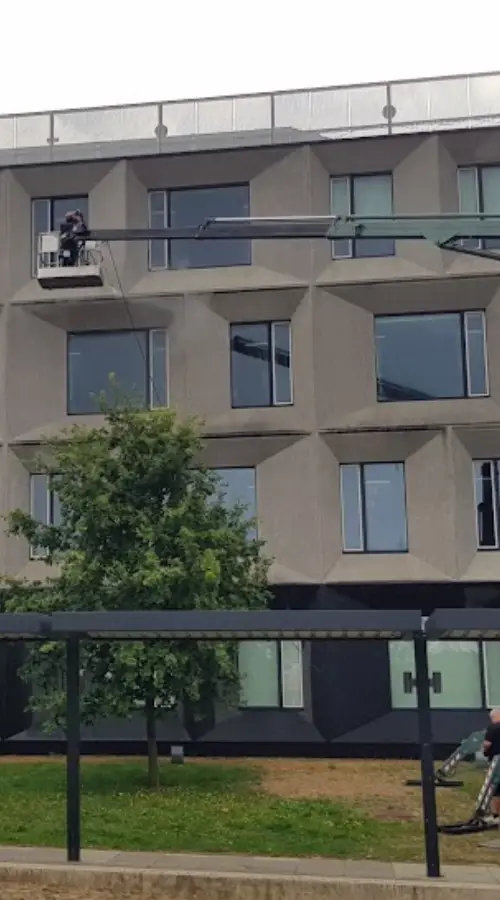
Getting hold of someone and getting a straight answer are the two things people most often say were missing when they describe a previous contractor, and neither is difficult to provide. Enquiries are answered rather than left. A survey is usually available within the week, and often sooner outside the spring peak. It takes around twenty minutes, and nobody needs to be at home provided every elevation is reachable. The itemised written quotation follows by email the same day or the next, setting out what was found on each wall and what is specified. It holds for a stated period and does not change afterwards. There is no chasing, no follow-up calls and no pressure. Once booked, you get a confirmed date and an arrival window rather than a vague half-day. If weather forces a change, which happens occasionally because treatment applied into heavy rain is diluted before it can work, you hear from us in advance and are offered the next workable slot rather than being pushed to the back of the queue. Afterwards we remain reachable. If an area has genuinely not responded within four to six weeks, we return and treat it again at no charge. Render cleaning prices are fixed at survey, and full public liability cover and current working at height certification are available on request before booking. Anyone searching for render cleaning near me is generally weighing competence and reliability together. Professional render cleaning delivered by a local render cleaning company should include being straightforward to deal with, which is a low bar and a surprisingly uncommon one.
Coverage takes in Kempsey together with Clifton, Hawbridge and Severn Stoke, all on identical terms with no travel loading applied to any of them. Grouping bookings is how we keep rates consistent across an area of this spread, and it is worth explaining because customers can take advantage of it deliberately. Rather than travelling to individual properties on separate days, we programme work by locality and complete several jobs in sequence. Travel, set-up and equipment positioning are then costs incurred once across a group rather than repeated for each property. That is what allows outlying addresses to be quoted at the same rates as those on a main road, with no travel surcharge and no minimum job value. Two things follow for the customer. Flexibility on timing helps: if you are not working to a deadline, saying so lets the job be slotted into a day already planned nearby, and that is usually reflected in the figure. And arranging with others nearby helps more: where several properties in the same settlement or on the same lane book within the same period, each individual quotation reduces. It is worth raising when you enquire. We are happy to survey several properties in one visit and quote each separately, with no requirement for anyone to commit on behalf of anyone else. Properties in Clifton, Hawbridge and Severn Stoke are typically individual rather than uniform, so each is assessed on its own terms and quoted per elevation. Surveys take around twenty minutes, can be carried out without anyone at home provided every wall is reachable, and produce an itemised written figure by email broken down per elevation.
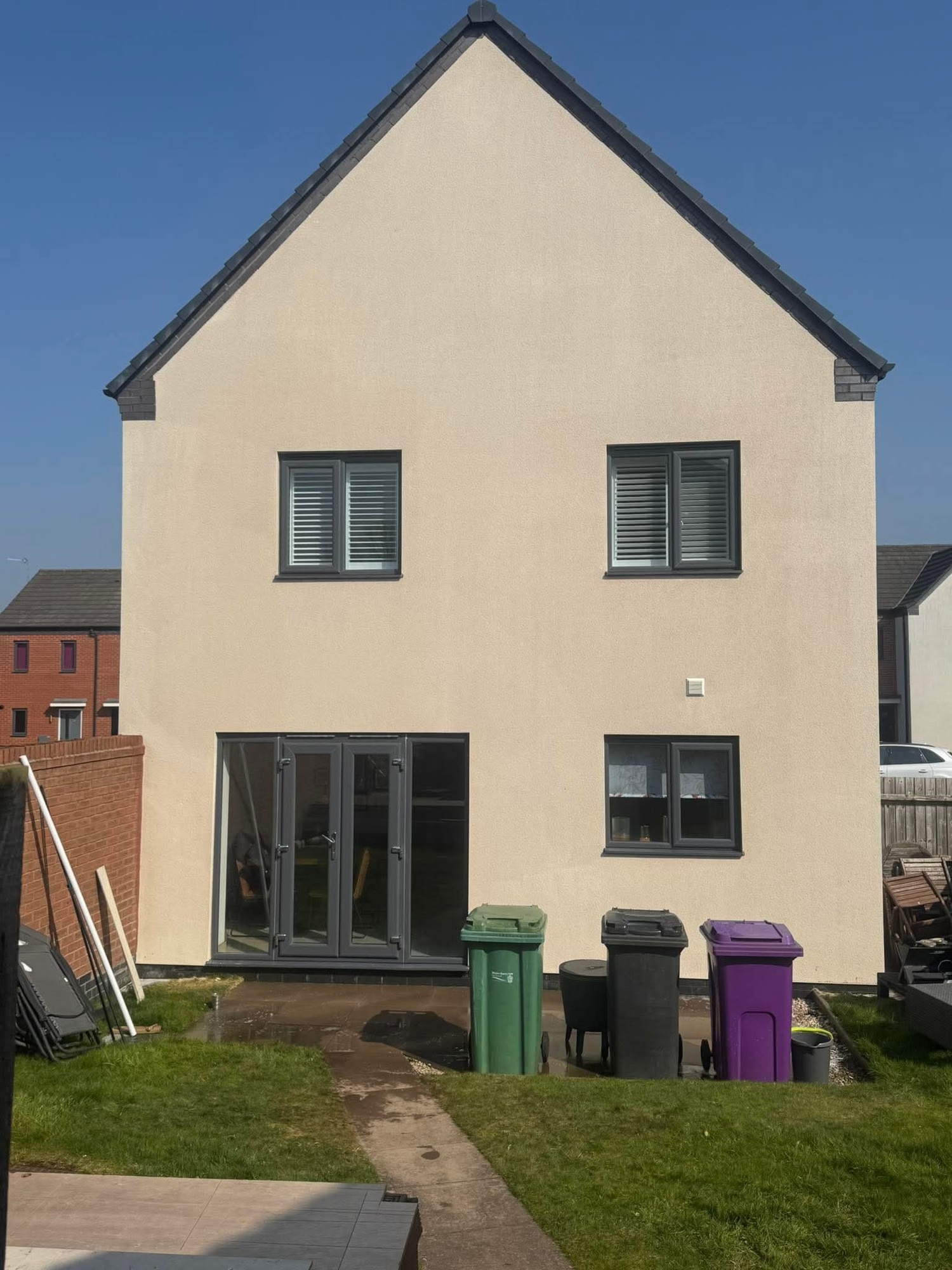
Most properties in Kempsey benefit from professional render cleaning every 3 to 5 years, although this depends on the surrounding environment. Properties near trees, woodland, busy roads or coastal areas may require more frequent cleaning due to algae, mould and airborne contaminants. Our soft washing process removes existing growth and helps keep your render cleaner for longer.
Yes. Soft washing is specifically designed for delicate surfaces such as K-Rend, silicone render, monocouche render and painted render. Unlike high-pressure washing, it cleans at low pressure while treating biological growth at its source, reducing the risk of damage to the render finish.
We clean virtually all external render finishes, including K-Rend, Monocouche, Weber, Sto, silicone render, acrylic render, painted render, roughcast and pebble dash. Every cleaning method is tailored to the specific render type to achieve the best possible results.
Yes. Our specialist soft washing treatments are highly effective at removing green algae, red algae, black mould, mildew, lichen and other organic staining. We also apply professional biocide treatments to kill spores and slow down regrowth.
Because our process targets the biological growth rather than simply washing the surface, results typically last much longer than pressure washing alone. The exact lifespan depends on weather conditions, surrounding vegetation and the property’s location.
No. Our soft washing process is specifically designed to clean render safely. We use low-pressure application methods and specialist cleaning solutions that remove contamination without damaging the render surface when carried out by trained professionals.
The UK’s damp climate provides ideal conditions for algae, mould and other biological growth to develop on rendered surfaces. Areas with limited sunlight, nearby trees or persistent moisture are especially susceptible. Professional soft washing safely removes these contaminants and restores your property’s appearance.









































WhatsApp us