Not every change in a wall’s appearance is caused by something growing on it. Render also fades. Ultraviolet light breaks down pigment slowly across decades, and on a south or west-facing elevation the colour after twenty-five years is genuinely lighter than the day it was applied. Nothing cleans that back. The related effect is chalking, where the binder at the very surface degrades and leaves a fine powdery layer that comes away on a hand. It is most common on older painted and mineral finishes, and it makes a wall look dull and tired without any organic growth being present at all. Distinguishing both from colonisation is the first job at any assessment. Growth is uneven, concentrated where moisture lingers, and usually green, black or grey. Fading is even across a whole face and heaviest where the sun reaches. Chalking shows on your fingers. Our render cleaning services address the first of those completely and neither of the other two. Where all three are present, and they often are, render algae removal will make a substantial difference and the wall will still be paler than it was. Saying that in advance is the only way to avoid disappointment. Render moss removal on the shaded details is frequently what a faded elevation actually needs, since the sunlit faces have little growing on them. Professional render cleaning of a house in Longburton is quoted with the fading described separately, and house render cleaning promised as a return to original colour on a thirty-year-old sunlit wall is overpromising. Exterior render cleaning removes what has landed on a coating rather than what time has done to it.
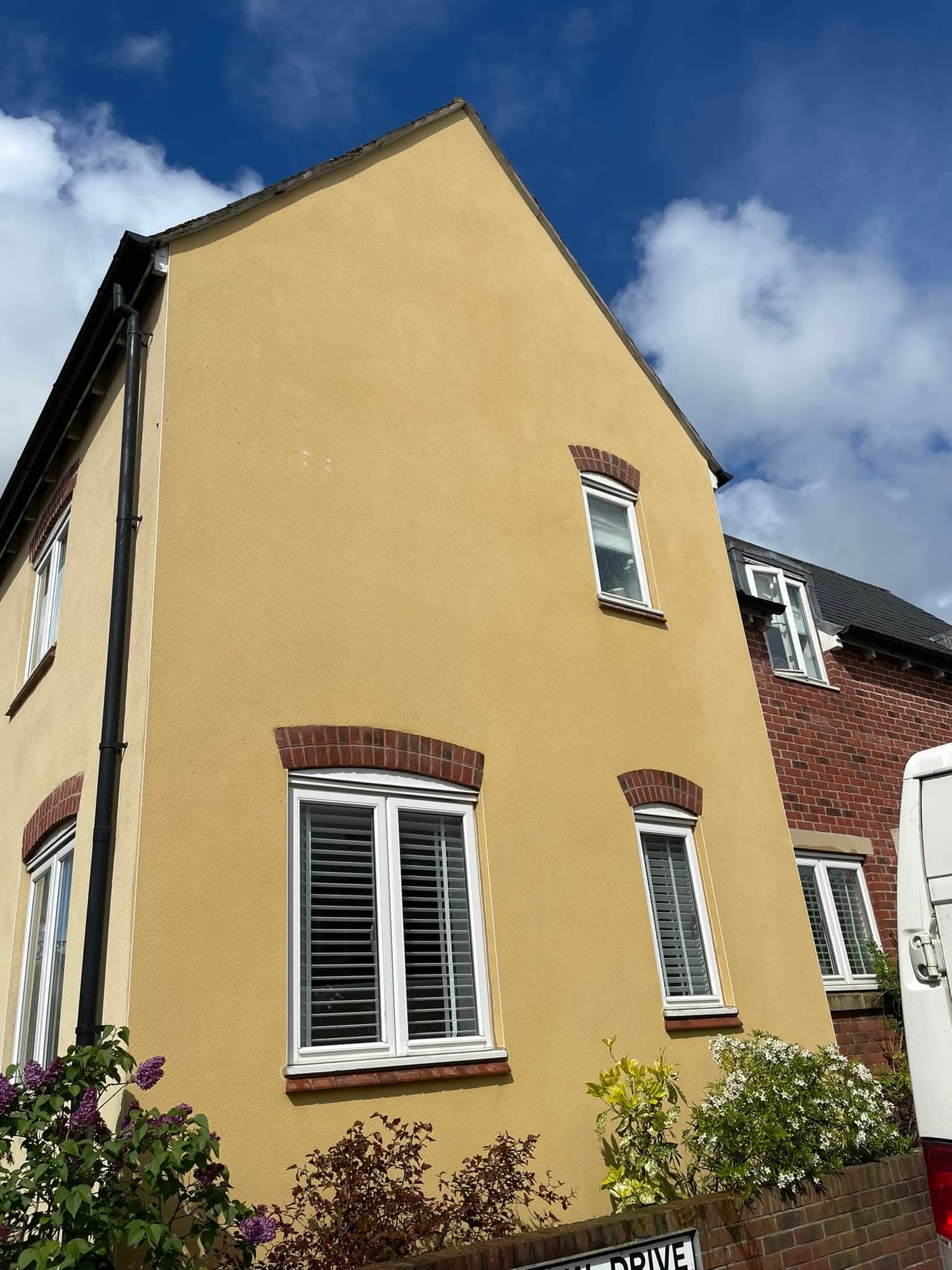
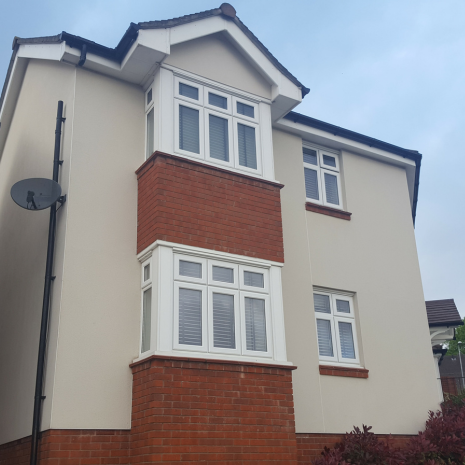

Silicone systems fade far less than older finishes, which is one of the more genuine claims made about them. The pigment is integral and the binder is UV-stable, so a K Rend elevation twelve or fifteen years old is usually close to its original colour with only organic growth accounting for how it looks. K Rend cleaning on those buildings frequently produces a striking result for that reason, since almost everything visible is removable. Softwashing UK still checks. A sunlit panel on an older installation can show a modest difference against a sheltered return, and it is worth knowing before rather than after so nobody expects the two to match perfectly. The treatment is unchanged: soft wash render cleaning applies a biocidal solution at a pressure barely above hose flow, dwells long enough to destroy algae and lichen at root level, then rinses with a gentle controlled flow. Nothing mechanical touches the surface, since pigment runs through the material and abrasion removes it permanently — which on a UV-stable finish would be the only way to lighten it. Silicone render cleaning also needs generous volume to keep a hydrophobic face wet through the dwell, whatever the age of the installation. Older panels take marginally more, since the surface has weathered. Render stain removal is quoted separately with an expected outcome for each mark. Iron bleed from ties and brackets, cement residue at fixing points and dark runs beneath a leaking joint each need a specific product and a test patch first. On a Longburton property those are the marks most likely to remain visible after the general treatment.
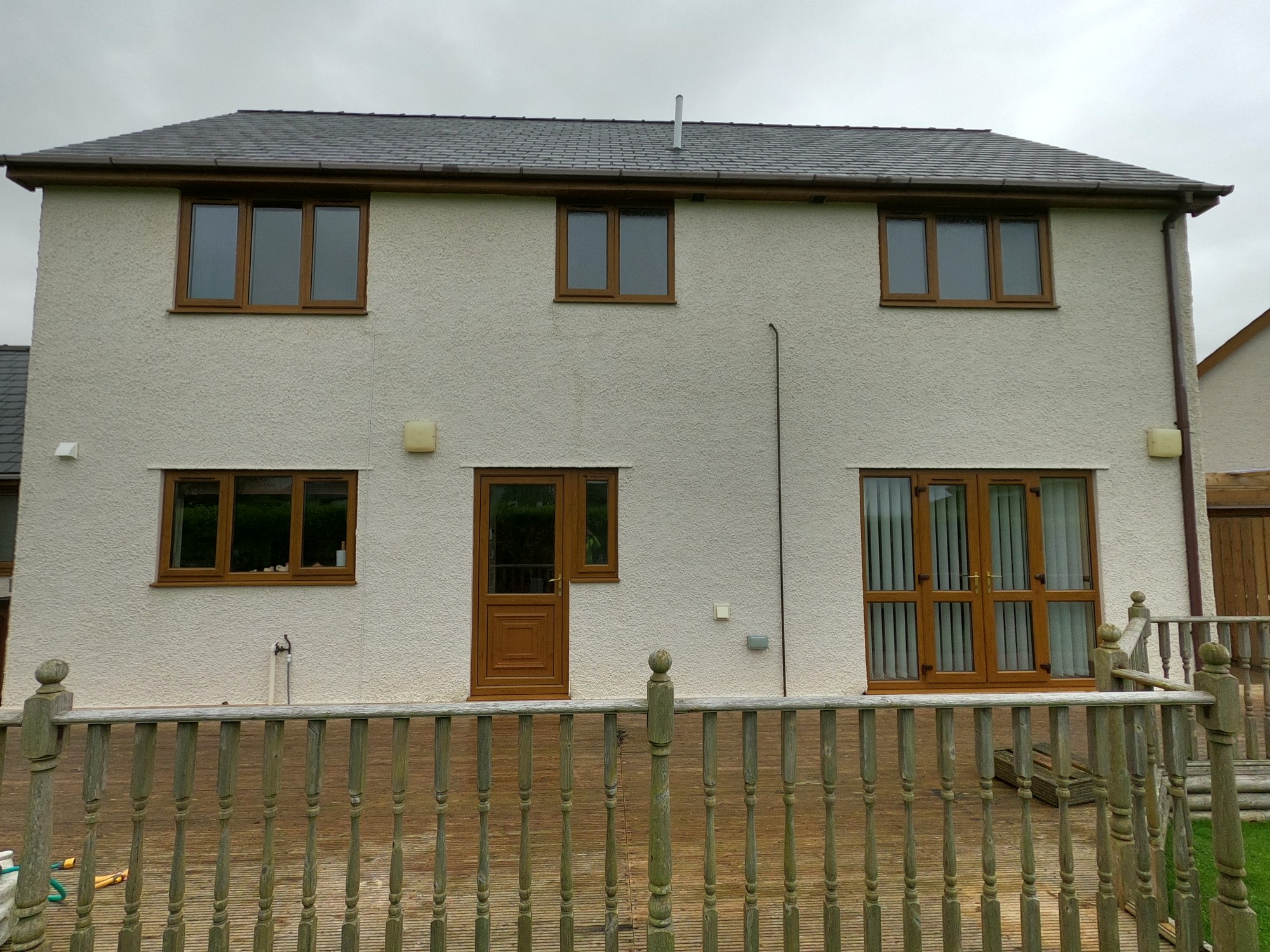
Monocouche is cement-based with integral pigment, and it fades more than a silicone system and considerably less than paint. Over twenty or thirty years a sunlit elevation lightens gradually while a shaded one holds its tone, and by the time somebody calls, the two faces of the same building can genuinely be different shades. Monocouche render cleaning removes the growth and leaves that difference exactly where it was, which is worth explaining before the work rather than after it. That is worth stating clearly, because the shaded face is usually the one carrying the growth and the sunlit one is usually the faded one. Cleaning the building makes both look better and does not make them match. Nothing available will, short of recoating. The method is unchanged: solution applied at low pressure in enough volume to soak through the depth of the scraped texture rather than glaze the peaks, a long dwell to kill growth at root level, a repeat application on the heaviest deposits along copings and projecting bands, then a soft even rinse across each full face. Render pressure washing would lighten a faded wall further by removing surface material, which is not a solution to anything and makes the difference between faces worse. It flattens the scrape, exposes the paler aggregate beneath and leaves permanent tracking, and coloured render cleaning offers no top coat to renew over it. On a building where fading is modest, render wall cleaning of monocouche returns a face very close to its specified tone. Around Longburton that is a genuine render restoration on most properties and a substantial improvement on the rest.
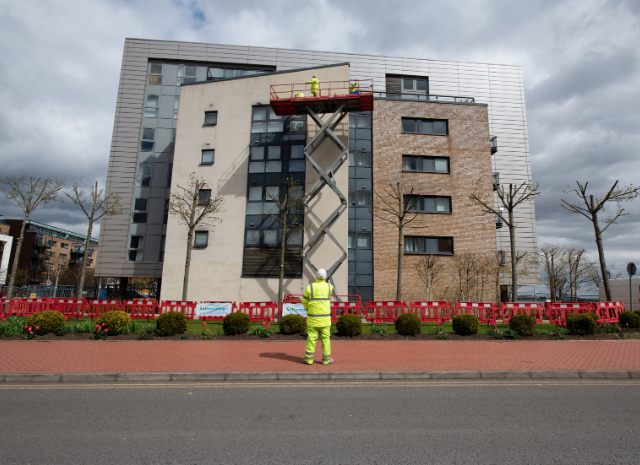

Fading is more visible on commercial buildings than on domestic ones, and it is raised in condition reports far more often, because the elevations are larger and any variation between faces reads at a distance. A frontage in full sun beside a shaded return can look like two different specifications after twenty years, and commercial render cleaning will not resolve that. The survey records it explicitly for that reason, elevation by elevation, alongside aspect, height, access requirement, coating type and condition. A client deciding between cleaning and a wider programme needs to know which part of the appearance is growth and which is age, and no photograph answers that, particularly one taken in flat light. The distinction between growth and age therefore belongs in the survey rather than in a conversation on site. Access is established alongside it — powered platforms, tower scaffold or extended pole systems according to height and standing ground — with the programme written around trading hours, deliveries and staff movement, and method statements and risk assessments issued in advance. Render soft washing is used throughout, giving even coverage along a full flank, very low water volumes, run-off directable clear of entrances and parking, and negligible drift near occupied doorways. Render facade cleaning delivers a consistent removal of growth and cannot deliver a consistent colour where the sun has produced one. Render mould removal on shaded and north-facing elevations is where the real work sits on a faded building, since those faces have the growth while the sunlit ones have the age. They set the render maintenance interval for premises in Longburton, while the sunlit faces need far less frequent attention.
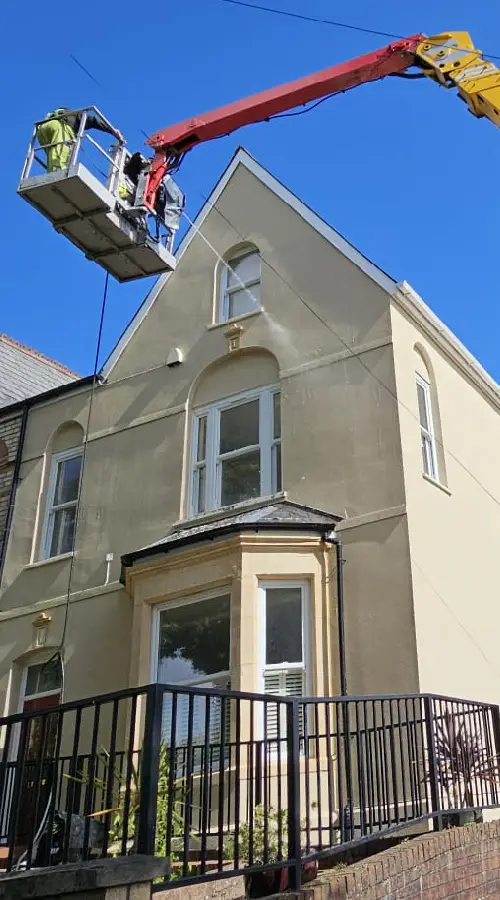
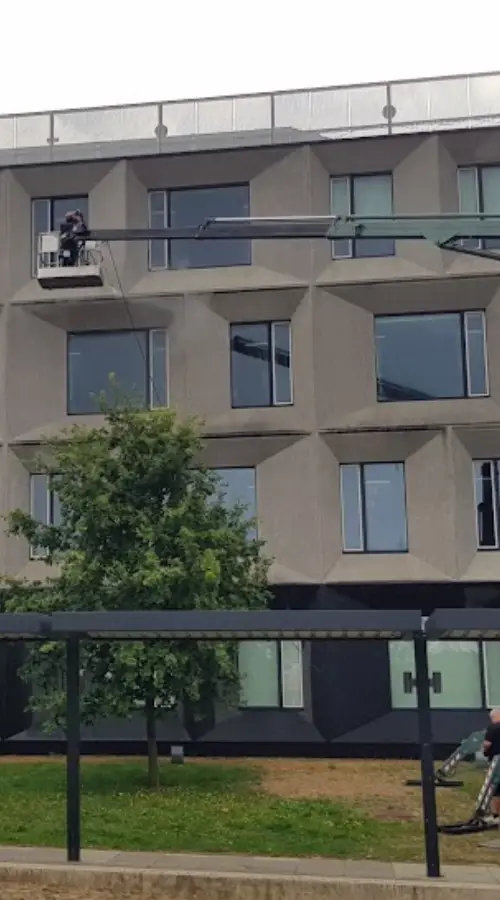
Fading is gradual enough that nobody notices it happening and obvious enough once a wall beside it has been replaced. That distinction matters commercially, because a customer expecting a faded wall to come back to its original shade will be disappointed by an excellent job. We set it out at the quotation. Render cleaning prices are established at an assessment from elevation count, working height, access arrangements and the extent of the growth, alongside a plain description of how much visible change to expect on each face. The written render cleaning cost then holds. Affordable render cleaning means paying for what a treatment can actually deliver rather than for a photograph of somebody else’s building. The crews are render cleaning specialists rather than general exterior cleaners, and telling fading from soiling on sight is part of that. So is recognising chalking before applying anything, since a degraded surface layer will come away during a rinse whatever is used on it. Where a wall is chalking badly the honest answer is sometimes that cleaning will achieve very little, and we would rather say so than take the work. A chalking surface is a coating problem rather than a cleaning one. Everything applied is an eco friendly render cleaning product chosen because it breaks down safely once its work is complete. Anyone comparing firms in search of the best render cleaning service on an older wall should ask specifically about fading. A contractor who has not mentioned it on a thirty-year-old sunlit elevation has either not looked or is not planning to raise it until afterwards.
Longburton sits within our regular working patch, and a fair number of properties here are now on their third or fourth treatment, which makes it possible to say what a decade of proper maintenance actually produces rather than guessing at it. The pattern is consistent across every property we have followed. The first clean is the largest job, since it deals with however many years have accumulated. The second, three to five years later, is noticeably quicker and cheaper because there is far less to break down and the access arrangements are already known. By the third, residential render cleaning on most buildings is a straightforward single application with no repeat visit required. The wall itself changes too. A coating never allowed to hold moisture against itself stays sound at the beads and the base, where neglected render fails first and where remedial work is most expensive, and the colour holds better because nothing has been sitting on it interfering with how it weathers. What does not change is the fading, which continues quietly regardless of how often a wall is treated. Nothing about a maintenance cycle slows it down. A regularly maintained elevation is clean rather than new, and that is worth understanding before the fourth visit as much as the first. There is no travel charge, no minimum job size and no charge for the assessment. Anyone searching render cleaning near me should expect a local render cleaning company to tell them how the last treatment held before quoting for the next one, since that is the most useful information available about a building.
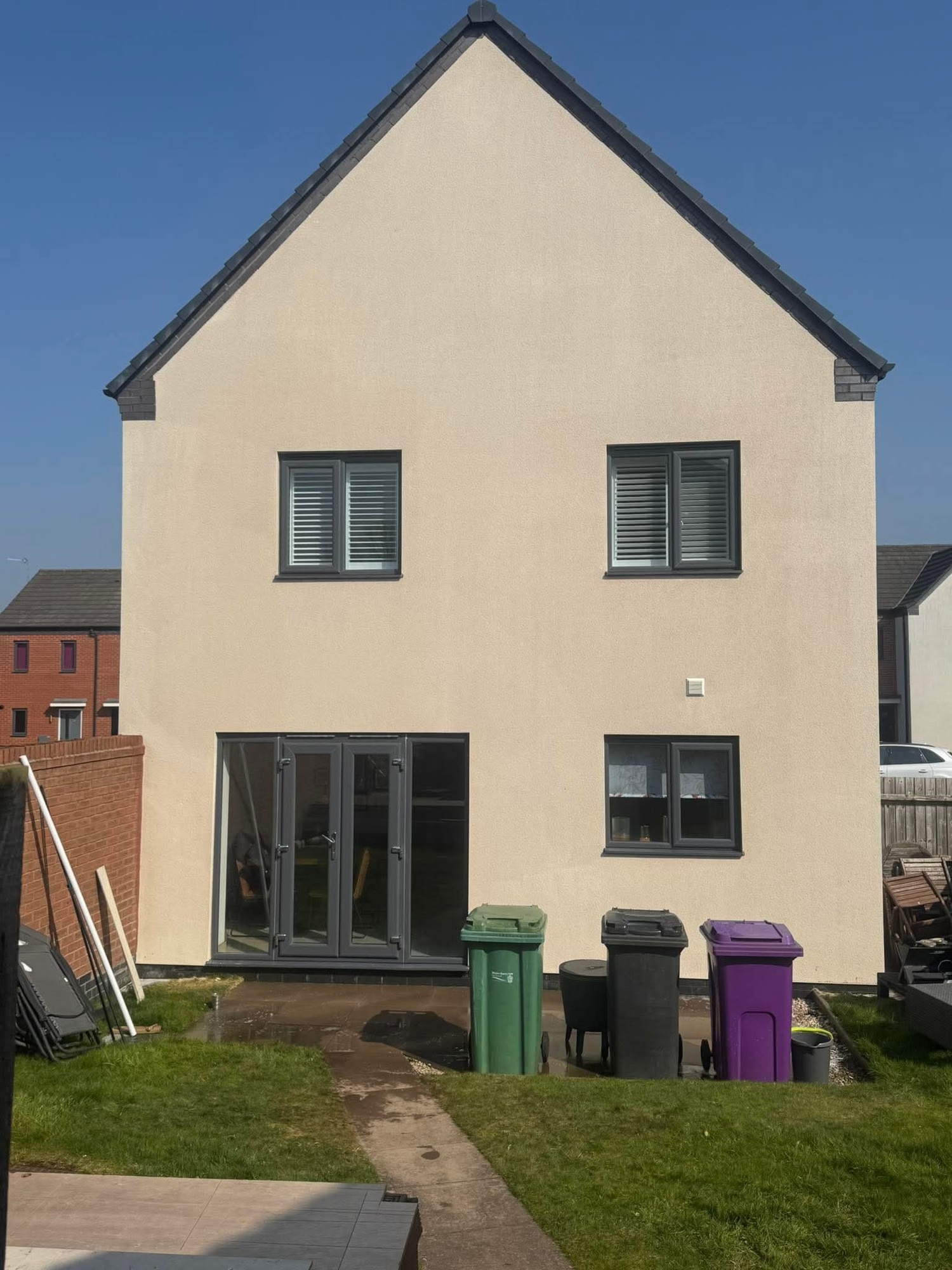
Most properties in Longburton benefit from professional render cleaning every 3 to 5 years, although this depends on the surrounding environment. Properties near trees, woodland, busy roads or coastal areas may require more frequent cleaning due to algae, mould and airborne contaminants. Our soft washing process removes existing growth and helps keep your render cleaner for longer.
Yes. Soft washing is specifically designed for delicate surfaces such as K-Rend, silicone render, monocouche render and painted render. Unlike high-pressure washing, it cleans at low pressure while treating biological growth at its source, reducing the risk of damage to the render finish.
We clean virtually all external render finishes, including K-Rend, Monocouche, Weber, Sto, silicone render, acrylic render, painted render, roughcast and pebble dash. Every cleaning method is tailored to the specific render type to achieve the best possible results.
Yes. Our specialist soft washing treatments are highly effective at removing green algae, red algae, black mould, mildew, lichen and other organic staining. We also apply professional biocide treatments to kill spores and slow down regrowth.
Because our process targets the biological growth rather than simply washing the surface, results typically last much longer than pressure washing alone. The exact lifespan depends on weather conditions, surrounding vegetation and the property’s location.
No. Our soft washing process is specifically designed to clean render safely. We use low-pressure application methods and specialist cleaning solutions that remove contamination without damaging the render surface when carried out by trained professionals.
The UK’s damp climate provides ideal conditions for algae, mould and other biological growth to develop on rendered surfaces. Areas with limited sunlight, nearby trees or persistent moisture are especially susceptible. Professional soft washing safely removes these contaminants and restores your property’s appearance.







































WhatsApp us