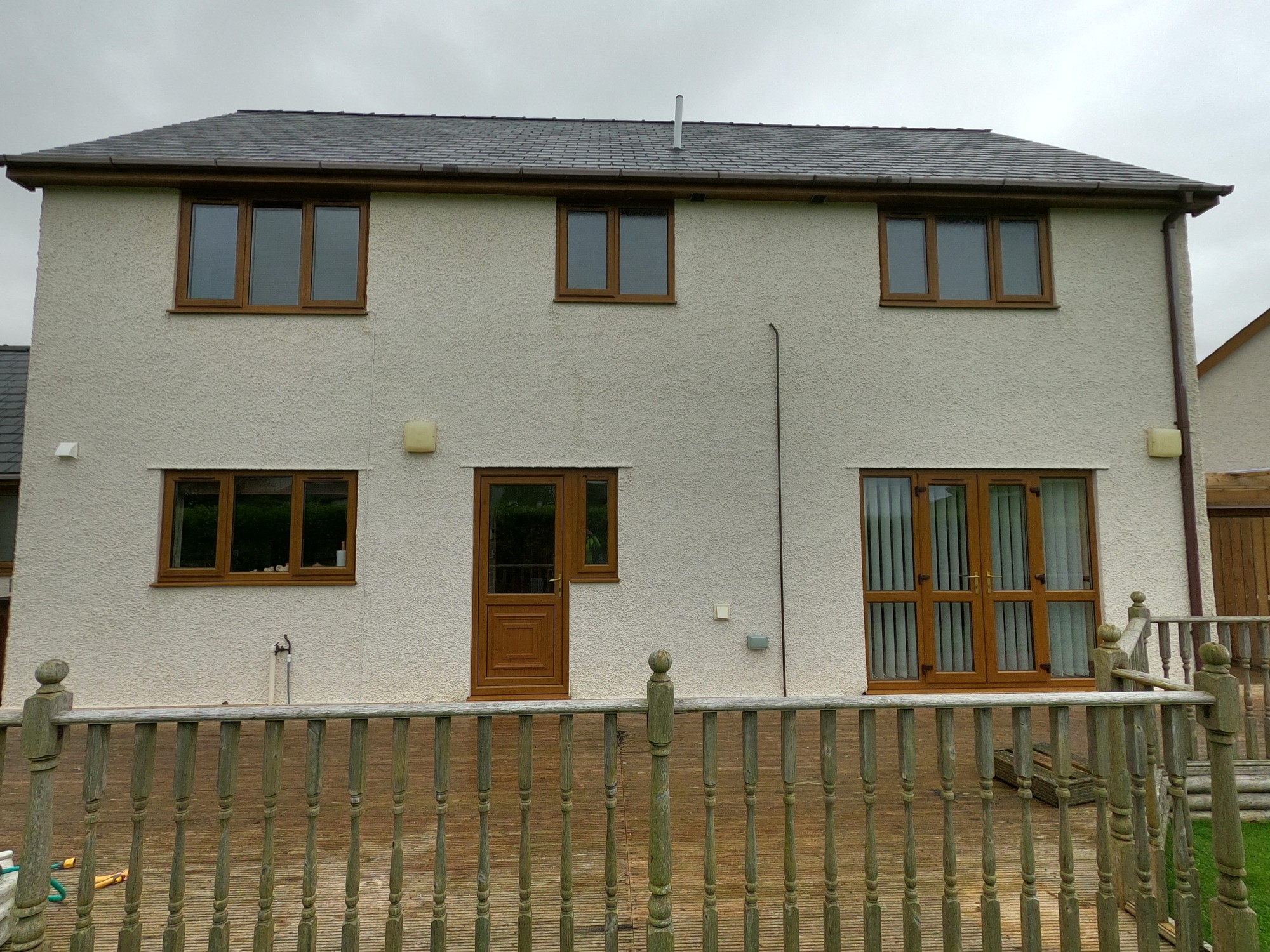
How rough a render is matters more to a cleaning job than almost anything else about it. A smooth float finish presents very little for growth to hold onto, dries quickly and cleans up with minimal effort. A scraped finish is full of open pores that shelter spores and hold water. Dry-dash and pebbledash, with loose aggregate proud of the surface, offer thousands of small ledges and shaded pockets and carry the heaviest colonisation of anything we work on. A tyrolean or flicked finish sits somewhere between the two. Our render cleaning services are specified against that profile rather than against the age of the property. The rougher the texture, the more solution is needed to wet it through, the longer the dwell required to reach growth sitting inside the profile, and the more likely a second application becomes. Quoting a dashed elevation at the same rate as a smooth one is how jobs run out of time halfway through the afternoon. Render algae removal on a smooth face is often complete within the visit. On a dashed wall it continues for weeks afterwards as dead material weathers out from between the aggregate, and customers are told to expect that rather than judging the result on the day. Render moss removal is texture-dependent in the same way, since moss establishes far more readily where debris can lodge. Professional render cleaning of a property in Lyme Regis begins with a hand on the wall as much as an eye on it, and house render cleaning quoted without establishing the profile is guesswork. Exterior render cleaning is chemistry meeting surface area, and rough surfaces have a great deal more of it.
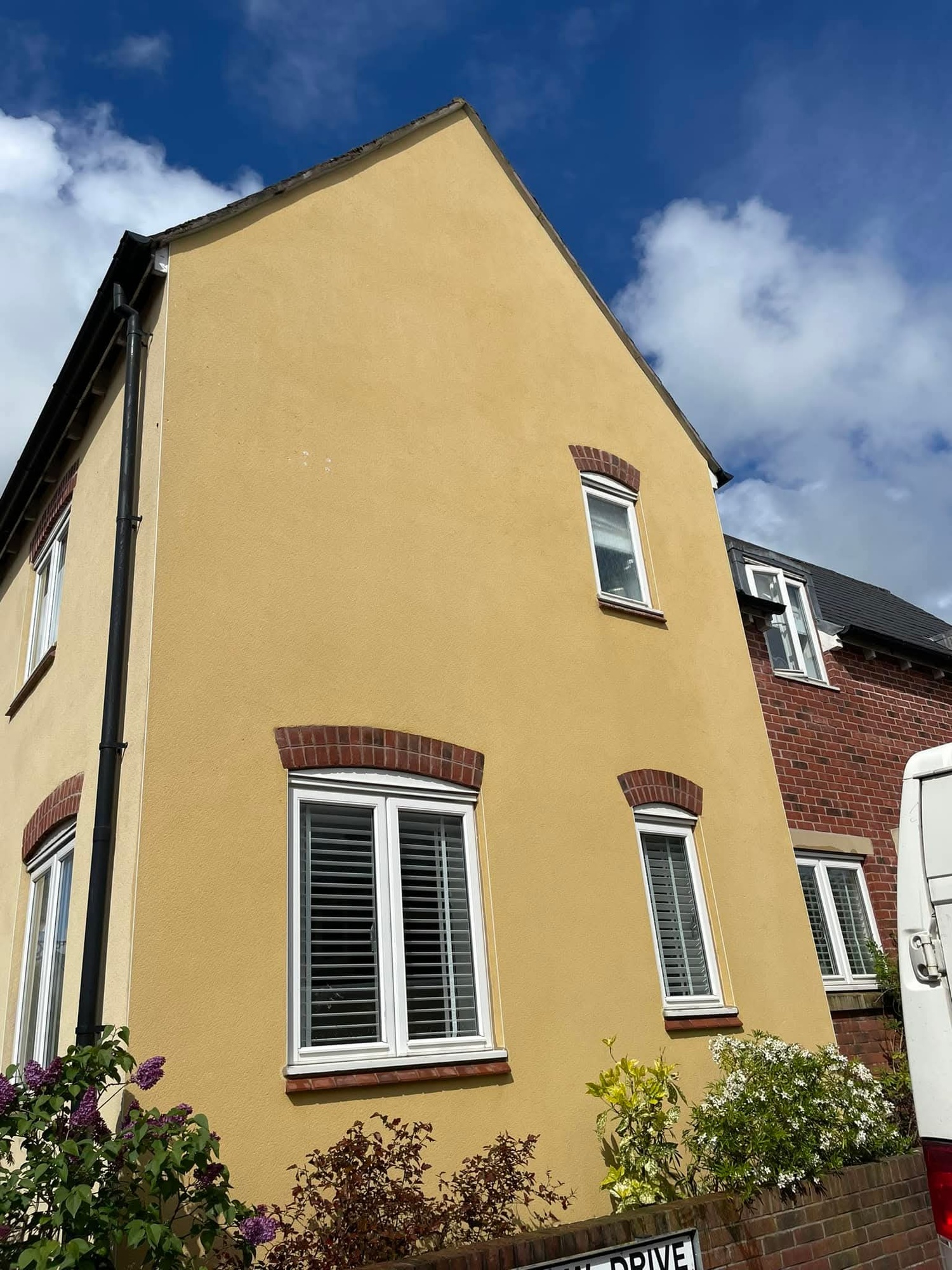
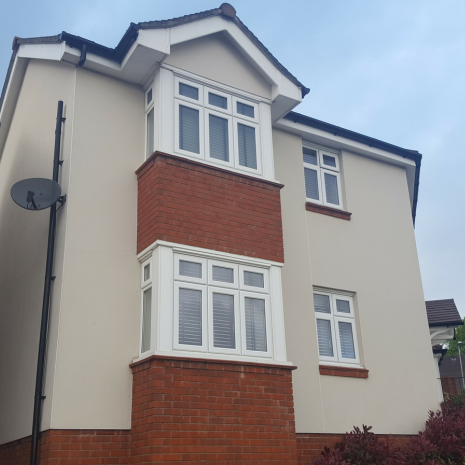

K Rend is not a single texture. The same system is supplied in different grain sizes and finish types, from a fine scraped face through to noticeably coarser textures, and each holds growth to a different degree. A coarse finish on a shaded elevation will colonise faster and require more product than a fine one on the same building, and K Rend cleaning is quoted with that in mind rather than by square metre alone. The method is identical across all of them. Soft wash render cleaning applies a biocidal solution at a pressure barely above hose flow, in enough volume to wet the full depth of whatever texture is present, then allows a long dwell before a gentle rinse. Nothing mechanical touches the face, because pigment runs through the material and abrasion removes it permanently. Volume is where texture changes things. Silicone render cleaning on a fine finish uses noticeably less product than the same area of a coarse one, and getting that judgement wrong is what produces a wall looking treated in some places and untouched in others. It is decided at the assessment rather than on the day. Two elevations of identical size can need quite different quantities of product, and that difference is set out in the quotation. Render stain removal is largely independent of texture, though rougher surfaces do hold mineral marking more stubbornly. Iron bleed from ties and brackets, cement residue from installation and dark runs beneath a leaking joint each need their own product and a test patch first, and on a coarse finish in Lyme Regis those spot treatments frequently need repeating before a mark clears fully.
The depth of the scrape on a monocouche elevation is worth checking before anything else, because it determines how much work the wall actually represents. A lightly scraped finish behaves almost like a fine texture and treats readily. A deeply scraped one has a profile several millimetres deep across its entire face, and growth roots down into that depth where nothing applied superficially will reach it. Softwashing UK assesses that by hand at the quotation stage, because Monocouche render cleaning is priced on depth quite as much as on area. The treatment adjusts by volume and dwell rather than by technique. Solution is applied at low pressure until the profile is genuinely wet through rather than merely glazed on the peaks, held long enough to destroy algae and lichen at root level, and repeated where deposits are heaviest along copings and projecting bands before a soft, even rinse across each full face. Render pressure washing is the one thing guaranteed to ruin a deep scrape. A lance shears the profile flat within seconds, exposes the aggregate beneath and leaves tracking visible in any low sun, and because coloured render cleaning has no top coat to renew, correcting it means recoating the whole elevation. Handled with the right volume for the depth involved, render wall cleaning of monocouche produces a face with no bright patches and no working joints, and the texture is exactly as it was before treatment. On Lyme Regis buildings where a deep scrape had held growth for a decade or more, what emerges over the following weeks is the original specified colour throughout, and render restoration is a reasonable description of a result achieved without adding a thing to the surface.
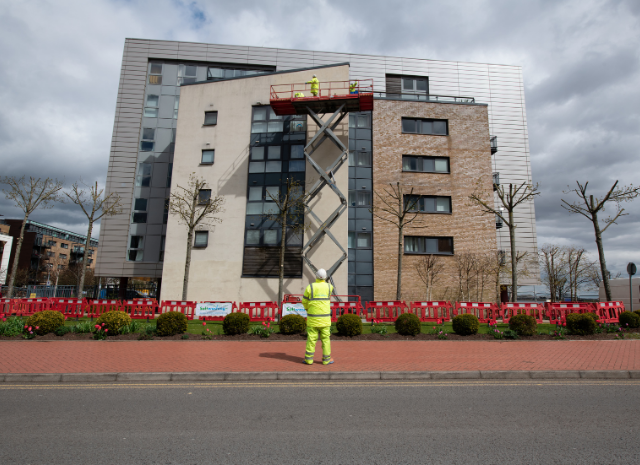

Textured finishes on commercial buildings change the arithmetic of a job considerably. A dashed or coarsely scraped flank of two hundred square metres carries far more actual surface than a smooth one of the same dimensions, needs proportionally more product, and takes longer to wet through. Commercial render cleaning priced on dimensions alone almost always underestimates the work involved. Access is established first — powered platforms, tower scaffold or extended pole systems depending on height and standing ground — and the programme is written around trading hours, deliveries and staff movement, with method statements and risk assessments issued in advance and the site contact briefed on daily arrangements. Render soft washing suits textured elevations particularly well, because it delivers volume without force. Solution can be laid on generously enough to penetrate a rough profile while still using very low water volumes overall, run-off stays directable clear of entrances and parking, and there is almost no drift near occupied doorways. Render facade cleaning of a heavily textured wall attempted with pressure equipment loosens aggregate as well as growth, which converts a cleaning job into a repair one. Once aggregate has been stripped from a dashed elevation there is no cleaning solution to that problem. Render mould removal on shaded and north-facing elevations is the recurring item, and rough textures hold that growth more tenaciously than smooth ones, so those faces often warrant a shorter interval. Building that into a render maintenance cycle keeps the whole property consistent, and once the volumes required for a particular texture are known each subsequent visit to premises in Lyme Regis can be planned precisely. Product quantities, dwell times and access are all known figures by the second visit.
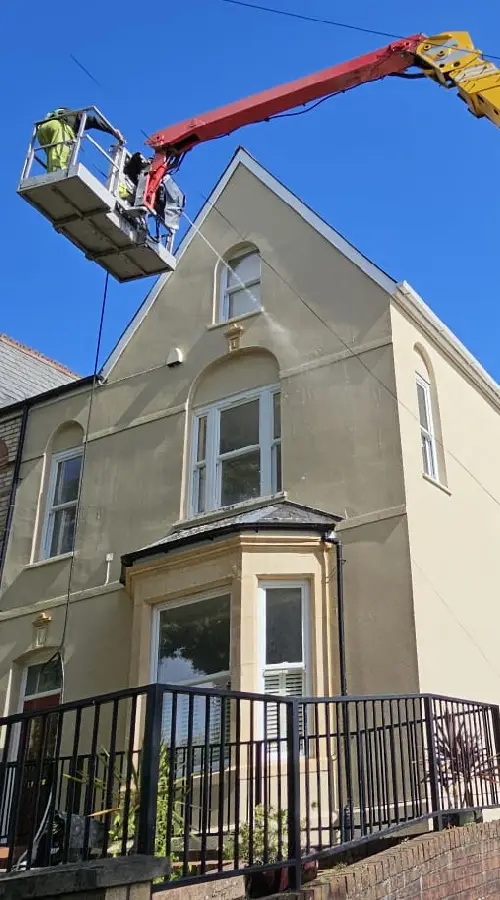
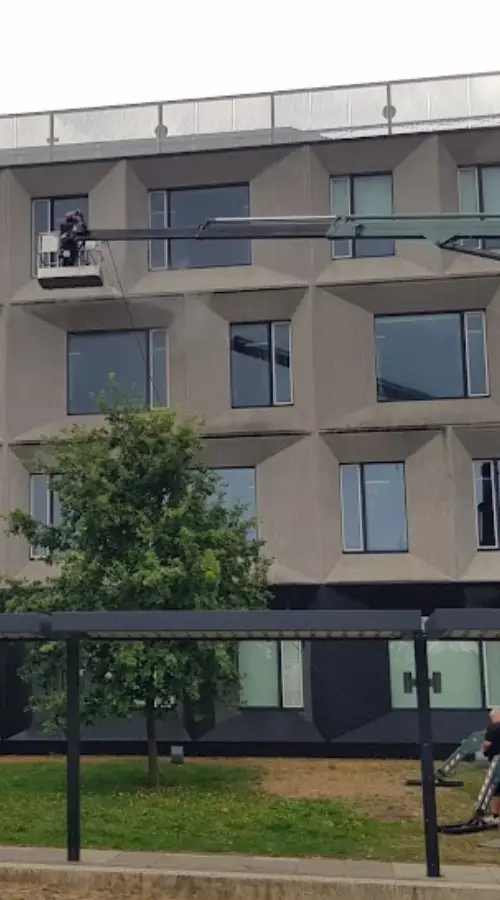
People are often surprised how widely quotations vary for the same building, and the explanation is usually surface area rather than profit margin. A heavily textured elevation carries several times the actual surface of a smooth one of identical dimensions, needs proportionally more product, and takes considerably longer to treat. A firm quoting from a photograph has no idea which it is dealing with. Render cleaning prices here are calculated from elevation count, working height, access arrangements and the texture and extent of the growth, all established by somebody standing at the wall. Once assessed, the render cleaning cost is issued in writing and holds. Affordable render cleaning comes from pricing the surface accurately at the outset so the job can be finished properly in one visit rather than abandoned partway and revisited at extra cost. The crews are render cleaning specialists rather than general exterior cleaners, and that shows in the reading of a surface. An overpainted dashed finish behaves differently from a bare one, a bead may not take handling, and hairline cracking will carry solution behind a coating — all of it is identified and raised rather than discovered later. Every treatment used is an eco friendly render cleaning product chosen because it breaks down safely after use, which matters when run-off reaches planting and drainage however carefully it is directed. Anyone weighing up the best render cleaning service should ask whether the quotation accounted for the texture of the wall. It is a question that separates a considered figure from a hopeful one very quickly indeed.
Getting equipment to a property is a real consideration across this patch, and it is checked at the assessment rather than assumed. Residential render cleaning at Uplyme, Raymonds Hill and Ryall is generally straightforward — reasonable approaches, somewhere to put the van, and enough standing ground to work from poles without difficulty. Morcombelake, Whitchurch Canonicorum, Chard Junction and Wootton Fitzpaine bring more properties on narrow approaches where the van cannot always park adjacent to the building. That affects hose runs and how much equipment can be carried in, so it is established before a figure is given rather than discovered on the morning. Where a platform would be needed but cannot physically be brought to the elevation, we say so at the quotation stage and plan around poles instead. Catherston Leweston, Fishpond Bottom, Stanton St Gabriel, Seatown and Seatown Beach include a number of properties on restricted lanes and sloping plots, often older buildings carrying render that has never been treated. Those take longer to set up than to clean, and the quotation reflects the set-up rather than pretending it does not exist. Carrying equipment fifty metres from a van is a real cost and is better stated than absorbed. None of it attracts a surcharge. There is no travel charge and no minimum job size, and a single elevation is quoted on the same basis as a whole building. Where two or three properties along one lane book together, the set-up is shared and the pricing reflects it. Anyone searching render cleaning near me should expect somebody to come and look at the approach as well as the wall, and a local render cleaning company that already knows which lanes take a van is worth the call.
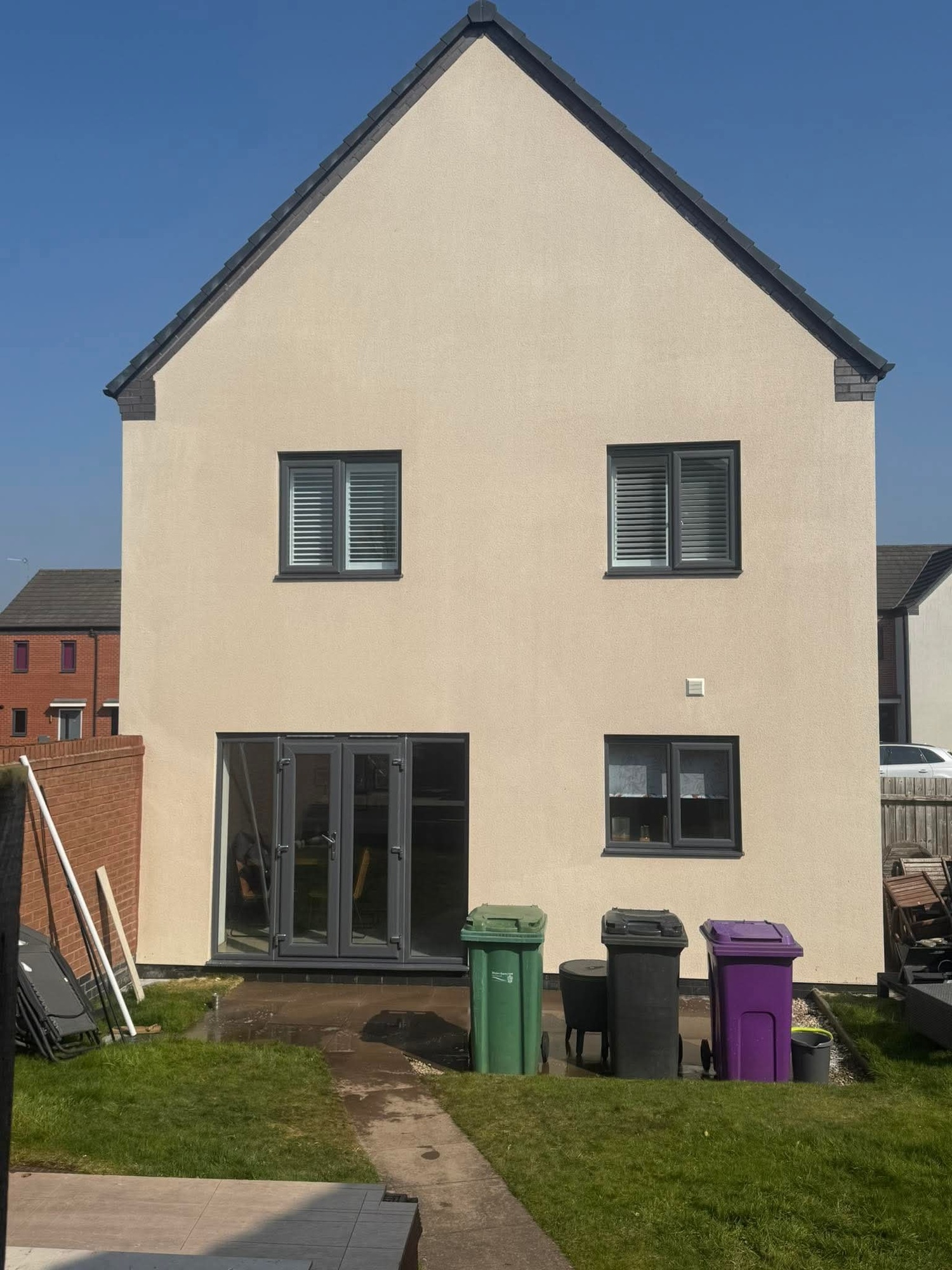
Most properties in Lyme Regis benefit from professional render cleaning every 3 to 5 years, although this depends on the surrounding environment. Properties near trees, woodland, busy roads or coastal areas may require more frequent cleaning due to algae, mould and airborne contaminants. Our soft washing process removes existing growth and helps keep your render cleaner for longer.
Yes. Soft washing is specifically designed for delicate surfaces such as K-Rend, silicone render, monocouche render and painted render. Unlike high-pressure washing, it cleans at low pressure while treating biological growth at its source, reducing the risk of damage to the render finish.
We clean virtually all external render finishes, including K-Rend, Monocouche, Weber, Sto, silicone render, acrylic render, painted render, roughcast and pebble dash. Every cleaning method is tailored to the specific render type to achieve the best possible results.
Yes. Our specialist soft washing treatments are highly effective at removing green algae, red algae, black mould, mildew, lichen and other organic staining. We also apply professional biocide treatments to kill spores and slow down regrowth.
Because our process targets the biological growth rather than simply washing the surface, results typically last much longer than pressure washing alone. The exact lifespan depends on weather conditions, surrounding vegetation and the property’s location.
No. Our soft washing process is specifically designed to clean render safely. We use low-pressure application methods and specialist cleaning solutions that remove contamination without damaging the render surface when carried out by trained professionals.
The UK’s damp climate provides ideal conditions for algae, mould and other biological growth to develop on rendered surfaces. Areas with limited sunlight, nearby trees or persistent moisture are especially susceptible. Professional soft washing safely removes these contaminants and restores your property’s appearance.






































WhatsApp us