What happens after the crew leaves is a longer part of the job than the visit itself, and knowing what to expect makes the difference between satisfaction and doubt. In the first fortnight the wall continues to change. Dead algae washes off in rainfall, lichen shadows fade as the holdfasts break down, and areas that looked stubborn on the day gradually clear. Our render cleaning services are designed to work that way rather than to peak on the afternoon of the visit. By the six-week mark the elevation has settled into its final condition, and that is the point at which the job should be judged. Anything still visible then is either mineral staining needing a targeted treatment or, occasionally, an area that would benefit from a second application. We would far rather come back and deal with it than have somebody live with a result that is not right. After that the wall simply behaves normally. Render algae removal carried out with a biocide leaves nothing viable on the surface, so regrowth depends entirely on airborne spores landing and finding conditions to establish. On most properties that takes years rather than months. There is very little for an owner to do in the meantime, though keeping rainwater goods clear makes a genuine difference, since an overflowing outlet will restart growth in a single winter. Render moss removal lasts longest where debris is not accumulating on ledges and copings. Professional render cleaning of a house in Lytchett Matravers should hold three to five years, and house render cleaning intervals stretch further on elevations that dry quickly. Exterior render cleaning is a maintenance cycle rather than a one-off event.
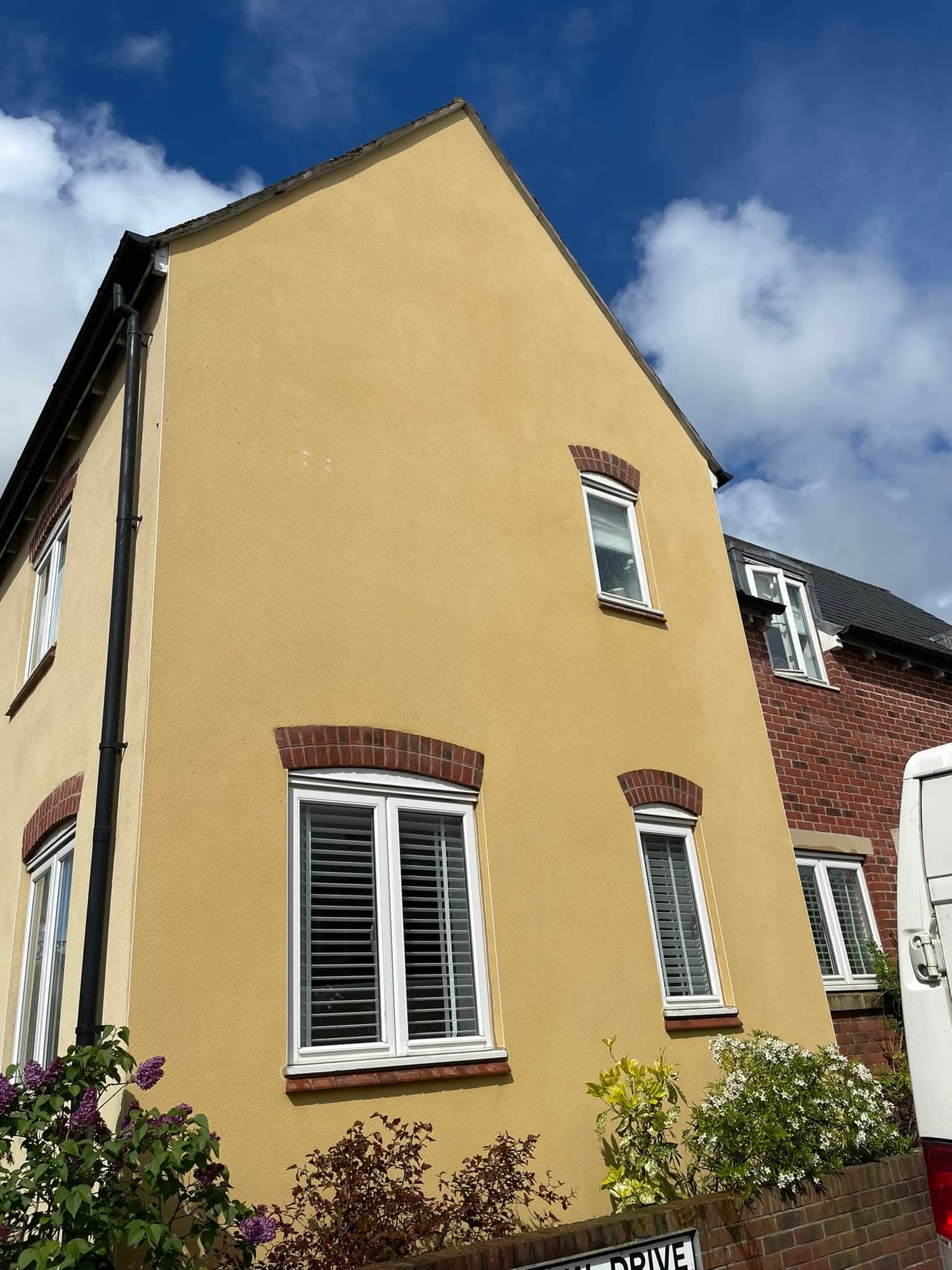
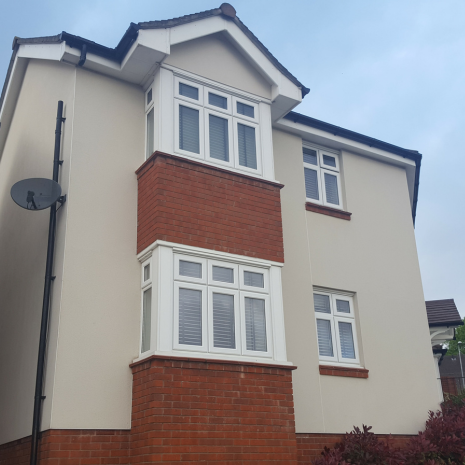

A properly executed K Rend clean should hold for several years, and what shortens that interval is almost always something on the building rather than the treatment. An overflowing gutter keeps one strip of wall permanently wet and will restart growth within a season. Planting grown up against an elevation does the same across a broader area. A blocked outlet, a defective joint or debris collecting on a sill return all reseed a face that would otherwise stay clear. The clean itself is chemical throughout. Soft wash render cleaning applies a biocidal solution at very low pressure, dwells long enough to destroy algae and lichen at root level, then rinses gently, with no brushing or mechanical contact of any kind — necessary because pigment runs through the material and abrasion removes it for good. Silicone render cleaning has a genuine advantage in longevity. Residue remaining within the surface after treatment continues suppressing regrowth well beyond the visit, and combined with the material’s natural water resistance that often produces intervals at the longer end of what any render achieves. K Rend cleaning done correctly is usually the least frequent maintenance item on a modern house. Render stain removal is the element most likely to need attention sooner. Iron bleed from a corroding fixing will return while the fixing continues to corrode, and dark runs beneath a leaking joint come straight back if the leak is unresolved. On a property in Lytchett Matravers we will say plainly which marks are permanent solutions and which will recur, so nobody is surprised eighteen months later.
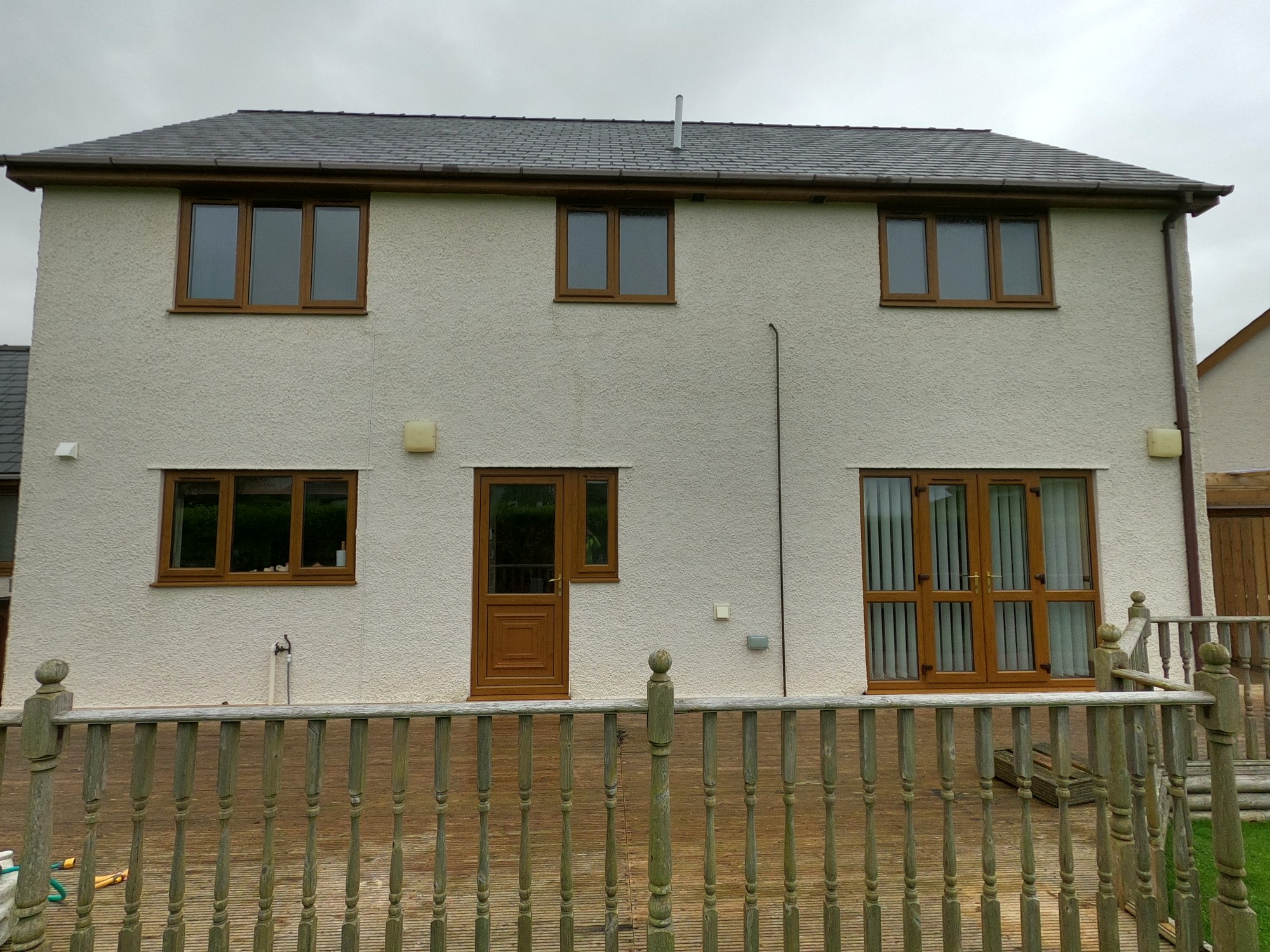
Monocouche takes longer than most finishes to reach its final appearance after treatment, and it is worth knowing that before judging the result. The scraped texture holds dead growth within its profile after the colony has been killed, and that material weathers out gradually across the following month rather than lifting during the rinse. Monocouche render cleaning looks good on the day and noticeably better four weeks later. Forcing that process is exactly what damages the wall. Render pressure washing removes dead growth immediately and takes the scraped surface with it, exposing aggregate and leaving tracking that catches every angle of low sun, and since coloured render cleaning has no top coat to renew, the only correction is recoating an entire elevation. The patient approach applies solution at low pressure in enough volume to soak through the depth of the texture, dwells long enough to kill at root level, repeats on the heaviest deposits along copings and projecting bands, then rinses softly and evenly across each face. Anything remaining is left for the weather to clear, which it reliably does over the following few weeks without any further intervention. Once settled, render wall cleaning of monocouche gives a completely uniform face, and the interval before it needs attention again is usually a good few years provided debris is not collecting on the horizontal details. On buildings around Lytchett Matravers where growth had obscured the finish for a decade, what emerges over those first weeks is the original specified colour returning in full, and calling that render restoration is accurate enough given that nothing whatever was applied to the surface.
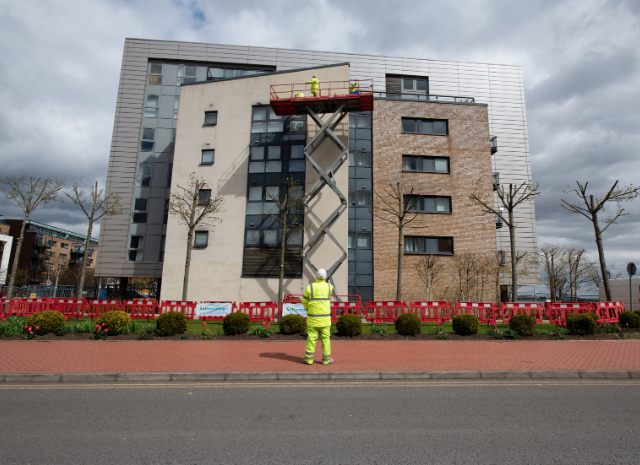

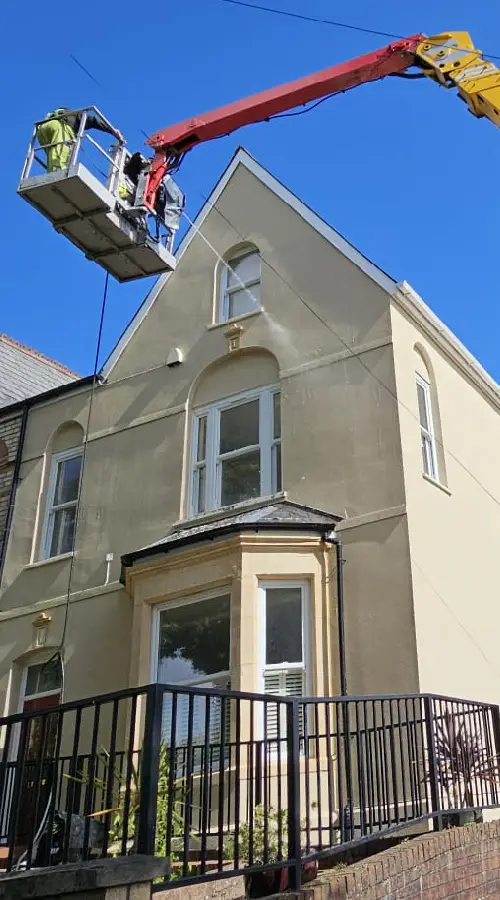
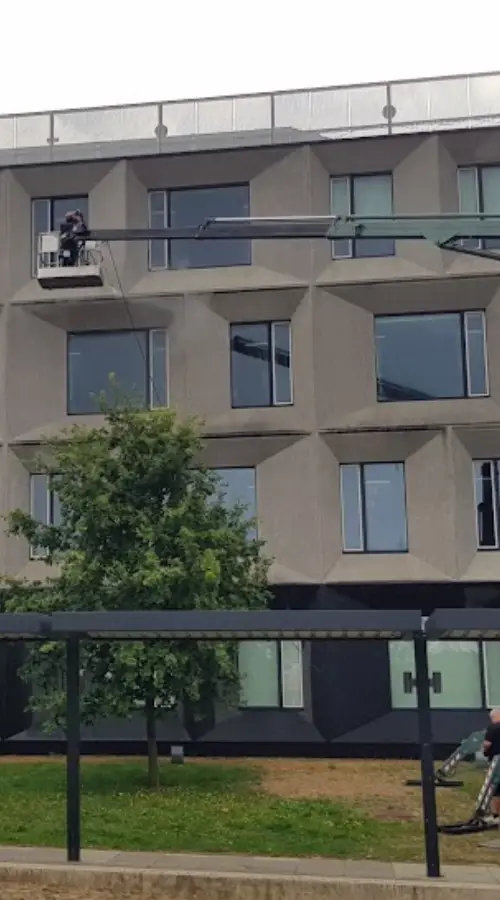
A render maintenance agreement is less complicated than it sounds. Softwashing UK surveys the building once, establishes which elevations need attention at what frequency, and then returns on that basis without anybody having to raise a work order. Most sites settle on the shaded faces being treated more often than the rest, since that is where the recurring cost actually sits. The first visit is the largest, because it deals with however many years of growth have accumulated. Access is established — powered platforms, tower scaffold or extended pole systems according to height and standing ground — and the programme is written around trading hours, deliveries and staff movement, with method statements and risk assessments issued in advance. Every subsequent visit reuses those arrangements, so set-up is quicker and the cost falls. Most sites find the second visit noticeably cheaper than the first and the third cheaper again. Render soft washing is the method at every visit. It gives consistent coverage along a full flank, uses very low water volumes, keeps run-off directable clear of entrances and parking, and creates negligible drift near occupied doorways. Render facade cleaning carried out to the same specification each time also means the building never shows a difference between one campaign and the next. Render mould removal on the north-facing elevations is the item that drives the interval, since those faces darken fastest. Commercial render cleaning arranged this way turns an unpredictable capital item into a routine annual figure, and premises in Lytchett Matravers stay presentable continuously rather than deteriorating visibly between one intervention and the next.
A fair proportion of our work now comes from properties we have treated before, which is a more useful measure of how a firm performs than anything it says about itself. A wall cleaned properly comes back onto the schedule after several years rather than the following season, and the second visit is quicker and cheaper than the first because there is far less growth to break down. Quotations are produced after an assessment in every case. Render cleaning prices depend on elevation count, working height, access arrangements and how much growth has accumulated since the wall was last treated, so a repeat customer is quoted on the actual condition of the building rather than on what was charged previously. The written render cleaning cost holds. If the condition of a wall turns out to be worse than it looked from the ground, that is discussed before the work starts rather than added to an invoice. Affordable render cleaning is largely a matter of not leaving a property so long that the job doubles in size. The crews are render cleaning specialists working on rendered elevations continuously, which is what allows them to spot an overpainted section, a fragile bead or hairline cracking that would draw solution behind the coating, and raise it rather than clean past it. All treatments are eco friendly render cleaning products chosen because they break down safely after use, since run-off reaches planting and drainage regardless of how carefully it is directed. If you are trying to identify the best render cleaning service, ask how much of a firm’s work is repeat business. It is a considerably harder question to answer dishonestly than most.
Coverage takes in Lytchett Matravers and Bear Cross, and the conversations that start most jobs are remarkably consistent. The first question is nearly always whether the wall can be cleaned at all, usually asked by somebody who has been told it needs painting. In the large majority of cases the answer is yes, and residential render cleaning turns out to cost a fraction of what had been feared. The second question is how long it will take, and the honest answer is that most domestic properties are a single day on site with the result continuing to improve for several weeks afterwards. People are often surprised by that second part, so it is explained before the work is booked rather than after. The third is what happens if it does not come out as hoped. Where an elevation needs a second application, we return and apply one. Where a mark turns out to be mineral rather than biological, it is treated separately and quoted separately. Neither of those becomes an argument if it has been discussed in advance. The last question is usually about price, and it is the one that cannot be answered on the telephone. Elevation count, height, access and the extent of growth all have to be seen. Anyone searching render cleaning near me should expect a visit before a figure, and it should carry no obligation and no charge. The assessment takes about twenty minutes and the written quotation follows the same day. A local render cleaning company close enough to come out for twenty minutes has no reason at all to be quoting blind.
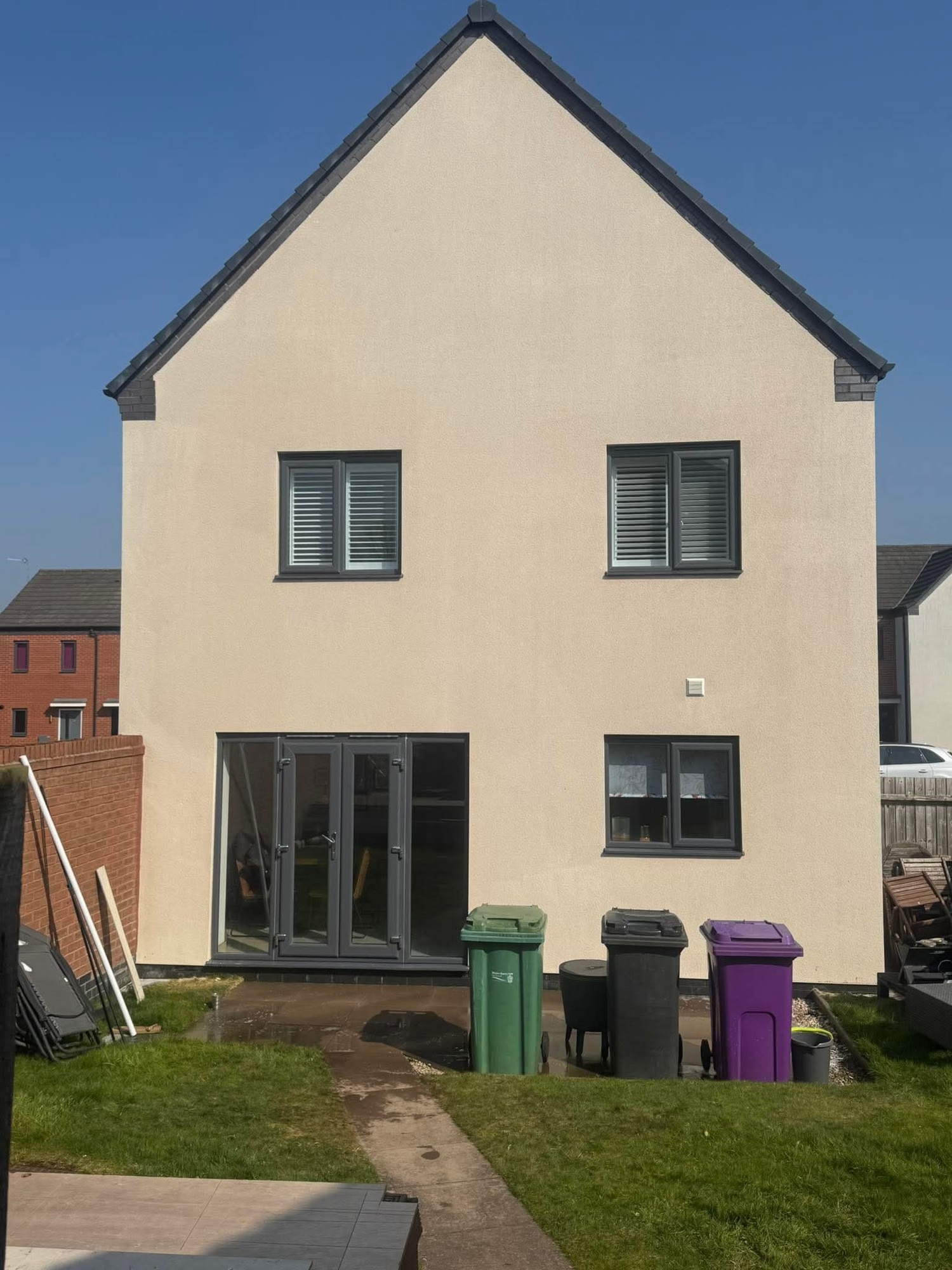
Most properties in Lytchett Matravers benefit from professional render cleaning every 3 to 5 years, although this depends on the surrounding environment. Properties near trees, woodland, busy roads or coastal areas may require more frequent cleaning due to algae, mould and airborne contaminants. Our soft washing process removes existing growth and helps keep your render cleaner for longer.
Yes. Soft washing is specifically designed for delicate surfaces such as K-Rend, silicone render, monocouche render and painted render. Unlike high-pressure washing, it cleans at low pressure while treating biological growth at its source, reducing the risk of damage to the render finish.
We clean virtually all external render finishes, including K-Rend, Monocouche, Weber, Sto, silicone render, acrylic render, painted render, roughcast and pebble dash. Every cleaning method is tailored to the specific render type to achieve the best possible results.
Yes. Our specialist soft washing treatments are highly effective at removing green algae, red algae, black mould, mildew, lichen and other organic staining. We also apply professional biocide treatments to kill spores and slow down regrowth.
Because our process targets the biological growth rather than simply washing the surface, results typically last much longer than pressure washing alone. The exact lifespan depends on weather conditions, surrounding vegetation and the property’s location.
No. Our soft washing process is specifically designed to clean render safely. We use low-pressure application methods and specialist cleaning solutions that remove contamination without damaging the render surface when carried out by trained professionals.
The UK’s damp climate provides ideal conditions for algae, mould and other biological growth to develop on rendered surfaces. Areas with limited sunlight, nearby trees or persistent moisture are especially susceptible. Professional soft washing safely removes these contaminants and restores your property’s appearance.






























WhatsApp us