A survey tells us a great deal, and there are some things it genuinely cannot establish until the wall is clean. The condition of the surface beneath dense growth is the main one. Lichen crusts and heavy moss physically cover the render, and no amount of looking establishes what is underneath them. Occasionally that turns out to be a surface that has broken down after years of saturation, or an area of previous repair that will be visible once the wall is uniform. Fine crazing is another. Hairline cracking is invisible under a layer of growth and grime and becomes apparent on a clean elevation in raking light. It was there before, but customers reasonably ask. The full extent of a water discharge problem often only appears afterwards too. A stained band is visible before cleaning; whether it is a permanent feature caused by a failed detail, or simply the wettest part of a generally colonised wall, is easiest to judge once everything else has cleared and the band returns first. Colour variation from inconsistent original application is the fourth. Dirt is a great leveller, and a wall with subtle banding from how it was applied can look uniform when soiled. We say all of this at the survey rather than presenting it as a discovery afterwards. Professional render cleaning is a maintenance operation that reveals a wall’s actual condition, and on a long-neglected elevation that is part of its value — but only if the customer was told to expect it. Where we suspect something specific, we say so and photograph the area before starting.
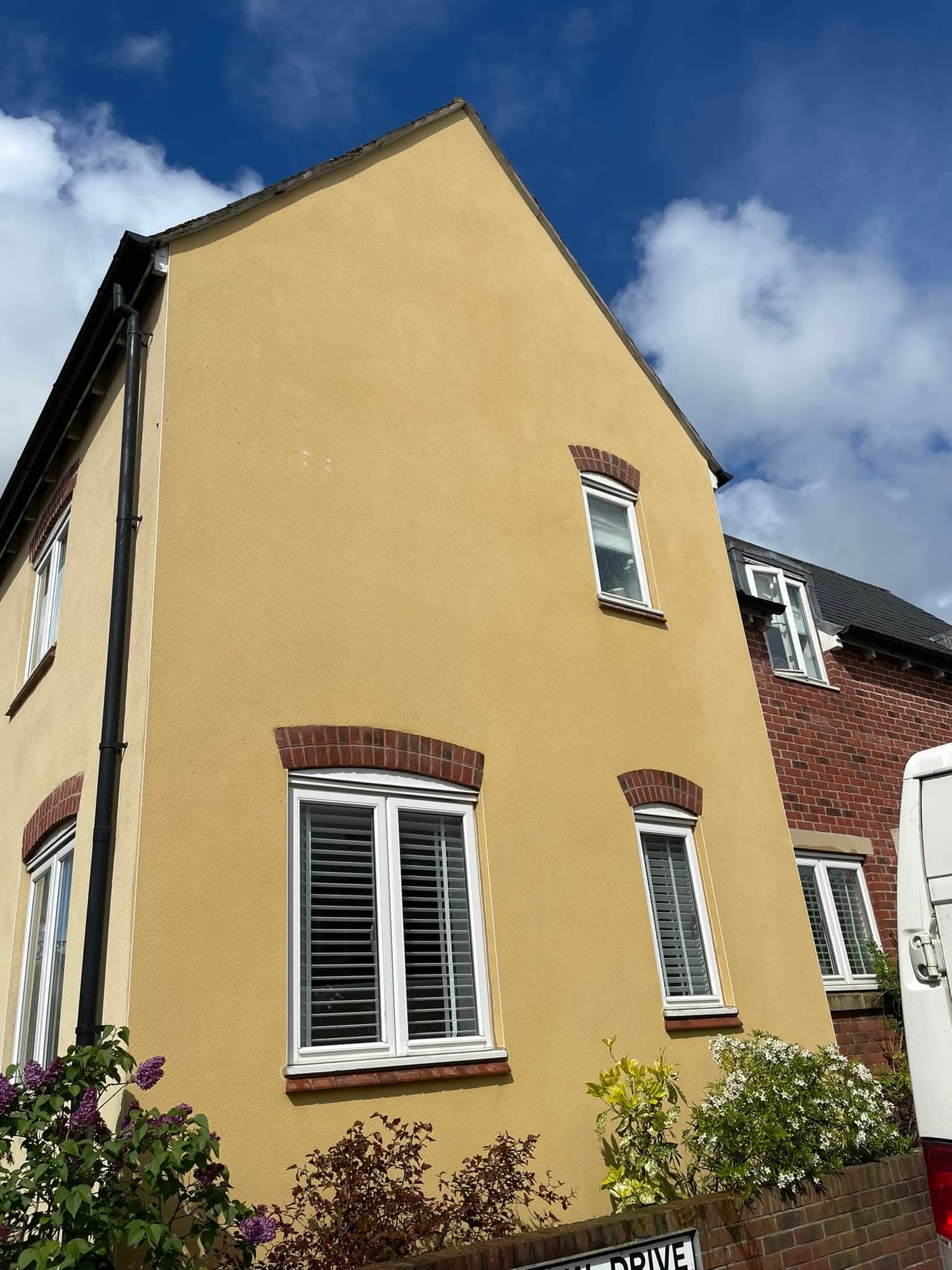
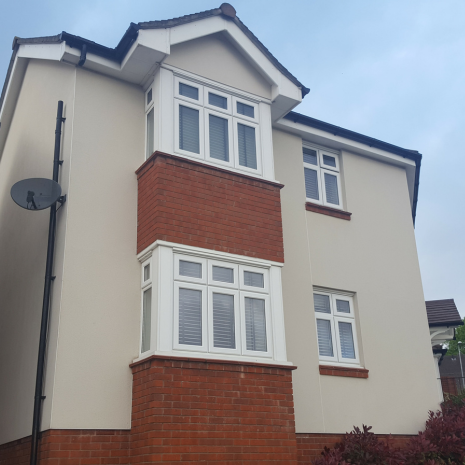

Protecting openings during a silicone render clean is a small part of the job that shows up immediately when it is done badly. Windows and doors are the obvious concern. Treatment solution drying on glass leaves marks that are a nuisance to remove, particularly on a warm day, and while the products are not aggressive, nobody wants residue on a conservatory roof or a set of French doors. We cover glazing on the working elevation, or where covering is impractical we rinse it thoroughly with clean water before anything can dry. Seals and trims matter more than people expect. Modern window systems have gaskets and drainage slots along the bottom of the frame, and directing water at them at anything above the gentlest pressure can push it past a seal. Our rinse pressures are low throughout for the sake of the render, which incidentally solves this, but the approach at openings is deliberately careful rather than incidental. Trickle vents are worth closing before we start, and we ask customers to do that along with shutting windows and roof lights on the elevation being treated. Letterboxes, keyholes, alarm boxes, doorbells, cameras and external lighting are all masked rather than worked around. K Rend cleaning around openings also needs the reveals treated individually — they are shaded, they carry the densest growth on many elevations, and a general pass reaches them poorly. Silicone render cleaning done properly leaves openings exactly as they were, and a customer should not be cleaning glass or drying out a window frame after a contractor has left.
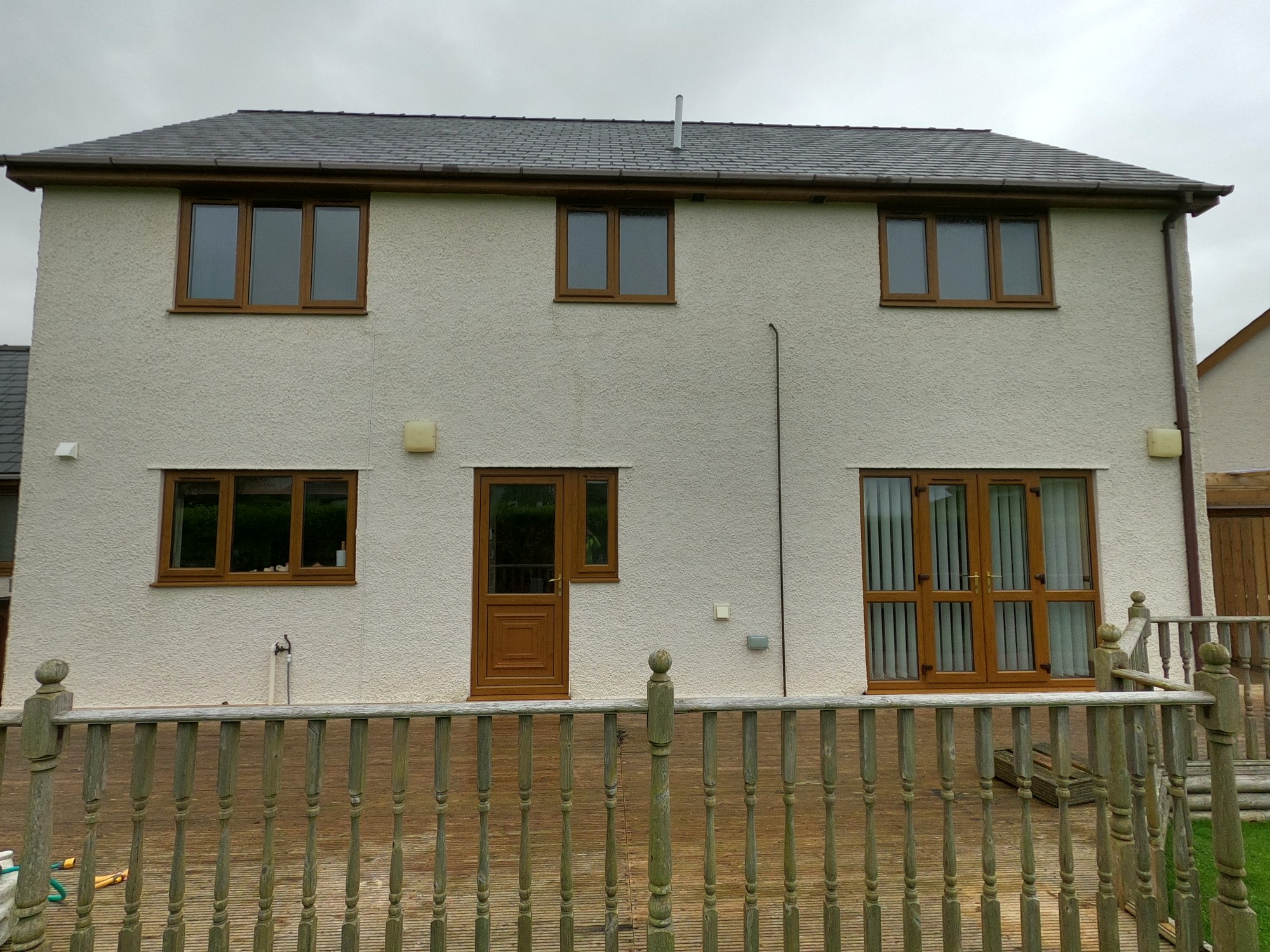
What a monocouche render was applied over affects how it behaves, and it is worth knowing on an older building. Applied to modern blockwork, the substrate is uniform and reasonably absorbent, and the render performs predictably across a whole elevation. Applied to brick, absorbency varies between brick and mortar, which occasionally produces subtle differences in how the coating dries. Applied over an existing render or an older masonry wall — which happens on refurbishment work — the picture can be considerably less uniform, particularly where the original wall had varying construction, patched areas, or previous coatings left in place. The visible effect is drying variation. Sections of an elevation may darken and lighten at different rates after rain, and growth follows those patterns, colonising the areas that stay damp longest. Owners frequently interpret this as staining in a strange pattern; it is the wall showing what is behind it. The other consideration is moisture from behind. Where an older solid wall was damp before rendering, or where the substrate is being wetted from another source, the render may be carrying moisture from the inside out, which keeps particular areas permanently wetter and produces growth that makes no sense in terms of aspect. Monocouche render cleaning removes the growth regardless, and the underlying pattern will remain and will drive the next colonisation. We identify it at survey and say plainly where we think the cause is behind the wall rather than on it, because treating repeatedly without addressing that means a short interval indefinitely. Where the substrate is the issue, that is worth knowing before money is spent on the surface.
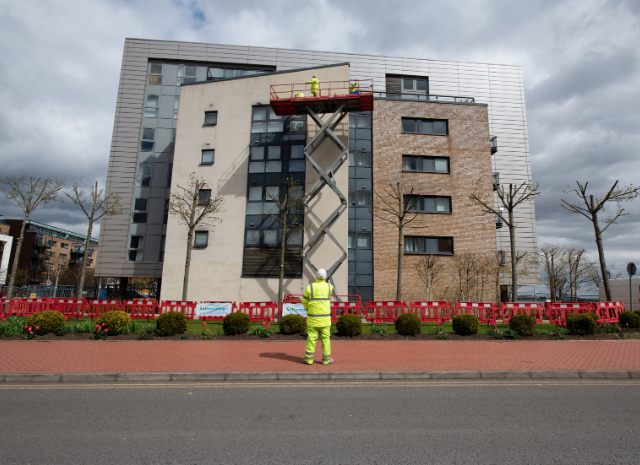

Commercial buildings with high rendered elevations bring a cost driver that has nothing to do with the render: getting to it. Where an elevation exceeds what a pole-fed system can reach and treat properly, a powered platform is required. That is a real cost, it has to be specified at survey rather than improvised, and on some sites it also requires ground assessment, permits or traffic management. It is worth understanding why we will not simply reach further with a longer pole. Solution applied at extended distance arrives as mist. It wets the surface without saturating the texture, so the treatment reaches the high points and not the recesses where growth actually lives. Rinsing has the same problem in reverse, since carrying material out of a textured surface needs volume, and volume is what is lost at reach. The result is an elevation that looks improved from the ground and is disappointing at close quarters — which on a high wall nobody discovers until the next inspection. So we price the access honestly and explain what it buys. Where a platform is genuinely needed, that is what the quotation says. There are ways to reduce it. Treating all high-level elevations in the same visit spreads the platform cost across the whole building rather than repeating it, and coordinating with any other work requiring access can share it entirely. Commercial render cleaning quoted without an access plan is the commonest source of revised prices, and we would rather establish it in advance. Method statements, risk assessments and insurance documentation are supplied with the quotation so access approval does not hold up the programme.
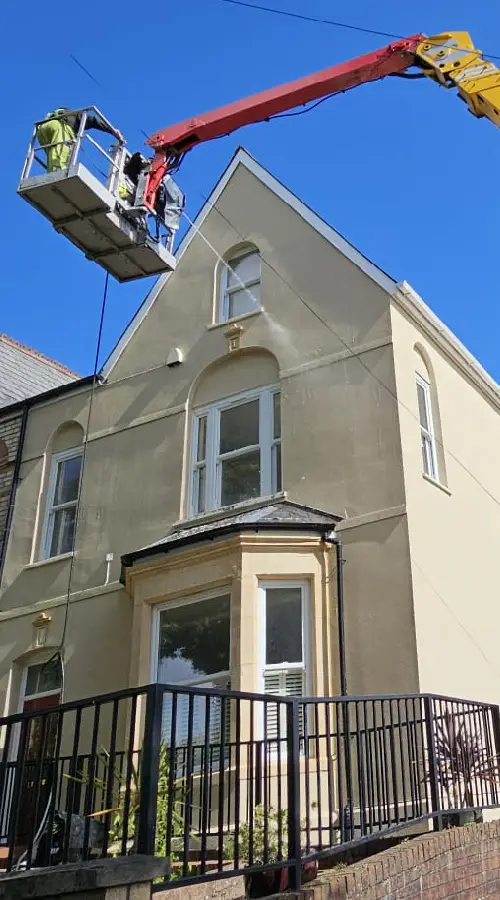
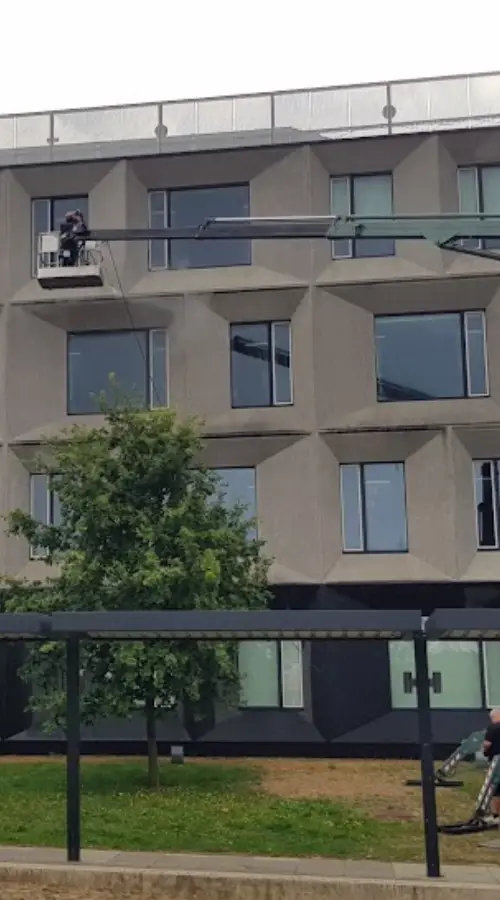
Rural work requires arriving self-sufficient, and it is worth setting out what that means in practice. Water is the first thing. Mains supply at a rural property may be low pressure, a long way from the elevation being treated, drawn from a private source, or simply not available where we need it. We establish that at the survey, and where there is any doubt we bring tank-fed units and carry our own. A wasted day because a tap did not deliver is entirely avoidable. Power is the second, though most of our equipment does not need it. Where anything does, we bring our own rather than asking to run a lead through a house. Access equipment is the third. Whether a pole-fed system reaches every elevation, or a platform is required, is settled at the survey and priced accordingly, along with whether the ground will actually take a platform. Soft ground after wet weather changes what can be brought onto a property, and we would rather plan for it than damage a lawn or a track. Everything else — protection sheeting, product mixed to the correct dilution for the coating identified, spares — is loaded on the basis of what the survey found rather than what a typical job needs. Softwashing UK works a defined area rather than travelling long distances, which keeps travel out of pricing and means we can group visits across nearby properties. The practical result is that rural jobs run to time. Most of the problems on isolated properties are logistical rather than technical, and all of them are solvable in advance.
Mark sits on low, level ground surrounded by open farmland and drainage channels, and rendered property here faces the conditions typical of that landscape. Persistent ground moisture is the dominant factor. High winter water levels, slow drainage, late-clearing mist and heavy dew keep humidity elevated and elevations damp for long periods. Growth is commonly found across more faces of a building than the conventional pattern predicts, so we assess all four rather than assuming only the shaded elevation needs attention. The base of the wall is almost always the worst affected part. The open aspect means little shelter. Wind-driven rain strikes the prevailing face repeatedly while the leeward elevations dry slowly, producing very uneven growth across a single property. Wind also affects application, so we plan around the forecast and will often treat sheltered elevations on a marginal day and return for the exposed ones. Agricultural surroundings add airborne dust and organic deposit alongside biological growth, so the rinse stage does more work here than on a suburban wall, and a treatment that clears the green but leaves bound deposit looks only partly finished. The housing is predominantly older, with painted sand-and-cement render common and frequently decades old, needing inspection, tap-testing and conservative dilutions. Thin-coat systems appear on extensions and newer building. Many properties also have rendered outbuildings and boundary walls, which we quote separately alongside the house. Render cleaning is quoted after a site visit and priced per elevation, and where mains water is uncertain we arrive with our own supply. Access, ground conditions and turning space are settled at the survey, and grouping visits locally keeps travelling out of what customers are charged.
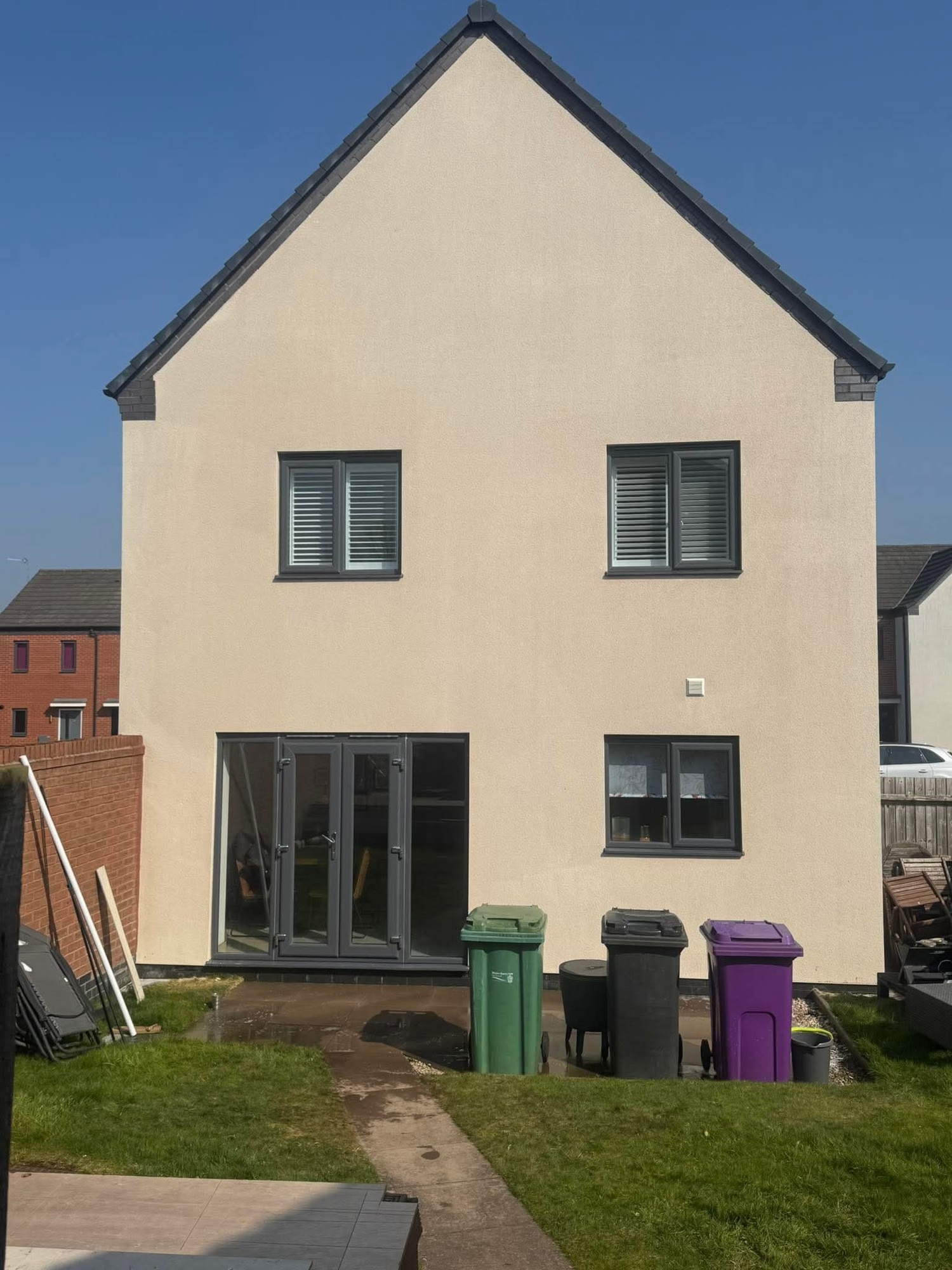
Most properties in Mark benefit from professional render cleaning every 3 to 5 years, although this depends on the surrounding environment. Properties near trees, woodland, busy roads or coastal areas may require more frequent cleaning due to algae, mould and airborne contaminants. Our soft washing process removes existing growth and helps keep your render cleaner for longer.
Yes. Soft washing is specifically designed for delicate surfaces such as K-Rend, silicone render, monocouche render and painted render. Unlike high-pressure washing, it cleans at low pressure while treating biological growth at its source, reducing the risk of damage to the render finish.
We clean virtually all external render finishes, including K-Rend, Monocouche, Weber, Sto, silicone render, acrylic render, painted render, roughcast and pebble dash. Every cleaning method is tailored to the specific render type to achieve the best possible results.
Yes. Our specialist soft washing treatments are highly effective at removing green algae, red algae, black mould, mildew, lichen and other organic staining. We also apply professional biocide treatments to kill spores and slow down regrowth.
Because our process targets the biological growth rather than simply washing the surface, results typically last much longer than pressure washing alone. The exact lifespan depends on weather conditions, surrounding vegetation and the property’s location.
No. Our soft washing process is specifically designed to clean render safely. We use low-pressure application methods and specialist cleaning solutions that remove contamination without damaging the render surface when carried out by trained professionals.
The UK’s damp climate provides ideal conditions for algae, mould and other biological growth to develop on rendered surfaces. Areas with limited sunlight, nearby trees or persistent moisture are especially susceptible. Professional soft washing safely removes these contaminants and restores your property’s appearance.












































If your property’s exterior is looking tired, stained or weathered, professional render cleaning Mark can completely transform its appearance without the expense of repainting or replacing the render. Over time, rendered walls naturally collect algae, moss, mould, pollution, dirt and other organic growth, leaving homes and commercial buildings looking older than they really are. Fortunately, modern cleaning techniques can safely restore almost every type of render while protecting the surface from unnecessary damage.
Whether you own a modern new-build with silicone render, a home finished with K Rend or monocouche render, or an older property with traditional cement render, investing in professional cleaning is one of the simplest ways to improve kerb appeal and extend the life of your exterior walls. This guide explains everything you need to know about render cleaning, including the best cleaning methods, common causes of staining, maintenance tips and how to choose the right contractor.
Render cleaning is the process of removing dirt, algae, moss, mould, pollution and other contaminants from rendered walls using specialist cleaning methods. Unlike general exterior cleaning, professional render cleaning services are designed specifically for delicate render finishes that require a more controlled approach than brick or concrete.
Many homeowners don’t realise that render is naturally porous. While it provides excellent protection against the weather, it also creates tiny surface textures where moisture and airborne contaminants can settle. Over time, these conditions encourage algae, mould and lichen to grow across the walls, causing green, black or red staining that gradually spreads if left untreated.
Professional house render cleaning removes these contaminants safely while restoring the original appearance of the property. Rather than simply washing away surface dirt, specialist treatments eliminate biological growth at its source, helping walls stay cleaner for longer.
The British climate provides ideal conditions for algae, moss and mould to thrive. Frequent rainfall, damp winters and shaded areas all contribute to biological growth on rendered surfaces.
Properties surrounded by trees often remain damp throughout the day, while north-facing walls receive very little direct sunlight. This combination of shade and moisture allows green algae to develop quickly. In urban areas, pollution from traffic gradually builds up across rendered walls, creating dark streaks and dull grey staining that cannot be removed with ordinary household cleaning products.
Red algae has become increasingly common on modern coloured render systems. Although it begins as small pink or orange spots, it can eventually spread across entire elevations if not professionally treated. Moss and lichen also develop on rendered walls, trapping additional moisture against the surface and making the property appear neglected.
Professional exterior render cleaning tackles these issues before they become permanent, helping preserve both the appearance and condition of the render.
Every render system has its own characteristics, which is why cleaning should always be tailored to the material rather than using the same method for every property.
Many newer homes benefit from silicone render cleaning, as silicone render has excellent water-repellent properties but can still become stained by algae and pollution. K Rend cleaning is another common service, restoring the appearance of this popular coloured render system without damaging its finish. Likewise, Monocouche render cleaning requires specialist knowledge to safely remove biological growth while protecting the decorative surface.
Many homeowners also request coloured render cleaning because they assume fading walls need repainting. In reality, years of dirt and algae often hide the original finish, and professional cleaning can dramatically improve the appearance without the need for costly decorating work.
Regardless of the render system installed, experienced render cleaning specialists will inspect the surface before selecting the most suitable cleaning process.
Attempting DIY cleaning often causes more harm than good. Many homeowners hire pressure washers believing that higher pressure delivers better results. Unfortunately, this can damage the render by removing protective coatings, opening small cracks or forcing water behind the surface.
Professional professional render cleaning uses methods designed specifically for rendered walls. Every property is carefully assessed before treatment begins, ensuring the safest approach is used for the particular render system.
Specialist cleaning also reaches deep into the microscopic pores where algae spores develop. This means the treatment continues working after the walls have been cleaned, slowing down future regrowth and providing much longer-lasting results.
One of the biggest misconceptions surrounding exterior cleaning is that pressure washing is suitable for every surface. While render pressure washing may remove visible dirt quickly, it is generally not recommended for delicate render because excessive pressure can permanently damage the finish.
Instead, most experienced contractors recommend render soft washing. Also known as soft wash render cleaning, this method combines low-pressure water application with specialist biodegradable cleaning solutions that remove algae, mould, moss and lichen safely.
Unlike pressure washing, soft washing doesn’t simply blast contaminants away. It kills the spores responsible for biological growth before gently rinsing the surface clean. This makes soft wash render cleaning one of the safest and most effective methods available for modern render systems.
Professional cleaning addresses far more than surface dirt. A comprehensive treatment includes render algae removal, eliminating the green staining commonly seen on shaded walls. It also provides effective render moss removal, preventing moss from retaining moisture against the building.
Many properties also require render mould removal, particularly in damp locations where mould develops around windows, beneath rooflines or on north-facing elevations. Black streaks caused by pollution and atmospheric contamination can often be eliminated through specialist render stain removal, restoring the render’s original appearance without harsh cleaning methods.
These treatments work together to improve both the appearance and long-term condition of rendered walls.
Professional residential render cleaning is suitable for detached houses, semi-detached homes, terraced properties, bungalows, apartment buildings and new-build developments. Whether the render has become lightly stained or heavily covered in algae, specialist cleaning can dramatically improve kerb appeal.
Businesses also benefit from commercial render cleaning, helping offices, hotels, schools, apartment blocks, retail premises and industrial buildings maintain a clean, professional appearance. Customers often form opinions before entering a building, making clean exterior walls an important part of presenting a positive image.
Larger commercial properties frequently require render facade cleaning to restore the appearance of external elevations exposed to weather and pollution throughout the year.
Many homeowners believe stained render needs repainting or replacing. In reality, professional render restoration often removes years of biological growth, pollution and environmental staining, revealing the original finish underneath.
Cleaning is considerably more affordable than replacing rendered walls and can often delay expensive renovation work for many years. By investing in routine render maintenance, homeowners protect their property’s appearance while reducing the likelihood of long-term deterioration.
Regular inspections also allow early signs of algae or mould to be treated before they spread across the entire property.
There is no universal schedule because every property experiences different environmental conditions. Homes surrounded by trees or located near woodland generally require more frequent attention than properties exposed to direct sunlight. Likewise, buildings close to busy roads accumulate pollution faster than those in quieter residential areas.
For most homes and commercial buildings, arranging professional render cleaning services every three to five years provides an excellent balance between appearance and preventative maintenance. Properties in particularly damp environments may benefit from more regular cleaning to prevent algae becoming firmly established.
If you’re searching online for render cleaning near me, it’s important to choose an experienced contractor rather than simply accepting the cheapest quotation.
A reputable local render cleaning company will inspect your property before recommending the most appropriate cleaning process. Rather than relying solely on pressure washing, experienced contractors understand the differences between silicone render, K Rend, monocouche render and painted render, ensuring every surface receives the correct treatment.
The best render cleaning service will also use specialist equipment, professional-grade cleaning solutions and proven soft washing techniques that deliver longer-lasting results.
Many homeowners are surprised to discover that affordable render cleaning is often far less expensive than repainting rendered walls. The overall render cleaning cost depends on factors including property size, accessibility, the severity of staining and the type of render installed. Most companies provide free surveys and quotations, allowing customers to compare render cleaning prices before making a decision.
Environmental responsibility is another important consideration. Many leading contractors now use eco friendly render cleaning products that effectively remove algae, mould and dirt while minimising the impact on surrounding plants, lawns and wildlife.
Keeping render clean isn’t just about appearance. Dirt, algae and moss trap moisture against the surface, increasing the likelihood of staining and reducing the lifespan of the render over time. Regular cleaning prevents organic growth from becoming deeply embedded, making future maintenance much easier and more affordable.
Professional cleaning also protects your investment by maintaining kerb appeal, reducing long-term repair costs and ensuring your property always looks its best. Whether you own a family home, rental property or commercial premises, regular render maintenance is one of the most cost-effective ways to preserve the exterior.
If your property has become stained by algae, moss, mould, pollution or years of accumulated dirt, professional render cleaning Mark can restore its appearance quickly, safely and effectively. From house render cleaning and commercial render cleaning to silicone render cleaning, K Rend cleaning, Monocouche render cleaning, render wall cleaning, render facade cleaning, render restoration and complete render maintenance, experienced specialists use safe soft washing techniques to deliver exceptional results.
Whether you’re searching for render cleaning near me, comparing render cleaning prices, looking for an affordable render cleaning solution or simply want advice from trusted render cleaning specialists, investing in professional cleaning will help protect your property, improve kerb appeal and keep your rendered walls looking their best for years to come.
WhatsApp us