Setting a realistic expectation of how much of a wall’s appearance is recoverable is one of the more useful things a survey produces, and it is more specific than a general promise of improvement. The recoverable part is everything sitting on the render: algal filming, fungal spotting, lichen, moss and atmospheric deposit. On a through-coloured finish where the coating is intact, removing that layer returns the elevation close to the colour it was supplied in, and the change is often greater than owners expect because the decline was gradual. The unrecoverable part is anything that has happened to the render itself. Pigment lifted unevenly by previous pressure washing. Aggregate stripped from a textured face. Patch repairs in slightly different colour or texture. Marking where equipment has been in contact. Crazing or cracking. None of that is removed by cleaning, and all of it becomes more visible once the growth disguising it has gone. There is a middle category too. Some staining is neither growth nor damage but embedded mineral deposit driven into the texture over years, particularly at base courses. It responds partially rather than completely, and we say so rather than implying otherwise. We use a sheltered reference area at survey to judge this, comparing the open wall against a section beneath a deep sill that has stayed protected. That gives a specific target rather than a vague one. Our render cleaning services are quoted against that assessment. Render algae removal and render stain removal are specified separately where both apply. Exterior render cleaning on a property in Middle Littleton is described honestly before booking rather than assessed afterwards.
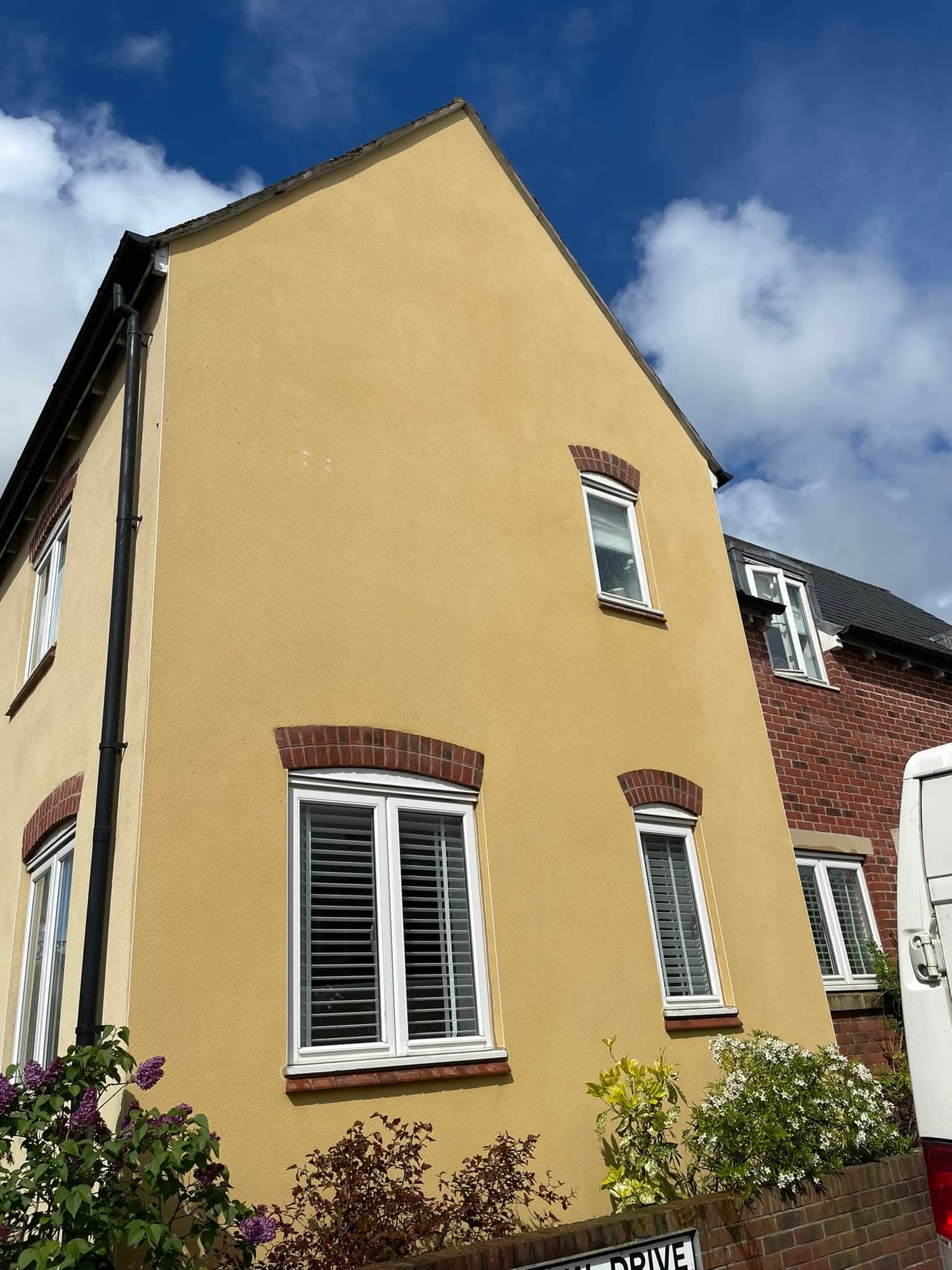
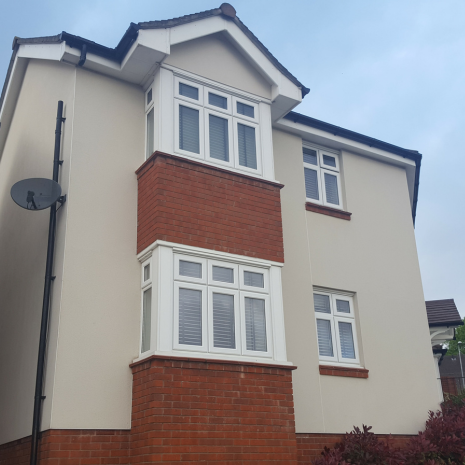

A second application is sometimes the right answer on silicone render, and it is better planned at the outset than raised afterwards. The situations that call for it are recognisable at survey. Very heavy lichen, which bonds physically as well as biologically and often needs a further treatment once the first has broken down the bulk of the colony. Dense black spotting on a deeply textured elevation, where the fungal root structure sits below what a single application reaches. Walls that have been left untreated for a decade or more, carrying several organisms layered on the same surface. And elevations where a previous aggressive clean opened up the texture, leaving growth rooted deeper than usual. In each case a single pass produces a substantial improvement and leaves visible residue, which is unsatisfying and avoidable. Where we expect it, the second application is included in the quoted figure rather than charged separately. It is normally carried out four to six weeks after the first, once the initial treatment has done its work and the dead material has begun weathering off, so the second reaches what remains rather than repeating the same coverage. K Rend cleaning specified this way costs more than a single-pass quotation and produces a result that a single pass could not. Where we did not anticipate a second application and an area has genuinely not responded within four to six weeks, we return and treat it again at no charge. Silicone render cleaning is chemical throughout in both passes: very low pressure, nothing brushed, full dwell, complete elevations worked with a live wet edge.
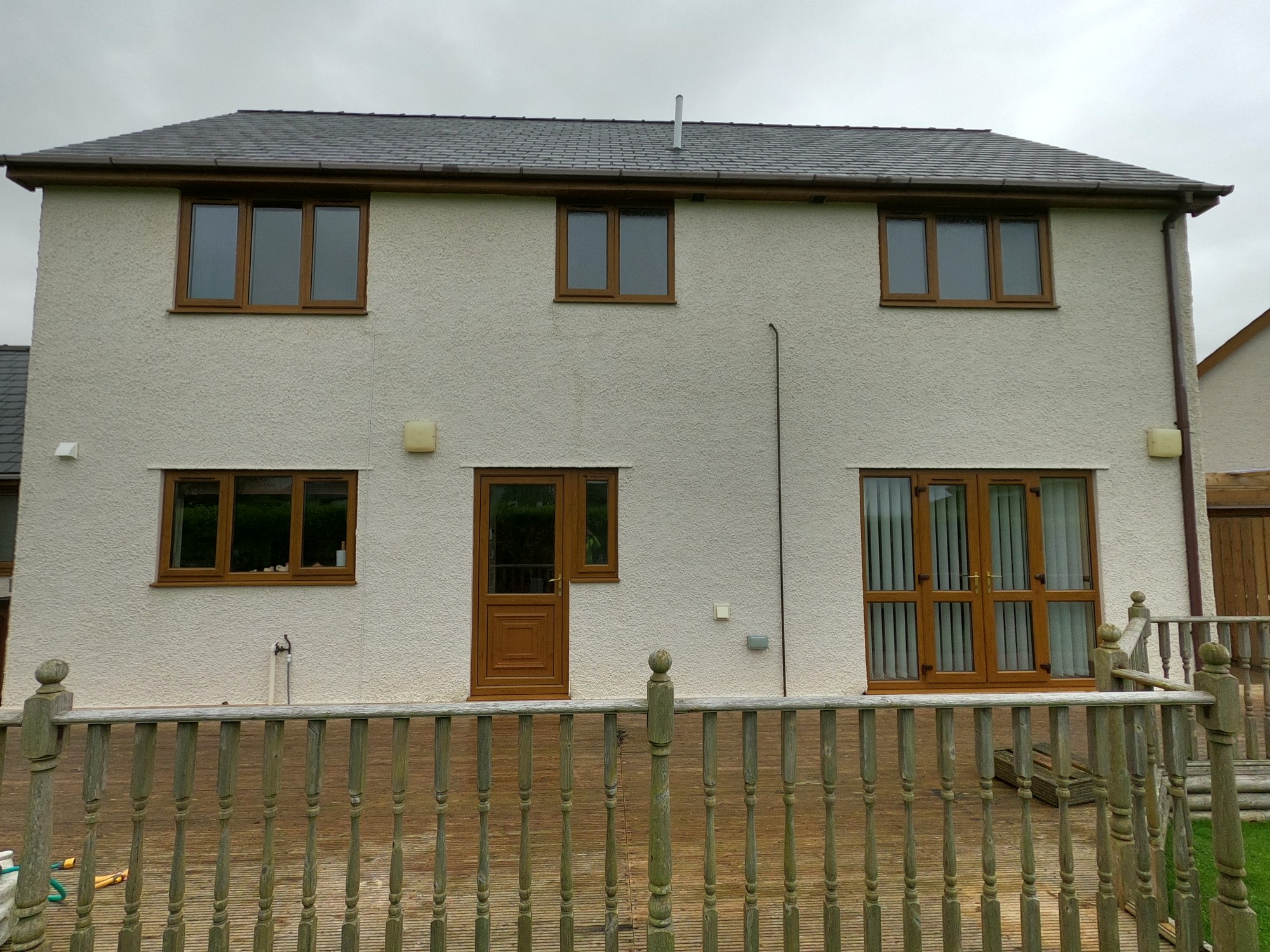
How much water a monocouche clean actually uses surprises people, and it is worth explaining because it bears on both the method and the practicalities. A typical detached property has somewhere between one hundred and two hundred square metres of rendered elevation. Treating a scraped texture properly means applying enough solution to flow into the depth of the profile rather than sitting on the high points, which on a coarse finish is materially more per square metre than on a smooth wall. Rinsing then uses more again. The total runs into hundreds of litres, all of it carried on the vehicle. That matters practically: we are not dependent on an outside tap, not limited by whatever pressure and flow is available, and not running a hose through the property. It also matters that the water goes on gently. Despite the volume, delivery pressure is low enough to be safe against a hand, so the wall is wetted rather than blasted and nothing is driven into the coating. Volumes are spread across a working day rather than concentrated, so gardens are not flooded and paving does not become a working pond. Rinsing uses purified water so no mineral deposit is left as the elevation dries, which on a pale monocouche would otherwise show as a faint haze. Monocouche render cleaning is therefore generous with volume and restrained with pressure, which is precisely the opposite of how most exterior cleaning is done. Render restoration achieved that way leaves the scraped face entirely undisturbed, and residential render cleaning repeated at sensible intervals takes nothing off the wall.
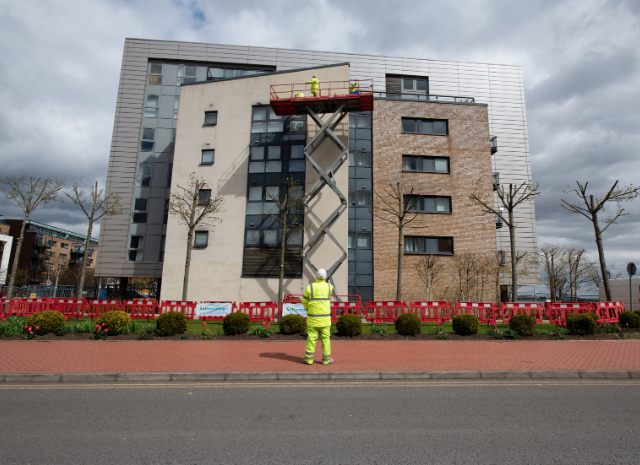

Dry cleaners, laundries and similar service premises with rendered elevations combine long opening hours with external plant and extraction that needs particular attention during any exterior work. Commercial render cleaning here starts with identifying what is on the wall besides render. Extraction outlets, condenser units, intakes and service penetrations are all common on these buildings, and every one is masked or isolated before treatment is applied. Where plant cannot be isolated, we schedule around its operation rather than working past it. Trading hours are long and collections happen throughout the day, so the frontage cannot be obstructed. In practice the work goes into an early morning slot before opening or onto a closing day, and premises of this size are almost always completed within a single visit. Anything on the pavement or forecourt is cleared and protected, and exclusion zones are agreed and signed so customers stay clear without the doorway being blocked. The low pressure method helps considerably: no machine noise carrying into the premises, no spray drifting across an entrance, and modest water volumes rather than a flooded frontage. Insurance, method statements and risk assessments are provided ahead of attendance, and operatives hold current working at height certification. Where the premises sit within a continuous run of units, we confirm boundaries and coordinate with the businesses either side, since a single treated frontage in a parade reads differently from those around it. Render facade cleaning maintains consistent dilution and live wet edges so the elevation reads uniformly. For service premises around Middle Littleton, a clean every few years keeps the building presenting properly at modest cost.
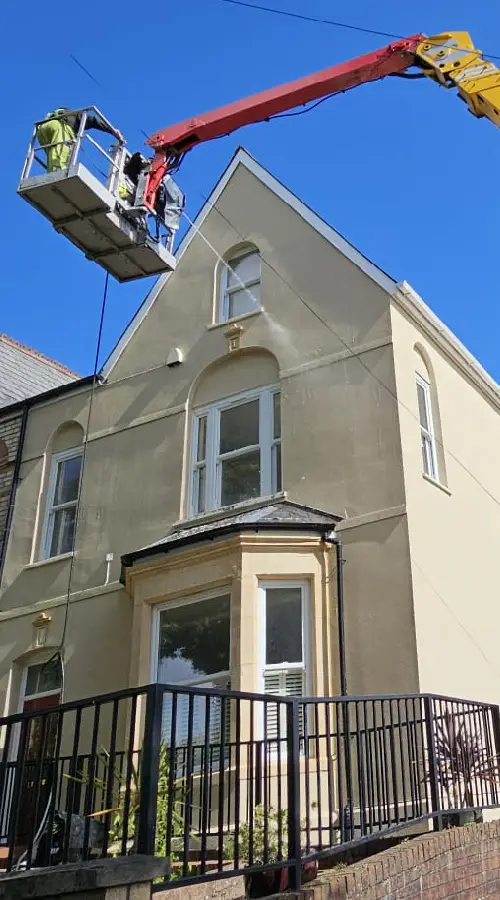
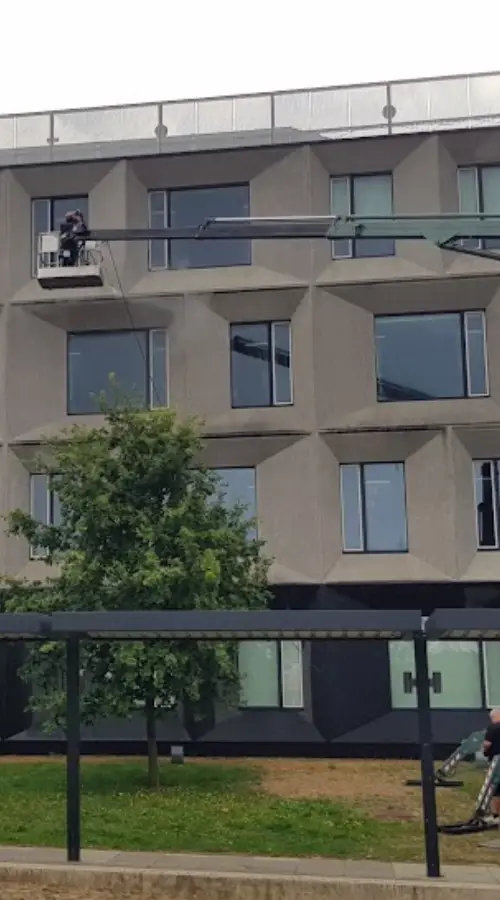
Occasionally a job cannot be completed as planned, and how that is handled matters more than pretending it never happens. The commonest cause is weather turning during the day. Treatment applied into heavy rain is diluted before it can work, and wind rising to the point where solution disperses before reaching the wall or where height work becomes unsafe means stopping. When that happens we complete whatever elevation is in progress rather than leaving a wall part-treated, then return to finish the rest at no additional cost. The second is discovering something at close range that was not apparent at survey. Occasionally an area of chalking paint, an open crack or a hollow-sounding section only becomes obvious once work is underway. In that case we stop on that elevation, explain what we have found, and adjust rather than proceeding and producing a poor outcome. If it means part of the quotation is not carried out, that part is not charged. The third is access proving harder than anticipated. That is our error rather than yours, and it is absorbed rather than passed on. Softwashing UK quote a fixed figure at survey and the figure holds. What we will not do is push a job through in conditions that compromise the result to avoid a return visit. It is invisible on the day and obvious the following spring. Render cleaning prices are fixed at survey and include any return needed to complete work we started. Full public liability cover and current working at height certification are in place, and our render cleaning specialists work on rendered elevations exclusively.
Middle Littleton is covered in full, with the same survey process and pricing basis applied to every property and no travel loading regardless of position. Choosing which elevations to include is a decision worth making deliberately rather than by default, and the itemised quotation is designed to make that possible. Every wall is surveyed separately and priced separately. The quotation shows what was found on each: the coating identified, the growth graded, the treatment specified and how it will be reached. Where an elevation genuinely does not need attention yet, that is stated rather than the wall being included silently. Three considerations usually shape the decision. The first is condition: a wall carrying established growth should be treated, since it is holding moisture against the coating continuously and the job only gets larger. The second is cost: the marginal price of adding an elevation while we are already at the property is far lower than a separate visit later, so a wall likely to need doing within a year or two is generally better done now. The third is appearance: on a through-coloured render, treating one wall and leaving another can leave a visible difference at the corner where they meet. We set all three out at survey so the choice is informed rather than guessed. There is no pressure to include anything, and no minimum job size. Surveys take around twenty minutes, can be carried out without anyone at home provided every elevation is reachable, and the written quotation follows by email itemised wall by wall so the reasoning behind the figure is visible.
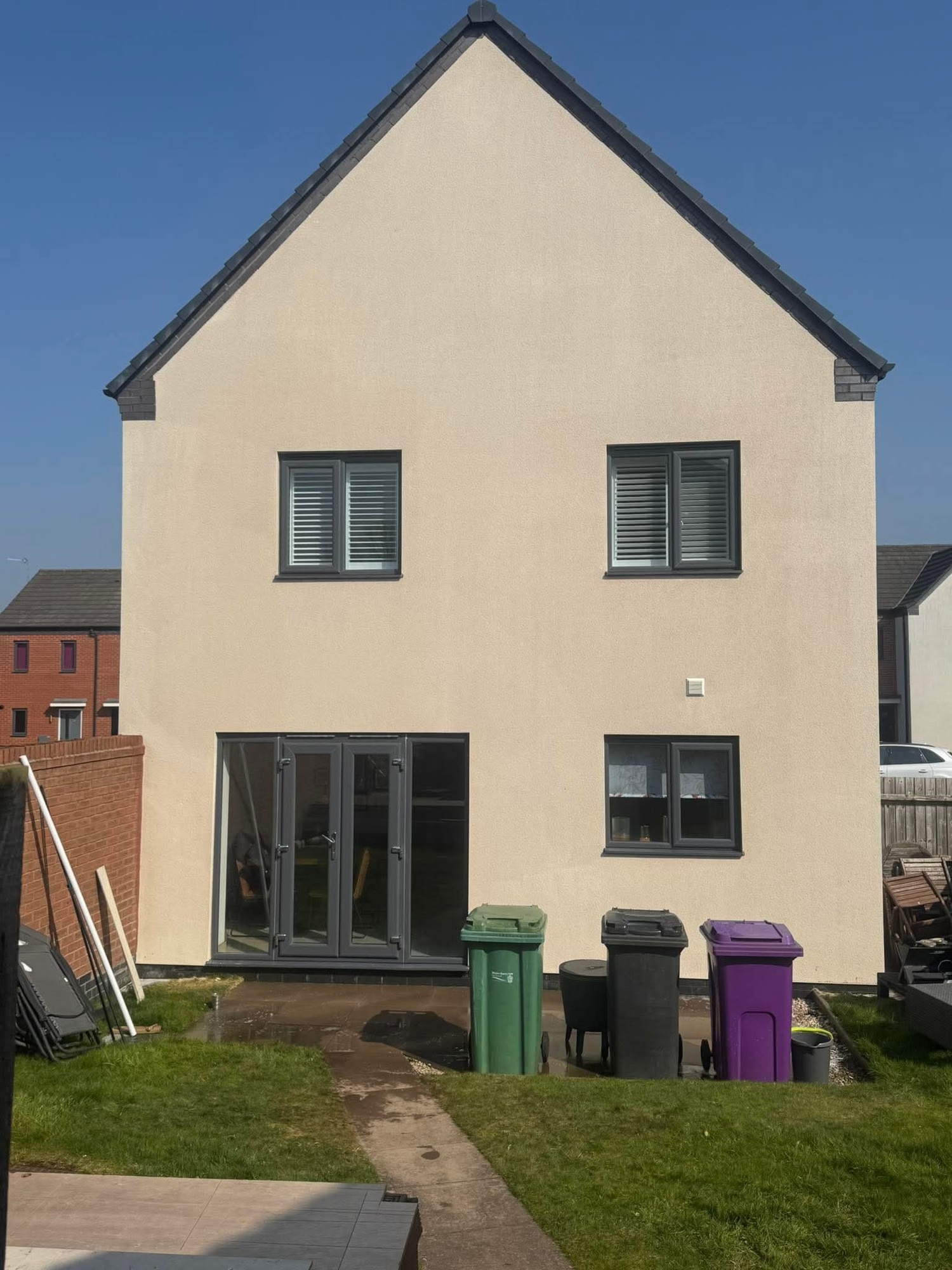
Most properties in Middle Littleton benefit from professional render cleaning every 3 to 5 years, although this depends on the surrounding environment. Properties near trees, woodland, busy roads or coastal areas may require more frequent cleaning due to algae, mould and airborne contaminants. Our soft washing process removes existing growth and helps keep your render cleaner for longer.
Yes. Soft washing is specifically designed for delicate surfaces such as K-Rend, silicone render, monocouche render and painted render. Unlike high-pressure washing, it cleans at low pressure while treating biological growth at its source, reducing the risk of damage to the render finish.
We clean virtually all external render finishes, including K-Rend, Monocouche, Weber, Sto, silicone render, acrylic render, painted render, roughcast and pebble dash. Every cleaning method is tailored to the specific render type to achieve the best possible results.
Yes. Our specialist soft washing treatments are highly effective at removing green algae, red algae, black mould, mildew, lichen and other organic staining. We also apply professional biocide treatments to kill spores and slow down regrowth.
Because our process targets the biological growth rather than simply washing the surface, results typically last much longer than pressure washing alone. The exact lifespan depends on weather conditions, surrounding vegetation and the property’s location.
No. Our soft washing process is specifically designed to clean render safely. We use low-pressure application methods and specialist cleaning solutions that remove contamination without damaging the render surface when carried out by trained professionals.
The UK’s damp climate provides ideal conditions for algae, mould and other biological growth to develop on rendered surfaces. Areas with limited sunlight, nearby trees or persistent moisture are especially susceptible. Professional soft washing safely removes these contaminants and restores your property’s appearance.




































WhatsApp us