How long a render clean takes is a fair question, and the answer depends on a handful of specific things rather than simply the size of the house. Total rendered area matters least of the four. A large smooth elevation can be quicker than a smaller heavily textured one, because texture depth determines how much treatment has to be applied and how long it needs to dwell before it reaches the base of the profile. Growth density matters more. A wall carrying light filming clears with a modest specification. One carrying layered colonisation, with black spotting, lichen and moss on the same surface, needs greater volume, longer dwell and sometimes a planned second application. Access matters considerably. Elevations reachable from the ground with telescopic delivery are straightforward. Anything requiring equipment to be positioned, moved and repositioned adds time before any treatment is applied. Detailing matters more than people expect. Bays, porches, dormers, deep reveals and projecting features each need treating as their own zone rather than being caught in passing, and a property with substantial detailing takes materially longer than a plain one of the same area. Preparation is the constant. Covering planting, sheeting hard surfaces, masking fittings and moving anything in the working area takes longer than most owners anticipate and is included in every job. Our render cleaning services are quoted with a realistic duration stated. Most domestic properties in Offenham are a single day from arrival to departure, and many are considerably less, but exterior render cleaning on a large detailed building can run to a day and a half and we say so rather than arriving and running short.
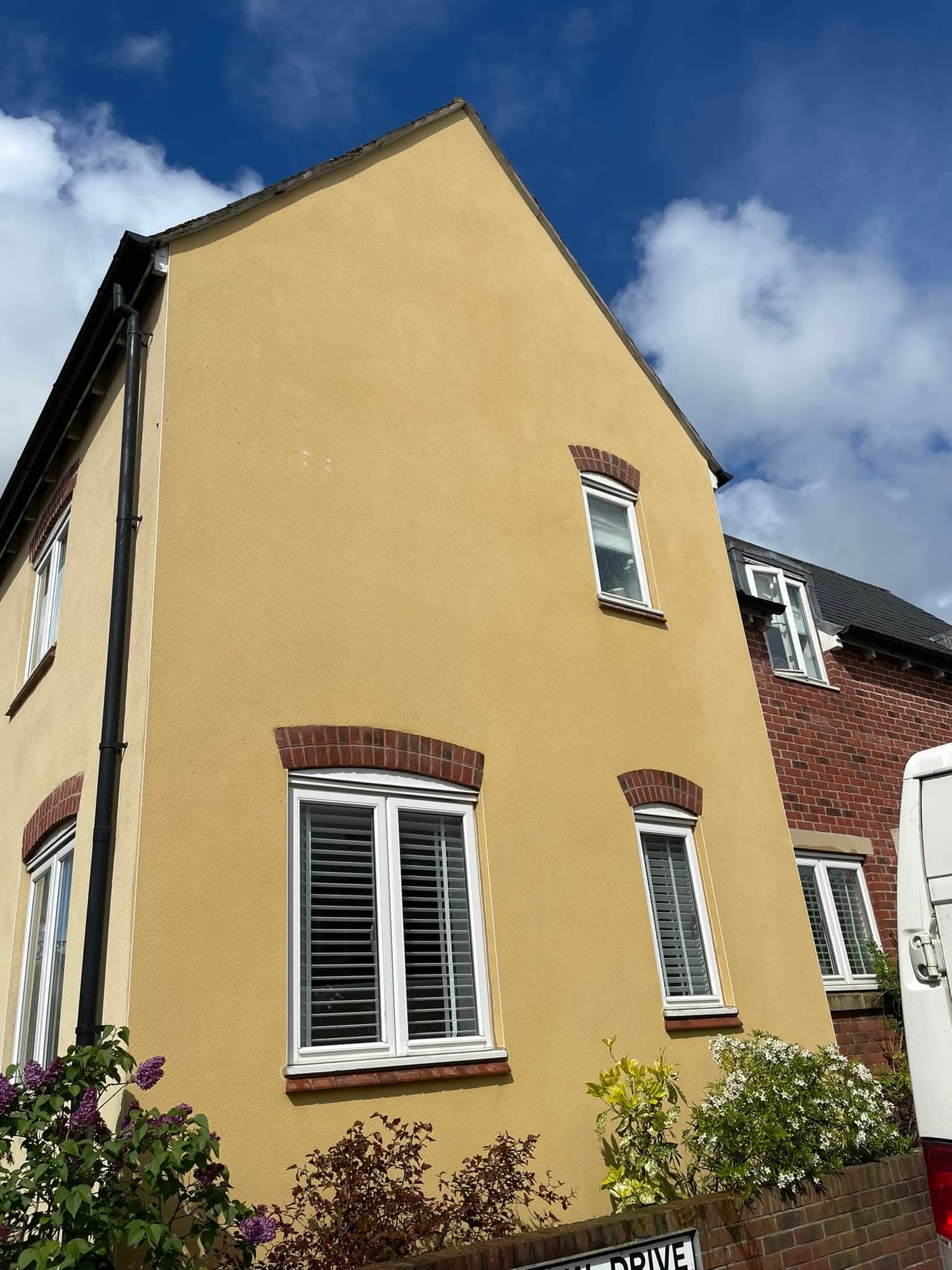
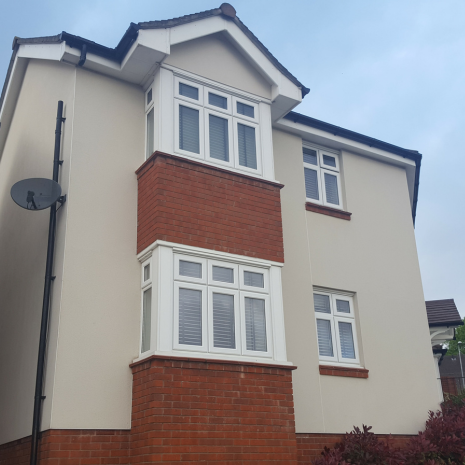

How long a silicone elevation takes to treat is worth understanding, since it explains why a contractor promising three properties in a day has necessarily shortened something. Preparation comes first and takes longer than most people expect. Covering planting, sheeting hard surfaces, masking every external fitting and moving anything in the working area is typically the better part of an hour on a domestic property. Application is comparatively quick. A full elevation is worked as a continuous unit with a live wet edge maintained throughout, at consistent dilution, and depending on size and texture depth this may take twenty minutes to an hour per wall. Dwell is the longest single stage and the one where nothing appears to be happening. Depending on the organisms present and the texture involved, treatment needs to remain in contact for a substantial period to reach and destroy root structures. Cutting this is invisible on the day and obvious the following spring. Rinsing follows at low pressure, worked systematically so no area dries part-rinsed, using purified water so no mineral deposit is left as the wall dries. Clearing down, checking borders and hard surfaces and returning everything to where it started completes the visit. K Rend cleaning on a typical detached property occupies most of a working day across all four elevations. Larger or more detailed buildings run longer. Silicone render cleaning is not a fast process by design. Render mould removal in particular depends entirely on dwell, and house render cleaning done properly is measured in hours rather than minutes per wall.
How long a monocouche job takes is governed more by texture depth than by anything else, and it is worth explaining because it affects both the quotation and the day. A finely scraped elevation is comparatively quick. Treatment reaches the base of a shallow profile readily, dwell periods are moderate, and rinsing clears the surface without difficulty. A heavily scraped one is a different proposition. Volume applied per square metre rises considerably, because product has to flow into real depth rather than bridging the high points. Dwell extends, since the treatment has further to travel and the colony sits deeper. Rinsing takes longer, worked carefully so nothing is left part-rinsed. The difference between the two on an otherwise identical property can be an hour or more per elevation, which is why we grade texture at survey rather than pricing by measured area. Detailing adds to it again. Bays, porches, deep reveals, projecting bands and returns each need treating as their own zone with treatment applied squarely rather than glancing across, and a heavily detailed monocouche building takes materially longer than a plain one. Preparation and clearing down are the constants, and both are included. Most monocouche properties are a single day from arrival to departure. Larger or more detailed buildings run to a day and a half, and we state that at the quotation stage. Monocouche render cleaning is unhurried by necessity, since nothing is brushed or agitated and the exposed aggregate must not be disturbed. Render restoration achieved that way is repeatable across the life of the coating.
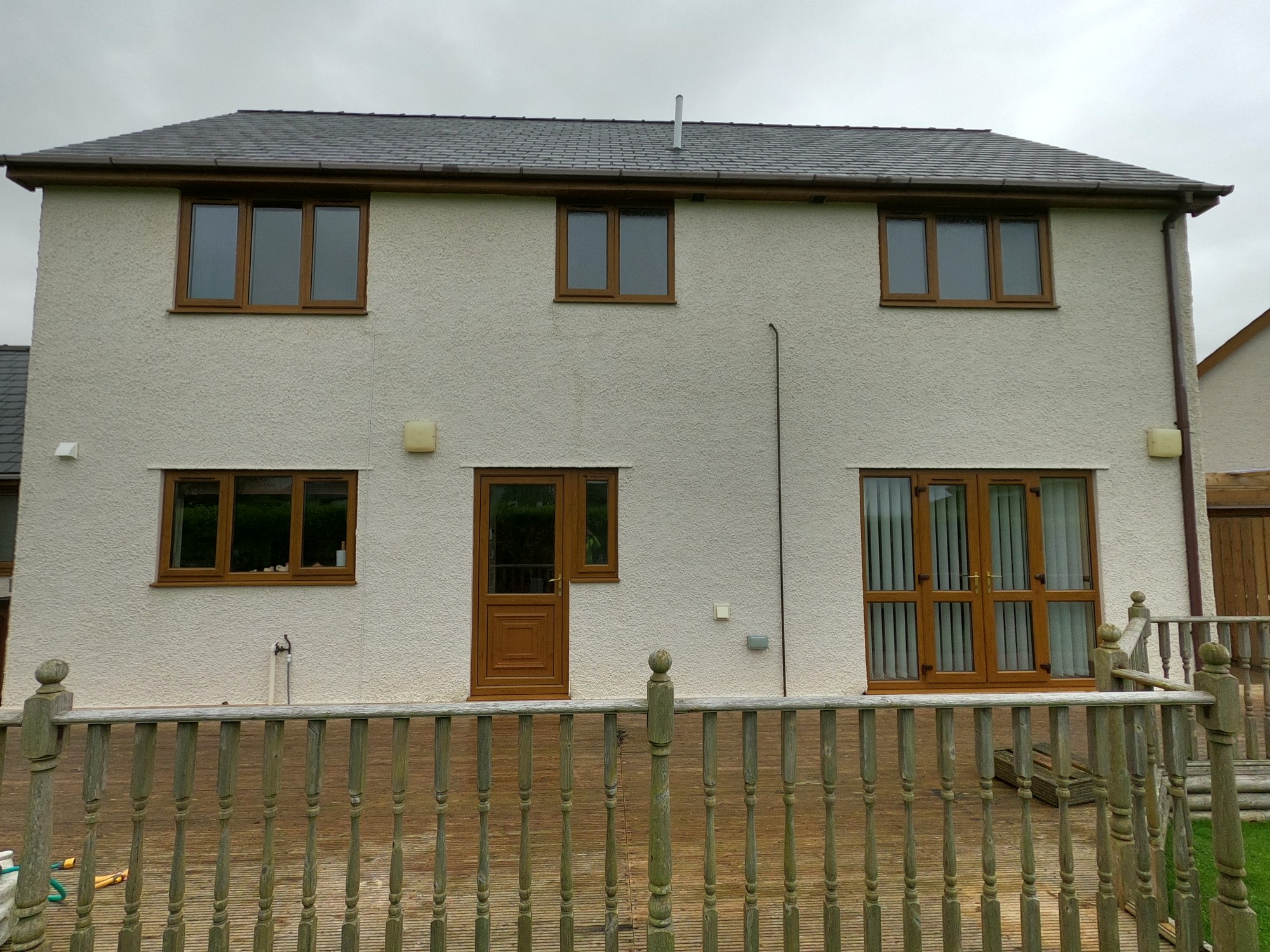
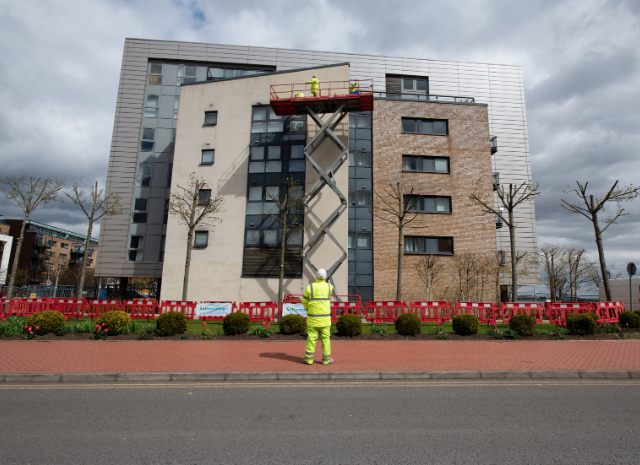

Theatres, arts venues and community performance spaces with rendered elevations are seen by audiences arriving in the evening, often in artificial light that shows soiling more clearly than daylight does. Commercial render cleaning at these venues is planned around the programme. Performances, rehearsals and get-ins occupy much of the week during a season, and the genuinely quiet periods are usually between productions or during a summer or winter break. Treating the whole building in one programme during such a window is generally the most economical arrangement. Where a venue runs continuously, we phase the work so only one elevation is affected at a time, and schedule around performance days rather than working through them. Noise is the main consideration, and the low pressure method helps considerably since there is no machine running and no high pressure impact against the building. Foyer entrances, box office access and any outdoor gathering area are kept usable throughout, with exclusion zones agreed and physically barriered rather than taped. Insurance, method statements and risk assessments are supplied ahead of attendance, and operatives hold current working at height certification. Where the venue is used by young people, any checks required are completed in advance. Technically these buildings often present large plain elevations, sometimes with substantial gables over an auditorium. Render facade cleaning must hold identical dilution and continuous wet edges across the full run, since banding on a large uninterrupted wall is immediately visible. For venues around Offenham, a planned interval keeps the building presenting properly through the season and protects a substantial area of coating.
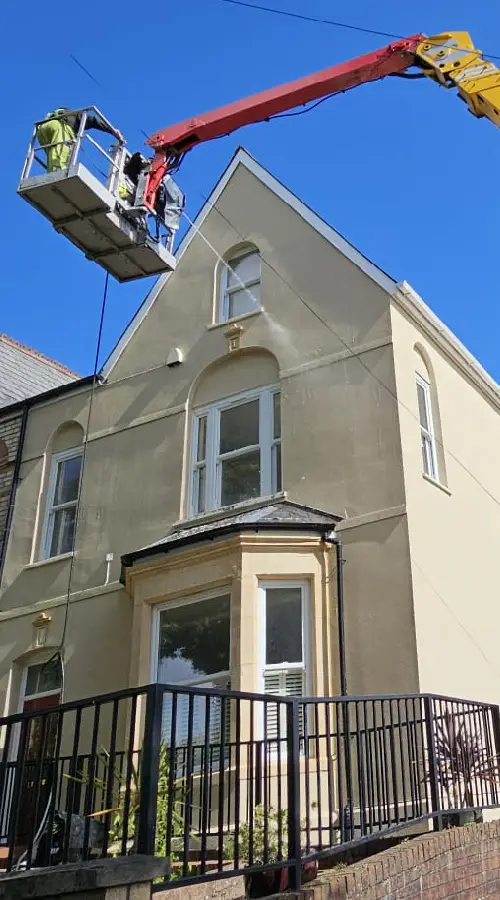
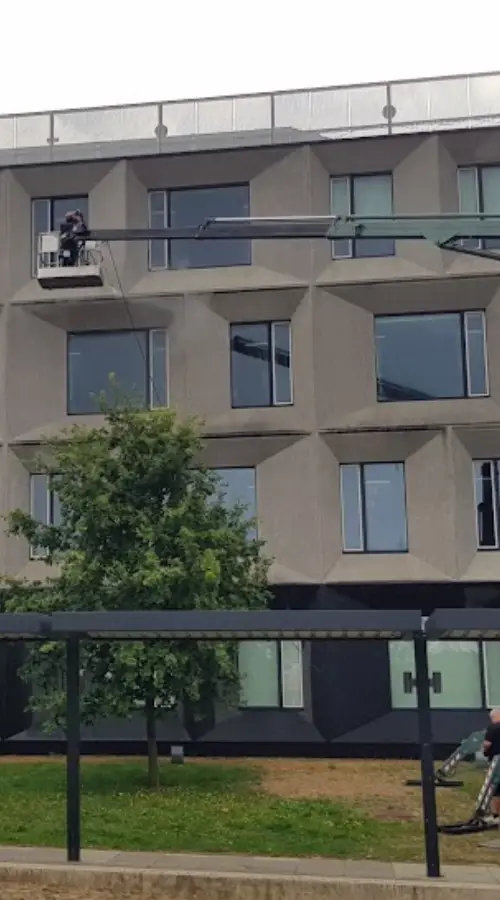
Softwashing UK do not subcontract, and the practical consequences of that are worth setting out because they affect the result rather than just the arrangement. The specification for a render clean is written at the survey. Which coating is on each elevation, what condition it is in, which organisms are present and at what density, what dilution and volume each wall needs, how long it must dwell, and how every part of it will be reached. Those are close-range judgements made by someone standing at the property. Where work is passed to a third party, all of that has to be transmitted second-hand, and in practice a good deal is lost. What arrives is a price, a date and an address, and the operative applies whatever they normally apply. Our surveys are carried out by someone who works alongside the team doing the job, so the specification written on the day of the survey is the one applied at the property. Nothing is interpreted at a distance. It also means the quotation can be specific. Each elevation is listed with the coating identified, the growth graded, the treatment specified and the access stated, because those details are going to be used. Render cleaning cost is fixed at that point and does not move. Full public liability cover and current working at height certification are in place and available on request, and they cover the people who will actually be at your property. As a local render cleaning company, the team that treats a wall is the team that comes back if anything needs revisiting.
Offenham is covered in full, with the same survey process, pricing basis and scheduling applied to every property and no travel loading. Completing a property in a single visit is what we plan for on almost every domestic job, and the reason is technical rather than merely convenient. Each elevation has to be treated, dwelled and rinsed as one continuous operation. Treatment that dries part-worked, or rinsing left half done, records itself on the finished wall as banding, and on a through-coloured render that difference remains until the next clean. Spreading a property across two days means at least one elevation is interrupted, and the join is usually visible once everything dries. Single-visit working also means protection goes down once and comes up once, planting is covered for hours rather than days, and you are not living around a partly finished job. Achieving it is a matter of resourcing rather than rushing. Enough operatives on site to keep wet edges live across the full width of each wall, enough water and treatment carried to complete every elevation without a change of batch, and access arranged at survey so nothing needs revisiting. All of that is planned before the day and built into the quoted figure. Most properties here are a single day from arrival to departure, and many are less. Where a building is genuinely too large, we say so at the quotation stage and set out how it will be divided so that no individual elevation is split across sessions. Surveys take around twenty minutes and produce an itemised written figure by email.
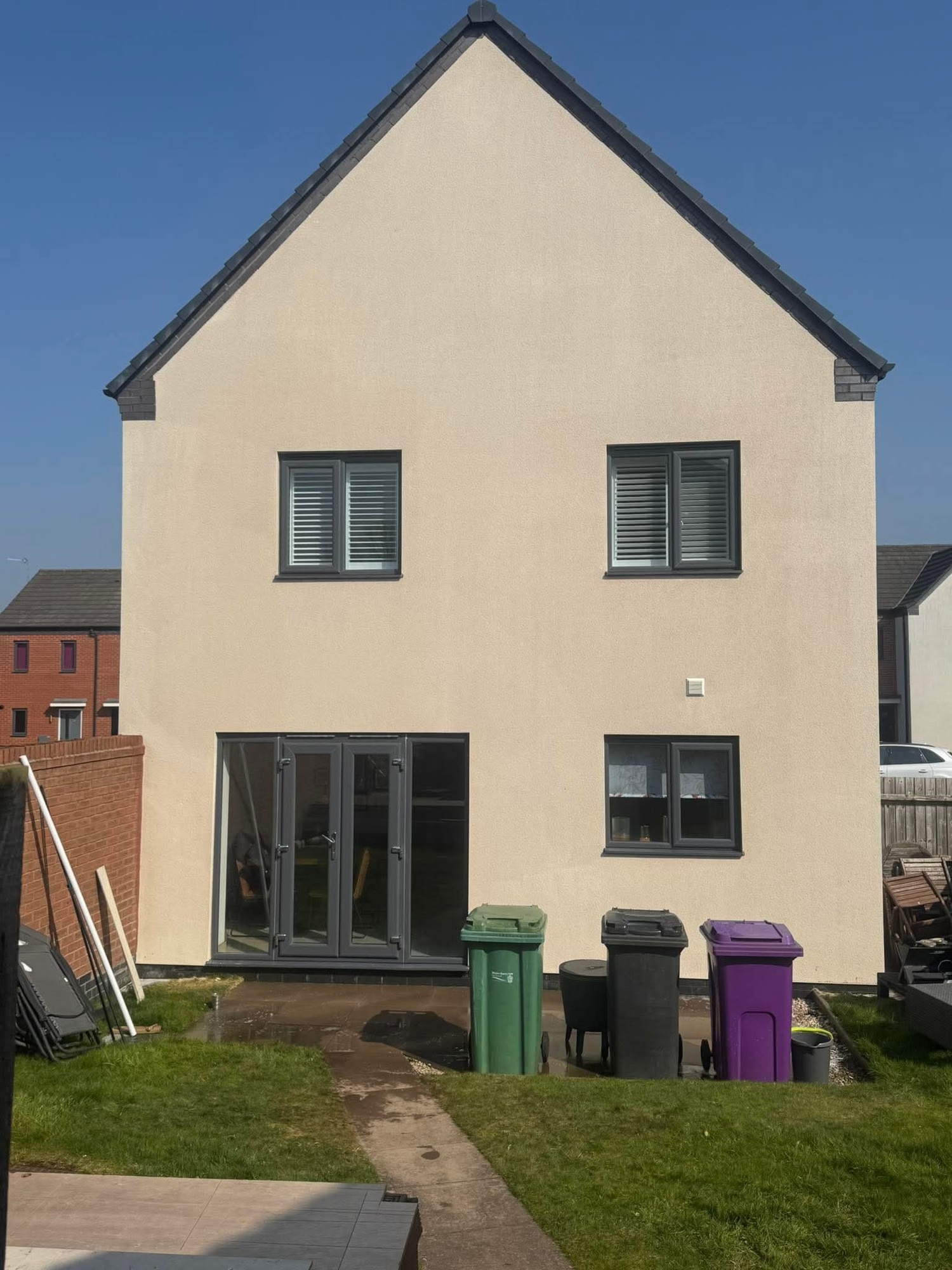
Most properties in Offenham benefit from professional render cleaning every 3 to 5 years, although this depends on the surrounding environment. Properties near trees, woodland, busy roads or coastal areas may require more frequent cleaning due to algae, mould and airborne contaminants. Our soft washing process removes existing growth and helps keep your render cleaner for longer.
Yes. Soft washing is specifically designed for delicate surfaces such as K-Rend, silicone render, monocouche render and painted render. Unlike high-pressure washing, it cleans at low pressure while treating biological growth at its source, reducing the risk of damage to the render finish.
We clean virtually all external render finishes, including K-Rend, Monocouche, Weber, Sto, silicone render, acrylic render, painted render, roughcast and pebble dash. Every cleaning method is tailored to the specific render type to achieve the best possible results.
Yes. Our specialist soft washing treatments are highly effective at removing green algae, red algae, black mould, mildew, lichen and other organic staining. We also apply professional biocide treatments to kill spores and slow down regrowth.
Because our process targets the biological growth rather than simply washing the surface, results typically last much longer than pressure washing alone. The exact lifespan depends on weather conditions, surrounding vegetation and the property’s location.
No. Our soft washing process is specifically designed to clean render safely. We use low-pressure application methods and specialist cleaning solutions that remove contamination without damaging the render surface when carried out by trained professionals.
The UK’s damp climate provides ideal conditions for algae, mould and other biological growth to develop on rendered surfaces. Areas with limited sunlight, nearby trees or persistent moisture are especially susceptible. Professional soft washing safely removes these contaminants and restores your property’s appearance.











































WhatsApp us