What makes one elevation harder to clean than another is worth setting out, since it explains why two walls of identical size can carry quite different figures. Texture depth comes first. A deeply scraped or coarse finish has several times the effective surface area of a shallow one, holds moisture in its profile long after the flat plane has dried, and shelters colonies at the base of the texture. It needs more volume applied and a longer dwell to reach root level. Growth density comes second, and it is not simply a matter of how green a wall looks. An elevation carrying layered colonisation, with fungal spotting, lichen and moss on the same surface, needs several strengths judged and applied rather than one. Geometry comes third. Bays, porches, dormers, deep reveals and projecting features each need treating as their own zone, with product applied squarely rather than glancing across, and a detailed wall takes materially longer than a plain one of the same area. Access comes fourth. Anything not reachable from the ground with telescopic delivery adds set-up time before treatment begins. Condition comes fifth, and occasionally changes the answer entirely. Chalking paintwork, open cracking or debonded areas mean water should not be introduced at all. Softwashing UK assess all five at survey and quote per elevation, so the itemised figure shows which wall is driving the cost and why. Render algae removal on a smooth, accessible, lightly colonised elevation is a straightforward job. Exterior render cleaning on a deeply textured, heavily detailed, badly neglected gable is not, and pricing them the same would misrepresent both.
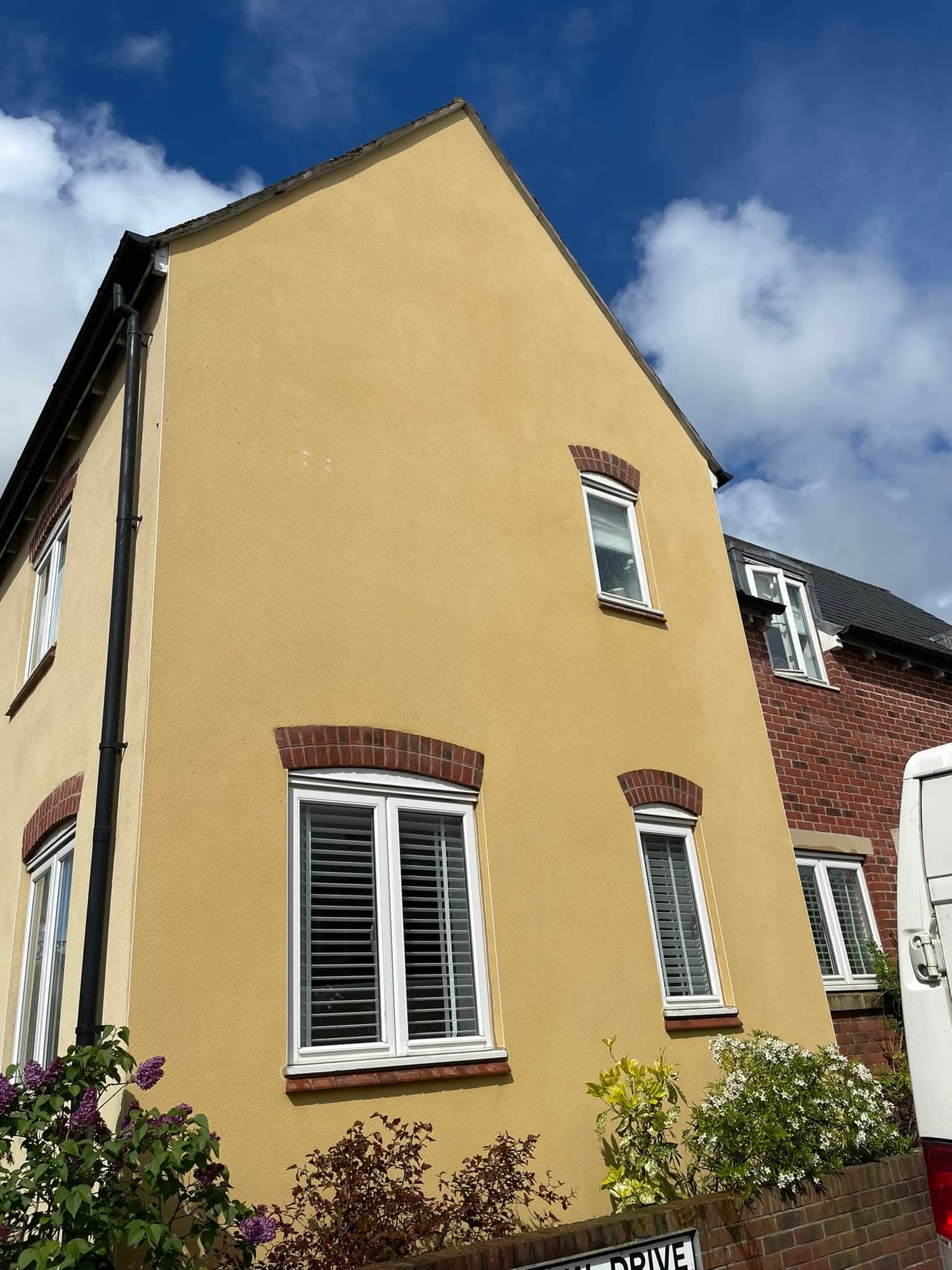
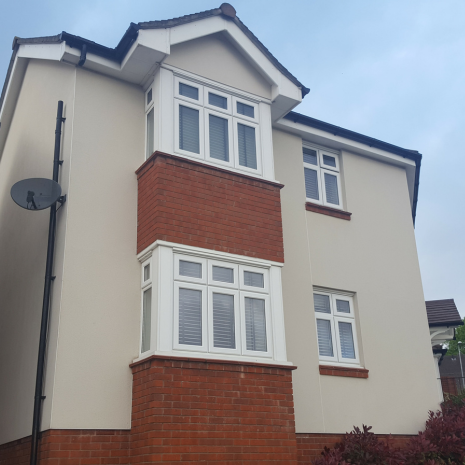

The survey makes more difference on silicone render than on almost any other finish, and it is worth explaining exactly what it changes. Coating identification is the first thing established, and it governs everything. A silicone thin-coat, an acrylic one and a monocouche can look similar at a few metres and behave quite differently under treatment. Getting it wrong is how walls are damaged. Texture grade is the second, and it determines volume applied and dwell period. Two properties finished in the same branded system can carry noticeably different depths depending on the applicator’s technique, so the specification cannot be transferred between them. Organism identification is the third. Algal filming, fungal black spotting and lichen respond to different strengths, and applying a mix judged for green filming on a wall carrying dense spotting clears one and leaves the other. Condition is the fourth, and occasionally means declining the work. Access is the fifth. A section that will be reached awkwardly receives less product and shorter effective dwell, and finishes visibly different, so the reach question is answered before quoting rather than discovered on the day. K Rend cleaning specified from that assessment produces a result that a standard approach cannot, because the specification is written for the wall rather than for the category. Silicone render cleaning is then chemical throughout: very low pressure, nothing brushed or agitated, complete elevations worked with a live wet edge at consistent dilution. Render mould removal in particular succeeds or fails on judgements made at survey rather than on anything done with equipment.
Monocouche and thin-coat renders are cleaned differently, and understanding why is useful when comparing quotations or judging advice. Both are through-coloured and both are damaged permanently by abrasion, so neither tolerates pressure or brushing. That much is shared. The differences are in thickness and texture. Monocouche is applied thickly in a single coat and scraped back to expose fine aggregate, producing a genuinely deep profile in a substantial body of material. A thin-coat system is a much thinner layer over a base coat and mesh, usually with a shallower and more uniform texture. The practical consequences are twofold. Monocouche needs materially more treatment per square metre, because product has to flow into real depth rather than sitting on a shallow surface, and it needs a longer dwell for the same reason. A specification written for a thin-coat wall applied to monocouche will bridge the high points and leave growth alive at the base of the profile. Conversely, monocouche is more forgiving of water volume, being thick and breathable, whereas driving water at a thin-coat system risks reaching the base coat behind it. Monocouche render cleaning is therefore generous with volume, unhurried on dwell and gentle on rinsing, with nothing brushed or agitated at any stage. We grade texture and identify the system at survey rather than assuming, and it is one of the reasons quotations differ between apparently similar properties. Render restoration on monocouche is repeatable across the life of the coating, and residential render cleaning specified against the actual material rather than a generic approach is what makes that possible.
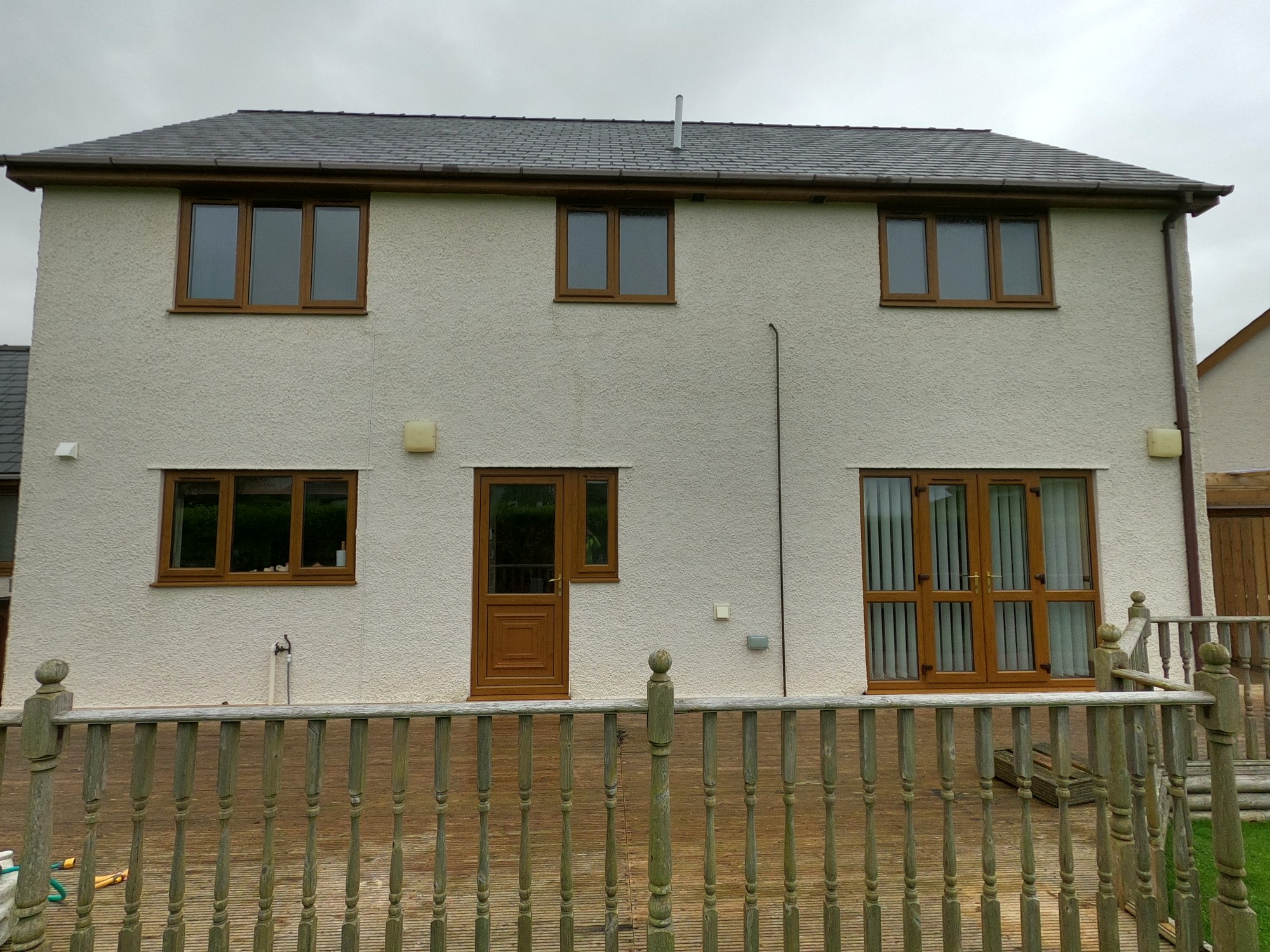
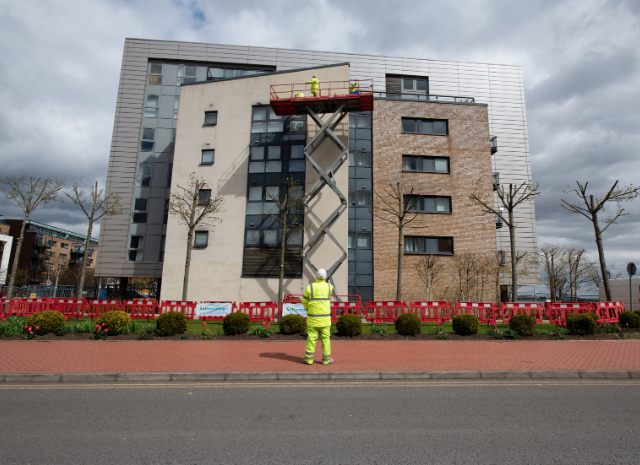

Banks, building society branches and similar high-street financial premises with rendered elevations are held to a particular standard of appearance, and the buildings are usually prominent within a parade. Commercial render cleaning at these premises is scheduled around security and trading requirements rather than simply opening hours. Cash handling, alarm systems, external cameras and secure entrances all need consideration before any work begins, and we agree the arrangements with the branch and its facilities management in advance. External fittings on the elevation are the main technical consideration. Cameras, alarm boxes, lighting, signage and cash machine surrounds are identified at survey and masked or isolated individually before treatment is applied. Trading hours are inflexible, so work goes into an early start before opening or onto a closing day. Premises of this size are almost always completed within a single visit. Exclusion zones are agreed and signed so pedestrians are kept clear without the entrance or any external machine being obstructed. Insurance, method statements and risk assessments are supplied ahead of attendance, and operatives hold current working at height certification. Where the branch sits within a continuous run of units, we confirm boundaries and coordinate with the businesses either side, since a single cleaned frontage in a parade reads differently from those around it. Render facade cleaning maintains consistent dilution and live wet edges so the elevation reads uniformly rather than showing where the work paused. For branch premises around Pershore, a clean every few years keeps the building presenting appropriately at modest recurring cost. Where a branch forms part of a wider estate, treating several premises in one programme reduces the cost per building considerably.
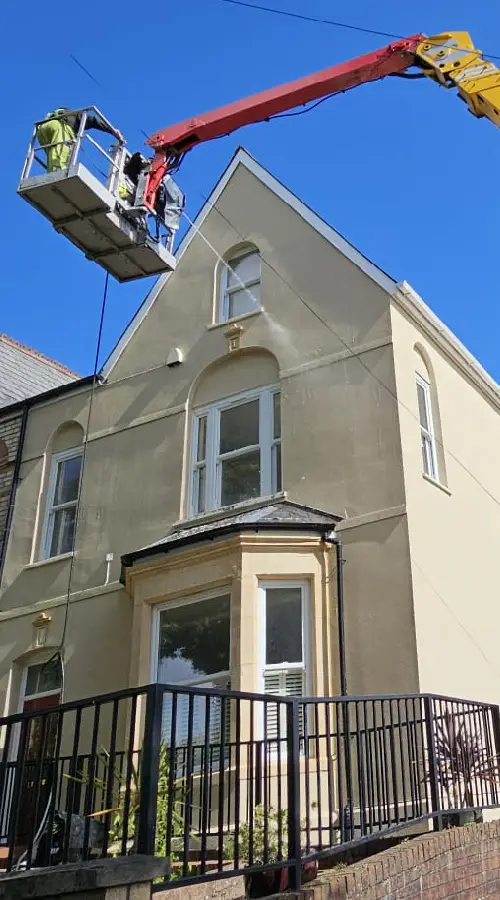
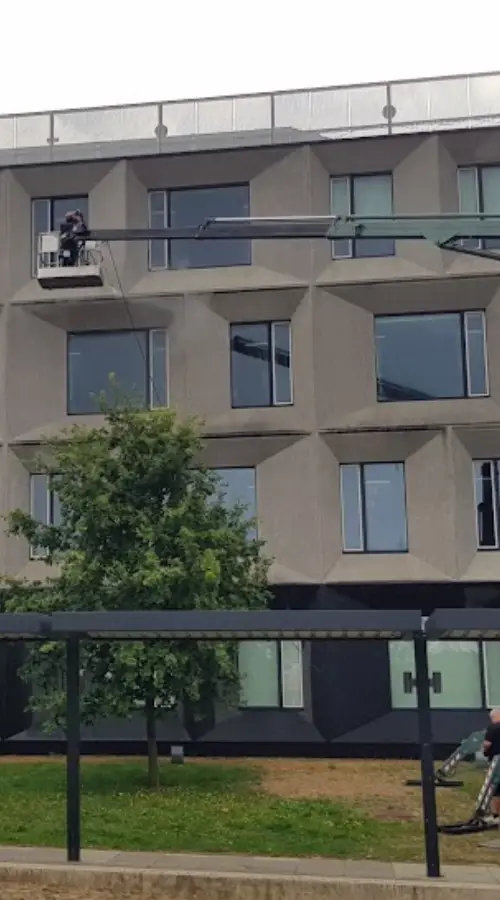
There are a few things we tell customers that contractors more often leave unsaid, and they are worth stating plainly. The first is that a wall may not need cleaning yet. Where an elevation is carrying nothing more than early filming and is years from needing attention, we say so, even though it means no work. There is no advantage in treating early, since the interval afterwards is governed by the elevation rather than by how recently it was cleaned. The second is that the result develops over weeks. On heavily colonised walls, dead material remains attached on the day and weathers off over two to four weeks, with lichen taking longer. A contractor who does not mention this is either not using a dwell-based method or is hoping you will not notice. The third is what cleaning will reveal rather than fix. Previous pressure washing damage, patch repairs and embedded staining all become more visible once growth is removed, and we identify them at survey. The fourth is that some walls should not be cleaned at all. Chalking paintwork, open cracking and debonded areas all mean water should not be introduced, and we decline rather than proceed. The fifth is that annual treatment is unnecessary on a properly cleaned wall, so we do not sell it. Render cleaning cost quoted on that basis is honest rather than optimistic. Render cleaning prices are fixed at survey, itemised per elevation, and our render cleaning specialists work on rendered elevations exclusively. None of it is difficult to say; it is simply less useful commercially than the alternative.
Coverage takes in Pershore together with Pensham and Wick, all on identical terms with no travel loading applied to any of them. The property mix across a town and its outlying settlements is broader than in a single village, and it shapes how work is organised. Within the town there are terraced and semi-detached frontages where the rendered area is modest, access is simple from ground level and the job takes a few hours. There are roads where properties share construction and finish, which makes clustering effective and reduces individual figures. And there are larger detached houses with three-storey gables, extensions in different systems from the original walls and access needing proper assessment. Across the outlying settlements the pattern shifts towards individual properties, older coatings repaired and recoated over long periods, and buildings set within their own grounds where exposure varies considerably around one house. Because coating type and growth density vary independently of property size, every address is surveyed rather than priced by area. A modest wall in older painted render can be a more careful job than a larger modern elevation, and quoting the two identically would misprice both. Clustering is worth raising when you enquire. Where several properties on the same road book within the same period, mobilisation is shared and each figure comes down. Properties in Pensham and Wick are surveyed on exactly the same basis, individually and quoted per elevation. Surveys can usually be arranged within the week, take around twenty minutes, and produce an itemised written quotation by email. Where several properties book together, mobilisation is shared and each individual figure reflects it.
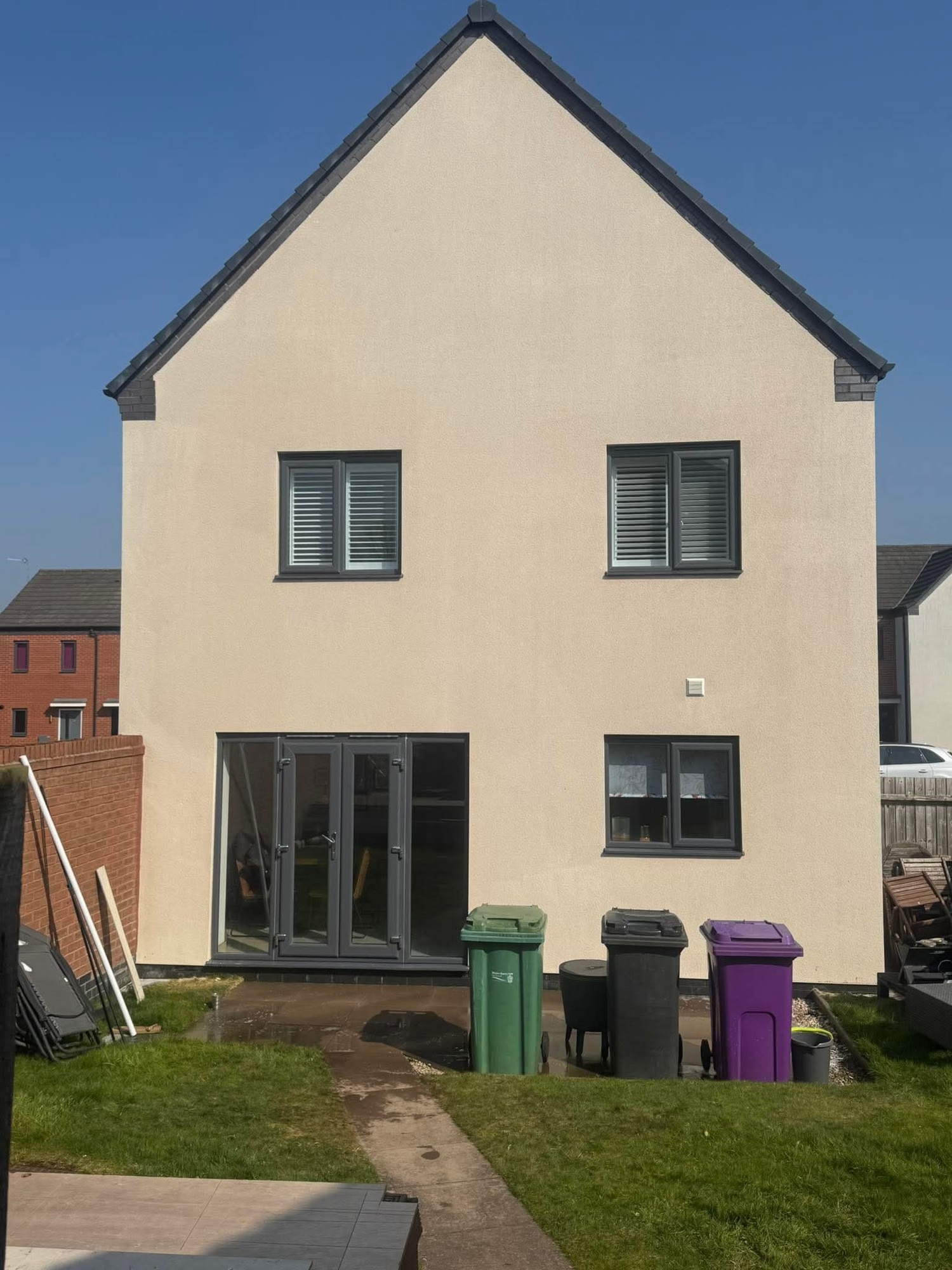
Most properties in Pershore benefit from professional render cleaning every 3 to 5 years, although this depends on the surrounding environment. Properties near trees, woodland, busy roads or coastal areas may require more frequent cleaning due to algae, mould and airborne contaminants. Our soft washing process removes existing growth and helps keep your render cleaner for longer.
Yes. Soft washing is specifically designed for delicate surfaces such as K-Rend, silicone render, monocouche render and painted render. Unlike high-pressure washing, it cleans at low pressure while treating biological growth at its source, reducing the risk of damage to the render finish.
We clean virtually all external render finishes, including K-Rend, Monocouche, Weber, Sto, silicone render, acrylic render, painted render, roughcast and pebble dash. Every cleaning method is tailored to the specific render type to achieve the best possible results.
Yes. Our specialist soft washing treatments are highly effective at removing green algae, red algae, black mould, mildew, lichen and other organic staining. We also apply professional biocide treatments to kill spores and slow down regrowth.
Because our process targets the biological growth rather than simply washing the surface, results typically last much longer than pressure washing alone. The exact lifespan depends on weather conditions, surrounding vegetation and the property’s location.
No. Our soft washing process is specifically designed to clean render safely. We use low-pressure application methods and specialist cleaning solutions that remove contamination without damaging the render surface when carried out by trained professionals.
The UK’s damp climate provides ideal conditions for algae, mould and other biological growth to develop on rendered surfaces. Areas with limited sunlight, nearby trees or persistent moisture are especially susceptible. Professional soft washing safely removes these contaminants and restores your property’s appearance.















































WhatsApp us