Water discharged onto a rendered wall does far more damage to its appearance than rain falling on it, and identifying the sources is one of the more useful parts of a survey. Rain wets an elevation fairly evenly and runs off. Discharge concentrates. Anywhere water is delivered onto the render in a stream rather than spread across it, the wall stays wet for far longer along that path and colonises accordingly. The sources are consistent. Sills shed water from their ends rather than across their width, producing two darker lines beneath rather than an even band. Bead terminations collect water along the edge before it drops. Projecting details discharge onto whatever is below. Any outlet, overflow or fitting that releases water onto the wall produces a permanent wet track. And at ground level, splashback from hard surfaces drives water back onto the base course continuously. Every one of those points colonises first and heaviest, which is why the pattern of streaking on a soiled elevation follows the architecture rather than being random. Our render cleaning services are specified against that map. Concentration points receive stronger treatment and longer dwell within the same visit, while the open wall receives what it needs. We also point out sources that can be addressed, since a discharge that keeps one area permanently wet will bring the next treatment forward regardless of how well the wall is cleaned. Render algae removal across a general elevation and render moss removal at a persistently wet track are different jobs on the same building. Exterior render cleaning around Powick is quoted with both itemised.
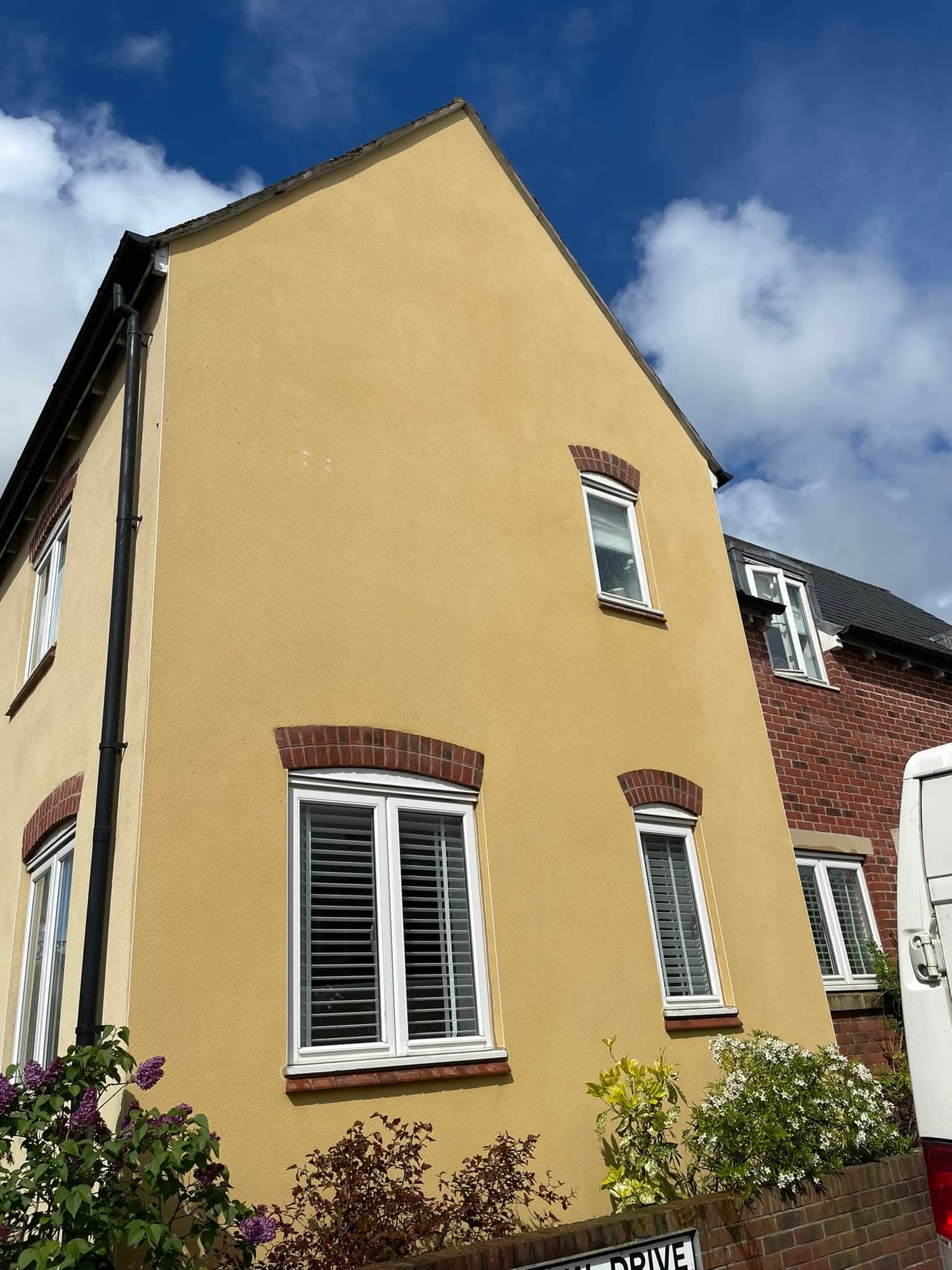
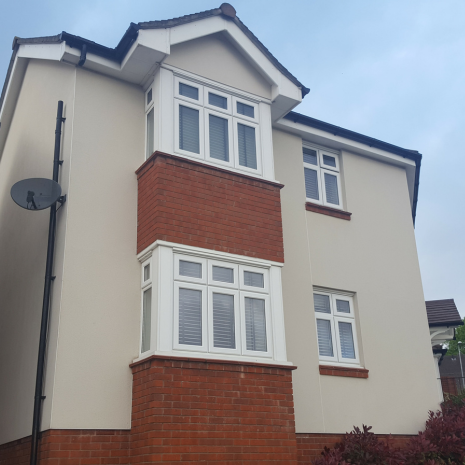

Where water is discharged down a silicone rendered wall, the marking left behind is often mistaken for biological growth and treated accordingly, which clears part of the problem and leaves the rest. The mechanism is straightforward. Water running repeatedly down the same narrow path carries whatever it has collected on the way and deposits some of it along the route. On a textured render that material works into the profile and stays. The visible result is a darker vertical line, usually starting at a specific point such as a fixing, a bracket or an outlet, and fading as it descends. Biological growth establishes along the same track, because that part of the wall is wet more often and for longer. So the line is usually both things at once. K Rend cleaning specified properly addresses both. Biocidal treatment handles the growth, and render stain removal uses appropriate chemistry for the deposit, applied within a full-elevation treatment so no cleaner band is left where a track was treated in isolation. Both are carried out at the same very low pressures used across the rest of the wall, since abrasion on integral pigment cannot be corrected. We also identify the source at survey and say whether it can be addressed, because a discharge that continues will produce the same line again regardless of how well the wall is cleaned. Silicone render cleaning judged on whether the tracking has gone as well as the green is a stricter test than most, and coloured render cleaning done properly passes it. House render cleaning quoted with tracking itemised separately reflects the extra work involved rather than absorbing it and hoping the biocide will cope.
Matching an extension to an original monocouche elevation is rarely exact, and cleaning makes the difference visible in a way that established growth had been hiding. The reasons are practical. Pigment batches vary slightly between deliveries. Scraping technique differs between applicators and between one day and another. The newer render has weathered less and is less absorbent, so it reflects light differently. And where the extension was finished in a different product entirely, texture depth may differ noticeably. While the whole building carries established colonisation, none of this shows. Growth covers both sections fairly uniformly and reads as one surface. Once clean, the join becomes apparent, and owners can reasonably interpret that as something the cleaning caused. We look for evidence of separate phases at survey and explain what to expect. It is not damage and it will not be corrected by treatment. There is a technical dimension too. The two sections may need different specifications, since the newer render is generally less absorbent and may hold treatment on the surface while an older, more weathered area draws some of it in. Treating both identically can leave one behind. Monocouche render cleaning across a property of this kind is therefore specified per section as well as per elevation, with volume and dwell adjusted for each. The method is unchanged throughout: low pressure, generous application to reach the base of the texture, full dwell, gentle rinsing, nothing brushed or agitated. Render restoration returns both sections to their own original tones, which is the most that can honestly be promised.
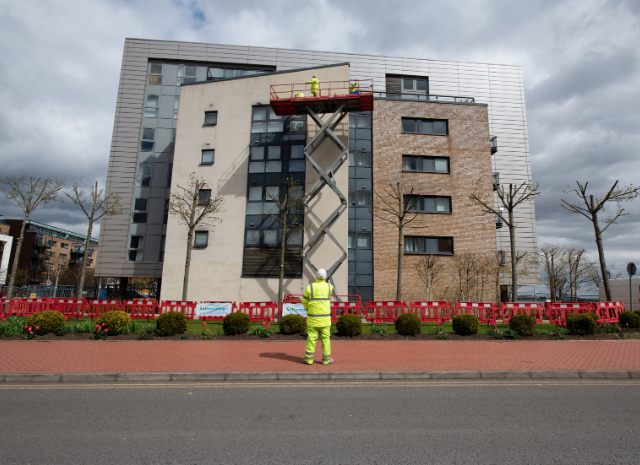

Caravan, motorhome and leisure vehicle dealerships with rendered buildings occupy large sites where the premises are seen alongside very expensive stock, and any contrast in presentation is noticed immediately. Commercial render cleaning at these sites is dominated by stock protection and by seasonal trading. Vehicles are displayed close to buildings, cannot always be relocated easily, and represent significant value. Anything within reach of a working elevation is moved or fully sheeted before we start, and the low pressure method means there is no drifting spray across a display area in the way a pressure washer would produce. Seasonally, spring and early summer are peak trading, so work generally goes into the quieter months when treating all buildings in one programme is also more economical. Showroom entrances, workshop bays and customer parking stay usable throughout, with exclusion zones agreed and physically barriered given the vehicle movement involved. Insurance, method statements and risk assessments are supplied ahead of attendance, and operatives hold current working at height certification. Site induction and permit systems are completed before starting. Technically these premises combine large glazed frontages with substantial rendered flank and rear elevations, often long and uninterrupted. Soft wash render cleaning must hold identical dilution and continuous wet edges across the full run, since banding on a plain wall of that length is obvious from across a display area. For dealerships around Powick, a planned interval keeps the buildings presenting to the same standard as the stock in front of them, and protects a large area of coating. Workshop and preparation buildings are usually treated in the same visit, since the marginal cost of an additional elevation is far lower than a separate attendance.
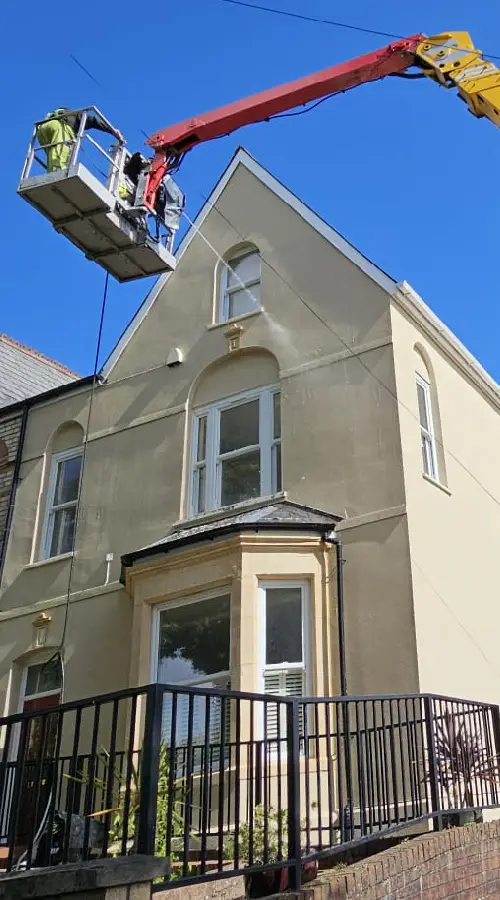
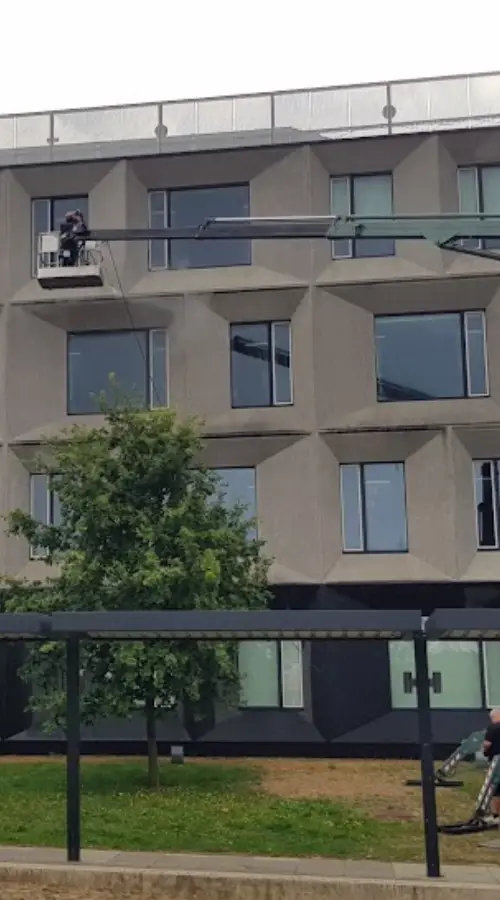
Softwashing UK price per elevation rather than per property, and it works in the customer’s favour more often than not. Buildings do not soil evenly. A well-lit frontage with reasonable air movement can be years from needing anything while a shaded gable enclosed by planting is heavily colonised. Applying a single rate across the whole building either overcharges for the clean walls or underspecifies the dirty one, and both outcomes are unsatisfactory. So each elevation is surveyed separately, graded separately and priced separately. The written quotation lists the coating identified, the growth found, the treatment specified and how each wall will be reached, so the reasoning behind the figure is visible rather than implied. In practice this means many properties end up with a full specification on one or two walls and a lighter treatment elsewhere, which costs less than treating everything at maximum strength. It also means we can state plainly where an elevation does not need doing yet, rather than including it silently to inflate a total. The one thing we flag alongside is appearance. On a through-coloured render, treating one wall and leaving another can leave a visible difference at the corner where they meet, so the decision needs to be informed rather than made on price alone. Render cleaning prices set out this way are fixed at survey and do not change. Affordable render cleaning means paying for the work each wall genuinely needs. Our render cleaning specialists work on rendered elevations exclusively, and full public liability cover and height certification are available on request.
Coverage takes in Powick together with Bastonford and Old Hills, all on identical terms with no travel loading applied to any of them. Quoting per elevation rather than per property is worth explaining, since it is the part of our approach customers find most immediately useful. Every wall is surveyed at close range and assessed on its own terms: the coating identified, the texture graded, the condition checked, the organisms present recorded and their density judged, the area measured and the access worked out. Each wall then carries its own figure in the written quotation. The reason is that buildings genuinely do not soil evenly. It is entirely normal for one elevation to carry heavy colonisation while another needs almost nothing, and an averaged rate across a property would misrepresent both. This gives you a decision to make with the numbers visible. Treating the problem wall alone is sometimes the sensible answer. Adding the others while we are already at the property is often better value, since the marginal cost of an extra elevation is far lower than a separate visit later. And where a wall genuinely does not need doing yet, the quotation says so rather than including it silently. The only caveat we raise is that on a through-coloured render, treating one wall and leaving another can leave a visible difference at the corner where they meet. Properties in Bastonford and Old Hills are assessed on exactly the same basis. Surveys take around twenty minutes and produce an itemised written figure by email. Where several properties in the same settlement arrange together, the mobilisation is shared and each quotation reduces accordingly.
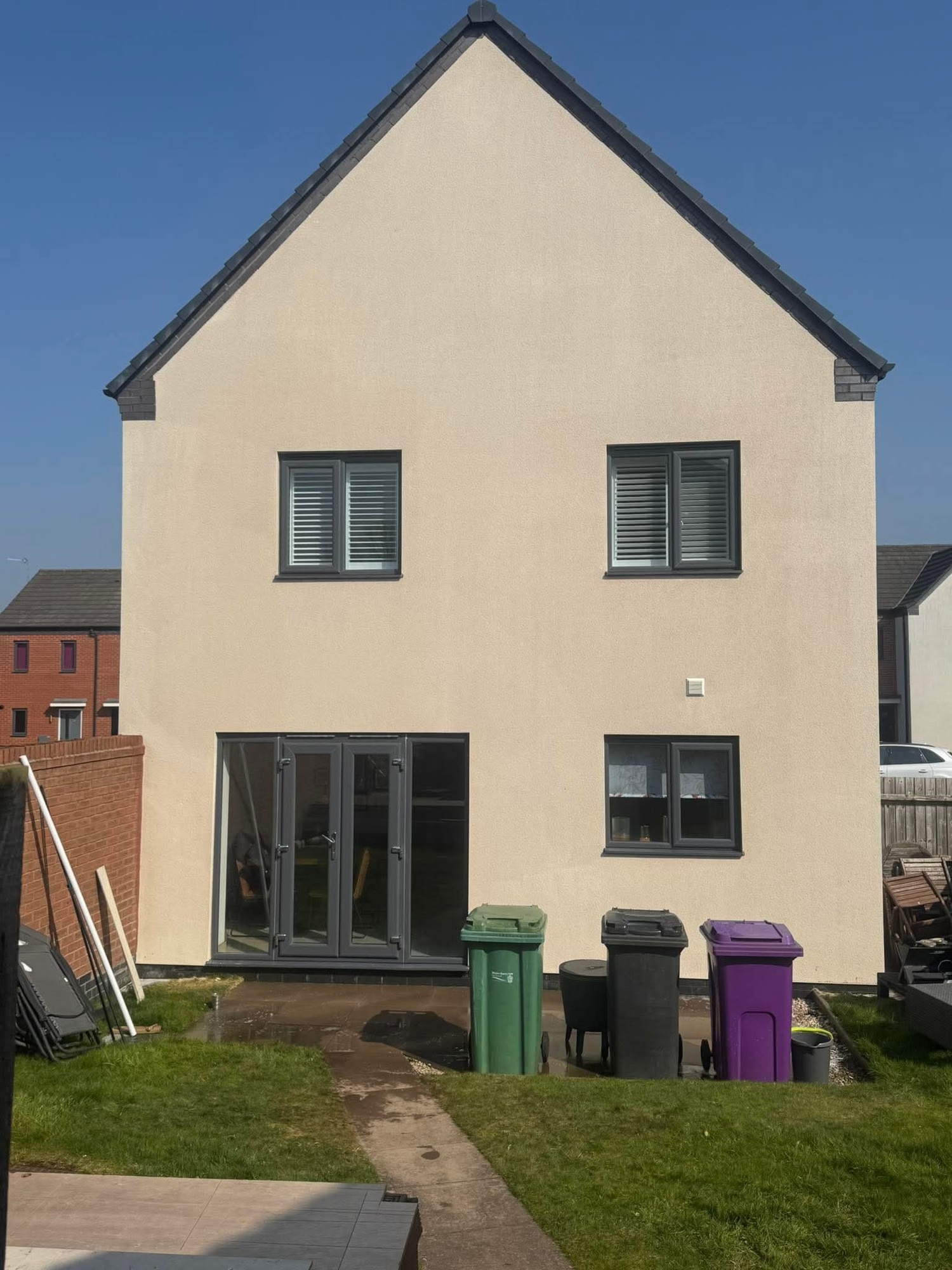
Most properties in Powick benefit from professional render cleaning every 3 to 5 years, although this depends on the surrounding environment. Properties near trees, woodland, busy roads or coastal areas may require more frequent cleaning due to algae, mould and airborne contaminants. Our soft washing process removes existing growth and helps keep your render cleaner for longer.
Yes. Soft washing is specifically designed for delicate surfaces such as K-Rend, silicone render, monocouche render and painted render. Unlike high-pressure washing, it cleans at low pressure while treating biological growth at its source, reducing the risk of damage to the render finish.
We clean virtually all external render finishes, including K-Rend, Monocouche, Weber, Sto, silicone render, acrylic render, painted render, roughcast and pebble dash. Every cleaning method is tailored to the specific render type to achieve the best possible results.
Yes. Our specialist soft washing treatments are highly effective at removing green algae, red algae, black mould, mildew, lichen and other organic staining. We also apply professional biocide treatments to kill spores and slow down regrowth.
Because our process targets the biological growth rather than simply washing the surface, results typically last much longer than pressure washing alone. The exact lifespan depends on weather conditions, surrounding vegetation and the property’s location.
No. Our soft washing process is specifically designed to clean render safely. We use low-pressure application methods and specialist cleaning solutions that remove contamination without damaging the render surface when carried out by trained professionals.
The UK’s damp climate provides ideal conditions for algae, mould and other biological growth to develop on rendered surfaces. Areas with limited sunlight, nearby trees or persistent moisture are especially susceptible. Professional soft washing safely removes these contaminants and restores your property’s appearance.













































WhatsApp us