There is a short sequence of checks made immediately before anything is applied to a wall, after the quotation and after the crew has arrived. They take a few minutes and they are the last opportunity to catch anything. The first is the weather, checked again on the morning rather than relied on from the day before. If rain is due within a couple of hours of application the work moves, since a treatment washed off before the dwell has completed achieves nothing. The second is the surface. A wall is checked dry and by hand for anything that has changed since the assessment — a bead that has come loose, a section that now sounds hollow, cracking that has opened over a winter. Our render cleaning services are specified from the survey and confirmed on the day. The third is protection. Glazing, frames, doors, fittings, planting, ground surfaces and anything belonging to somebody else within reach is covered before a drop is mixed. The fourth is the mix itself, made up on site to suit the coating and the severity rather than poured from a drum, since render algae removal on a light film and on twenty years of lichen need different strengths. The fifth is the running order, deciding which elevation is treated when so nothing dries before the rest has been wetted. Render moss removal on copings is scheduled first where it needs a second application. Professional render cleaning of a house in Ringwood starts properly only once all five are done, and house render cleaning that begins with the pump rather than the checks is the version that goes wrong. Exterior render cleaning is decided before it is applied.
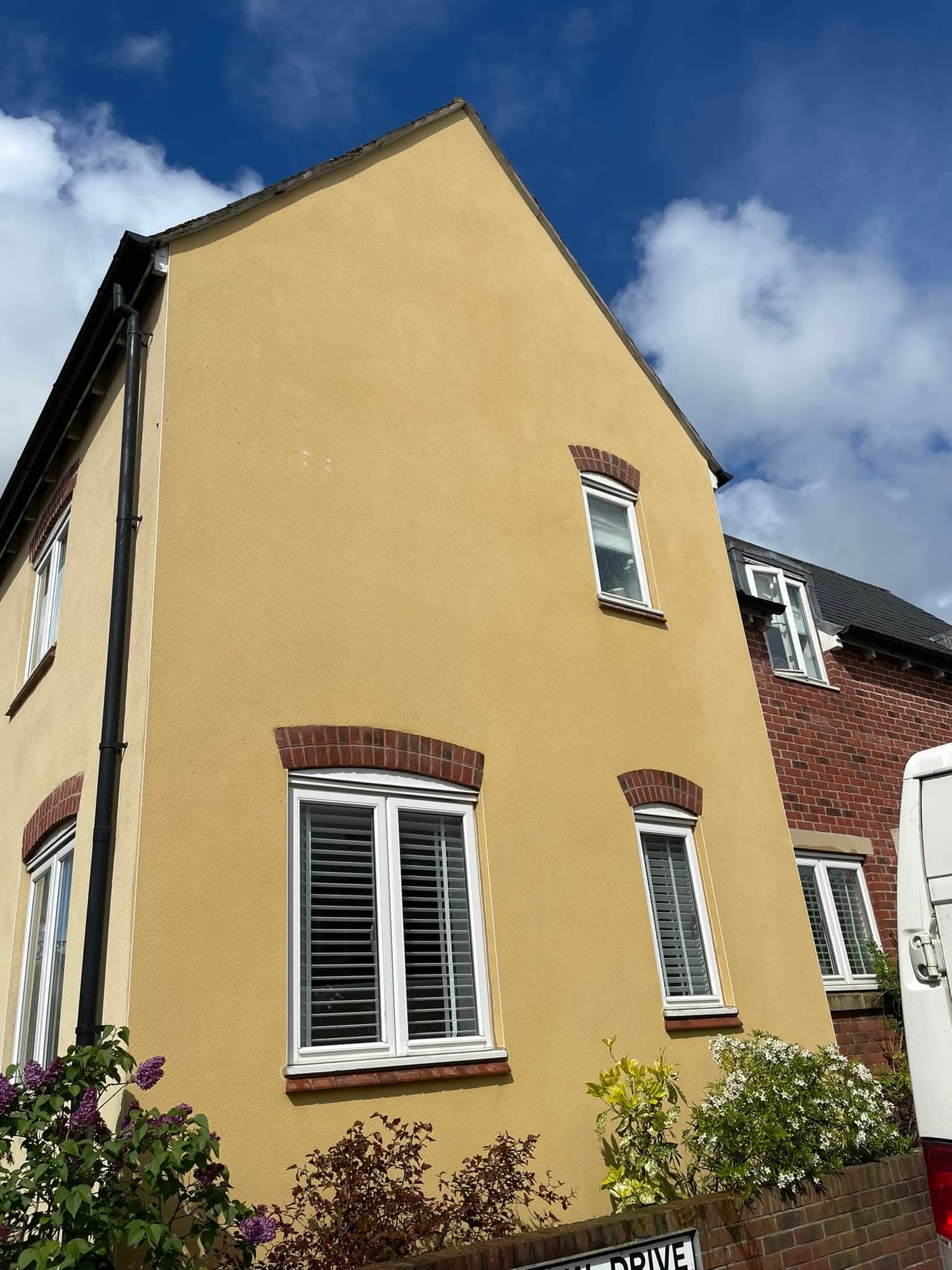
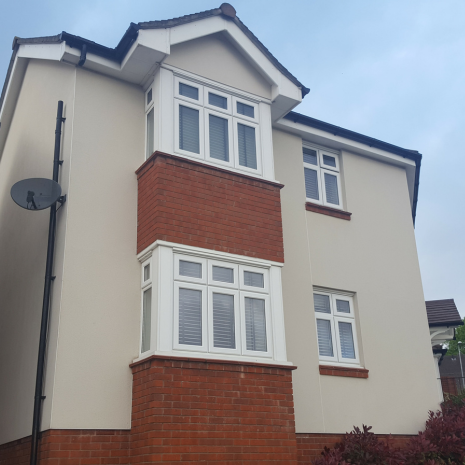

On a silicone system two of the pre-application checks matter more than the rest. The first is confirming the system type, which is done by splashing a little water on the surface — a face that beads is behaving as a modern hydrophobic finish and will need the volume that goes with it. The second is the sun. K Rend cleaning depends entirely on keeping solution in contact with a face designed to shed it, so the running order is set by which elevations are in shade at which point in the day rather than by which looks worst. Getting either of those wrong produces a patchy result that then gets blamed on the material. Beyond that the checks are the same as anywhere: junctions and seals inspected, fixings looked over for anything corroding, glazing and frames protected, and the mix made up on site. Soft wash render cleaning then applies a biocidal solution at a pressure barely above hose flow, dwells long enough to destroy algae and lichen at root level, and rinses with a gentle controlled flow directed down the face. Nothing mechanical touches the surface, since pigment runs through the material and abrasion removes it permanently. Silicone render cleaning is unforgiving of a rushed application and entirely reliable when it is not rushed at any stage. Render stain removal is checked last, with each mark tested on a small area before wider application. Iron bleed from ties and brackets, cement residue at fixing points and dark runs beneath a leaking joint behave differently on a Ringwood property depending on how the finish has weathered.
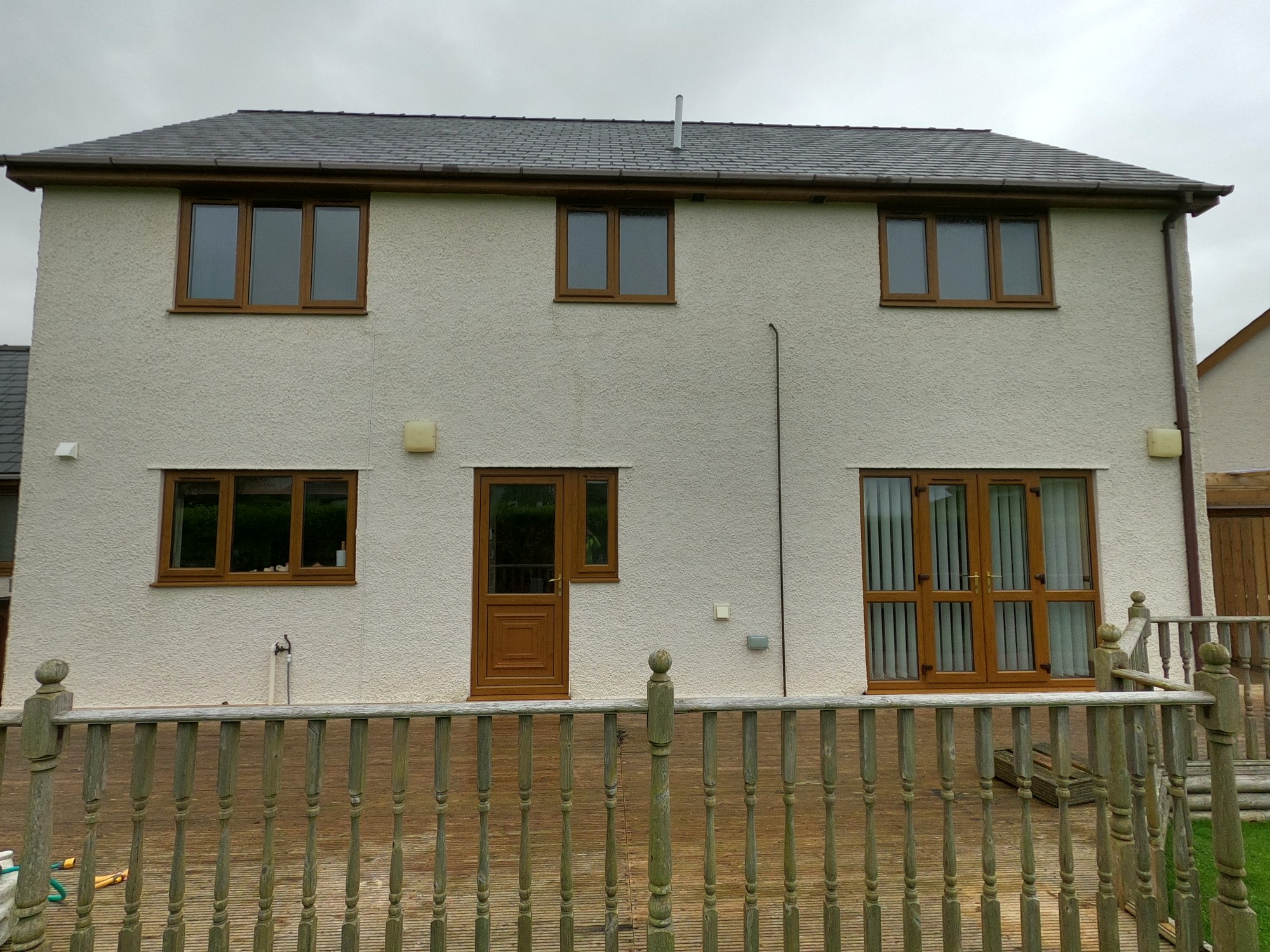
Monocouche adds two checks of its own before anything at all is applied to it. The depth of the scrape is confirmed by hand, since it determines how much solution the texture will absorb, and every bead at every corner, opening and base is examined for damage and recorded before anything is applied. The third check is for earlier harm. Flattened patches, vertical streaking and light bands at working height are the signature of a previous pressure wash, and Monocouche render cleaning will not recover them, so they are photographed before the work rather than discussed afterwards. Nobody should be answering for damage that was already there. Conditions matter more on this finish than any other, so the weather check is made again on arrival. Strong sun evaporates solution before it penetrates the profile and hard frost stops the chemistry entirely, so a marginal forecast moves the date. Once all of that is settled the method is the familiar one: solution applied at low pressure in enough volume to soak through the depth of the texture rather than glaze the peaks, a long dwell to kill growth at root level, a repeat application on the heaviest deposits, then a soft even rinse across each full face. Render pressure washing is excluded before any check is made, since it flattens the scrape, exposes the paler aggregate beneath and leaves permanent tracking, and coloured render cleaning offers no top coat to renew over it. Handled properly, render wall cleaning of monocouche around Ringwood returns the specified tone across the following weeks in a genuine render restoration.
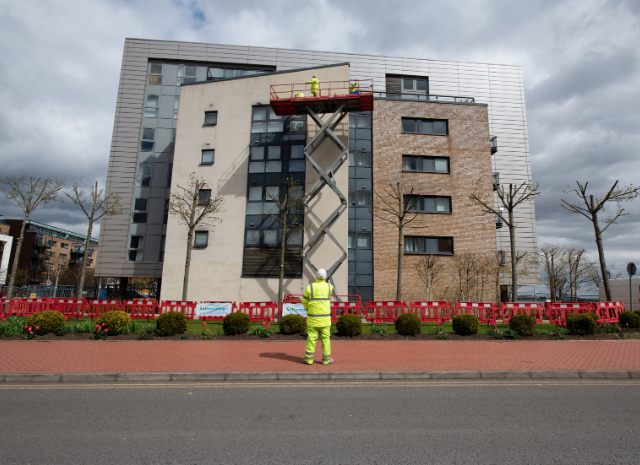

On a commercial site the same pre-application checks are formalised rather than left informal, and several of them involve somebody else signing something. A site induction or permit where required, confirmation that exclusion zones are in place, a check that the access equipment is positioned as planned, and a walk of the elevations to confirm nothing has changed since the survey. Commercial render cleaning does not begin until all of that is signed off by whoever holds responsibility. The programme itself was written around trading hours, deliveries and staff movement, with method statements and risk assessments issued in advance, and access established at survey — powered platforms, tower scaffold or extended pole systems according to height and standing ground. Nothing about a large programme is assumed from the first morning. The conditions check is made daily rather than once, since a programme running across several days will meet more than one forecast. Where a day is lost the sequence is adjusted rather than compressed, because compressing it means cutting the dwell, which is the one part that cannot be shortened. Render soft washing is used throughout, giving even coverage along a full flank, very low water volumes, run-off directable clear of entrances and parking, and negligible drift near occupied doorways. Render facade cleaning delivered to a checked and confirmed plan finishes consistently from one end of a building to the other. Render mould removal on shaded and north-facing elevations is scheduled first each day, since those faces need the longest contact. They set the render maintenance interval for premises in Ringwood.
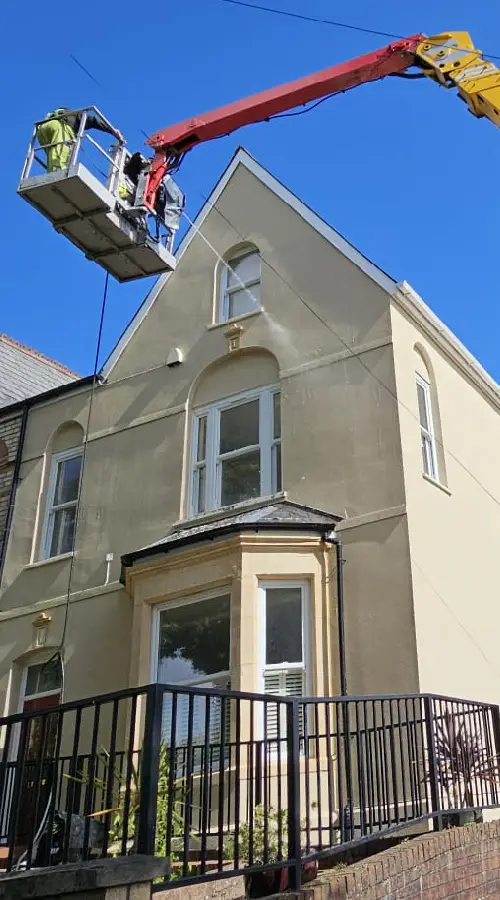
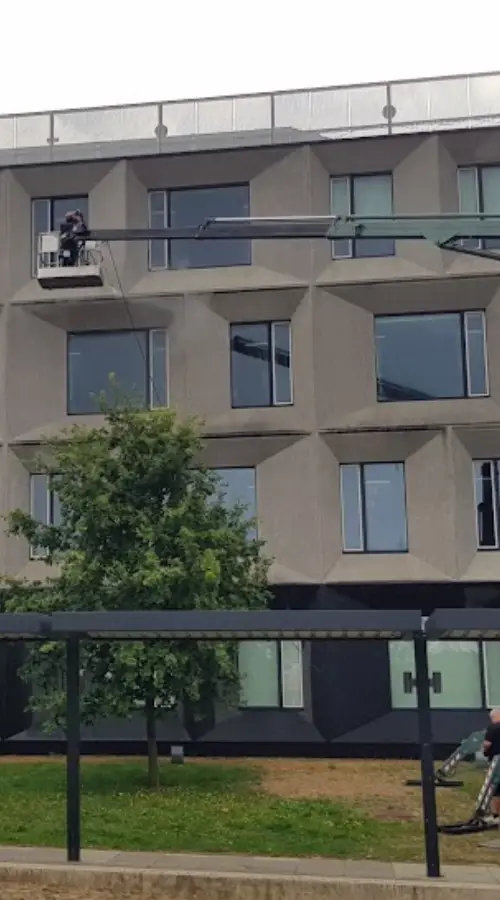
Those checks are also the point where a job occasionally stops before it has started, and it is worth knowing that can happen. A coating that has deteriorated since the assessment, a wall that sounds hollow over a larger area than expected, or conditions that have turned overnight are all reasons to postpone rather than to proceed and hope. Nothing is charged for a visit that does not go ahead, however far the crew has travelled. Render cleaning prices are established at an assessment from elevation count, working height, access arrangements and the extent of the growth, and the written render cleaning cost holds when the work is done rather than being partially invoiced for a partial attempt. Postponing costs a morning; a failed treatment costs a full visit. Affordable render cleaning depends on the job being right first time, which is precisely what the pre-application checks protect. A treatment applied into the wrong conditions has to be repeated at somebody’s expense, and it is usually ours. The crews are render cleaning specialists rather than general exterior cleaners, and the authority to stop is part of that. An operator who has to ring somebody for permission to postpone will usually press on instead of losing a day. Everything used is an eco friendly render cleaning product chosen because it breaks down safely once its work is complete. Anyone comparing firms in search of the best render cleaning service should ask what happens if a wall turns out differently on the day. A firm with an answer has thought about it; a firm without one is planning to carry on regardless.
Ringwood sits within our regular working patch, and arranging an assessment is deliberately uncomplicated from start to finish. There is no form to complete and nothing to measure beforehand. Ring or email Softwashing UK with the address and a rough description of the property — how many storeys, whether there is a gable, and roughly what the render looks like. That conversation takes two or three minutes and establishes whether a visit is worth arranging at all, since occasionally the answer is that a wall has a few years in hand. The visit itself takes about twenty minutes and carries no obligation. Somebody walks the full perimeter, establishes the coating and its condition, records the growth on each elevation, checks access and where run-off will go, and photographs anything worth recording. Nobody needs to be present provided the perimeter is reachable. Anything found is described plainly rather than left for the invoice. A written quotation follows the same day, broken down by element so residential render cleaning can be taken in full or in part. It holds for three months and there is no follow-up call unless you ask for one. If it is booked, a date and an arrival window are confirmed, and the work is invoiced on completion with no deposit at any stage. There is no travel charge, no minimum job size and no charge for the assessment. Anyone searching render cleaning near me should find a local render cleaning company that makes the first step as small as possible, because most of this job is decided long before anybody touches a wall.
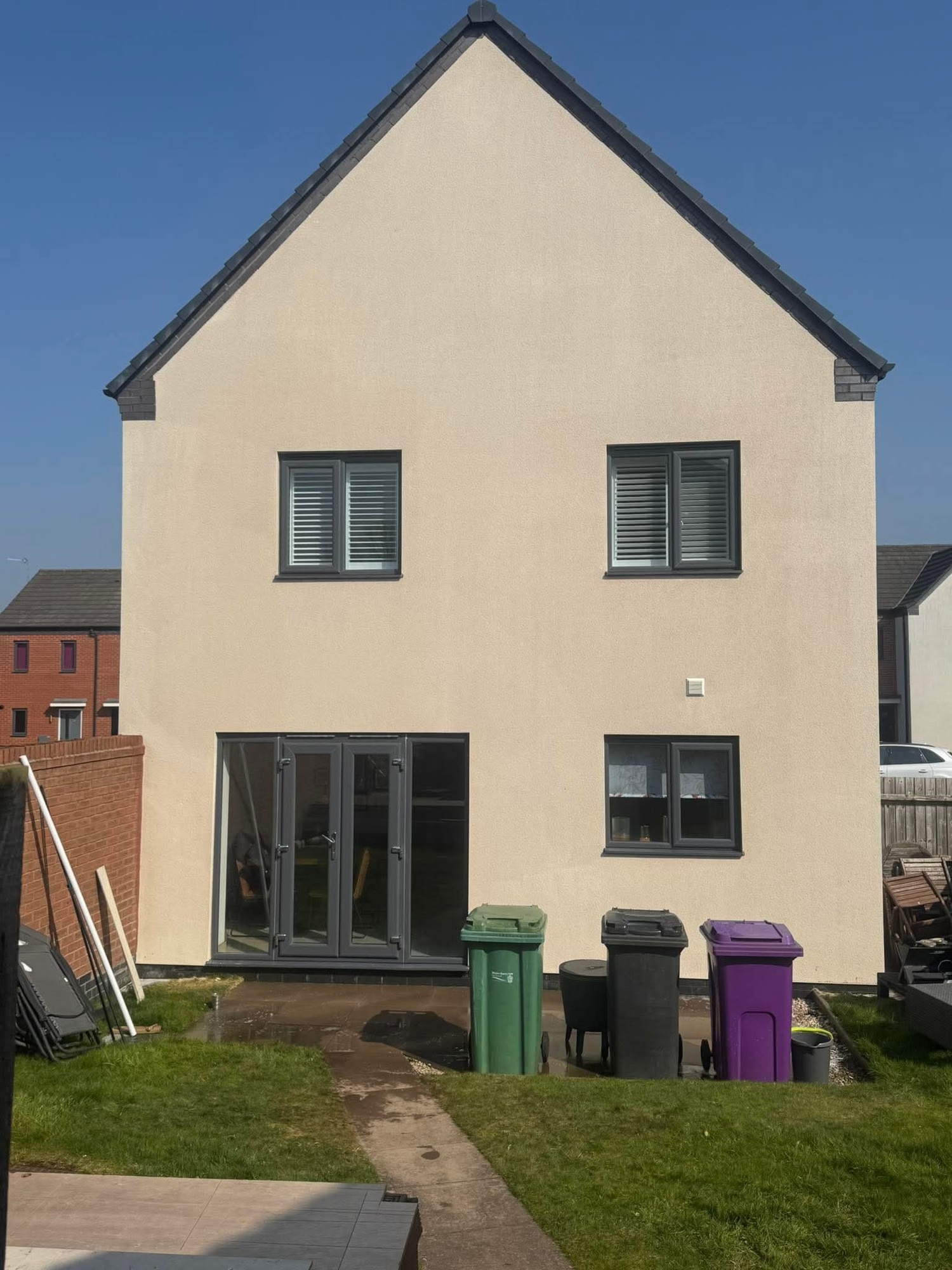
Most properties in Ringwood benefit from professional render cleaning every 3 to 5 years, although this depends on the surrounding environment. Properties near trees, woodland, busy roads or coastal areas may require more frequent cleaning due to algae, mould and airborne contaminants. Our soft washing process removes existing growth and helps keep your render cleaner for longer.
Yes. Soft washing is specifically designed for delicate surfaces such as K-Rend, silicone render, monocouche render and painted render. Unlike high-pressure washing, it cleans at low pressure while treating biological growth at its source, reducing the risk of damage to the render finish.
We clean virtually all external render finishes, including K-Rend, Monocouche, Weber, Sto, silicone render, acrylic render, painted render, roughcast and pebble dash. Every cleaning method is tailored to the specific render type to achieve the best possible results.
Yes. Our specialist soft washing treatments are highly effective at removing green algae, red algae, black mould, mildew, lichen and other organic staining. We also apply professional biocide treatments to kill spores and slow down regrowth.
Because our process targets the biological growth rather than simply washing the surface, results typically last much longer than pressure washing alone. The exact lifespan depends on weather conditions, surrounding vegetation and the property’s location.
No. Our soft washing process is specifically designed to clean render safely. We use low-pressure application methods and specialist cleaning solutions that remove contamination without damaging the render surface when carried out by trained professionals.
The UK’s damp climate provides ideal conditions for algae, mould and other biological growth to develop on rendered surfaces. Areas with limited sunlight, nearby trees or persistent moisture are especially susceptible. Professional soft washing safely removes these contaminants and restores your property’s appearance.











































WhatsApp us