Organic growth does more than spoil the appearance of a rendered wall, and the damage it causes to the coating itself is the better argument for treating it. The mechanism is moisture retention. A clean render wets during rain and dries afterwards, and the drying is what protects it. Moss and heavy algal colonisation form a layer that holds water against the surface continuously, so an elevation that should dry within hours stays saturated for days, and through the wetter months it may not dry at all. Three consequences follow. A permanently damp coating is subject to repeated freeze-thaw cycling through winter, and where any hairline crazing exists, that cycling works at it. Persistent saturation also accelerates the ordinary weathering of the surface, increasing absorbency and making the wall wetter still. And the damp itself encourages further colonisation, so the process compounds rather than reaching a steady state. Moss adds a physical dimension. On a textured face it anchors into the profile, and where it has established at low level or in sheltered corners it holds standing water directly against the render. None of this is dramatic in any single season. Across a decade it is the difference between a coating reaching its expected service life and falling short of it, and recoating an elevation costs many times what cleaning it does. Our render cleaning services address the cause rather than the symptom. Render moss removal and render algae removal at root level return the wall to drying normally between wettings. Exterior render cleaning on a property in Romsley is preventative maintenance rather than cosmetic spending.
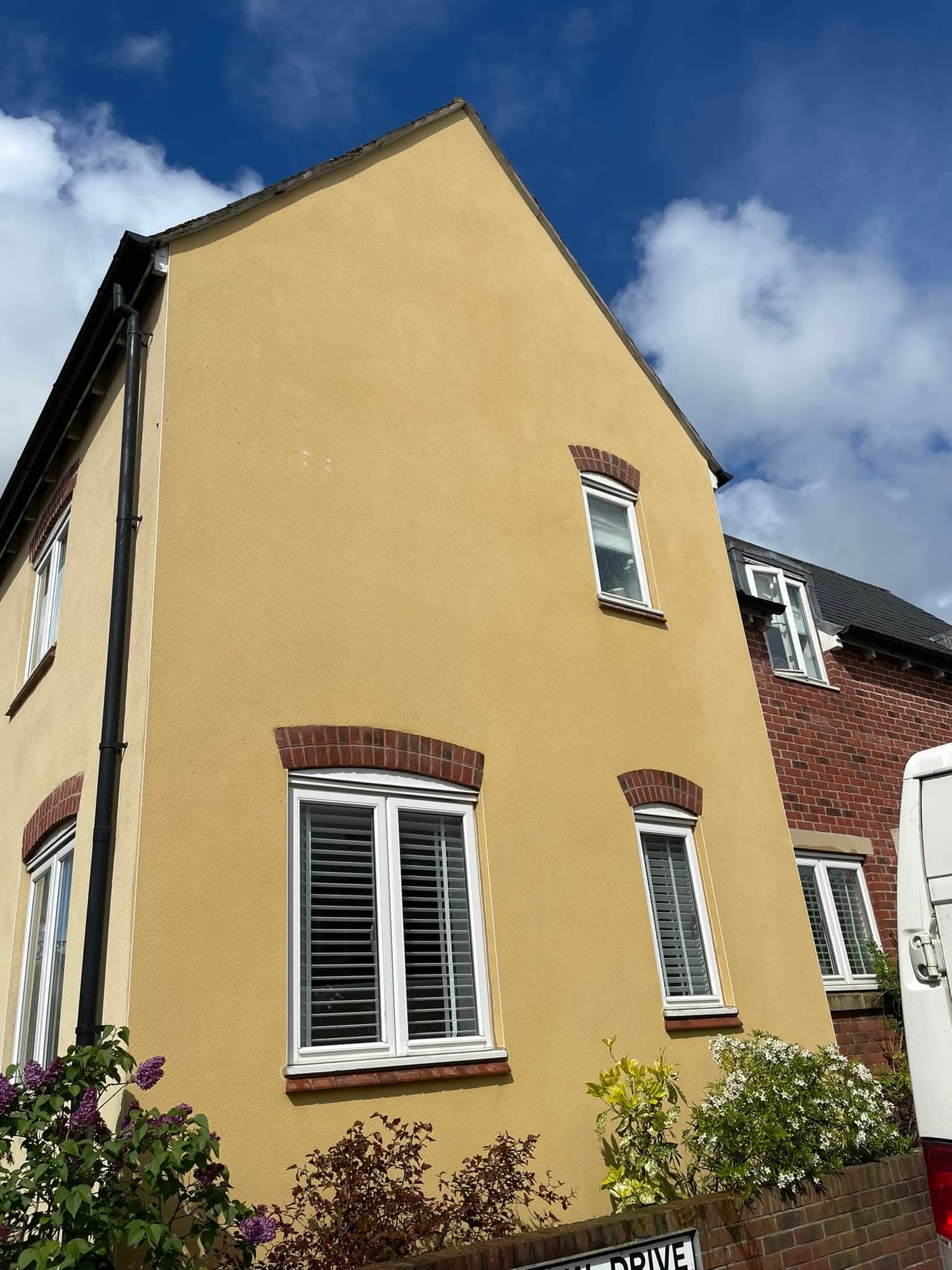
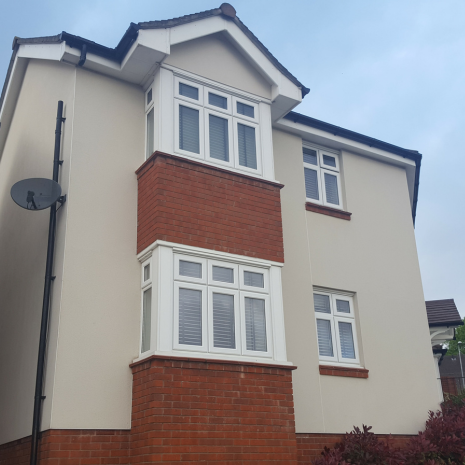

Interval expectations on exposed silicone render elevations differ from sheltered ones, and it is worth explaining because the two behave in opposite directions. An exposed wall dries fast. Air movement across the surface carries away the saturated layer and allows evaporation to continue, so the elevation is dry within a comparatively short period after rain. That works strongly against algal filming, which needs sustained dampness, and exposed frontages frequently stay green-free for years. What they do accumulate is deposition. Wind carries spores and airborne particulate onto the wall continuously, so an exposed elevation is being seeded far more heavily than a sheltered one even while it is drying faster. Fungal black spotting, which tolerates a wider range of conditions than algae, often establishes on exposed walls that carry no green cast at all. The practical consequence is a wall that looks clean from the road and carries dense specking at close range, and owners reasonably conclude nothing needs doing. K Rend cleaning on an exposed elevation is therefore specified for the organism actually present, which usually means a strength judged for fungal colonisation rather than one suited to algal filming. Interval advice reflects the same thing. Exposed walls often hold longer overall, but the specking returns steadily rather than in a sudden flush, so the useful interval is set by that rather than by appearance from a distance. Silicone render cleaning stays chemical throughout: very low pressure, nothing brushed or agitated, complete elevations worked with a live wet edge at consistent dilution. Assessing an exposed elevation from close range rather than from the drive is what prevents it being underspecified.
Judging whether a monocouche clean has been done properly is easier with a few specific things to look at, and they are worth knowing whoever carried out the work. Look at the texture in raking light, ideally low morning or evening sun across the elevation. The scraped face should look consistent across the whole wall. Smoothed or shiny patches mean aggregate has been detached by pressure or brushing, and that damage is permanent. Look for banding. Horizontal lines at working height, or vertical divisions where sections met, indicate the wall was treated in parts that dried at different rates rather than as a continuous unit. Look at the detailing. Reveals, returns, sill undersides and the lines beneath bead terminations should read as cleanly as the open wall. Where they are noticeably darker, they were caught in passing rather than treated as their own zones. Look at the base course, which is the area most often left behind, since it carries embedded mineral soiling as well as biological growth. Look at the corners, where two elevations meet. A tonal step down the arris means the walls were treated separately without the junction being managed. And look again at four weeks rather than on the day, since monocouche render cleaning by dwell rather than force continues improving as dead growth weathers off. Render restoration judged on those six points tells you whether both the method and the execution were right, and residential render cleaning that passes them has left the coating entirely undisturbed. A wall that passes all six will still be improving a month later, which is the seventh test and the most telling one.
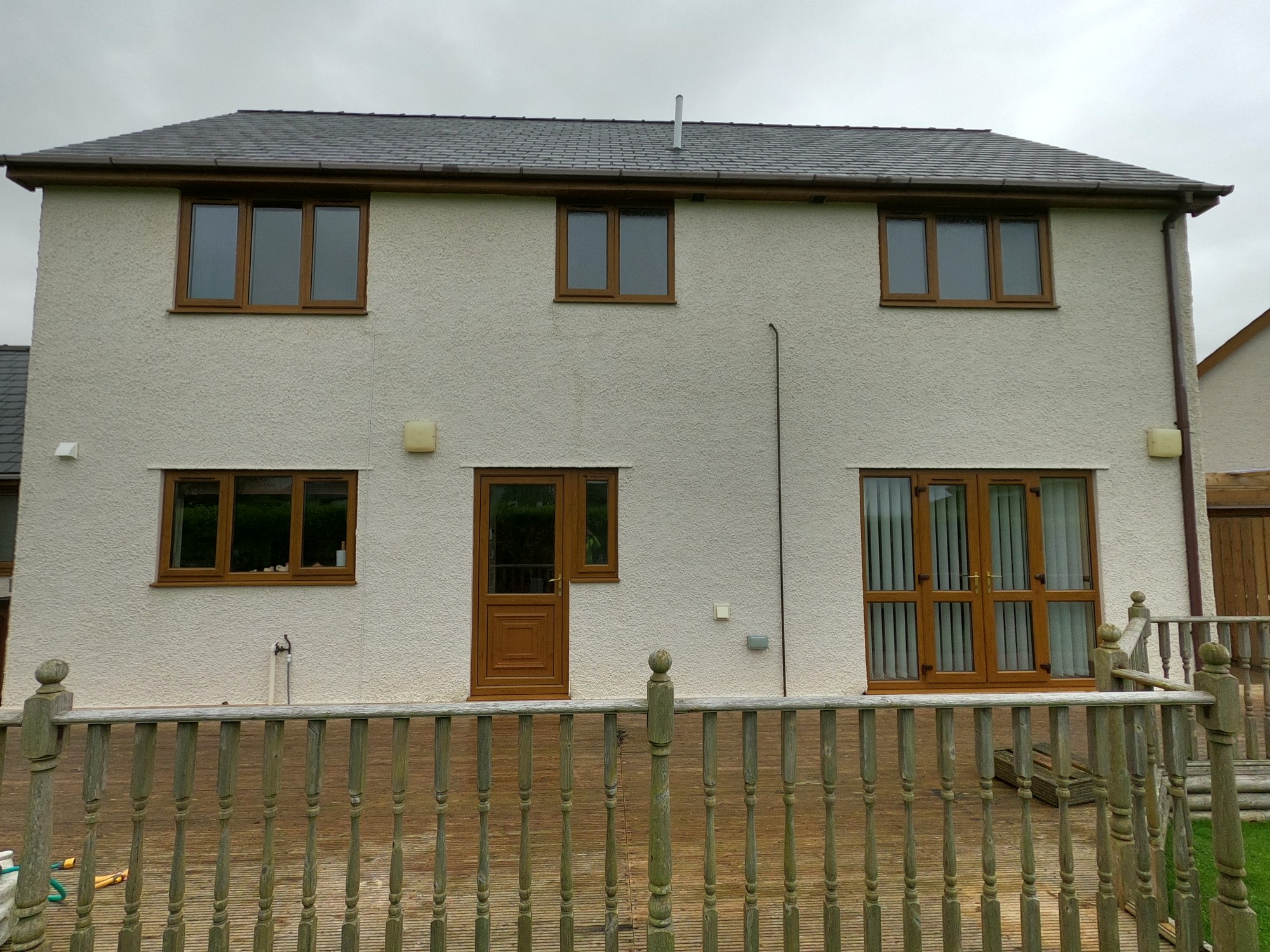
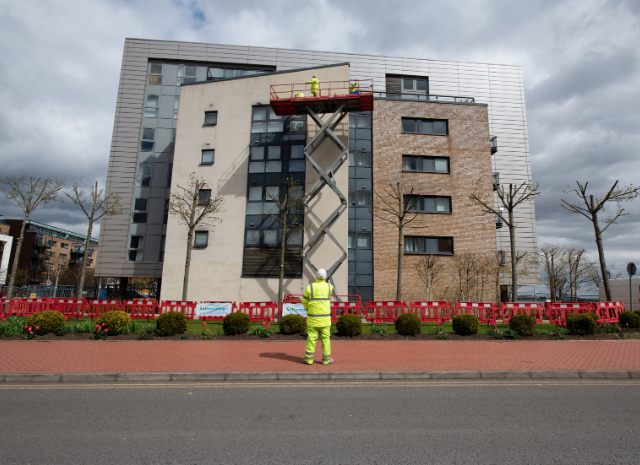

Furniture and homeware showrooms with rendered elevations sell on presentation more directly than most retail, and a soiled exterior undercuts the impression the interior has been arranged to create. Commercial render cleaning at these premises is scheduled around trading, which is generally long-hours including weekends, with deliveries arriving through the week. In practice the work goes into an early start before opening or onto a closing day, and most buildings of this size are completed within a single visit. Display windows are the main technical consideration. Large glazed frontages sit between rendered sections, and treatment must not be allowed to run down the glass and dry, so glazing on the working elevation is protected or rinsed as we go. Signage and external lighting are masked or isolated. Customer parking and entrances stay usable throughout, with exclusion zones agreed and signed rather than blocking access. The low pressure method helps: no machine noise carrying into a showroom, no spray drifting across a frontage, and modest water volumes. Insurance, method statements and risk assessments are supplied ahead of attendance, and operatives hold current working at height certification. Technically these buildings often present large plain rendered areas above and beside glazing. Render facade cleaning must hold identical dilution and continuous wet edges across each run, since banding on a broad uninterrupted panel is immediately visible from the car park. For showroom premises around Romsley, a clean every few years keeps the building consistent with what is being sold inside it and protects the coating from permanent damp. Where a retailer holds several branches, programming them in one visit keeps presentation consistent and reduces the cost per building.
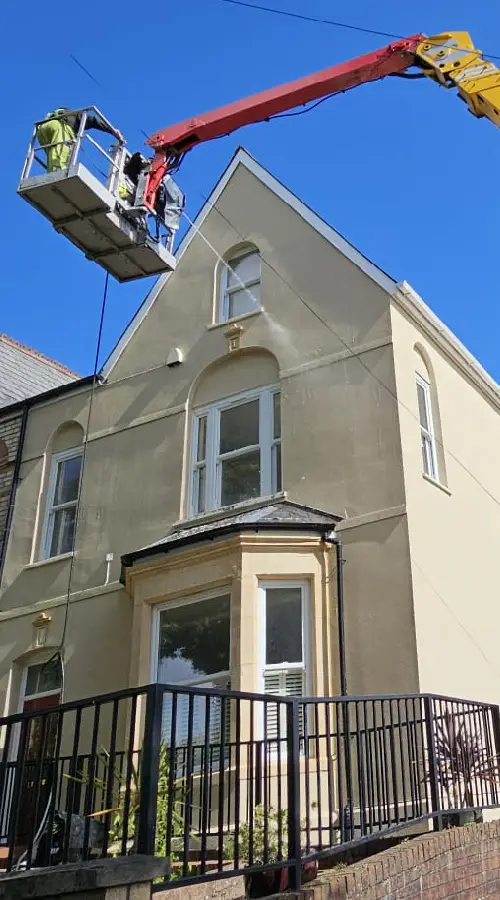
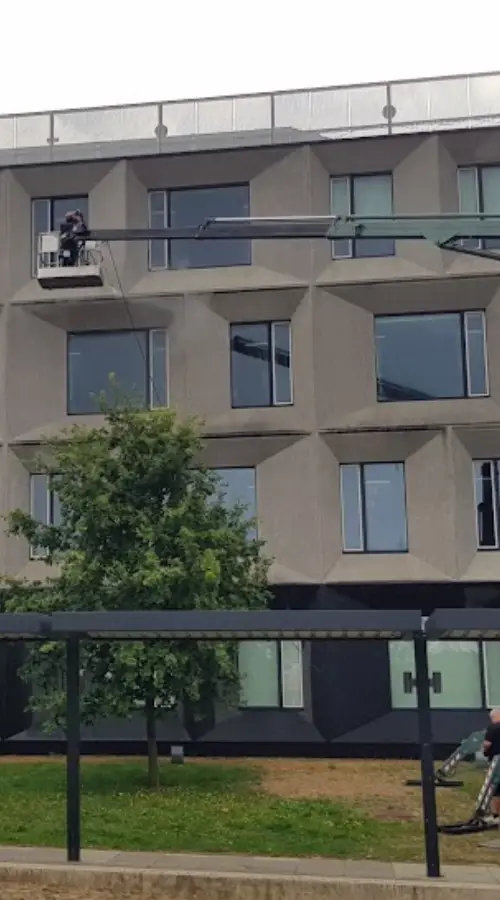
Occasionally the right answer is that a wall should not be cleaned, and how a contractor handles that tells you a good deal. The situations are recognisable at survey. Paintwork that has begun to chalk, showing as a powdery residue on a hand drawn across the surface, will detach further during any treatment however gentle. A film lifting at reveals or bead lines will do the same. Open cracking, particularly at the corners of openings where movement concentrates, means water should not be introduced. Areas that sound hollow indicate the coating has debonded from what is behind it, which is a different problem altogether. In each case treatment would produce a poor outcome, and in some it would make matters worse. We explain what we have found, why it changes the answer, and what would need to happen before cleaning becomes appropriate. Then we decline the work rather than taking the booking. That costs us jobs. It also prevents the situation where an owner pays for treatment and ends up with a patchy elevation and a genuine problem, which is the outcome nobody wants and the one that ends up on a review. Where part of a property is suitable and part is not, we quote for the part that is and state the exclusion in writing. Render cleaning prices are fixed at survey and only cover work we are prepared to stand behind. Our render cleaning specialists work on rendered elevations exclusively, and full public liability cover and height certification are available on request. Where part of a wall can be treated and part cannot, that split is set out in writing before any date is agreed.
Softwashing UK cover Romsley in full, with the same survey process and pricing basis applied to every property and no travel loading regardless of position. Once a quotation is accepted, the process is straightforward and worth setting out so there are no unknowns. You are given a confirmed date and an arrival window rather than a vague half-day. If weather forces a change, which happens occasionally because treatment applied into heavy rain is diluted before it can work, you hear from us in advance and are offered the next workable slot. A postponed date does not change the figure. On the morning, the team walks the elevations to confirm what was recorded at survey, since a wet spell between quoting and attending can change growth density slightly. Protection is then laid out: planting covered or pre-wetted, hard surfaces sheeted, external fittings masked and anything moveable shifted clear. Treatment is applied elevation by elevation at the specified dilution, worked as a continuous operation with a live wet edge. Dwell runs while very little appears to happen, which is the stage doing the work. Low pressure rinsing follows with purified water, then clearing down and a check of borders and hard surfaces before we leave. Most properties here are a single day from arrival to departure, and many less. Afterwards the wall continues improving for two to four weeks. There is no deposit, invoicing follows completion, and if an area has not responded within four to six weeks we return at no charge. Surveys are usually available within the week and produce an itemised written figure by email.
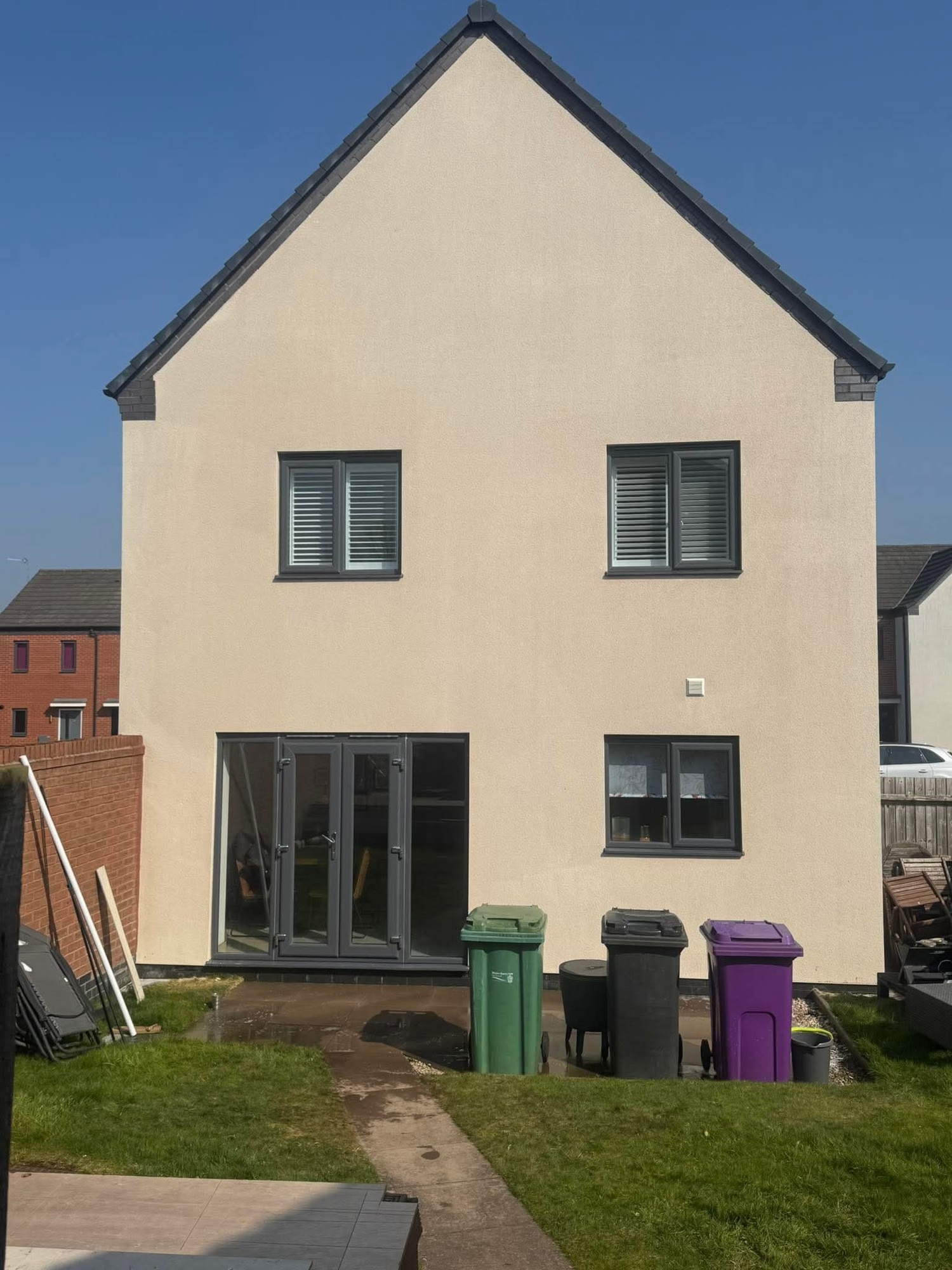
Most properties in Romsley benefit from professional render cleaning every 3 to 5 years, although this depends on the surrounding environment. Properties near trees, woodland, busy roads or coastal areas may require more frequent cleaning due to algae, mould and airborne contaminants. Our soft washing process removes existing growth and helps keep your render cleaner for longer.
Yes. Soft washing is specifically designed for delicate surfaces such as K-Rend, silicone render, monocouche render and painted render. Unlike high-pressure washing, it cleans at low pressure while treating biological growth at its source, reducing the risk of damage to the render finish.
We clean virtually all external render finishes, including K-Rend, Monocouche, Weber, Sto, silicone render, acrylic render, painted render, roughcast and pebble dash. Every cleaning method is tailored to the specific render type to achieve the best possible results.
Yes. Our specialist soft washing treatments are highly effective at removing green algae, red algae, black mould, mildew, lichen and other organic staining. We also apply professional biocide treatments to kill spores and slow down regrowth.
Because our process targets the biological growth rather than simply washing the surface, results typically last much longer than pressure washing alone. The exact lifespan depends on weather conditions, surrounding vegetation and the property’s location.
No. Our soft washing process is specifically designed to clean render safely. We use low-pressure application methods and specialist cleaning solutions that remove contamination without damaging the render surface when carried out by trained professionals.
The UK’s damp climate provides ideal conditions for algae, mould and other biological growth to develop on rendered surfaces. Areas with limited sunlight, nearby trees or persistent moisture are especially susceptible. Professional soft washing safely removes these contaminants and restores your property’s appearance.












































WhatsApp us