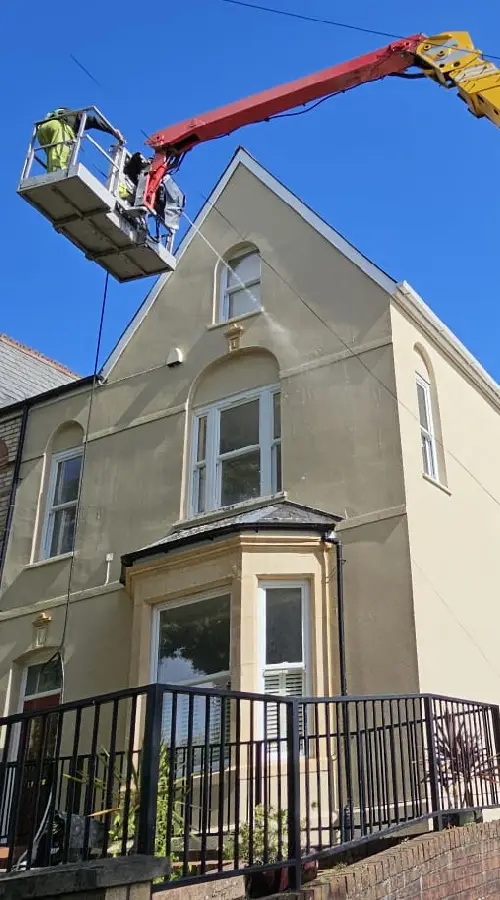
Some elevations have nowhere to work from except a pavement or a road. Terraced frontages, buildings on a back edge of footway, and walls facing directly onto a shared yard all present the same problem: everything beneath the elevation belongs to somebody else or to the public. That changes the preparation entirely. Pedestrians, parked vehicles, shopfronts and boundary structures all sit within reach of anything applied, and our render cleaning services are set up to keep everything on the wall and nothing anywhere else. Low pressure does most of the work. A soft wash applied at barely above hose flow produces droplets rather than a mist, so there is very little airborne at any point, and the solution is laid onto the face rather than thrown at it. Volumes are low enough that run-off at ground level is modest and can be directed rather than allowed to spread across a footway. Timing helps as well. A frontage onto a busy pavement is better treated early, and where a road is narrow enough that vehicles have to be considered, that is agreed before the day rather than negotiated on it. Render algae removal on a public frontage is often lighter than on a rear elevation, since those walls get sun and moving air. Render moss removal along a coping or a parapet above a footway is the part needing the most care, because anything falling has somewhere to land. Professional render cleaning of a property in Spetisbury with no private ground is a planning exercise first, and house render cleaning on a street frontage is judged on what happened below the wall as much as on it. Exterior render cleaning has to leave a pavement exactly as it was found.
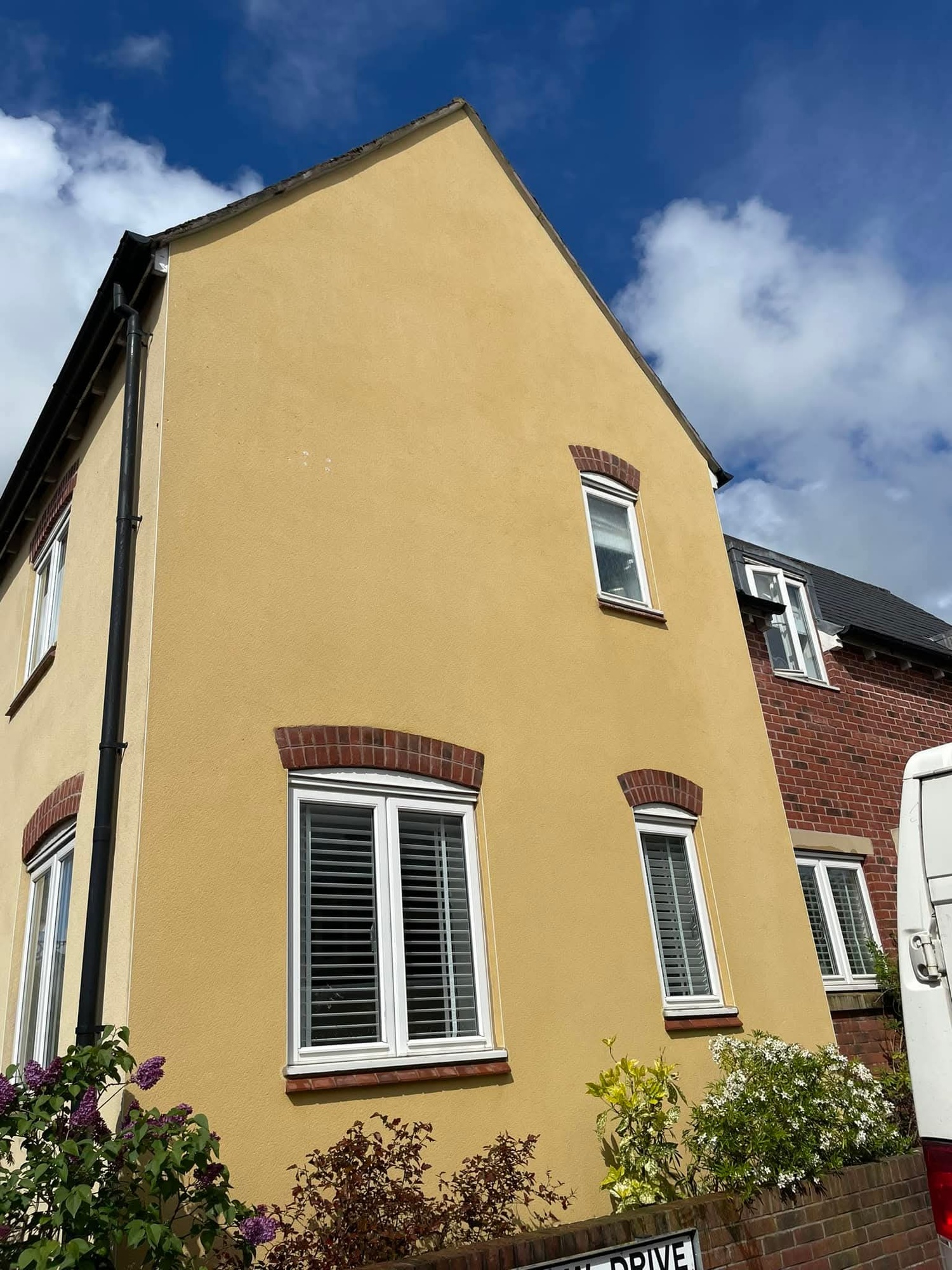
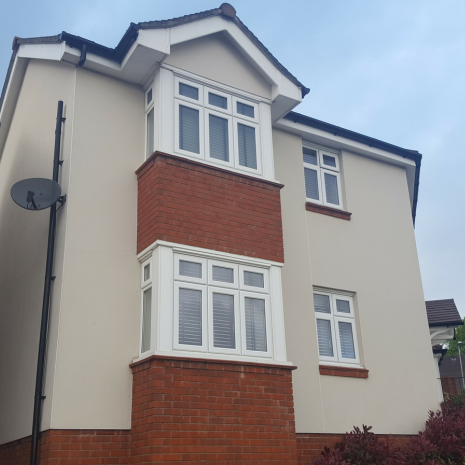

Modern terraces and mews housing put silicone render straight onto a pavement line with no margin at all, and K Rend cleaning in that situation is defined by containment rather than by the wall itself, which is usually in good condition. The material helps. A hydrophobic surface holds solution on the face rather than absorbing it, so what goes on stays where it is put and rinse water sheets off cleanly rather than soaking in and running unpredictably. Soft wash render cleaning applies a biocidal solution at a pressure barely above hose flow, which produces almost no drift — the single most important property when a footway sits a metre away. It dwells long enough to destroy algae and lichen at root level, then rinses with a gentle controlled flow directed down the face. Nothing mechanical touches the surface, since pigment runs through the material and abrasion removes it permanently. Silicone render cleaning does need generous volume, and on a constrained frontage that volume is applied deliberately with everything below protected first, rather than freely as it would be on an open plot. Render stain removal is common on street elevations, because the fixings, brackets and signage that generate marks are concentrated there. Iron bleed from ties and brackets, cement residue at fixing points and dark runs beneath a leaking joint each need a specific product and a test patch, and those products are stronger than the general biocide so the protection extends further. On a Spetisbury frontage that preparation is frequently the longest part of the visit, and it is included rather than charged separately.
Monocouche on a frontage with no working space is the most demanding combination in this trade, because the finish needs generous volume and a long dwell while the position allows the least margin for anything going astray. Monocouche render cleaning there is slower than the same wall on an open plot. Everything below is covered before a drop is applied — footway, kerb, any adjoining threshold and anything belonging to a neighbour — and the run-off is directed to a single point rather than allowed to spread. Rinsing is soft and controlled for the same reason, with the flow kept low enough that nothing carries beyond the sheeting. The treatment is otherwise standard: solution applied at low pressure in enough volume to soak through the depth of the texture rather than glaze the peaks, a long dwell to kill growth at root level, a repeat application on the heaviest deposits along copings and projecting bands, then a soft even rinse across the full face. Render pressure washing on a street frontage is doubly excluded. Alongside flattening the scrape, exposing the paler aggregate beneath and leaving permanent tracking, with coloured render cleaning offering no top coat to renew over it, it throws water and debris across a public footway at speed, which no amount of signage makes acceptable. Treated carefully, render wall cleaning of monocouche returns the specified tone with nothing to show for it at ground level. On buildings around Spetisbury where a frontage had darkened over a decade, that recovery is a genuine render restoration achieved without inconveniencing anybody who happened to be passing.
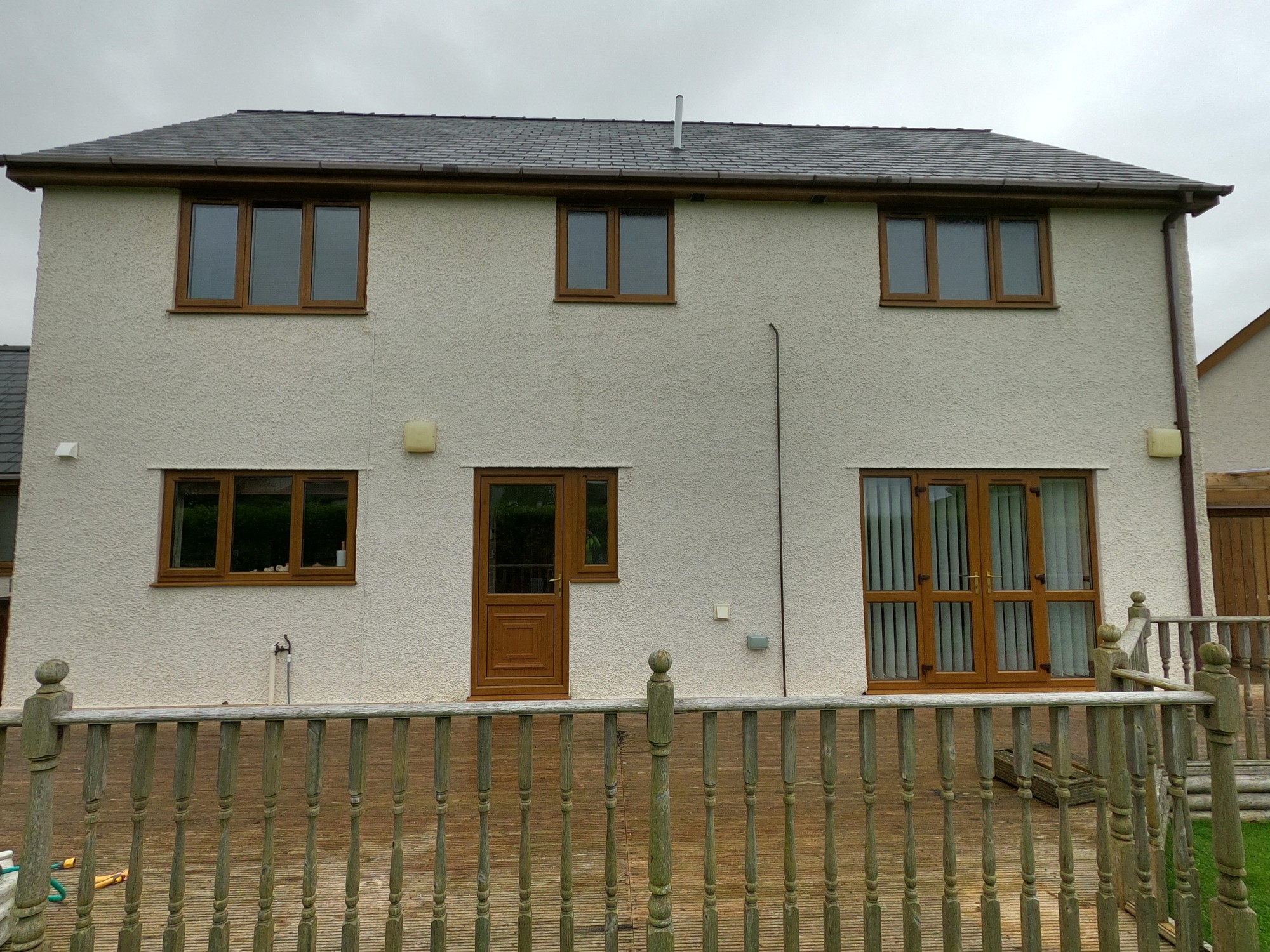
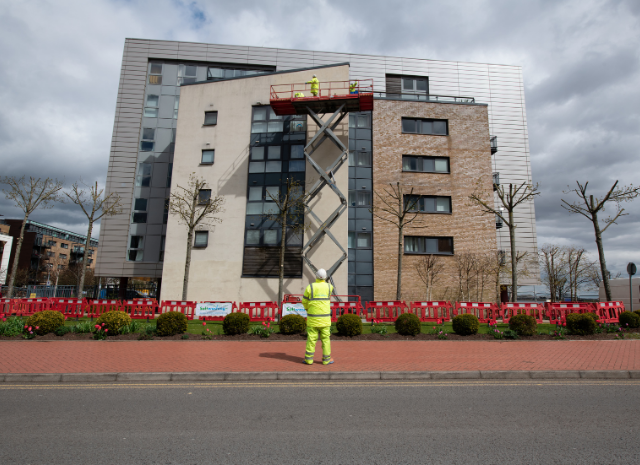

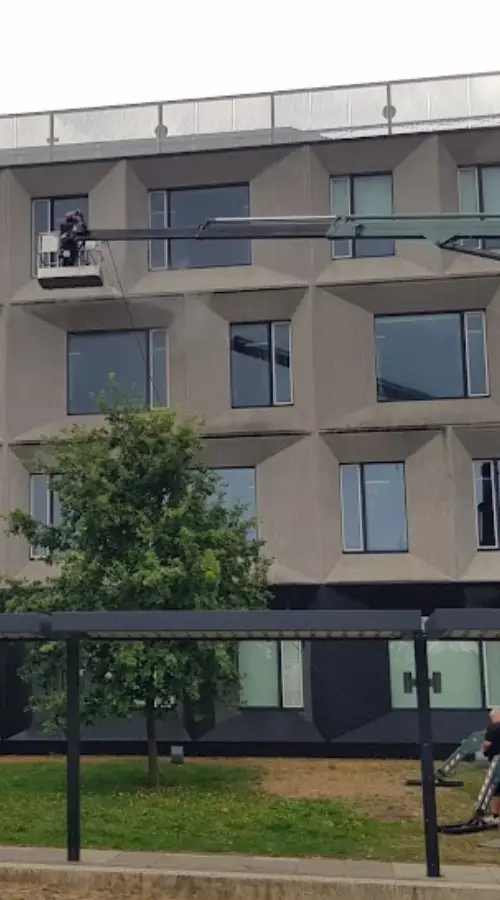
Retail frontages and town-centre premises bring the tightest constraints of any commercial render work. A pavement carrying pedestrians all day, a shopfront that has to stay open, parked vehicles at the kerb and adjoining occupiers a metre away all sit directly beneath the elevation. Commercial render cleaning there is delivered around the public rather than around the building, and the planning takes longer than the treatment. Access is established first — usually a tower or extended pole systems, occasionally a platform where a parapet runs high — with pedestrian management agreed in advance, signage in place, and the programme written around trading hours and delivery windows. Method statements and risk assessments are issued beforehand, and where a highway licence or a permit is required that is arranged rather than assumed, since a permit refused on the morning stops the job entirely. Early starts do most of the work, and on a parade the whole frontage can frequently be treated before the first shutter goes up. A frontage treated before a parade opens causes almost no disruption, and the dwell continues through the morning without anybody noticing that anything is happening. Render soft washing is the only viable method in that setting. Droplets rather than mist, very low water volumes, run-off directable clear of doorways and gullies, and even coverage along a full frontage. Render facade cleaning attempted with pressure equipment above a pavement is not a serious proposition on any occupied street. Render mould removal on shaded returns and above canopies is the recurring item, and those areas set the render maintenance interval for premises in Spetisbury.
Softwashing UK carries full public liability cover and will provide the certificate rather than a figure over the phone, which matters more on a street frontage than anywhere else, since almost everything within reach belongs to somebody who has not commissioned the work. Where a pavement, a parked vehicle or an adjoining shopfront is within reach of the work, that cover is the reason anybody should be comfortable with it proceeding. Preparation is included rather than added. Render cleaning prices are established at an assessment from elevation count, working height, access arrangements, the extent of the growth and how much protection the surroundings require, and the written render cleaning cost then holds. Affordable render cleaning on a constrained frontage is not achieved by cutting the sheeting or the signage. Those are the two things a constrained frontage most needs. The crews are render cleaning specialists rather than general exterior cleaners, and on a public frontage that shows in what gets covered and what gets communicated. Glazing belonging to somebody else, adjoining doorways and anything within reach of the work is protected as carefully as the customer’s own property. Everything used is an eco friendly render cleaning product chosen because it breaks down safely once its work is complete, which matters where run-off reaches a highway gully rather than a garden. Anyone comparing firms in search of the best render cleaning service on a street-facing wall should ask to see the insurance and ask how the footway will be managed. Both questions have straightforward answers and both are worth hearing before anybody starts. A firm that hesitates on either is not set up for street work.
Spetisbury sits within our regular working patch, and the practical question on a good number of properties here is not the wall but where the van goes, since a frontage on a road offers nowhere obvious to stop. Everything needed for residential render cleaning travels on a single vehicle, and the equipment reaches a fair distance from it, so parking directly outside is convenient rather than essential. A parking space a short distance away is usually sufficient. Where a hose run of thirty or forty metres is required that is entirely workable and is established at the assessment rather than discovered on the morning. Where a property fronts directly onto a road, we will ask whether a space can be kept clear for a few hours and will work around it if not. Where residents’ parking or a permit scheme applies, that is arranged in advance rather than left to chance. On narrow frontages the van is positioned to avoid obstructing anybody, and anything set out on a footway is kept to the minimum the work requires, with a clear route maintained past it at all times, and cleared as soon as it is finished rather than left until the end of the day. None of it appears as a charge. There is no travel charge, no minimum job size and no charge for the assessment. Anyone searching render cleaning near me on a street-facing property should expect a local render cleaning company to have thought about the parking before the appointment rather than after arriving and finding nowhere to stop.
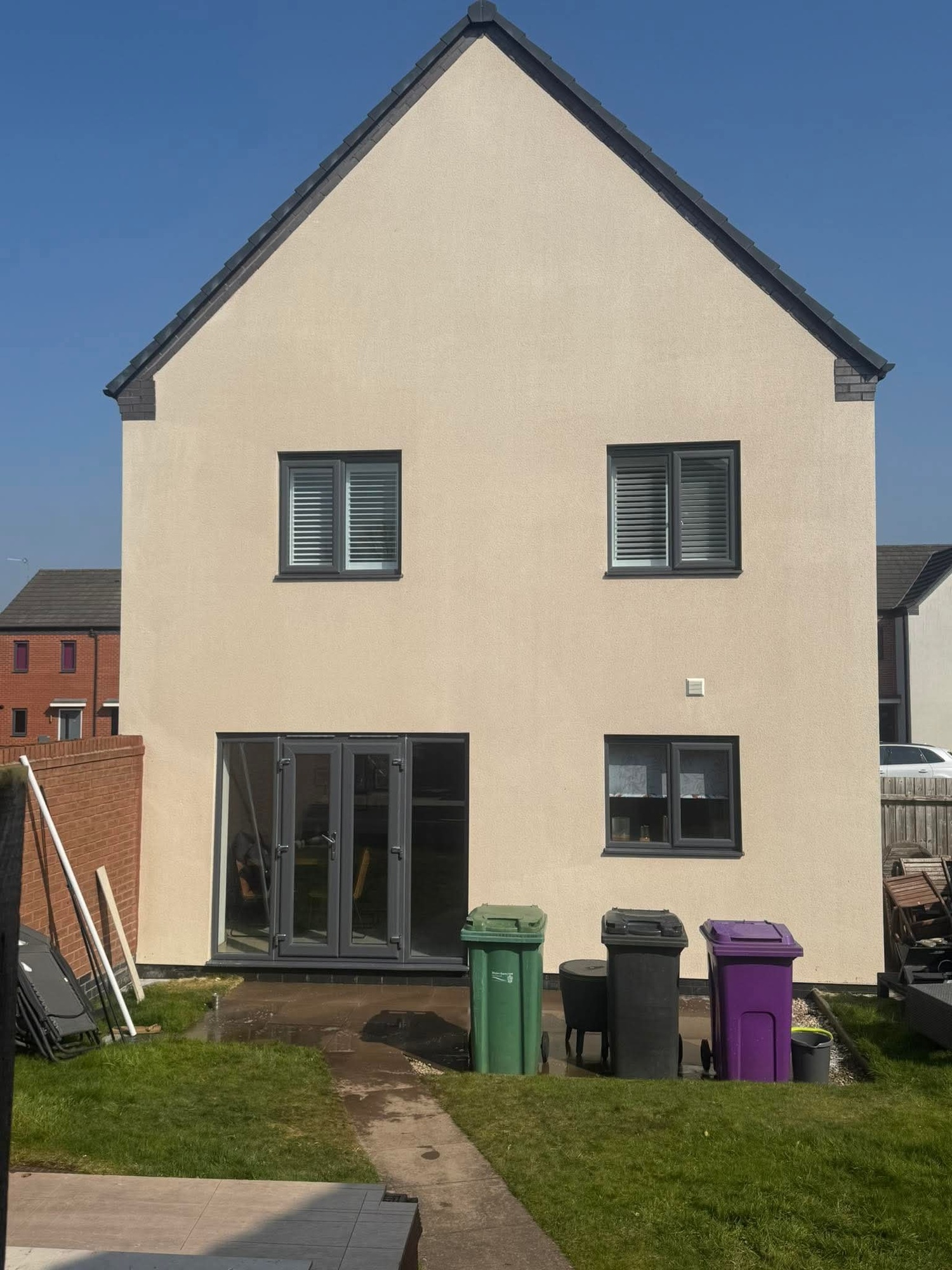
Most properties in Spetisbury benefit from professional render cleaning every 3 to 5 years, although this depends on the surrounding environment. Properties near trees, woodland, busy roads or coastal areas may require more frequent cleaning due to algae, mould and airborne contaminants. Our soft washing process removes existing growth and helps keep your render cleaner for longer.
Yes. Soft washing is specifically designed for delicate surfaces such as K-Rend, silicone render, monocouche render and painted render. Unlike high-pressure washing, it cleans at low pressure while treating biological growth at its source, reducing the risk of damage to the render finish.
We clean virtually all external render finishes, including K-Rend, Monocouche, Weber, Sto, silicone render, acrylic render, painted render, roughcast and pebble dash. Every cleaning method is tailored to the specific render type to achieve the best possible results.
Yes. Our specialist soft washing treatments are highly effective at removing green algae, red algae, black mould, mildew, lichen and other organic staining. We also apply professional biocide treatments to kill spores and slow down regrowth.
Because our process targets the biological growth rather than simply washing the surface, results typically last much longer than pressure washing alone. The exact lifespan depends on weather conditions, surrounding vegetation and the property’s location.
No. Our soft washing process is specifically designed to clean render safely. We use low-pressure application methods and specialist cleaning solutions that remove contamination without damaging the render surface when carried out by trained professionals.
The UK’s damp climate provides ideal conditions for algae, mould and other biological growth to develop on rendered surfaces. Areas with limited sunlight, nearby trees or persistent moisture are especially susceptible. Professional soft washing safely removes these contaminants and restores your property’s appearance.










































WhatsApp us