What sits beneath a rendered wall matters as much as the wall itself, and on a domestic property it is usually a garden. Borders, lawn, vegetable beds, ponds, greenhouses and the animals that use all of them are directly below every elevation being treated, and Softwashing UK plans around them before anything is mixed. Ponds need the most care. Water features and fish are sensitive to anything entering them, so a pond within reach of an elevation is covered completely rather than partially, and run-off is directed away from it at ground level. Where that cannot be achieved with confidence we will say so and discuss whether that elevation is worth treating at all. Planting is more forgiving but still protected. Borders beneath a wall are sheeted, shrubs held tight against a face are tied back where possible, and vegetable beds are covered as thoroughly as a pond would be. Our render cleaning services use low volumes, which keeps the quantity reaching ground level modest to begin with. Pets are kept indoors while treatment and rinsing are under way, and access to the treated area is left clear afterwards once hard surfaces have been rinsed through. Render algae removal produces broken-down organic material that is washed away rather than left across a lawn, and render moss removal on low walls and copings is the part most likely to land in planting. Professional render cleaning of a house in Stoborough should leave the garden exactly as it was found, and house render cleaning that scorches a border has been done carelessly. Exterior render cleaning is a whole-property job.
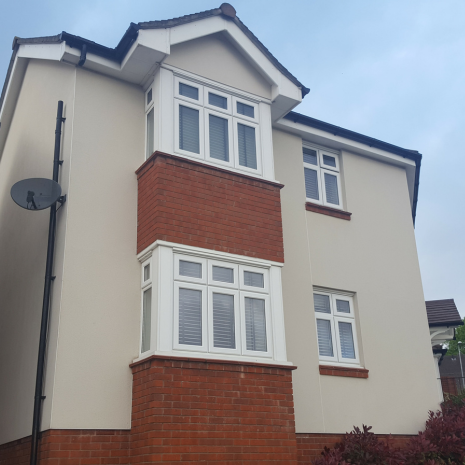

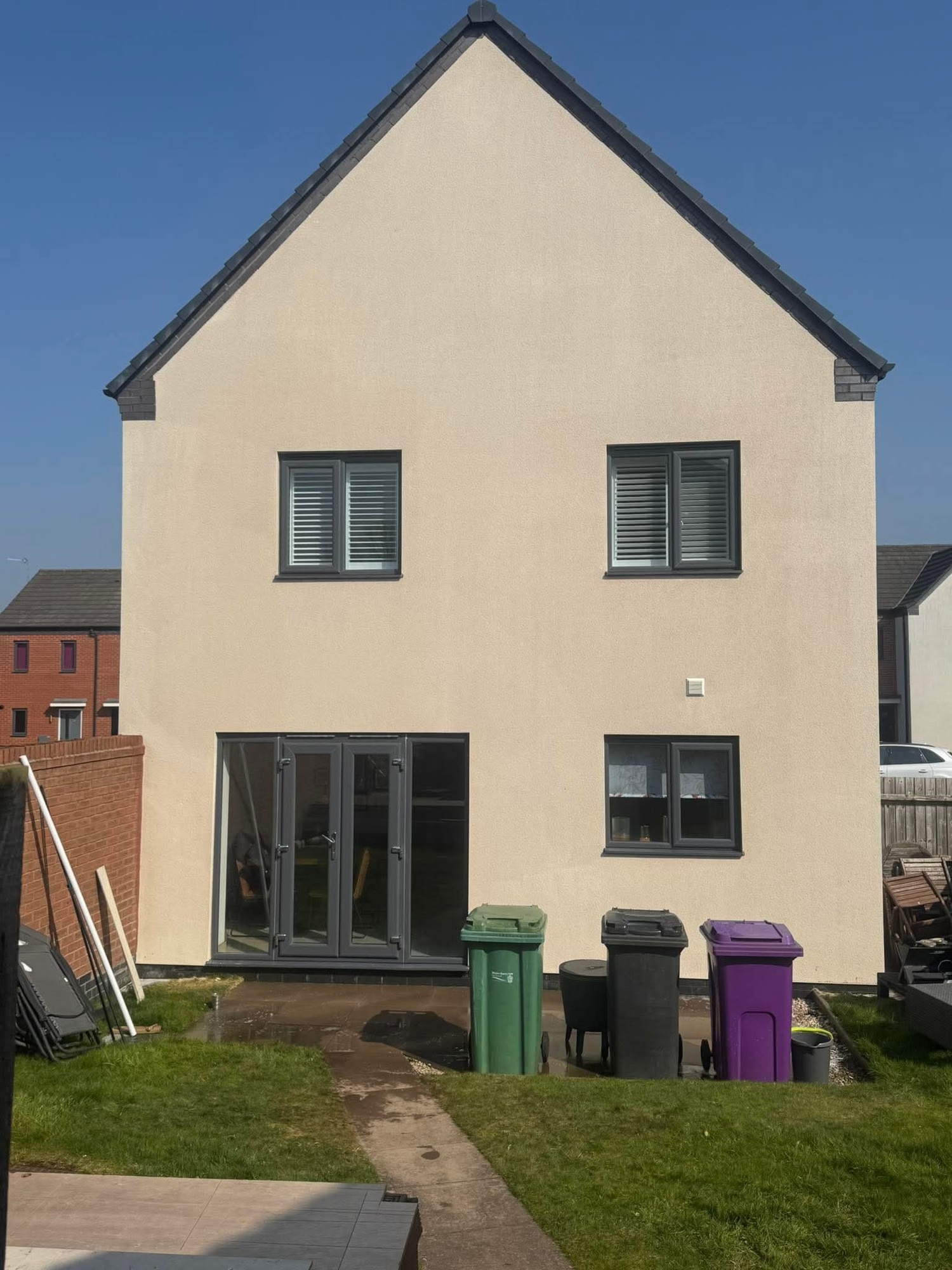
Modern estate housing puts very little between a rendered wall and a garden. Borders run tight against elevations, patios sit directly beneath them, and plots are small enough that run-off has nowhere to disperse. K Rend cleaning on that sort of property is as much about containment as coverage. The plot decides the preparation more than the wall does. Soft wash render cleaning helps considerably, because the volumes are low and the pressure is barely above hose flow, so there is very little liquid at ground level and almost nothing airborne. The solution is laid onto the face, given a long dwell to destroy algae and lichen at root level, and rinsed with a gentle controlled flow directed down the wall rather than outward. Very little reaches a border that has been sheeted properly. Nothing mechanical touches the surface at any stage, since pigment runs through the material and abrasion removes it permanently. Silicone render cleaning does need generous volume to keep a hydrophobic face wet, and on a tight plot that volume is applied carefully rather than freely. Accuracy matters more where there is nowhere for excess to go. Render stain removal requires the most protection of all, since those products are stronger than the general biocide and applied at close range. Iron bleed from ties and brackets, cement residue at fixing points and dark runs beneath a leaking joint are treated only where they sit, with everything below covered first and a test patch before wider use. On a Stoborough property that preparation is frequently the longest part of the visit. It is also the part deciding whether anything is damaged.
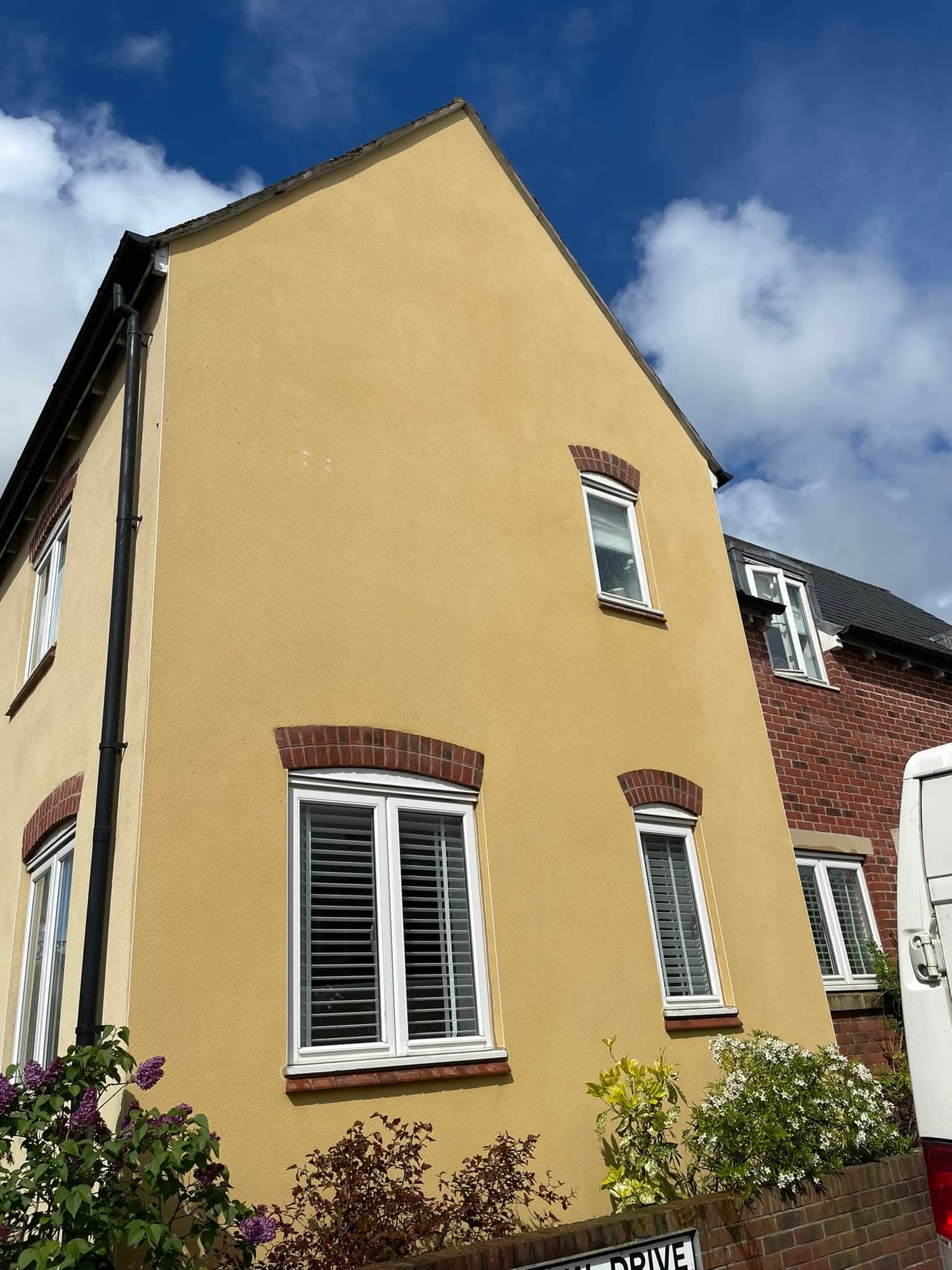
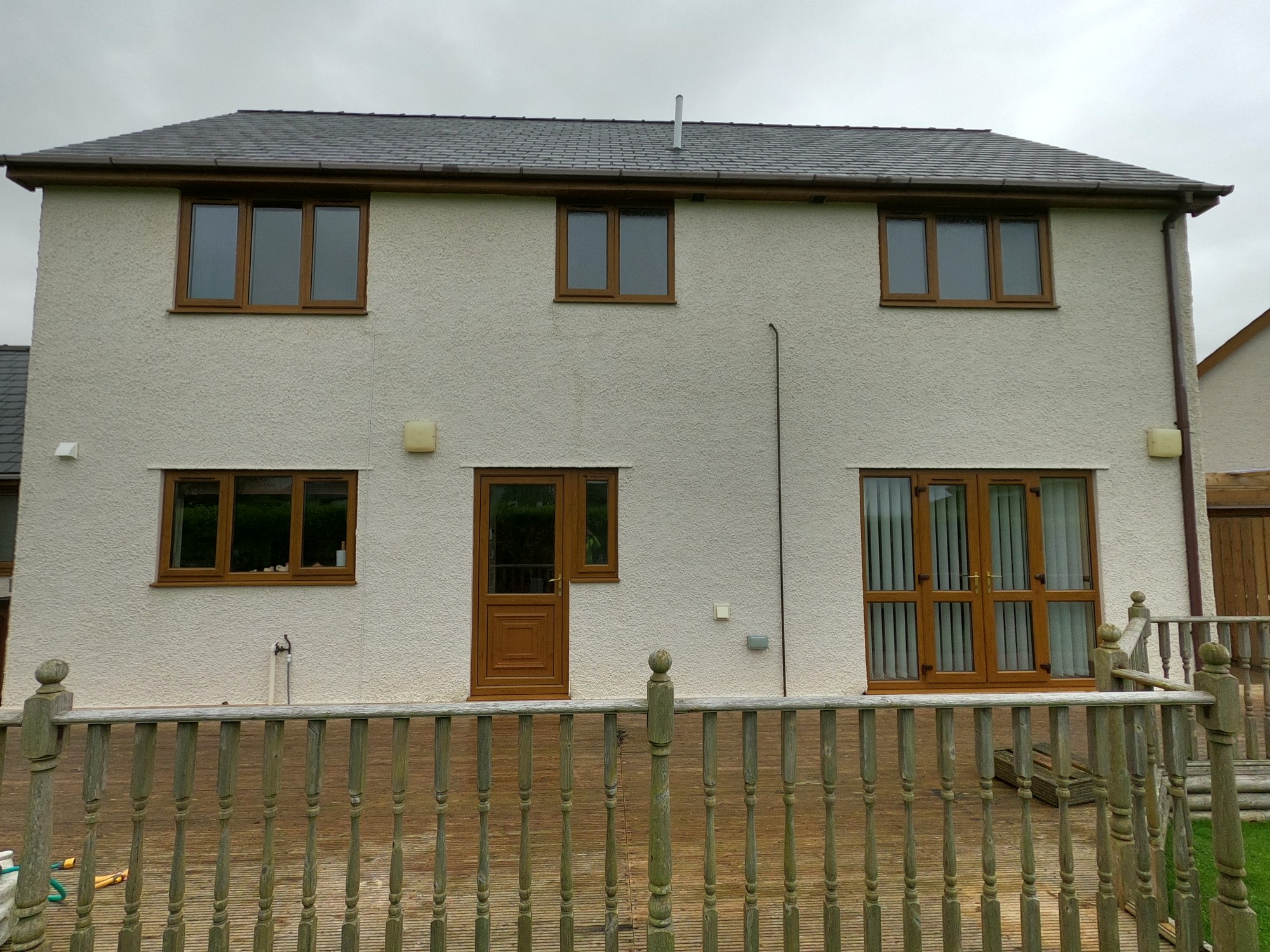
Monocouche uses more solution than any other finish, because the scraped texture has to be wet through rather than glazed, and that means more reaching the ground beneath. Monocouche render cleaning on a property with planting close to the walls needs the protection extended further out than most people expect. Two metres beyond the elevation is a sensible minimum. Rinse water spreads at ground level rather than falling straight down, so sheeting runs well beyond the width of the elevation, and on sloping ground it extends downhill rather than simply outward. Hard surfaces below are rinsed through afterwards as part of the job. Nothing is left to dry with residue across it. The treatment is otherwise standard: solution at low pressure in volume, a long dwell to kill growth at root level, a repeat application on the heaviest deposits along copings and projecting bands, then a soft even rinse across each full face. Render pressure washing is excluded absolutely, and on a planted plot the reasons multiply — alongside flattening the scrape, exposing the aggregate beneath and leaving permanent tracking, it throws water and debris across everything within several metres. Coloured render cleaning offers no top coat to renew over the damage to a wall, and nothing renews a border either. Replanting is a considerably slower repair than recoating. Treated carefully, render wall cleaning of monocouche leaves the elevation uniform and the ground beneath untouched. On properties around Stoborough where growth had obscured the specified colour for years, the tone recovered afterwards is a genuine render restoration. The planting beneath should look exactly as it did that morning.
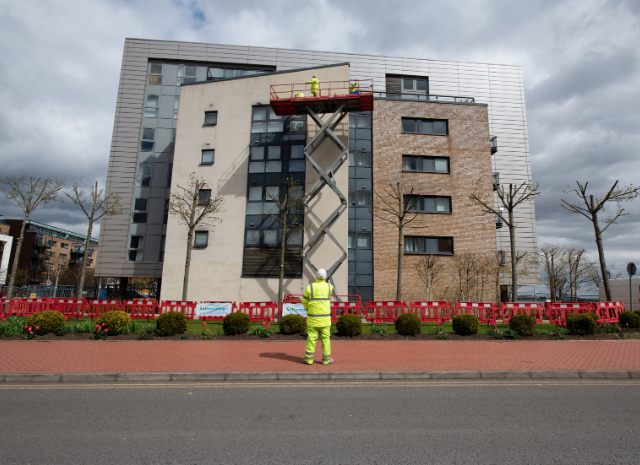

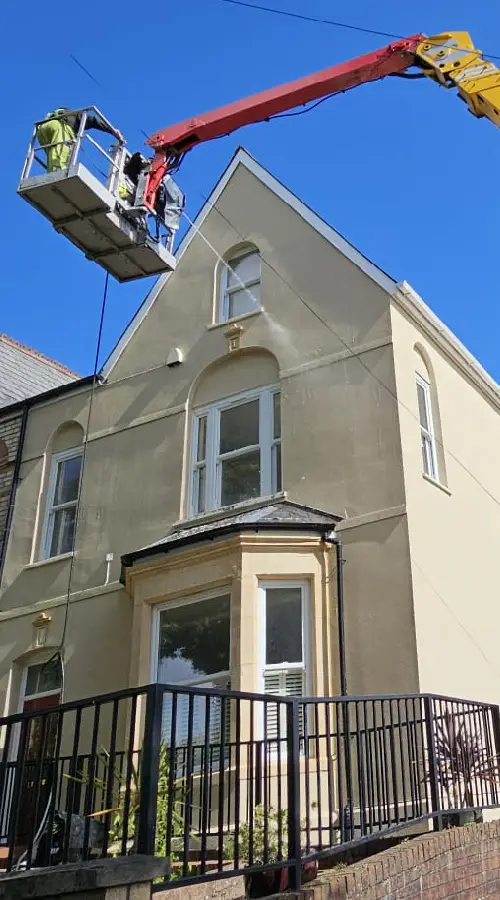
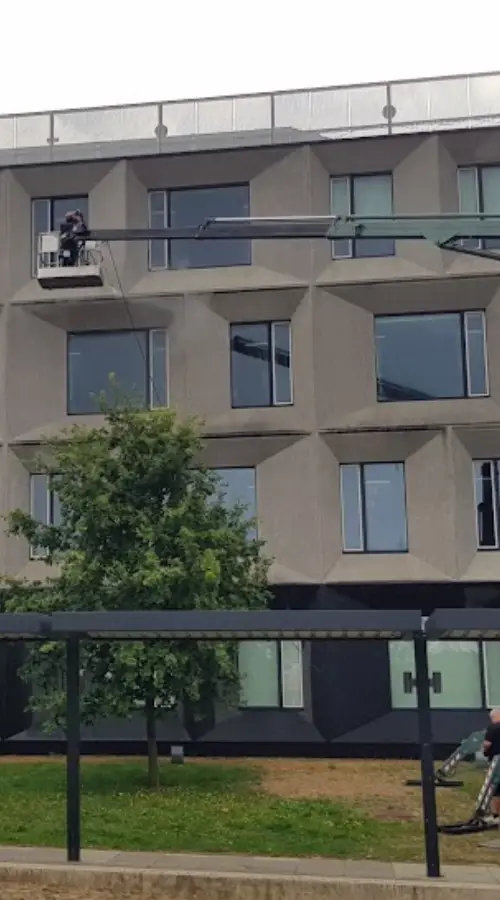
Landscaped commercial sites bring the same considerations at a larger scale, with the addition of surface drainage. Planted borders, root zones, ornamental water and gullies discharging to a watercourse all sit beneath elevations that need treating, and commercial render cleaning is planned around them at survey rather than on the morning. Nothing about drainage should be discovered while water is already running. Drainage is confirmed first: where the gullies beneath each elevation discharge to, and whether any need covering during the work. Where a gully leads somewhere sensitive it is protected before starting. Access is then established — powered platforms, tower scaffold or extended pole systems according to height and standing ground — with the programme written around trading hours, deliveries and staff movement, and method statements, risk assessments and product data sheets issued in advance. Render soft washing is the method throughout for exactly these reasons. Very low water volumes mean there is little to manage in the first place, run-off can be directed to a chosen point rather than spreading, and drift near planting, open doorways and parked vehicles is negligible. Render facade cleaning attempted with pressure equipment across a landscaped site produces uncontrolled volumes that reach places nobody intended. Uncontrolled volume is the problem rather than the product itself. Render mould removal on shaded and north-facing elevations is usually heaviest exactly where planting is densest, since the two conditions produce one another. Shade encourages growth and growth thrives on shade. Putting premises in Stoborough onto a render maintenance cycle keeps those faces from ever needing the heaviest treatment. Gentler work near planting is easier for everybody involved.
The products themselves are chosen with that environment in mind. Everything applied is an eco friendly render cleaning treatment, meaning it breaks down into harmless components once its work is complete rather than persisting in soil or water. That is not a marketing point on a domestic property; it is the reason a border beneath a treated elevation recovers rather than being replanted. Recovery matters more to most people than the wall does. Preparation is included in the figure rather than added to it. Render cleaning prices are established at an assessment from elevation count, working height, access arrangements, the extent of the growth and how much protection the surroundings need, and the written render cleaning cost then holds. Protection is never a line that appears afterwards. Affordable render cleaning never comes from skipping the sheeting, which is the cheapest insurance available on any job. Half an hour of covering prevents the only kind of damage that lasts. The crews are render cleaning specialists rather than general exterior cleaners, and they cover things without being asked. A pond, a greenhouse, a raised bed, a water butt, a bird bath and anything else within reach of run-off is dealt with as routine rather than as an afterthought. Nobody should have to ask for their pond to be covered. Anyone comparing firms in search of the best render cleaning service should ask what happens to the garden. A contractor who has not considered it is planning to find out on the day, and gardens take considerably longer to recover than walls do. A scorched border is a season lost rather than an afternoon.
Stoborough sits within our regular working patch, and one question comes up more than any other when a date is being agreed: what happens if the weather turns. The answer is that we move it. A biocidal treatment needs several hours on the wall to work, and heavy rain within a couple of hours of application washes it off before it has achieved anything. Applying product into that is a waste of your money and of ours, so a forecast showing rain during the working window means the appointment is rescheduled rather than attempted. You will hear from us the day before rather than on the morning wherever the forecast allows. Where it changes overnight the call comes early, and a new date is offered at the same time rather than left to be arranged later. Most reschedules move by a few days rather than by weeks. Light drizzle after the dwell has completed is a different matter and causes no problem at all — rain in the weeks following a treatment actively helps, since it carries the broken-down growth away. Residential render cleaning is only ever postponed for conditions that would affect the result. There is no charge for a rescheduled visit and no deposit at risk, since we do not take one. There is no travel charge, no minimum job size and no charge for the assessment. Anyone searching render cleaning near me should expect a local render cleaning company to postpone rather than press on, because the alternative is a job that has to be done twice. Nobody gains from a treatment washed off before it has worked.
Most properties in Stoborough benefit from professional render cleaning every 3 to 5 years, although this depends on the surrounding environment. Properties near trees, woodland, busy roads or coastal areas may require more frequent cleaning due to algae, mould and airborne contaminants. Our soft washing process removes existing growth and helps keep your render cleaner for longer.
Yes. Soft washing is specifically designed for delicate surfaces such as K-Rend, silicone render, monocouche render and painted render. Unlike high-pressure washing, it cleans at low pressure while treating biological growth at its source, reducing the risk of damage to the render finish.
We clean virtually all external render finishes, including K-Rend, Monocouche, Weber, Sto, silicone render, acrylic render, painted render, roughcast and pebble dash. Every cleaning method is tailored to the specific render type to achieve the best possible results.
Yes. Our specialist soft washing treatments are highly effective at removing green algae, red algae, black mould, mildew, lichen and other organic staining. We also apply professional biocide treatments to kill spores and slow down regrowth.
Because our process targets the biological growth rather than simply washing the surface, results typically last much longer than pressure washing alone. The exact lifespan depends on weather conditions, surrounding vegetation and the property’s location.
No. Our soft washing process is specifically designed to clean render safely. We use low-pressure application methods and specialist cleaning solutions that remove contamination without damaging the render surface when carried out by trained professionals.
The UK’s damp climate provides ideal conditions for algae, mould and other biological growth to develop on rendered surfaces. Areas with limited sunlight, nearby trees or persistent moisture are especially susceptible. Professional soft washing safely removes these contaminants and restores your property’s appearance.















































WhatsApp us