The lowest part of a rendered wall almost always needs its own treatment, and it is the area most often given the same specification as everything above it. The reasons are cumulative. Rain striking hard ground splashes back onto the base of the elevation repeatedly, which both wets it and drives soil, grit and organic matter into the texture. It is the last part of the wall to dry after any wetting, since it sits closest to damp ground and receives the least air movement. Where a border runs along the wall, local humidity keeps it damp for longer still. And where the render terminates at a bead just above ground level, water sheds and concentrates along that line. What accumulates there is a mixture. Biological growth needs biocidal treatment at a strength judged for whatever has established, which is usually the heaviest colonisation on the building. Embedded mineral soiling, driven into the profile over years, needs different chemistry and responds partially rather than completely. Applying a single uniform specification across an elevation therefore leaves the base course visibly behind once the wall dries, and the contrast draws attention to precisely the band nobody previously examined. Our render cleaning services specify the low-level band as its own zone within the job, with stronger biocidal treatment, longer dwell and appropriate handling for the deposit. Render moss removal at the base course is frequently the largest single part of the work. Exterior render cleaning on a property around Stourport-on-Severn is judged from the path as much as from the road, and that is where the difference shows.
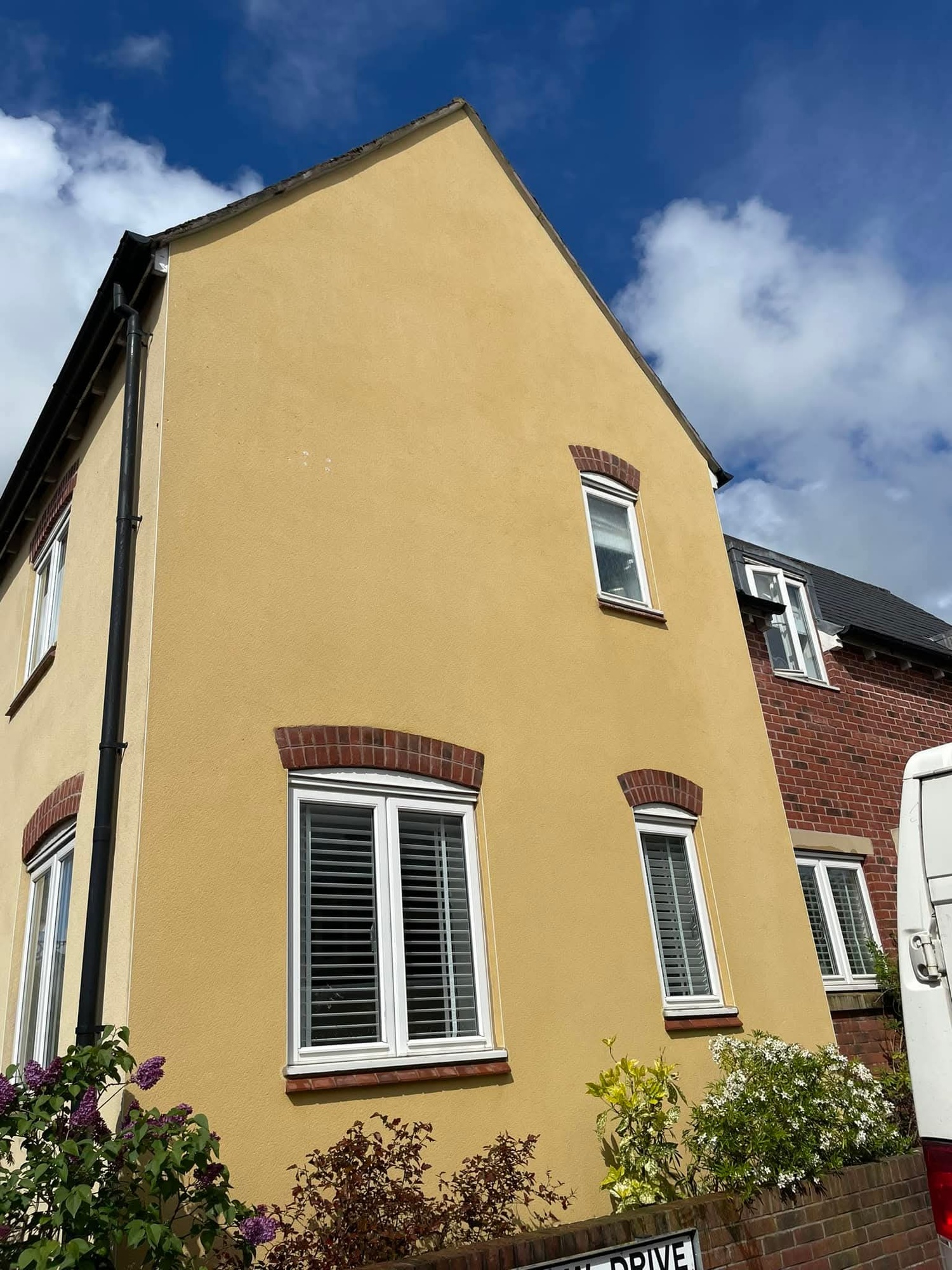
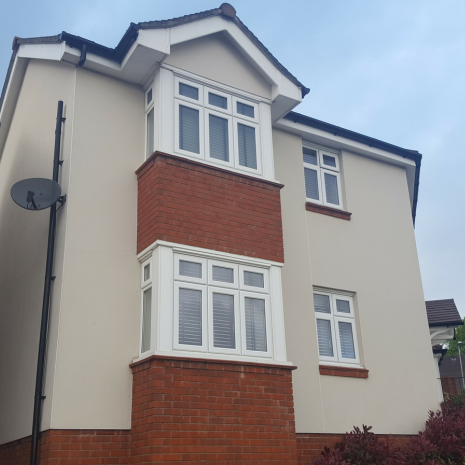

Long continuous silicone-rendered elevations are among the more demanding jobs we take on, and the difficulty is uniformity rather than anything technical about the material. A wall running twenty or thirty metres without interruption is read as a single surface from any distance, and there is nothing to break up the plane or disguise variation. Any difference in how one part was treated shows plainly, and because the colour is integral to the render it cannot be corrected afterwards. Three things produce that variation. Working the wall in sections that dry between passes, which leaves a vertical line at each junction. Dilution drifting between mixes, which shifts tone across the run. And parts of the elevation reached less squarely than others, which receive less product and shorter effective dwell. K Rend cleaning on a long elevation is therefore planned before it is started. The wall is worked as one unit with a continuous live wet edge, dilution is dosed at source and held constant, sufficient product is carried to finish without interruption, and enough operatives are on site to maintain the edge across the full width. Access is resolved at survey so nothing is awkward to reach at any point along the run. Silicone render cleaning is otherwise unchanged: chemical throughout at very low pressure, with nothing brushed or agitated at any stage. House render cleaning on a long elevation is judged by standing at one end and looking along it, which shows banding far more readily than looking at it square on. Coloured render cleaning on a run of that length is judged from the end of the wall rather than square on, which shows any variation immediately.
Base courses on long monocouche elevations are worth planning as a distinct part of the job, because they run the full length and carry the heaviest and most varied soiling on the building. Splashback is the driver. Rain striking hard ground rebounds onto the lowest metre continuously along the whole run, driving grit, soil and organic matter into the scraped texture. That band is also the slowest part of the wall to dry, and where borders or hard surfaces sit against it the local conditions are damper still. On a long elevation the practical issue is consistency. The base course has to be treated at its own strength and with its own dwell, but it also has to be worked continuously along the full length rather than in sections, or the run dries showing exactly where each stretch stopped. Since it is usually treated alongside the wall above, both bands need to progress together. Monocouche render cleaning here uses a stronger biocidal specification at low level, appropriate chemistry for the embedded mineral component, and generous volume so treatment reaches the base of the profile rather than sitting on the high points. Nothing is brushed or agitated despite the temptation on stubborn deposit, because exposed aggregate detaches permanently and smoothed patches at low level are seen at close range by anyone walking past. Render restoration along a base course frequently produces the most visible change on a long building, since that band had degraded furthest from the original tone. Residential render cleaning that stops at eye level has done the part seen from a distance and left the part people stand next to.
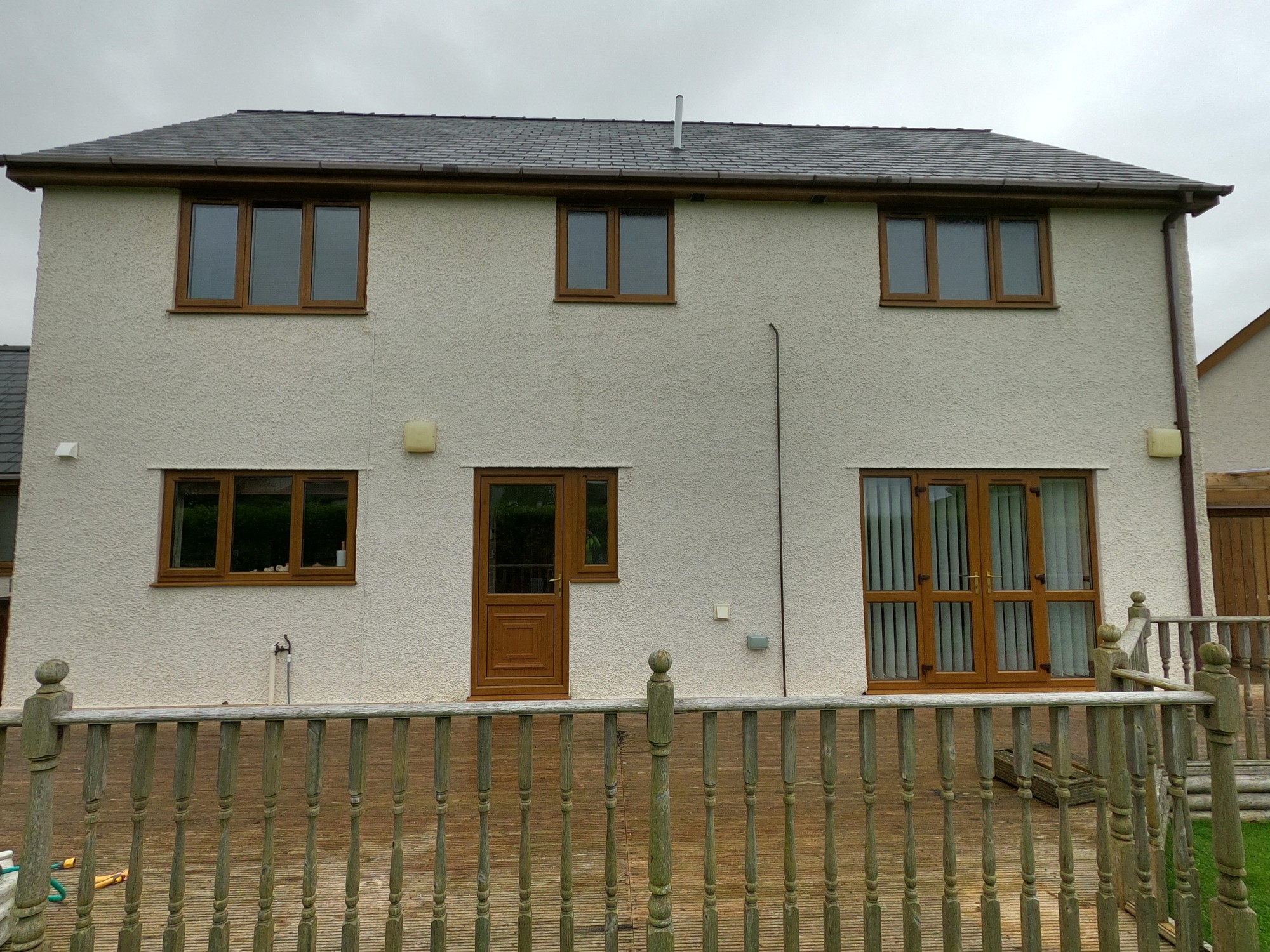
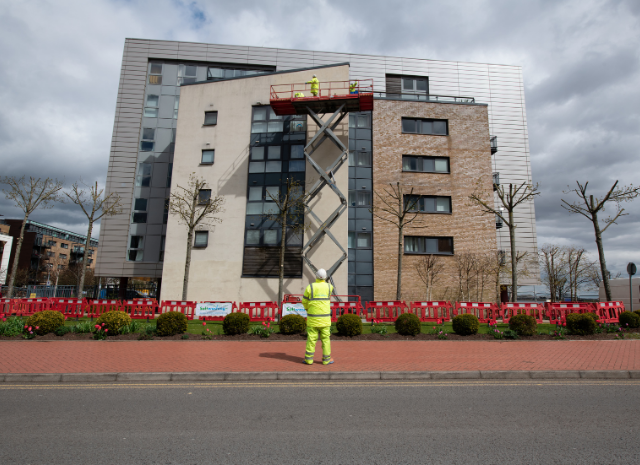

Boatyards, marine businesses and waterside commercial premises with rendered buildings sit in conditions that favour colonisation strongly, and their elevations generally reflect it. High ambient humidity, limited drying between wettings and abundant surrounding vegetation combine to produce heavier and faster growth than an equivalent building in a drier setting. Salt or mineral deposit is frequently present alongside, and neither responds to biocidal treatment. Commercial render cleaning at these premises therefore uses a dual specification, with biocidal treatment for the growth and render stain removal for the deposit, both applied at low pressure since abrasion cannot be corrected on a through-coloured finish. Operationally, yards stay live. Craft movements, lifting operations, workshops and customer access all continue, so we survey first, phase the work so only one building or elevation is affected at a time, and agree routes and timings with site management before attending. Run-off is directed away from water and from any drainage that matters, and dilution is controlled to what the growth requires rather than mixed strong. Insurance, method statements and risk assessments are supplied ahead of attendance, and operatives hold current working at height certification. Site induction and permit systems are completed first. Technically these are usually single-storey or low two-storey buildings with long elevations, treatable from ground level. Soft wash render cleaning holds identical dilution and continuous wet edges across each run so every building reads uniformly. For waterside premises around Stourport-on-Severn, intervals are generally shorter than elsewhere and we say so honestly rather than quoting a general figure. Where a yard holds several rendered buildings, treating them in one programme keeps the site consistent and reduces the cost per building.
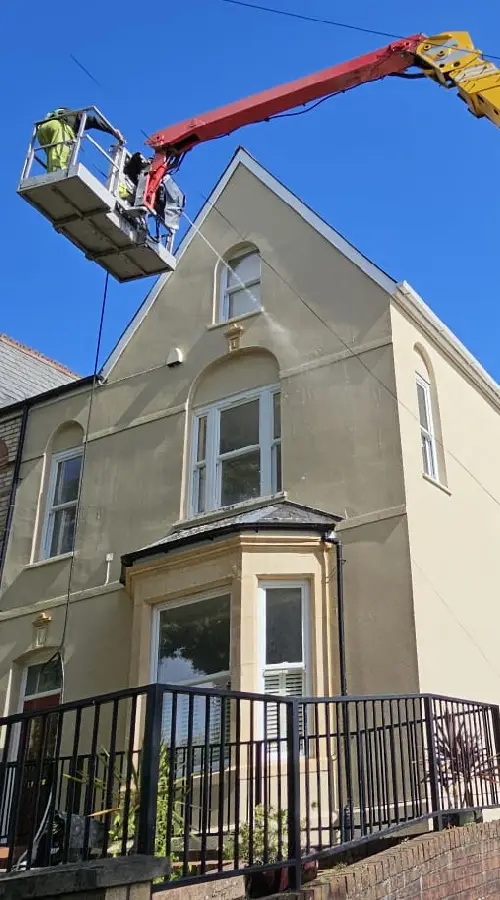
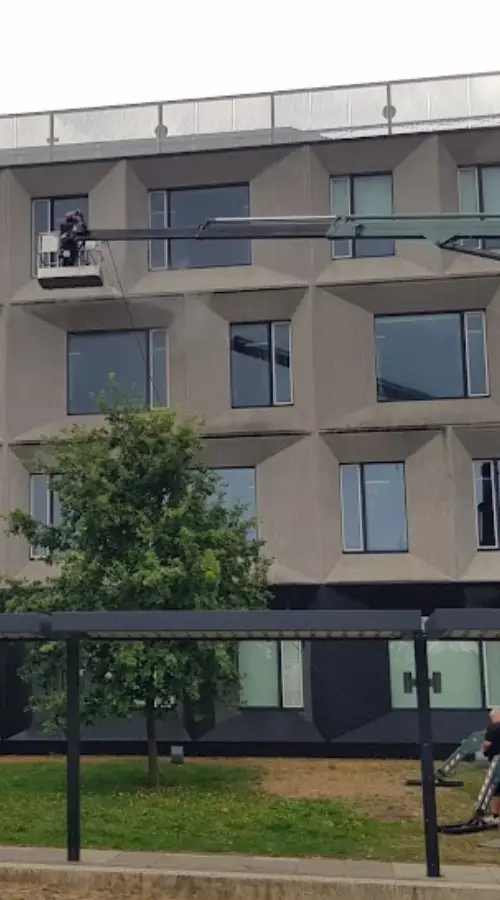
Larger jobs need resourcing rather than simply time, and it is a reasonable question to put to any contractor quoting for a substantial property. The binding constraint is that every elevation must be treated, dwelled and rinsed as a single continuous operation. Treatment allowed to dry part-worked, or rinsing left half completed, records itself on the finished wall as banding, and on a through-coloured render that difference remains until the next clean. On a large elevation that means enough operatives working together to keep a wet edge live across the full width, rather than one person progressing along the wall over several hours. It means carrying enough water and treatment to complete each wall without a change of batch, since dilution drifting mid-elevation shows once dry. And it means access arranged so that no section is reached awkwardly and consequently underserved. We survey with resourcing in mind and quote accordingly. Where a job needs a larger team or a second vehicle, that is built into the figure rather than discovered on the morning, and render cleaning prices are fixed at that point. Where a building is genuinely too large for one visit, we say so at the quotation stage and set out how it will be divided so that no individual elevation is split. Full public liability cover and current working at height certification are in place, and our render cleaning specialists work on rendered elevations exclusively. A quotation that looks low against others on a large property usually means the resourcing question has not been considered. Where a property genuinely needs two visits, that is said at the quotation stage rather than discovered when the light goes.
Coverage takes in Stourport-on-Severn together with Areley Kings, Astley, Astley Cross, Crossway Green, Dunley, Hartlebury, Titton, Upper Mitton and Wilden, all on identical terms with no travel loading. Across a working area of that breadth, the essential point is that every property is surveyed individually, because the variables move independently of one another. Coating type varies between and within properties. Older buildings frequently carry traditional render repaired and recoated across decades, where absorbency differs across a single elevation and any paint film governs whether cleaning is advisable at all. Newer builds and extensions carry modern through-coloured systems that clean up well but tolerate no abrasion. Both on one house is entirely normal. Texture grade varies within each of those, and determines how much treatment is applied and how long it dwells. Condition varies with age and previous work. Growth density varies with aspect, shelter and proximity to vegetation, often substantially between walls on the same building. Access varies with height and how the property sits on its plot. Two houses of similar size and apparent age can therefore require genuinely different specifications, and quoting by measured area would misprice at least one. Softwashing UK produce an itemised written quotation per elevation showing the coating identified, the growth graded, the treatment specified and how each wall will be reached. Clustering is worth mentioning at the enquiry stage, since several properties booking together share mobilisation and each figure reduces. Surveys take around twenty minutes. Access ranges from tight town frontages to long rural approaches, and neither presents a difficulty for equipment that runs at length from the vehicle.
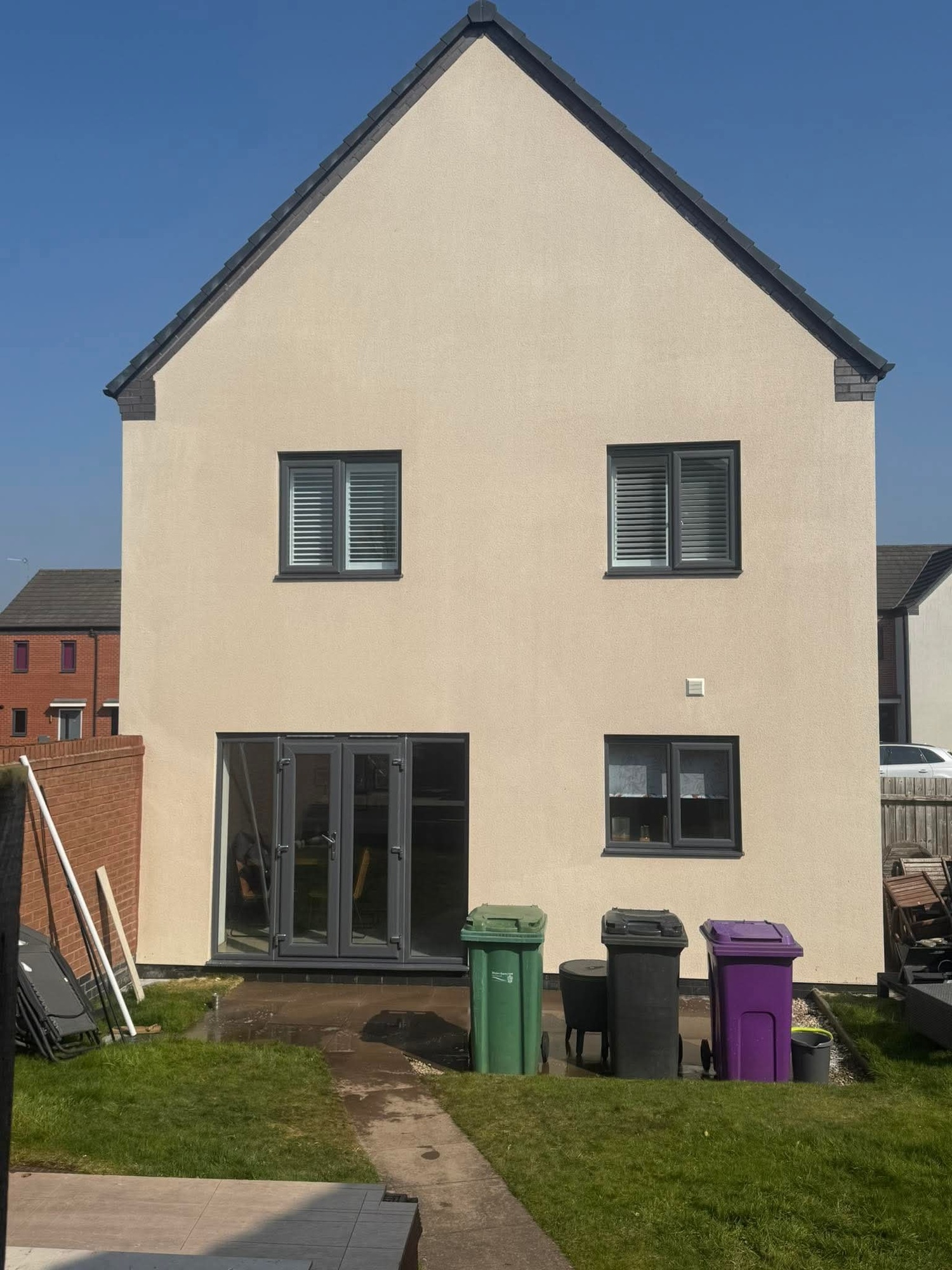
Most properties in Stourport-on-Severn benefit from professional render cleaning every 3 to 5 years, although this depends on the surrounding environment. Properties near trees, woodland, busy roads or coastal areas may require more frequent cleaning due to algae, mould and airborne contaminants. Our soft washing process removes existing growth and helps keep your render cleaner for longer.
Yes. Soft washing is specifically designed for delicate surfaces such as K-Rend, silicone render, monocouche render and painted render. Unlike high-pressure washing, it cleans at low pressure while treating biological growth at its source, reducing the risk of damage to the render finish.
We clean virtually all external render finishes, including K-Rend, Monocouche, Weber, Sto, silicone render, acrylic render, painted render, roughcast and pebble dash. Every cleaning method is tailored to the specific render type to achieve the best possible results.
Yes. Our specialist soft washing treatments are highly effective at removing green algae, red algae, black mould, mildew, lichen and other organic staining. We also apply professional biocide treatments to kill spores and slow down regrowth.
Because our process targets the biological growth rather than simply washing the surface, results typically last much longer than pressure washing alone. The exact lifespan depends on weather conditions, surrounding vegetation and the property’s location.
No. Our soft washing process is specifically designed to clean render safely. We use low-pressure application methods and specialist cleaning solutions that remove contamination without damaging the render surface when carried out by trained professionals.
The UK’s damp climate provides ideal conditions for algae, mould and other biological growth to develop on rendered surfaces. Areas with limited sunlight, nearby trees or persistent moisture are especially susceptible. Professional soft washing safely removes these contaminants and restores your property’s appearance.












































WhatsApp us