Condition assessment is the part of a render survey that most often changes the answer, and it is worth setting out what we actually check. The surface film comes first where one exists. Paint that has begun to chalk leaves a powdery residue on a hand drawn across the wall, and it will detach further during any treatment however gentle. A film lifting at reveals, bead lines or anywhere water concentrates does the same. Cracking is second. Fine crazing across the surface is generally cosmetic and does not prevent treatment. A crack that has genuinely opened, particularly at the corner of an opening where movement concentrates, means water should not be introduced until it has been addressed. Adhesion is third. Tapping lightly across an elevation reveals hollow-sounding areas where the coating has debonded from what is behind it, which is a different problem from anything cleaning addresses. Junctions are fourth. Sealant that has shrunk back or failed at abutments allows water into places it should not go. Previous repairs and previous damage are fifth. Patch repairs and areas where pigment has been lifted by aggressive washing are usually invisible under established growth and become apparent once the wall is clean. Softwashing UK record all five in the written quotation, including where the honest answer is that a wall should not be treated yet. Our render cleaning services proceed only where the surface is sound. Render algae removal and render moss removal on a compromised substrate produce a poor outcome for everyone, and exterior render cleaning quoted around Tardebigge is offered on that basis.
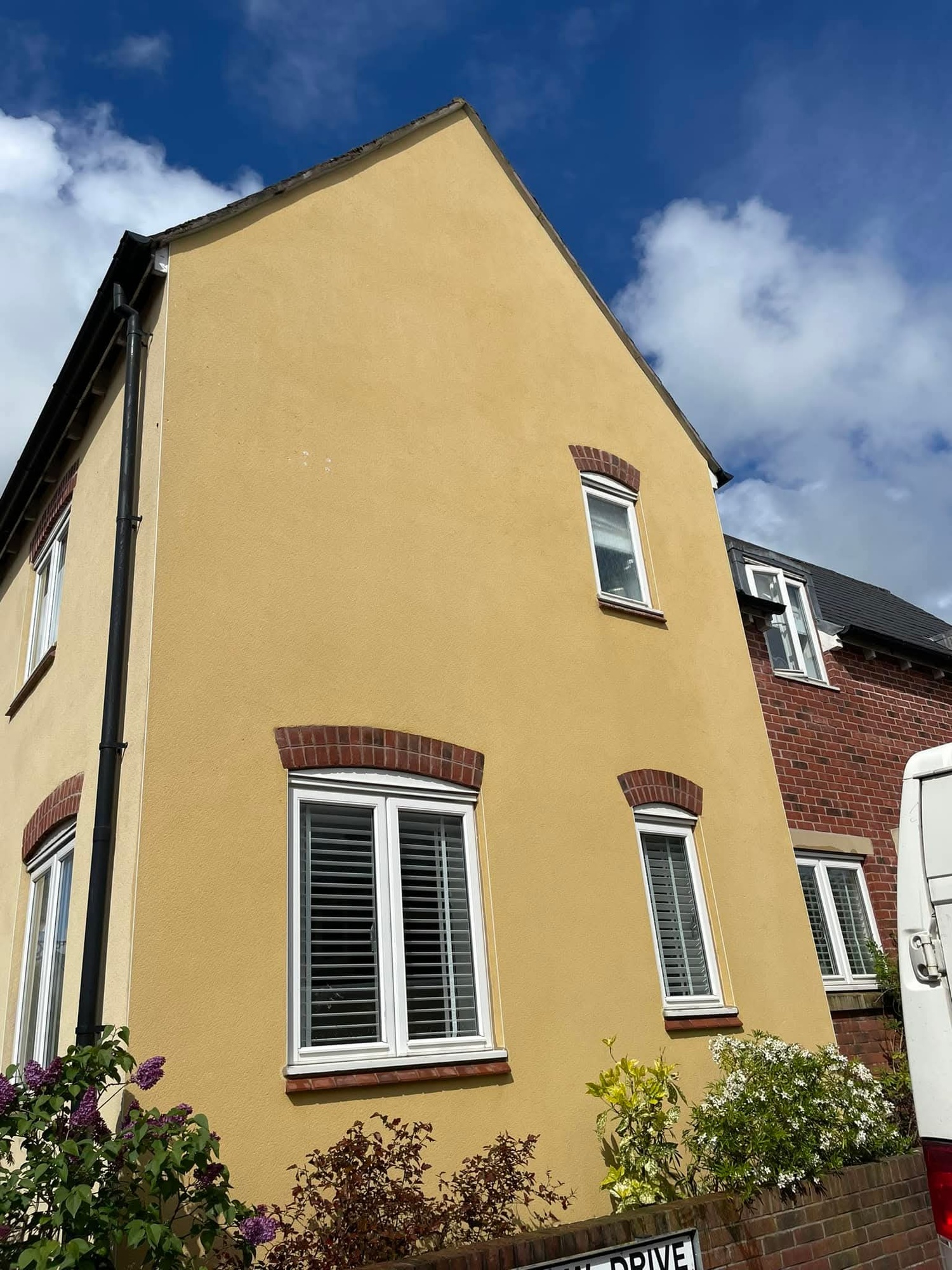
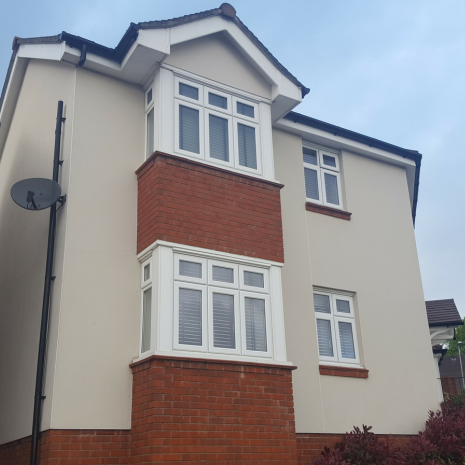

Silicone render that carries an earlier coating raises questions worth resolving before any work is quoted, and the situation is more common than owners realise. Sometimes a thin-coat elevation that discoloured badly was coated rather than cleaned, often because the owner was told cleaning would not work. Sometimes a property has been decorated at some point and the render happened to be included. Either way, the result is a through-coloured system carrying a film over it, and the two behave quite differently. The critical question is the film’s condition. A sound, well-adhered coating takes treatment perfectly well and cleaning proceeds much as on any surface. A film that has begun to chalk, or that is lifting at reveals and bead lines, will detach further during any process however gentle, leaving a patchy wall rather than a clean one. We test for this at survey rather than assuming, and we say plainly where the honest answer is that the wall should not be cleaned. There is a second consideration. Where the film is sound but thin, cleaning may reveal variation beneath it that had not been apparent, and we flag that as well. K Rend cleaning on a genuinely bare silicone elevation is the more straightforward job and produces the better result, since what returns is the manufacturer’s original colour rather than a coated approximation of it. Silicone render cleaning is chemical throughout in either case: very low pressure, nothing brushed or agitated, complete elevations worked with a live wet edge at consistent dilution. House render cleaning on a coated elevation is quoted against what the film will actually withstand rather than what the wall could look like.
Assessing the condition of a monocouche elevation before quoting is more involved than it looks, and it determines whether cleaning is the right next step at all. The first check is adhesion. Monocouche is applied thickly, and where it has debonded from the substrate an area will sound hollow when tapped lightly. That is a different problem from soiling and treatment is not the appropriate response. The second is cracking. Fine crazing across the surface is common, generally cosmetic and no obstacle to cleaning, though it does hold moisture slightly longer. A crack that has opened through the coating, particularly at the corner of an opening, means water should not be introduced. The third is the beads and stop details. Where these have corroded or pulled away, water tracks behind the render rather than shedding, and the elevation has an issue that cleaning will expose rather than solve. The fourth is previous damage. Smoothed or shiny patches visible in raking light indicate aggregate has been detached by pressure or brushing, and that cannot be restored. The fifth is repairs. Areas made good in slightly different colour or texture become visible once growth is removed. Monocouche render cleaning proceeds where the coating is sound, which covers the great majority of walls we look at. Where it is not, we explain what we found and decline rather than proceeding. Render restoration is worth doing properly or not at all, and residential render cleaning quoted against an honest assessment produces the result described. Where the coating is sound, the work proceeds exactly as on any monocouche wall and the result is genuinely restorative.
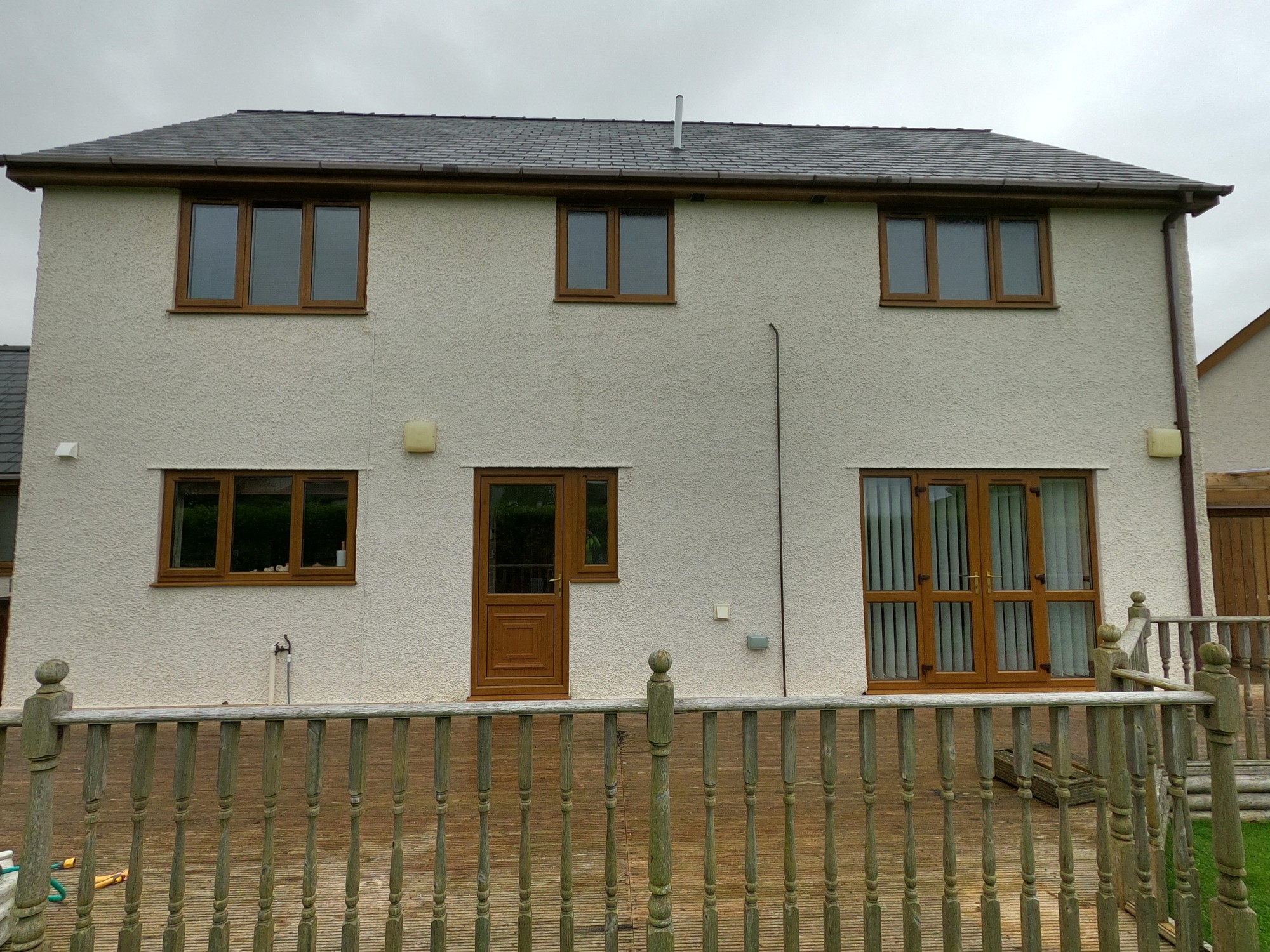
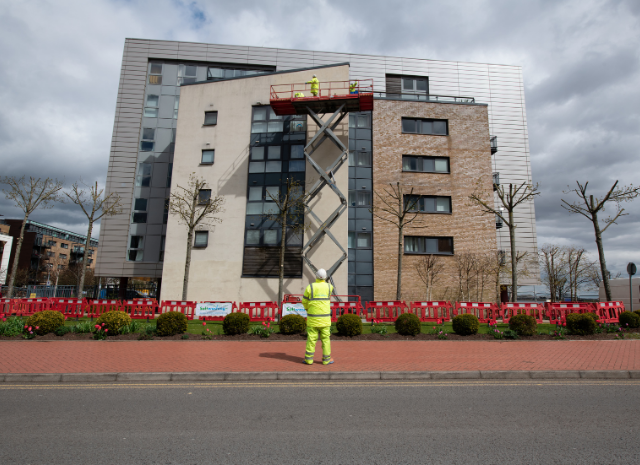

Recycling centres, waste transfer stations and materials handling premises with rendered buildings operate in conditions that soil elevations rapidly, with dust and particulate deposited continuously across every exposed surface. Commercial render cleaning at these sites is dominated by the operating environment. Much of what accumulates is mineral rather than biological, so a dual specification is needed: render stain removal for the deposit alongside biocidal treatment for whatever growth has established. Operationally, sites run to schedules with heavy vehicle movement throughout the day, and areas cannot be taken out of use wholesale. We survey first, phase the work so only one elevation is affected at a time, and agree routes and timings with site management. Safety requirements on these sites are more stringent than most. Induction, permit systems and site-specific procedures are all completed before attendance, and exclusion zones are agreed and physically barriered given the plant movement involved. Insurance, method statements and risk assessments are supplied ahead of attendance, and operatives hold current working at height certification. Run-off is directed appropriately, and dilution is controlled to what the growth requires rather than mixed strong, which matters on a site where drainage is closely regulated. Technically these premises present large plain elevations, frequently tall and uninterrupted. Soft wash render cleaning must hold identical dilution and continuous wet edges across each run, since banding on an unbroken wall of that scale is visible from a considerable distance. For operational sites around Tardebigge, a planned interval keeps buildings presenting properly and protects a very large area of coating from permanent damp.
Being clear about what will not clear is as important as describing what will, and it is the part of a quotation most often left vague. Embedded mineral soiling is the main case. Fine particulate driven into a textured face over many years becomes part of the profile rather than sitting on it, and while treatment improves it substantially, it will not always return the wall entirely to its original tone. Base courses are where this is most common. Rust bleed around fixings is another. It is a staining of the render itself rather than a deposit on it, and it does not respond to biocidal treatment. Patch repairs will not be reconciled. Areas made good at some point in slightly different colour or texture become more visible once the growth disguising them has gone. Previous pressure washing damage is the same. Pigment lifted unevenly or aggregate stripped from a textured face cannot be restored, and cleaning reveals it rather than correcting it. Some very heavy lichen leaves faint marking where it was attached, which fades over subsequent months rather than disappearing at once. We identify all of it at survey, using a sheltered reference area as a target so the expectation is specific rather than vague, and state it in writing before any date is agreed. Render cleaning prices are fixed at that point. Our render cleaning specialists work on rendered elevations exclusively, and full public liability cover and current working at height certification are available on request before booking. Setting all of that out in writing before a date is agreed is the difference between a fair result and an argument afterwards.
Tardebigge is covered in full, with the same survey process and pricing basis applied to every property and no travel loading regardless of position. The booking process is straightforward and worth setting out so nothing is unexpected. An enquiry needs only an address, which lets us confirm coverage immediately, and a rough description of the property. Photographs taken on a phone are genuinely useful and often allow a realistic indication before we attend, though nobody is expected to identify their own render accurately. A survey is usually available within the week, sometimes sooner outside the spring peak. It takes around twenty minutes and does not require anyone to be at home provided every elevation can be reached without going through the house. The itemised written quotation follows by email the same day or the next, listing each elevation separately with what was found, what is specified and what is excluded. It holds for a stated period and does not change. There is no follow-up chasing. Once accepted, you get a confirmed date and an arrival window rather than a vague half-day, and notice in advance if weather forces a change. There is no deposit. Nothing is paid before the work is carried out, and invoicing follows completion. Most properties here are a single day from arrival to departure. Afterwards the wall continues improving for two to four weeks, and if an area has genuinely not responded within four to six weeks we return and treat it again at no charge. Where several properties in the area book within the same period, mobilisation is shared and each individual figure reduces.
Most properties in Tardebigge benefit from professional render cleaning every 3 to 5 years, although this depends on the surrounding environment. Properties near trees, woodland, busy roads or coastal areas may require more frequent cleaning due to algae, mould and airborne contaminants. Our soft washing process removes existing growth and helps keep your render cleaner for longer.
Yes. Soft washing is specifically designed for delicate surfaces such as K-Rend, silicone render, monocouche render and painted render. Unlike high-pressure washing, it cleans at low pressure while treating biological growth at its source, reducing the risk of damage to the render finish.
We clean virtually all external render finishes, including K-Rend, Monocouche, Weber, Sto, silicone render, acrylic render, painted render, roughcast and pebble dash. Every cleaning method is tailored to the specific render type to achieve the best possible results.
Yes. Our specialist soft washing treatments are highly effective at removing green algae, red algae, black mould, mildew, lichen and other organic staining. We also apply professional biocide treatments to kill spores and slow down regrowth.
Because our process targets the biological growth rather than simply washing the surface, results typically last much longer than pressure washing alone. The exact lifespan depends on weather conditions, surrounding vegetation and the property’s location.
No. Our soft washing process is specifically designed to clean render safely. We use low-pressure application methods and specialist cleaning solutions that remove contamination without damaging the render surface when carried out by trained professionals.
The UK’s damp climate provides ideal conditions for algae, mould and other biological growth to develop on rendered surfaces. Areas with limited sunlight, nearby trees or persistent moisture are especially susceptible. Professional soft washing safely removes these contaminants and restores your property’s appearance.











































WhatsApp us