Sometimes the right first step is not cleaning a wall but changing what is happening to it, and it is worth knowing when that applies. The test is whether the growth has an identifiable local cause. Where an elevation is colonising evenly because it faces north and receives little sun, there is nothing to change and cleaning is the answer. Where growth is concentrated in a band, a corner or the base of a wall, something specific is producing it. The usual causes are all correctable. Water discharged onto a wall from a blocked gutter, a failed joint or a bridged sill. Ground level bridging the base of the coating. Planting held hard against an elevation. A structure or stored material preventing airflow. Irrigation reaching the wall. Where one of these is operating, cleaning first means treating the same band again in two or three years. Correcting it first means the clean lasts as long as the rest of the building. Render cleaning is still worth doing in either order — the wall improves regardless — but the sequence affects the value. We identify causes at survey and say plainly where we think something should be dealt with first. That advice costs us a shorter interval and it is the correct recommendation, and a good number of customers act on it and need us less often as a result. Where nothing can be changed, we build the shorter interval into the expected figures rather than pretending otherwise. We put the recommendation in writing whether or not any work follows, so an owner has a record of what was identified and can act on it in their own time.
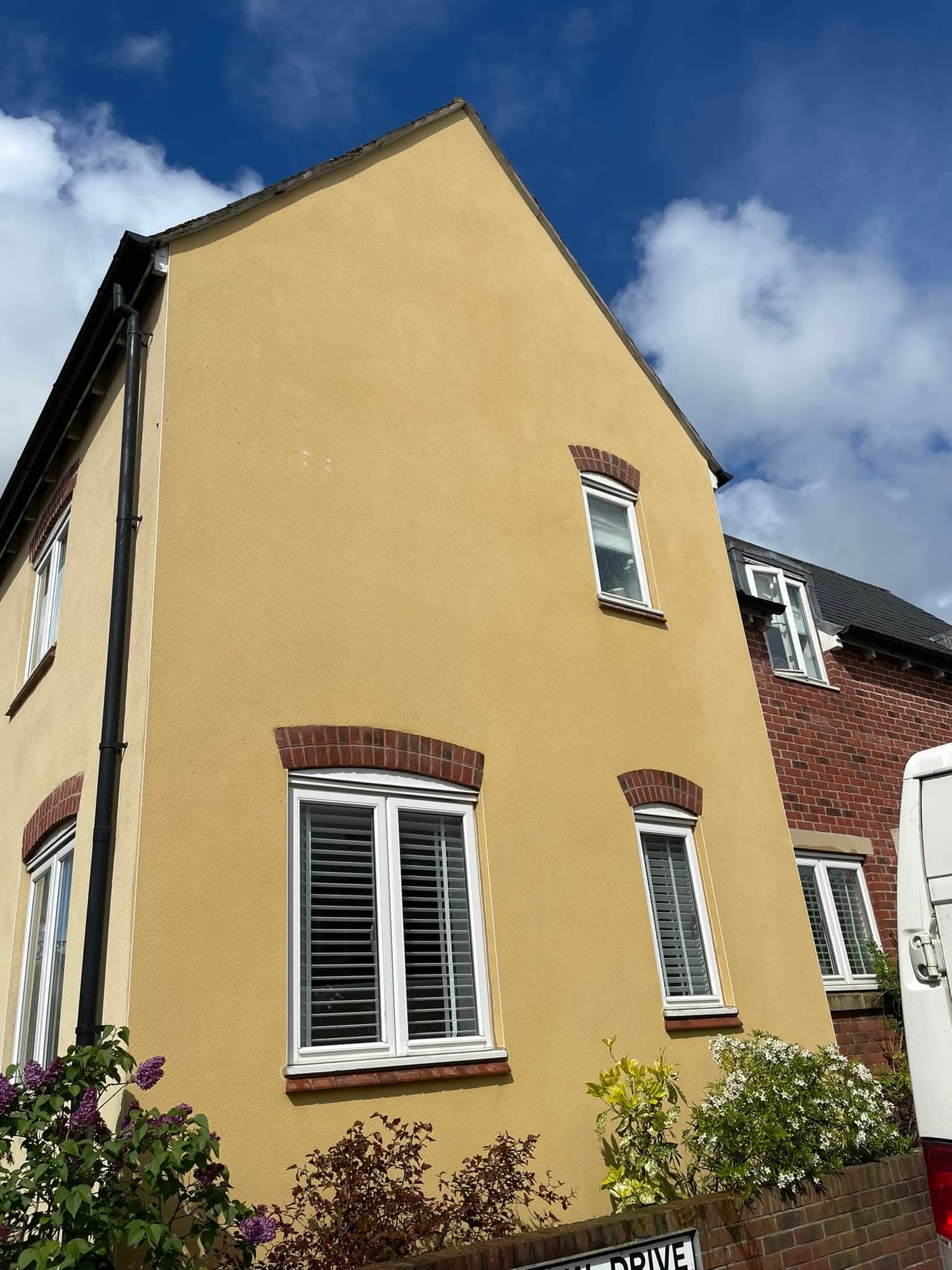

Proximity to a watercourse changes the air around a building, and on silicone render the effect is more pronounced than owners expect. The mechanism is humidity. Air near open water holds more moisture, mist forms readily and clears slowly, and dew is heavier and persists later into the morning. On a water-repellent thin-coat system, which does not absorb moisture but holds it as a surface film, that means the wall carries a film of condensation on a great many mornings when no rain has fallen at all. Elevations facing the water are affected most, and they are frequently the ones with the best aspect — which produces the confusing situation of a south-facing wall carrying more growth than a north-facing one on the same building. K Rend cleaning here is technically unchanged: biocide matched to the growth density, low-pressure application, full dwell, gentle rinse. What differs is the interval, which is shorter than general advice suggests, and the case for a protective aftercare treatment, which is proportionally stronger where the baseline interval is short. Containment also matters. Rinse water must not reach open water, so we plan directed collection or treat only elevations that drain manageably, and everything we apply is biodegradable and used at the lowest effective concentration. We assess each elevation individually on properties near water rather than assuming the conventional pattern, since it frequently does not apply. We assess each elevation on how it actually behaves rather than on where it faces, and we set the expected interval from that rather than from a general figure. Aftercare is quoted separately with its own cost and expected lifespan for each elevation.
Where growth on a monocouche wall stops abruptly at a certain height, that line is telling you something specific. The commonest version is a band along the base ending at roughly the height rainwater splashes from a hard surface — typically half a metre or so, higher where the ground is paved and the rainfall intense. Above the splash line the wall dries normally; below it, it does not. A second version is a line at the height of a former structure. Where a lean-to, a store or a stack of material stood against a wall for years, the sheltered strip behind it colonised heavily, and after removal the boundary remains visible for a long time. A third is a line where render meets a different material or thickness, since the two dry at different rates. A fourth, on some buildings, is a horizontal band at floor level where the structure behind produces a slightly cooler strip that holds dew longer. Monocouche render cleaning removes growth from all of them, and the band along the base needs the longest dwell and the lowest rinse pressures since it carries the densest growth on a coating that may be softened by years of saturation. We identify which explanation applies at survey, because it determines whether the line will return quickly, slowly or not at all — and where the cause can be corrected, that does more than treating more often. We photograph the line at survey so its position before treatment is recorded, and we say plainly whether we expect it to return quickly or not at all.
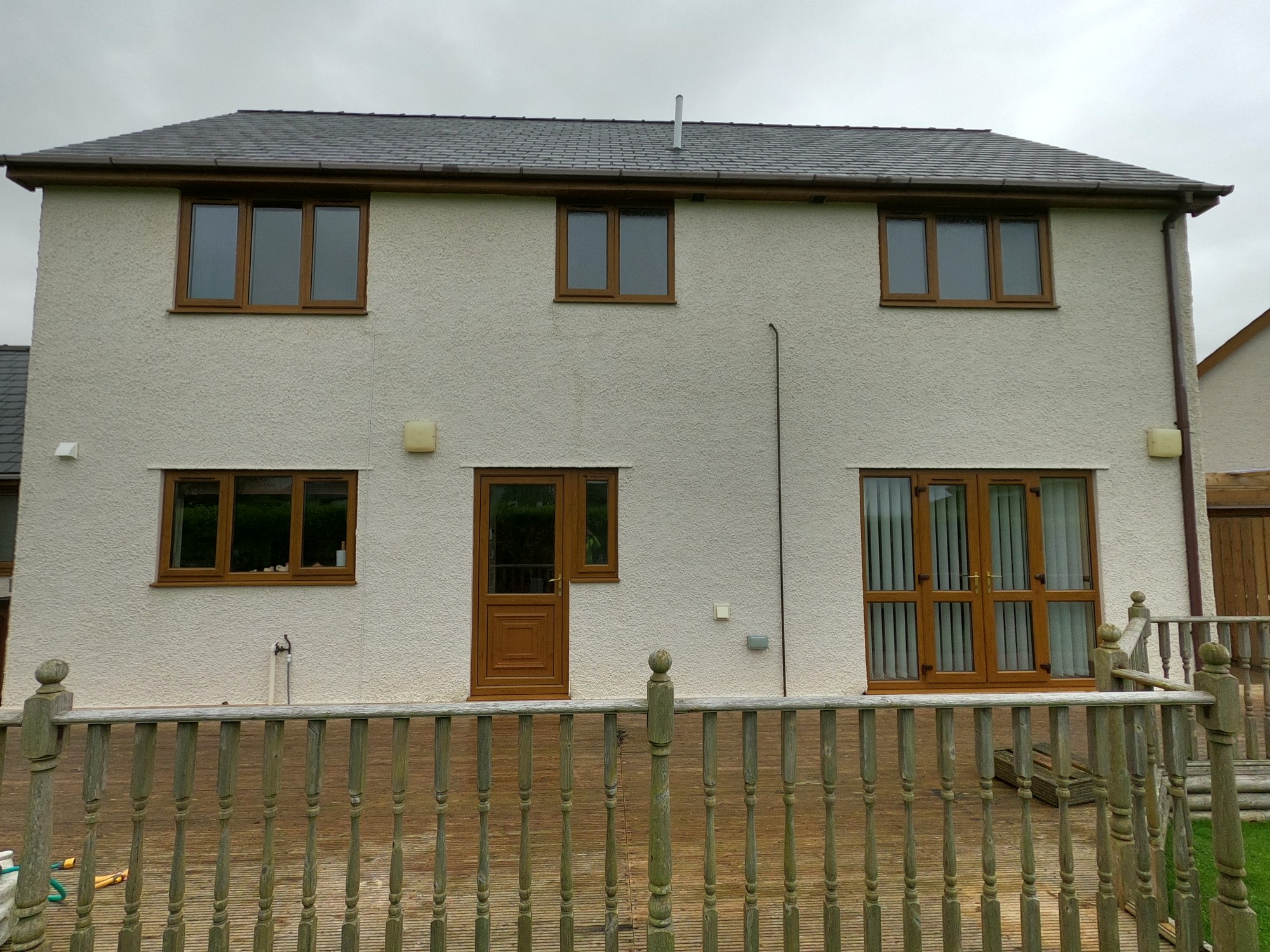
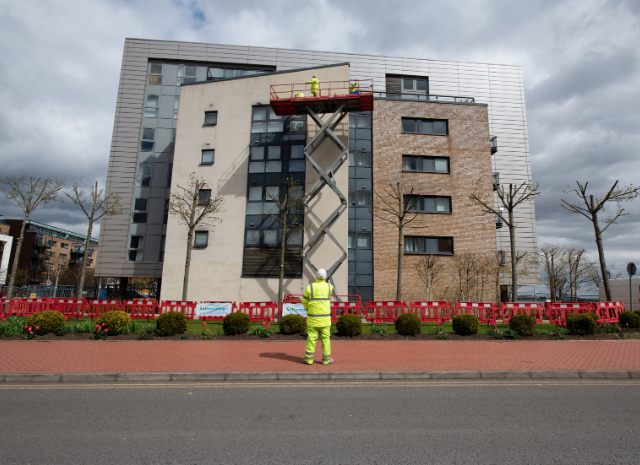

Sites with a mixture of rendered and metal-clad buildings need each material assessed on its own terms, and the difference affects both method and expectation. Profiled metal cladding is non-porous, so growth on it is superficial and confined largely to the sheltered faces and the joints. It responds quickly to treatment and clears completely, though coated finishes vary and manufacturer guidance is worth checking before anything is applied. Render is absorbent or, on thin-coat systems, holds a surface film, so colonisation is deeper and clearing takes longer and continues after we leave. The two therefore look finished at different times, which is worth saying in advance on a site where they sit side by side. Junctions are where the trouble is. A change of material means a joint, a shadow and a place where water is concentrated and debris collects, so those lines carry the densest growth on the elevation and need individual treatment with a longer dwell. Run-off is the other consideration. Water passing over metal, particularly where any fixing or edge is corroding, deposits staining onto render below which is chemical rather than biological and will not respond to a biocide. Commercial render cleaning on mixed-material sites is priced by building and by elevation with the material identified for each, and we say clearly which surfaces we are treating and which we are protecting. Documentation is supplied in advance as standard, and we photograph every building before and after so condition across a mixed site is a matter of record. Runoff containment is agreed at survey where any part of a site drains to open water.
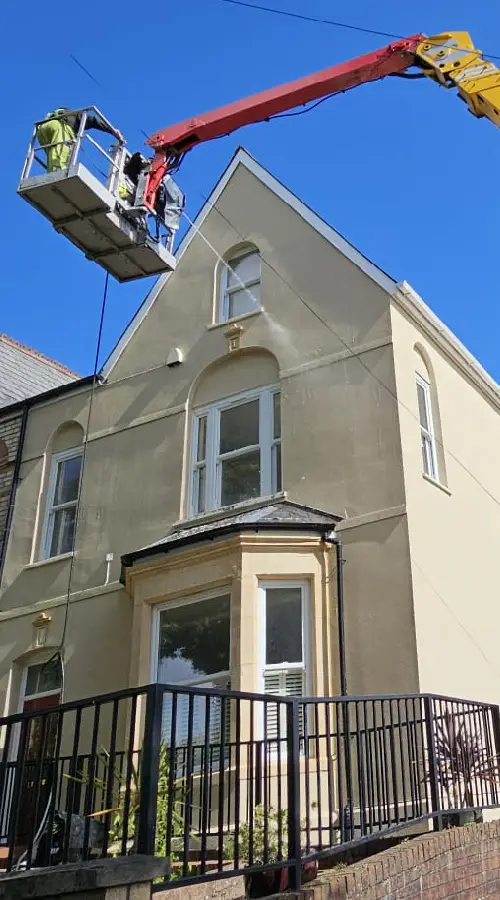
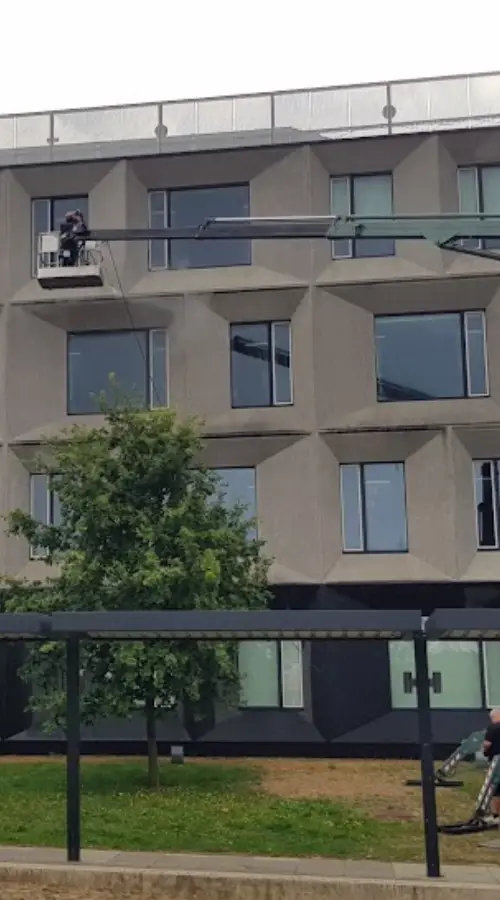
Where two owners disagree about what should be done, we quote for both positions rather than taking sides. The situation arises on shared buildings, adjoining properties and jointly owned premises. One party wants the whole building treated; the other wants the minimum. One wants it now; the other next year. One is worried about cost; the other about appearance. Our position is that we provide the information and let them settle it. That means quoting per elevation so any combination is priced, setting out the condition of each wall plainly, giving an expected interval for each, and saying what leaving a particular elevation will mean. The one thing we will not do is treat part of a continuous plane, because a boundary partway across a wall produces a hard line that draws the eye more than the original staining. On a shared elevation the sensible unit is the whole plane, and we say so and provide a proportional breakdown rather than a way to divide it physically. We also do not act as an intermediary. Where a conversation needs to happen between owners, we supply the same written information to both and stay out of it. Softwashing UK holds figures for thirty days, and longer where a decision genuinely needs time. Nobody is pressed, and a job that takes two months to be agreed is priced exactly as it was on the day we quoted. Where a decision genuinely cannot be reached, we are happy to leave the quotation open and hear from whoever wants to proceed later. Both parties receive the same written information at the same time, without exception.
Tatworth sits on low ground near the water, and our coverage includes Chard Junction, Forton, Perry Street and South Chard. Proximity to watercourses is the dominant local influence. Air near open water holds more moisture, mist forms readily and clears slowly, and dew is heavier and persists later into the morning. Elevations therefore stay damp far longer than rainfall alone would explain, and growth is commonly found on more faces of a building than the conventional pattern predicts — including elevations with good aspect that would stay clear elsewhere. The base of the wall is almost always the worst affected part, where ground moisture, splash-back and slow drainage combine, and that band is treated first and separately with a longer dwell and the lowest rinse pressures we use. Where a property sits close to open water, containment of rinse water is planned at the survey rather than on the day, and everything we apply is biodegradable and used at the lowest effective concentration. The housing is mixed, with older painted sand-and-cement render alongside stone construction with rendered sections and newer building in thin-coat systems. Inspection and tap-testing precede any dilution, and on unfamiliar or genuinely old finishes we test a small inconspicuous area first. House render cleaning is quoted after a site visit and priced per elevation, with honest expected intervals that are typically shorter here than general advice suggests. Access and water availability are settled at the same visit. Rendered outbuildings and boundary walls are quoted separately alongside the house, and grouping visits keeps travelling costs down. Grouping visits locally keeps travelling out of what customers are charged.
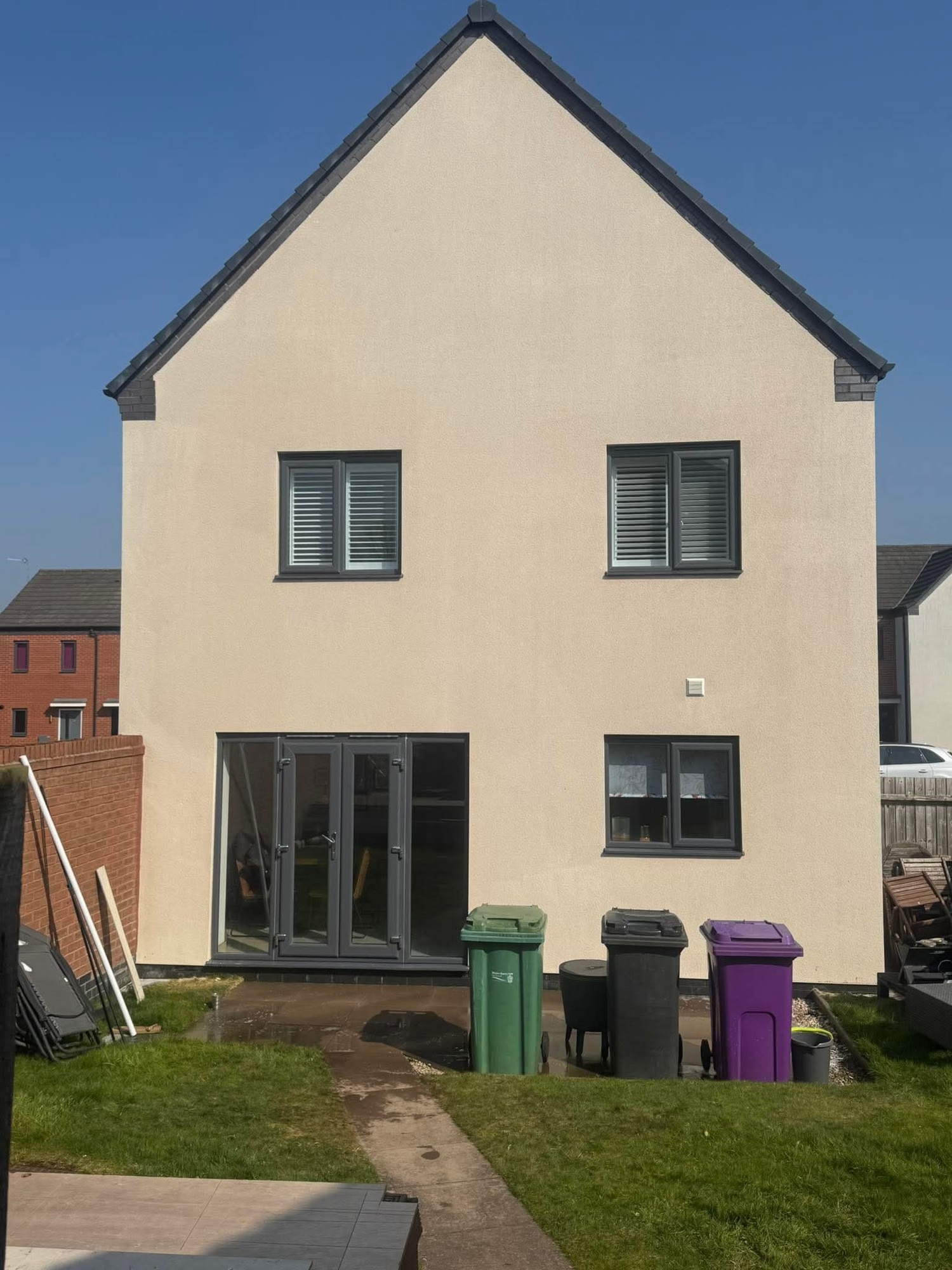
Most properties in Tatworth benefit from professional render cleaning every 3 to 5 years, although this depends on the surrounding environment. Properties near trees, woodland, busy roads or coastal areas may require more frequent cleaning due to algae, mould and airborne contaminants. Our soft washing process removes existing growth and helps keep your render cleaner for longer.
Yes. Soft washing is specifically designed for delicate surfaces such as K-Rend, silicone render, monocouche render and painted render. Unlike high-pressure washing, it cleans at low pressure while treating biological growth at its source, reducing the risk of damage to the render finish.
We clean virtually all external render finishes, including K-Rend, Monocouche, Weber, Sto, silicone render, acrylic render, painted render, roughcast and pebble dash. Every cleaning method is tailored to the specific render type to achieve the best possible results.
Yes. Our specialist soft washing treatments are highly effective at removing green algae, red algae, black mould, mildew, lichen and other organic staining. We also apply professional biocide treatments to kill spores and slow down regrowth.
Because our process targets the biological growth rather than simply washing the surface, results typically last much longer than pressure washing alone. The exact lifespan depends on weather conditions, surrounding vegetation and the property’s location.
No. Our soft washing process is specifically designed to clean render safely. We use low-pressure application methods and specialist cleaning solutions that remove contamination without damaging the render surface when carried out by trained professionals.
The UK’s damp climate provides ideal conditions for algae, mould and other biological growth to develop on rendered surfaces. Areas with limited sunlight, nearby trees or persistent moisture are especially susceptible. Professional soft washing safely removes these contaminants and restores your property’s appearance.











































If your property’s exterior is looking tired, stained or weathered, professional render cleaning Tatworth can completely transform its appearance without the expense of repainting or replacing the render. Over time, rendered walls naturally collect algae, moss, mould, pollution, dirt and other organic growth, leaving homes and commercial buildings looking older than they really are. Fortunately, modern cleaning techniques can safely restore almost every type of render while protecting the surface from unnecessary damage.
Whether you own a modern new-build with silicone render, a home finished with K Rend or monocouche render, or an older property with traditional cement render, investing in professional cleaning is one of the simplest ways to improve kerb appeal and extend the life of your exterior walls. This guide explains everything you need to know about render cleaning, including the best cleaning methods, common causes of staining, maintenance tips and how to choose the right contractor.
Render cleaning is the process of removing dirt, algae, moss, mould, pollution and other contaminants from rendered walls using specialist cleaning methods. Unlike general exterior cleaning, professional render cleaning services are designed specifically for delicate render finishes that require a more controlled approach than brick or concrete.
Many homeowners don’t realise that render is naturally porous. While it provides excellent protection against the weather, it also creates tiny surface textures where moisture and airborne contaminants can settle. Over time, these conditions encourage algae, mould and lichen to grow across the walls, causing green, black or red staining that gradually spreads if left untreated.
Professional house render cleaning removes these contaminants safely while restoring the original appearance of the property. Rather than simply washing away surface dirt, specialist treatments eliminate biological growth at its source, helping walls stay cleaner for longer.
The British climate provides ideal conditions for algae, moss and mould to thrive. Frequent rainfall, damp winters and shaded areas all contribute to biological growth on rendered surfaces.
Properties surrounded by trees often remain damp throughout the day, while north-facing walls receive very little direct sunlight. This combination of shade and moisture allows green algae to develop quickly. In urban areas, pollution from traffic gradually builds up across rendered walls, creating dark streaks and dull grey staining that cannot be removed with ordinary household cleaning products.
Red algae has become increasingly common on modern coloured render systems. Although it begins as small pink or orange spots, it can eventually spread across entire elevations if not professionally treated. Moss and lichen also develop on rendered walls, trapping additional moisture against the surface and making the property appear neglected.
Professional exterior render cleaning tackles these issues before they become permanent, helping preserve both the appearance and condition of the render.
Every render system has its own characteristics, which is why cleaning should always be tailored to the material rather than using the same method for every property.
Many newer homes benefit from silicone render cleaning, as silicone render has excellent water-repellent properties but can still become stained by algae and pollution. K Rend cleaning is another common service, restoring the appearance of this popular coloured render system without damaging its finish. Likewise, Monocouche render cleaning requires specialist knowledge to safely remove biological growth while protecting the decorative surface.
Many homeowners also request coloured render cleaning because they assume fading walls need repainting. In reality, years of dirt and algae often hide the original finish, and professional cleaning can dramatically improve the appearance without the need for costly decorating work.
Regardless of the render system installed, experienced render cleaning specialists will inspect the surface before selecting the most suitable cleaning process.
Attempting DIY cleaning often causes more harm than good. Many homeowners hire pressure washers believing that higher pressure delivers better results. Unfortunately, this can damage the render by removing protective coatings, opening small cracks or forcing water behind the surface.
Professional professional render cleaning uses methods designed specifically for rendered walls. Every property is carefully assessed before treatment begins, ensuring the safest approach is used for the particular render system.
Specialist cleaning also reaches deep into the microscopic pores where algae spores develop. This means the treatment continues working after the walls have been cleaned, slowing down future regrowth and providing much longer-lasting results.
One of the biggest misconceptions surrounding exterior cleaning is that pressure washing is suitable for every surface. While render pressure washing may remove visible dirt quickly, it is generally not recommended for delicate render because excessive pressure can permanently damage the finish.
Instead, most experienced contractors recommend render soft washing. Also known as soft wash render cleaning, this method combines low-pressure water application with specialist biodegradable cleaning solutions that remove algae, mould, moss and lichen safely.
Unlike pressure washing, soft washing doesn’t simply blast contaminants away. It kills the spores responsible for biological growth before gently rinsing the surface clean. This makes soft wash render cleaning one of the safest and most effective methods available for modern render systems.
Professional cleaning addresses far more than surface dirt. A comprehensive treatment includes render algae removal, eliminating the green staining commonly seen on shaded walls. It also provides effective render moss removal, preventing moss from retaining moisture against the building.
Many properties also require render mould removal, particularly in damp locations where mould develops around windows, beneath rooflines or on north-facing elevations. Black streaks caused by pollution and atmospheric contamination can often be eliminated through specialist render stain removal, restoring the render’s original appearance without harsh cleaning methods.
These treatments work together to improve both the appearance and long-term condition of rendered walls.
Professional residential render cleaning is suitable for detached houses, semi-detached homes, terraced properties, bungalows, apartment buildings and new-build developments. Whether the render has become lightly stained or heavily covered in algae, specialist cleaning can dramatically improve kerb appeal.
Businesses also benefit from commercial render cleaning, helping offices, hotels, schools, apartment blocks, retail premises and industrial buildings maintain a clean, professional appearance. Customers often form opinions before entering a building, making clean exterior walls an important part of presenting a positive image.
Larger commercial properties frequently require render facade cleaning to restore the appearance of external elevations exposed to weather and pollution throughout the year.
Many homeowners believe stained render needs repainting or replacing. In reality, professional render restoration often removes years of biological growth, pollution and environmental staining, revealing the original finish underneath.
Cleaning is considerably more affordable than replacing rendered walls and can often delay expensive renovation work for many years. By investing in routine render maintenance, homeowners protect their property’s appearance while reducing the likelihood of long-term deterioration.
Regular inspections also allow early signs of algae or mould to be treated before they spread across the entire property.
There is no universal schedule because every property experiences different environmental conditions. Homes surrounded by trees or located near woodland generally require more frequent attention than properties exposed to direct sunlight. Likewise, buildings close to busy roads accumulate pollution faster than those in quieter residential areas.
For most homes and commercial buildings, arranging professional render cleaning services every three to five years provides an excellent balance between appearance and preventative maintenance. Properties in particularly damp environments may benefit from more regular cleaning to prevent algae becoming firmly established.
If you’re searching online for render cleaning near me, it’s important to choose an experienced contractor rather than simply accepting the cheapest quotation.
A reputable local render cleaning company will inspect your property before recommending the most appropriate cleaning process. Rather than relying solely on pressure washing, experienced contractors understand the differences between silicone render, K Rend, monocouche render and painted render, ensuring every surface receives the correct treatment.
The best render cleaning service will also use specialist equipment, professional-grade cleaning solutions and proven soft washing techniques that deliver longer-lasting results.
Many homeowners are surprised to discover that affordable render cleaning is often far less expensive than repainting rendered walls. The overall render cleaning cost depends on factors including property size, accessibility, the severity of staining and the type of render installed. Most companies provide free surveys and quotations, allowing customers to compare render cleaning prices before making a decision.
Environmental responsibility is another important consideration. Many leading contractors now use eco friendly render cleaning products that effectively remove algae, mould and dirt while minimising the impact on surrounding plants, lawns and wildlife.
Keeping render clean isn’t just about appearance. Dirt, algae and moss trap moisture against the surface, increasing the likelihood of staining and reducing the lifespan of the render over time. Regular cleaning prevents organic growth from becoming deeply embedded, making future maintenance much easier and more affordable.
Professional cleaning also protects your investment by maintaining kerb appeal, reducing long-term repair costs and ensuring your property always looks its best. Whether you own a family home, rental property or commercial premises, regular render maintenance is one of the most cost-effective ways to preserve the exterior.
If your property has become stained by algae, moss, mould, pollution or years of accumulated dirt, professional render cleaning Tatworth can restore its appearance quickly, safely and effectively. From house render cleaning and commercial render cleaning to silicone render cleaning, K Rend cleaning, Monocouche render cleaning, render wall cleaning, render facade cleaning, render restoration and complete render maintenance, experienced specialists use safe soft washing techniques to deliver exceptional results.
Whether you’re searching for render cleaning near me, comparing render cleaning prices, looking for an affordable render cleaning solution or simply want advice from trusted render cleaning specialists, investing in professional cleaning will help protect your property, improve kerb appeal and keep your rendered walls looking their best for years to come.
WhatsApp us