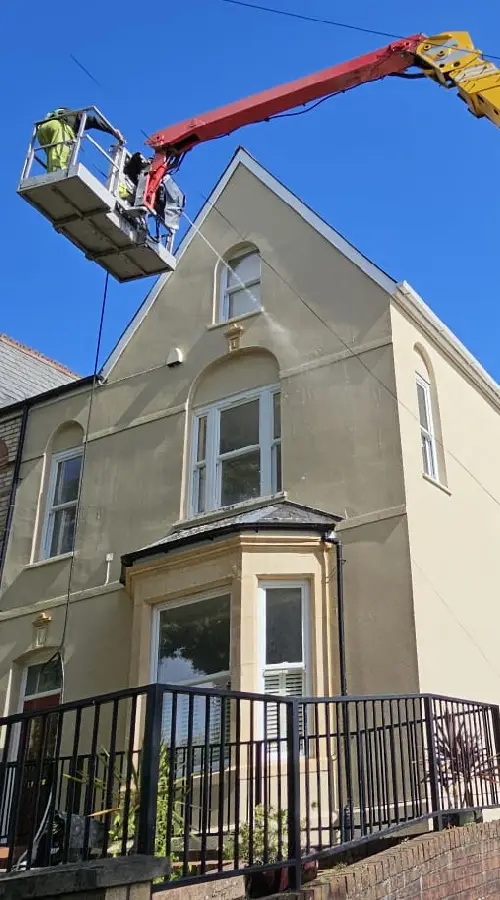
Building height affects both the method and the cost of a render clean more than any other single factor, and it is worth explaining how. A single-storey elevation is entirely within comfortable reach. Treatment is applied squarely, coverage is even, dwell is easy to control and rinsing is straightforward. These are the quickest jobs we do and priced accordingly. Two-storey work is still routine from ground level using telescopic delivery. Reach is adequate, though the upper section is approached at more of an angle and needs deliberate attention to keep coverage consistent with the wall below. Three-storey elevations and tall gables are where planning matters. Telescopic delivery reaches most domestic apexes from the ground, which is safer and faster than any alternative, but the extreme limit of reach is where coverage thins if it is not managed carefully. That is exactly the part of the wall seen against the sky from a distance. Above that, or where ground conditions prevent working from directly in front of a wall, access equipment becomes necessary. That is established at survey and included in the quoted figure rather than raised afterwards. Our render cleaning services state how every elevation will be reached in the written quotation, so nothing is left to be improvised. Render algae removal and render mould removal need the same volume and the same dwell at the apex as at the base, and applying less because it is harder to reach is why some walls dry with the upper section visibly behind. Exterior render cleaning across the range of property heights around Tenbury Wells is quoted with the reach question answered first.
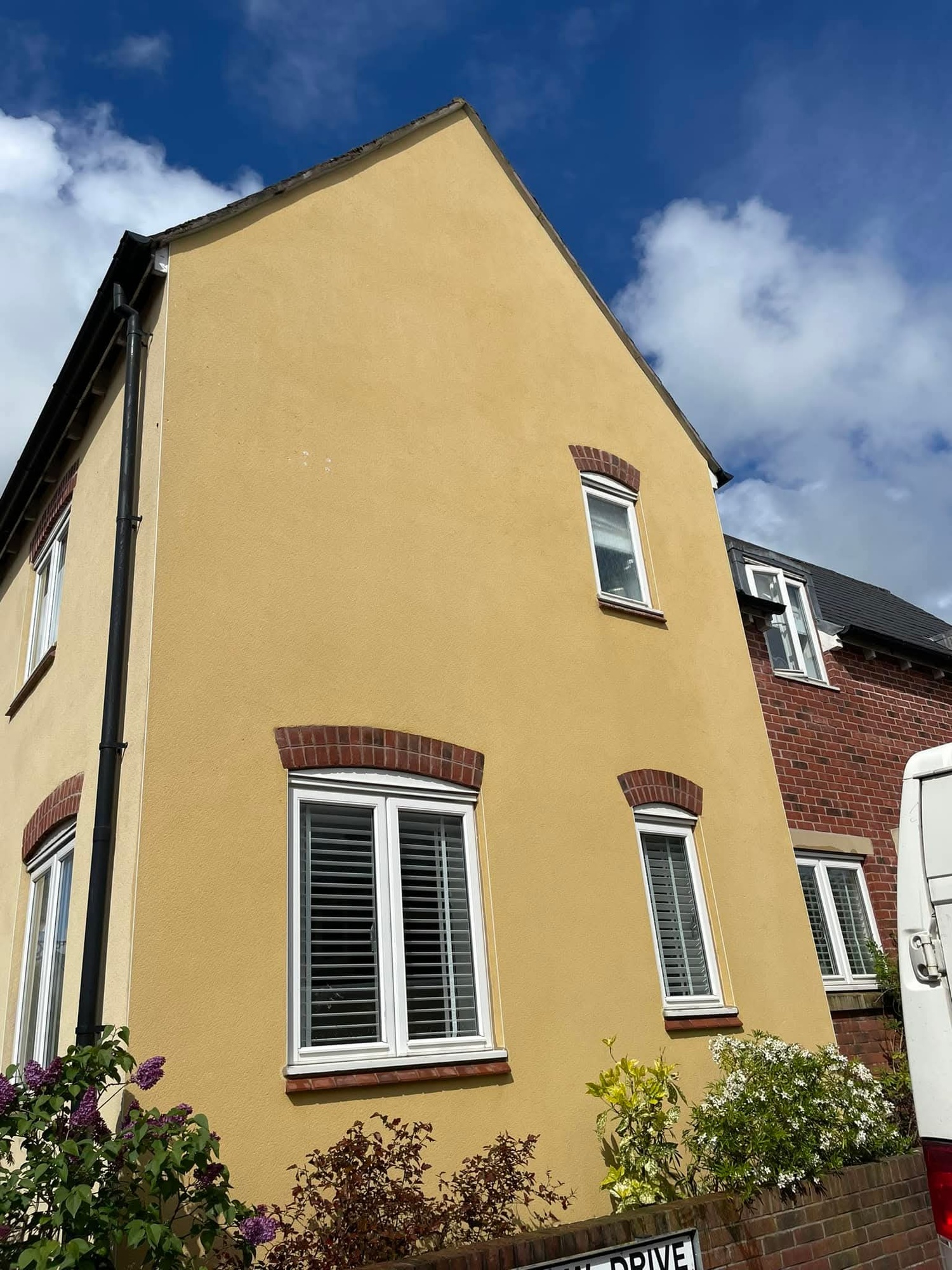
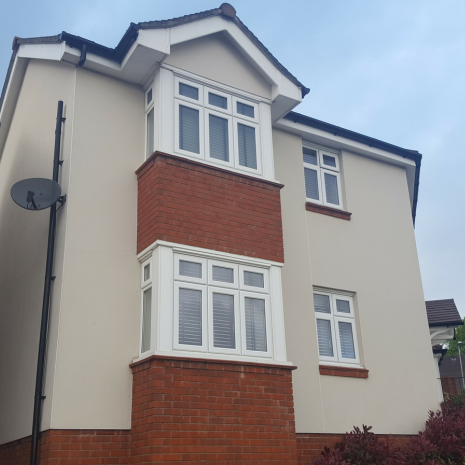

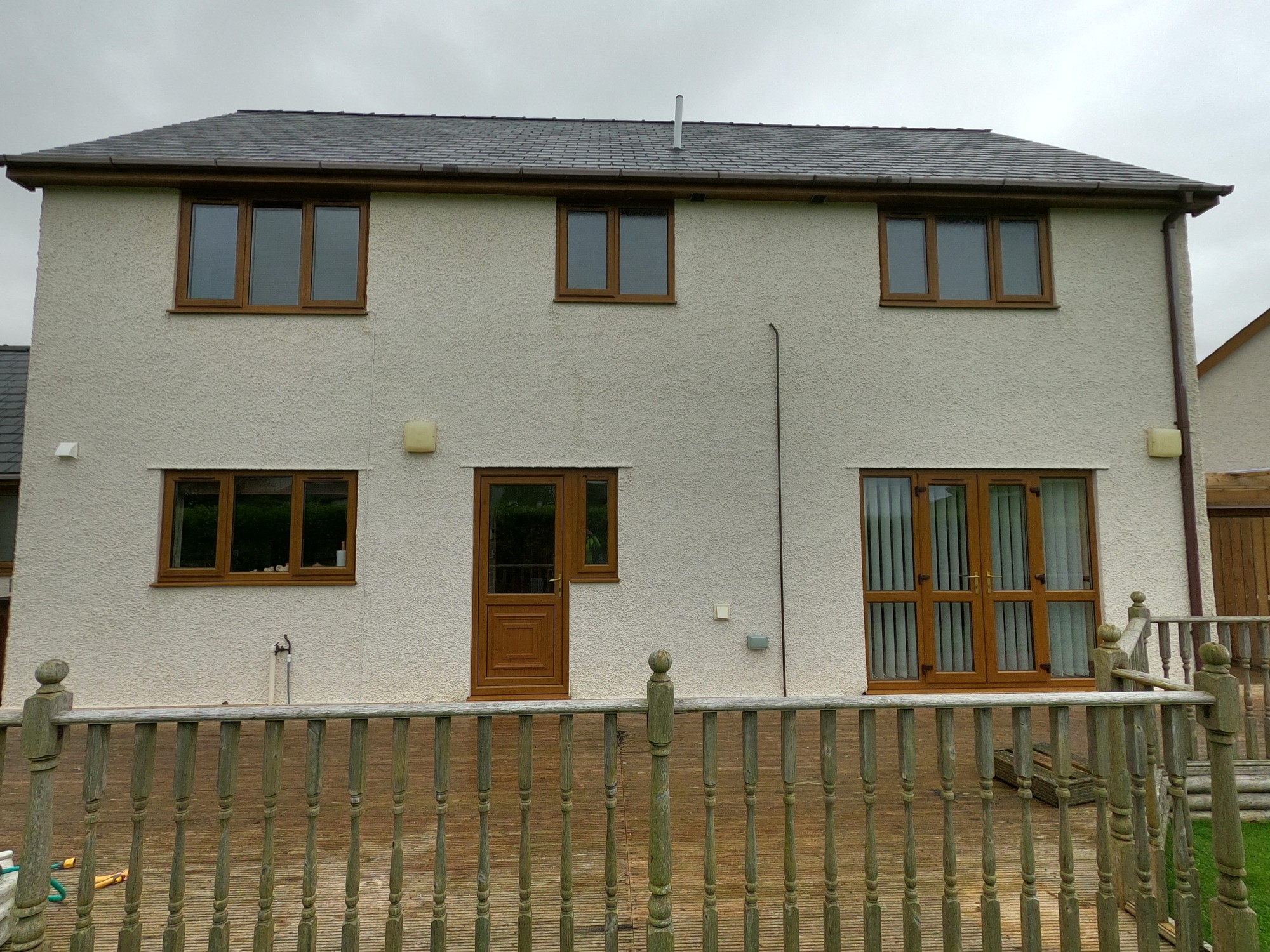
Three-storey silicone-rendered properties come up regularly on our books, and Softwashing UK plan them differently from lower buildings for several reasons. Reach is the obvious one. Telescopic delivery covers most domestic apexes from ground level, which is safer, faster and cheaper than access equipment. What matters is that the top of the wall receives the same volume and the same dwell as the bottom, since coverage naturally thins at the limit of reach unless it is managed deliberately. Sequence is the second. A tall elevation must be worked as a single continuous unit from top to bottom, because treatment applied to a partly dried section behaves differently and the finished wall records the join. On a through-coloured render that difference remains until the next clean. Rinsing direction is the third. Working systematically down the elevation ensures nothing is left part-rinsed and no treated area dries prematurely while a lower section is being addressed. Wind is the fourth, and it is a genuine constraint. Solution disperses before reaching a wall at height, and any work at that height becomes unsafe. We move dates rather than proceeding. K Rend cleaning on a tall property is therefore a planned operation rather than simply a larger version of a small one, and the quotation states how each elevation will be reached. Silicone render cleaning remains chemical throughout: very low pressure, nothing brushed or agitated, dilution held constant across the full height, and complete elevations worked with a live wet edge. Where a property has been treated by someone else previously, we assess what was done at the apex particularly, since that is where corners are most often cut.
Tall monocouche elevations demand more planning than shorter ones, and the reasons are worth setting out because they affect what a quotation should contain. Volume is the first. A scraped monocouche face needs generous application so treatment flows into the depth of the profile rather than bridging the high points, and on a three-storey elevation that means carrying enough to complete the wall without a change of batch. Dilution drifting mid-elevation shows once dry and cannot be corrected on a through-coloured finish. Reach is the second. Telescopic delivery covers most domestic gables from ground level, but coverage naturally thins at the limit of reach, so the apex needs deliberate attention rather than a final sweep. It is also the part of the elevation seen against the sky, so shortfalls show at a distance. Continuity is the third. The wall must be treated, dwelled and rinsed as one operation from top to bottom, which requires enough operatives to keep a wet edge live across the full width. Detailing is the fourth. Verges, bead lines and any projecting features at height concentrate water and colonise more heavily, and each needs treating as its own zone. Monocouche render cleaning at height is otherwise identical in method: low pressure, full dwell, gentle rinsing, nothing brushed or agitated, since exposed aggregate detaches permanently under abrasion. Render restoration on a tall gable is usually the most visible part of any job, and residential render cleaning that leaves the apex behind has missed the part everyone sees. Where a gable cannot be reached properly from the ground, the access needed is identified at survey and included rather than the area being treated lightly.
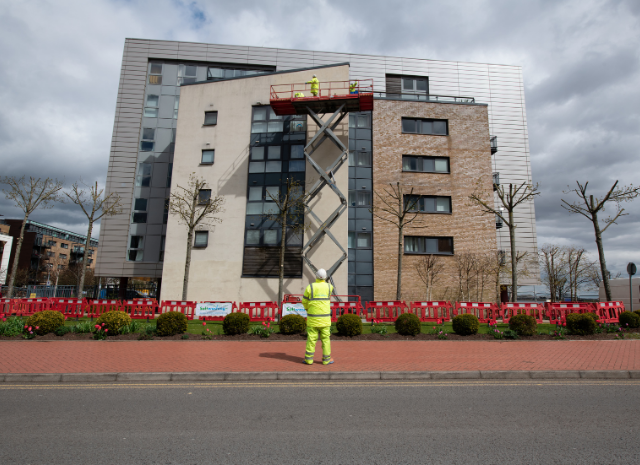

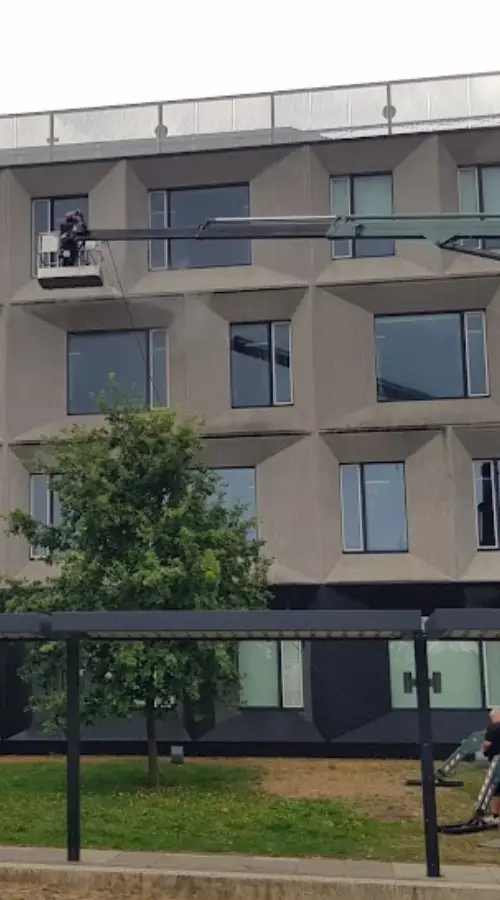
Auction houses, salerooms and valuation premises with rendered buildings operate on a cycle of viewing days and sale days, which leaves fairly clear windows for exterior work. Commercial render cleaning at these premises is planned around that calendar. Viewing periods and sale days bring substantial public attendance and vehicle movement, so work goes into the gaps between them, and most buildings of this size are completed within a single visit. Loading and collection areas are the operational consideration. Lots arrive and leave continuously outside the sale cycle, often in large vehicles, and those routes need to stay usable. We agree exclusion zones and timings with the operator before attending. Anything at ground level within the working area is protected or moved, and external fittings, signage and any opening on the elevation are masked or isolated. The low pressure method suits these buildings, with minimal noise and no spray drifting across an entrance or loading area. Insurance, method statements and risk assessments are supplied ahead of attendance, and operatives hold current working at height certification. Technically these premises are often substantial buildings with large plain elevations and considerable height. Render facade cleaning must hold identical dilution and continuous wet edges from top to bottom, since banding on a tall prominent wall is highly visible and awkward to remedy without treating the whole face again. For saleroom premises around Tenbury Wells, a clean every few years keeps the building presenting appropriately to attending buyers and protects a large area of coating from permanent damp. Where an operator holds more than one building on the site, treating them together in one visit reduces the cost per premises.
Serving a wide rural area properly requires a deliberate way of working, because the economics do not function if scattered jobs are treated individually. Travelling to one property at distance, carrying out a half-day job and travelling back is expensive per job. Contractors covering broad areas usually respond either by adding a travel charge or by declining smaller work in outlying settlements. We do neither. Instead we programme by locality. When bookings accumulate in a particular area, we hold them until there is enough to justify a full day or more and work through them in sequence. Mobilisation is then shared across several properties rather than carried by one, which is what allows the same rates to apply in outlying settlements as anywhere on our books. Flexibility on timing helps and is usually reflected in the figure. If you are not working to a deadline, saying so lets the job be slotted into a day already planned nearby. Where several properties along the same lane arrange together, the saving is larger again. There is no travel surcharge and no minimum job value. A single elevation is quoted at the same rates as a full property. Our vehicles carry water and treatment on board and deliver through long hose runs, which matters more in rural settings than anywhere, since a mains connection at the property may be limited or awkwardly placed. Render cleaning prices are quoted per elevation and fixed at survey, and as a local render cleaning company we are genuinely available across the whole area rather than only near the main roads.
Coverage takes in Tenbury Wells together with Aston Bank, Berrington Green, Bickley, Bockleton, Eardiston, Eastham, Frith Common, Hanley Childe, Hanley William, Lindridge, Newnham Bridge, Orleton, Rochford, St Michaels, Stoke Bliss and Upper Rochford, all on identical terms with no travel loading. Grouping work across an area of that spread is how we keep rates consistent, and customers can use it deliberately. Rather than travelling to individual properties on separate days, bookings are programmed by locality and completed in sequence. Travel, set-up and equipment positioning become costs incurred once across a group rather than repeated for each property, which is what allows outlying addresses to be quoted at the same rates as anywhere else, with no travel surcharge and no minimum job value. Two things follow. Flexibility helps: if you are not working to a deadline, saying so lets the job be fitted into a day already planned nearby, and that is usually reflected in the quotation. And arranging alongside others in the same settlement helps more, since the saving scales with the number of properties involved. We are happy to survey several properties in one visit and quote each separately, with no requirement for anyone to commit on behalf of anyone else. Properties across these settlements are typically individual rather than uniform, often set within their own grounds with elevations facing every direction, so each is assessed on its own terms and quoted per elevation. Access is rarely a difficulty, since our vehicles carry water and treatment on board and deliver at length. Surveys take around twenty minutes.
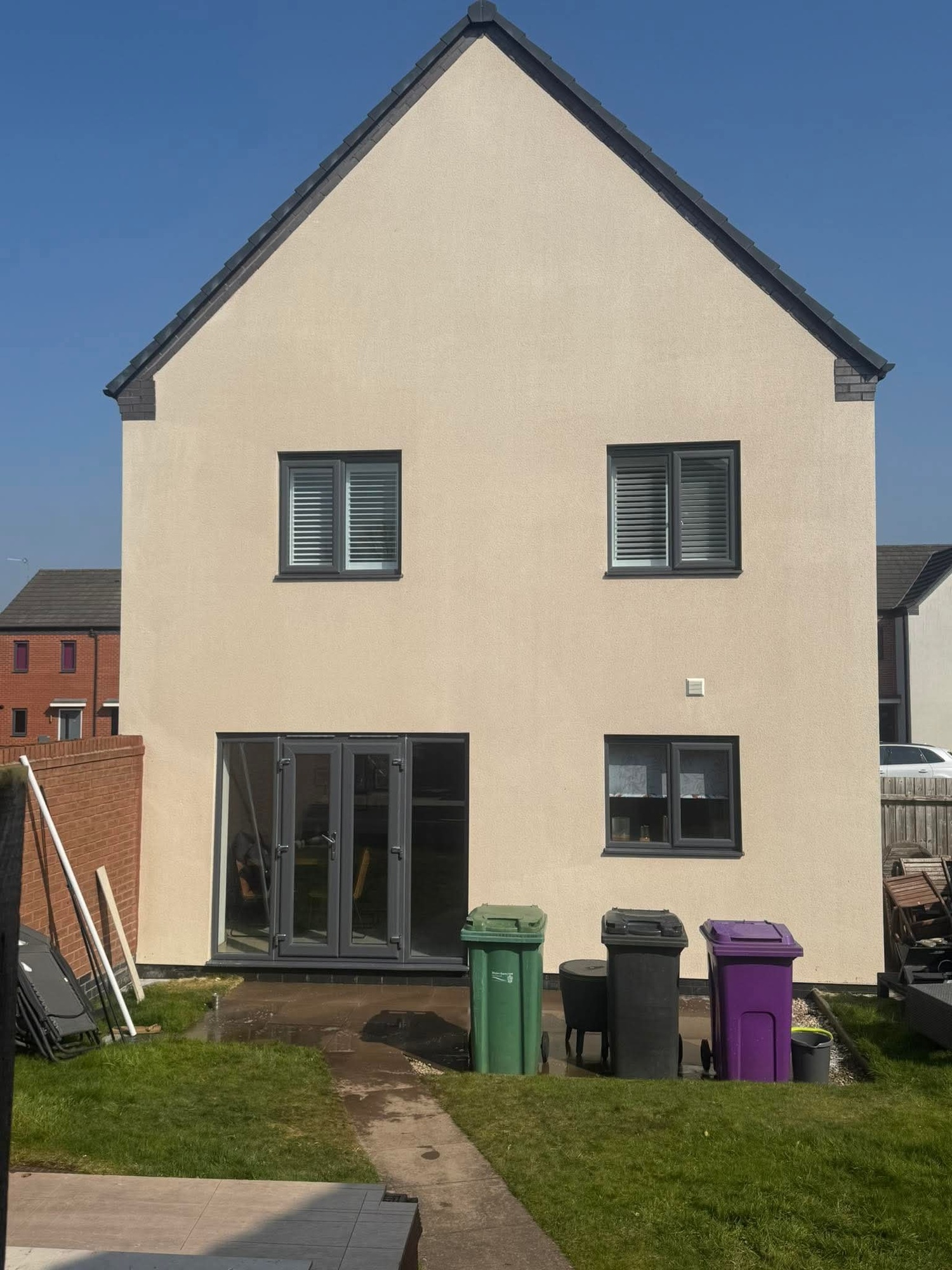
Most properties in Tenbury Wells benefit from professional render cleaning every 3 to 5 years, although this depends on the surrounding environment. Properties near trees, woodland, busy roads or coastal areas may require more frequent cleaning due to algae, mould and airborne contaminants. Our soft washing process removes existing growth and helps keep your render cleaner for longer.
Yes. Soft washing is specifically designed for delicate surfaces such as K-Rend, silicone render, monocouche render and painted render. Unlike high-pressure washing, it cleans at low pressure while treating biological growth at its source, reducing the risk of damage to the render finish.
We clean virtually all external render finishes, including K-Rend, Monocouche, Weber, Sto, silicone render, acrylic render, painted render, roughcast and pebble dash. Every cleaning method is tailored to the specific render type to achieve the best possible results.
Yes. Our specialist soft washing treatments are highly effective at removing green algae, red algae, black mould, mildew, lichen and other organic staining. We also apply professional biocide treatments to kill spores and slow down regrowth.
Because our process targets the biological growth rather than simply washing the surface, results typically last much longer than pressure washing alone. The exact lifespan depends on weather conditions, surrounding vegetation and the property’s location.
No. Our soft washing process is specifically designed to clean render safely. We use low-pressure application methods and specialist cleaning solutions that remove contamination without damaging the render surface when carried out by trained professionals.
The UK’s damp climate provides ideal conditions for algae, mould and other biological growth to develop on rendered surfaces. Areas with limited sunlight, nearby trees or persistent moisture are especially susceptible. Professional soft washing safely removes these contaminants and restores your property’s appearance.







































WhatsApp us