Softwashing UK turns down a handful of jobs every year, and the reasons are worth setting out since none of them is about the money. A wall that cannot be reached safely. A render nobody can identify with confidence and which the owner does not want tested. A property where the expectation is a result the method cannot produce. The commonest is timing. Somebody wants an elevation looking finished for a date a fortnight away, and the honest answer is that the treatment works over four to six weeks. Taking the booking and hoping is worse than declining it. The second commonest is condition. A wall that is failing rather than dirty needs a renderer, and cleaning it first wastes money in the wrong order. Where a job is straightforward, it proceeds in the usual way. Algae, lichen, moss and mould colonise the porous, textured face of render and hold moisture in it, so professional render cleaning applies a biocidal solution at low pressure and kills the colony at root rather than removing the visible layer. Our render cleaning services identify the render, survey the elevations and protect glazing, seals, frames, planting and hard surfaces before anything is applied. Render algae removal is quickest, render moss removal takes the most product, and render mould removal is slowest. Our render cleaning services identify the render, survey the elevations and protect glazing, seals, frames, planting and hard surfaces before anything is applied, and the survey is where most of these decisions are made. Render stain removal is handled separately afterwards, once the growth has cleared and the true extent of any marking is visible rather than assumed.
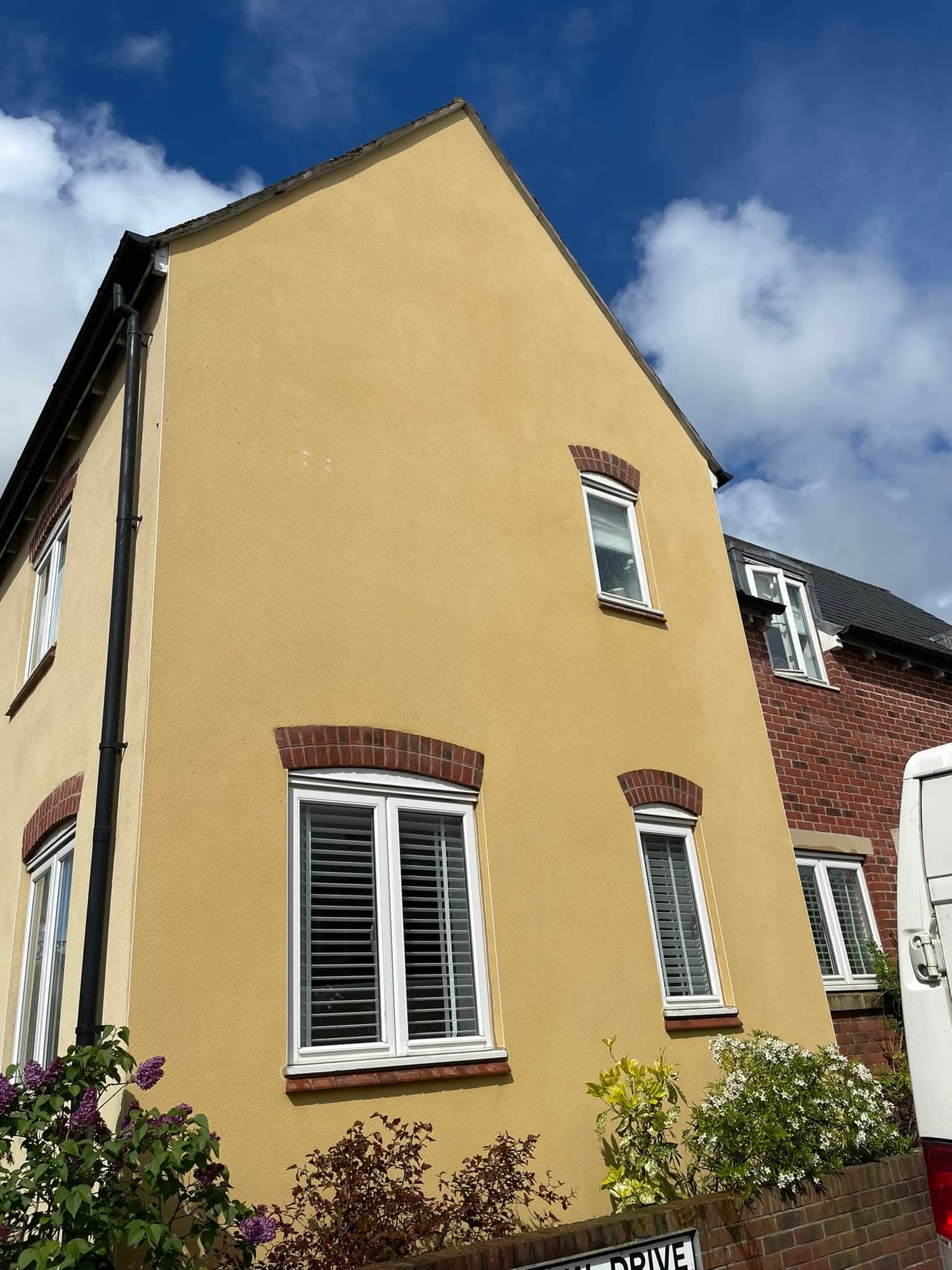
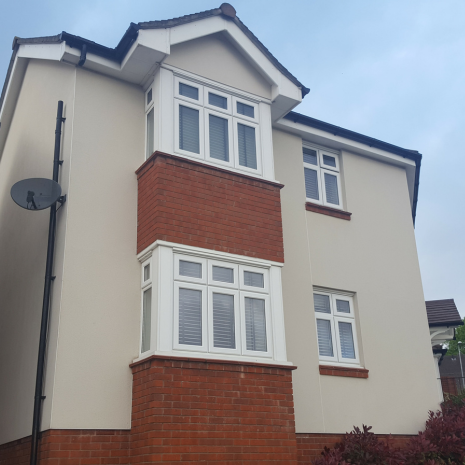

On thin-coat silicone the usual reason for declining is a wall that has already been damaged. Where a previous pressure wash has scoured an elevation, a treatment will remove the growth and leave everything else exactly as it is, and where somebody is expecting the marks to disappear we would rather not take the work. That is explained with photographs at the quotation stage rather than at the end of a visit. K Rend cleaning on a sound wall is straightforward and rarely refused. A soft wash render cleaning solution is applied at low pressure from the top of the elevation down, wet-on-wet so contact time stays even, with additional passes where colonisation is heaviest. The other case is a debonded section. A treatment does not disturb it, but a customer entitled to know it is there sometimes decides to have the render repaired first, which is usually the better order. Beads, joints, mastic and cracking are checked beforehand, since a wall that will keep staining from behind is another case where the honest answer is a repair rather than a clean. Silicone render cleaning done chemically leaves the coat performing exactly as designed. Render soft washing kills at root and rain clears the dead layer across four to six weeks, which is the timeline nobody can compress. Where a customer accepts what a treatment can and cannot achieve, the job goes ahead as normal and the result is exactly as described. Beads, joints, mastic and cracking are checked beforehand, and a wall that will keep staining from behind is the clearest case for a repair before a treatment.
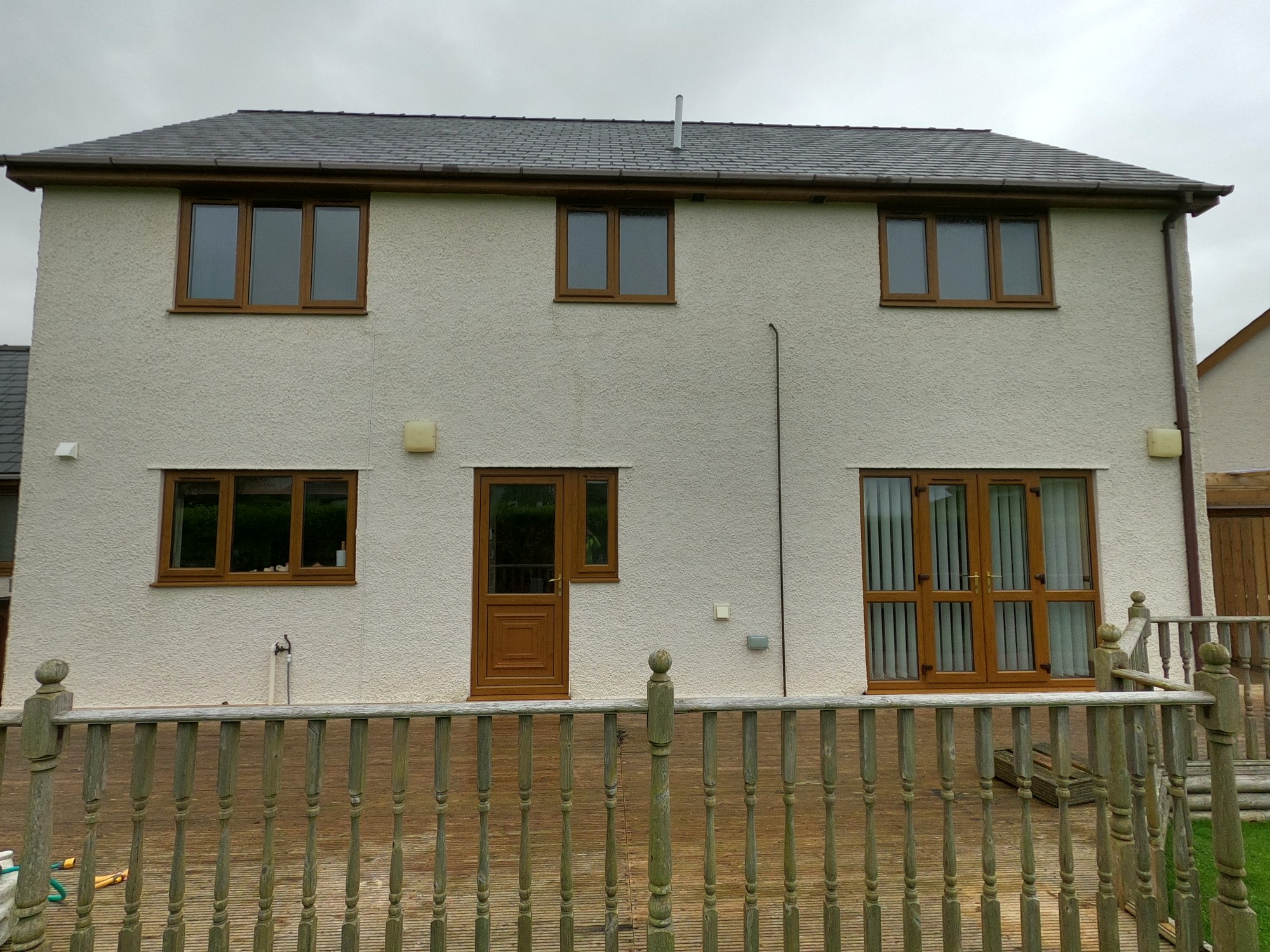
Monocouche produces the most declined jobs of any render, almost always on timing. The scraped texture holds dead material for six or eight weeks, so an elevation treated shortly before a viewing, a letting or an occasion will look mottled rather than finished on the day that matters. Where somebody needs a result faster than that, we will say so rather than take the booking. A rinse helps and does not eliminate the interim entirely. Monocouche render cleaning otherwise proceeds normally. Product is applied heavily, reapplied where the open granular face absorbs it, and whole elevations kept wet with sections worked to a live edge, with nothing abrasive at any stage since colour runs through the full depth of the coat. The second case is a wall somebody wants brushed. On a through-coloured render that request cannot be accommodated, since brushing polishes the texture and leaves a permanent lighter patch. Coloured render cleaning also means recognising lime bloom, which needs a brief acidic treatment neutralised at once rather than any biocide. Render maintenance every three to five years prevents almost every situation in which a job would have to be declined, since a wall on a cycle is never in a state that raises any of these questions. Coloured render cleaning also means recognising lime bloom, which needs a brief acidic treatment neutralised at once and is another thing worth agreeing before a visit rather than during one. Render wall cleaning on this surface is booked as a full day rather than fitted around other work, which is another reason a rushed date is declined rather than accommodated.
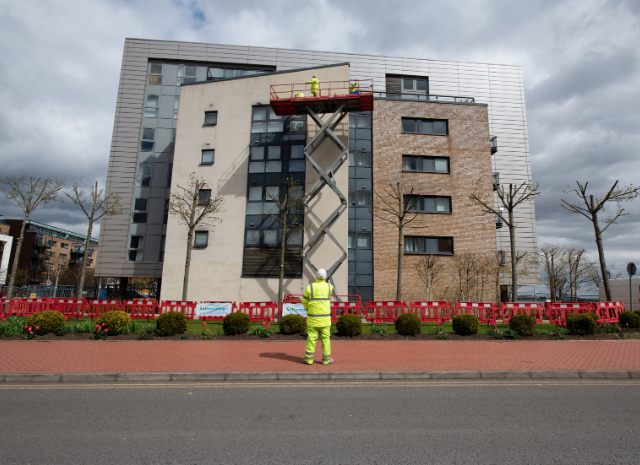

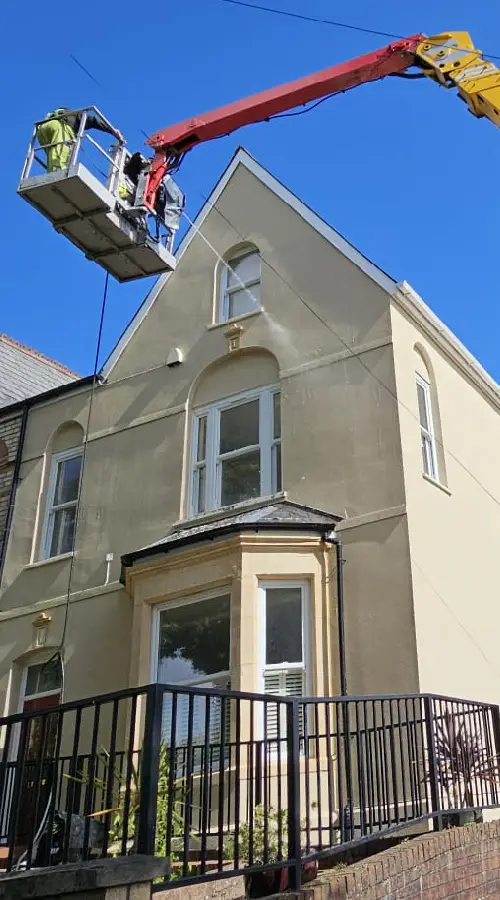
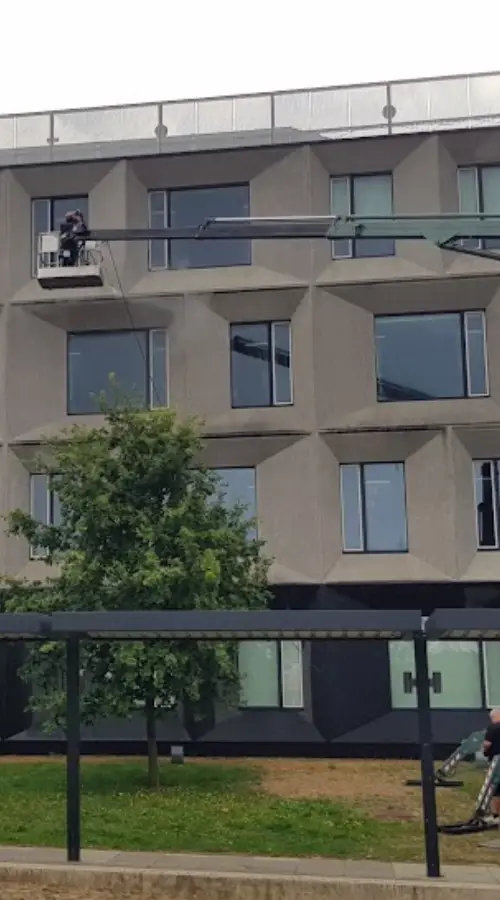
On commercial work the reasons for declining are usually about access or specification. An elevation that cannot be reached safely without equipment nobody is willing to fund, or a specification requiring a method we regard as damaging, are both cases where we withdraw rather than compromise. Where a tender document names pressure washing on a rendered facade, we will say why that is inadvisable and let the client decide. Where the specification stands, somebody else can carry it out. Commercial render cleaning as we deliver it is quoted from a survey covering render type, elevation areas, condition, contamination, drainage and access, with a written programme setting out sequence, hours, welfare, parking, exclusion zones and permits before a date is confirmed. Most render facade cleaning is completed from ground level with long-reach soft wash equipment, avoiding scaffold entirely. Premises range from offices and retail units to hotels, care homes, schools, workshops and light industrial buildings. Risk assessments, method statements, COSHH information and insurance certification are supplied before mobilisation. Most render facade cleaning is completed from ground level with long-reach soft wash equipment, avoiding scaffold and keeping the working area small enough that a building trades normally. Premises range from offices and retail units to hotels, care homes, schools, workshops and light industrial buildings, with additional planning wherever residents, pupils or the public are present. Risk assessments, method statements, COSHH information and insurance certification are supplied before mobilisation on every job we do take. Where a specification cannot be met without a method we regard as damaging, we withdraw rather than reinterpret it quietly.
Declining a job is easier than explaining a poor result afterwards. A customer told at the quotation stage that the timing will not work, or that the wall needs a different trade, is inconvenienced; the same customer told after paying is something rather worse. Where we decline, we say why and suggest what would need to change. Occasionally that is a later date. Occasionally it is a repair first. Occasionally it is a willingness to accept that two marks on an elevation are permanent. Very little is turned down on grounds of size or awkwardness. Small jobs, difficult access and long hose runs are all normal, and none of them is a reason to say no. As render cleaning specialists working only on exterior coatings, there is no other service to redirect somebody towards, which keeps the conversation honest. Full public liability cover is in place on every job, with method statements and risk assessments available on request. Products are biodegradable and applied in measured volumes, so eco friendly render cleaning is the ordinary approach here. Anyone in Tywardreath comparing render cleaning prices should note who was prepared to say no. A treated wall holds four to five years, which makes thorough work the affordable render cleaning option and a willingness to decline a fair sign of the best render cleaning service. Quotations are fixed, with elevations measured, condition and access assessed and the render cleaning cost written down alongside the scope, and no figure is issued for work we do not think is worth doing. Where a job is declined, the reasoning is set out in writing so somebody can act on it rather than simply being turned away.
Par and Polkerris are covered with Tywardreath, and jobs across the three are scheduled together so that travel does not appear in anyone’s figure and properties booked in the same week share a setup. If you have a date, a doubt about the render or an expectation you are not sure is realistic, say so at the enquiry stage. It is a short conversation and it occasionally saves somebody from paying for the wrong thing. House render cleaning covers modern silicone-rendered homes through to older properties with painted or traditional coatings. Residential render cleaning is priced per property, since render type, contamination and access all change the amount of work involved. If one elevation is the problem, that is all we will quote for, and we will say honestly when a wall could reasonably wait another year. Where several households want work at the same time, consecutive visits from one setup reduce the cost for everyone and take a single call to organise. Clear daylight images taken square on to each affected elevation, plus rough dimensions, are normally enough for a firm written quotation. Anyone searching render cleaning near me will find plenty of contractors and little explanation of method. As a local render cleaning company we would rather decline a job than deliver a disappointing one. Restricted access, three storeys or an uncertain render type will bring us out at no charge. Nobody needs to be present for the work itself, and the site is left as it was found. There is no charge for an opinion, including one that ends in us declining the work.
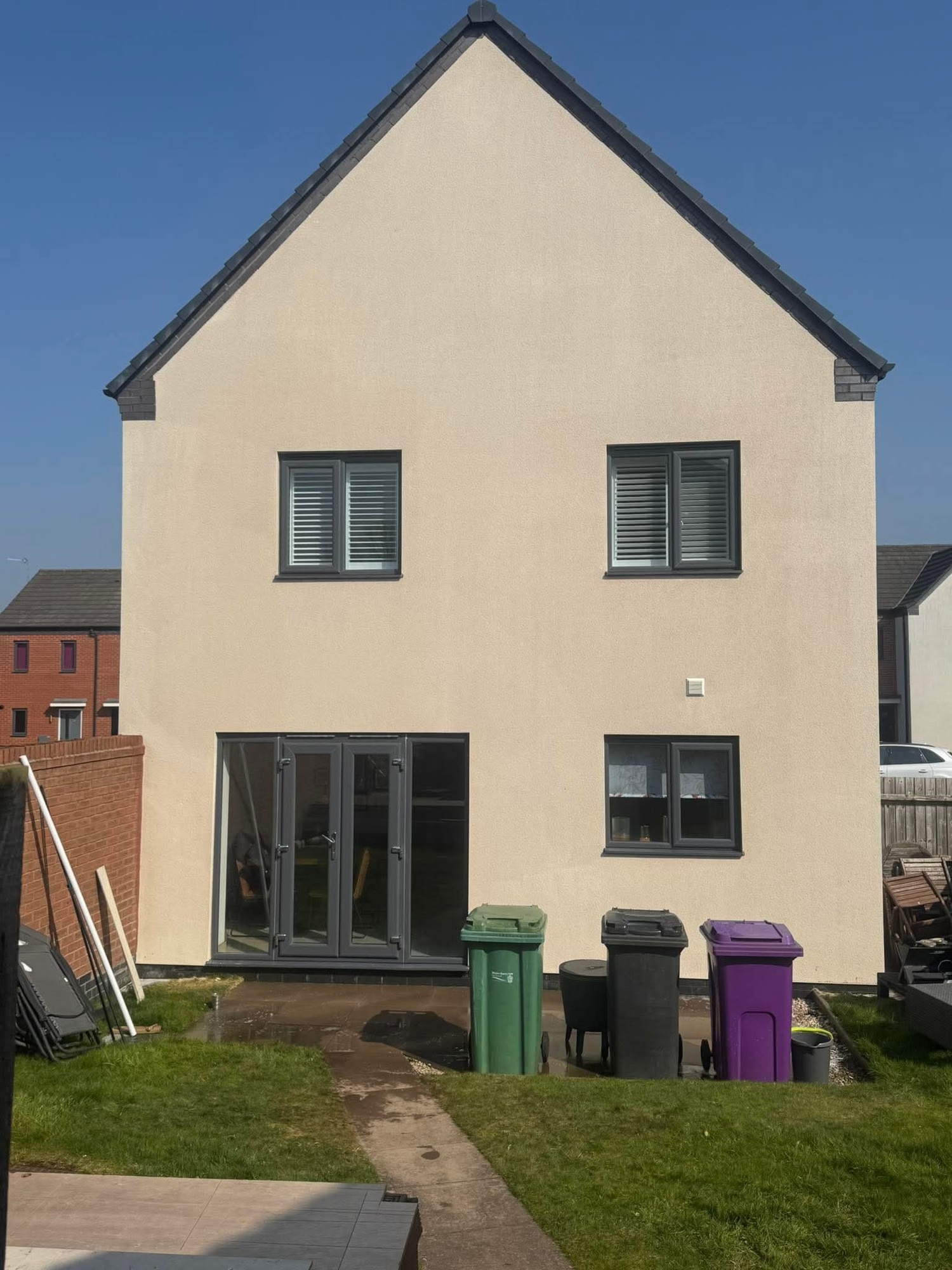
Most properties in Tywardreath benefit from professional render cleaning every 3 to 5 years, although this depends on the surrounding environment. Properties near trees, woodland, busy roads or coastal areas may require more frequent cleaning due to algae, mould and airborne contaminants. Our soft washing process removes existing growth and helps keep your render cleaner for longer.
Yes. Soft washing is specifically designed for delicate surfaces such as K-Rend, silicone render, monocouche render and painted render. Unlike high-pressure washing, it cleans at low pressure while treating biological growth at its source, reducing the risk of damage to the render finish.
We clean virtually all external render finishes, including K-Rend, Monocouche, Weber, Sto, silicone render, acrylic render, painted render, roughcast and pebble dash. Every cleaning method is tailored to the specific render type to achieve the best possible results.
Yes. Our specialist soft washing treatments are highly effective at removing green algae, red algae, black mould, mildew, lichen and other organic staining. We also apply professional biocide treatments to kill spores and slow down regrowth.
Because our process targets the biological growth rather than simply washing the surface, results typically last much longer than pressure washing alone. The exact lifespan depends on weather conditions, surrounding vegetation and the property’s location.
No. Our soft washing process is specifically designed to clean render safely. We use low-pressure application methods and specialist cleaning solutions that remove contamination without damaging the render surface when carried out by trained professionals.
The UK’s damp climate provides ideal conditions for algae, mould and other biological growth to develop on rendered surfaces. Areas with limited sunlight, nearby trees or persistent moisture are especially susceptible. Professional soft washing safely removes these contaminants and restores your property’s appearance.



































WhatsApp us