Describing a wall’s condition accurately rather than dramatically is part of quoting honestly, and the vocabulary matters. Light algae means a green film across parts of an elevation, shallow in the texture, cosmetic in the short term and straightforward to remove. It does not mean the wall is damaged. Established algae means the film covers whole faces and has worked into the recesses. Still cosmetic, but the treatment needs more time. Black spotting means fungal growth rather than algae, appearing as discrete dark marks, and it is more persistent and needs longer dwell. Moss means cushions on horizontal detail holding water permanently against the coating, and that is the point at which growth stops being purely about appearance. Lichen means crusts attached firmly to the surface, indicating a wall left a decade or more, and it dies slowly so the result takes four to six weeks. Deterioration means something else entirely: hollow, friable or debonding coat, which cleaning does not address and may worsen. We use those terms as written rather than describing every wall as urgent. Our render cleaning services are quoted against whichever applies. Soft wash render cleaning pre-wets the elevation, applies correctly diluted biocide at low pressure, allows full dwell so growth is killed at root within the texture, then rinses gently from the top down. Render algae removal shows within days and render moss removal across several weeks. Render pressure washing is frequently sold on the drama rather than the description. House render cleaning and exterior render cleaning of a property in Uplyme generally take a single working day.
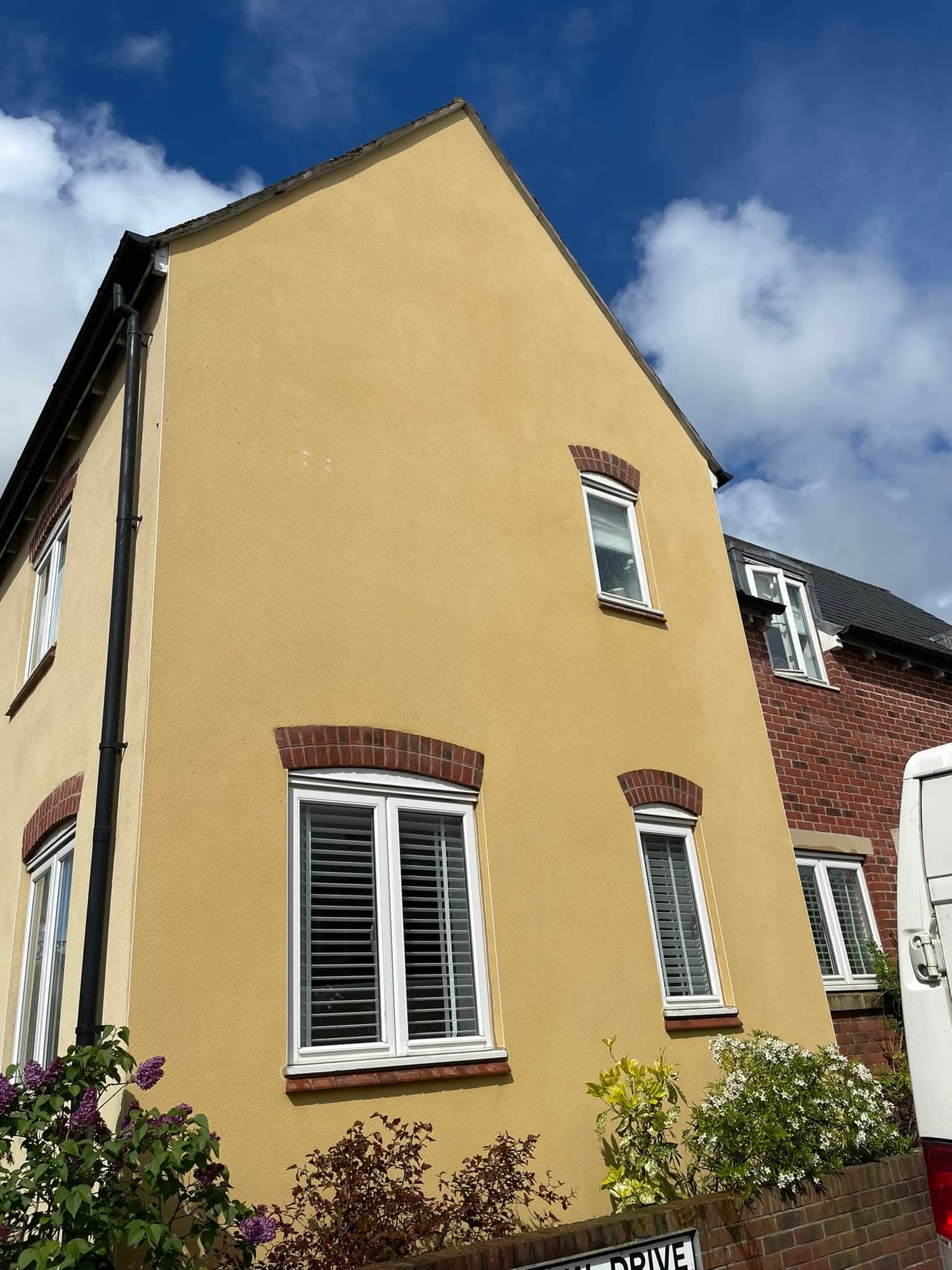
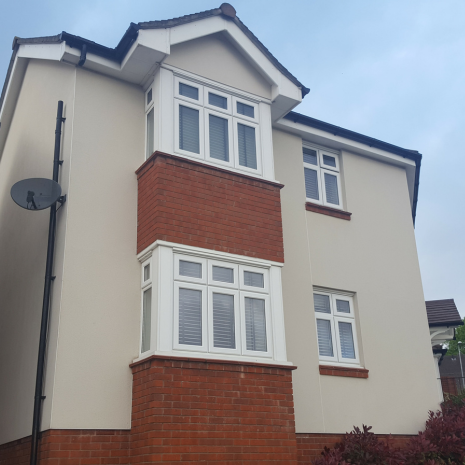

On a sloping site, where run-off travels matters as much as where treatment is applied, and K Rend jobs are sequenced around it. Water moves downhill, which sounds obvious and is regularly ignored. Solution rinsed from an upper elevation travels across whatever sits below, so anything downhill of a working wall is protected before treatment starts rather than afterwards. Structures are treated in order. Anything uphill of another building is worked first so nothing washes down across a wall already finished, and boundary or retaining walls at the bottom of a plot are treated last since they take run-off from everything above. Planting downhill of an elevation needs particular attention, since run-off concentrates as it travels and reaches ground that would be unaffected on a level plot. Drainage is identified at the start, and where a gully sits below a working area the rinse is directed towards it. Hose routes are planned too, since dragging line uphill across treated ground is both awkward and pointless. Access frequently means standing well above or below a wall, which extends reach and lengthens hose runs, and that is assessed before a figure is given. K Rend cleaning otherwise runs its usual sequence: pre-wet, apply correctly diluted biocide, allow full dwell so treatment reaches the base of growth within the scraped texture, then rinse at controlled low pressure from the top down. Silicone render cleaning involves no abrasion, render mould removal depends on dwell, and coloured render cleaning is completed elevation by elevation. On sound walls in Uplyme render restoration is rarely required.
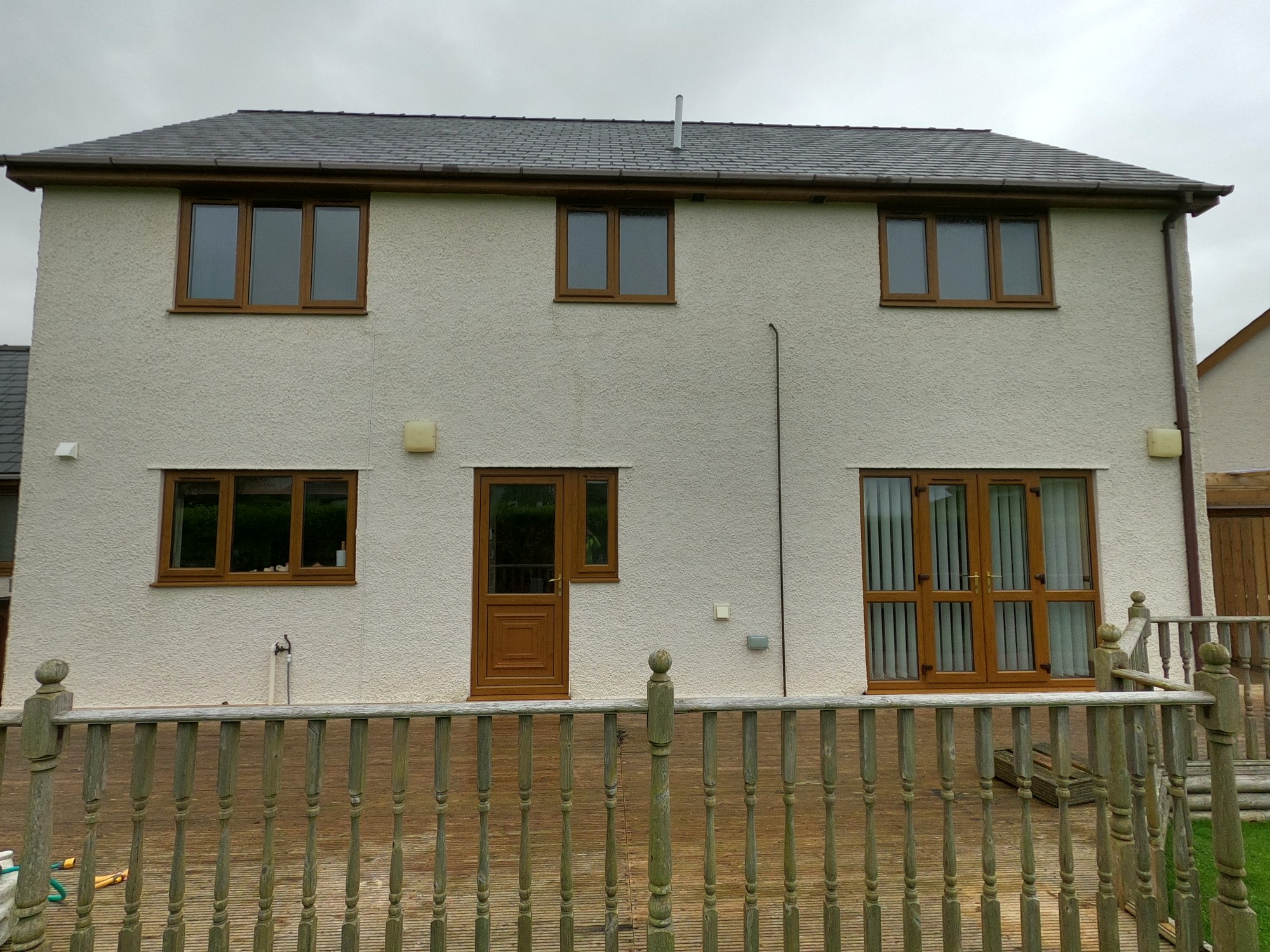
Steep gardens change how a monocouche job is protected and how long it takes. Terracing is the first factor. Retaining structures, steps and raised beds finished in matching render need treating alongside the house, and each is exposed on more faces than a flat plot would produce. Planting on a slope is the second. Beds sit at different heights relative to a wall, so sheeting has to work with gravity rather than against it, and material that would stay put on level ground slides. Run-off is the third and the most important. Everything below a treated elevation receives it, so protection extends considerably further downhill than it would on a level plot, and drainage is identified before anything is mixed. Access is the fourth. Standing is frequently well above or below a wall, hose runs are long, and equipment has to be positioned where it can be reached safely rather than where it would be convenient. And time is the consequence, since a steep plot adds a substantial part of a morning before any treatment is applied. Monocouche render cleaning through render soft washing then applies correctly diluted biocide across a full elevation, allows proper dwell time to penetrate the open mineral texture, and rinses at controlled low pressure from the top down with no abrasion of the coloured face. Residential render cleaning covers reveals, sills, soffits, beads and returns, and render wall cleaning extends to terracing, steps, garages and boundary walls in matching finish. Render maintenance every three to four years suits most properties in Uplyme. Anyone flexible on timing generally gets both a better figure and a quicker date, since the job drops into whichever round is running.
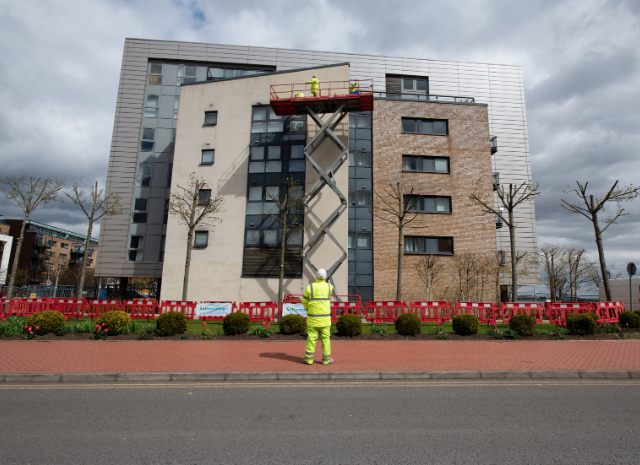

Holiday parks and self-catering complexes have rendered structures scattered across a site and a very narrow window in which to treat them. The buildings are numerous and varied. Reception and offices, shower and toilet blocks, laundry facilities, shops and cafés, plant and storage buildings, individual units and the walls enclosing bins, parking and service areas are all frequently rendered. The ancillary structures are always worse, sitting lower, closer to hard standing, frequently shaded and enclosed, with nobody looking at them between seasons. Occupancy runs from spring through autumn with changeover days offering no useful working window, so commercial render cleaning is programmed for the closed months when access is unrestricted, pricing is better and nobody is inconvenienced. Photography usually follows, and we advise allowing three to four weeks between the two, since the result keeps developing as dead growth weathers off. Each structure is quoted separately so an operator can see the whole picture and phase the work across seasons, and everything is completed within one attendance wherever possible. Render facade cleaning holds dilution constant along each run, sizes sections so treatment can be applied and rinsed before any part of it dries, and finishes each structure in one continuous operation. Render stain removal covers run marks below hoppers and overflow pipes, splash across lower walls, and soiling around bin stores, service doors and parking, with risk assessments, method statements and dated photographic records supplied for operators in Uplyme. Owners with more than one rendered structure are quoted per building and completed together where the calendar allows. Dated photographic records are supplied per structure so spend can be evidenced across a site.
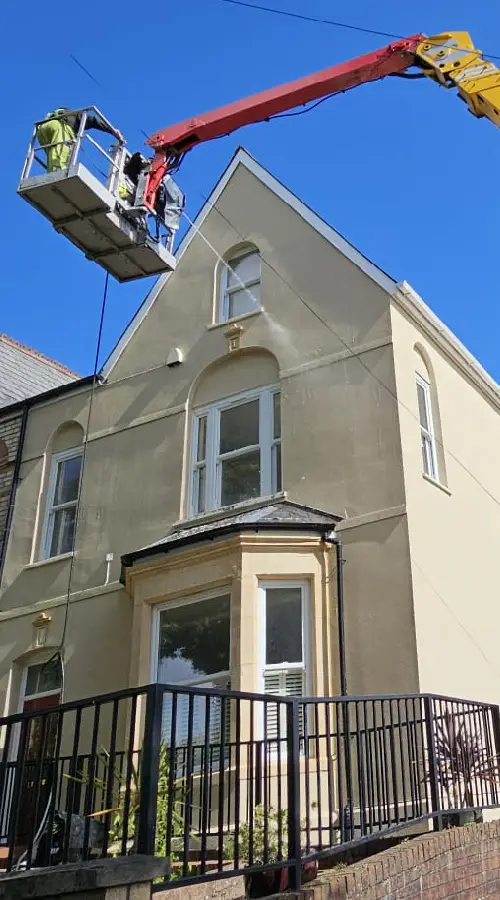
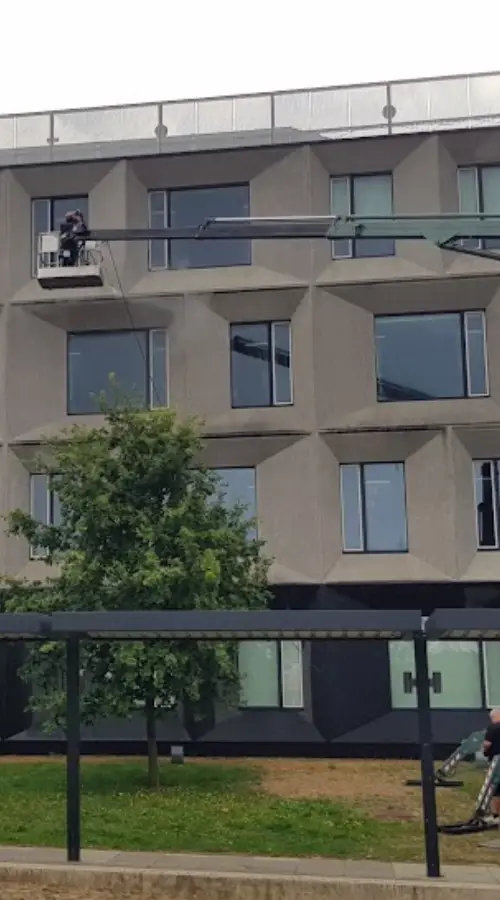
How teams are trained decides more about a result than any product does, and it is worth setting out. Coating identification comes first. Recognising traditional render, painted render, pebbledash, tyrolean, monocouche, silicone systems and insulated build-ups on sight, since each has a different tolerance and getting it wrong causes permanent damage. Condition assessment is second. Tapping for hollow areas, reading cracking, spotting previous pressure washing and recognising failing paint film. Dilution discipline is third. Mixing to a measure for a specific elevation rather than by eye, and understanding why strength comes down when planting, ponds or older coatings are involved. Application technique is fourth. Even coverage across a full face, working details directly, applying upwards and rinsing downwards, and sizing sections to conditions. Protection is fifth, covering sheeting, pre-wetting, exclusions and downwashing. And safety at height is sixth, along with knowing when a property genuinely needs powered access rather than improvisation. None of that is quick to teach, which is one reason we employ our teams rather than subcontracting. Softwashing UK works as render cleaning specialists, and professional render cleaning is a trained trade rather than a piece of equipment. Render cleaning cost is fixed after assessment, built from wall area, storey height, access and how established the growth is, and render cleaning prices do not move. Affordable render cleaning comes from efficient routing rather than from cheaper labour. Eco friendly render cleaning is standard throughout. Anyone comparing listings for render cleaning near me should ask what training the attending team has, since a local render cleaning company that can answer specifically is generally the best render cleaning service available.
Coverage from Uplyme includes Combpyne, Hampton and Pinhay, and both position and access shape the work across all four. Positions with any line to open water take some salt on the air, holding moisture at the surface and building deposit in the texture alongside organic growth, so those elevations need two stages within one visit and a generous rinse. Intervals there run at the shorter end. Sheltered and wooded positions behave quite differently, drying slowly in still air, with growth concentrating on shaded faces, moss on the horizontal details and lichen building on anything left a decade. Those walls want dwell at the longer end rather than a heavier deposit stage. Sloping ground is the other constant. Run-off travels further than on a level plot, so protection extends downhill, structures are treated in order from the top down, and drainage is identified before anything is mixed. Access follows from that, with standing frequently well above or below a property and hose runs longer than the footprint suggests, all assessed at the quoting stage rather than on the morning. Work is grouped into rounds so travelling never lands on a single quote, water is carried as standard, quotes are itemised structure by structure, there is no minimum job size applied, and photographs of each face are enough for an accurate fixed figure. Lead times run at two to three weeks, shortening considerably from late summer onwards. Anyone flexible on the exact date generally gets both a better figure and a quicker slot, since the job drops into whichever round is filling.
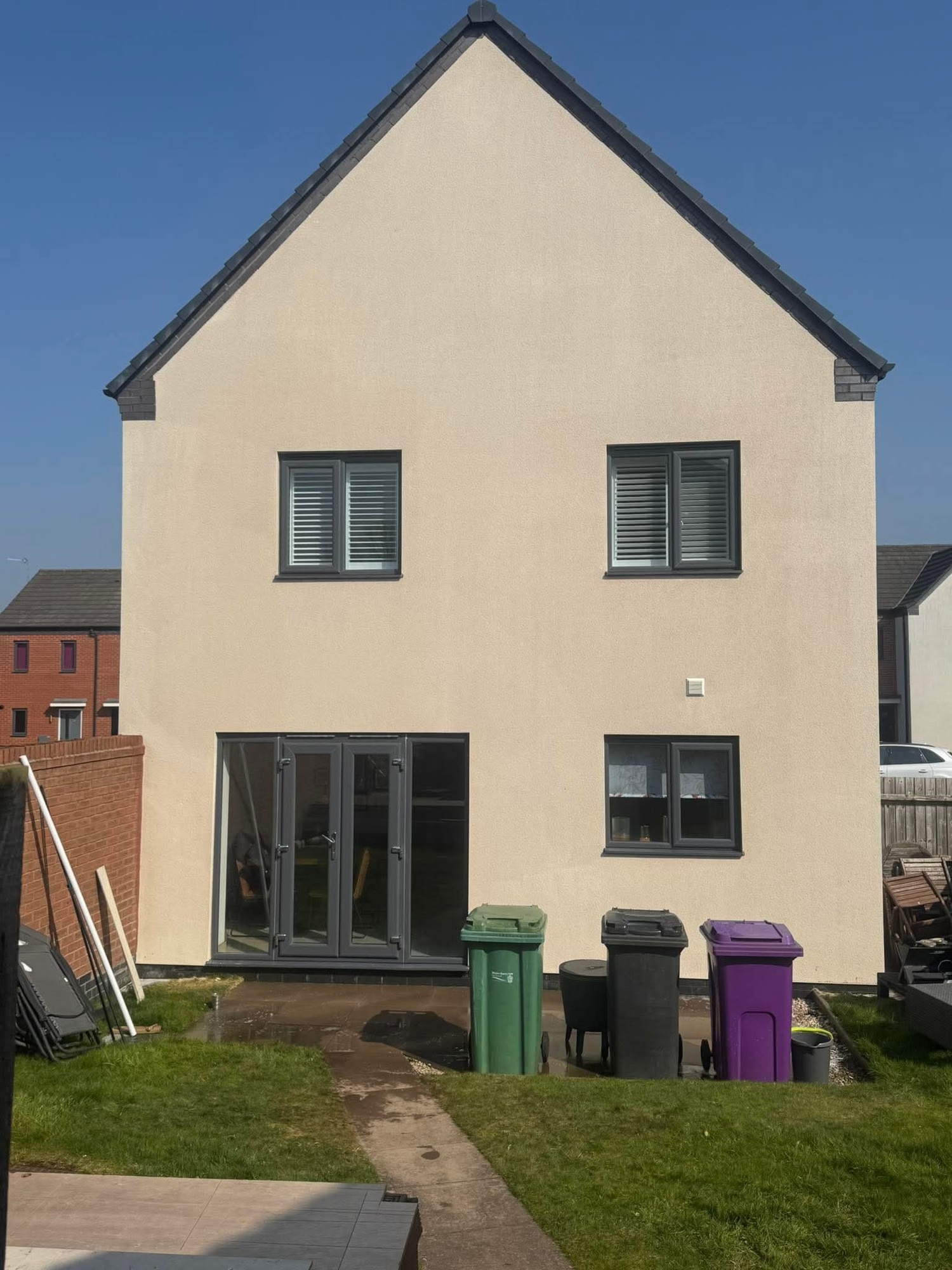
Most properties in Uplyme benefit from professional render cleaning every 3 to 5 years, although this depends on the surrounding environment. Properties near trees, woodland, busy roads or coastal areas may require more frequent cleaning due to algae, mould and airborne contaminants. Our soft washing process removes existing growth and helps keep your render cleaner for longer.
Yes. Soft washing is specifically designed for delicate surfaces such as K-Rend, silicone render, monocouche render and painted render. Unlike high-pressure washing, it cleans at low pressure while treating biological growth at its source, reducing the risk of damage to the render finish.
We clean virtually all external render finishes, including K-Rend, Monocouche, Weber, Sto, silicone render, acrylic render, painted render, roughcast and pebble dash. Every cleaning method is tailored to the specific render type to achieve the best possible results.
Yes. Our specialist soft washing treatments are highly effective at removing green algae, red algae, black mould, mildew, lichen and other organic staining. We also apply professional biocide treatments to kill spores and slow down regrowth.
Because our process targets the biological growth rather than simply washing the surface, results typically last much longer than pressure washing alone. The exact lifespan depends on weather conditions, surrounding vegetation and the property’s location.
No. Our soft washing process is specifically designed to clean render safely. We use low-pressure application methods and specialist cleaning solutions that remove contamination without damaging the render surface when carried out by trained professionals.
The UK’s damp climate provides ideal conditions for algae, mould and other biological growth to develop on rendered surfaces. Areas with limited sunlight, nearby trees or persistent moisture are especially susceptible. Professional soft washing safely removes these contaminants and restores your property’s appearance.








































Rendered walls can quickly lose their original appearance when exposed to rain, damp conditions, pollution, algae and mould. What may have once been a clean, bright finish can gradually become covered in green growth, dark staining, dirt and other marks, making the entire property look older and less well maintained.
Professional render cleaning Uplyme provides an effective way to restore the appearance of rendered walls without immediately resorting to repainting or replacing the render. Using specialist equipment, suitable cleaning treatments and controlled techniques, experienced render cleaning specialists can remove years of accumulated contamination while taking care to protect the underlying surface.
Whether you require house render cleaning, commercial render cleaning, K Rend cleaning, silicone render cleaning, Monocouche render cleaning or general render wall cleaning, professional treatment can make a significant difference to the appearance of your property.
Render cleaning is the specialist process of removing dirt, algae, moss, mould, lichen, pollution and other environmental contamination from rendered walls. Unlike conventional exterior cleaning, the process needs to account for the type and condition of the render being treated.
Rendered surfaces can be porous, textured or coated, meaning that moisture and organic contamination can become established within the surface. Simply washing the wall may remove some visible dirt, but specialist render cleaning services can go further by treating the biological growth responsible for recurring staining.
Professional exterior render cleaning is designed to improve the appearance of the render while helping prevent organic growth from quickly returning.
The UK’s wet and changeable weather creates ideal conditions for algae, moss and mould. Rainfall and damp conditions can leave rendered walls moist for long periods, particularly where there is limited sunlight.
Shaded and north-facing walls are often more susceptible to algae and mould, while properties surrounded by trees can experience additional moisture, leaves and organic debris. Buildings located near busy roads may also develop dark marks and pollution staining as airborne contaminants settle against the exterior.
Green algae is one of the most common problems, but render can also develop black, brown, pink, orange and red staining. Moss and lichen may become established where moisture remains trapped against the wall.
Professional render algae removal, render moss removal, render mould removal and render stain removal can tackle these different forms of contamination and help restore a much cleaner appearance.
Different render systems require different approaches. A professional render cleaning company should assess the surface before choosing the most suitable cleaning method.
Silicone render cleaning is frequently required on modern properties where algae, dirt and pollution have affected the appearance of the finish. Silicone render is designed to resist moisture, but it can still become stained and discoloured over time.
K Rend cleaning can restore the appearance of textured coloured render that has become affected by algae, dirt and environmental contamination.
Similarly, Monocouche render cleaning requires suitable techniques to clean the surface without unnecessarily affecting its decorative finish.
Coloured render cleaning can also be a worthwhile alternative to repainting. What appears to be fading may actually be years of accumulated dirt, algae and staining sitting over the original finish.
An experienced render cleaning specialist will consider the render type, level of contamination, condition of the surface and accessibility before deciding how the work should be carried out.
High-pressure cleaning is not suitable for every rendered surface. Although render pressure washing may appear to provide a quick solution, excessive pressure can potentially damage delicate render, remove surface coatings or cause water to penetrate areas where it should not.
For this reason, render soft washing is often a more suitable approach.
Soft wash render cleaning combines low-pressure water with specialist cleaning treatments designed to break down and treat algae, mould, moss, lichen and other organic contamination. Instead of relying on force to remove everything from the surface, the treatment targets the biological growth before the render is carefully rinsed.
This makes soft washing render a popular option for homeowners looking for effective cleaning while minimising unnecessary pressure on the surface.
Render can develop a range of different problems depending on its location and exposure.
Render algae removal helps eliminate green growth that commonly develops on shaded or damp elevations.
Render moss removal can help prevent moss from retaining moisture against the surface, while specialist render mould removal can address dark growth around windows, rooflines and other areas where moisture accumulates.
Pollution and atmospheric contamination can also leave rendered walls looking grey, dull and streaked. Professional render stain removal can help lift these marks and restore a more consistent finish.
A thorough render cleaning service can therefore address much more than general dirt, improving the overall appearance of the walls and helping prevent contamination from becoming increasingly established.
Residential render cleaning is suitable for houses, bungalows, apartments, terraces, semi-detached properties and modern new-build homes. Cleaning tired or stained render can significantly improve kerb appeal and make the exterior look brighter and better maintained.
For homeowners, professional house render cleaning can be particularly useful before selling a property, completing exterior improvements or simply improving the overall appearance of the home.
For businesses and larger properties, commercial render cleaning can help maintain a professional appearance. Offices, shops, schools, hotels, apartment buildings and other premises can all experience staining caused by weather, pollution and organic growth.
Larger buildings may also benefit from specialist render facade cleaning, particularly where extensive external elevations have become heavily marked or discoloured.
Heavily stained render does not always need to be repainted or replaced. Professional render restoration can remove years of accumulated contamination and reveal a cleaner finish underneath.
Cleaning can be considerably less disruptive and expensive than replacing rendered walls. Regular render maintenance can also help prevent algae, moss and mould from becoming deeply established, making future cleaning easier.
Keeping rendered walls maintained can therefore help protect the appearance of the property while potentially reducing the need for more costly exterior renovation work.
There is no single cleaning schedule that applies to every property. The ideal frequency depends on the render type, location, surrounding environment and level of exposure to moisture and pollution.
Properties surrounded by trees or located in shaded areas may require more frequent cleaning than buildings exposed to direct sunlight. Similarly, homes close to busy roads may develop pollution staining more quickly.
For many properties, professional render cleaning services every three to five years can provide a useful maintenance routine. Properties in particularly damp environments may benefit from more regular render maintenance.
If you are searching for render cleaning near me, choosing an experienced contractor is important. Render should not simply be treated like concrete, brickwork or paving.
A reputable local render cleaning company will assess the surface before recommending a suitable cleaning solution. This is particularly important where the building has silicone render, K Rend, Monocouche, coloured render or another specialist finish.
The best render cleaning service will also use appropriate equipment and professional cleaning products rather than automatically relying on high-pressure washing.
For homeowners comparing render cleaning prices, the final render cleaning cost will depend on factors such as the size of the property, accessibility, render type and severity of staining. Affordable render cleaning can often provide a much more cost-effective alternative to repainting or replacing tired render.
Where possible, choosing eco friendly render cleaning products can also help reduce unnecessary impact on surrounding gardens, plants and outdoor areas.
If your property has become affected by algae, moss, mould, pollution, dirt or general weathering, professional render cleaning Uplyme can provide an effective way to restore its appearance.
From house render cleaning and render wall cleaning to commercial render cleaning, render facade cleaning, silicone render cleaning, K Rend cleaning and Monocouche render cleaning, specialist treatments can be tailored to the surface being cleaned.
Professional soft wash render cleaning can also provide an effective solution for render algae removal, render moss removal, render mould removal and render stain removal, helping to improve the appearance of tired and weathered walls.
Whether you are searching for render cleaning near me, comparing render cleaning prices, looking for affordable render cleaning or need advice from experienced render cleaning specialists, professional cleaning can be a practical alternative to repainting or replacing your render.
WhatsApp us