Cleaning and restoring are used interchangeably in this trade and they mean different things, which is worth clarifying before commissioning work. Cleaning removes what has accumulated on a wall. Biological growth, atmospheric deposit and embedded soiling all sit on or in the outer part of the coating, and taking them away returns the elevation to whatever condition the render itself is in. Restoring implies returning the wall to its original state, and that is only achievable where the render underneath is undamaged. On a through-coloured finish that has never been abraded, the two amount to the same thing: the pigment is unchanged, so cleaning genuinely restores the supplied colour. Where the coating has been damaged, they diverge. Pigment lifted unevenly by previous pressure washing, aggregate stripped from a textured face, patch repairs in slightly different colour, or physical marking from equipment cannot be reversed. Cleaning reveals that condition rather than correcting it, and describing the outcome as restoration would be misleading. We establish which applies at survey, using a sheltered reference area beneath a deep sill as a target for what the wall should return to. Where full recovery is achievable we say so. Where it is not, we describe what the finished elevation will actually look like. Our render cleaning services are quoted against that honest assessment rather than an implied promise. Render algae removal and render stain removal are specified separately where both biological and mineral soiling are present. Exterior render cleaning on a property around Upton-upon-Severn is described accurately before booking rather than assessed afterwards.
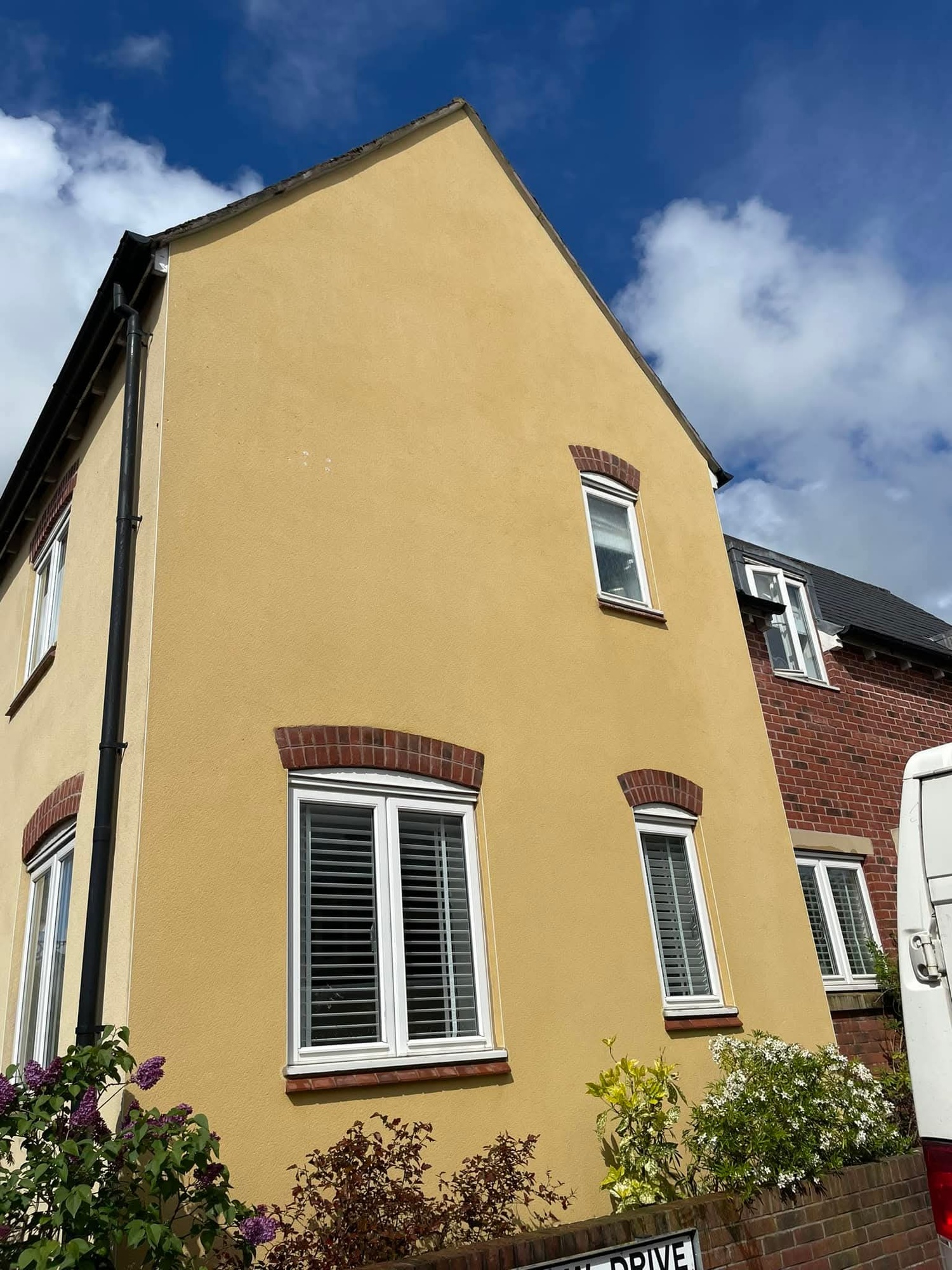
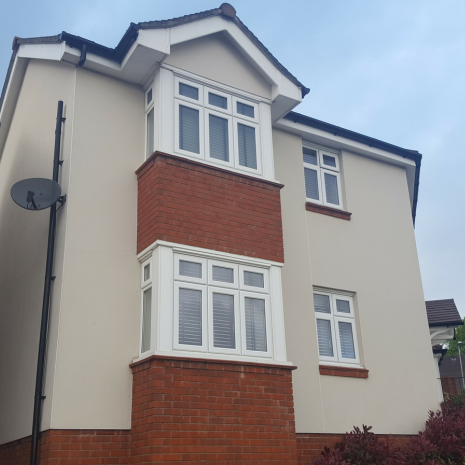

Embedded soiling on silicone render is the category most often over-promised, and setting realistic expectations about it is worth doing before any work begins. Surface soiling sits on top of the coating or in the outermost part of the texture. Recent atmospheric deposit and biological filming both fall into this group, and both respond readily, lifting during treatment and rinsing. Embedded soiling has worked down into the profile over years. Fine particulate driven in by repeated wetting, mineral deposit at a base course from splashback, and the residue of long-established colonisation become part of the texture rather than sitting on it. That responds partially rather than completely. Appropriate chemistry, applied in sufficient volume to reach into the profile and given proper dwell, improves it substantially. It will not always return the wall entirely to its supplied tone, and on a deeply textured elevation that has never been treated the difference can remain visible. The one thing that would remove embedded material entirely is abrasion, and that takes the surface with it. On a through-coloured render the damage is permanent, so it is not an option. K Rend cleaning is therefore quoted against an honest assessment of how much of the soiling is embedded, using a sheltered reference area as the target. Silicone render cleaning otherwise proceeds as always: very low pressure, nothing brushed or agitated, complete elevations worked with a live wet edge at consistent dilution, and full dwell judged against the organisms present. House render cleaning quoted against a sheltered reference area gives you something specific to hold the finished wall against.
Embedded soiling behaves differently on monocouche than on shallower finishes, and the depth of the scraped texture is the reason. A monocouche profile is genuinely deep, exposing fine aggregate with real relief between the high points. That depth is what holds moisture and shelters growth, and it also accommodates a great deal more accumulated particulate than a smooth or lightly textured wall could. Over years, fine material is driven into the base of that profile by repeated wetting. At the lowest metre of an elevation, splashback adds grit and soil to the same band continuously. What results is not a layer sitting on the surface but material occupying the texture itself. Monocouche render cleaning improves this substantially, using appropriate chemistry applied in generous volume so it reaches the base of the profile, with a full dwell. What it will not always do is return a long-neglected wall entirely to its supplied tone. We say so at survey rather than implying otherwise, using a sheltered reference area beneath a deep sill to show what is realistically achievable. The alternative would be abrasion, which would remove the embedded material and the surface aggregate together. On a through-coloured render that damage is permanent and the smoothed patches never blend back, so it is not an option at any pressure. Render restoration on a monocouche wall with limited embedded soiling is close to complete. On one with decades of it, the improvement is substantial rather than total, and residential render cleaning quoted honestly describes which applies. Residential render cleaning that describes the limit honestly is worth more than one that promises a uniform result and delivers an improvement.
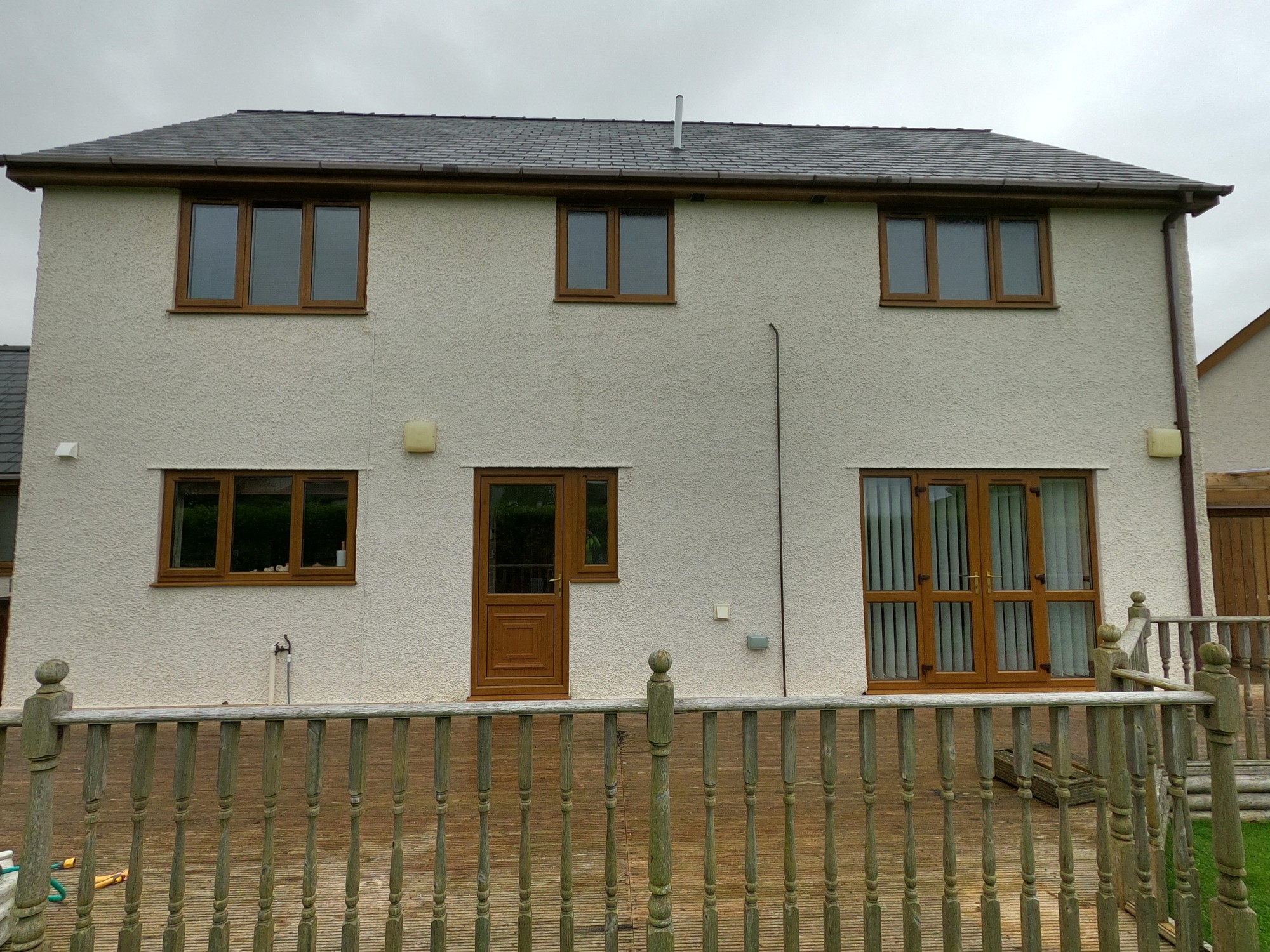
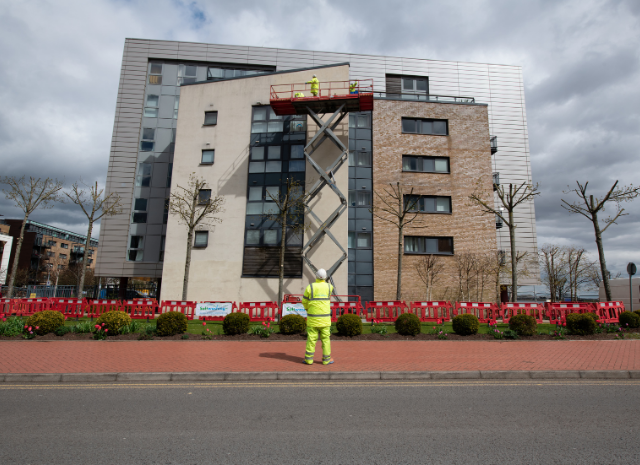

Antique shops, galleries and specialist retail premises with rendered frontages depend on an impression of care, and a soiled elevation contradicts that before anyone looks at what is in the window. Commercial render cleaning at these premises is generally straightforward technically and needs planning around trading and around stock. Opening hours vary, many operate a closing day, and that is usually the simplest window. Buildings of this size are almost always completed within a single visit. Window displays are the main technical consideration. Treatment must not be allowed to run down glazing and dry, so glass on the working elevation is protected or rinsed as we go. Signage, lighting and any external fitting is masked or isolated. Anything on the pavement is cleared and protected, and exclusion zones are agreed and signed so passers-by stay clear without the doorway being obstructed. The low pressure method matters here: no machine noise carrying into the premises, no spray drifting across a display, and modest water volumes rather than a flooded frontage. Insurance, method statements and risk assessments are provided ahead of attendance, and operatives hold current working at height certification. Where the premises sit within a continuous run of buildings, we confirm boundaries and coordinate with the properties either side, since one cleaned frontage reads differently from those around it. Render facade cleaning maintains consistent dilution and live wet edges so the elevation reads uniformly. For specialist premises around Upton-upon-Severn, a clean every few years is modest against the impression the frontage creates. Where several units in a run arrange together, the whole parade reads consistently and the cost per premises falls.
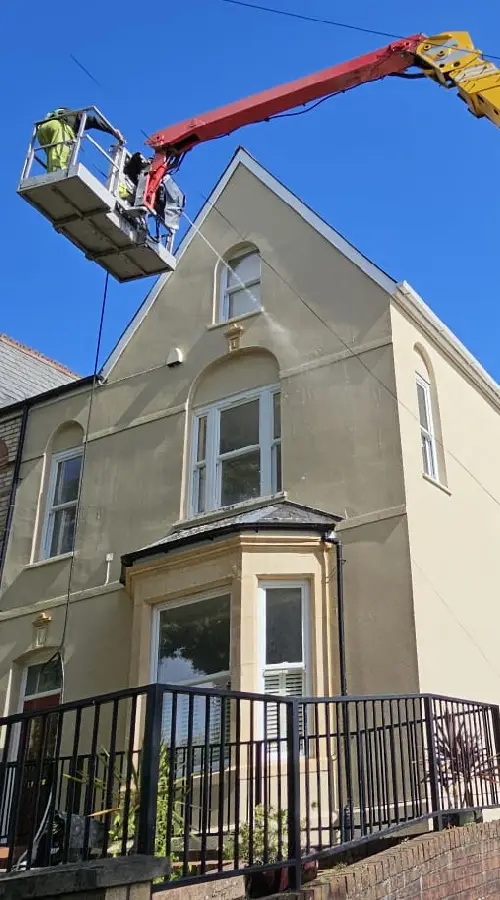
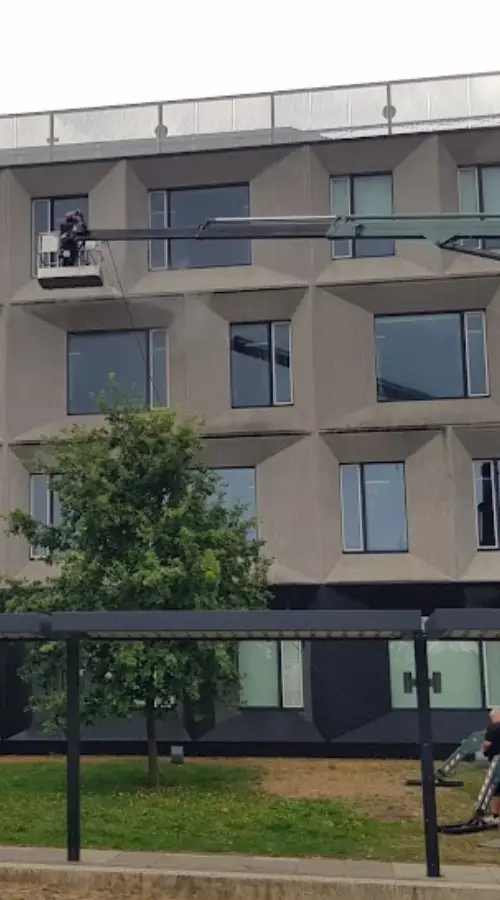
There is no deposit on any job we take, and invoicing follows completion rather than preceding it. It is worth explaining why, since the practice varies widely. Nothing is paid before the work is carried out. There is no booking fee to secure a date and no payment on account. That means nothing is at risk if a date has to move for weather, and nothing needs recovering if circumstances change at your end. The invoice matches the quoted figure exactly, because render cleaning prices are fixed at survey and do not change. There are no additions for preparation, protection, access identified at survey or the time the treatment needed to dwell. Where an elevation was heavily colonised, we do not press for settlement before the result has developed. A soft washed wall continues improving for two to four weeks and heavier lichen longer, and where we anticipated a second application it is completed before the account is settled. If an area has genuinely not responded within four to six weeks, we return and treat it again at no charge, and that applies whether or not the invoice has been paid. Softwashing UK are able to work this way because we operate in a defined area continuously and most of our work arrives through recommendation. Full public liability cover and current working at height certification are available on request before booking. Anyone asked for a substantial deposit before any work has been done is entitled to ask what it is securing. Anyone asked for money up front is entitled to ask precisely what it secures and what happens to it if the date moves.
Coverage takes in Upton-upon-Severn together with Bushley Green, Corse Lawn, Earls Croome, Eldersfield, Hill Croome, Long Green, Longdon, Lower Hook and Uckinghall, all on identical terms with no travel loading. Every property across that spread is surveyed individually and quoted per elevation, and it is worth explaining why nothing transfers between them. Coating type varies, often within a single building. Older properties carry traditional render repaired and recoated over many decades, where absorbency differs across one elevation and any paint film determines whether cleaning is advisable at all. Newer builds and extensions carry modern through-coloured systems that clean up well but tolerate no abrasion. Texture grade varies within each of those and governs how much treatment is applied and how long it dwells. Condition varies with age and previous work. Growth density varies with aspect, shelter and proximity to vegetation, frequently by a wide margin between walls on the same house. Access varies with height and how the building sits on its plot. Because those variables move independently, two properties of similar size and apparent age can need genuinely different specifications and carry different figures. The written quotation lists each elevation separately with the coating identified, the growth graded, the treatment specified and the access stated, so the basis of the figure is visible rather than implied. Where several properties in the same settlement arrange together, mobilisation is shared and each figure reduces. Surveys take around twenty minutes and can be carried out unattended provided every wall is reachable. Clustering is worth mentioning when you enquire, since properties booking within the same period share the mobilisation cost.
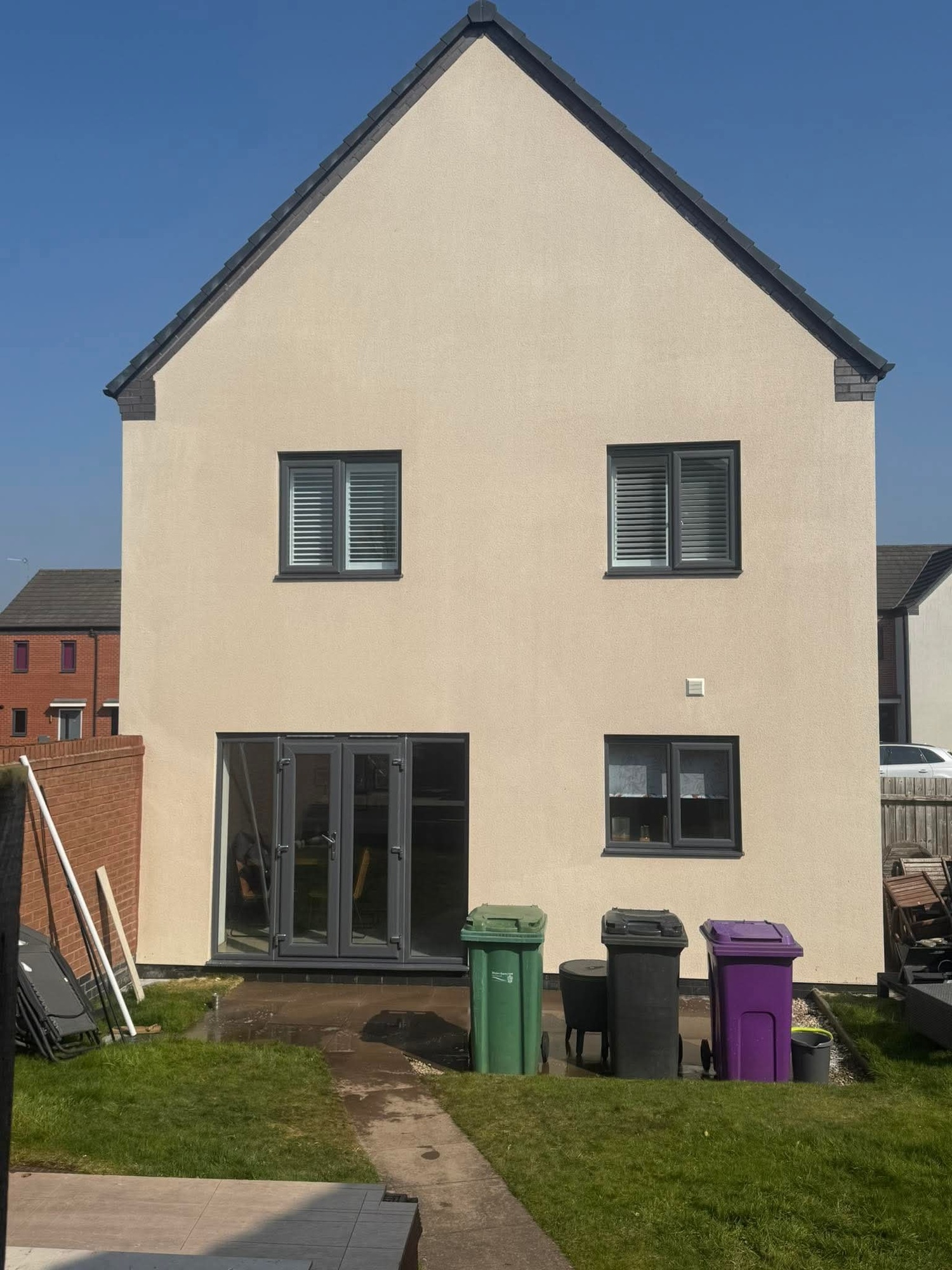
Most properties in Upton-upon-Severn benefit from professional render cleaning every 3 to 5 years, although this depends on the surrounding environment. Properties near trees, woodland, busy roads or coastal areas may require more frequent cleaning due to algae, mould and airborne contaminants. Our soft washing process removes existing growth and helps keep your render cleaner for longer.
Yes. Soft washing is specifically designed for delicate surfaces such as K-Rend, silicone render, monocouche render and painted render. Unlike high-pressure washing, it cleans at low pressure while treating biological growth at its source, reducing the risk of damage to the render finish.
We clean virtually all external render finishes, including K-Rend, Monocouche, Weber, Sto, silicone render, acrylic render, painted render, roughcast and pebble dash. Every cleaning method is tailored to the specific render type to achieve the best possible results.
Yes. Our specialist soft washing treatments are highly effective at removing green algae, red algae, black mould, mildew, lichen and other organic staining. We also apply professional biocide treatments to kill spores and slow down regrowth.
Because our process targets the biological growth rather than simply washing the surface, results typically last much longer than pressure washing alone. The exact lifespan depends on weather conditions, surrounding vegetation and the property’s location.
No. Our soft washing process is specifically designed to clean render safely. We use low-pressure application methods and specialist cleaning solutions that remove contamination without damaging the render surface when carried out by trained professionals.
The UK’s damp climate provides ideal conditions for algae, mould and other biological growth to develop on rendered surfaces. Areas with limited sunlight, nearby trees or persistent moisture are especially susceptible. Professional soft washing safely removes these contaminants and restores your property’s appearance.












































WhatsApp us