The most common thing we are told is that the wall just needs a good jet wash. It is an understandable assumption and it is wrong in almost every case, because the growth causing the discolouration is not sitting on the surface. Algae and lichen root down into the texture of the coating, and pressure removes what is visible while leaving the organism intact and the wall saturated. Softwashing UK works chemically for that reason alone. The second assumption is that the dark colour is dirt. Airborne soiling does contribute, but the great majority of what people are looking at is living. That is why render algae removal is achieved with a biocide rather than a detergent, and why treatment continues working for weeks after the visit as dead material weathers off. A third belief is that north-facing walls are simply doomed. They are not. They colonise faster because they dry more slowly, but a properly killed colony has to restart from airborne spores, and the interval before it becomes noticeable again is measured in years rather than months. Our render cleaning services are built around those realities: low-pressure application across whole elevations, dwell time long enough for the chemistry to complete, gentle rinsing, and render moss removal handled by repeat application rather than by scraping ledges and copings. Professional render cleaning of an Upton property is deliberately undramatic to watch, and house render cleaning done this way holds far longer than any wash. Exterior render cleaning is a chemistry job that happens to involve water, not the other way round.
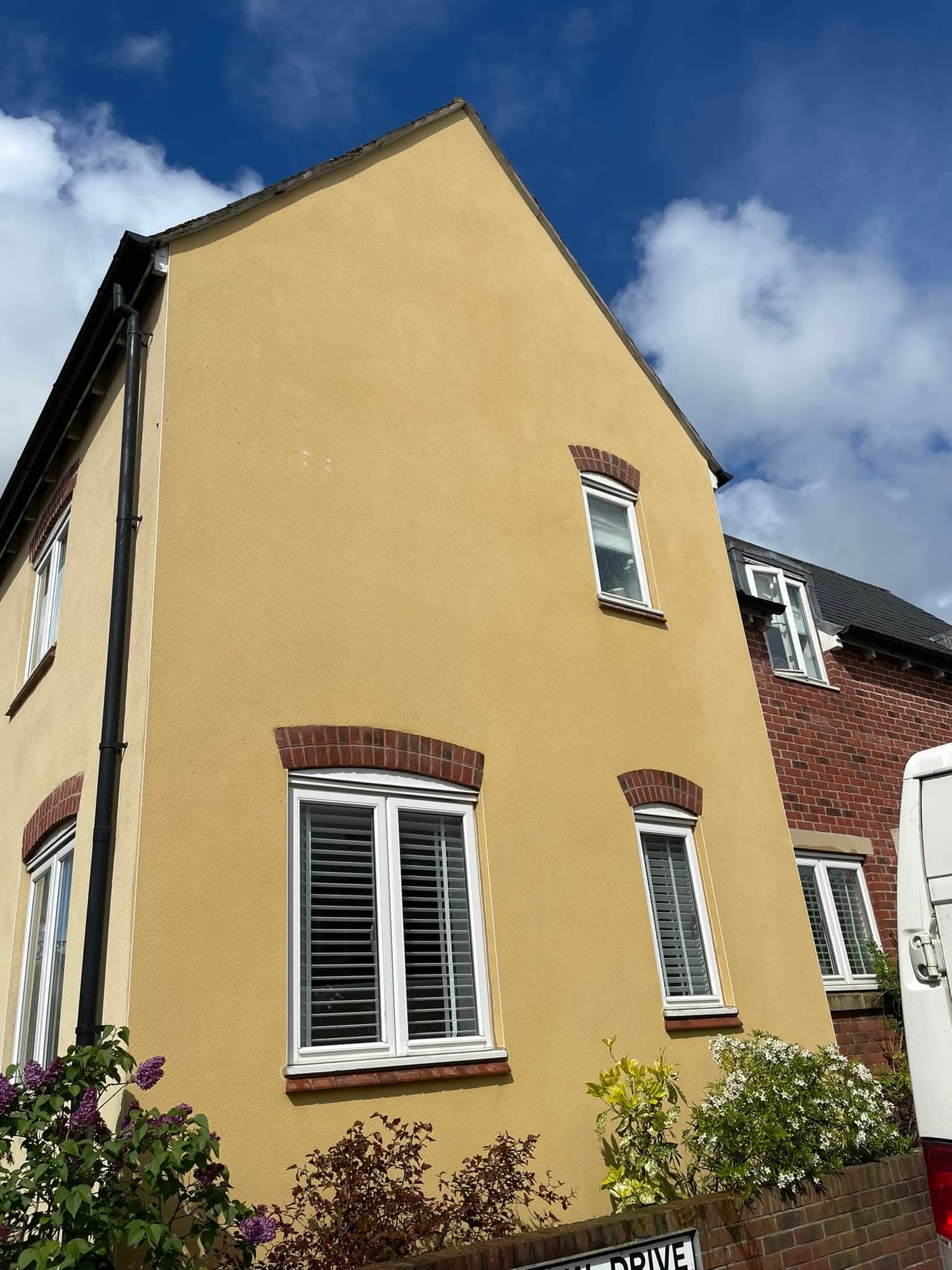
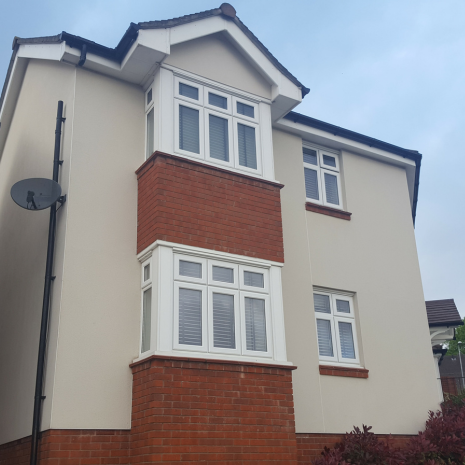

Two beliefs about K Rend cause most of the damage we are called to look at. The first is that a hard-feeling surface must be durable enough to take a lance — it is not, and the pigment comes away with the texture. The second is that because the system repels water it must repel dirt and growth as well. It resists both far better than older finishes, which is precisely why owners are surprised when a shaded elevation greens up and K Rend cleaning becomes necessary. The correct method removes physical contact entirely. Soft wash render cleaning lays a biocidal solution onto the face at very low pressure, allows a long dwell for it to break down algae and lichen at root level, and rinses with gentle controlled flow. No brushing, no scraping, no lance. Silicone render cleaning does need care in the detail. The hydrophobic surface encourages solution to run before the chemistry has finished, so volume, dilution and the order elevations are treated in all matter. Applied correctly, residue left in the texture keeps suppressing regrowth long after the crew has gone. Render stain removal is separate work with separate products. Iron bleed from ties, brackets and fixings, cement residue from installation, and the dark runs that form beneath a leaking joint are mineral marks a biocide will not touch, and each is tested on a small area before wider application. On newer housing around Upton it is normal to find both types of marking on the same building, quoted as two distinct pieces of work. Separating them shows plainly which half of the job is driving the figure.
Owners of monocouche are frequently told two things that are not true: that the wall can be painted if the cleaning goes badly, and that lance marks will weather out. Neither survives contact with the material. A through-coloured mineral finish is designed never to be painted, and coating it changes how the wall handles moisture as well as how it looks; lance tracking, meanwhile, is physical damage to the texture and does not fade. Monocouche render cleaning is carried out on the assumption that the finish must survive the process untouched. That means chemistry and time rather than force. A biocidal solution is applied at low pressure in sufficient volume to penetrate the scraped texture rather than glaze it, left long enough to destroy growth at root level, then repeated on the heaviest deposits along copings and projecting details before a soft, even rinse across whole faces. Render pressure washing does the damage people assume can be undone. It flattens the scrape, exposes aggregate and leaves permanent tracks, and coloured render cleaning offers no top coat to renew afterwards, so the only real correction is recoating an entire elevation for consistency. That means scaffold, materials and several days of work to undo a few minutes of impatience. Done properly, render wall cleaning of monocouche shows no working joints, no banding and no bright patches, because no part of the wall has been treated harder than another. Where growth had obscured the finish for years, what emerges is the original specified colour rather than an approximation of it, and on Upton properties that recovery is substantial enough to be called render restoration without exaggeration.
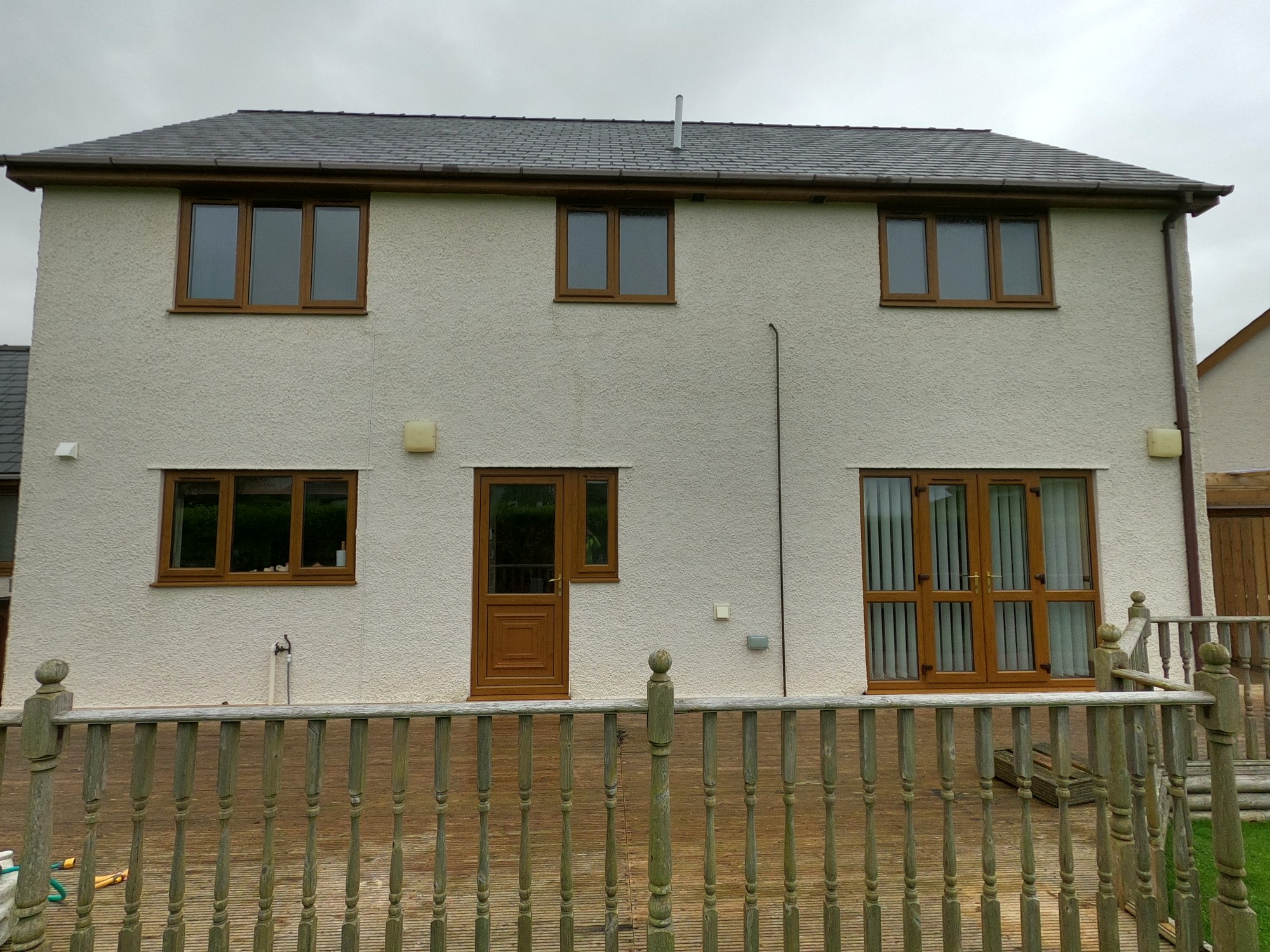
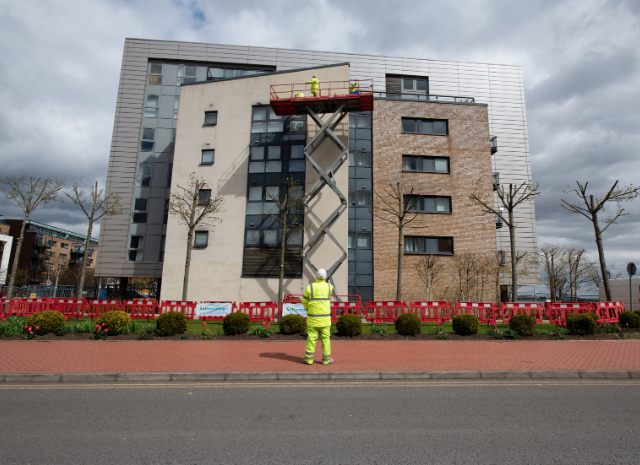

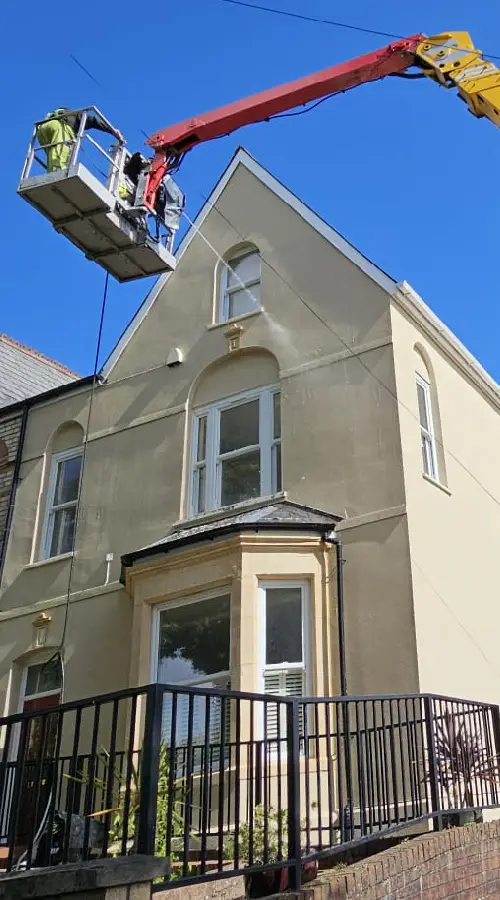
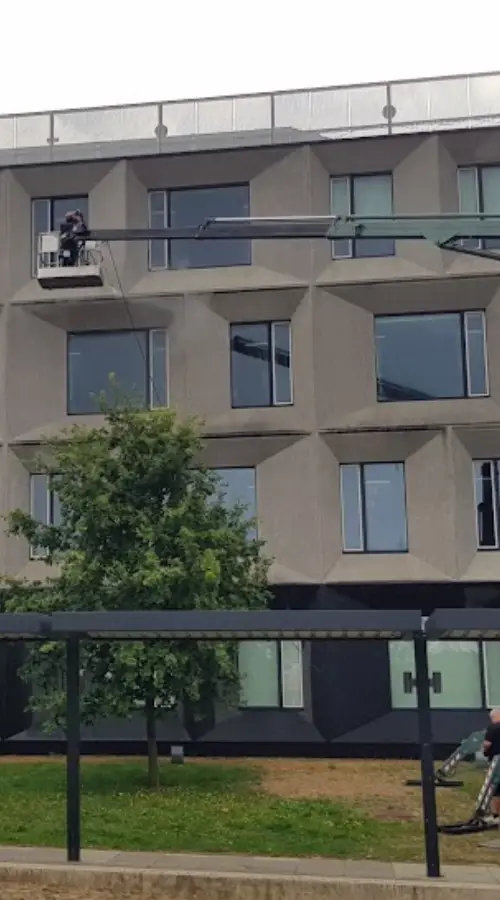
A fair amount of commercial render damage is self-inflicted. An in-house maintenance team has a pressure washer for hard surfaces, the elevations look poor, and somebody makes a reasonable-seeming decision. The staining goes, the coating suffers, and within two years the discolouration is back on a wall that is now marked as well. Commercial render cleaning is worth treating as a specialist item rather than a general cleaning task. The equipment that suits a car park is precisely the wrong equipment for the wall beside it. Delivered properly it starts with access — powered platforms, tower scaffold or extended pole systems according to height and standing ground — followed by a programme written around trading hours, deliveries and staff movement. Method statements and risk assessments are issued beforehand and the site contact knows the timings and which areas are affected each day. Where premises stay open, work is sequenced so no entrance is obstructed for more than a short period. Render soft washing is used throughout, and the reasons scale up rather than down. Low water volumes, run-off that can be directed away from entrances and parked vehicles, negligible drift near occupied doorways, and coverage that stays even along an entire flank. Render facade cleaning that visibly changes character partway across a building attracts more attention than the original staining did. Render mould removal on shaded and north-facing elevations is the recurring item everywhere, because those faces blacken first and return within a year if the growth was displaced rather than killed. Putting a building onto a render maintenance cycle at a fixed interval converts that into a predictable figure and keeps premises in Upton consistently presentable rather than lurching between neglect and emergency.
There are a few things worth treating as warning signs when getting quotations for this work. A price given without anyone visiting. A refusal to name the product. An offer to do it tomorrow. And any mention of pressure settings as a selling point, since on render the answer should be that pressure is not being used at all. Our own figures follow an assessment, because render cleaning prices genuinely depend on elevation count, working height, access arrangements and how long the growth has been left. Once that is established the render cleaning cost is put in writing and held to. Affordable render cleaning comes from turning up properly equipped and finishing in one visit, not from shortening the dwell or thinning the mix to cover more wall with less product. The crews are render cleaning specialists working on rendered elevations continuously, which is what makes them useful when something unexpected appears. An overpainted section behaving oddly, a bead that will not take handling, hairline cracking that would draw solution in behind the coating — these get identified and raised rather than cleaned over. Every treatment used is an eco friendly render cleaning product selected to break down after use, because run-off reaches borders, gullies and open ground however carefully it is controlled. Anyone comparing firms to find the best render cleaning service will learn more from how a quotation was arrived at than from the number itself. A figure produced after twenty minutes at the property is worth considerably more than one produced in twenty seconds on the telephone.
One practical thing that shapes a day’s work is where the equipment can stand and where water can be drawn from. Residential render cleaning at Creekmoor, Turlin Moor and Hamworthy is generally straightforward on both counts — reasonable frontages, accessible outside taps and enough standing space for the van close to the building. Beacon Hill, Rockley Park and Holton Heath bring more variation. Longer approaches, restricted parking and properties set back from the road all mean the set-up is checked at the assessment rather than assumed, since hose runs and pole reach both have practical limits. Where a property has no usable outside supply we bring our own water rather than treating it as a problem on the day. The tanks carried are sized for a full domestic elevation, so nothing is rationed partway through. Bookham and Slepe sit among the addresses where buildings are older, often larger, and the render has frequently never been treated. Those need more product, longer dwell times and occasionally a second visit, all of which is established before a figure is given rather than raised once the work has started. None of these considerations appears as a surcharge. There is no travel charge, no minimum job size and no different standard of work for a smaller property. A single elevation is quoted on the same basis as a whole building. Somebody searching render cleaning near me from any of these addresses gets a proper site visit and a written quotation, and a local render cleaning company that has already worked out how it will set up is one that will not be renegotiating on the morning.
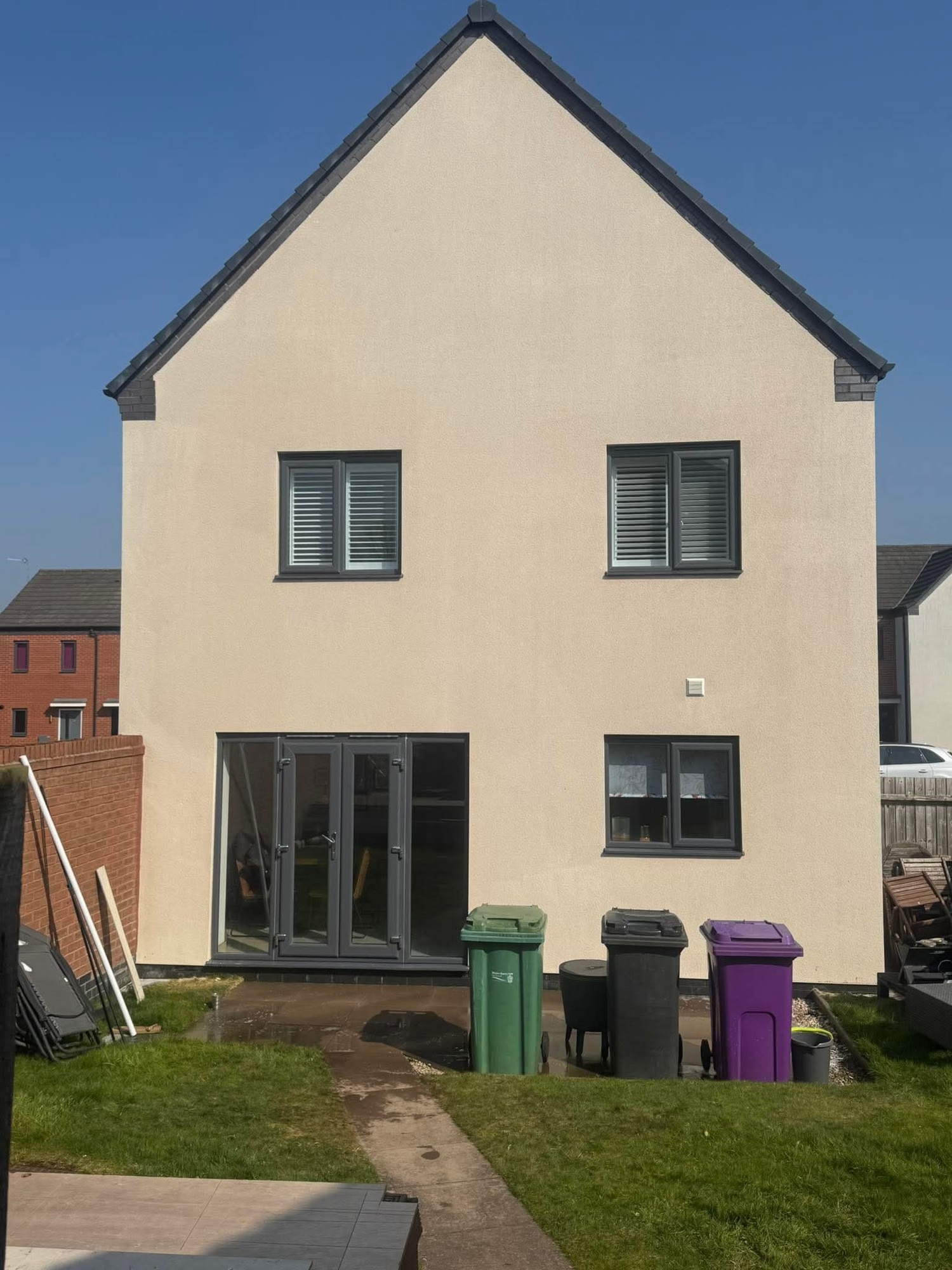
Most properties in Upton benefit from professional render cleaning every 3 to 5 years, although this depends on the surrounding environment. Properties near trees, woodland, busy roads or coastal areas may require more frequent cleaning due to algae, mould and airborne contaminants. Our soft washing process removes existing growth and helps keep your render cleaner for longer.
Yes. Soft washing is specifically designed for delicate surfaces such as K-Rend, silicone render, monocouche render and painted render. Unlike high-pressure washing, it cleans at low pressure while treating biological growth at its source, reducing the risk of damage to the render finish.
We clean virtually all external render finishes, including K-Rend, Monocouche, Weber, Sto, silicone render, acrylic render, painted render, roughcast and pebble dash. Every cleaning method is tailored to the specific render type to achieve the best possible results.
Yes. Our specialist soft washing treatments are highly effective at removing green algae, red algae, black mould, mildew, lichen and other organic staining. We also apply professional biocide treatments to kill spores and slow down regrowth.
Because our process targets the biological growth rather than simply washing the surface, results typically last much longer than pressure washing alone. The exact lifespan depends on weather conditions, surrounding vegetation and the property’s location.
No. Our soft washing process is specifically designed to clean render safely. We use low-pressure application methods and specialist cleaning solutions that remove contamination without damaging the render surface when carried out by trained professionals.
The UK’s damp climate provides ideal conditions for algae, mould and other biological growth to develop on rendered surfaces. Areas with limited sunlight, nearby trees or persistent moisture are especially susceptible. Professional soft washing safely removes these contaminants and restores your property’s appearance.







































WhatsApp us