Texture governs almost every decision made about cleaning a rendered wall, and it is worth setting out just how far its influence extends. It determines how quickly a wall soils. A deep profile has several times the effective surface area of a smooth one and thousands of sheltered points where spores settle and moisture lingers, so colonisation is both faster and denser. It determines how quickly a wall dries. Water held in a profile clears far more slowly than water on a flat plane, which extends the damp period after every wetting and creates exactly the conditions growth needs. It determines how much treatment is applied. Product has to flow into the depth of the texture rather than bridging the high points, so volume per square metre rises substantially with depth. It determines dwell time, since the treatment has further to travel to reach the colony at the base of the profile. It determines how long the job takes, and therefore what it costs. And it determines how much accumulated soiling a wall can hold, since a deep profile accommodates far more embedded particulate than a shallow one. Our render cleaning services grade texture on every elevation at survey rather than assuming from the system name, since two properties finished in the same product can differ noticeably depending on the applicator’s technique. Render algae removal on a fine finish and on a coarse one are genuinely different jobs at the same visible density. Exterior render cleaning on properties around Welland is priced against the texture as much as the area.
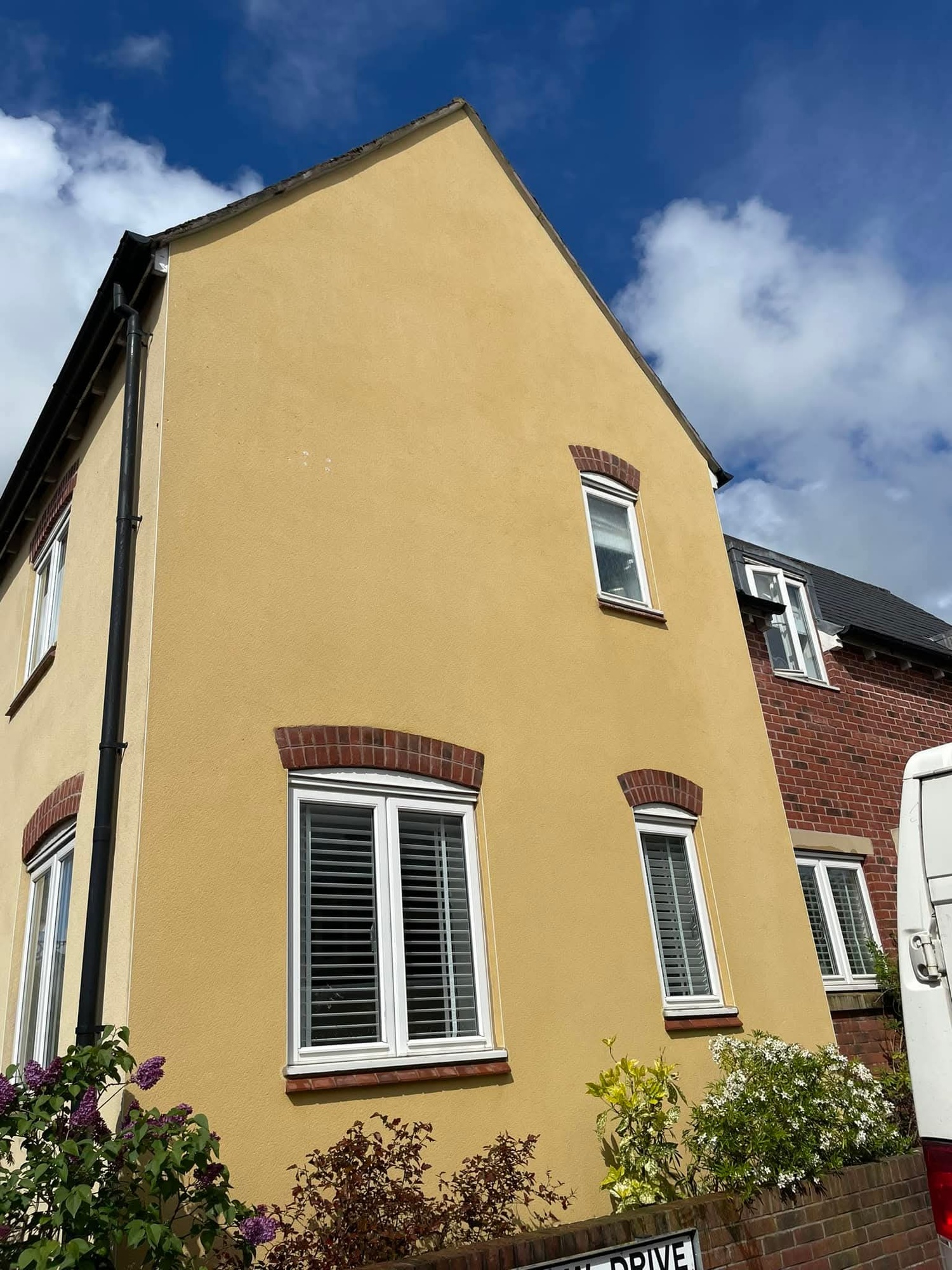
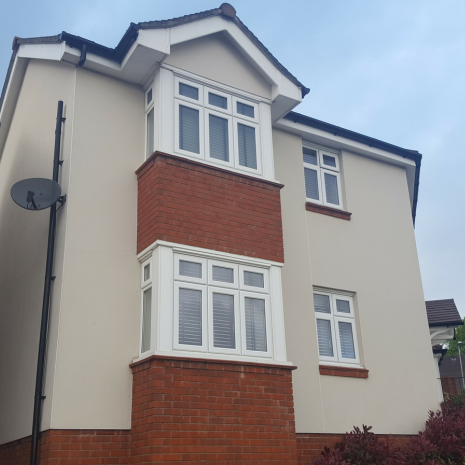

There are things a silicone render clean will not fix, and stating them plainly is more useful than a general assurance of improvement. It will not restore pigment lifted by previous pressure washing. On a through-coloured finish the colour runs through the material, and where it has been removed unevenly there is nothing to reinstate. Cleaning reveals that condition rather than correcting it. It will not repair texture. Aggregate stripped from a scraped face leaves smoothed areas that catch light differently, and no treatment restores them. It will not reconcile patch repairs. Areas made good in slightly different colour or texture become more visible once the growth disguising them has gone. It will not remove rust bleed around fixings, which is a staining of the render itself rather than a deposit on it. It will not fully clear decades of embedded particulate from a deep texture, though it will improve it substantially. And it will not address anything structural. Cracking, debonded areas and failed sealant at junctions all need different attention, and where they are present we say the wall should not be treated yet. We identify all of it at survey and state it in the written quotation before any date is agreed, using a sheltered reference area as a realistic target for what the elevation should return to. K Rend cleaning does everything else extremely well, and silicone render cleaning by chemistry rather than force leaves the coating undisturbed for the next time. Silicone render cleaning quoted with the limits stated is comparable against any other figure, which a bare total is not.
Texture grade is the single most useful thing to establish about a monocouche elevation before quoting, and it is worth explaining how far its influence reaches. It sets the volume of treatment required, since product must flow to the base of the profile rather than resting on the high points. A coarse finish takes materially more per square metre than a fine one. It sets the dwell period, because treatment has further to travel and the colony sits deeper. It sets how quickly the wall soils in the first place, since a deep profile shelters spores and retains moisture far more effectively. It sets how much accumulated material the elevation can hold, and therefore how much of the soiling is embedded rather than superficial. It sets the realistic interval between treatments, which on a coarse shaded wall can be half that of a fine well-lit one. And it sets the time on site, which is what drives the figure. Because grade depends on the applicator’s technique as much as the product specified, two properties finished in the same material on the same development can differ noticeably. Softwashing UK grade it by eye and by touch on every wall rather than assuming. Monocouche render cleaning is otherwise unchanged regardless of depth: low pressure, full dwell, gentle rinsing, nothing brushed or agitated, since exposed aggregate detaches permanently under abrasion. Render restoration on a coarse texture takes longer and usually produces the more dramatic result, because more had accumulated in the profile to begin with. Grading it properly is also what allows an accurate interval to be quoted rather than a general figure applied to every property.
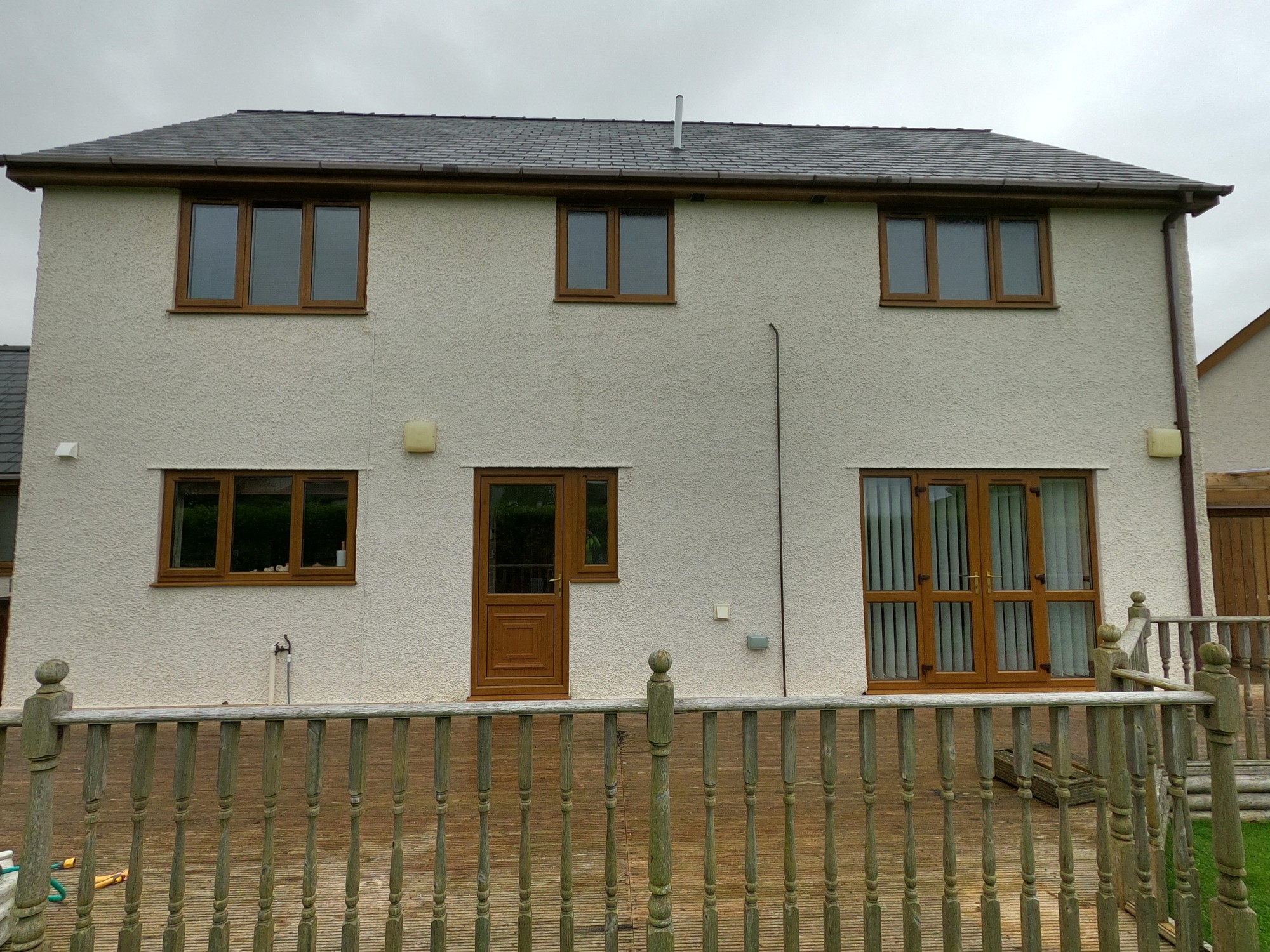
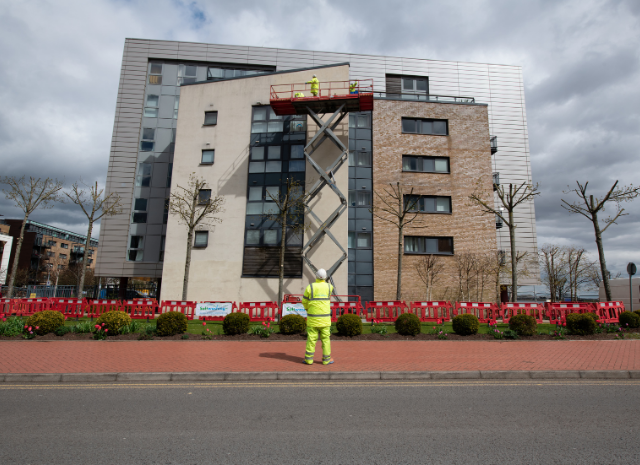

Plant nurseries, growers and horticultural businesses with rendered buildings operate in conditions that favour colonisation strongly, and they have an obvious sensitivity about anything applied near stock. Commercial render cleaning at these premises is planned around both. Elevations here typically carry heavier growth than an equivalent building elsewhere, since humidity is high, air movement around structures is often restricted and spore load from surrounding planting is substantial. Protection is the priority. Stock within reach of a working elevation is moved or covered thoroughly, run-off is directed away from growing areas, beds and any water source, and dilution is controlled to what the growth requires rather than mixed strong. The low pressure method means no aerosol drifting across an open growing area in the way a pressure washer would produce. Seasonally, spring is peak trading and the worst time to disrupt, so work generally goes into the quieter months when treating all buildings in one programme is also more economical. Customer routes stay usable, with exclusion zones agreed and signed. Insurance, method statements and risk assessments are supplied ahead of attendance, and operatives hold current working at height certification. Technically these are usually single-storey or low two-storey buildings treatable from ground level, sometimes several across one site. Render facade cleaning holds identical dilution and live wet edges so each reads uniformly. For horticultural premises around Welland, intervals are generally shorter than elsewhere and we say so honestly rather than quoting a general figure. Where a nursery has several buildings, treating them in one visit during a quiet period is usually the most economical arrangement.
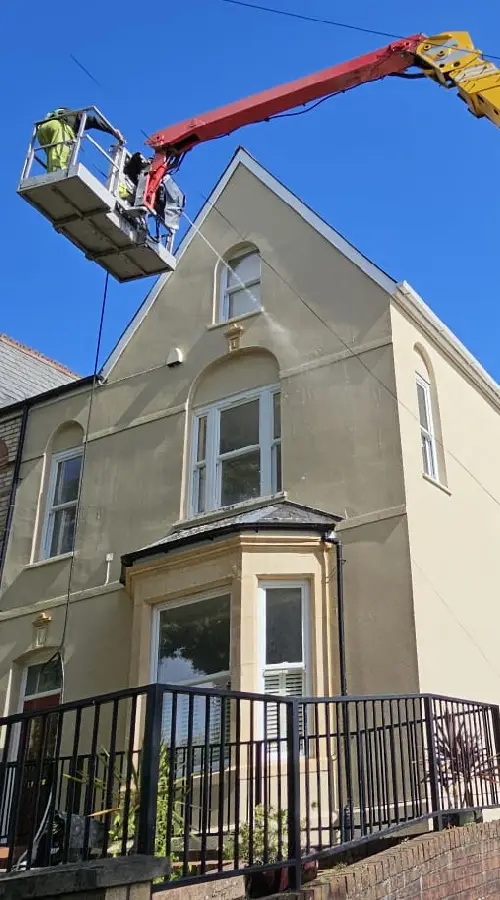
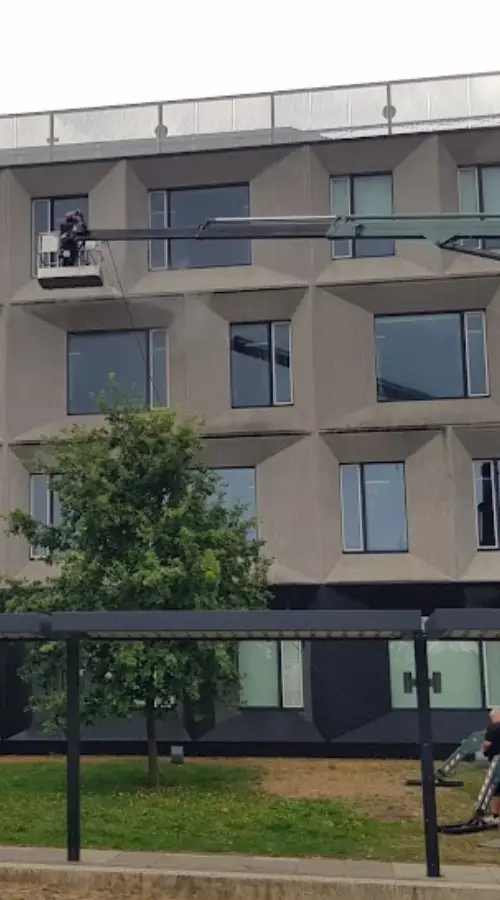
Protecting the property is a substantial part of every job, and it is worth describing because it is the stage most often shortened. Before anything is mixed, planting within reach of the working elevation is covered where practical and thoroughly pre-wetted where covering is not, since a wet plant absorbs far less of anything landing on it. Borders running along the base of a wall are sheeted, and lawns beneath the working area are protected where run-off would otherwise collect. Hard surfaces are covered or rinsed down thoroughly afterwards, and drainage points are identified before we start so run-off can be directed rather than allowed to pool. External sockets, light fittings, alarm boxes, vents and any opening on the elevation being treated are masked or isolated individually. Anything moveable within the working area is shifted clear rather than worked around. Dilution is then set to what the growth actually requires rather than mixed strong for speed, and that single decision does more to protect everything at ground level than any amount of covering. The low pressure method contributes as well, since delivery close to garden hose pressure produces no aerosol cloud drifting beyond the working area. Afterwards, protection comes up, hard surfaces are rinsed down, borders are checked and everything is returned to where it started. All of it is included in the quoted figure. Render cleaning prices are fixed at survey, and our render cleaning specialists work on rendered elevations exclusively, so the protection routine is identical on every property. The property should look exactly as it did apart from the walls themselves, and we check before leaving rather than assuming.
Coverage takes in Welland together with Berrow, Castlemorton, Hollybush, Pendock, Rye Cross, Upper Pendock and Whiteleaved Oak, all on identical terms with no travel loading and no minimum job value. Equipment is what makes rural coverage practical, and ours is specified for render rather than adapted from general exterior work. Water and treatment are carried on the vehicle in bulk, so we are not dependent on a mains connection, not limited by whatever pressure and flow an outside tap provides, and not asking to run a hose through the property. Dosing and dilution are controlled at source rather than mixed by eye, which keeps strength consistent across a whole elevation. Hose runs are long enough to reach elevations at considerable distance, so the vehicle stays on a road, drive or hard standing while treatment reaches every wall. Nothing is driven across grass, gravel or planted ground. Telescopic delivery reaches most domestic elevations, including gables at three storeys, from ground level, which removes access equipment from the majority of jobs and matters more in rural settings where bringing a platform to a property can be awkward. Rinsing uses purified water, so no mineral deposit is left behind as the wall dries. The practical result is that a property with a long approach, restricted parking or no convenient water supply is no more difficult for us than one on a main road, and it is priced no differently. Properties across these settlements are surveyed individually and quoted per elevation. Surveys take around twenty minutes. Surveys take around twenty minutes and produce an itemised written figure by email, broken down wall by wall.
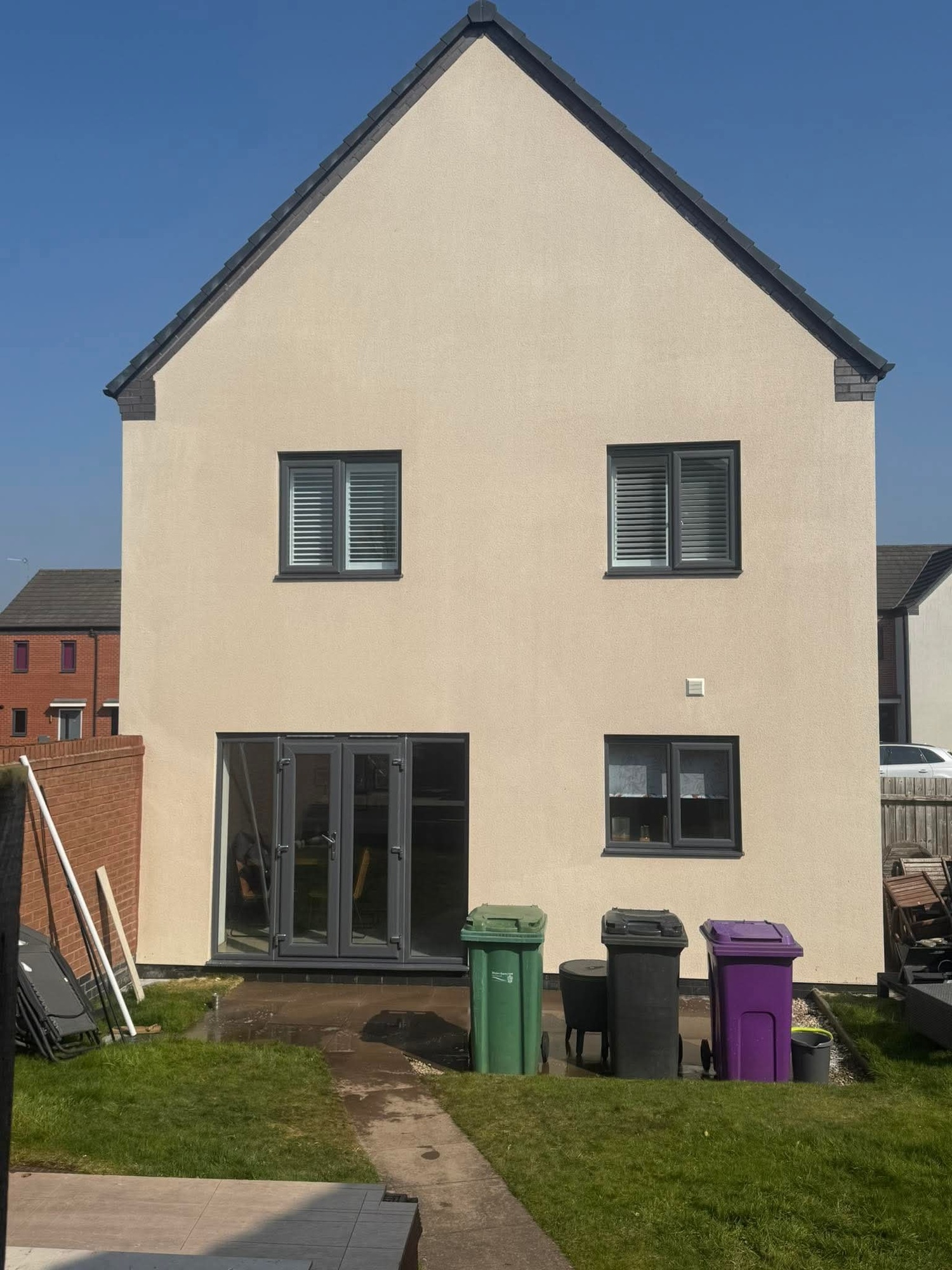
Most properties in Welland benefit from professional render cleaning every 3 to 5 years, although this depends on the surrounding environment. Properties near trees, woodland, busy roads or coastal areas may require more frequent cleaning due to algae, mould and airborne contaminants. Our soft washing process removes existing growth and helps keep your render cleaner for longer.
Yes. Soft washing is specifically designed for delicate surfaces such as K-Rend, silicone render, monocouche render and painted render. Unlike high-pressure washing, it cleans at low pressure while treating biological growth at its source, reducing the risk of damage to the render finish.
We clean virtually all external render finishes, including K-Rend, Monocouche, Weber, Sto, silicone render, acrylic render, painted render, roughcast and pebble dash. Every cleaning method is tailored to the specific render type to achieve the best possible results.
Yes. Our specialist soft washing treatments are highly effective at removing green algae, red algae, black mould, mildew, lichen and other organic staining. We also apply professional biocide treatments to kill spores and slow down regrowth.
Because our process targets the biological growth rather than simply washing the surface, results typically last much longer than pressure washing alone. The exact lifespan depends on weather conditions, surrounding vegetation and the property’s location.
No. Our soft washing process is specifically designed to clean render safely. We use low-pressure application methods and specialist cleaning solutions that remove contamination without damaging the render surface when carried out by trained professionals.
The UK’s damp climate provides ideal conditions for algae, mould and other biological growth to develop on rendered surfaces. Areas with limited sunlight, nearby trees or persistent moisture are especially susceptible. Professional soft washing safely removes these contaminants and restores your property’s appearance.















































WhatsApp us