A great many rendered walls have been painted at some point, and that changes the job considerably. Masonry paint sits over the render as a separate layer, and once it is there the coating underneath is no longer what is being treated — the paint is. The first question at any assessment is therefore whether the finish is painted at all, which is not always obvious. A uniform colour with no visible aggregate, a slightly plastic sheen in raking light, and paint carried across beads or onto adjacent surfaces are the usual indicators. Our render cleaning services are specified differently once it is established. Sound paint cleans well. A biocidal solution kills the growth sitting on it exactly as it would on bare render, and render algae removal is often faster because the surface is smoother and less absorbent than the coating beneath. Failing paint is another matter. Where a film has begun to flake, blister or lift, treatment will not stop it and rinsing will sometimes bring loose material away. That is not damage caused by the clean — it was already detached — but it looks like it unless everybody has agreed in advance what is likely to happen. Render moss removal along copings and horizontal details is where loose paint most often shows up, since those areas fail first. Professional render cleaning of a house in West Knighton starts with an honest assessment of the paint film, and house render cleaning on a painted wall is quoted with the condition of that film written down. Exterior render cleaning cannot improve a coating that is already coming off.
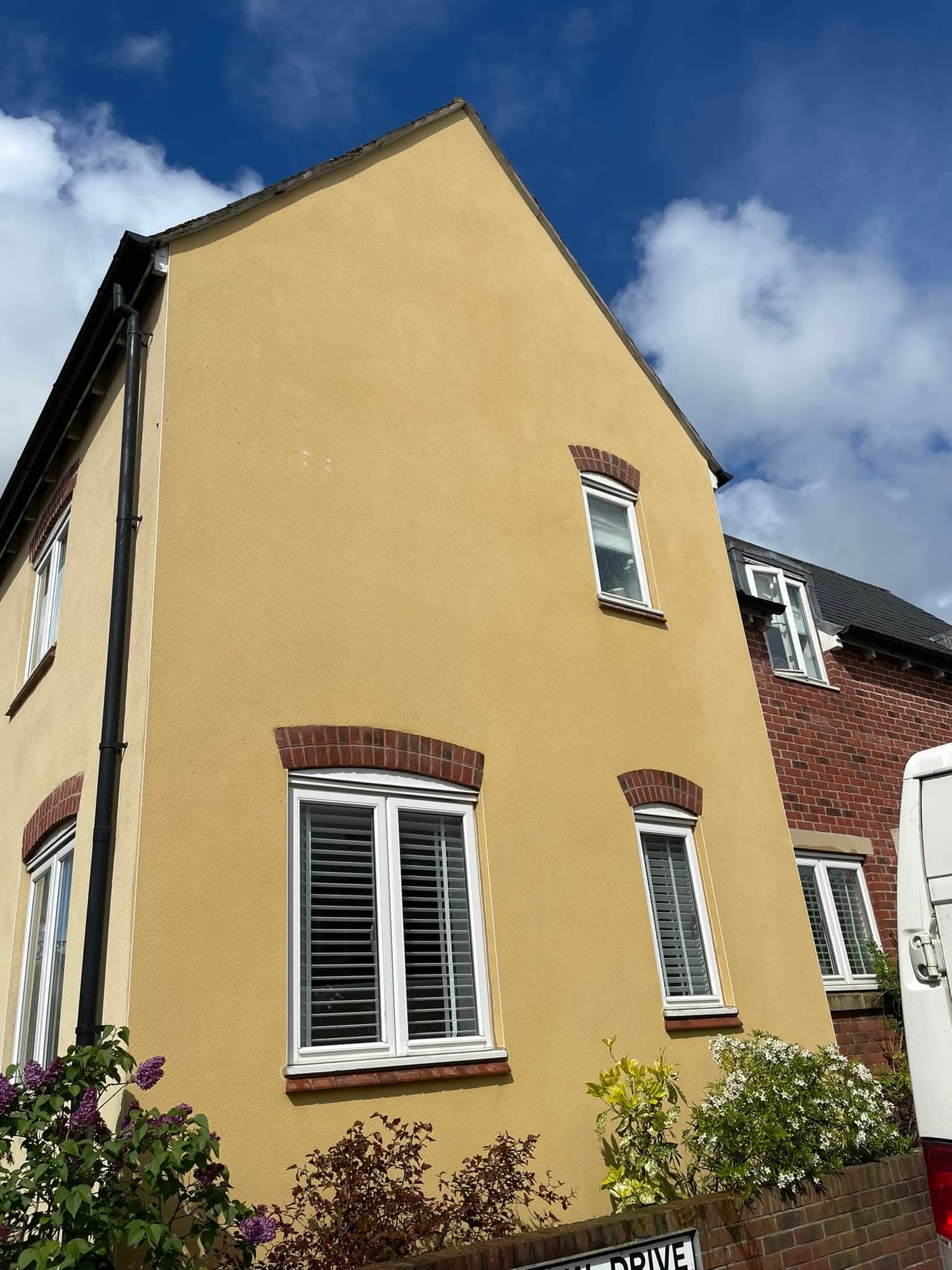
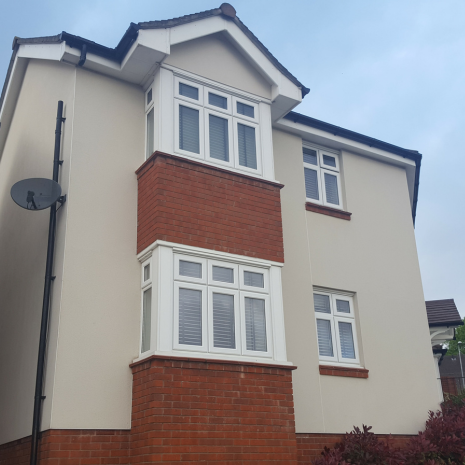

Painting a silicone system is generally a mistake, and we come across it more often than expected. These finishes are designed to shed water while remaining breathable, and a conventional masonry paint over the top interferes with both, trapping moisture in the coating rather than allowing it out. The practical consequence for cleaning is that K Rend cleaning on a painted panel is really paint cleaning, and the excellent long-term behaviour these systems normally offer no longer applies. Growth returns faster, the residual protection is compromised, and any failure in the film shows as flaking rather than as fading. Neither outcome is what the system was designed to do. The treatment itself is unchanged. Soft wash render cleaning applies a biocidal solution at a pressure barely above hose flow, dwells long enough to destroy algae and lichen at root level, then rinses with a gentle controlled flow. Nothing mechanical touches the surface, and on a painted face that restraint matters more rather than less, since a film will lift under pressure long before the render beneath it would. Silicone render cleaning on an unpainted system is a different and considerably better proposition, which is worth knowing before anybody decides to paint one. The colour is already permanent underneath. Render stain removal is complicated by paint as well. Iron bleed from ties and brackets and dark runs beneath a leaking joint frequently sit beneath the film rather than on it, and no surface treatment reaches them. On a West Knighton property we will say plainly which marks are on the paint and which are under it. Only one of those two will respond to anything applied.
Monocouche is specified precisely so that it never needs painting, and painting one throws away the whole point of the material. Monocouche render cleaning on an unpainted wall returns the original colour permanently; on a painted one it cleans a film that will eventually need renewing. Where somebody has painted a scraped through-coloured finish, the paint usually sits unevenly in the texture, thick in the voids and thin on the peaks, and it fails first on the high points. Cleaning will not disguise that. An uneven film reads worse once the growth around it has gone. The method remains the same regardless. Solution applied at low pressure in enough volume to soak through the texture rather than glaze the peaks, a long dwell to kill growth at root level, a repeat application on the heaviest deposits along copings and projecting bands, then a soft even rinse across each full face. Render pressure washing is excluded absolutely and doubly so on a painted wall, since it strips film as readily as it flattens the scrape, exposes the aggregate beneath and leaves permanent tracking. Coloured render cleaning offers no top coat to renew over any of it. Damage to paint and damage to render are equally permanent here. On an unpainted elevation, render wall cleaning of monocouche brings back the specified tone across the weeks after treatment. On buildings around West Knighton where the finish had never been painted and was simply obscured by growth, that recovery is a genuine render restoration and no further coating is ever needed. That is the whole reason the finish was chosen.
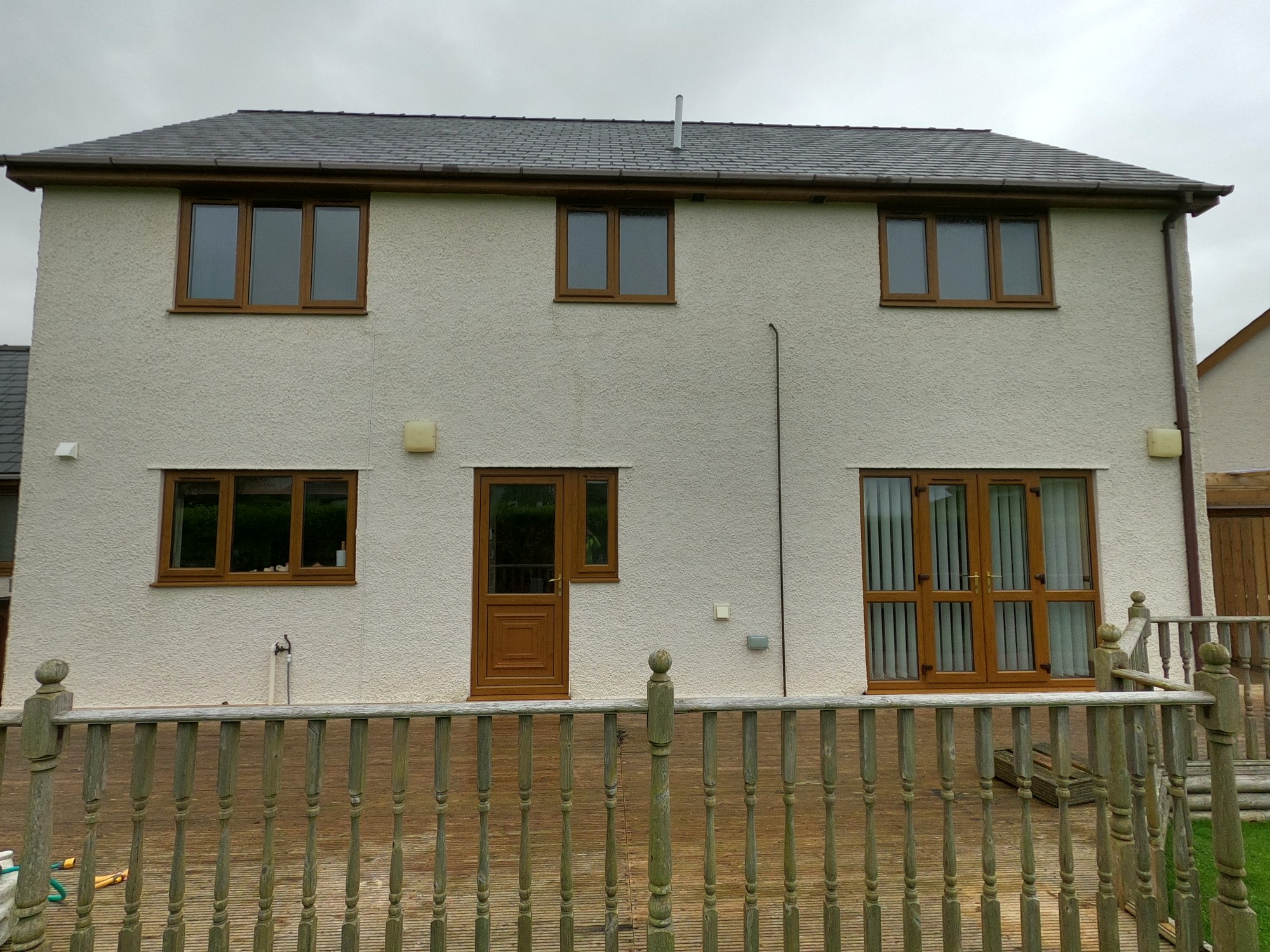
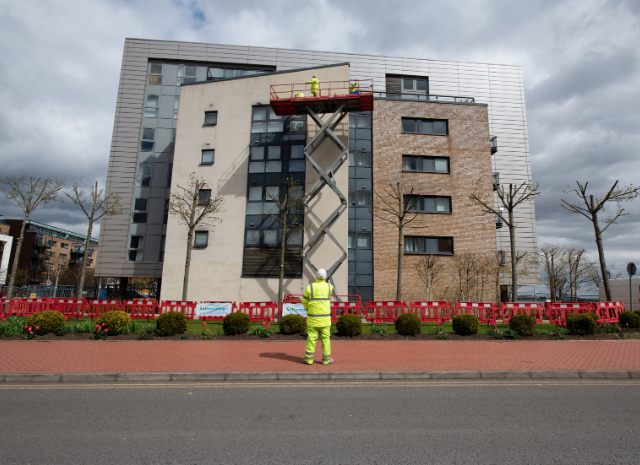

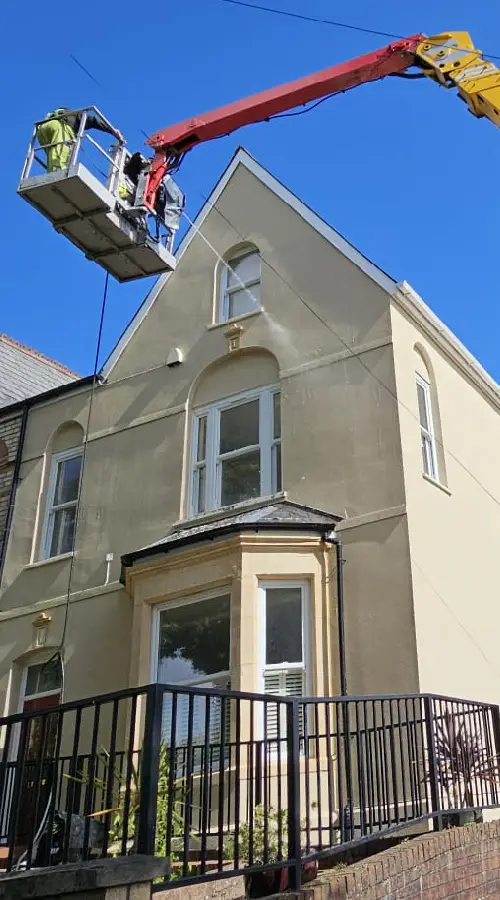
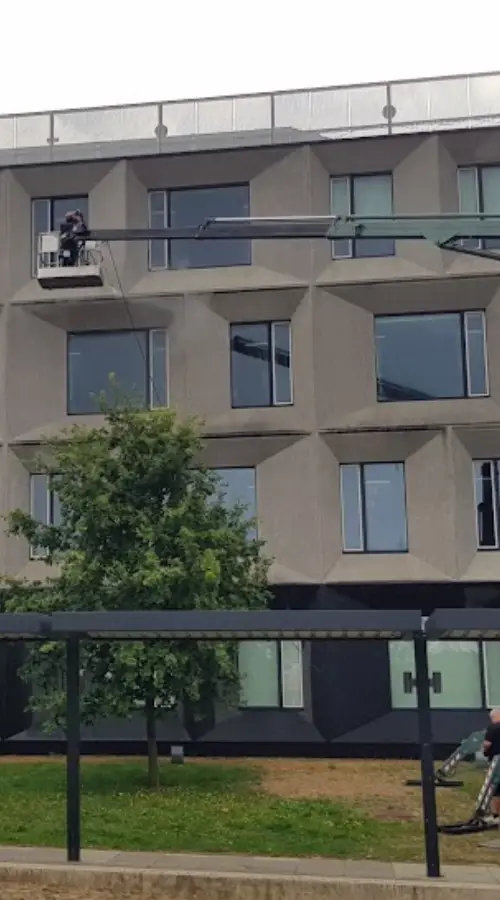
Painted render is common on commercial stock, particularly on buildings where a corporate colour has been applied over an original finish. Commercial render cleaning on that basis is straightforward while the film is sound and increasingly limited once it is not, so the survey records the condition of the paint elevation by elevation rather than treating the building as one surface. A single figure for the whole property would be misleading on both counts. Where a film is failing on some faces and not others, the specification says so and the expected outcome for each is stated. That prevents a client comparing a transformed elevation with a merely improved one and assuming the work was inconsistent. Stating the outcome per elevation removes that entirely. Access is established first — powered platforms, tower scaffold or extended pole systems according to height and standing ground — with the programme written around trading hours, deliveries and staff movement, and method statements and risk assessments issued in advance. Render soft washing is used throughout, giving even coverage along a full flank, very low water volumes, run-off directable clear of entrances and parking, and negligible drift near occupied doorways. Render facade cleaning on painted elevations is also gentler by necessity, since a film tolerates far less than the coating beneath it. Volume and dwell do the work instead of anything mechanical. Render mould removal on shaded and north-facing painted elevations tends to return faster than on bare render, and those faces set the render maintenance interval for premises in West Knighton. Painted walls generally sit on a shorter cycle than bare ones.
Softwashing UK records the condition of a painted finish before starting and photographs anything already flaking or blistering, because it is the single most common source of disagreement on this kind of wall. Anything loose is identified in advance rather than discovered afterwards. Render cleaning prices are established at an assessment from elevation count, working height, access arrangements, the extent of the growth and the state of the paint film. Where a coating is sound the figure is much the same as for bare render; where it is failing we will say what is likely to come away and quote accordingly, or advise against the work altogether. The written render cleaning cost then holds. Affordable render cleaning on painted walls is usually a matter of catching them while the film is still intact. Once it has begun to fail, cleaning becomes a limited exercise rather than a transformation. The crews are render cleaning specialists rather than general exterior cleaners, which matters because painted render behaves unpredictably. A wall painted twice, or painted with the wrong product over a breathable coating, or painted while damp, will all respond differently, and recognising that before applying anything is what prevents an afternoon going badly. Everything used is an eco friendly render cleaning product chosen because it breaks down safely once its work is complete. Anyone comparing firms in search of the best render cleaning service on a painted wall should ask what happens if the paint lifts. A contractor who has not considered it has not looked at the wall properly. Paint condition is the first thing to establish, not the last.
West Knighton sits within our regular working patch, and the part of residential render cleaning worth describing here is the last hour rather than the first. Sheeting is lifted rather than dragged, so nothing collected on it ends up across a border or a lawn. Hard surfaces beneath every treated elevation are rinsed through, since residue left to dry on a path or a drive shows for weeks. Anything moved at the start — a bin, a planter, a piece of garden furniture — goes back where it was. Nothing is left for somebody else to move. Gates are closed, hoses are coiled off borders rather than left across them, and the working area is checked over before anything is loaded. Where a property was empty during the work, a note is left setting out what was done, what to expect over the following weeks and who to ring if anything is not right. The note also records the date, which matters when judging the result later. The last item is the walk-round, where somebody is present. Each treated elevation, the detail areas at coping and sill level, and the ground beneath are looked at together, with an explanation of how the wall will change over the coming month. Anything raised at that point is dealt with before the invoice goes out. There is no travel charge, no minimum job size and no charge for the assessment. Anyone searching render cleaning near me should expect a local render cleaning company to leave a property looking as though nobody had been there apart from the wall. The last half hour is what most people actually remember.
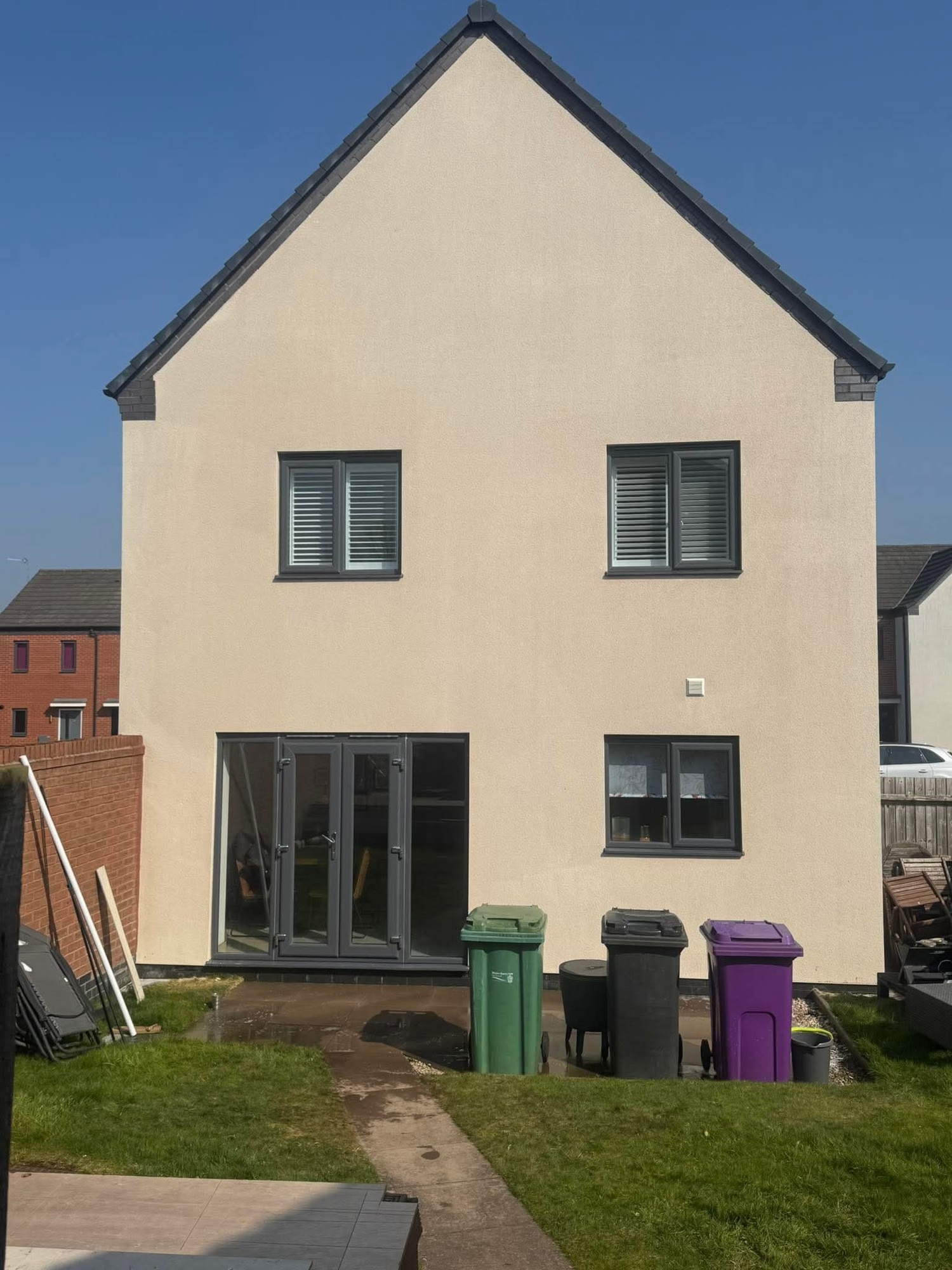
Most properties in West Knighton benefit from professional render cleaning every 3 to 5 years, although this depends on the surrounding environment. Properties near trees, woodland, busy roads or coastal areas may require more frequent cleaning due to algae, mould and airborne contaminants. Our soft washing process removes existing growth and helps keep your render cleaner for longer.
Yes. Soft washing is specifically designed for delicate surfaces such as K-Rend, silicone render, monocouche render and painted render. Unlike high-pressure washing, it cleans at low pressure while treating biological growth at its source, reducing the risk of damage to the render finish.
We clean virtually all external render finishes, including K-Rend, Monocouche, Weber, Sto, silicone render, acrylic render, painted render, roughcast and pebble dash. Every cleaning method is tailored to the specific render type to achieve the best possible results.
Yes. Our specialist soft washing treatments are highly effective at removing green algae, red algae, black mould, mildew, lichen and other organic staining. We also apply professional biocide treatments to kill spores and slow down regrowth.
Because our process targets the biological growth rather than simply washing the surface, results typically last much longer than pressure washing alone. The exact lifespan depends on weather conditions, surrounding vegetation and the property’s location.
No. Our soft washing process is specifically designed to clean render safely. We use low-pressure application methods and specialist cleaning solutions that remove contamination without damaging the render surface when carried out by trained professionals.
The UK’s damp climate provides ideal conditions for algae, mould and other biological growth to develop on rendered surfaces. Areas with limited sunlight, nearby trees or persistent moisture are especially susceptible. Professional soft washing safely removes these contaminants and restores your property’s appearance.








































WhatsApp us