There are broadly three ways to get growth off a rendered wall and only one of them is worth doing. Mechanical removal — brushing, scraping, wire work — takes the surface along with the growth and is only ever appropriate on a sacrificial coating. High-pressure water clears the visible layer quickly and leaves both the roots and a saturated wall behind. Chemical treatment kills the organism and lets weather do the rest, which is slower to look impressive and far better for the coating. Our render cleaning services use the third exclusively. The reasoning is straightforward. Algae and lichen anchor into the texture of a render rather than resting on top of it, so anything that only addresses the surface leaves the colony viable. Render algae removal by biocide destroys it through, meaning regrowth restarts from airborne spores rather than from surviving holdfasts. That single difference is what turns a twelve-month result into a multi-year one. Application is low pressure across whole elevations so nothing dries in patches, with dwell time long enough for the chemistry to complete before rinsing. Render moss removal on copings, ledges and behind rainwater goods gets a second targeted application, because those deposits are dense and would otherwise need mechanical attention that no textured finish should ever receive. The trade-off is patience. Exterior render cleaning done chemically continues improving for weeks after the visit as dead growth weathers off, rather than peaking on the day. Professional render cleaning accepts that in exchange for an intact coating, and house render cleaning in West Moors carried out on this basis leaves a wall still holding several winters later.
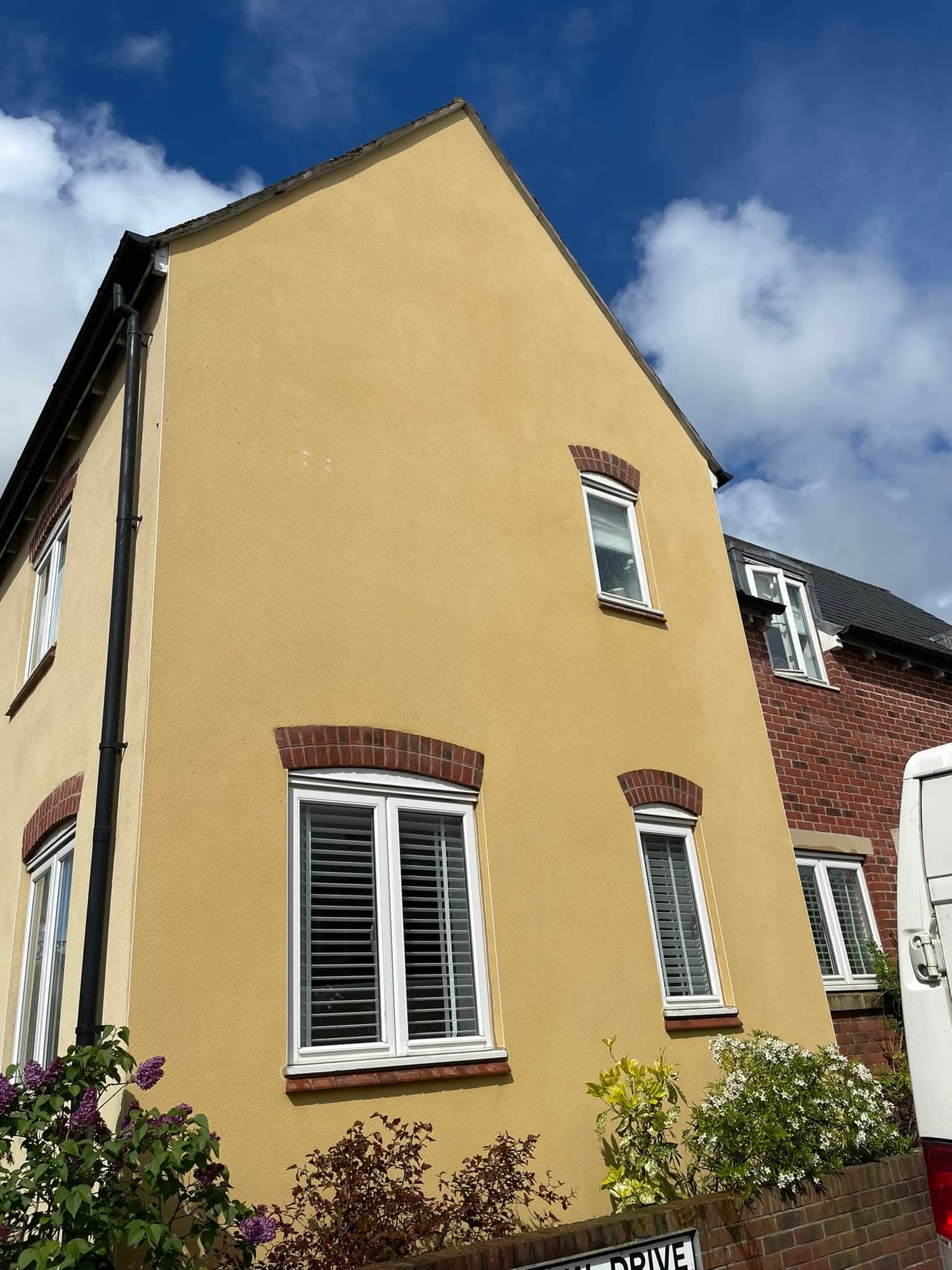
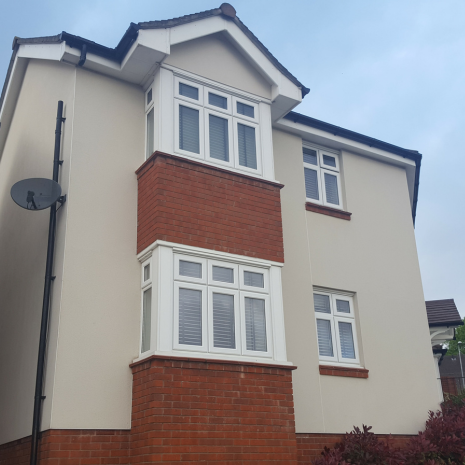

What people like about K Rend is the depth of the finish — a fine, consistent texture with colour reading evenly across a whole elevation in daylight. That appearance is exactly what a bad clean destroys, and preserving it is the entire object of K Rend cleaning. The threat is abrasion. Pigment runs through the material, so any polishing or scouring of the face removes colour permanently and creates a patch that will read differently for as long as the render is on the building. Soft wash render cleaning eliminates that risk by removing all physical contact: a biocidal solution is laid on at negligible pressure, given a long dwell to break down algae and lichen at root level, and rinsed with gentle controlled flow. Silicone render cleaning does demand technique. The surface repels water by design, so solution slides rather than settles, and keeping it in contact long enough is a matter of correct volume, correct dilution and sequencing elevations so nothing is treated while baking in direct sun. Handled properly, residue left in the texture keeps suppressing regrowth for a long time afterwards. Render stain removal is separate and specific. Iron bleed from fixings, mortar residue from installation and the dark runs forming beneath a failed joint are mineral marks that a biocide will not touch, and each needs its own product tested on a small area first. Getting a West Moors property genuinely finished usually means a full-elevation soft wash plus a few targeted treatments, quoted as two distinct pieces of work rather than one vague figure.
Before quoting monocouche we look at four things: the depth of the scrape, the colour, the condition of the beads, and how much of the growth is lichen rather than algae. Each affects the method. A deep, open texture holds more and needs more solution. A pale colour hides less. Damaged beads mean careful work at the edges. Lichen means longer dwell and usually a second application. Monocouche render cleaning is quoted from that assessment rather than from a rate per square metre. The constant across every one of those jobs is that nothing touches the surface. A single-coat mineral finish with integral colour has no sacrificial layer, so render pressure washing removes the scrape, exposes the aggregate and leaves permanent tracking. Coloured render cleaning cannot be patched afterwards, and a partial repair to a through-coloured wall never matches, so the only genuine remedy is recoating the whole elevation. The treatment itself is unhurried by design. Solution is applied at low pressure in enough volume to penetrate the texture rather than glaze it, left long enough to kill growth at root level, then topped up on the heaviest areas beneath copings and along projecting bands before a soft, even rinse. The finished elevation shows nothing of the process — render wall cleaning with no seams, no banding and no bright patches, because no section was worked harder than another. On buildings in West Moors where the finish had darkened over many years, the original colour reappearing is often close enough to new that render restoration is a fair way to describe what has happened.
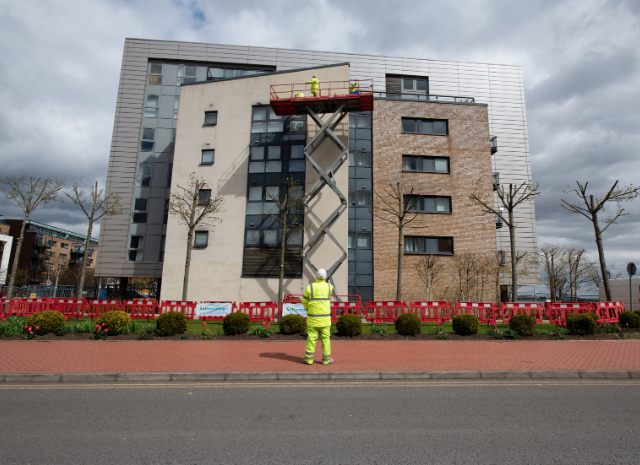

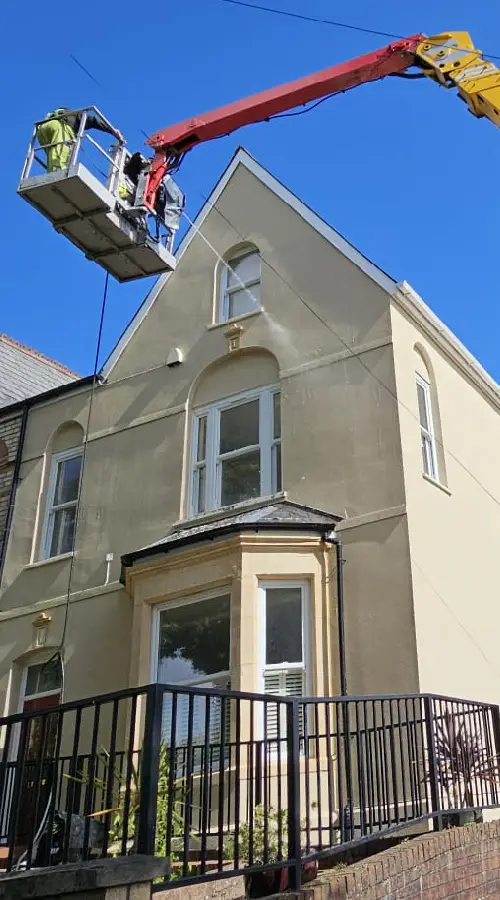
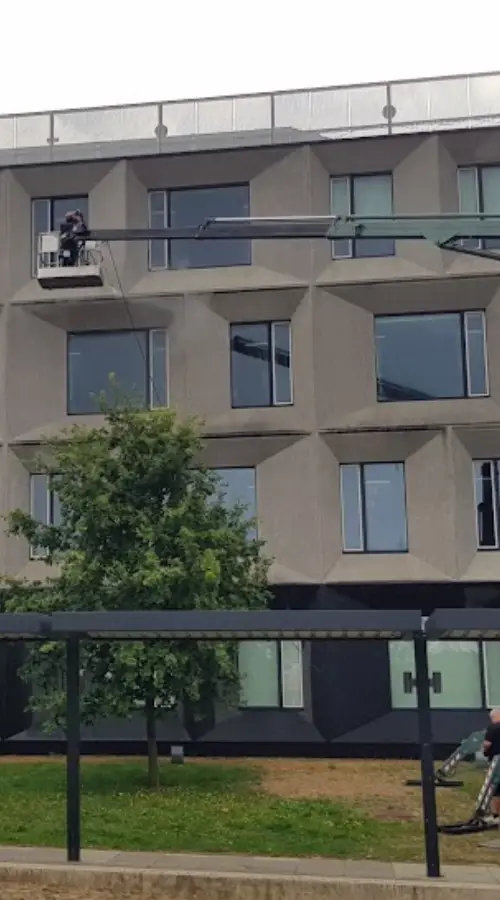
On commercial elevations the cleaning method is frequently decided by the access rather than the other way round. Anything three storeys and up means working from a platform, and an operator on a platform managing the recoil of a high-pressure lance is a genuinely poor arrangement. That practical fact is one of several reasons commercial render cleaning is done chemically. Access is settled before anything else — powered platform, tower scaffold or extended pole systems depending on height, ground conditions and what can be positioned where. Works are then programmed around trading hours, deliveries and staff movement, with method statements and risk assessments issued in advance and the site contact briefed on timings. Render soft washing suits the environment as well as the equipment. It uses low water volumes, produces run-off that can be directed away from entrances and parking, generates negligible drift near open doors and windows, and covers a long flank evenly enough that the finish stays consistent end to end. Render facade cleaning that varies visibly across a large elevation is worse than not cleaning it at all. Render mould removal on shaded and north-facing walls is the priority item almost everywhere. Those faces darken first and, where growth has been rinsed rather than killed, are back within a year. Treated chemically they hold for several. That gap is the whole argument for putting a building onto a render maintenance cycle at a fixed interval and an agreed cost, which is how most managers of premises in West Moors end up handling it once they have seen both approaches.
Most of what goes wrong in this trade goes wrong through inexperience rather than dishonesty. Somebody with good intentions and a pressure washer causes damage they do not recognise until months afterwards, by which point the wall has become somebody else’s problem. Softwashing UK avoids that by having crews who do nothing else. Rendered elevations are the whole of the work, which makes the people carrying it out render cleaning specialists in a way a general exterior cleaning outfit cannot be. They read a substrate before touching it, recognise an overpainted section, know which beads and edges are fragile, and will stop to flag a hairline crack rather than push solution in behind a coating. Quotations follow an assessment. Render cleaning prices reflect how many elevations there are, how high they run, what access is required and how many years of growth have built up — variables that cannot be guessed from an address. The written render cleaning cost then holds. Affordable render cleaning is the product of one efficient visit with everything already on the van, not of shortening dwell or watering down the mix. Every treatment used is an eco friendly render cleaning product chosen to biodegrade after it has done its work, because run-off from any elevation reaches planting and drainage no matter how carefully it is controlled. If you are trying to settle on the best render cleaning service for a property, ask what happens when something unexpected turns up on the wall halfway through. Firms that have met that situation often will answer immediately. Those that have not tend to talk about pressure settings, which is usually a sign that pressure is all they have.
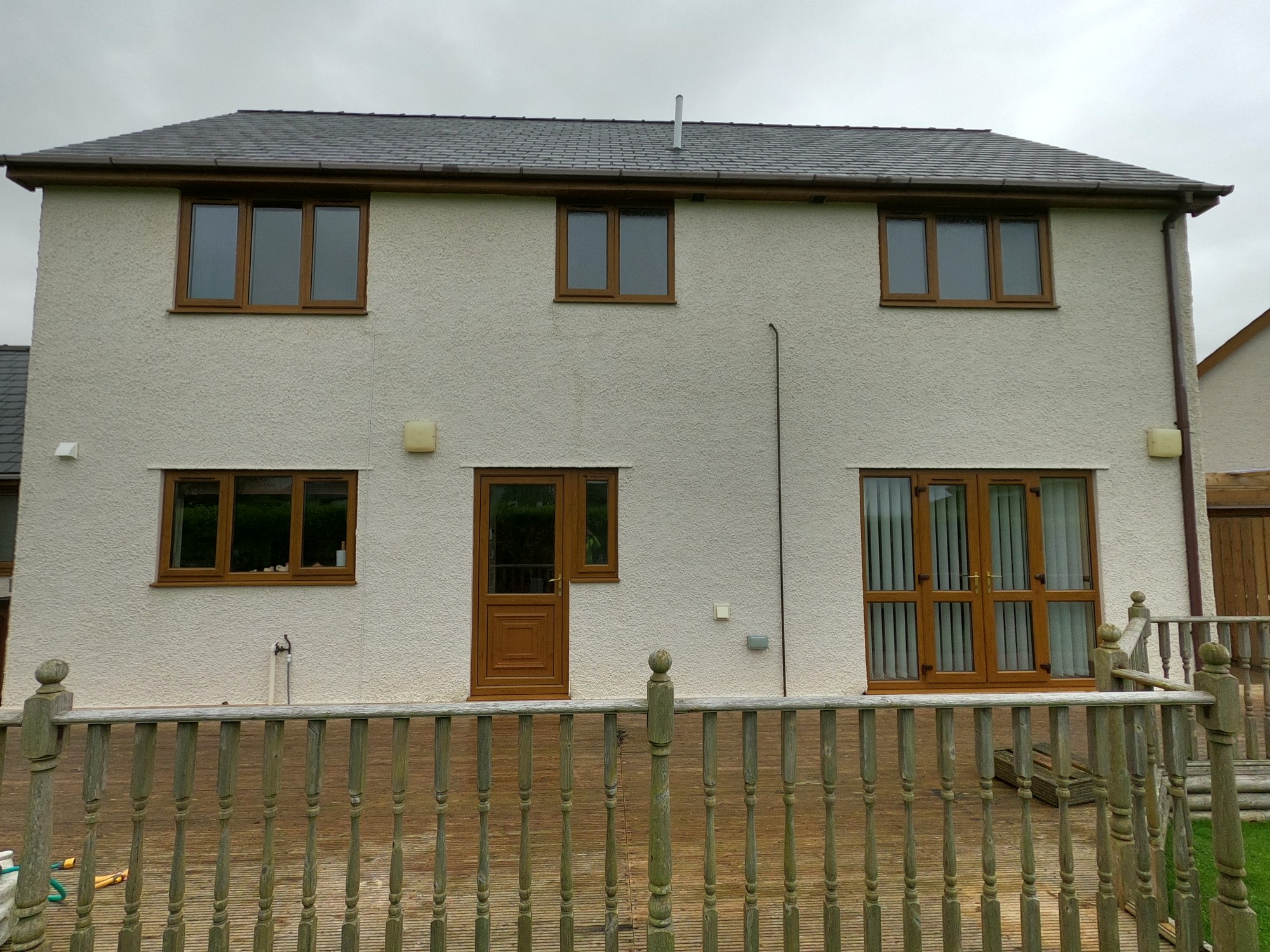
Coverage extends from West Moors out to Eversley, St Ives and St Leonards, and every one of those is served on the same terms with no travel charge and no minimum job size. What varies between properties is not the address but the elevations, which is why residential render cleaning here is quoted face by face rather than as a single figure for the whole building. The reason is simple enough. On most houses one elevation carries the great majority of the growth — the one sitting in shade, or backing onto planting, or never catching a drying wind — while another two may be almost clean. Pricing the whole property at an average rate either overcharges for the easy faces or undercharges for the difficult one, and the second version is what leads to shortcuts on the day. The housing across this patch makes that especially true. There is a good deal of bungalow and chalet stock with deep eaves keeping one wall permanently shaded, older properties with mineral finishes that have been in place for decades, and newer detached homes carrying modern through-coloured systems that clean quickly. All three can appear on the same road. So each quotation follows a proper walk round: coating type, elevation count, access on each side, where water is running, and anything fixed to the wall needing protection. It takes very little time and removes almost every reason a job would later need repricing. Somebody searching render cleaning near me should expect that as standard, and a local render cleaning company close enough to visit before quoting has no excuse for doing anything less.
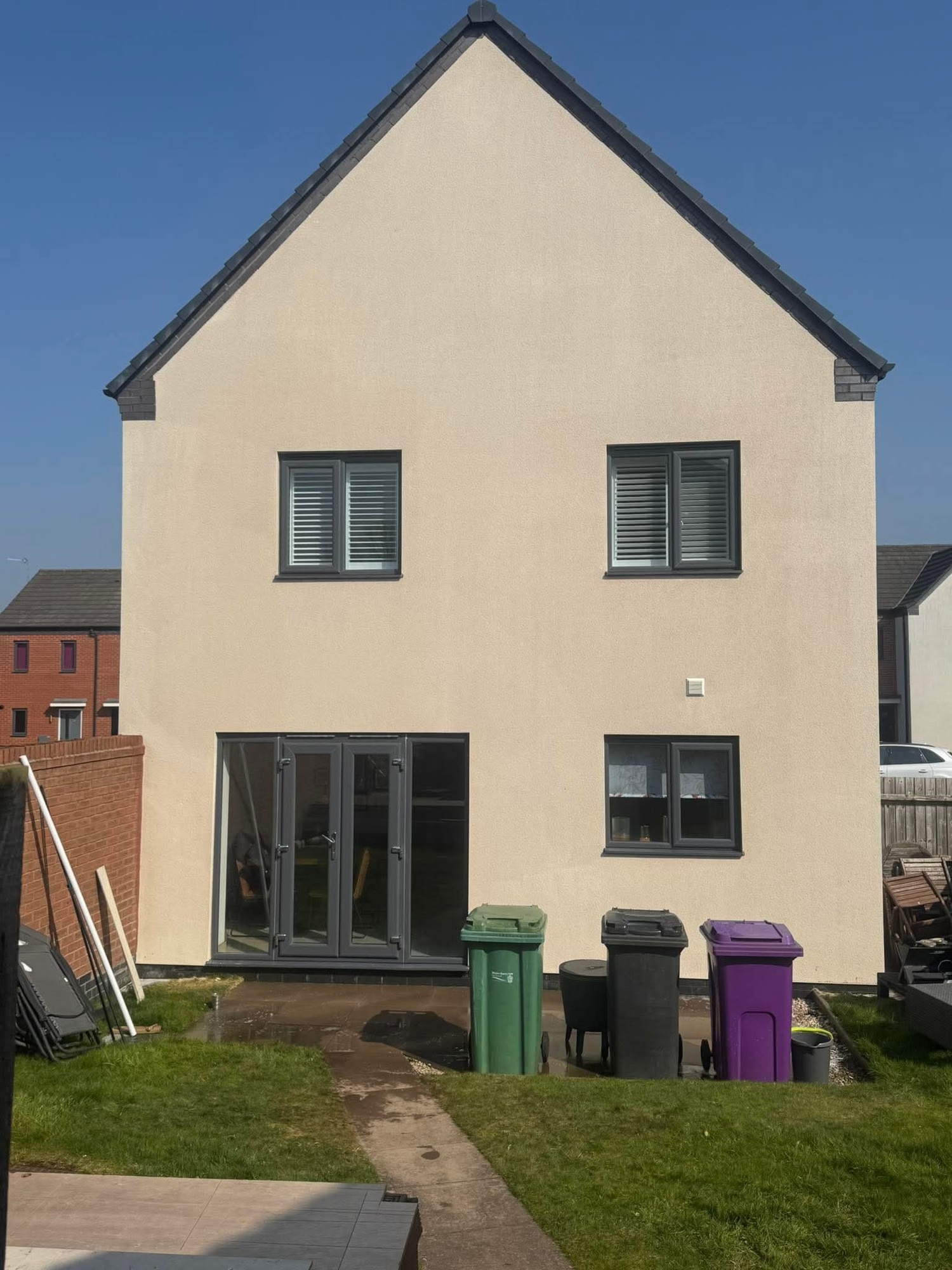
Most properties in West Moors benefit from professional render cleaning every 3 to 5 years, although this depends on the surrounding environment. Properties near trees, woodland, busy roads or coastal areas may require more frequent cleaning due to algae, mould and airborne contaminants. Our soft washing process removes existing growth and helps keep your render cleaner for longer.
Yes. Soft washing is specifically designed for delicate surfaces such as K-Rend, silicone render, monocouche render and painted render. Unlike high-pressure washing, it cleans at low pressure while treating biological growth at its source, reducing the risk of damage to the render finish.
We clean virtually all external render finishes, including K-Rend, Monocouche, Weber, Sto, silicone render, acrylic render, painted render, roughcast and pebble dash. Every cleaning method is tailored to the specific render type to achieve the best possible results.
Yes. Our specialist soft washing treatments are highly effective at removing green algae, red algae, black mould, mildew, lichen and other organic staining. We also apply professional biocide treatments to kill spores and slow down regrowth.
Because our process targets the biological growth rather than simply washing the surface, results typically last much longer than pressure washing alone. The exact lifespan depends on weather conditions, surrounding vegetation and the property’s location.
No. Our soft washing process is specifically designed to clean render safely. We use low-pressure application methods and specialist cleaning solutions that remove contamination without damaging the render surface when carried out by trained professionals.
The UK’s damp climate provides ideal conditions for algae, mould and other biological growth to develop on rendered surfaces. Areas with limited sunlight, nearby trees or persistent moisture are especially susceptible. Professional soft washing safely removes these contaminants and restores your property’s appearance.







































WhatsApp us