A question worth asking before committing to a maintenance cycle is whether repeated cleaning wears a coating out. On the method we use, it does not, and the reasoning is worth setting out in full. The reason is that nothing is being removed except what has grown on the surface. A biocidal solution applied at low pressure kills a colony and is rinsed away; the render itself is not abraded, not saturated and not chemically altered. Our render cleaning services can be repeated indefinitely on a sound coating without any cumulative effect at all. That is emphatically not true of the alternative. Every pressure wash takes a little of a surface with it, and a wall treated that way every couple of years will visibly deteriorate across a decade — texture flattened, aggregate exposed, edges blown at the beads. The damage is cumulative precisely because the method is mechanical. Render algae removal by chemistry also becomes easier each time rather than harder. A colony that has never been allowed to establish deeply clears with a single light application, so the third treatment on a building is gentler than the first. Render moss removal follows the same pattern on copings and horizontal details, where regular attention prevents the dense deposits that damage a coating. Professional render cleaning of a house in Winterborne St Martin is genuinely preventative maintenance rather than a recurring compromise, and house render cleaning repeated at sensible intervals extends the life of a render rather than shortening it. Exterior render cleaning is one of the few maintenance items with no downside to doing it regularly.
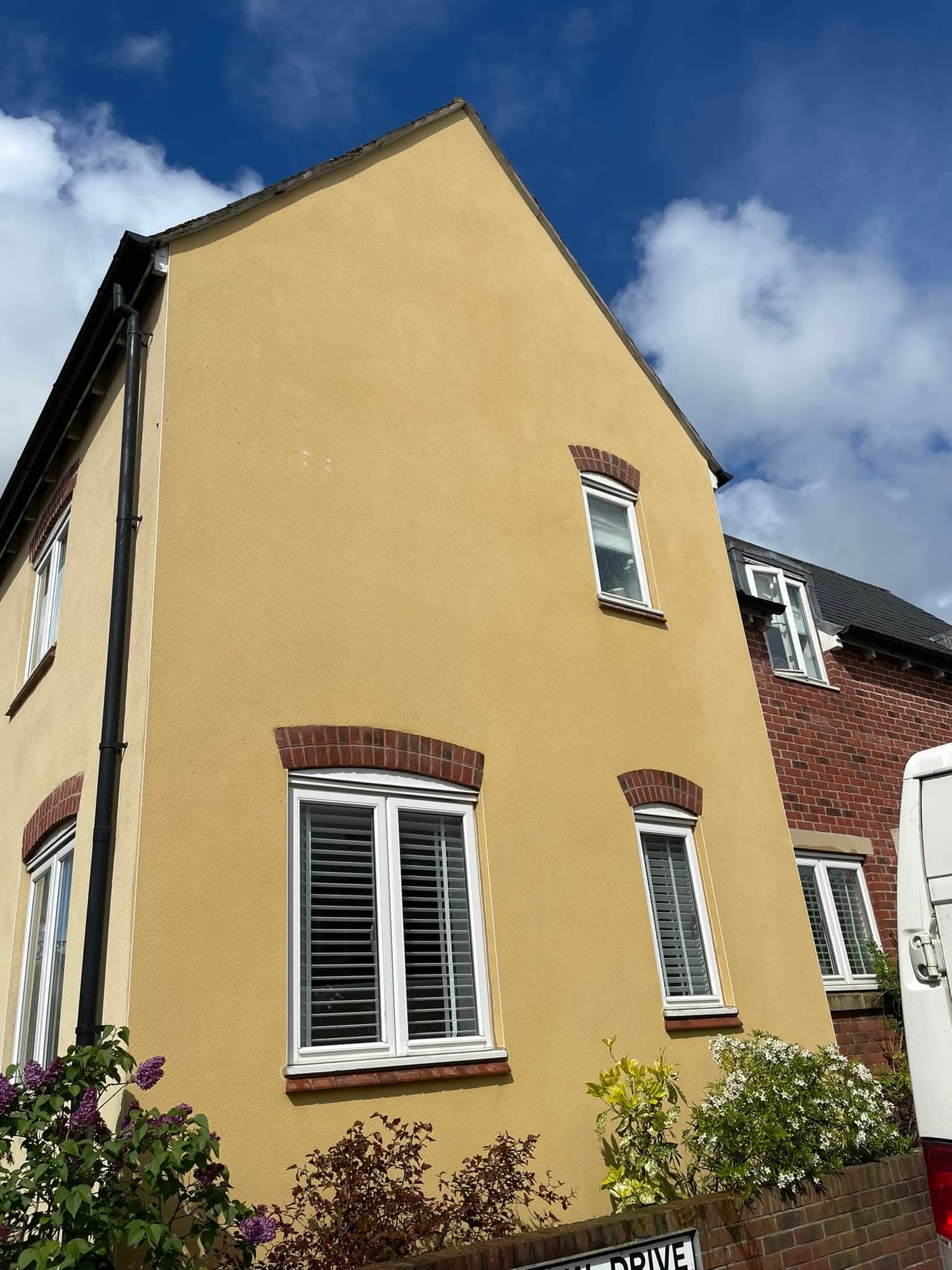
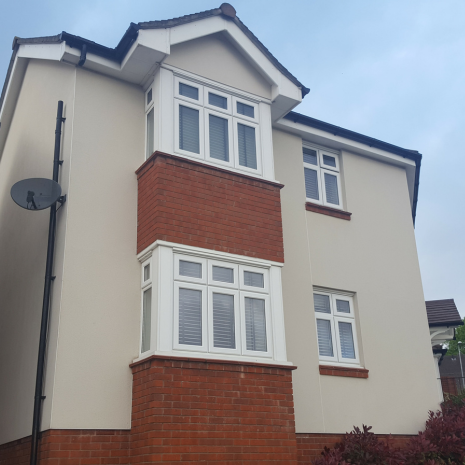

Of everything we work on, silicone systems tolerate repeated chemical treatment best, and there is a straightforward reason. The surface is designed to be washed by rain continuously for decades, and a soft wash is gentler than a heavy shower in every respect except the chemistry it carries. K Rend cleaning every four or five years puts no strain on the material at all, and the manufacturers say the same. What does cause harm is repetition of the wrong method. A silicone finish pressure washed twice loses pigment twice, and the pale scouring accumulates until the elevation reads as patchy from the road permanently. Two mistakes are twice as visible as one. Nothing is gained by varying it either. The correct approach never varies: soft wash render cleaning applies a biocidal solution at a pressure barely above hose flow, dwells long enough to destroy algae and lichen at root level, then rinses with a gentle controlled flow. Nothing mechanical touches the surface at any stage. Silicone render cleaning also benefits from the residual left behind, and on a building treated regularly that protection is effectively continuous, which is why maintained modern houses so rarely look green even in a bad winter. Render stain removal is the only element where repetition is a signal rather than a routine. Iron bleed from ties and brackets, cement residue at fixing points and dark runs beneath a leaking joint returning visit after visit means the source is still active. On a Winterborne St Martin property we will say so rather than simply treating it again.
Monocouche gains more from regular treatment than any finish we work on, because the damage it suffers comes from growth left in the texture rather than from anything applied to it. A colony rooted in the scraped profile holds water against a cement-based coating through every freeze, and that is what eventually opens edges and blows beads. Monocouche render cleaning at sensible intervals prevents that entirely, which is the strongest argument for a cycle on this finish. Repeated chemical treatment does nothing to the material whatsoever. The texture is not touched, the pigment is not affected, and the beads are not handled at any point. There is nothing cumulative to worry about, and the finish looks the same after five cycles as after one. The routine is the same every time: solution applied at low pressure in enough volume to soak through the depth of the texture rather than glaze the peaks, a long dwell to kill growth at root level, a repeat application where deposits are heaviest, then a soft even rinse across each full face. On a maintained wall the second application is rarely needed after the first cycle, which is where most of the saving appears. Render pressure washing is cumulative in exactly the way chemistry is not, flattening the scrape a little more each time, exposing more aggregate and leaving more tracking, with coloured render cleaning offering no top coat to renew over any of it. Kept on a cycle, render wall cleaning of monocouche means a building around Winterborne St Martin never reaches the condition where render restoration becomes the right word for what it needs.
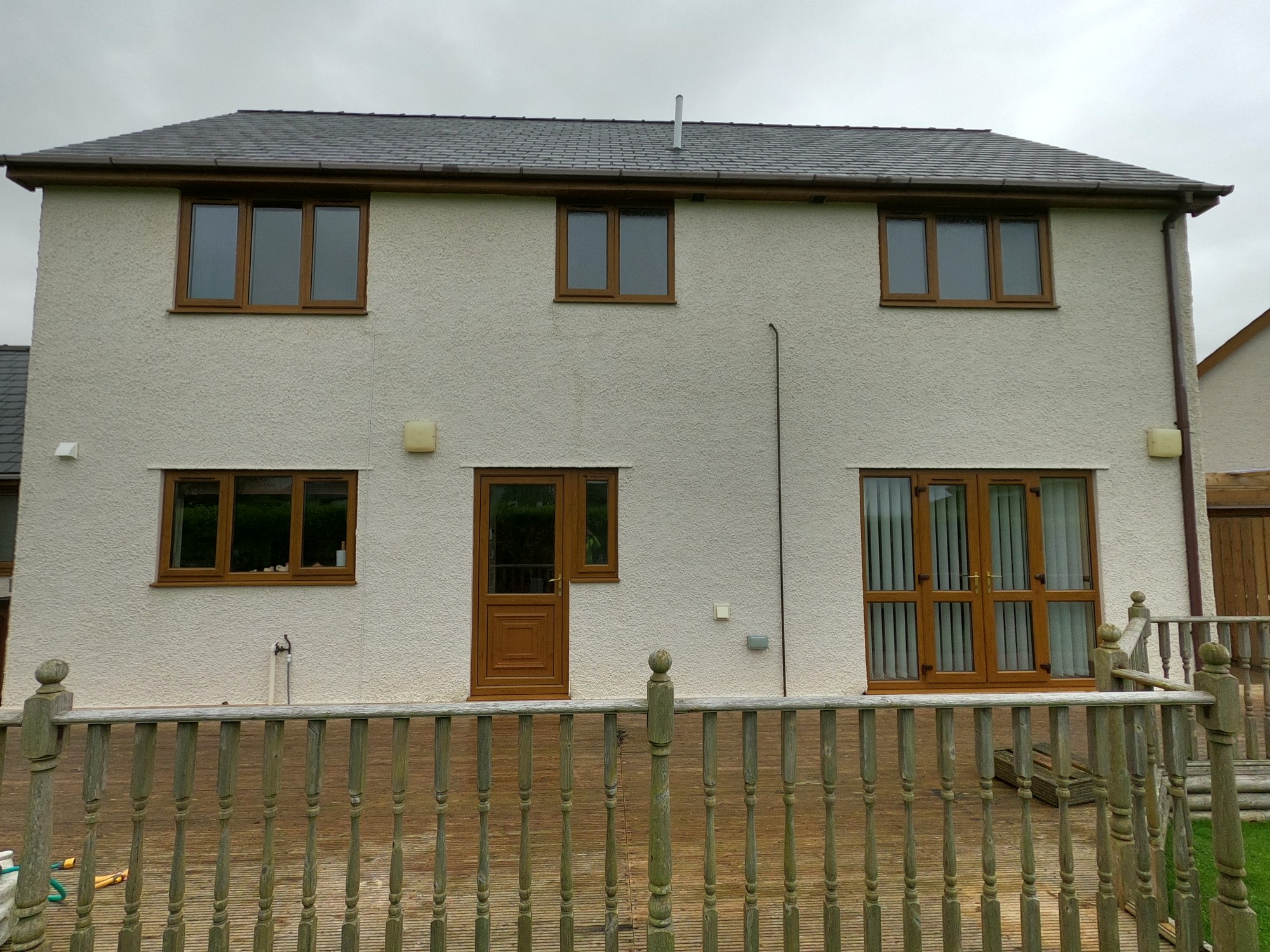
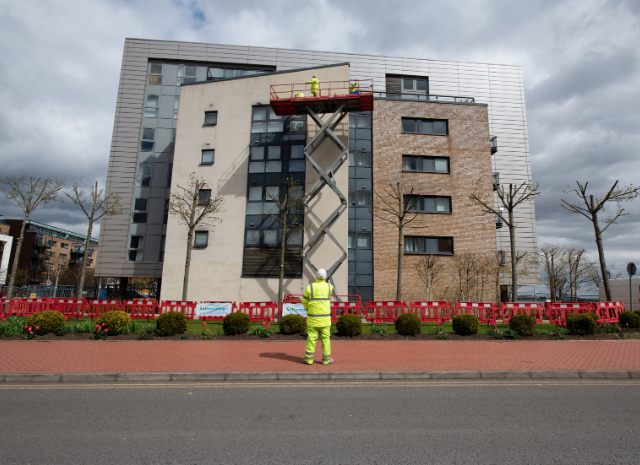

The whole case for a maintenance cycle rests on the treatment being repeatable without consequence, and on commercial buildings that is worth establishing before signing anything. A maintenance agreement is only as good as the number of times it can be honoured. Commercial render cleaning carried out chemically can run indefinitely; carried out mechanically it has a finite number of repetitions before the coating needs replacing. That difference is rarely visible in the first two years and unmistakable by the sixth, which is why a specification should describe method rather than outcome, and why the cheaper submission is often the more expensive decision. The question is therefore worth putting directly to any contractor before a multi-year agreement is signed. Access is established at survey — powered platforms, tower scaffold or extended pole systems according to height and standing ground — with the programme written around trading hours, deliveries and staff movement, and method statements and risk assessments issued in advance. On a returning site all of that is reused, so every visit after the first mobilises faster. Render soft washing is used throughout, giving even coverage along a full flank, very low water volumes, run-off directable clear of entrances and parking, and negligible drift near occupied doorways. Render facade cleaning on an established cycle also becomes quicker each time, since there is progressively less growth to break down at each return. Render mould removal on shaded and north-facing elevations remains the item driving the interval, and on a maintained building those faces stay manageable rather than becoming a project. They set the render maintenance interval for premises in Winterborne St Martin.
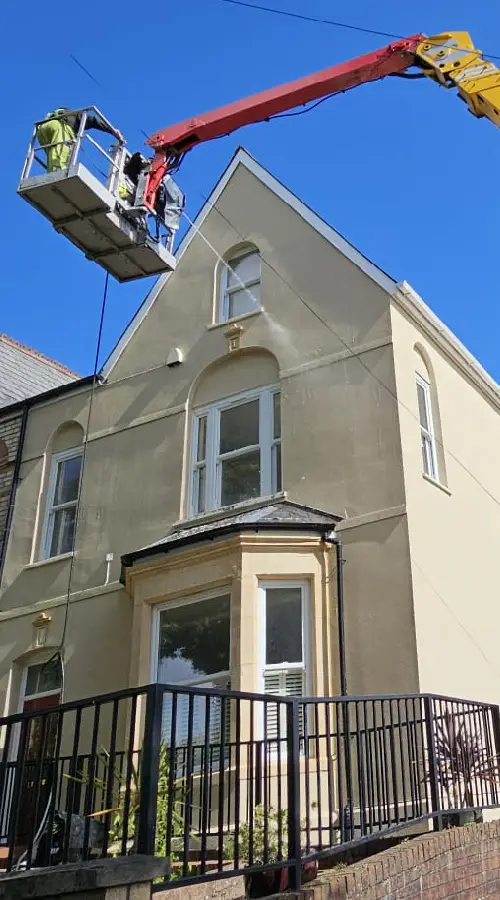
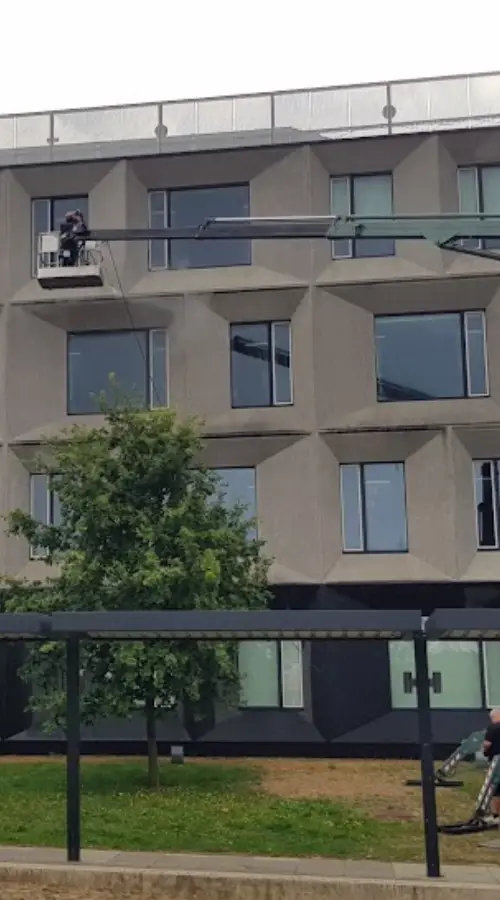
Softwashing UK treats plenty of buildings that have now been through four or five cycles, and the pattern is entirely consistent: each visit is shorter, cheaper and gentler than the one before it, and the coating is in better condition each time. The building improves rather than deteriorating across a cycle, which is not something most maintenance can claim. Render cleaning prices are established at an assessment from elevation count, working height, access arrangements and the extent of the growth, and on a maintained property that last element is minimal. A wall treated on schedule is among the cheapest jobs in the diary. The written render cleaning cost then holds. Affordable render cleaning across the life of a building is almost entirely a matter of not letting the interval stretch, since a lapsed cycle puts a wall straight back to a first-clean figure. The crews are render cleaning specialists rather than general exterior cleaners, and on a returning property that continuity is worth something practical. The coating type, the access arrangements, the volumes required and which elevation needed the repeat application last time are all already known. Everything used is an eco friendly render cleaning product chosen because it breaks down safely once its work is complete, which matters more on a building being treated repeatedly than on one treated once, since the quantities accumulate over a decade. Anyone comparing firms in search of the best render cleaning service should ask whether repeated treatment causes any harm. A firm working chemically will say no and explain why; a firm working with pressure will change the subject or talk about the finish instead.
Winterborne St Martin sits within our regular working patch, and a number of properties here are now on a standing arrangement rather than booking individually each time. It is an informal thing rather than a contract, with nothing to sign and nothing to pay for. We keep a note of when a property was last treated and roughly what interval it needs, and a reminder goes out when that comes round rather than a year afterwards. Nobody is committed by it, and plenty of people take the reminder and decide to leave it another year. Most people simply prefer not to have to remember. The advantage is that residential render cleaning gets booked at the right point rather than once a wall has become obvious from the road, and a wall caught early is a shorter, cheaper job with no return visit required. It also means the assessment itself is quicker each time round. The coating, the access, the volumes and the elevation needing the most attention are already on record, so a return visit rarely requires anything more than a quick look at the wall before the date is set. There is no charge for the arrangement, nothing to cancel if it is ignored, and no follow-up beyond a single message when the interval comes round. There is no travel charge, no minimum job size and no charge for the assessment. Anyone searching render cleaning near me should be able to ask a local render cleaning company to keep them on a list without that becoming a commitment of any kind.
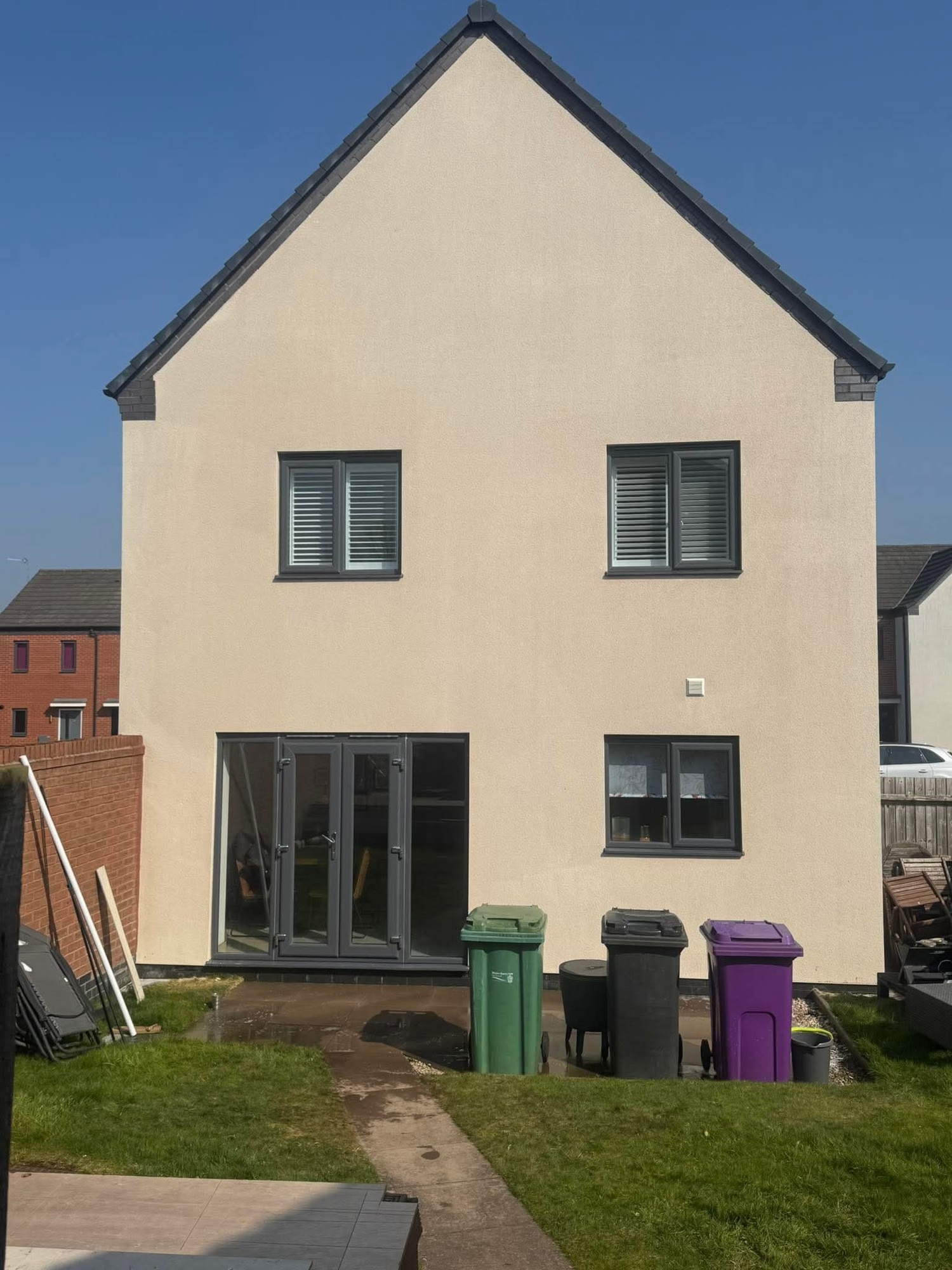
Most properties in Winterborne St Martin benefit from professional render cleaning every 3 to 5 years, although this depends on the surrounding environment. Properties near trees, woodland, busy roads or coastal areas may require more frequent cleaning due to algae, mould and airborne contaminants. Our soft washing process removes existing growth and helps keep your render cleaner for longer.
Yes. Soft washing is specifically designed for delicate surfaces such as K-Rend, silicone render, monocouche render and painted render. Unlike high-pressure washing, it cleans at low pressure while treating biological growth at its source, reducing the risk of damage to the render finish.
We clean virtually all external render finishes, including K-Rend, Monocouche, Weber, Sto, silicone render, acrylic render, painted render, roughcast and pebble dash. Every cleaning method is tailored to the specific render type to achieve the best possible results.
Yes. Our specialist soft washing treatments are highly effective at removing green algae, red algae, black mould, mildew, lichen and other organic staining. We also apply professional biocide treatments to kill spores and slow down regrowth.
Because our process targets the biological growth rather than simply washing the surface, results typically last much longer than pressure washing alone. The exact lifespan depends on weather conditions, surrounding vegetation and the property’s location.
No. Our soft washing process is specifically designed to clean render safely. We use low-pressure application methods and specialist cleaning solutions that remove contamination without damaging the render surface when carried out by trained professionals.
The UK’s damp climate provides ideal conditions for algae, mould and other biological growth to develop on rendered surfaces. Areas with limited sunlight, nearby trees or persistent moisture are especially susceptible. Professional soft washing safely removes these contaminants and restores your property’s appearance.












































WhatsApp us