There is very little maintenance required on a rendered wall between treatments, and what there is costs nothing. Softwashing UK mentions it at the end of every job because it makes a genuine difference to how long the work holds. Keeping rainwater goods clear is the single most useful thing. An overflowing gutter or a blocked outlet keeps a strip of wall permanently wet, and growth will restart there within a season on a coating that would otherwise have stayed clear for years. It is the most common reason our render cleaning services are needed sooner than expected. Cutting planting back from the walls is the second. A shrub or hedge held tight against an elevation stops it drying, drops debris onto whatever ledge is below, and shades the surface all day. Even a gap of a foot makes a measurable difference. Clearing debris off horizontal details is the third. Copings, sills, string courses and the tops of beads collect leaves and organic material that hold moisture, and that is precisely where render moss removal is needed at the next visit. Brushing them off occasionally delays it considerably. Nothing else is required, and specifically nothing should be applied to the wall in the meantime. Render algae removal is not something to attempt with a domestic product between professional visits. Professional render cleaning of a house in Winterborne Whitechurch will hold three to five years on its own, and house render cleaning intervals stretch noticeably further where those three habits are kept up. Exterior render cleaning lasts longest on a wall nobody is working against.
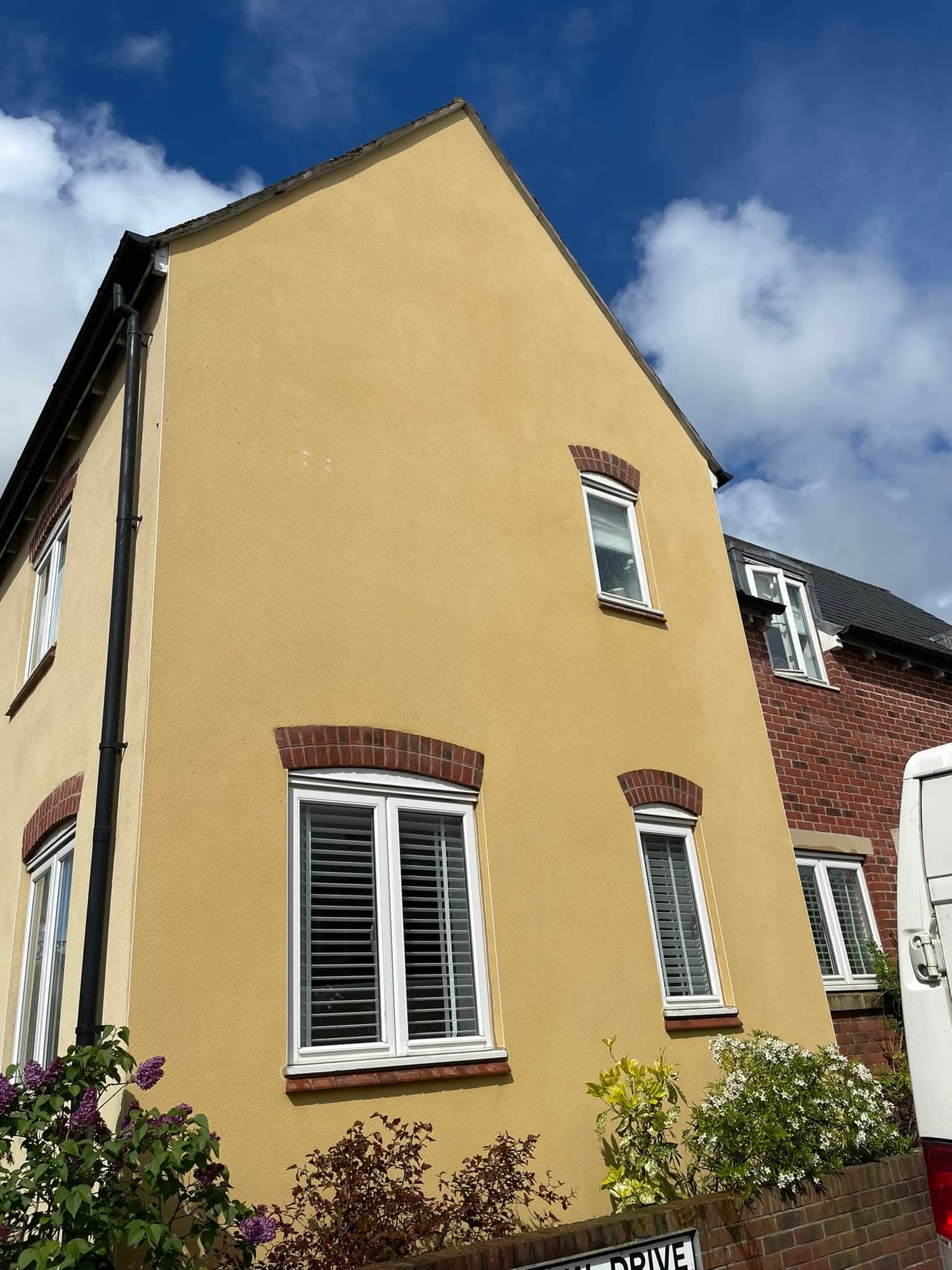
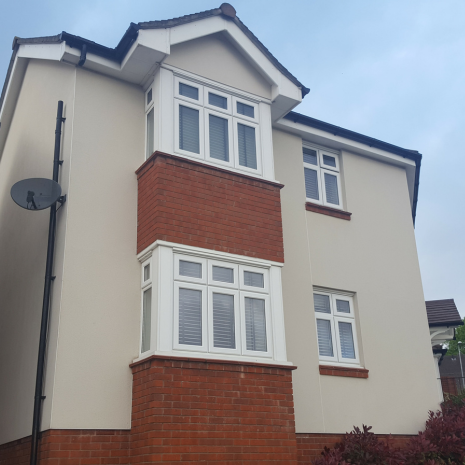

Silicone systems need less attention between cleans than anything else, largely because there is nothing to do. The surface sheds water, holds very little debris and requires no coating, sealing or treatment of any kind. K Rend cleaning at sensible intervals is the entire maintenance regime. What still matters is water. A leaking joint, an overflowing outlet or a blocked gully will keep a strip of a hydrophobic wall wet, and growth establishes there while everything around it stays clear. Those marks are also the ones least likely to clear on the next visit, since the source is still active. The clean itself uses soft wash render cleaning throughout: a biocidal solution at a pressure barely above hose flow, a long dwell to destroy algae and lichen at root level, then a gentle rinse. Nothing mechanical touches the surface, since pigment runs through the material and abrasion removes it permanently. Silicone render cleaning also needs generous volume to keep the face wet through the dwell. One thing genuinely worth avoiding is anybody applying a sealer or coating to a silicone system between cleans. These finishes are designed to breathe as well as to repel water, and anything added over the top interferes with both. Render stain removal deals with the marks a biocide will not touch. Iron bleed from ties and brackets, cement residue at fixing points and dark runs beneath a leaking joint each need a specific product and a test patch first. On a Winterborne Whitechurch property we will say which of those will return until something on the building is put right.
Monocouche rewards attention to the horizontal details more than any other finish, because that is where its intervals are won and lost. The scraped texture on a coping, a projecting band or the top of a bell-cast collects debris, holds moisture and reseeds everything below it, and Monocouche render cleaning is needed sooner on a building where those are left to accumulate. Brushing them clear occasionally is the whole of the maintenance. Nothing is applied, nothing is washed, and nothing needs any equipment beyond a soft brush and a ladder used sensibly, or simply left until the next visit if that is easier. What must not happen in the meantime is any attempt at spot cleaning. A domestic product applied to one area of a through-coloured finish will show as a lighter patch, and render pressure washing on any part of it flattens the scrape, exposes the aggregate beneath and leaves permanent tracking. Coloured render cleaning offers no top coat to renew over either. At the treatment itself the method is unchanged: solution at low pressure in enough volume to soak through the texture, a long dwell to kill growth at root level, a repeat application on the heaviest deposits, then a soft even rinse across each full face. Handled that way and kept clear between visits, render wall cleaning of monocouche holds at the longer end of what any textured finish achieves. On buildings around Winterborne Whitechurch where a decade of growth had obscured the specified colour, the recovery afterwards is a genuine render restoration and it stays that way for several years.
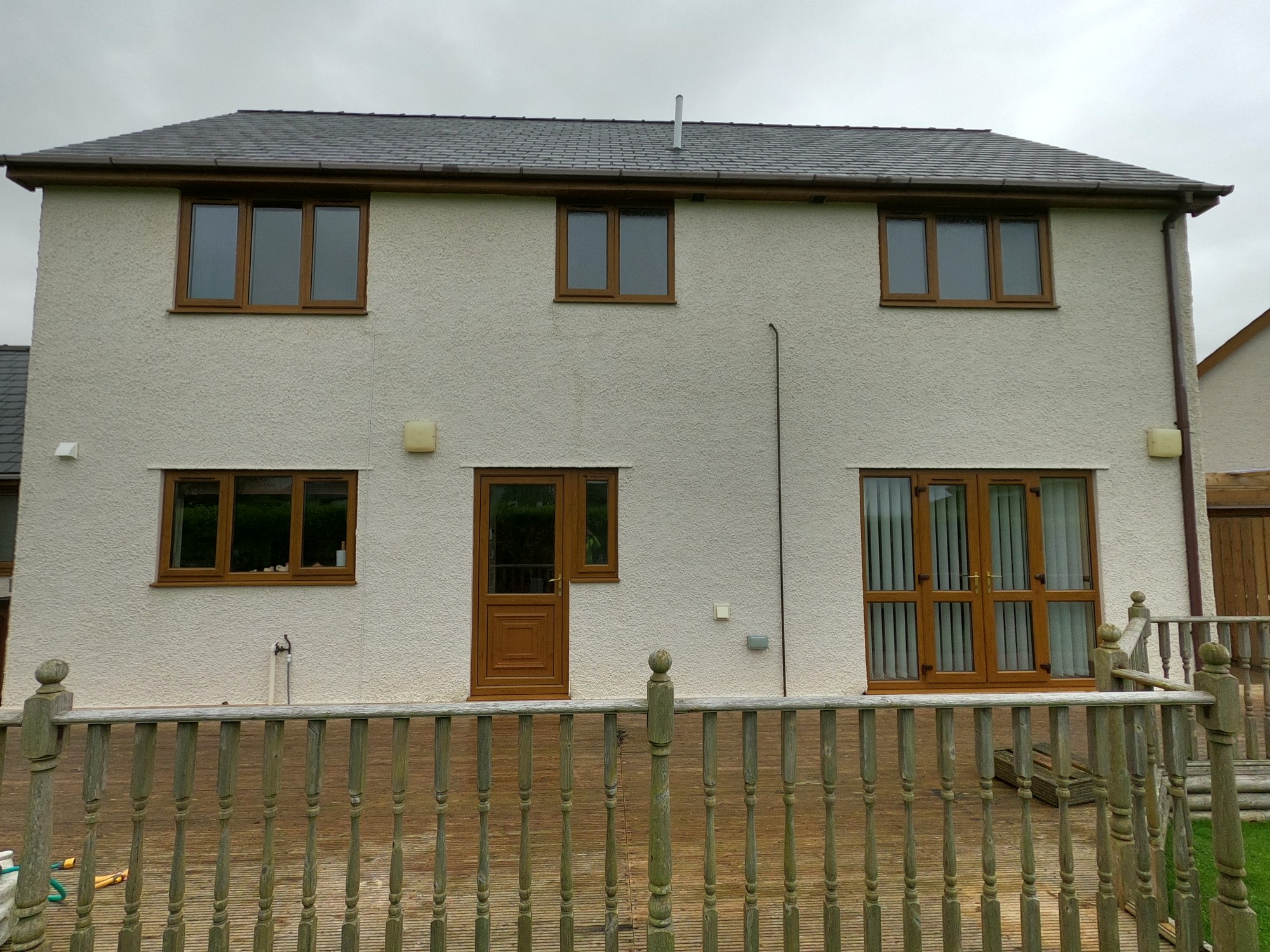
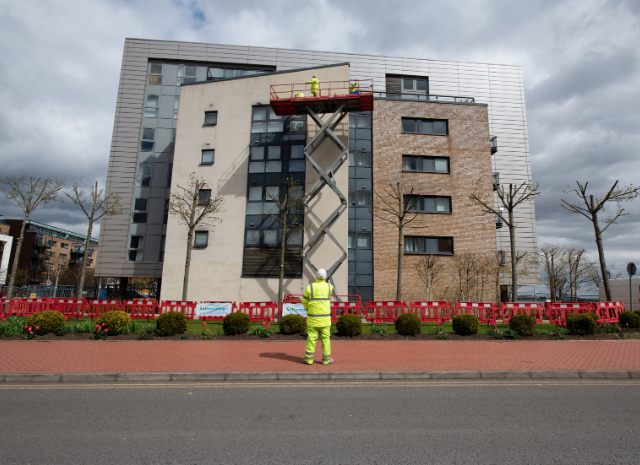

On commercial property the maintenance between visits is usually somebody’s job already, which makes it easier to arrange. Clearing rainwater goods, keeping planting cut back from elevations and removing debris from parapets and copings all sit naturally within existing grounds and building upkeep, and they extend the interval on a commercial render cleaning cycle considerably. The survey identifies which of them matter on a particular building, since it varies. A site with mature planting against a north elevation gains far more from cutting it back than from anything else; one with a history of blocked outlets gains from checking them each autumn. Neither costs anything beyond attention. Access is established at the outset — powered platforms, tower scaffold or extended pole systems according to height and standing ground — with the programme written around trading hours, deliveries and staff movement, and method statements and risk assessments issued in advance. Render soft washing is used throughout, giving even coverage along a full flank, very low water volumes, run-off directable clear of entrances and parking, and negligible drift near occupied doorways. Render facade cleaning on a building where the upkeep is being kept up is a shorter, cheaper visit each time, and the difference compounds across a decade. A well-kept building costs noticeably less to maintain by the third visit. Render mould removal on shaded and north-facing elevations remains the item setting the render maintenance interval, and it is also the one most responsive to planting being cut back. Premises in Winterborne Whitechurch that do both tend to settle onto a comfortably long cycle.
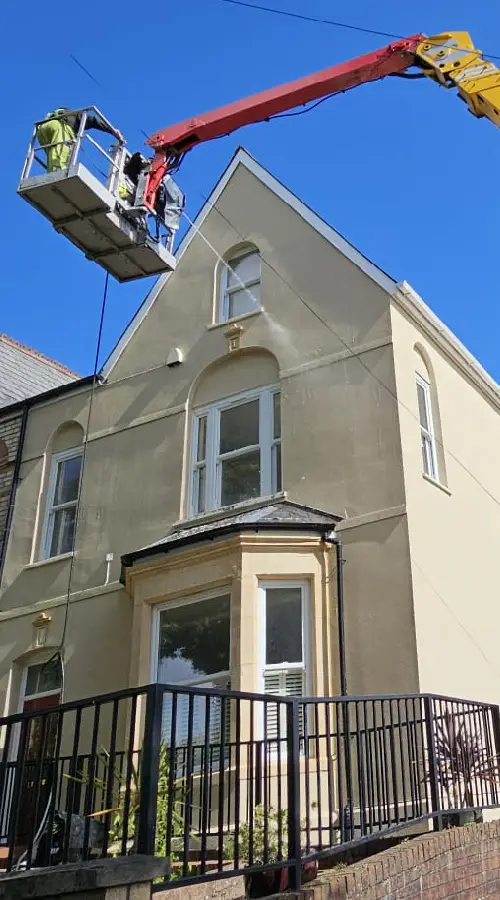
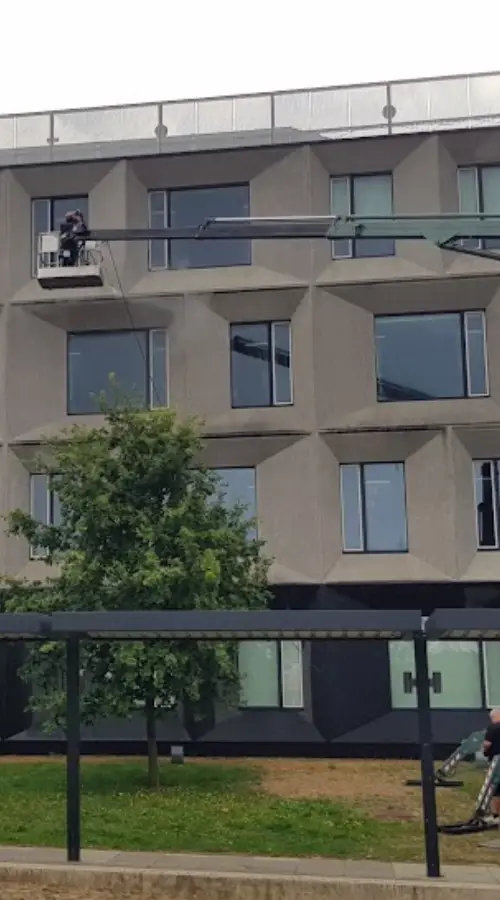
We would rather tell you how to delay the next visit than sell you one sooner, and there is a straightforward commercial reason as well as an honest one. A customer who gets five years out of a treatment recommends it; one who gets eighteen months does not. That is why the quotation comes with an expected interval attached. Render cleaning prices are established at an assessment from elevation count, working height, access arrangements and the extent of the growth, and the written render cleaning cost then holds. Alongside it we will say what is driving the growth on that particular building and what, if anything, is worth doing about it. Affordable render cleaning over the life of a property is mostly a matter of intervals rather than individual figures. A wall treated every five years costs a fraction of the same wall treated every two, and the difference is usually a gutter. The crews are render cleaning specialists rather than general exterior cleaners, and part of that is noticing the causes rather than only the symptoms. An outlet discharging onto a face, planting held against a wall, a filled drip groove on a sill or a blocked gully at the base all get pointed out whether or not anything is booked. Everything used is an eco friendly render cleaning product chosen because it breaks down safely once its work is complete. Anyone comparing firms in search of the best render cleaning service should ask what will make the result last longer. A contractor with no answer has not been paying attention to their own work.
Winterborne Whitechurch falls within our regular working patch, and it is worth saying plainly what happens if something is wrong, since most firms leave it unsaid. Ring and say so. There is no form, no procedure and no requirement to put anything in writing first. Where an elevation has not come out as expected, somebody comes and looks at it, and where a second application is needed it is applied at no cost. Residential render cleaning is priced as a finished job rather than as a visit. Nothing about that is discretionary on our part. The one thing worth waiting for is time. A wall that looks patchy a week after treatment is usually a wall that has not finished weathering, and six weeks is the point at which a fair judgement can be made. We will explain that rather than treating an early call as a complaint. Where something has genuinely gone wrong — a mark on a path, a plant affected, anything damaged — it is put right, and we hold current public liability cover for anything beyond that. The certificate is available on request rather than on demand. Where the answer is that a mark was always going to remain, we will say so and point back to the quotation, which should have said the same thing before the work. There is no travel charge, no minimum job size and no charge for the assessment. Anyone searching render cleaning near me should expect a local render cleaning company to answer the phone after the invoice as readily as before it.
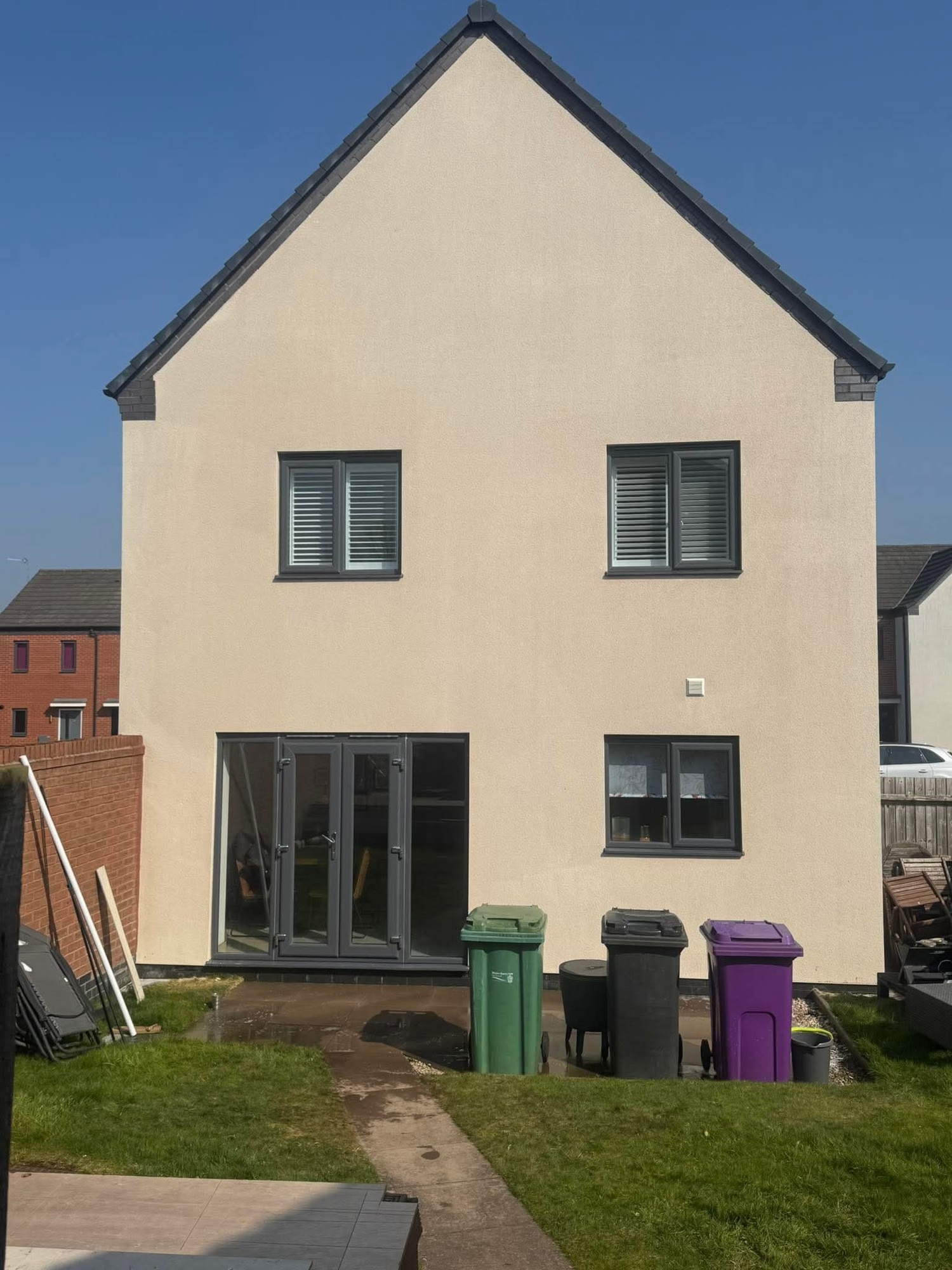
Most properties in Winterborne Whitechurch benefit from professional render cleaning every 3 to 5 years, although this depends on the surrounding environment. Properties near trees, woodland, busy roads or coastal areas may require more frequent cleaning due to algae, mould and airborne contaminants. Our soft washing process removes existing growth and helps keep your render cleaner for longer.
Yes. Soft washing is specifically designed for delicate surfaces such as K-Rend, silicone render, monocouche render and painted render. Unlike high-pressure washing, it cleans at low pressure while treating biological growth at its source, reducing the risk of damage to the render finish.
We clean virtually all external render finishes, including K-Rend, Monocouche, Weber, Sto, silicone render, acrylic render, painted render, roughcast and pebble dash. Every cleaning method is tailored to the specific render type to achieve the best possible results.
Yes. Our specialist soft washing treatments are highly effective at removing green algae, red algae, black mould, mildew, lichen and other organic staining. We also apply professional biocide treatments to kill spores and slow down regrowth.
Because our process targets the biological growth rather than simply washing the surface, results typically last much longer than pressure washing alone. The exact lifespan depends on weather conditions, surrounding vegetation and the property’s location.
No. Our soft washing process is specifically designed to clean render safely. We use low-pressure application methods and specialist cleaning solutions that remove contamination without damaging the render surface when carried out by trained professionals.
The UK’s damp climate provides ideal conditions for algae, mould and other biological growth to develop on rendered surfaces. Areas with limited sunlight, nearby trees or persistent moisture are especially susceptible. Professional soft washing safely removes these contaminants and restores your property’s appearance.












































WhatsApp us