Conditions on the day matter more in this trade than most people expect. A biocidal treatment needs to stay wet on the surface long enough to break down growth through its full depth, and almost everything about the weather affects whether it does. Strong sun evaporates solution before the chemistry has finished. High wind carries it off the wall and makes controlled application difficult. Frost stops the process working at all and risks damage to a saturated coating. Heavy rain within a couple of hours of application simply washes the treatment away before it has achieved anything. Our render cleaning services are scheduled around those constraints rather than around a fixed calendar. Mild, overcast, still days are ideal, which in practice means a great deal of the year is workable and a small number of days are not. Where a forecast turns we would rather move an appointment than apply product into conditions that will waste it, and customers are told so at the booking stage. Within a single day the same logic applies at a smaller scale. Shaded elevations are treated first while sunlit ones are left until later, once evaporation has slowed and the solution will hold. Render algae removal on a wall that has been baking since morning is markedly less effective than the same treatment applied to the same wall at four in the afternoon. Render moss removal along copings and ledges benefits particularly from damp, still conditions, since those deposits need the longest contact of anything on a building. Professional render cleaning of a house in Wool is planned around the forecast, and house render cleaning done in the right conditions gives a noticeably better result than the same work rushed into the wrong ones. Exterior render cleaning is one of the few outdoor trades where waiting a week genuinely pays.
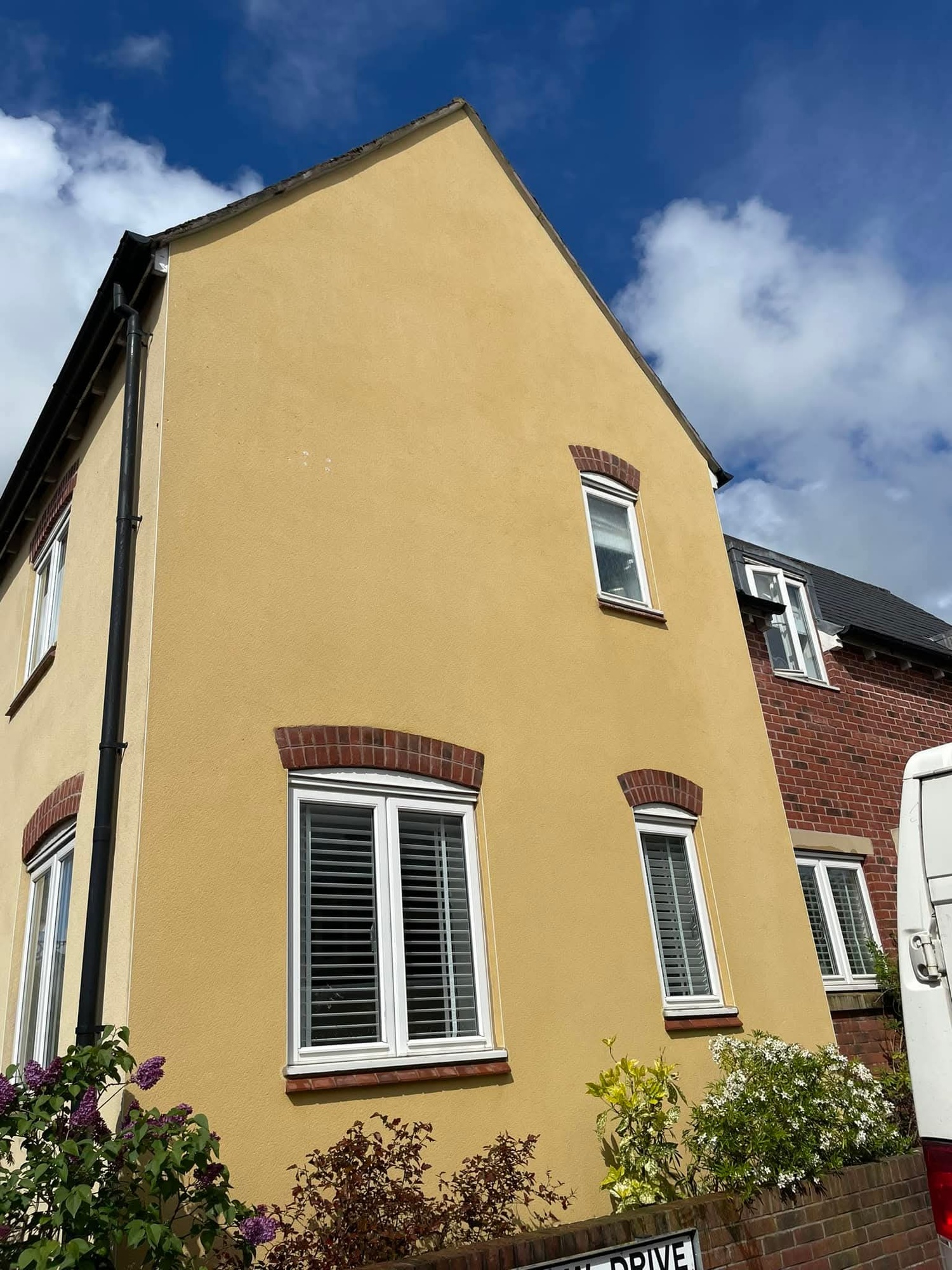
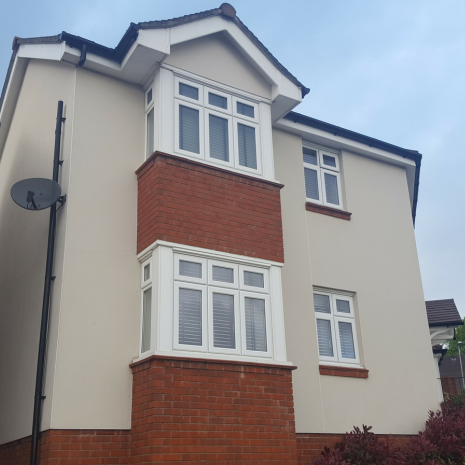

Temperature affects a silicone system more than most surfaces during a clean. On a warm day the face itself is warm, and a hydrophobic coating already inclined to shed solution will do so far faster once heat is added. That is why K Rend cleaning is planned around the position of the sun rather than simply around which elevation looks worst. The working method never changes. Soft wash render cleaning applies a biocidal solution at a pressure barely above hose flow, allows a long dwell so the chemistry can destroy growth at root level, then rinses with a gentle, controlled flow. Nothing physical touches the surface at any stage, which is essential because pigment runs through the material and abrasion removes it permanently. What changes with conditions is volume and sequencing. Silicone render cleaning on a cool, overcast day may need a single application; the same building in bright sunshine might need the treated face re-wetted partway through to maintain contact time. Judging that on site is the difference between an even result and a patchy one that later gets blamed on the material. Render stain removal is handled separately in every case. Iron bleed from ties and brackets, cement residue left from installation and the dark runs beneath a leaking joint are mineral marks a biocide cannot touch, and each requires its own product tested on a small area first. On a property in Wool it is common for the biological work to finish quickly while the targeted spot treatments take the longer share of the visit, and both are set out separately in the quotation so nothing is hidden inside a single figure.
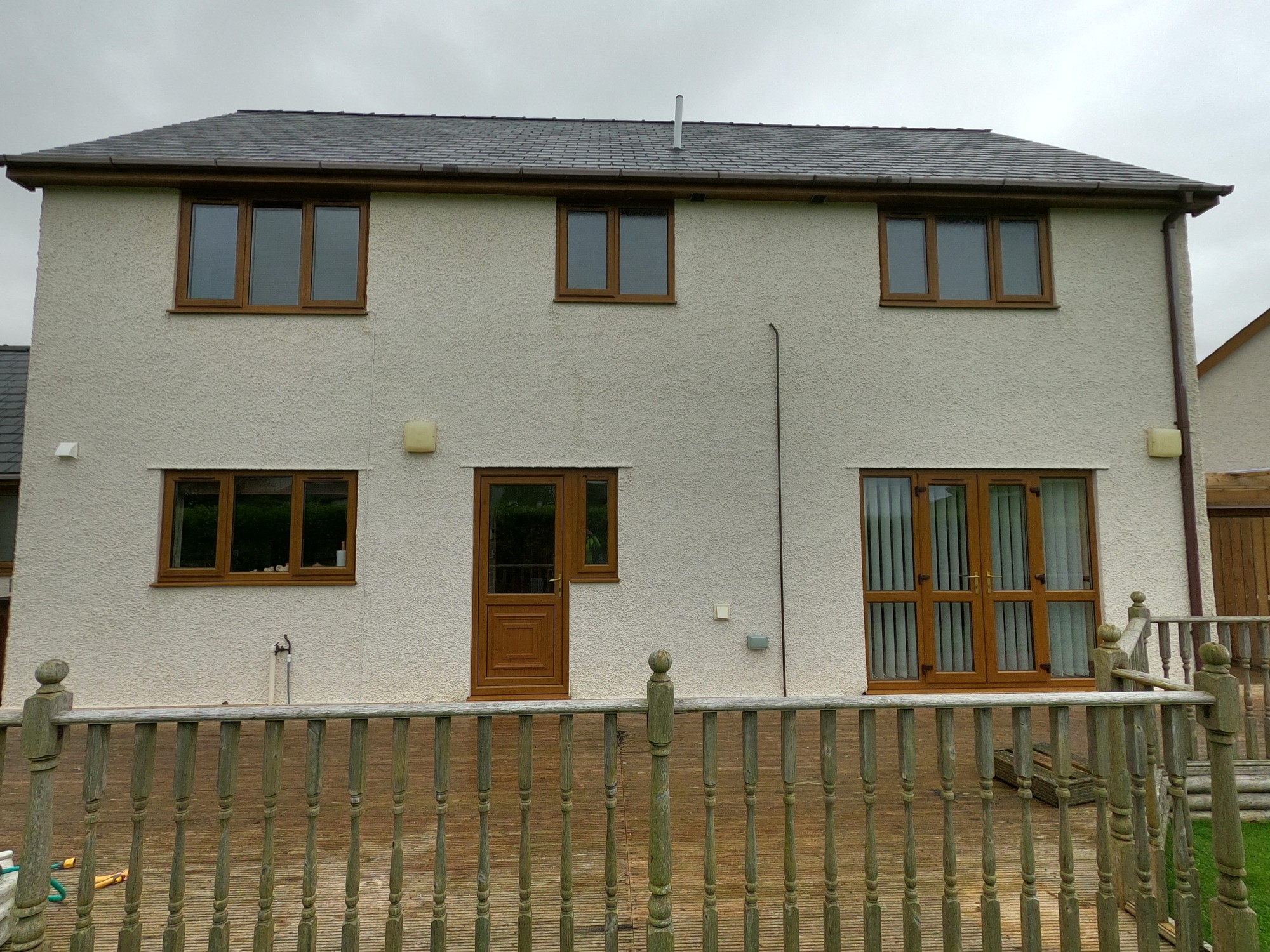
Monocouche is the finish most sensitive to when the work is carried out. The scraped texture holds solution well, which is an advantage, but it also means an uneven application shows far more obviously than it would on a smooth surface. Softwashing UK books this type of work into settled, mild conditions wherever the schedule allows, because Monocouche render cleaning done into strong sun or gusting wind produces variation a customer will notice for months. The process itself is unchanged regardless. A biocidal solution goes on at low pressure in enough volume to soak through the depth of the texture rather than glaze the peaks, dwells long enough to kill algae and lichen at root level, and is repeated on the heaviest deposits along copings and projecting bands before a soft, even rinse across each full elevation. Render pressure washing is never used on this material under any conditions. A lance flattens the scraped profile, brings aggregate to the surface and leaves tracking that catches low sun for the life of the building, and because coloured render cleaning has no top coat to renew, there is no correcting it short of recoating an entire elevation. Carried out properly, render wall cleaning of monocouche leaves a face with no banding, no bright spots and no sign of where the operator started or stopped. On buildings around Wool where growth had obscured the original tone for a decade or more, what comes back is the specified colour rather than an approximation of it, and render restoration is a fair description of a result achieved without a gram of new material going onto the wall.
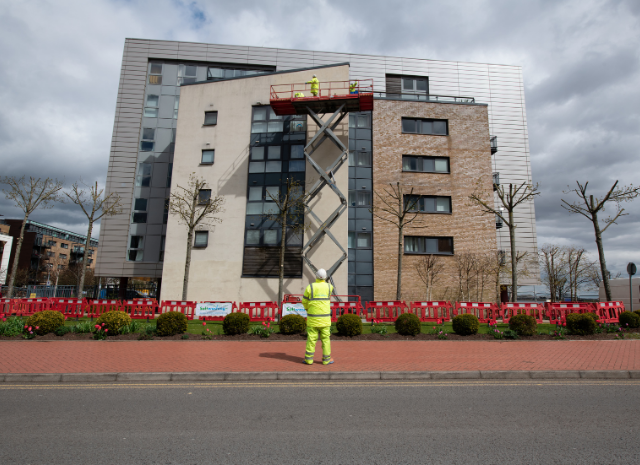

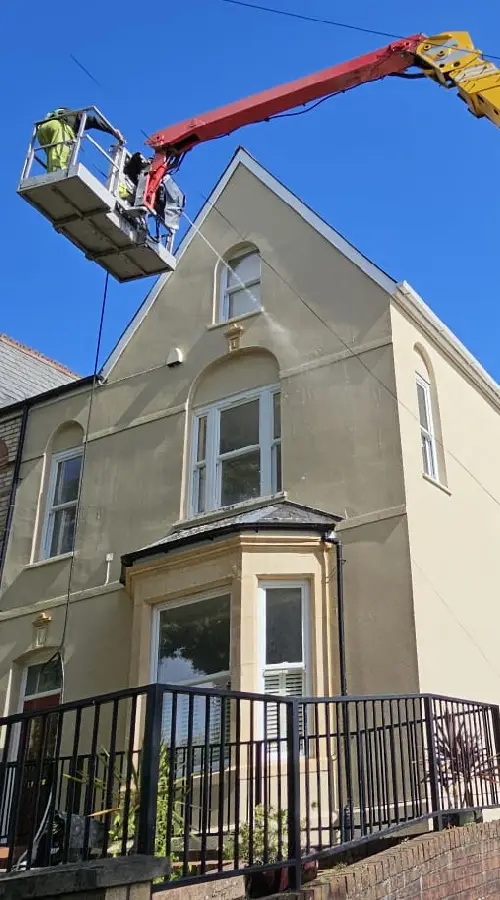
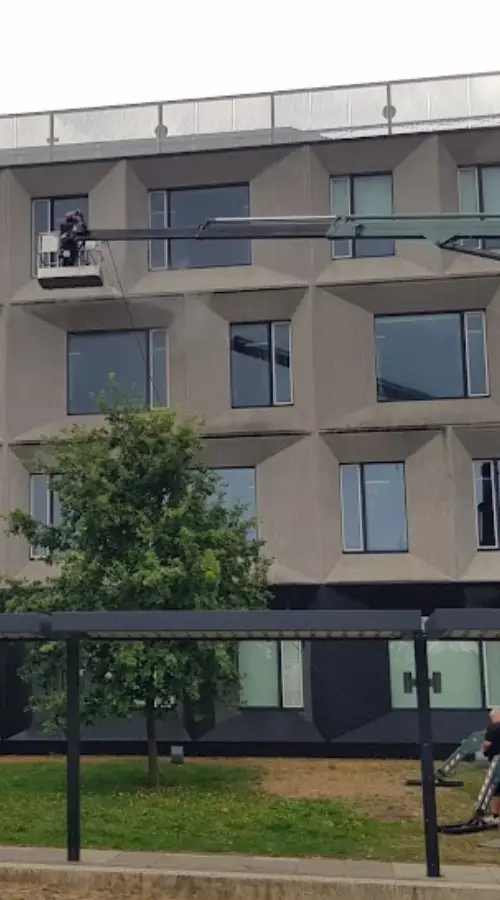
Larger buildings take longer than a single weather window allows, which means commercial render cleaning is usually phased rather than completed in one push. Splitting a programme across elevations is straightforward provided the split is planned; what causes problems is stopping halfway across a single face because conditions turned, since the join will always show. Access is settled before anything else — powered platforms, tower scaffold or extended pole systems according to height and standing ground — and the programme is then written around trading hours, deliveries and staff movement, with method statements and risk assessments issued in advance. Where a building remains occupied, the sequence is agreed so no entrance is affected for longer than necessary on any given day. Render soft washing is the method throughout and suits phased work particularly well. It covers a complete elevation evenly in one pass, uses very low water volumes, produces run-off that can be directed clear of entrances and parking, and generates almost no drift near occupied doorways or open windows. Render facade cleaning that shows a visible change partway along a flank is the one outcome nobody wants, and treating whole faces at a time prevents it. Render mould removal on shaded and north-facing elevations remains the item that recurs soonest, because those faces darken fastest and return within a year if growth was rinsed rather than destroyed. Moving a building onto a render maintenance cycle at a fixed interval allows the whole programme to be scheduled well in advance and keeps premises in Wool presentable continuously rather than in bursts.
Rescheduling is the part of this trade customers dislike most, and it is worth explaining how we handle it. If the forecast turns and applying treatment would waste both your money and our product, we move the date and say why. What we do not do is fail to appear and explain afterwards. A confirmed slot means a confirmed slot unless conditions would make the work pointless. Everything else follows the same principle of saying it in advance. Render cleaning prices are calculated from elevation count, working height, access requirements and how many years of growth have accumulated, which is why the figure comes after somebody has looked at the building rather than before. Once assessed, the render cleaning cost goes in writing and holds. Affordable render cleaning comes from efficient sequencing and arriving properly equipped, not from cutting dwell time or thinning what goes onto the wall. Because the crews are render cleaning specialists working on rendered elevations continuously, they recognise what they are dealing with immediately: an overpainted section that will behave unpredictably, a bead too fragile to handle, hairline cracking that would draw solution in behind the coating. Anything of that sort is raised rather than cleaned over and left to emerge later. All treatments are eco friendly render cleaning products chosen because they biodegrade properly after use, which matters when run-off inevitably reaches borders, gullies and open ground. If you are trying to identify the best render cleaning service available, ask what happens when the weather does not cooperate. The answer tells you whether a firm is working to a method or simply working through a list.
How a job is quoted around here depends heavily on how tall the building is, because height determines access and access determines cost. A great deal of the residential render cleaning at Winfrith Newburgh, East Knighton and Warmwell is single-storey or chalet-style work, comfortably handled from poles and normally finished within a day, with the roof line and any dormer cheeks reached without ladders. Two-storey properties at Owermoigne, Coombe Keynes and Chaldon Herring are still pole work in most cases, though gable ends and anything above an extension roof need checking before a figure is given. A wall that looks simple from the front frequently has a rear elevation that is anything but, which is why every quotation follows a walk round the whole building rather than a look at the frontage. Larger and older buildings at Lulworth, West Lulworth, East Lulworth, Lulworth Cove, Ringstead and Holworth are where platform access becomes likely. Those are also the properties most often carrying render that has never been treated, so extended dwell times and a second application are common and are included in the original price rather than added afterwards. None of it changes the terms. There is no travel charge and no minimum job size, and a single elevation is quoted on the same basis as a whole property. Where two or three properties on the same lane book together, the work is grouped into one trip and the pricing reflects it. Anyone searching render cleaning near me from any of these addresses gets a proper site visit before a number is given, which is the practical difference a local render cleaning company ought to be able to offer.
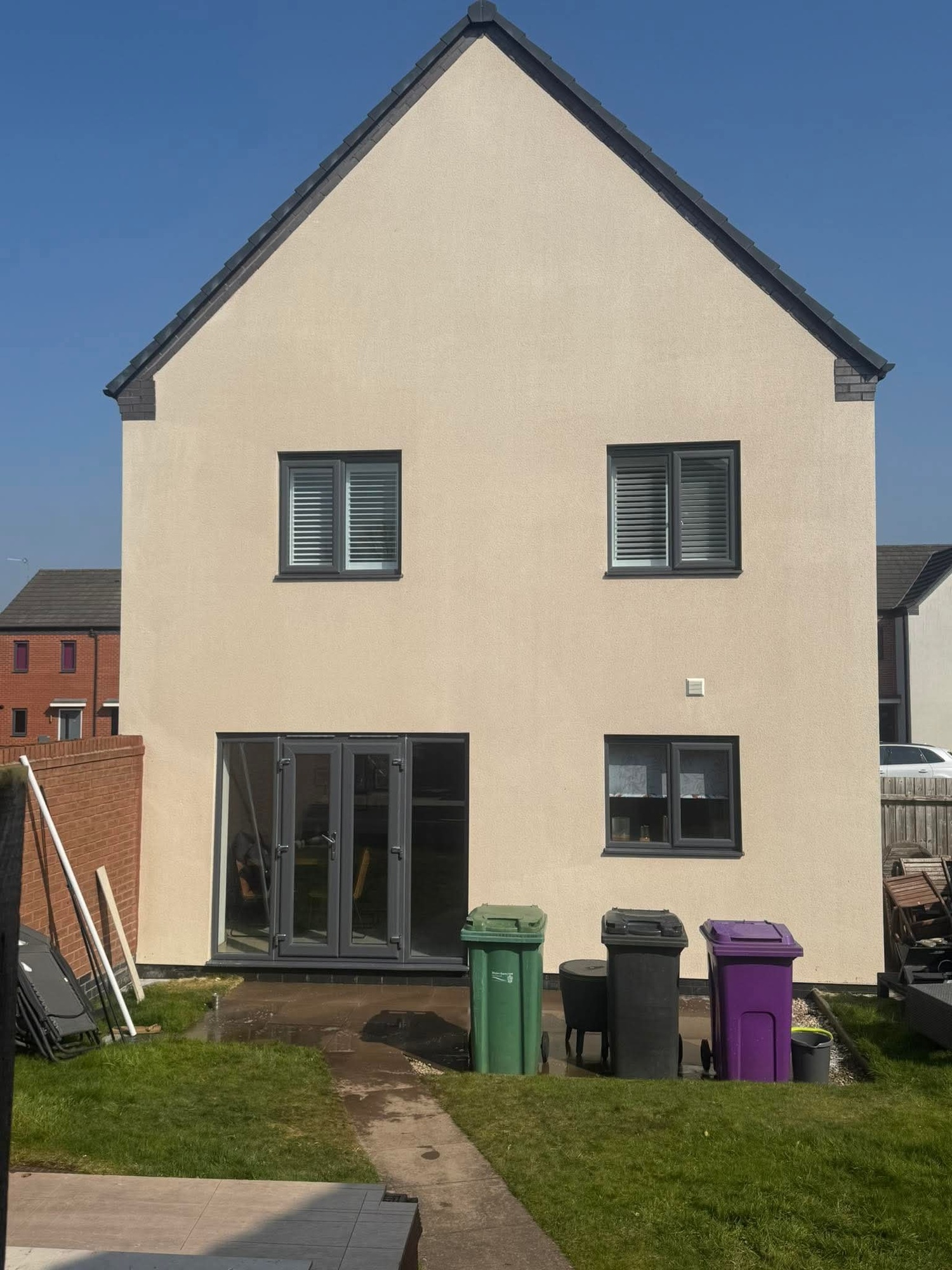
Most properties in Wool benefit from professional render cleaning every 3 to 5 years, although this depends on the surrounding environment. Properties near trees, woodland, busy roads or coastal areas may require more frequent cleaning due to algae, mould and airborne contaminants. Our soft washing process removes existing growth and helps keep your render cleaner for longer.
Yes. Soft washing is specifically designed for delicate surfaces such as K-Rend, silicone render, monocouche render and painted render. Unlike high-pressure washing, it cleans at low pressure while treating biological growth at its source, reducing the risk of damage to the render finish.
We clean virtually all external render finishes, including K-Rend, Monocouche, Weber, Sto, silicone render, acrylic render, painted render, roughcast and pebble dash. Every cleaning method is tailored to the specific render type to achieve the best possible results.
Yes. Our specialist soft washing treatments are highly effective at removing green algae, red algae, black mould, mildew, lichen and other organic staining. We also apply professional biocide treatments to kill spores and slow down regrowth.
Because our process targets the biological growth rather than simply washing the surface, results typically last much longer than pressure washing alone. The exact lifespan depends on weather conditions, surrounding vegetation and the property’s location.
No. Our soft washing process is specifically designed to clean render safely. We use low-pressure application methods and specialist cleaning solutions that remove contamination without damaging the render surface when carried out by trained professionals.
The UK’s damp climate provides ideal conditions for algae, mould and other biological growth to develop on rendered surfaces. Areas with limited sunlight, nearby trees or persistent moisture are especially susceptible. Professional soft washing safely removes these contaminants and restores your property’s appearance.








































WhatsApp us