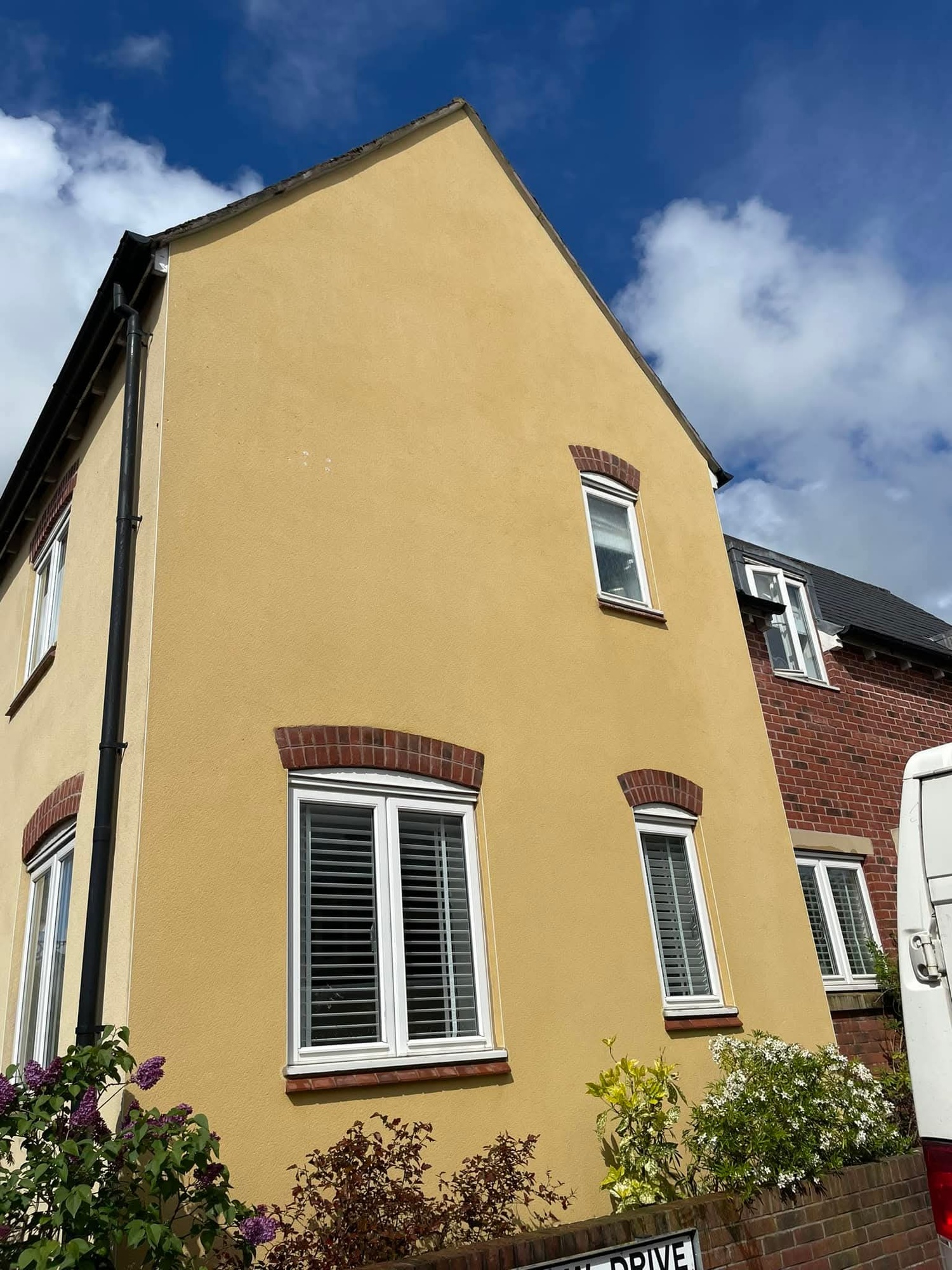
A handful of mistakes account for most of the damaged render we are called to, and all of them are avoidable. The first is reaching for a pressure washer. On a rendered face it removes growth and surface material together, drives water behind the coating, opens the texture and lifts pigment from a through-coloured finish in patches that never even out. The wall looks bright for a fortnight and weathers badly for a decade. The second is scrubbing stubborn areas. Physical agitation detaches loosely bound aggregate and leaves smoothed patches that catch light differently for the life of the coating. The third is household bleach. It removes colour from growth almost immediately, which looks like success, but it does not reliably destroy root structures, it damages planting wherever it runs off, and on coloured render it can alter tone permanently. The fourth is treating too shallowly. Product applied thinly across a textured wall bridges the high points and never reaches the colony at the base of the profile, so the elevation clears superficially and greens again within a season. The fifth is working at height from a ladder with a lance, which turns a routine job into a serious incident. The sixth is leaving a wall until everything needs doing, when treating the problem elevation years earlier would have cost a fraction. Our render cleaning services avoid all six by using controlled chemistry, generous volume, proper dwell and telescopic delivery from the ground. Render algae removal and render moss removal work from the inside out. Exterior render cleaning on a property in Wychbold should be quiet, unhurried and entirely uneventful.

The mistakes made on silicone render are specific to the material, and each of them is permanent, which is why they are worth naming. Using pressure at any setting is the first. The colour runs through the render, so pigment removed unevenly cannot be reinstated, and the texture cannot be repaired. Manufacturer guidance on every system we have seen excludes it, and damage from inappropriate cleaning falls outside any warranty. Brushing stubborn growth is the second, producing the same damage more locally and usually exactly where the contrast will show most. Mixing strong and applying unevenly is the third. Over-concentrated treatment can lift tone inconsistently across a through-coloured wall and leave a permanent shadow. Working an elevation in sections is the fourth. A wall treated in parts that dry at different rates records the sequence in the finished surface, and on integral pigment that variation stays until the next clean. Underspecifying for black spotting is the fifth. Fungal colonisation needs a higher strength and longer dwell than algal filming, and a mix judged for green clears the green and leaves the specking. Ignoring the detailing is the sixth, which leaves every opening outlined once the flat wall is clean. K Rend cleaning at our specification avoids all six. Silicone render cleaning is chemical throughout at very low pressure, dilution dosed at source and held constant, complete elevations worked with a live wet edge, full dwell judged per wall, and detailing treated as its own zone. Asking a contractor which of these their method avoids usually separates quotations faster than comparing the figures alone.
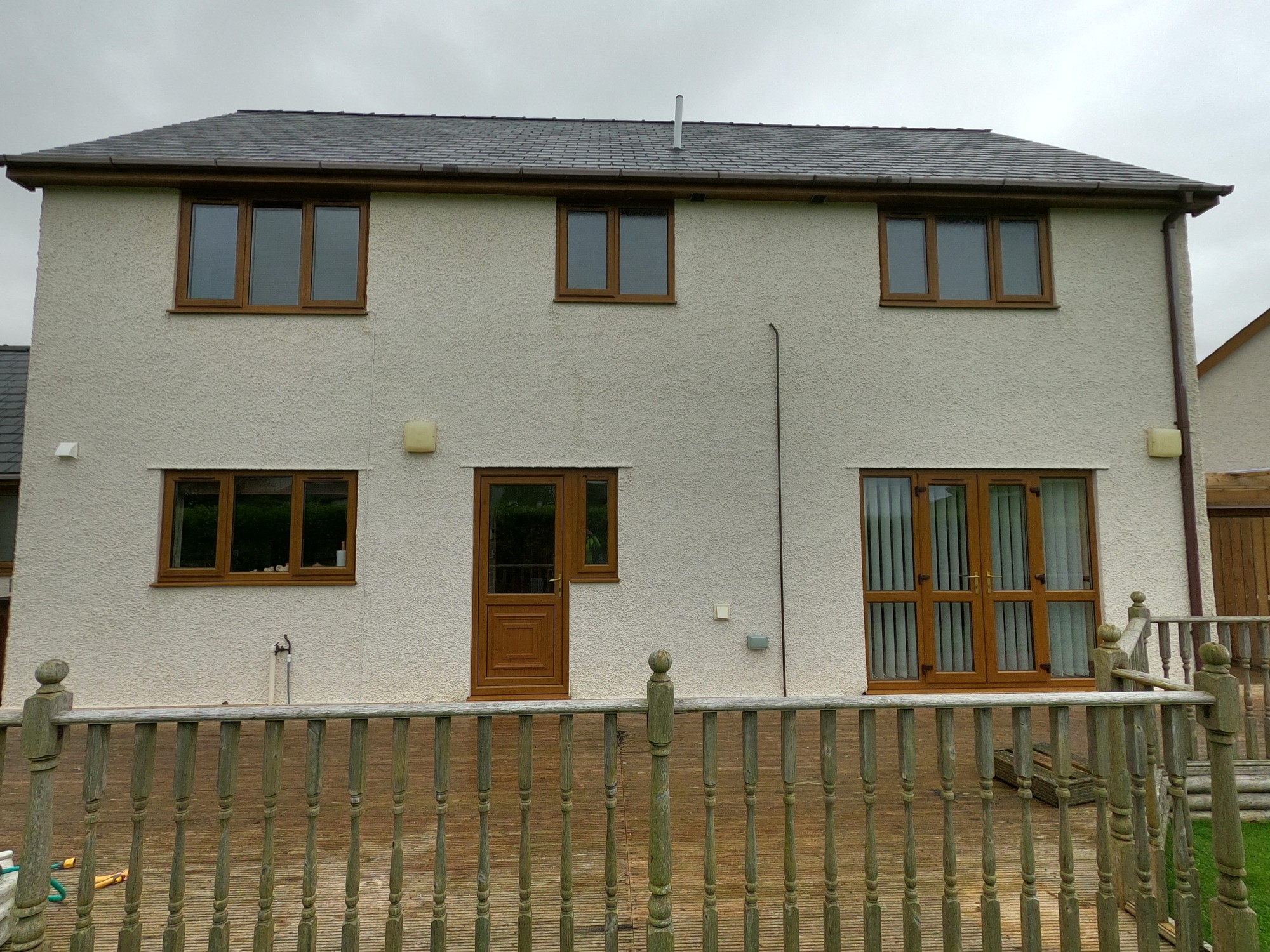
Monocouche is damaged more often than any other render we work on, and almost always by the cleaning rather than by the weather. Pressure is the principal cause. The scraped face exposes fine aggregate that is only lightly bound, and water at working pressure detaches it, leaving smoothed patches that reflect light differently for the life of the coating. Because the colour is integral there is no repair. Brushing does the same more locally, and it tends to be used precisely where growth is heaviest, which is where the contrast will be most obvious. Applying thinly is the third mistake. On a deep profile, product that bridges the high points never reaches the colony at the base of the texture, so the wall clears superficially and returns within a season. Rushing the dwell is the fourth, and it is invisible on the day. Treating the elevation as a flat plane is the fifth, which leaves bellcast beads, reveals, returns and the base course visibly behind once everything dries. Leaning equipment against the wall is the sixth, and it marks the surface permanently. Softwashing UK avoid all six by design. Monocouche render cleaning uses low pressure throughout, generous volume so treatment reaches the base of the texture, a full dwell so growth is destroyed at root level, gentle rinsing, and nothing in contact with the wall at any stage. Render restoration on an undamaged elevation is repeatable indefinitely, which is the whole argument for protecting the surface on every single visit. Coloured render cleaning judged in raking light a month afterwards will show immediately whether any of the six were made.
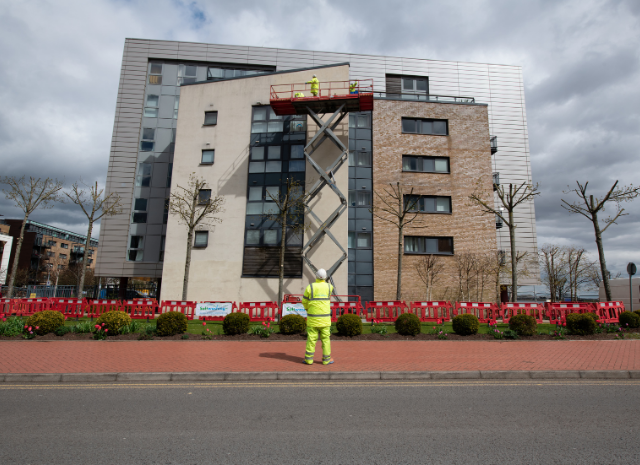

Cinemas, entertainment venues and similar leisure buildings with rendered elevations are seen mostly in the evening, often under artificial light that shows soiling more sharply than daylight does. Commercial render cleaning at these venues is scheduled around the programme. Screenings and events run from afternoon into late evening across most of the week, so the practical window is usually mornings, and most buildings are treated across one or two visits depending on size. Entrances, box office access and any outdoor waiting area stay usable throughout, with exclusion zones agreed and physically barriered rather than taped, since public movement is unpredictable. Signage, lighting, display cases and any opening on the working elevation are masked or isolated before treatment is applied. The low pressure method suits an occupied venue: no machine running continuously, minimal noise carrying into an auditorium, and no spray drifting across an approach. Insurance, method statements and risk assessments are supplied ahead of attendance, and operatives hold current working at height certification. Technically these buildings often present large plain elevations with considerable height and very few openings to break up the plane. Render facade cleaning must hold identical dilution and continuous wet edges from top to bottom, because banding on an unbroken wall of that size is highly visible and awkward to remedy without treating the whole face again. For venues around Wychbold, a planned interval keeps the building presenting properly through the year and protects a substantial area of coating from the accelerated deterioration permanent damp produces. Residential render cleaning that leaves the scraped face untouched is the only version of this work worth paying for twice.
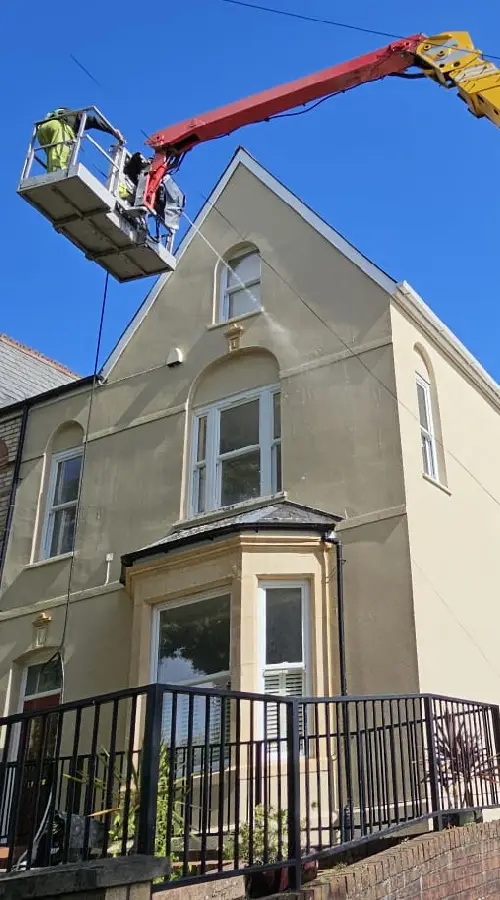
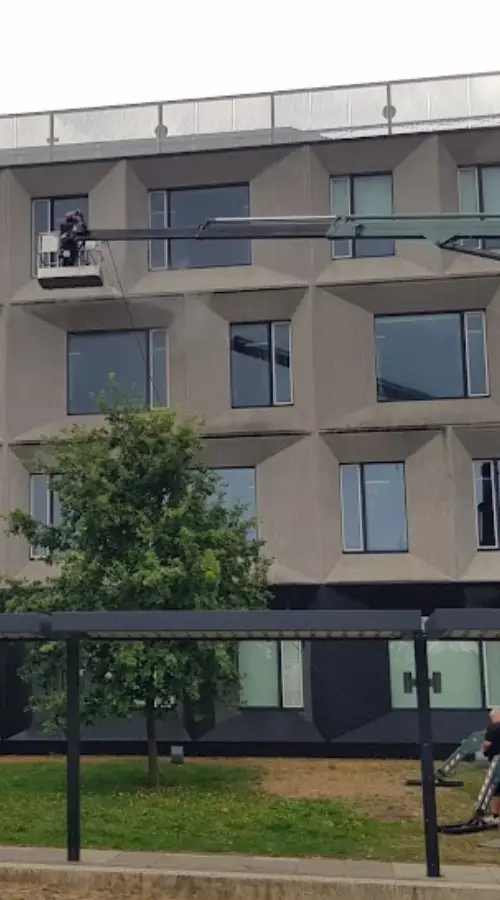
Plain pricing is easier to describe than to find, so it is worth setting out exactly what ours involves. The survey is free, carries no obligation and takes around twenty minutes. Nobody needs to be at home provided every elevation is reachable. The quotation is itemised per elevation. Each wall appears separately with the coating identified, the texture graded, the condition noted, the organisms recorded, the treatment specified and the access stated. Exclusions are written down. Where a second application is anticipated, it is included in the figure rather than raised afterwards. The figure covers preparation, protection, treatment, the full dwell, rinsing with purified water, clearing down and any access equipment identified at survey. It holds for a stated period and does not change. There is no deposit. Nothing is paid before the work is carried out, and invoicing follows completion. If an area has genuinely not responded within four to six weeks, we return and treat it again at no charge. Returning properties are quoted lower than first-time ones, because a maintained wall is a genuinely smaller job once colonisation has been eliminated at root level. That structure also makes competing quotations comparable, which a single lump sum does not. Render cleaning cost varies legitimately between contractors, but a good deal of that variation reflects what has been left out rather than any difference in skill. Full public liability cover and current working at height certification are available on request before booking, and our render cleaning specialists work on rendered elevations exclusively. Anyone considering tackling a wall themselves is best advised to leave anything above ground level to somebody insured for it.
Wychbold is covered in full, with the same survey process and pricing basis applied to every property and no travel loading regardless of position. Lead times are worth explaining, since they vary through the year in a predictable pattern and it affects when to arrange work. Spring is by far the busiest period. Growth becomes visible after winter, enquiries arrive in volume, and the diary can be several weeks ahead through April and May. If you want work carried out then, arranging it in February is sensible. Late summer and autumn are generally bookable at much shorter notice, often within a fortnight, and autumn work has a genuine advantage: clearing colonisation before the wet months removes the moisture-holding layer that would otherwise keep a wall damp right through winter. Winter is quieter still and entirely workable. The chemistry functions identically in cold conditions provided treatment is not applied into heavy rain, strong wind or onto a frozen surface. The only difference is that results weather off more slowly, since the wall dries less often. Surveys are available within the week in almost any season, take around twenty minutes and do not require anyone to be at home provided every elevation is reachable. Where a genuine deadline exists, for a sale, a letting or photographs, tell us at the enquiry stage. We will build in margin rather than promising something tight, since a treated wall continues improving for two to four weeks and is best given that time. A rescheduled date never changes the quoted figure. Where several properties book within the same period, mobilisation is shared and each figure reflects it.
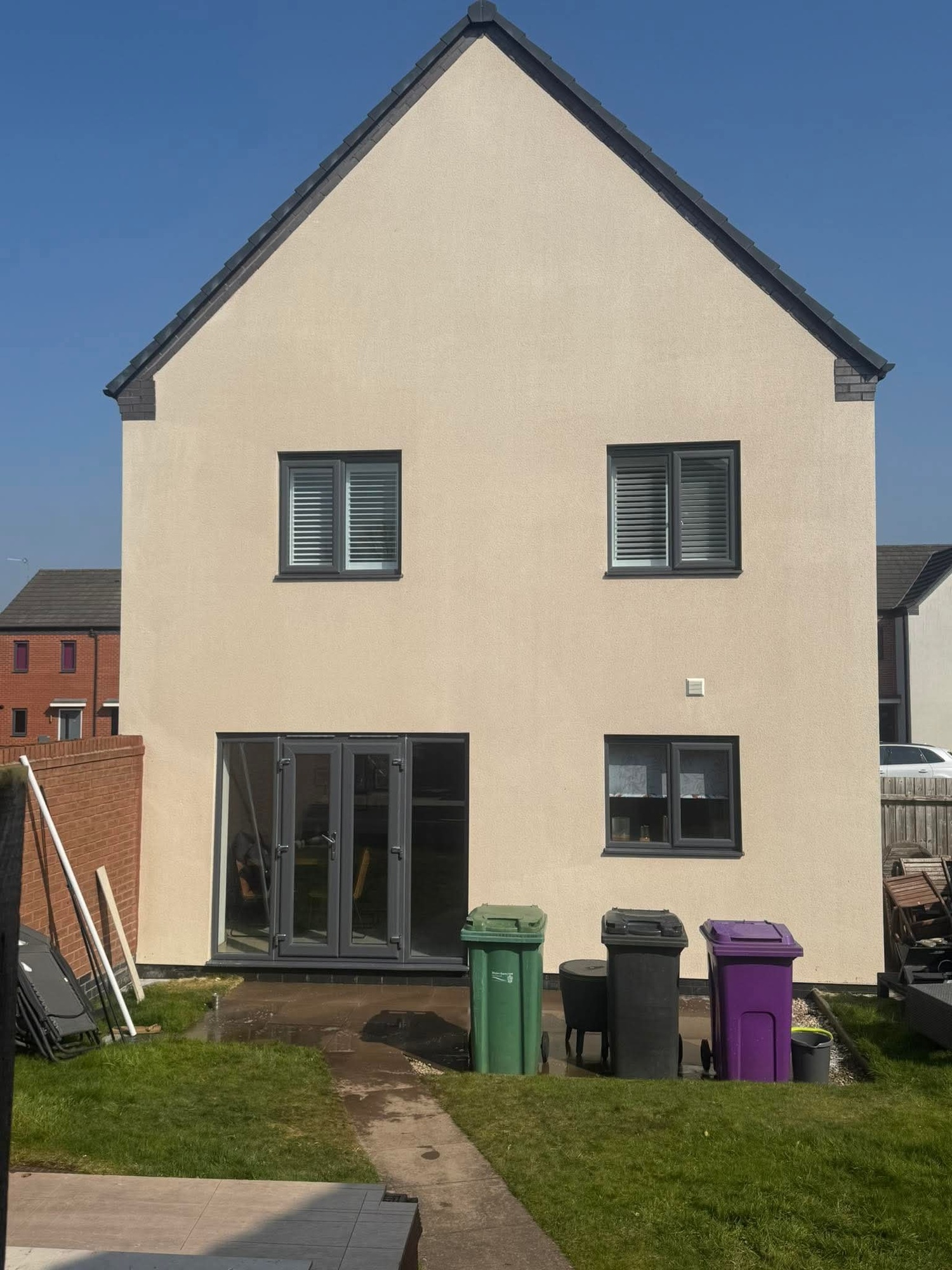
Most properties in Wychbold benefit from professional render cleaning every 3 to 5 years, although this depends on the surrounding environment. Properties near trees, woodland, busy roads or coastal areas may require more frequent cleaning due to algae, mould and airborne contaminants. Our soft washing process removes existing growth and helps keep your render cleaner for longer.
Yes. Soft washing is specifically designed for delicate surfaces such as K-Rend, silicone render, monocouche render and painted render. Unlike high-pressure washing, it cleans at low pressure while treating biological growth at its source, reducing the risk of damage to the render finish.
We clean virtually all external render finishes, including K-Rend, Monocouche, Weber, Sto, silicone render, acrylic render, painted render, roughcast and pebble dash. Every cleaning method is tailored to the specific render type to achieve the best possible results.
Yes. Our specialist soft washing treatments are highly effective at removing green algae, red algae, black mould, mildew, lichen and other organic staining. We also apply professional biocide treatments to kill spores and slow down regrowth.
Because our process targets the biological growth rather than simply washing the surface, results typically last much longer than pressure washing alone. The exact lifespan depends on weather conditions, surrounding vegetation and the property’s location.
No. Our soft washing process is specifically designed to clean render safely. We use low-pressure application methods and specialist cleaning solutions that remove contamination without damaging the render surface when carried out by trained professionals.
The UK’s damp climate provides ideal conditions for algae, mould and other biological growth to develop on rendered surfaces. Areas with limited sunlight, nearby trees or persistent moisture are especially susceptible. Professional soft washing safely removes these contaminants and restores your property’s appearance.









































WhatsApp us