There are a small number of checks that determine whether a render clean has been done properly, and none of them involves standing back and looking at the wall. The first is coverage: whether every part of an elevation was actually wetted, including the areas that are hard to reach and the ones that did not look particularly dirty. A face treated in patches will dry in patches. The difference shows for months rather than days. The second is dwell. The chemistry needs a sustained period in contact with the growth, and cutting it short is invisible on the day and obvious a year later. Our render cleaning services work to a dwell judged by the wall rather than by the clock, with the elevation re-wetted where it has dried too quickly. The third is the detail. Render moss removal on copings, sills, string courses and behind rainwater goods is where a rushed job stops, because those areas need a second application and cannot be reached from a comfortable position. The fourth is the ground. Hard surfaces below the treated elevation are rinsed through and sheeting is lifted carefully rather than dragged. Render algae removal produces a quantity of broken-down material and none of it should be left where it landed. Professional render cleaning of a house in Yetminster is checked against those four things before anybody leaves, and house render cleaning that satisfies all of them will look right for years rather than weeks. Exterior render cleaning is easy to assess if you know what to look at. None of those four checks requires any technical knowledge to make.
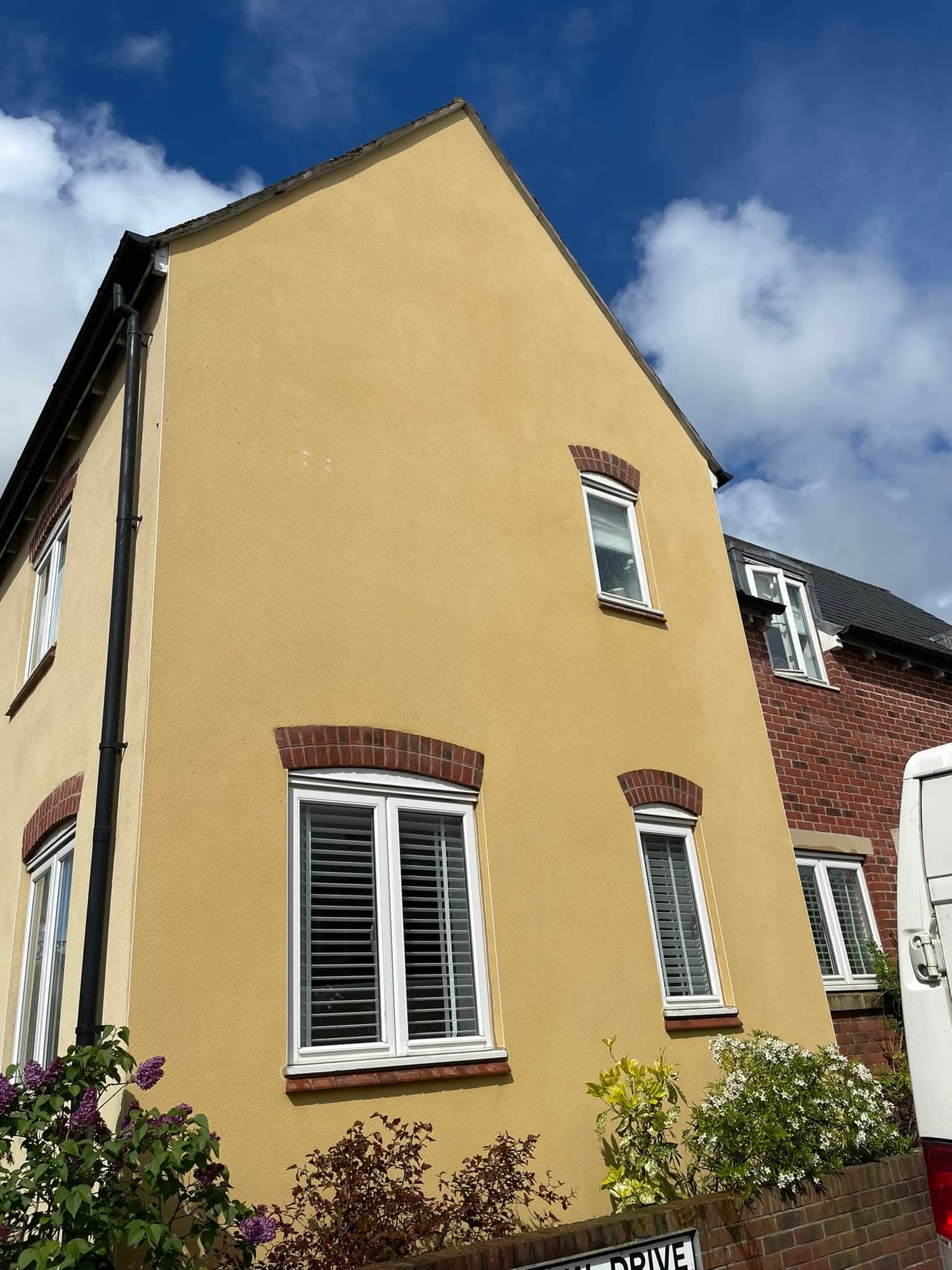
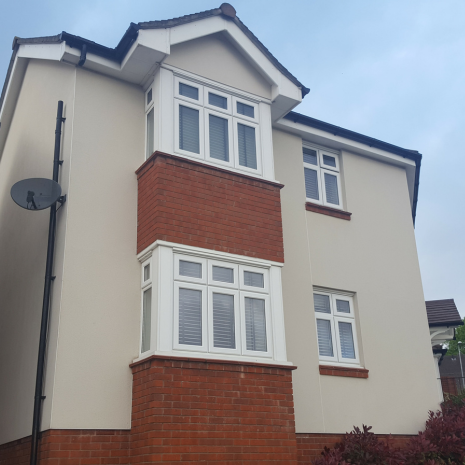

Checking a K Rend clean is mostly a matter of looking for what should not be there. Even coverage across a full elevation with no lighter or darker bands, no tide line where one section dried before the next was treated, no residue drying as a bloom in a corner, and no marking whatsoever on glazing, frames or the ground beneath. K Rend cleaning done correctly leaves no evidence of the process at all. The only visible change should be the colour of the wall itself. The other check is at the junctions. Board joints, mesh laps, movement beads and the seals around windows should be dry and undisturbed, since anything driven into them will show as staining months later. Soft wash render cleaning at a pressure barely above hose flow makes that straightforward, and the rinse is directed down the face rather than into any junction. Silicone render cleaning also has a delayed test. Because residue held in the surface continues suppressing regrowth, a wall treated properly will still be clear several years on, while one that was rinsed rather than dwelled will be greening again within twelve months. That gap is the clearest measure of whether the dwell was genuine. Render stain removal is checked mark by mark rather than across the elevation. Iron bleed from ties and brackets, cement residue at fixing points and dark runs beneath a leaking joint each had a stated expected outcome at the quotation, and on a Yetminster property those are reviewed individually at the end so nobody is left wondering whether a mark was meant to clear. Each one is either finished or explained.
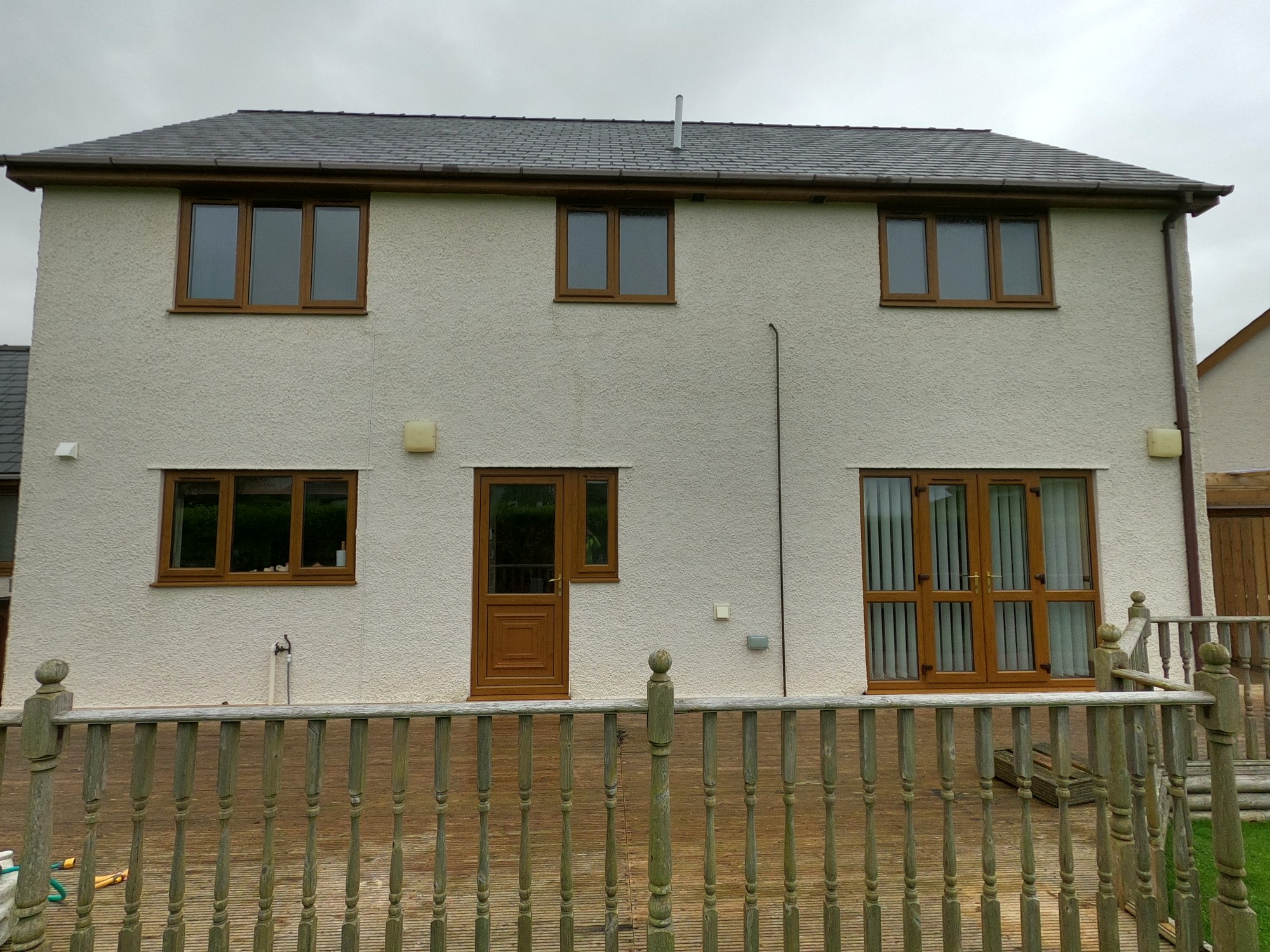
Inspecting a finished monocouche elevation is largely about texture rather than colour. Run a hand across the face and it should feel exactly as it did before treatment — the scraped profile intact, no smoothed or polished areas, no exposed aggregate anywhere. Any patch that feels different has been damaged, and Monocouche render cleaning done properly leaves nothing to find. Texture is the honest test on this finish, because colour can be misleading. Visually the test is uniformity. There should be no banding where one section was treated more heavily than another, no bright spots where a repeat application was concentrated, and no line at working height showing where an operator stood. The beads at every corner, opening and base should be undamaged, since those are the first things to suffer from any contact. A chipped bead is permanent and immediately obvious once you know to look. Render pressure washing fails every one of those checks simultaneously. It flattens the scrape, exposes the paler aggregate beneath and leaves tracking visible in low sun, and coloured render cleaning offers no top coat to renew over the damage. Every one of those failures is visible to a hand rather than to an eye. The final check is delayed. Render wall cleaning of monocouche continues improving for several weeks as dead growth weathers out of the profile, so the real assessment happens about a month afterwards. On buildings around Yetminster where growth had obscured the specified colour for years, what has appeared by that point is the original tone throughout, and render restoration is an accurate way to describe it. The wall has been emptied of growth rather than resurfaced.
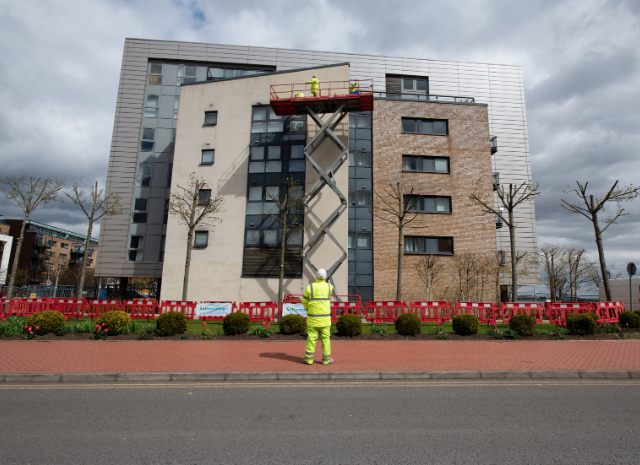

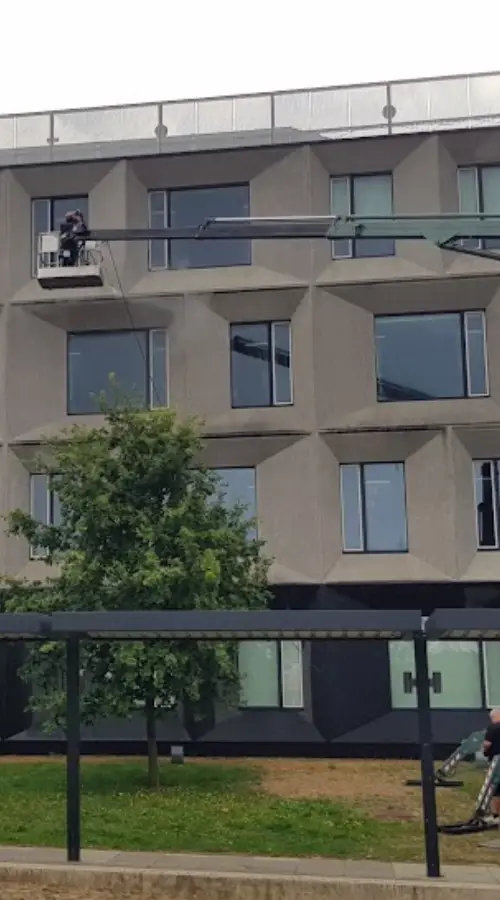
Commercial work needs evidence rather than assurance, and Softwashing UK issues a completion record with every programme. It lists the elevations treated, the products used and their dilutions, the dwell times achieved, anything found during the work, and photographs of each face before and after. Commercial render cleaning documented that way is straightforward to sign off and straightforward to compare against the next visit. It also removes any argument about what was and was not included. Sign-off itself is a walk-round with the site contact rather than a form left at reception. Anything outstanding is agreed at that point, including any element identified in the survey as unlikely to clear entirely. Nothing raised at survey should come as news at completion. Access was established at the outset — powered platforms, tower scaffold or extended pole systems according to height and standing ground — and the programme written around trading hours, deliveries and staff movement, with method statements and risk assessments issued in advance. Render soft washing was used throughout, giving even coverage along a full flank, very low water volumes, run-off directed clear of entrances and parking, and negligible drift near occupied doorways. Render facade cleaning that has been recorded properly is far easier to defend in a condition survey than one that has not. Render mould removal on shaded and north-facing elevations is noted separately in the record, since those faces determine the interval. Once premises in Yetminster are on a render maintenance cycle, each completion record becomes the baseline for judging whether that interval is right. Two records side by side answer the question better than any opinion.
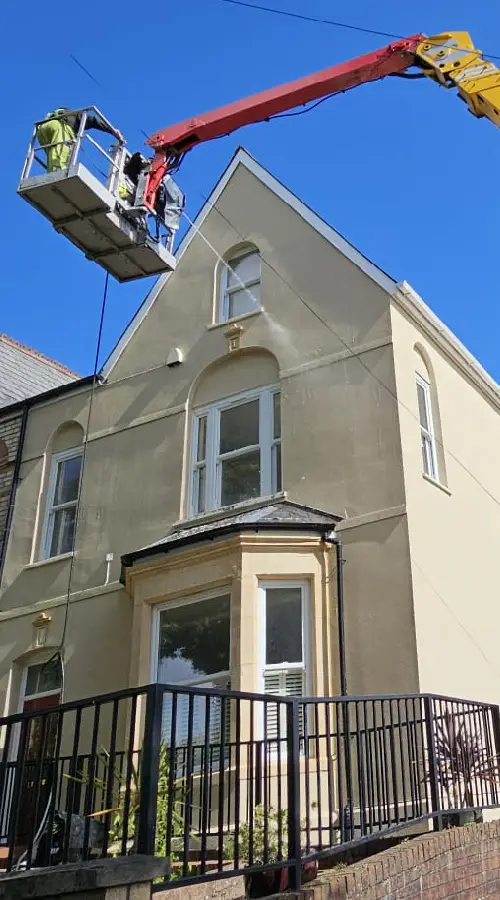
Every job finishes with a walk-round, and it is worth taking part in rather than treating as a formality. It covers each elevation that was treated, the detail areas at coping and sill level, the condition of any ground surface beneath the work, and an explanation of what will happen to the wall over the following weeks. That last part matters most. A wall does not look its best on the day, and knowing which shadows will weather away and which are mineral marks needing separate treatment prevents an unnecessary phone call a fortnight later. Expectations set properly are rarely disappointed. Where anything has not come out as expected, it is far easier to say so with everybody standing in front of it. Render cleaning prices are established at an assessment beforehand from elevation count, working height, access arrangements and the extent of the growth, and the written render cleaning cost holds. Affordable render cleaning depends on that quotation being accurate rather than optimistic, which is why the same people who assess a property carry out the work. Nothing is lost between the quotation and the day itself. The crews are render cleaning specialists rather than general exterior cleaners, and everything used is an eco friendly render cleaning product chosen because it breaks down safely after use. Anyone comparing firms in search of the best render cleaning service should ask whether somebody will go round the building with them at the end. A firm that would rather load up and leave has already told you something. Five minutes at the end prevents most of the conversations that follow a job.
Coverage takes in Yetminster along with Chetnole, Ryme Intrinseca and Stockwood, and every property treated across those addresses gets a record kept against it. That sounds bureaucratic and is entirely practical. Nobody is asked to keep hold of anything themselves. What it holds is the coating type and its condition, the elevations treated and the strengths used, anything found during the work, how the wall looked at the six-week point, and how long the result was expected to hold. When a property comes back round for residential render cleaning three or four years later, none of that has to be established from scratch. The second assessment is usually a matter of confirming what has changed. The practical benefit is a shorter, cheaper second visit. The access arrangements are known, the volumes required are known, and whether a particular elevation needed a repeat application last time is on file rather than a matter of guesswork. It also means we can tell whether the interval was right, and adjust the recommendation rather than simply repeating a figure. Some walls hold longer than expected and are told so. New owners inherit the record too, which is occasionally useful when somebody rings about a property they have just bought and has no idea what has been done to it. There is no travel charge, no minimum job size and no charge for the assessment. A single elevation is quoted on exactly the same basis as a full property. Anyone searching render cleaning near me should expect a local render cleaning company that has treated a wall before to arrive already knowing something about it. Continuity is worth more on this job than most people assume.
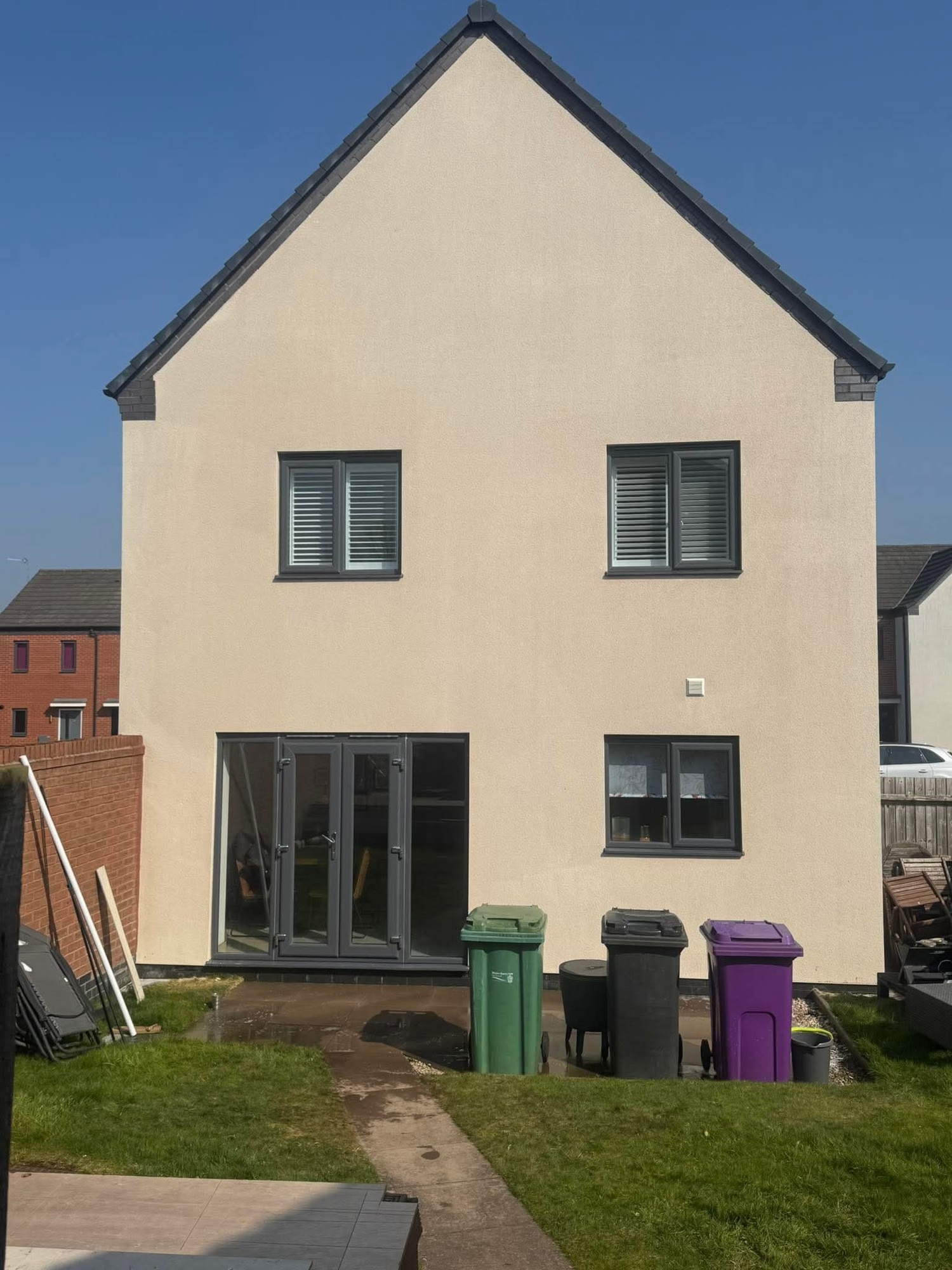
Most properties in Yetminster benefit from professional render cleaning every 3 to 5 years, although this depends on the surrounding environment. Properties near trees, woodland, busy roads or coastal areas may require more frequent cleaning due to algae, mould and airborne contaminants. Our soft washing process removes existing growth and helps keep your render cleaner for longer.
Yes. Soft washing is specifically designed for delicate surfaces such as K-Rend, silicone render, monocouche render and painted render. Unlike high-pressure washing, it cleans at low pressure while treating biological growth at its source, reducing the risk of damage to the render finish.
We clean virtually all external render finishes, including K-Rend, Monocouche, Weber, Sto, silicone render, acrylic render, painted render, roughcast and pebble dash. Every cleaning method is tailored to the specific render type to achieve the best possible results.
Yes. Our specialist soft washing treatments are highly effective at removing green algae, red algae, black mould, mildew, lichen and other organic staining. We also apply professional biocide treatments to kill spores and slow down regrowth.
Because our process targets the biological growth rather than simply washing the surface, results typically last much longer than pressure washing alone. The exact lifespan depends on weather conditions, surrounding vegetation and the property’s location.
No. Our soft washing process is specifically designed to clean render safely. We use low-pressure application methods and specialist cleaning solutions that remove contamination without damaging the render surface when carried out by trained professionals.
The UK’s damp climate provides ideal conditions for algae, mould and other biological growth to develop on rendered surfaces. Areas with limited sunlight, nearby trees or persistent moisture are especially susceptible. Professional soft washing safely removes these contaminants and restores your property’s appearance.










































WhatsApp us