


Adding an extension is one of the most popular ways to increase living space and add value to a property. Whether it’s a single-storey kitchen extension, a two-storey addition or a garden room, many homeowners choose render to create a clean, modern appearance.
However, one challenge often becomes obvious once the work is complete – the new render doesn’t always match the existing render.
Differences in colour, texture and weathering can make even a professionally built extension stand out. Fortunately, with the right planning and ongoing maintenance, it’s possible to keep both old and new render looking consistent for years to come.
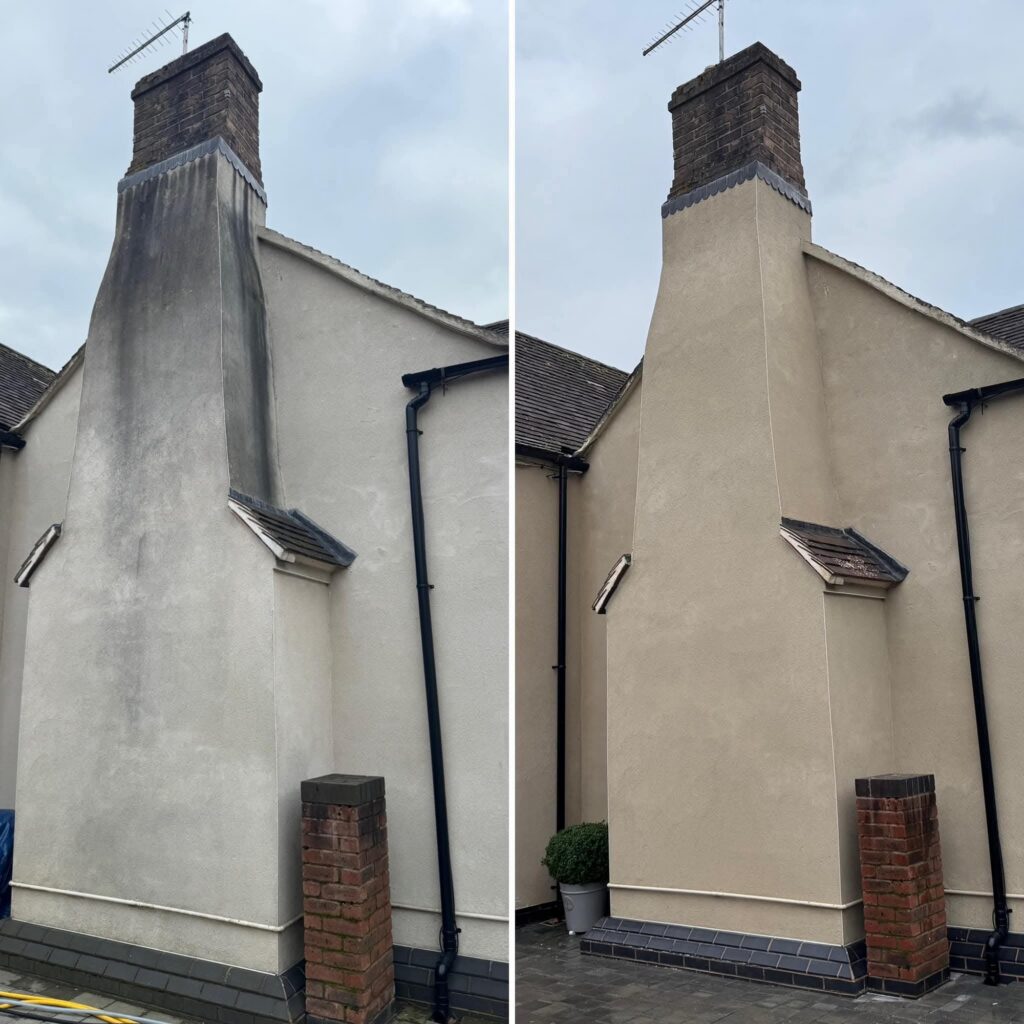
Professional cleaning and maintenance from Soft Washing UK can help restore existing render and maintain a more uniform appearance across the entire property.
Why New and Old Render Look Different
Even if the same render product is used, there are several reasons why an extension may not perfectly match the original building.
These include:
- Different manufacturing batches
- Natural weathering
- Dirt accumulation
- UV exposure
- Age of the existing render
- Different application techniques
Render changes over time, meaning a wall installed ten years ago will rarely look identical to one completed this month.
| Factor | Existing Render | New Extension Render |
|---|---|---|
| Age | Several years old | Brand new |
| Colour | Weathered | Fresh finish |
| Surface contamination | Present | Minimal |
| UV exposure | Long-term | Very little |
| General appearance | Slightly faded | Bright and clean |
Weathering Happens Naturally
All exterior finishes change over time.
Exposure to the British weather gradually alters the appearance of render through:
- Rain
- Sunlight
- Frost
- Wind
- Air pollution
- Biological growth
This process is completely normal and affects every property differently depending on its location and orientation.
A north-facing wall, for example, usually ages differently from a south-facing elevation because it stays damp for longer.
Existing Dirt Can Make the Difference Look Worse
One of the biggest reasons extensions appear mismatched isn’t actually the new render.
It’s the existing render that has gradually become dirty.
Years of exposure can leave behind:
- Atmospheric pollution
- Dust
- Organic staining
- Moss
- Lichen
- Green algae
- Red algae
Once the original render is professionally cleaned, homeowners are often surprised at how closely it matches the new extension.
Different Types of Render Age Differently
Modern homes feature several render systems, each with its own characteristics.
| Render Type | Matching Difficulty |
|---|---|
| Silicone render | Low |
| Monocouche render | Medium |
| Acrylic render | Medium |
| Cement render | High |
| Painted render | Varies |
Some finishes naturally retain their colour better than others.
Understanding the render already on your home is essential before extending the property.
Colour Matching Is Never Exact
Even manufacturers acknowledge that slight colour variations are normal.
Reasons include:
- Production tolerances
- Weather conditions during application
- Drying times
- Water content
- Natural curing
Trying to achieve a perfect match immediately after construction is often unrealistic.
Instead, the aim should be to create a finish that blends naturally over time.
Texture Is Just as Important
Colour attracts most attention, but texture often creates the biggest visual difference.
A smoother extension beside heavily textured existing render will always appear different.
Common textures include:
- Smooth
- Fine scraped
- Sponge finish
- Roughcast
- Pebbled
- Spray applied
Matching texture should always be considered alongside colour.
Sunlight Changes Everything
Different elevations weather at different rates.
South-facing walls receive more sunlight and tend to dry quickly.
North-facing walls remain damp for longer and often develop biological contamination much sooner.
This uneven ageing can make an extension appear mismatched even when identical materials have been used.
Green Algae and Red Algae Affect Appearance
Biological growth is one of the biggest causes of colour inconsistency.
Both green algae and red algae thrive in damp conditions.
Green algae often creates:
- Green streaks
- Dark patches
- Slippery surfaces
Red algae may appear as:
- Pink staining
- Orange patches
- Rust-coloured streaks
- Red discolouration
Removing both green algae and red algae professionally helps restore a cleaner, more even appearance across old render.
Air Pollution Creates Uneven Weathering
Properties close to busy roads often experience darker staining.
Pollutants include:
- Carbon deposits
- Vehicle emissions
- Construction dust
- Industrial particles
These contaminants accumulate slowly over many years.
A newly rendered extension has not yet experienced this weathering, making the contrast more noticeable.
Trees and Shade Influence Colour
Nearby vegetation affects render far more than many homeowners realise.
Large trees increase:
- Shade
- Moisture
- Leaf debris
- Moss spores
- Algae growth
If the extension receives more sunlight than the original property, each area may age at different speeds.
| Environmental Factor | Effect on Render |
|---|---|
| Heavy shade | Faster biological growth |
| Open sunlight | Slower contamination |
| Dense trees | Increased moisture |
| Good airflow | Faster drying |
Cleaning Before Extending Can Produce Better Results
Many homeowners wait until after an extension is complete before considering render cleaning.
However, cleaning the original render beforehand often allows builders to compare colours more accurately.
Benefits include:
- Better colour assessment
- Improved planning
- Easier matching
- Cleaner working environment
- More consistent finished appearance
Should Existing Render Be Repainted?
Some painted render can be recoloured after an extension is completed.
However, repainting is not always necessary.
If the render is structurally sound, professional cleaning may restore much of its original appearance without applying additional coatings.
This preserves the render’s existing finish while maintaining breathability where appropriate.
Why Pressure Washing Isn’t the Answer
Pressure washing may seem like an easy way to match old render with new.
Unfortunately, excessive pressure can:
- Damage textured finishes
- Remove protective coatings
- Force water into the render
- Leave visible cleaning marks
- Shorten render lifespan
Professional soft washing uses specialist cleaning products designed to remove biological contamination safely without unnecessary surface damage.
The Importance of Professional Soft Washing
Soft washing doesn’t simply remove visible dirt.
It also targets the microorganisms responsible for staining.
The process typically includes:
- Inspection of the render.
- Identification of contamination.
- Careful application of specialist cleaning treatments.
- Removal of dead biological growth.
- Optional preventative biocide treatment.
This approach produces a more consistent finish while helping to slow future regrowth.
Can Older Render Ever Look Like New Again?
No exterior surface can be made completely new again.
Natural ageing cannot be reversed.
However, professional cleaning can significantly improve:
- Colour consistency
- Brightness
- Overall appearance
- Kerb appeal
- Uniformity between old and new render
Many homeowners find the improvement is substantial enough that the extension blends far more naturally with the original property.
Factors That Affect Long-Term Colour Matching
Keeping render consistent requires ongoing maintenance rather than a one-off clean.
| Maintenance Task | Benefit |
|---|---|
| Regular inspections | Identify staining early |
| Gutter cleaning | Prevent water streaks |
| Tree pruning | Increase sunlight |
| Soft washing | Remove biological growth |
| Biocide treatment | Slow algae regrowth |
| Downpipe maintenance | Reduce damp patches |
Small maintenance tasks often prevent noticeable differences developing between old and new render.
How Much Does Professional Render Cleaning Cost?
The cost of cleaning both the original property and a rendered extension depends on several factors, including:
- Property size
- Height
- Accessibility
- Render type
- Amount of biological growth
- Overall surface condition
Typical guide prices include:
| Property | Typical Professional Cost |
|---|---|
| Small rendered extension | £300–£600 |
| Semi-detached property with extension | £800–£1,400 |
| Detached home with extension | £1,200–£2,200+ |
| Large executive property | £2,500+ |
Higher-quality specialist services may cost more initially but typically include experienced technicians, appropriate insurance, specialist cleaning products and treatments designed to provide longer-lasting results.
When Should You Clean Existing Render?
Timing can make a noticeable difference.
Many homeowners choose to have existing render cleaned:
- Before extension work begins.
- Immediately after construction is completed.
- Before painting or decorating.
- Prior to selling the property.
- As part of routine maintenance every few years.
Cleaning before significant biological growth develops usually delivers the best cosmetic results.
Why Professional Assessment Is Important
Every extension presents different challenges.
Matching render depends on:
- The age of the original property
- The render specification
- Previous maintenance
- Environmental exposure
- Existing contamination
- Weathering patterns
An experienced assessment identifies why the render differs and recommends the safest cleaning approach.
Whether the variation is caused by dirt, biological growth, pollution or natural ageing, professional soft washing can often restore a much more consistent appearance. Homeowners looking to improve the overall finish of both existing render and new extensions can arrange an assessment with Soft Washing UK to determine the most suitable cleaning and maintenance solution for their property.
Why Extensions Age at Different Rates
Even when an extension is completed using identical materials, it may not age at the same speed as the original property.
Several environmental factors influence how quickly render changes appearance.
These include:
- Different roof overhangs
- Varying levels of rainfall exposure
- Changes in airflow
- Altered drainage
- Nearby planting
- Differences in sunlight
For example, a rear extension may be sheltered by neighbouring buildings, while the front elevation is fully exposed to wind and rain. Over time, these differing conditions create visible variations in colour and cleanliness.
| Environmental Factor | Effect on Render Appearance |
|---|---|
| Sheltered walls | Stay damp for longer |
| Exposed walls | Dry more quickly after rainfall |
| Nearby shrubs | Encourage moisture retention |
| Open gardens | Better airflow and faster drying |
New Landscaping Can Affect Render
Extensions are often completed alongside new landscaping projects.
These may include:
- Raised flower beds
- Decorative bark
- New lawns
- Fencing
- Garden walls
- Trees and shrubs
While these improvements enhance the property’s appearance, they can also influence moisture levels around the render.
For example, dense planting positioned against the wall restricts airflow and traps humidity, encouraging biological growth.
Leaving a small gap between vegetation and rendered walls allows air to circulate more freely and helps the surface dry naturally.
Roof Design Makes a Difference
The design of the extension roof also affects how clean the render remains.
A roof with generous overhangs provides additional protection from driving rain, whereas minimal overhangs leave render more exposed to the elements.
Other roofing features that influence render include:
- Gutter positioning
- Valley details
- Downpipe locations
- Roof pitch
- Rainwater run-off
Poor drainage can create concentrated wet areas that become noticeably darker than surrounding render.
Water Run-Off Creates Streaking
Even when gutters are functioning correctly, water naturally follows predictable paths.
These flow patterns can leave:
- Vertical streaks
- Dark patches
- Localised dirt build-up
- Biological staining
Over several years these marks become increasingly visible, particularly on lighter-coloured render.
Professional cleaning removes these deposits before permanent staining develops.
Matching Render Around Openings
Windows, doors and bi-fold openings often create subtle differences between old and new render.
This is because:
- Rainwater flows differently around openings.
- Window sills collect dirt.
- Sealants weather at different rates.
- Shaded reveals stay damp for longer.
These areas usually require careful attention during professional cleaning to achieve a consistent finish.
Different Building Heights Affect Weathering
If an extension is lower than the original property, the render may receive additional water from the main roof.
Similarly, taller sections of a building often experience:
- Stronger winds
- Faster drying
- Greater UV exposure
Meanwhile, lower walls may remain shaded for much of the day.
This variation explains why different elevations weather at different speeds despite being part of the same property.
Why Render Around Patios Often Stays Cleaner
Interestingly, some extension walls remain cleaner than expected.
Patios and paved areas absorb heat during sunny weather and release it slowly during the evening.
This can:
- Improve drying
- Reduce surface moisture
- Slow biological growth
In contrast, render beside lawns or flower beds is usually exposed to higher humidity, increasing the likelihood of green algae and red algae developing.
Choosing the Right Maintenance Schedule
Rather than waiting until the difference between old and new render becomes obvious, many homeowners choose scheduled maintenance.
Typical inspection intervals include:
| Property Location | Suggested Inspection Frequency |
|---|---|
| Open countryside | Every 18–24 months |
| Urban environment | Every 2 years |
| Coastal property | Every 12–18 months |
| Heavily shaded home | Annually |
Regular inspections don’t always mean cleaning is required, but they allow early signs of contamination to be identified before they spread.
Signs the Existing Render Needs Attention
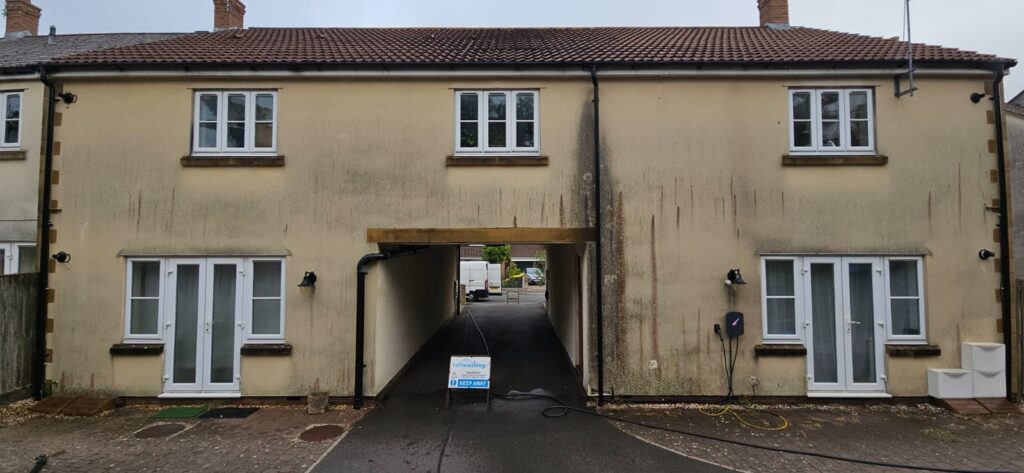
The older section of the property may benefit from professional cleaning if you notice:
- Uneven colouring
- Green streaks
- Pink or red staining
- Black spotting
- Dirt around window frames
- Staining beneath gutters
- Moss near rooflines
- Dull or patchy appearance
Addressing these issues early often restores a much more balanced appearance between the original house and the extension.
Protecting Your Investment
A rendered extension represents a significant investment, often costing many thousands of pounds to design and build.
Keeping both old and new render looking consistent helps:
- Preserve kerb appeal
- Enhance the overall appearance of the property
- Protect exterior finishes
- Reduce long-term maintenance costs
- Support future resale value
Even a beautifully designed extension can appear unfinished if the original render has become heavily stained while the new section remains bright and clean.
Why Soft Washing Is Ideal for Matching Render
Soft washing is particularly effective because it focuses on the root cause of staining rather than simply washing the surface.
Specialist treatments help to:
- Remove atmospheric dirt
- Eliminate biological contamination
- Treat green algae
- Remove red algae
- Reduce mould and mildew
- Improve overall colour consistency
Because the process relies on carefully selected cleaning solutions instead of excessive pressure, it is suitable for many modern render systems and helps minimise the risk of surface damage.
Planning Ahead Before Building an Extension
If you’re still in the planning stages of an extension, it’s worth considering the future appearance of the render.
Simple decisions made early can help maintain a more consistent finish for years to come.
These include:
- Matching the existing render specification where possible.
- Considering how nearby trees may cast shade.
- Designing effective rainwater drainage.
- Allowing sufficient airflow around the extension.
- Planning regular maintenance from the outset.
Thinking about these factors before construction begins can reduce visible differences as both sections of the property age together.
Maintaining a Uniform Appearance Over Time
Perfect colour matching between new and existing render isn’t always possible on the day an extension is completed, but it is often achievable through careful maintenance.
By keeping both sections of the property free from pollution, organic staining and biological growth, the contrast between old and new render can be greatly reduced.
Regular professional cleaning, prompt maintenance of gutters and drainage, and attention to environmental factors such as shade and moisture all contribute to a cleaner, more uniform exterior that continues to complement the investment made in the extension for many years to come.