


Soft washing has become one of the most effective methods for cleaning exterior surfaces throughout the UK. From render and roofs to cladding, driveways and commercial buildings, soft washing offers a safer and longer-lasting alternative to traditional pressure washing. While many property owners understand the benefits of soft washing, fewer understand the role that specialist cleaning chemicals play in the process.
The success of soft washing depends heavily on the correct selection, application and management of cleaning solutions. These chemicals are specifically designed to eliminate biological growth such as green algae, red algae, moss, lichen, mould and mildew while protecting the underlying surface.
Understanding how soft washing chemicals work helps property owners make informed decisions about exterior cleaning and maintenance.
For professional soft washing services and expert advice, visit Soft Washing UK.
What Is Soft Washing?
Soft washing is a low-pressure exterior cleaning process that relies primarily on specially formulated cleaning solutions rather than water pressure.
Unlike pressure washing, which removes contamination through force, soft washing targets the microorganisms responsible for staining and growth.
The process is commonly used on:
- Roofs
- Render
- Brickwork
- Cladding
- Fencing
- Decking
- Pathways
- Commercial buildings
The treatment removes contamination at its source and helps prevent rapid regrowth.
Why Chemicals Are Essential in Soft Washing
Many people assume dirt and staining can simply be washed away with water.
However, biological contamination is often deeply embedded within porous surfaces.
Soft washing chemicals help by:
| Function | Purpose |
|---|---|
| Killing algae | Eliminates active growth |
| Destroying spores | Reduces regrowth |
| Breaking down organic matter | Improves cleaning performance |
| Removing staining | Restores appearance |
| Sanitising surfaces | Improves hygiene |
| Extending cleanliness | Provides longer-lasting results |
Without specialist treatments, many forms of biological contamination would quickly return.
What Are Soft Washing Chemicals Designed to Remove?
Professional soft washing chemicals target a wide range of organic contaminants.
These include:
Green Algae
Green algae is one of the most common forms of exterior staining in the UK.
It often appears as:
- Green patches
- Green streaks
- Dark green discolouration
Green algae thrives in damp environments and spreads rapidly on shaded surfaces.
Red Algae
Red algae has become increasingly common across UK properties.
It may appear as:
- Pink staining
- Red streaks
- Orange discolouration
- Rust-coloured marks
Many homeowners mistake red algae for rust contamination when it is actually biological growth, called Trentepohlia.
Professional soft washing chemicals are formulated to tackle both green algae and red algae effectively.
Moss
Moss retains moisture and can accelerate surface deterioration.
It commonly develops on:
- Roof tiles
- Render
- Brickwork
- Pathways
Lichen
Lichen can be particularly stubborn and often appears as:
- White spots
- Black spots
- Grey growths
- Yellow patches
Soft washing treatments help weaken lichen colonies and support their removal.
Mould and Mildew
Mould and mildew not only affect appearance but may also contribute to unhealthy environmental conditions around a property.
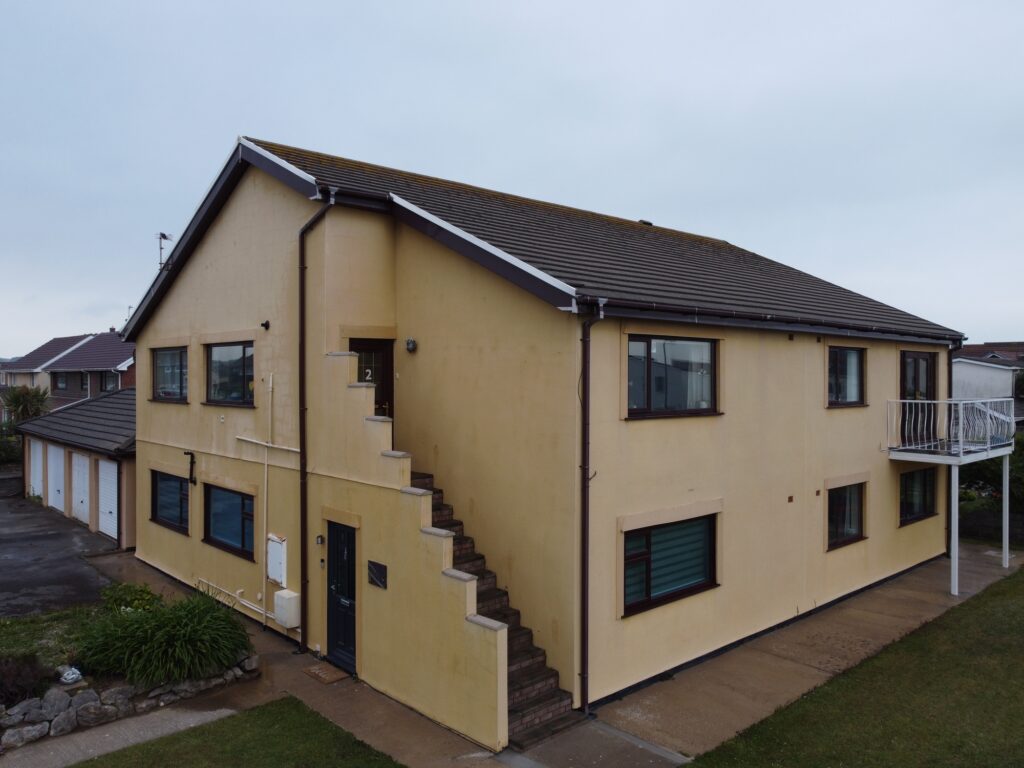
Main Types of Soft Washing Chemicals
Professional soft washing systems may utilise several categories of cleaning products depending on the surface and contamination involved.
Biocides
Biocides are among the most commonly used products in soft washing.
Their purpose is to eliminate:
- Algae
- Moss
- Lichen
- Fungi
- Bacteria
Biocidal treatments work by attacking biological growth at a cellular level.
Benefits include:
- Long-lasting results
- Improved cleanliness
- Reduced regrowth
- Enhanced appearance
Surfactants
Surfactants help cleaning solutions spread evenly across surfaces.
They improve:
| Benefit | Explanation |
|---|---|
| Coverage | More consistent application |
| Penetration | Better access to contamination |
| Dwell time | Improved effectiveness |
| Cleaning performance | More thorough treatment |
Surfactants are often added to soft wash mixtures to maximise treatment efficiency.
Detergents
Certain cleaning projects may involve specialist detergents.
These help remove:
- Dirt
- Atmospheric pollution
- Grease deposits
- General staining
Detergents are often combined with biological treatments where necessary.
Oxidising Agents
Some soft washing systems utilise oxidising chemicals to break down staining and contamination.
These products can be particularly useful for difficult biological growth and discolouration.
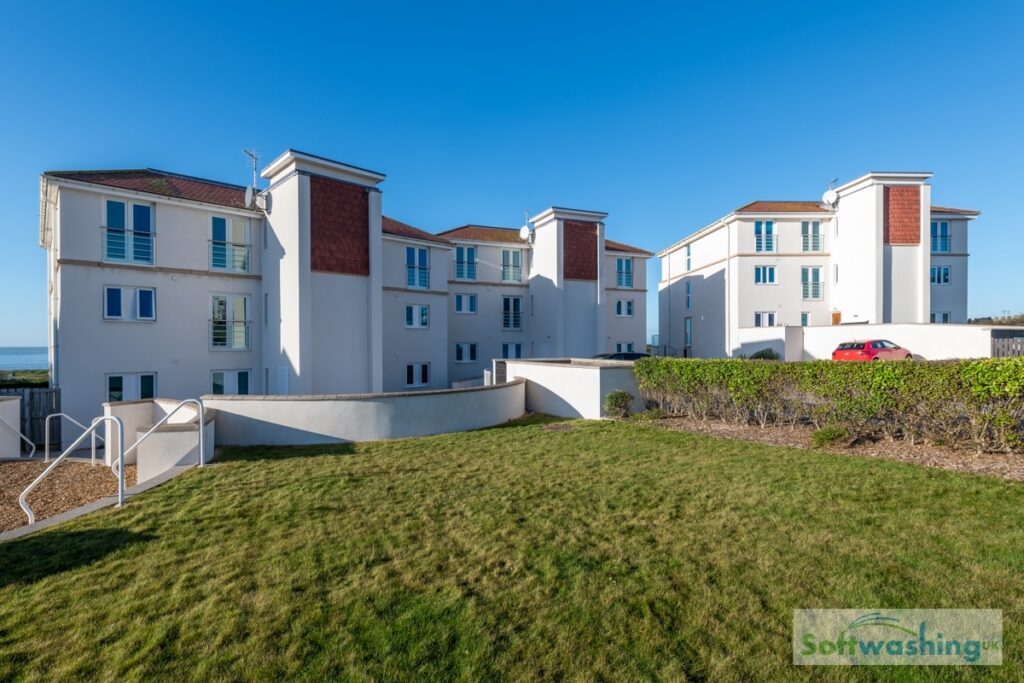
How Soft Washing Chemicals Work
The effectiveness of soft washing comes from the chemistry involved.
The process generally follows several stages.
Stage One: Application
The cleaning solution is applied at low pressure.
This ensures even coverage without damaging the surface.
Stage Two: Penetration
The solution penetrates:
- Algae colonies
- Moss growth
- Lichen structures
- Surface contamination
Stage Three: Biological Destruction
The chemical treatment begins destroying the organisms responsible for staining.
This is the critical difference between soft washing and pressure washing.
Stage Four: Breakdown
Dead biological matter starts to break down naturally.
Stage Five: Surface Restoration
The appearance improves as contamination is removed and remaining residues weather away.
Why Soft Washing Chemicals Last Longer Than Pressure Washing
Pressure washing often removes visible contamination without killing the underlying organisms.
This means:
- Spores remain active.
- Regrowth occurs quickly.
- Surfaces become stained again.
Soft washing chemicals address the root cause.
| Cleaning Method | Typical Longevity |
|---|---|
| Pressure Washing | Months |
| Soft Washing | Several years |
This longer-lasting performance often makes soft washing more cost-effective.
Are Soft Washing Chemicals Safe?
One of the most frequently asked questions concerns safety.
When used correctly by trained professionals, soft washing chemicals can be applied safely and effectively.
Key considerations include:
- Correct dilution
- Surface compatibility
- Professional application
- Environmental management
- Appropriate safety procedures
The expertise of the operator plays a significant role in achieving safe results.
Surface Compatibility
Different surfaces require different treatment approaches.
Professional soft washing specialists assess:
| Surface Type | Typically Suitable |
|---|---|
| Roof tiles | Yes |
| Render | Yes |
| Brickwork | Yes |
| Stone | Yes |
| Cladding | Yes |
| Painted surfaces | Often |
| Concrete | Yes |
Selecting the correct chemical solution helps protect the surface while achieving effective cleaning.
Soft Washing Chemicals for Render Cleaning
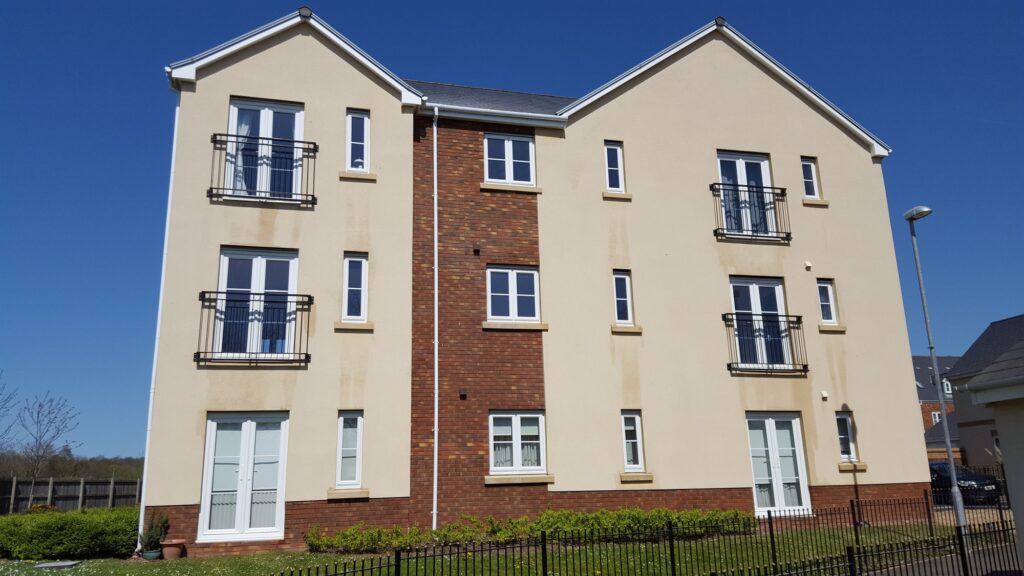
Render cleaning is one of the most common applications of soft washing.
Render frequently suffers from:
- Green algae
- Red algae
- Atmospheric staining
- Mould growth
Soft washing chemicals help restore render while avoiding the risks associated with high-pressure cleaning.
Benefits include:
- Reduced risk of damage
- Improved appearance
- Longer-lasting cleanliness
- Enhanced kerb appeal
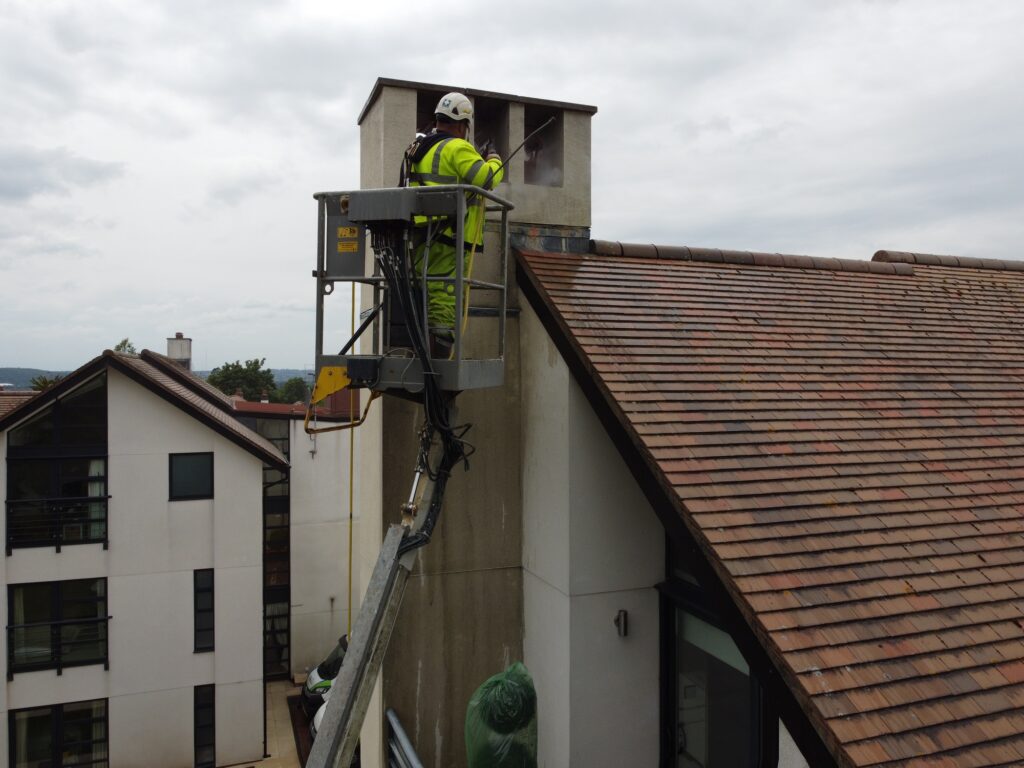
Soft Washing Chemicals for Roof Cleaning
Roof cleaning presents unique challenges due to:
- Moss accumulation
- Lichen growth
- Algae contamination
Specialist treatments help eliminate biological growth and extend roof cleanliness.
Common roof cleaning benefits include:
| Benefit | Result |
|---|---|
| Moss control | Cleaner roof |
| Algae removal | Improved appearance |
| Reduced moisture retention | Better roof performance |
| Long-term protection | Extended cleanliness |
Factors Affecting Chemical Performance
Several factors influence how well soft washing chemicals perform.
Weather Conditions
Weather plays a significant role.
Important factors include:
- Temperature
- Humidity
- Rainfall
- Wind
Professional operators consider these conditions before treatment.
Surface Type
Porous surfaces absorb treatments differently from smooth surfaces.
Contamination Levels
Heavy biological growth may require:
- Stronger solutions
- Additional applications
- Longer dwell times
Age of Growth
Older contamination can be more difficult to remove than recent growth.
How Long Do Soft Washing Chemicals Continue Working?
One advantage of soft washing is that the treatment often continues working after application.
Many surfaces continue improving over:
- Days
- Weeks
- Months
This is particularly true when treating:
- Moss
- Lichen
- Deep-rooted biological growth
The gradual improvement often produces superior long-term results.
Environmental Considerations
Responsible soft washing involves careful environmental management.
Professional operators typically consider:
- Runoff control
- Surface protection
- Plant protection
- Appropriate application rates
- Site-specific conditions
Environmental responsibility is an important part of modern soft washing practices.
Typical Soft Washing Costs in the UK
Costs vary according to:
- Property size
- Access requirements
- Surface type
- Contamination levels
- Treatment complexity
General guide prices include:
| Service | Typical Cost Range |
|---|---|
| Small render cleaning project | £350–£700 + VAT |
| Semi-detached property | £500–£1,200 + VAT |
| Detached property | £800–£2,000 + VAT |
| Roof soft washing | £900–£3,500 upwards + VAT |
| Commercial projects | Site specific |
These figures are intended as broad estimates only.
Common Myths About Soft Washing Chemicals
Myth 1: They Simply Bleach Surfaces
Professional soft washing involves far more than bleaching.
Modern treatment systems are designed to eliminate biological growth and provide lasting results.
Myth 2: Water Alone Works Just As Well
Water may remove surface dirt but generally cannot eliminate deeply embedded biological contamination.
Myth 3: All Chemicals Are The Same
Different surfaces and contaminants require different treatment solutions.
Professional assessment is essential.
Myth 4: Soft Washing Chemicals Damage Surfaces
When correctly selected and professionally applied, soft washing chemicals are designed to clean rather than damage.
Signs a Property May Benefit From Soft Washing Treatment
Property owners should consider treatment when they notice:
- Green algae growth
- Red algae staining
- Moss accumulation
- Lichen colonies
- Black spots
- Surface discolouration
- Dull appearance
Early treatment often provides the most cost-effective solution.
Frequently Asked Questions About Soft Washing Chemicals
Do Soft Washing Chemicals Remove Red Algae?
Yes. Professional treatments are specifically designed to target red algae as well as green algae, moss and other biological growth.
How Long Do Results Last?
Results vary depending on location and environmental conditions but often last significantly longer than pressure washing.
Are Chemicals Applied Using High Pressure?
No. Soft washing relies on low-pressure application systems designed to minimise surface stress.
Can Soft Washing Be Used On New Render?
Yes, subject to the render manufacturer’s recommendations and the condition of the surface.
Is Every Property Treated The Same Way?
No. Professional soft washing requires an individual assessment to determine the most suitable treatment plan based on contamination levels, surface type and environmental conditions.
Choosing a Professional Soft Washing Specialist
The effectiveness of soft washing chemicals depends not only on the products used but also on the knowledge and experience of the contractor applying them.
Important considerations include:
- Understanding of surface materials
- Knowledge of biological contamination
- Safe application procedures
- Appropriate chemical selection
- Experience with green algae and red algae treatment
- Long-term maintenance planning
Property owners seeking expert advice and professional soft washing services can obtain further information from Soft Washing UK, specialists in exterior cleaning and biological contamination removal across the UK.
Understanding Dwell Time in Soft Washing
One of the most important factors in successful soft washing is dwell time. This refers to the period during which the cleaning solution remains on the surface before naturally degrading, being rinsed or weathering away.
Unlike pressure washing, which relies on immediate results from water pressure, soft washing chemicals need sufficient time to penetrate and destroy biological contamination.
The appropriate dwell time can vary depending on:
| Factor | Effect on Dwell Time |
|---|---|
| Surface type | Porous materials may require longer contact |
| Weather conditions | Temperature and humidity can influence performance |
| Severity of contamination | Heavy growth often needs more time |
| Type of biological growth | Moss and lichen may require extended treatment |
| Product formulation | Different chemicals work at different rates |
Allowing the correct dwell time helps maximise cleaning effectiveness and contributes to the longer-lasting results associated with professional soft washing.
Why DIY Soft Washing Can Be Risky
The growing popularity of soft washing has led some property owners to consider carrying out treatments themselves. While this may appear straightforward, professional soft washing involves far more than simply spraying chemicals onto a surface.
Potential issues with DIY treatments include:
- Incorrect chemical dilution
- Surface incompatibility
- Inadequate safety precautions
- Poor coverage
- Environmental risks
- Unsatisfactory cleaning results
Without proper training, homeowners may struggle to identify the correct treatment approach for specific surfaces.
Professional contractors understand how different materials react to cleaning solutions and can adjust application methods accordingly.
How Chemical Strength Is Determined
Soft washing solutions are rarely applied at the same strength for every project.
Instead, professionals assess factors such as:
- Surface condition
- Type of contamination
- Age of staining
- Material sensitivity
- Environmental conditions
A heavily contaminated roof with extensive moss and lichen growth may require a different treatment strategy than lightly stained render affected by green algae and red algae.
Using the correct concentration is essential for achieving effective cleaning while protecting the underlying surface.
Why Biological Growth Returns Without Treatment
Many exterior surfaces appear clean immediately after pressure washing, only for staining to reappear months later.
This occurs because pressure washing often removes visible contamination while leaving behind:
- Algae spores
- Fungal colonies
- Microscopic growth
- Root structures
Soft washing chemicals help address these underlying causes.
By destroying biological growth at a microscopic level, professional treatments reduce the likelihood of rapid regrowth and help maintain cleaner surfaces for longer periods.
Soft Washing as Part of a Property Maintenance Plan
Many property owners now view soft washing as a preventative maintenance service rather than simply a cleaning treatment.
Regular soft washing can help:
| Maintenance Benefit | Potential Advantage |
|---|---|
| Control algae growth | Cleaner appearance |
| Reduce moss accumulation | Less moisture retention |
| Improve kerb appeal | Enhanced property presentation |
| Protect exterior finishes | Reduced maintenance costs |
| Extend cleaning intervals | Better long-term value |
Properties that receive periodic soft washing treatments often remain in better visual condition than those that rely solely on reactive cleaning after contamination becomes severe.
As awareness of soft washing continues to grow throughout the UK, more homeowners and commercial property managers are recognising the importance of professional chemical treatments in maintaining roofs, render, cladding and other external surfaces exposed to the British climate.