


Render has become one of the most popular exterior finishes for homes and commercial properties throughout the UK. Modern render systems provide a clean, contemporary appearance while offering protection against the elements. However, like any external surface, render is continually exposed to weather, pollution, biological growth and airborne contaminants.
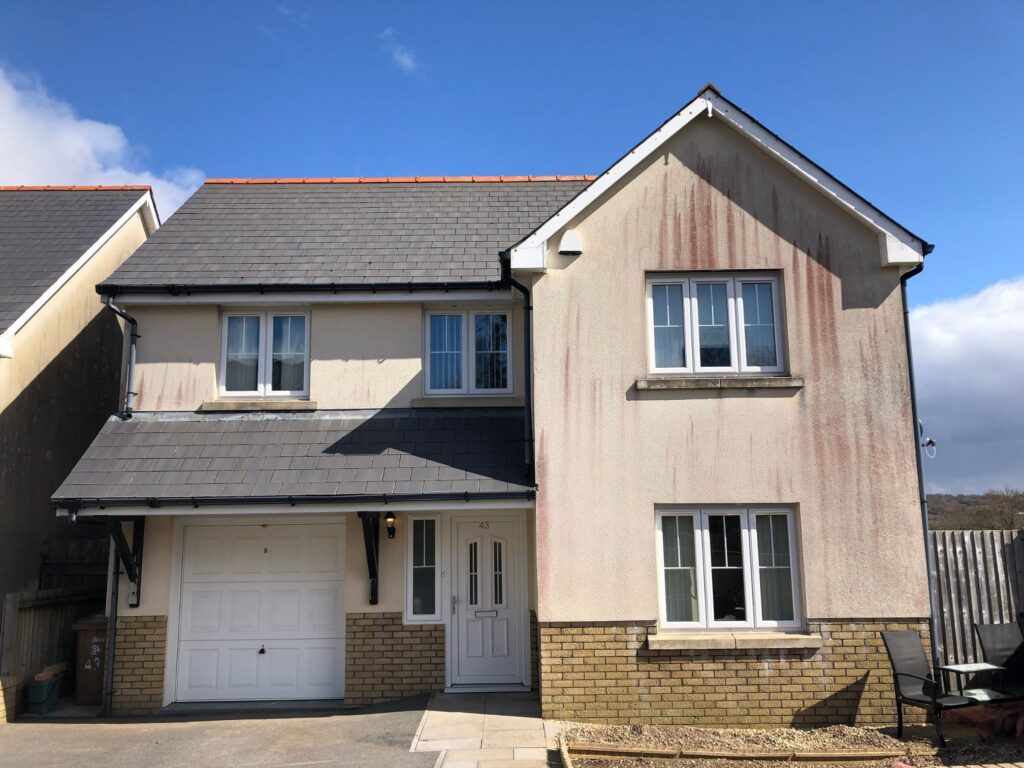
Over time, many rendered properties develop staining caused by algae, moss, lichen, dirt and atmospheric pollution. Green algae are among the most common forms of contamination, but red algae can also appear on rendered surfaces, creating pink or reddish staining that can significantly affect appearance.
When render becomes dirty, property owners often ask the same question: should it be soft washed or pressure washed?
While both methods can improve appearance, they work in very different ways and produce very different results. Understanding the advantages, disadvantages and long-term implications of each approach is essential when choosing the most suitable cleaning method.
For professional render cleaning services, visit Soft Washing UK.
Understanding Modern Render Systems
Before comparing cleaning methods, it is important to understand how render systems are constructed.
Modern render differs significantly from traditional cement render. Many contemporary properties use specialist finishes designed to provide flexibility, breathability and weather resistance.
Common render types include:
| Render Type | Common Uses |
|---|---|
| Silicone Render | Modern residential properties |
| Monocouche Render | New-build developments |
| Acrylic Render | Decorative finishes |
| Cement Render | Traditional properties |
| Lime Render | Heritage and period buildings |
Each render type has unique characteristics that influence the most appropriate cleaning method.
Why Render Becomes Dirty
Render is constantly exposed to environmental contaminants.
Common causes of staining include:
- Green algae
- Red algae
- Moss
- Lichen
- Traffic pollution
- Airborne dirt
- Organic debris
- Weathering
North-facing walls and shaded elevations often experience the most severe contamination because they remain damp for longer periods.
What Is Pressure Washing?
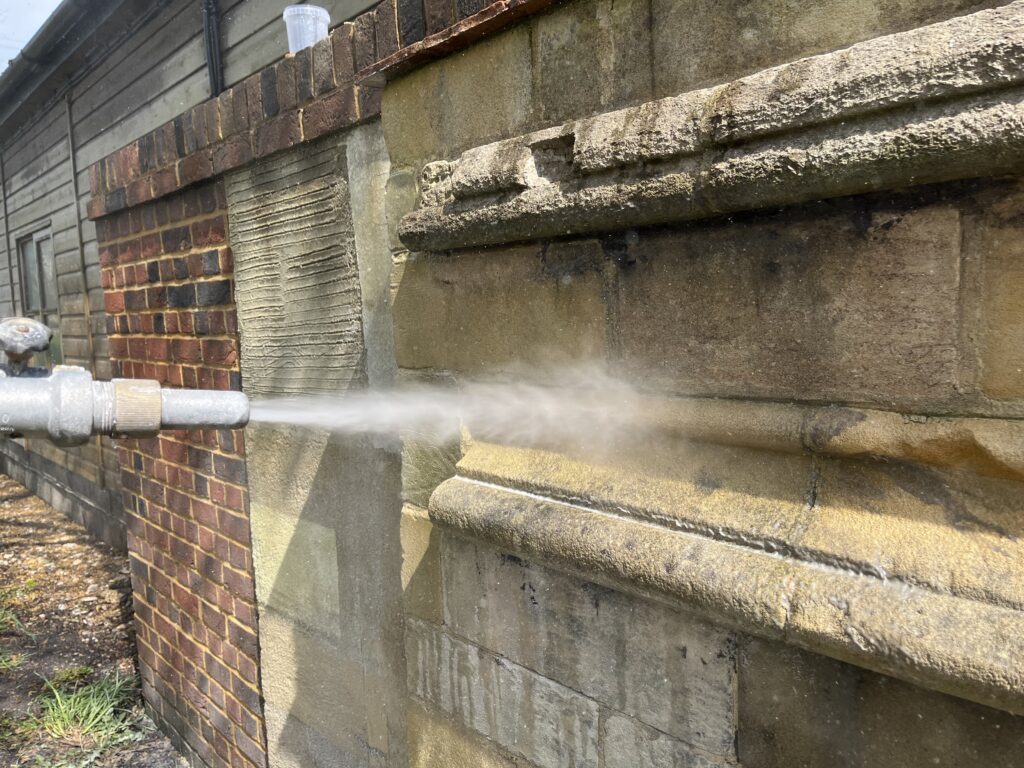
Pressure washing uses high-pressure water to remove contamination from surfaces.
Water is forced through a specialist nozzle at considerable pressure, physically blasting dirt and debris from the surface.
Pressure washing is commonly used on:
- Concrete
- Block paving
- Some patios
- Industrial surfaces
- Certain hard landscaping materials
The effectiveness of pressure washing comes from water pressure rather than chemical treatment.
How Pressure Washing Works
The process is relatively straightforward:
- Water is pressurised.
- The operator directs the jet at the surface.
- Dirt and contamination are physically removed.
- The area is rinsed clean.
While effective on robust surfaces, problems can arise when pressure washing more delicate materials.
What Is Soft Washing?
Soft washing is a low-pressure cleaning method that combines specialist cleaning solutions with gentle application techniques.
Rather than relying on force, soft washing targets contamination biologically and chemically.
The process typically includes:
- Surface inspection
- Preparation
- Application of cleaning treatment
- Dwell time
- Optional rinsing
- Long-term biocidal protection
Soft washing removes visible contamination while helping to prevent future regrowth.
Key Differences Between Soft Washing and Pressure Washing
| Feature | Soft Washing | Pressure Washing |
|---|---|---|
| Cleaning Method | Treatment-Based | Force-Based |
| Water Pressure | Low | High |
| Biological Control | Excellent | Limited |
| Surface Risk | Low | Higher |
| Suitable for Modern Render | Yes | Often Not Recommended |
| Long-Term Results | Excellent | Variable |
| Spore Removal | Yes | Often No |
These differences have significant implications for render cleaning.
Why Render Requires Careful Cleaning
Render is not simply a decorative finish.
It forms part of a property’s protective exterior envelope.
Aggressive cleaning methods can potentially cause:
- Surface erosion
- Cracking
- Water ingress
- Colour inconsistency
- Premature deterioration
The risk level depends on:
- Render type
- Age of render
- Existing condition
- Cleaning pressure used
This is why many render manufacturers recommend low-pressure cleaning methods.
The Problem with High Pressure on Render
Pressure washing can appear highly effective because contamination disappears quickly.
However, appearance alone does not always tell the full story.
High-pressure water can:
| Potential Issue | Description |
|---|---|
| Surface Damage | Removes protective outer layer |
| Micro-Cracking | Weakens render finish |
| Water Penetration | Forces moisture into substrate |
| Colour Variation | Creates patchy appearance |
| Reduced Lifespan | Accelerates wear |
These risks increase significantly when inexperienced operators use excessive pressure.
Biological Growth and Render
One of the primary reasons render becomes stained is biological growth.
This includes:
- Green algae
- Red algae
- Moss
- Lichen
- Fungal contamination
Many of these organisms establish microscopic structures that attach firmly to the render surface.
Removing visible contamination does not necessarily eliminate the root cause.
How Pressure Washing Handles Algae
Pressure washing primarily removes surface contamination.
It can:
- Remove visible green algae
- Remove visible red algae
- Improve appearance temporarily
However, microscopic spores often remain behind.
This means algae may return relatively quickly once favourable conditions return.
Common Regrowth Cycle
| Stage | Outcome |
|---|---|
| Pressure Washing | Surface cleaned |
| Spores Remain | Hidden contamination survives |
| Moisture Returns | Growth conditions improve |
| Regrowth Begins | Staining reappears |
This cycle explains why some rendered walls become dirty again within months.
How Soft Washing Handles Algae
Soft washing addresses contamination differently.
Rather than relying solely on removal, it treats the biological growth itself.
Benefits include:
- Spore destruction
- Deep cleaning
- Reduced regrowth
- Longer-lasting results
Both green algae and red algae can be treated effectively through professional soft washing methods.
Comparing Cleaning Results
Property owners often focus on immediate visual improvements.
While both methods can improve appearance, their long-term performance differs.
| Performance Factor | Soft Washing | Pressure Washing |
|---|---|---|
| Immediate Results | Excellent | Excellent |
| Long-Term Cleanliness | Excellent | Moderate |
| Regrowth Resistance | High | Low |
| Surface Preservation | High | Moderate |
| Render Safety | High | Variable |
Soft washing generally provides longer-lasting results because it tackles the biological cause of staining.
Why Soft Washing Is Preferred for Modern Render
Modern render systems are often designed with textured finishes and specialist coatings.
These surfaces may be vulnerable to excessive pressure.
Soft washing offers:
- Gentle treatment
- Reduced damage risk
- Better biological control
- Longer-lasting appearance
For this reason, soft washing has become the preferred method for many render cleaning projects.
The Cost of Cleaning Render
The price of render cleaning varies depending on:
- Property size
- Access requirements
- Contamination level
- Cleaning method
Although prices differ between projects, homeowners should consider value rather than simply the initial cost.
Comparing Long-Term Costs
| Factor | Soft Washing | Pressure Washing |
|---|---|---|
| Initial Cleaning Cost | Competitive | Competitive |
| Frequency of Cleaning | Lower | Higher |
| Regrowth Potential | Lower | Higher |
| Repair Risk | Lower | Higher |
A cleaning method that lasts longer may offer better value over time.
Environmental Factors Affecting Results
No cleaning method can completely eliminate future contamination.
Several environmental factors influence how quickly render becomes dirty again.
High-Risk Conditions
- Dense tree cover
- North-facing walls
- Coastal locations
- High humidity
- Poor airflow
Lower-Risk Conditions
- Open locations
- South-facing walls
- Good ventilation
- Limited vegetation
Properties in high-risk environments often benefit significantly from biocidal soft washing treatments.
Render Colours and Cleaning Considerations
Certain render colours show contamination more readily than others.
Light-coloured render often highlights:
- Green algae staining
- Red algae staining
- Pollution deposits
- Water streaks
Darker colours may disguise minor contamination but still require maintenance.
The cleaning method chosen should preserve colour consistency while removing staining.
Pressure Washing and Water Ingress Risks
One of the greatest concerns associated with pressure washing render is water ingress.
High-pressure water can sometimes penetrate:
- Hairline cracks
- Weak joints
- Surface imperfections
Once moisture enters behind the render system, further issues may develop.
Potential consequences include:
| Issue | Impact |
|---|---|
| Damp Patches | Internal moisture problems |
| Freeze-Thaw Damage | Surface deterioration |
| Delamination | Render separation |
| Staining | Ongoing appearance issues |
Low-pressure soft washing significantly reduces these risks.
Soft Washing and Preventative Maintenance
Soft washing is not simply a cleaning method.
It forms part of a wider preventative maintenance strategy.
Benefits include:
- Reduced future contamination
- Improved appearance
- Longer maintenance intervals
- Surface preservation
Many property owners choose periodic soft washing as part of ongoing building care.
Common Misconceptions About Pressure Washing Render
Myth 1: More Pressure Means Better Cleaning
Excessive pressure often increases the risk of damage.
Myth 2: If It Looks Clean, The Problem Is Solved
Visible cleanliness does not necessarily mean spores have been eliminated.
Myth 3: All Render Can Be Pressure Washed Safely
Different render systems have different cleaning requirements.
Myth 4: Pressure Washing Lasts Just As Long
Without biological treatment, regrowth frequently occurs sooner.
Signs Your Render Needs Cleaning
Watch for:
- Green staining
- Red staining
- Dark patches
- Moss growth
- Streaking
- Discolouration
- Loss of kerb appeal
Early intervention usually produces the best results.
Factors to Consider When Choosing Between Soft Washing and Pressure Washing
Every property is unique.
The following considerations help determine the most suitable cleaning approach:
| Consideration | Importance |
|---|---|
| Render Type | Very High |
| Property Age | High |
| Biological Growth | Very High |
| Existing Damage | High |
| Location | Medium |
| Long-Term Goals | Very High |
Understanding these factors helps property owners make informed decisions regarding render maintenance.
Situations Where Soft Washing Excels
Soft washing is particularly beneficial when dealing with:
- Modern render systems
- Delicate finishes
- Green algae contamination
- Red algae contamination
- Recurring staining problems
- Long-term maintenance planning
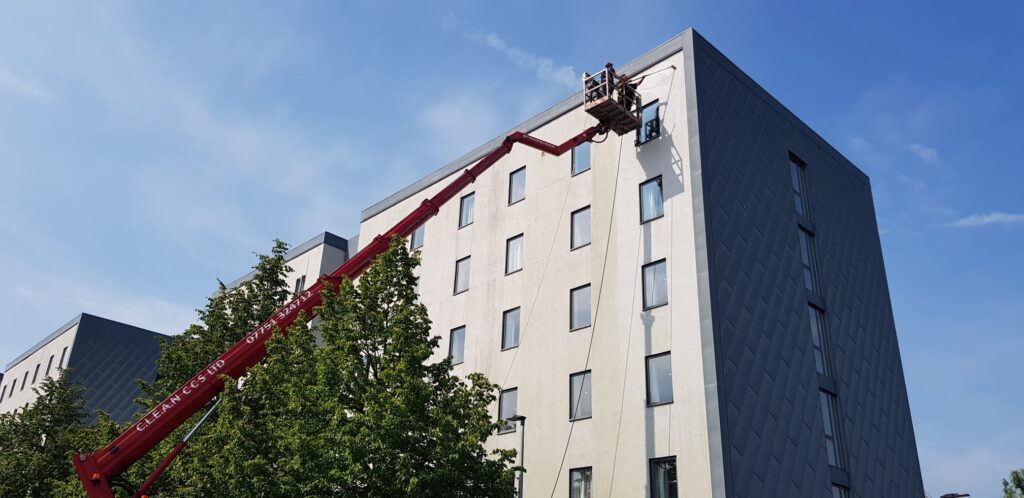
- Large rendered elevations
- Commercial buildings
Because soft washing addresses both visible contamination and underlying biological growth, it remains one of the most effective methods available for preserving the appearance and condition of rendered surfaces throughout the UK.
The Importance of Treating the Cause Rather Than the Symptom
One of the biggest differences between soft washing and pressure washing is the way each method approaches contamination.
Pressure washing is primarily focused on removing what can be seen. Dirt, algae and staining are blasted from the surface using water pressure. While this can create an impressive visual transformation, the underlying causes of contamination often remain untouched.
Soft washing, on the other hand, is designed to treat the source of the problem. Specialist cleaning solutions penetrate microscopic pores within the render and target biological organisms at a cellular level. This approach helps reduce the likelihood of green algae and red algae returning shortly after treatment.
This distinction becomes particularly important on rendered properties where recurring contamination can become a costly maintenance issue.
Symptom Removal vs Root Cause Treatment
| Cleaning Objective | Soft Washing | Pressure Washing |
|---|---|---|
| Remove Visible Staining | Yes | Yes |
| Kill Algae Spores | Yes | Limited |
| Reduce Regrowth | Yes | Limited |
| Treat Hidden Contamination | Yes | No |
| Long-Term Surface Protection | Yes | Limited |
How Render Texture Affects Cleaning Results
Render surfaces are rarely perfectly smooth. Most modern render systems contain small textures and microscopic imperfections that contribute to their appearance and performance.
Unfortunately, these same surface characteristics provide ideal locations for algae spores, dirt and organic matter to settle.
When pressure washing is used, contaminants may be removed from exposed areas while remaining hidden within deeper surface textures. This can contribute to uneven cleaning results and faster recolonisation.
Soft washing treatments are able to reach these textured areas more effectively because the cleaning solution remains in contact with the surface for an extended period, allowing it to penetrate difficult-to-reach locations.
Protecting New Render Investments
Modern rendering systems represent a significant investment for homeowners.
Depending on the size of the property and the type of render selected, installation costs can often reach several thousands of pounds.
| Render Project Type | Typical Investment |
|---|---|
| Small Property | £5,000 – £10,000 upwards + VAT |
| Medium Property | £10,000 – £20,000 upwards + VAT |
| Large Property | £20,000 upwards + VAT |
Because of this investment, choosing the correct cleaning method becomes increasingly important.
Using aggressive cleaning techniques that may shorten the lifespan of the render can result in avoidable repair costs later. Soft washing provides a maintenance-focused approach that helps preserve the appearance and integrity of the render system.
Why Render Manufacturers Often Recommend Low-Pressure Cleaning
Many render manufacturers recognise that excessive pressure can damage decorative finishes.
While cleaning recommendations vary between systems, low-pressure cleaning methods are commonly preferred because they minimise the risk of:
- Surface abrasion
- Colour loss
- Cracking
- Water penetration
- Finish deterioration
Homeowners should always consider the specific requirements of their render system before selecting a cleaning method.
Professional assessment can help determine the safest and most effective approach.
The Impact of Algae on Kerb Appeal
Algae growth can have a surprisingly large impact on the overall appearance of a property.
Even relatively small patches of green algae or red algae can make a building appear neglected. This is particularly noticeable on white, cream and light-grey render finishes where staining tends to be highly visible.
Common areas affected include:
- Gable ends
- Side elevations
- Around windows
- Beneath gutters
- Garden-facing walls
- North-facing elevations
Maintaining a clean render finish helps preserve the property’s appearance and can significantly enhance kerb appeal.
Soft Washing for Commercial Rendered Buildings
The benefits of soft washing are not limited to residential properties.
Commercial premises often feature extensive rendered elevations that can become heavily contaminated by biological growth and environmental pollution.
Examples include:
- Offices
- Care homes
- Schools
- Retail premises
- Apartment blocks
- Hotels
For commercial property owners, maintaining clean external surfaces helps project a professional image while reducing the risk of long-term deterioration.
Commercial Cleaning Priorities
| Priority | Importance |
|---|---|
| Appearance | Very High |
| Surface Protection | Very High |
| Long-Term Value | High |
| Tenant Satisfaction | High |
| Maintenance Costs | High |
Soft washing allows these objectives to be achieved without exposing rendered surfaces to unnecessary pressure-related risks.
Establishing a Render Maintenance Programme
Rather than waiting for heavy staining to develop, many property owners choose to implement a planned maintenance schedule.
A proactive approach often includes:
- Annual inspections
- Gutter maintenance
- Vegetation management
- Early treatment of algae growth
- Periodic soft washing
This strategy can help reduce cleaning costs over the long term while maintaining the property’s appearance throughout the year.
Regular monitoring is particularly important for buildings located near trees, woodland, rivers or coastal areas where moisture levels remain consistently high.
When combined with preventative biocidal treatments, a structured maintenance programme can significantly reduce the likelihood of widespread algae contamination and help keep rendered surfaces looking their best for extended periods.