


Rendered properties have become increasingly popular throughout the UK due to their modern appearance, weather resistance, and ability to improve kerb appeal. Whether a property features silicone render, monocouche render, acrylic render, lime render, or traditional cement render, maintaining a clean and attractive finish requires ongoing protection against biological growth.
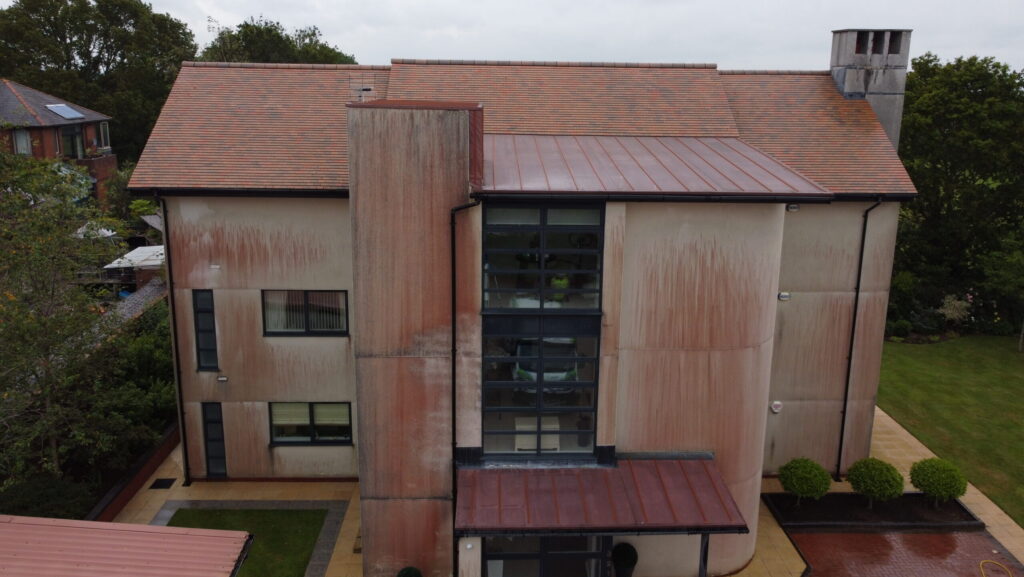
One of the most common issues affecting rendered surfaces is algae contamination. Many homeowners first notice green staining spreading across shaded walls, but algae growth is not limited to green varieties. Red algae can also develop on render, often creating unsightly reddish or pink staining that can be difficult to remove without specialist treatment. In many cases, this red staining is caused by algae from the genus Trentepohlia, which is commonly found on external surfaces throughout the UK.
Understanding why algae develops, how it affects render, and the best methods for preventing future growth can help homeowners preserve their property’s appearance and avoid unnecessary repair costs.
For professional render cleaning and soft washing services, Soft Washing UK provides specialist treatments designed to safely remove biological contamination and help prevent regrowth.
What Is Algae and Why Does It Grow on Render?
Algae are simple organisms that thrive in damp environments. They reproduce through microscopic spores and can quickly colonise rendered surfaces when conditions are favourable.
Render provides an ideal environment because its surface often retains moisture after rainfall, particularly on shaded elevations where sunlight is limited. Over time, airborne algae spores settle onto the render and begin to grow.
Several factors encourage algae growth:
| Growth Factor | Impact on Render |
|---|---|
| Moisture | Provides the water algae need to survive |
| Shade | Reduces drying time after rainfall |
| Poor Airflow | Traps humidity against walls |
| Nearby Trees | Increase shade and organic debris |
| North-Facing Walls | Receive less direct sunlight |
| High Humidity | Encourages continual growth |
Even newly applied render can develop algae contamination if environmental conditions are suitable.
Green Algae and Red Algae on Render
Many property owners assume all algae growth appears green. While green algae are certainly the most common form of biological contamination found on rendered surfaces, red algae can also become established on render systems throughout the UK.
Green algae typically appear as:
- Green streaks running down walls
- Green patches around windows
- Green discolouration near gutters
- Widespread staining on shaded elevations
Red algae often appear as:
- Pinkish staining
- Red patches across render
- Rust-coloured marks
- Reddish streaking beneath architectural features
In many cases, the red staining seen on render is caused by red algae from the genus Trentepohlia. These algae contain high levels of carotenoid pigments that produce their distinctive orange, red, or reddish-brown colouration. Because Trentepohlia can resemble rust staining or render defects, it is frequently misidentified.
Both green algae and red algae from the genus Trentepohlia should be addressed promptly, as they can spread rapidly when moisture levels remain high.
Why Algae Growth Should Not Be Ignored
Algae are often viewed as a cosmetic issue, but the consequences can extend beyond appearance alone.
Persistent algae growth can:
- Retain moisture against the render
- Encourage secondary biological growth
- Reduce kerb appeal
- Increase maintenance costs
- Accelerate surface deterioration
- Contribute to ongoing dampness
As algae colonies mature, they form thicker layers that trap moisture against the render. Over time, this continual dampness can place additional stress on the render system and increase maintenance requirements.
Areas Most Vulnerable to Algae Growth
Not all walls experience algae contamination at the same rate.
The following locations are particularly vulnerable:
| Property Area | Risk Level |
| North-Facing Walls | Very High |
| Shaded Side Elevations | Very High |
| Areas Beneath Trees | High |
| Around Downpipes | High |
| Near Garden Borders | High |
| South-Facing Walls | Moderate |
| Exposed Sunny Walls | Lower |
Regular inspection of these areas can help identify problems before they become widespread.
How UK Weather Contributes to Algae Problems
The British climate creates ideal conditions for algae growth.
Frequent rainfall, mild temperatures and extended periods of humidity allow algae colonies to thrive throughout much of the year. Unlike regions that experience prolonged dry summers, many parts of the UK remain damp enough to support continual biological growth.
The combination of:
- Rainfall
- Cloud cover
- Humidity
- Mild temperatures
creates near-perfect conditions for both green algae and red algae from the genus Trentepohlia.
Properties located near woodland, rivers, lakes or coastal environments often experience faster contamination due to elevated moisture levels.
Types of Render Commonly Affected
Algae can affect virtually every render system.
Silicone Render
Silicone render is highly popular due to its flexibility and water-resistant properties. However, it can still develop algae growth, particularly on shaded elevations.
Monocouche Render
Monocouche render provides a coloured finish that eliminates the need for painting. Algae staining can become highly visible, especially on lighter colours.
Acrylic Render
Acrylic render offers excellent flexibility and crack resistance but remains susceptible to biological contamination.
Cement Render
Traditional cement render often features a rougher surface texture that can retain moisture and organic debris.
Lime Render
Lime render is breathable and widely used on older buildings but remains vulnerable when damp conditions persist.
| Render Type | Susceptibility to Algae |
| Silicone Render | Moderate |
| Monocouche Render | High |
| Acrylic Render | Moderate |
| Cement Render | High |
| Lime Render | Moderate to High |
Early Warning Signs of Algae Growth
Recognising algae early allows treatment before contamination becomes extensive.
Common warning signs include:
- Green speckling
- Red patches
- Surface discolouration
- Dark staining
- Damp-looking areas
- Colour inconsistency
Homeowners often notice subtle colour changes long before heavy staining develops.
Why Pressure Washing Can Damage Render
A common mistake is attempting to remove algae using high-pressure washing equipment.
While pressure washing may temporarily improve appearance, it can create significant risks.
| Risk | Description |
| Surface Damage | Pressure can erode render finishes |
| Cracking | Existing weaknesses may worsen |
| Water Ingress | Moisture can penetrate behind render |
| Patchy Appearance | Uneven cleaning may occur |
| Reduced Lifespan | Protective surface layers can be damaged |
Modern render systems generally require specialist low-pressure cleaning methods rather than aggressive pressure washing.
Understanding Soft Washing
Soft washing is widely regarded as one of the safest and most effective methods for treating algae contamination on render.
Unlike pressure washing, soft washing relies on specialist cleaning solutions that eliminate biological growth at the source.
The process typically involves:
- Surface assessment
- Application of cleaning solution
- Appropriate dwell time
- Removal of contamination
- Long-term biocidal protection
This approach removes visible staining while also targeting microscopic spores that would otherwise remain behind.
Why Soft Washing Is Effective Against Green and Red Algae
Green algae and red algae from the genus Trentepohlia share similar biological characteristics.
Although they appear different visually, both can be effectively treated using professional soft washing systems.
Benefits include:
- Deep biological treatment
- Reduced risk of render damage
- Longer-lasting results
- Improved appearance
- Lower maintenance requirements
By addressing the root cause rather than simply removing visible staining, soft washing helps prevent rapid regrowth.
The Importance of Biocidal Treatments
Removing visible contamination is only part of the process.
Without suitable biocidal treatment, algae spores often remain embedded within microscopic pores and surface imperfections.
A professional biocide helps:
| Benefit | Result |
| Kill Remaining Spores | Reduces regrowth |
| Extend Cleaning Results | Longer-lasting appearance |
| Treat Hidden Growth | Addresses contamination below the surface |
| Improve Protection | Reduces future colonisation |
Biocidal treatment is one of the most important components of long-term render protection.
Environmental Factors That Encourage Regrowth
Even after successful cleaning, environmental factors can encourage algae to return.
These include:
- Overhanging branches
- Blocked gutters
- Leaking downpipes
- Poor drainage
- Dense vegetation
- Consistent shade
Addressing these issues helps maximise the lifespan of cleaning treatments.
Tree Management and Algae Prevention
Trees contribute significantly to render contamination.
They:
- Create shade
- Increase moisture retention
- Deposit organic debris
- Restrict airflow
Selective pruning can dramatically improve drying times and reduce conditions that favour both green algae and red algae from the genus Trentepohlia.
Gutter Maintenance and Render Protection
Faulty gutters are a major contributor to algae growth.
Overflowing gutters can create continual dampness on rendered walls.
Homeowners should inspect:
| Gutter Component | Inspection Frequency |
| Gutters | Twice Yearly |
| Downpipes | Twice Yearly |
| Hopper Heads | Twice Yearly |
| Drainage Outlets | Twice Yearly |
Prompt repairs help minimise moisture exposure.
Choosing Render Colours with Algae Resistance in Mind
Although colour does not prevent algae growth, it can influence how visible contamination becomes.
Lighter colours often show:
- Green algae more clearly
- Red algae staining more prominently
- Dirt accumulation more readily
Darker shades may disguise minor contamination but still require maintenance.
Annual Render Maintenance Schedule
Preventative maintenance is often more cost-effective than reactive cleaning.
| Season | Recommended Action |
| Spring | Inspect for winter growth |
| Summer | Assess shaded elevations |
| Autumn | Clear gutters and vegetation |
| Winter | Monitor drainage and moisture issues |
Routine inspections help identify concerns before significant staining develops.
Cost Considerations for Render Protection
The cost of algae prevention is generally far lower than repairing damaged render.
Potential expenses associated with neglect include:
- Extensive cleaning
- Repeated maintenance
- Surface repairs
- Re-rendering sections
- Decorative improvements
Investing in preventative maintenance often represents better long-term value.
How Long Does Algae Protection Last?
Several factors influence treatment longevity.
These include:
- Property location
- Amount of shade
- Weather exposure
- Nearby vegetation
- Quality of treatment
Properties surrounded by trees often require more frequent maintenance than those situated in open, well-ventilated locations.
Signs That Render Requires Professional Attention
Certain indicators suggest professional intervention may be beneficial.
Watch for:
- Extensive green algae growth
- Red algae from the genus Trentepohlia spreading across elevations
- Recurring staining after cleaning
- Dark patches that remain damp
- Large discoloured areas
- Visible contamination around windows
Early treatment is usually simpler and more cost-effective than waiting for contamination to spread.
Common Myths About Algae on Render
Myth 1: Algae Only Affect Old Buildings
Algae can develop on both new and old properties.
Myth 2: Pressure Washing Solves the Problem Permanently
Pressure washing often removes visible staining while leaving spores behind.
Myth 3: Only Green Algae Grow on Render
Red algae from the genus Trentepohlia frequently colonise rendered surfaces throughout the UK.
Myth 4: Algae Are Purely Cosmetic
Persistent growth can contribute to moisture retention and increased maintenance requirements.
Myth 5: Render Never Needs Maintenance
All external surfaces benefit from routine inspection and preventative care.
How Property Location Influences Algae Growth on Render
The location of a property significantly affects how quickly algae develop.
Homes situated near woodland often experience more contamination due to increased shade, higher moisture levels and reduced airflow.
Coastal properties can also face greater challenges because of:
- Salt-laden air
- Elevated humidity
- Frequent damp conditions
Properties located close to rivers, lakes, ponds and marshland are similarly exposed to conditions that favour algae growth.
| Property Location | Relative Algae Risk |
| Woodland Areas | Very High |
| Coastal Locations | High |
| Near Rivers and Lakes | High |
| Suburban Areas | Moderate |
| Open Countryside | Moderate |
| Urban Centres | Lower |
Regular inspections become especially important in these environments.
Creating a Long-Term Render Protection Strategy
Effective render protection involves combining multiple preventative measures.
| Protection Measure | Purpose |
| Soft Washing | Removes contamination safely |
| Biocidal Treatment | Prevents regrowth |
| Gutter Maintenance | Reduces moisture |
| Tree Management | Improves sunlight and airflow |
| Annual Inspections | Identifies early issues |
| Drainage Improvements | Minimises damp conditions |
A planned maintenance strategy helps preserve render appearance while reducing the likelihood of extensive biological contamination.
The Role of Professional Render Cleaning
Professional cleaning services provide expertise that extends far beyond simply removing visible staining.
A specialist assessment can identify:
- Areas vulnerable to future algae growth
- Moisture-related issues
- Drainage concerns
- Surface deterioration
- The most suitable treatment methods
Tailored treatment plans help ensure render remains clean and protected for longer periods while reducing the risk of damage associated with unsuitable cleaning techniques.
Conclusion
Green algae and red algae from the genus Trentepohlia are among the most common causes of staining on rendered properties throughout the UK. While many homeowners initially view algae as a cosmetic issue, unchecked growth can contribute to moisture retention, increased maintenance requirements and a decline in kerb appeal.
Understanding the environmental conditions that encourage algae growth is the first step towards effective prevention. By combining regular inspections, gutter maintenance, vegetation management, professional soft washing and appropriate biocidal treatments, homeowners can significantly reduce the risk of future contamination.
Whether your property features silicone render, monocouche render, acrylic render, lime render or traditional cement render, a proactive maintenance programme will help preserve its appearance and maximise its lifespan for years to come.