


Render is designed to protect your property while providing a clean, modern appearance. However, over time it can become stained by dirt, pollution and biological growth, leaving even relatively new homes looking tired.
Before arranging professional render cleaning, it’s worth taking a few minutes to assess your property. Understanding the condition of your render, identifying any existing issues and preparing your home properly can help ensure the best possible results.
Many homeowners assume all render cleaning is the same, but different render systems require different approaches. Choosing the correct cleaning method is just as important as choosing the right company.
At Soft Washing UK, every property is assessed individually to determine the safest and most effective cleaning method for the specific type of render.
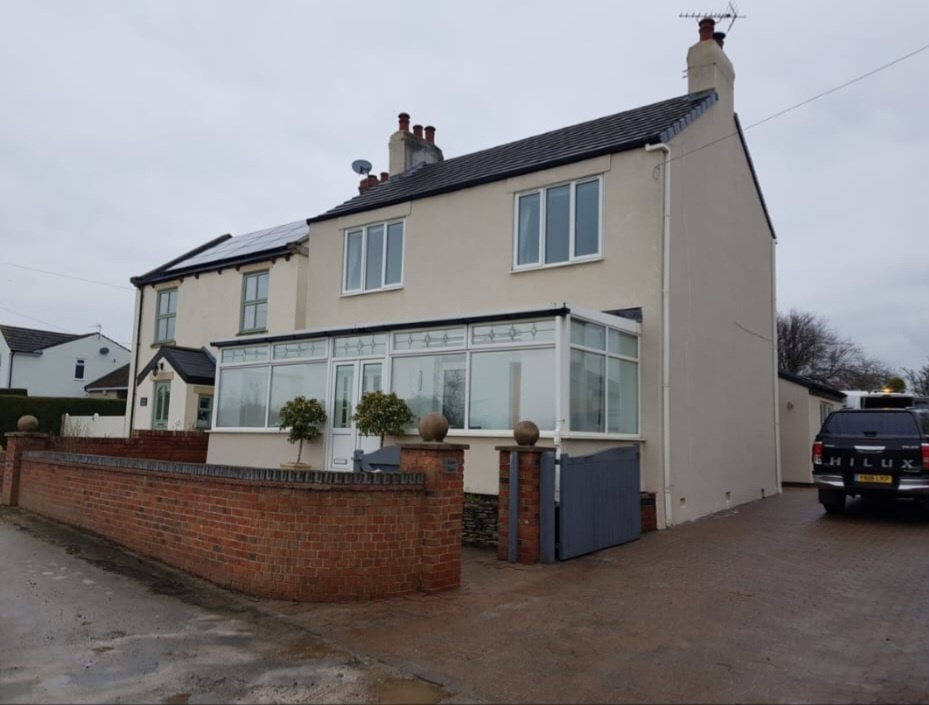
Why Preparation Matters
Render cleaning is much more than simply washing dirt away.
A professional assessment considers:
- The render type
- Existing staining
- Biological growth
- Surface condition
- Accessibility
- Environmental factors
Preparing beforehand helps identify any concerns that should be discussed before work begins.
Step 1: Identify the Type of Render
Different render systems have different cleaning requirements.
If you’re unsure what type you have, don’t worry—many homeowners don’t know.
Common render types include:
| Render Type | Common Features |
|---|---|
| Silicone render | Flexible, water-repellent finish |
| Monocouche render | Through-coloured render |
| Acrylic render | Decorative textured finish |
| Cement render | Traditional render |
| Lime render | Older breathable finish |
| Painted render | Masonry paint applied over render |
Using the wrong cleaning method on specialist render can cause unnecessary damage.
Step 2: Inspect the Walls
Walk around your property and look carefully at every elevation.
Make a note of any areas showing:
- Green algae
- Red algae
- Black streaks
- Moss
- Lichen
- Dirt
- Water staining
Also note whether staining appears worse on particular sides of the house.
North-facing walls usually remain damp for longer and often develop heavier biological growth.
Step 3: Check for Damage
Cleaning restores appearance but doesn’t repair structural issues.
Look for:
- Cracks
- Loose render
- Hollow areas
- Missing sections
- Bulging render
- Previous repairs
If any of these are present, mention them before work begins.
Step 4: Look at Gutters and Downpipes
Many render staining problems actually begin with faulty rainwater systems.
Inspect for:
| Problem | Possible Effect |
|---|---|
| Overflowing gutters | Green staining |
| Leaking joints | Damp streaks |
| Broken downpipes | Water marks |
| Blockages | Persistent moisture |
Fixing drainage problems helps prevent algae returning quickly after cleaning.
Step 5: Consider Nearby Trees
Trees are one of the biggest contributors to biological growth.
They:
- Block sunlight
- Increase humidity
- Drop leaves
- Deposit pollen
- Encourage damp conditions
Properties surrounded by mature trees often require more regular maintenance than homes in open locations.
Step 6: Think About Access
Professional cleaning equipment needs safe access to the property.
Walk around the outside and consider:
- Locked side gates
- Narrow pathways
- Garden furniture
- Parked vehicles
- Children’s toys
- Potted plants
Clearing these areas beforehand can help work proceed more efficiently.
Step 7: Move Delicate Items
Although professional soft washing uses controlled application methods, it’s sensible to move valuable outdoor items away from the working area.
Examples include:
- Garden cushions
- Decorative ornaments
- BBQs
- Outdoor rugs
- Bicycles
- Children’s play equipment
This gives technicians a clear working space while protecting your belongings.
Step 8: Trim Back Vegetation
Overgrown plants can restrict access and contribute to future algae growth.
Consider trimming back:
- Ivy
- Climbing roses
- Shrubs
- Hedges
- Hanging baskets
- Tree branches touching walls
Improved airflow helps render dry more quickly after rainfall.
Step 9: Understand What Cleaning Can Achieve
Professional cleaning produces impressive results, but it’s important to understand what it can and cannot do.
Cleaning can remove:
| Cleaning Removes | Cleaning Does Not Repair |
|---|---|
| Green algae | Structural cracks |
| Red algae | Loose render |
| Dirt | Missing render |
| Black staining | Failed adhesion |
| Pollution | Significant impact damage |
Having realistic expectations ensures you’re delighted with the finished result.
Step 10: Ask About Cleaning Methods
Not every cleaning company uses the same process.
It’s worth understanding how the render will actually be cleaned.
Professional soft washing generally focuses on:
- Low-pressure application
- Specialist cleaning solutions
- Careful treatment of biological growth
- Appropriate dwell times
- Gentle rinsing
This approach helps protect delicate render finishes.
Step 11: Ask Whether Biocide Is Included
Removing visible algae is only part of the job.
Professional biocide treatment helps destroy the microscopic spores responsible for regrowth.
Without this stage, algae often returns much sooner.
Both green algae and red algae benefit from specialist treatment rather than simple washing alone.
Step 12: Consider the Age of the Render
The age of your render can help determine the best cleaning approach.
| Approximate Age | Typical Condition |
|---|---|
| Under 5 years | Usually light staining |
| 5–10 years | Moderate biological growth |
| 10–20 years | May require deeper cleaning |
| Over 20 years | Assessment recommended |
Older render isn’t automatically unsuitable for cleaning, but professional assessment becomes increasingly important.
Step 13: Check the Weather Forecast
While experienced professionals work in a range of conditions, extreme weather can sometimes affect scheduling.
Heavy rain, freezing temperatures or high winds may influence:
- Application times
- Drying periods
- Safety
- Overall efficiency
Flexibility can help ensure the best results.
Step 14: Understand Why Algae Has Developed
Cleaning solves the current problem, but understanding the cause helps keep render cleaner for longer.
Common reasons include:
- Constant shade
- Damp conditions
- Nearby trees
- Poor drainage
- Limited airflow
- North-facing walls
Addressing these factors where possible may extend the time between professional cleans.
Step 15: Ask About Expected Results
Every property is unique.
Before work begins, ask what level of improvement is realistically expected.
Factors affecting results include:
| Factor | Influence |
|---|---|
| Render age | Older render may retain slight weathering |
| Type of staining | Some contamination is more stubborn |
| Previous cleaning | Incorrect cleaning can leave permanent marks |
| Existing damage | Cannot be removed through cleaning |
A professional assessment provides realistic expectations rather than unrealistic promises.
Step 16: Think About Long-Term Maintenance
Render cleaning shouldn’t necessarily be viewed as a one-off service.
Regular maintenance helps preserve appearance.
Homeowners can assist by:
- Keeping gutters clear
- Trimming vegetation
- Fixing leaks promptly
- Monitoring shaded areas
- Removing moss from nearby roofs
Simple maintenance often delays the return of algae.
Questions Worth Asking Before Booking
Preparing a few questions can help you better understand the service being offered.
| Question | Why Ask? |
|---|---|
| Is my type of render suitable for soft washing? | Different finishes require different care |
| Will green algae and red algae both be treated? | Ensures comprehensive cleaning |
| Is biocide included? | Helps slow regrowth |
| How long are results expected to last? | Sets realistic expectations |
| Will damaged render be identified? | Helps plan future maintenance |
| Is access equipment required? | Helps prepare the property |
Why Every Property Needs an Individual Assessment
No two rendered homes are exactly alike.
Factors such as location, weather exposure, tree cover and render type all influence how the surface should be cleaned.
A tailored approach allows the cleaning process to be adapted to suit the individual property rather than applying the same method to every home.
This helps achieve the best possible finish while protecting the render beneath.
Preparing for the Day of Cleaning
On the day of your scheduled appointment, a little preparation can help everything run smoothly.
A simple checklist includes:
| Before the Team Arrives | Benefit |
|---|---|
| Move vehicles away from the property | Easier access to all elevations |
| Close windows and doors | Prevents water entering the property |
| Remove fragile garden ornaments | Protects valuable items |
| Keep pets indoors | Improves safety |
| Inform neighbours if access is close to boundaries | Helps avoid inconvenience |
| Ensure outside taps are accessible if required | Supports efficient working |
These small steps can reduce delays and allow the cleaning process to begin promptly.
Recognising When It’s Time to Book
Many homeowners wait until staining becomes severe before considering professional cleaning.
However, arranging cleaning when the first signs of contamination appear is often the most effective approach.
Early indicators include:
- Faint green patches developing on shaded walls.
- Small areas of red algae on light-coloured render.
- Black streaks beneath window sills.
- General dullness caused by atmospheric pollution.
- Moss beginning to establish near rooflines.
Treating these issues early is often quicker and helps preserve the appearance of the render for longer.
Protecting Your Investment
Render represents a significant investment in your home’s appearance and weather protection. Looking after it properly can extend its lifespan while maintaining kerb appeal.
At Soft Washing UK, every project begins with a careful assessment to determine the safest cleaning method for your property. By combining specialist soft washing techniques with professional treatments designed to tackle both green algae and red algae, homeowners can restore the appearance of their render while helping to protect it against future biological growth and unnecessary deterioration.
Why the Cheapest Quote Isn’t Always the Best Value
When comparing render cleaning services, it’s natural to look at price first. However, the cheapest quotation isn’t always the most economical option in the long run.
Professional render cleaning involves far more than simply spraying water onto a wall. The quality of the products used, the experience of the technicians and the time spent treating the render all influence how long the results last.
A higher-quality service may include:
- A detailed property inspection.
- Identification of damaged render.
- Specialist soft washing products.
- Professional biocide treatment.
- Careful application techniques.
- Thorough rinsing where appropriate.
- Advice on ongoing maintenance.
Although premium services generally cost more upfront, they often reduce the need for frequent repeat cleaning, making them better value over time.
| Lower-Cost Service | Premium Professional Service |
|---|---|
| May focus on appearance only | Focuses on long-term results |
| Limited preparation | Thorough property assessment |
| Faster completion | More attention to detail |
| Regrowth may occur sooner | Longer-lasting cleanliness |
| Minimal aftercare advice | Maintenance guidance provided |
Check Whether the Render Has Been Cleaned Before
Knowing the cleaning history of your property can be useful.
Ask yourself:
- Has the render ever been professionally cleaned?
- Has it previously been pressure washed?
- Has it been painted?
- Have repairs been carried out?
Pressure washing performed incorrectly can sometimes leave etched or patchy areas that become more visible once dirt has been removed.
Sharing this information before work begins allows the most suitable cleaning method to be selected.
Don’t Forget Detached Structures
Render isn’t always limited to the main house.
Many properties also have rendered:
- Garages
- Garden walls
- Boundary walls
- Outbuildings
- Home offices
- Extensions
Cleaning these at the same time often creates a much more consistent appearance across the entire property.
It can also be more convenient than arranging separate visits later.
Consider Future Home Improvements
If you’re planning additional work on your property, it may be worth considering the order in which projects are completed.
For example, homeowners often combine render cleaning with:
| Planned Improvement | Best Timing |
|---|---|
| New windows | Before or shortly afterwards |
| New front door | After cleaning to maximise visual impact |
| Landscaping | Either before or after depending on access |
| Roof cleaning | Can often be coordinated |
| Gutter replacement | Ideally completed before render cleaning |
Planning ahead helps avoid unnecessary repeat work.
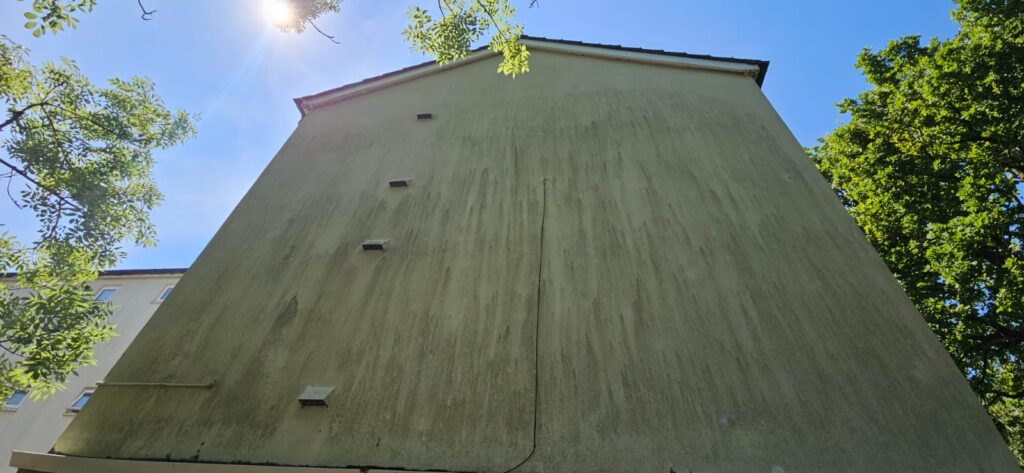
Understanding Biological Growth
Many people use the term “algae” to describe every type of staining found on render.
In reality, several different organisms may be present at the same time.
These include:
- Green algae
- Red algae
- Moss
- Lichen
- Fungi
- Airborne mould spores
Each develops slightly differently depending on the local environment.
Professional treatment is designed to tackle biological contamination rather than simply improving the appearance temporarily.
Why Some Walls Need More Attention Than Others
It’s perfectly normal for one side of a house to look much dirtier than another.
This usually comes down to environmental conditions.
Factors that encourage staining include:
- Limited direct sunlight.
- Dense surrounding trees.
- Poor air circulation.
- Prevailing weather.
- Nearby hedgerows.
- Consistently damp conditions.
These elevations may require more regular maintenance than walls exposed to sunshine throughout the day.
Things to Photograph Before Cleaning
Taking photographs before work starts provides a useful record of your property’s condition.
Consider photographing:
- Every elevation.
- Existing cracks.
- Areas of heavy algae.
- Previous repairs.
- Damaged guttering.
- Downpipe leaks.
These images make it much easier to appreciate the transformation once the cleaning has been completed.
Questions About Safety
Professional exterior cleaning should always place safety first.
Before booking, it’s reasonable to ask how access will be managed.
Areas that may require additional planning include:
- Conservatories.
- Sloping gardens.
- Narrow access paths.
- High gables.
- Extensions.
- Glass roofs.
A professional assessment helps determine the safest way to clean each area without putting the property or its occupants at unnecessary risk.
How Long Should You Wait Before Judging the Final Result?
Some homeowners expect the finished appearance immediately after the equipment has been packed away.
However, certain treatments continue working after application.
Depending on the type of contamination and weather conditions, the appearance may continue to improve over the following days or weeks as dead organic matter naturally breaks down and weathers away.
This gradual improvement is a normal part of many professional soft washing treatments.
Signs Your Render Is Being Well Maintained
Once your render has been professionally cleaned, regular visual inspections can help you keep it in excellent condition.
Positive signs include:
| Good Maintenance Indicator | Why It Matters |
|---|---|
| Even colouring | Suggests contaminants are under control |
| No persistent damp patches | Helps reduce biological growth |
| Clean gutters | Prevents water staining |
| Healthy drainage | Minimises splashback |
| Trimmed vegetation | Improves drying conditions |
Simple maintenance often adds years to the appearance of your render.
Planning for Future Maintenance
Render cleaning shouldn’t be viewed as something that only happens when staining becomes severe.
Instead, periodic maintenance can help prevent extensive biological growth from becoming established.
The exact interval depends on factors such as:
- Property location.
- Tree cover.
- Weather exposure.
- Nearby water.
- Amount of sunlight.
- Type of render.
Properties in open, sunny locations may remain clean for much longer than homes surrounded by mature woodland.
Protecting Your Property’s Appearance
Your home’s exterior is one of the first things visitors and potential buyers notice.
Allowing dirt, green algae and red algae to build up over many years can make an otherwise well-maintained property appear neglected.
Professional render cleaning restores brightness while helping preserve the protective finish already in place.
Combined with regular maintenance and attention to moisture sources, it can significantly extend the life and appearance of your render without the need for unnecessary replacement.
At Soft Washing UK, every property receives an individual assessment to ensure the most appropriate soft washing techniques are used. By preparing your home properly before the appointment and understanding what to expect, you can help achieve the best possible results and keep your render looking cleaner for longer.