


If you’ve ever looked across the street and wondered why your neighbour’s render still looks bright and spotless while yours has become stained, discoloured or covered in algae, you’re certainly not alone.
Many homeowners assume their neighbour simply has higher-quality render or spends more money on maintenance. In reality, the reason is usually far more complicated. A property’s location, orientation, surrounding environment and maintenance routine all have a significant impact on how clean render remains over time.
Even two identical houses built by the same developer can age very differently.
If your render has lost its fresh appearance, the specialists at Softwashing UK can assess the cause and recommend the safest cleaning solution for your property.
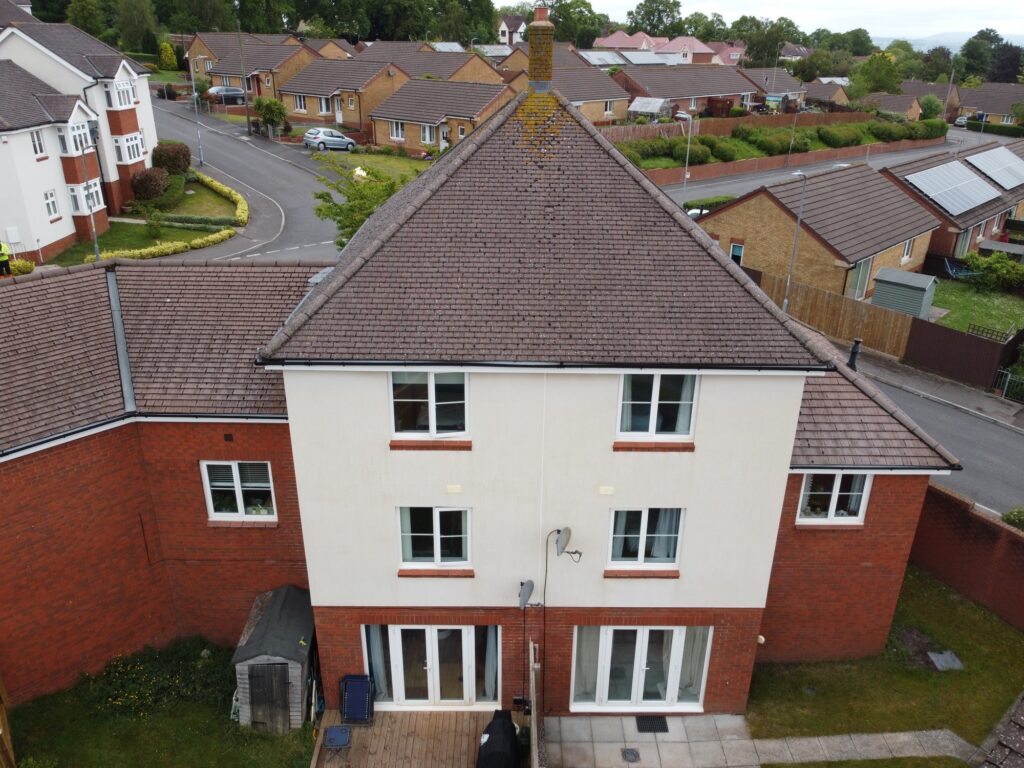
Why Two Identical Homes Can Look Completely Different
Modern housing developments often use exactly the same render products across multiple homes.
Yet after only a few years you may notice:
- One property still looks almost new.
- Another has green staining.
- Another has black streaks.
- Another has red patches.
- Another appears dull and weathered.
This happens because render responds to environmental conditions much more than most homeowners realise.
The Biggest Factors Affecting Render Appearance
| Factor | Effect on Render |
|---|---|
| Shade | Encourages moisture retention |
| Sunlight | Helps surfaces dry faster |
| Tree cover | Increases algae growth |
| Traffic pollution | Causes dark staining |
| Rain exposure | Promotes biological growth |
| Nearby vegetation | Increases airborne spores |
Small differences around the home can produce dramatically different results over time.
Sunlight Makes a Huge Difference
One of the biggest reasons your neighbour’s render looks cleaner is simple sunlight.
Walls receiving direct sunshine for much of the day dry quickly after rain.
Dry surfaces make it much harder for biological growth to establish itself.
Shaded walls remain damp for much longer, creating ideal conditions for:
- Green algae
- Red algae
- Moss
- Lichen
North-facing elevations are particularly vulnerable because they receive very little direct sunlight throughout the year.
Trees Can Transform Your Render
Trees add privacy and improve gardens, but they also create one of the worst environments for rendered walls.
Large trees produce:
- Shade
- Moisture
- Organic debris
- Airborne spores
- Bird activity
All of these contribute to render becoming dirty much faster.
If your neighbour has an open garden while your property sits beneath mature trees, the difference in render condition can become noticeable within only a few years.
Common Tree-Related Problems
| Tree Effect | Result |
|---|---|
| Constant shade | Damp render |
| Falling leaves | Organic staining |
| Bird droppings | Surface contamination |
| Increased humidity | Faster algae growth |
| Reduced airflow | Slower drying |
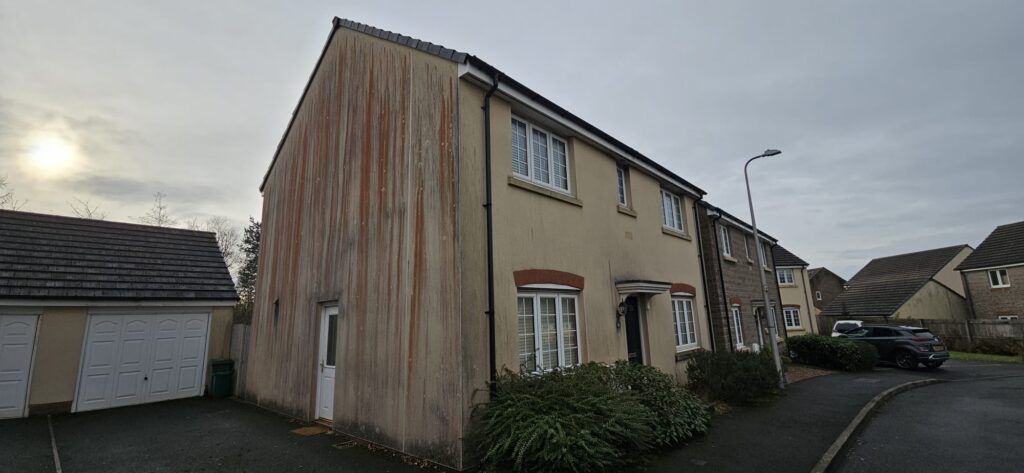
Green Algae and Red Algae Thrive in Damp Conditions
One of the most common reasons render changes colour is biological growth.
Many homeowners first notice green patches developing.
However, it’s important to remember that green algae and red algae often appear together on UK properties.
Green algae usually develops first because it thrives on damp surfaces.
Red algae is becoming increasingly common and often creates:
- Pink staining
- Orange staining
- Red patches
- Rust-like discolouration
Unlike green algae, red algae can penetrate deeper into the render, making professional treatment even more important.
Pollution Could Be the Difference
If your property sits close to:
- Busy roads
- Industrial areas
- Main traffic routes
your render may accumulate pollution much faster.
Airborne particles gradually settle onto the surface before combining with rainwater and biological growth.
Over time this creates:
- Grey staining
- Black streaks
- General dullness
Meanwhile, a neighbouring property located even slightly further away may experience noticeably less contamination.
Gutters Play a Bigger Role Than You Think
Overflowing gutters often create some of the darkest stains found on rendered homes.
Water repeatedly running down the same section of wall carries:
- Dirt
- Roof debris
- Organic material
This encourages both staining and biological growth.
Checking gutters annually can help reduce unnecessary contamination.
Signs Water Is Affecting Your Render
| Symptom | Possible Cause |
|---|---|
| Vertical black lines | Overflowing gutter |
| Green patches below roofline | Constant moisture |
| Dark corners | Poor drainage |
| Moss near downpipes | Excess water |
| Uneven staining | Water runoff |
Your Neighbour May Simply Clean Their Render
Sometimes the explanation is surprisingly straightforward.
Your neighbour may have already arranged professional cleaning.
Modern soft washing removes:
- Dirt
- Pollution
- Green algae
- Red algae
- Moss
- Lichen
Once cleaned, render often looks dramatically brighter without needing repainting.
Many homeowners don’t realise their neighbour has had professional treatment because the results simply restore the original appearance.
Different Sides of the Same House Age Differently
Even within one property, render rarely deteriorates evenly.
One elevation may remain almost spotless while another becomes heavily stained.
Common examples include:
- North-facing wall covered in algae.
- South-facing wall remaining relatively clean.
- Rear garden wall shaded by fences.
- Side wall exposed to prevailing weather.
This explains why partial cleaning is sometimes appropriate instead of cleaning the entire property.
Which Walls Usually Get Dirty First?
| Elevation | Likelihood of Staining |
|---|---|
| North | Very high |
| East | Moderate |
| West | Moderate to high |
| South | Usually lowest |
This depends on surrounding trees, buildings and weather exposure.
The Age of the Render Isn’t Always Important
Many homeowners assume older render automatically becomes dirtier.
Age plays a part, but environmental conditions matter far more.
For example:
| Property | Age | Condition |
|---|---|---|
| 3 years | Heavy shade | Significant algae |
| 12 years | Full sun | Still relatively clean |
| 8 years | Beside woodland | Heavy staining |
| 15 years | Open location | Moderate weathering |
This is why two homes of completely different ages can appear surprisingly similar—or completely different.
Maintenance Habits Matter
Small maintenance jobs often have a surprisingly large impact on render.
Regularly maintaining your property can reduce contamination.
Helpful tasks include:
- Cleaning gutters.
- Repairing leaking downpipes.
- Trimming trees.
- Removing climbing plants.
- Improving drainage.
- Keeping walls clear of soil and vegetation.
These won’t prevent dirt completely, but they can slow the build-up considerably.
Not All Stains Mean the Same Thing
Many homeowners believe every mark on render is identical.
Professional assessment often reveals several different types of contamination on the same wall.
Examples include:
| Stain | Likely Cause |
|---|---|
| Green | Green algae |
| Red or pink | Red algae |
| Black | Pollution or mould |
| Brown | Organic debris |
| White | Mineral deposits |
Each requires slightly different treatment for the best results.
Why DIY Cleaning Doesn’t Always Match Professional Results
Many homeowners attempt to clean render themselves using:
- Pressure washers
- Patio cleaner
- Household bleach
- Stiff brushes
While these methods may remove some visible dirt, they often fail to deal with the underlying biological growth.
High-pressure cleaning can also damage certain render finishes, leaving patchy or uneven results.
Professional soft washing focuses on treating the contamination while protecting the render surface.
Seasonal Weather Changes Everything
Britain’s weather constantly affects render.
During wetter periods:
- Moisture remains on walls longer.
- Algae grows more rapidly.
- Dirt sticks more easily.
- Biological growth spreads.
Dry summer weather often slows growth but doesn’t remove existing contamination.
This explains why some homeowners notice dramatic changes after a particularly wet autumn or winter.
Seasonal Impact on Render
| Season | Common Effect |
|---|---|
| Spring | Algae becomes more noticeable |
| Summer | Dirt dries but staining remains |
| Autumn | Falling leaves increase organic debris |
| Winter | Persistent damp encourages growth |
Does Render Colour Matter?
Yes.
Lighter colours show contamination much sooner.
White, cream and light grey render often reveal:
- Green algae.
- Red algae.
- Black pollution.
- Brown staining.
Darker coloured render hides dirt better but still develops biological growth.
The contamination simply becomes less obvious until it becomes severe.
Could Your Neighbour Have Better Drainage?
Drainage around the property is another overlooked factor.
Poor drainage increases humidity around lower walls.
This creates ideal conditions for:
- Moss.
- Green algae.
- Red algae.
Good drainage helps walls dry faster after rainfall.
Even relatively small improvements can reduce long-term moisture exposure.
Why Regular Professional Cleaning Makes a Difference
Render doesn’t need cleaning every year, but leaving contamination for too long allows biological growth to establish itself more deeply.
Professional soft washing removes the organisms responsible for staining rather than simply washing away surface dirt.
Benefits include:
| Benefit | Result |
|---|---|
| Removes biological growth | Cleaner appearance |
| Restores colour | Improves kerb appeal |
| Gentle cleaning | Protects render finish |
| Kills spores | Slower regrowth |
| Improves overall appearance | Property looks better maintained |
Kerb Appeal Starts With Clean Render
Your render often covers more of your home’s exterior than any other material.
When it’s clean, the entire property appears:
- Brighter.
- Better maintained.
- More modern.
- More valuable.
- More welcoming.
Conversely, even a beautiful home can look neglected if the render has become stained with green algae, red algae or pollution.
If you’ve found yourself comparing your home with your neighbour’s, the explanation is usually a combination of sunlight, moisture, maintenance and environmental conditions rather than luck or better-quality render. A professional assessment from Softwashing UK can identify exactly why your render has become stained and recommend the most appropriate soft washing treatment to restore its appearance safely without unnecessary damage.
The Role of Airflow Around Your Home
One factor that many homeowners overlook is airflow.
Properties with good air circulation tend to dry much faster after rainfall. On the other hand, homes surrounded by fences, neighbouring buildings, sheds or dense hedging often remain damp for much longer.
When moisture lingers on render, it creates the ideal environment for biological growth to develop.
Poor airflow can encourage:
- Green algae.
- Red algae.
- Moss.
- Lichen.
- General surface staining.
Even removing overgrown shrubs or cutting back hedges can help increase ventilation around exterior walls.
| Airflow Condition | Effect on Render |
|---|---|
| Open and exposed | Faster drying, less algae growth |
| Surrounded by hedges | Increased moisture retention |
| Narrow side passages | Limited airflow encourages staining |
| Sheltered courtyards | Walls remain damp for longer |
Roof Design Can Affect Your Render
The design of your roof influences how much water reaches your walls.
For example:
- Small roof overhangs offer less protection from rainfall.
- Larger eaves help shield upper render.
- Valleys and roof junctions can direct more water onto certain elevations.
- Overflowing gutters create concentrated staining.
This means two neighbouring houses with slightly different roof designs may experience completely different patterns of render contamination.
Keeping roof drainage systems in good condition is one of the simplest ways to reduce unnecessary staining.
Wildlife Can Leave Its Mark
Birds are another surprisingly common source of render staining.
Bird droppings contain organic matter that can leave noticeable marks, particularly on white render.
Birds also carry spores that contribute to biological growth.
Properties located near:
- Parks
- Woodland
- Farmland
- Lakes
- Coastal areas
may experience higher levels of contamination simply because of increased wildlife activity.
Modern Homes Are Not Immune
Many people believe render problems only affect older houses.
In reality, some of the most heavily stained properties are less than ten years old.
Modern render systems are durable and designed to withstand the British climate, but they are still exposed to:
- Rain.
- Pollution.
- Airborne spores.
- Moisture.
- Dirt.
No render system can completely prevent biological growth if environmental conditions are favourable.
The Cost of Ignoring Dirty Render
While dirty render is often viewed as purely cosmetic, allowing contamination to build up for many years can lead to more expensive maintenance.
Potential future costs include:
| Issue | Possible Expense |
|---|---|
| Heavy staining | More intensive cleaning |
| Permanent discolouration | Specialist restoration |
| Failed coatings | Repainting |
| Extensive algae growth | Multiple treatment visits |
| Water-related issues | Repairs to drainage or guttering |
Addressing contamination early is usually more straightforward than waiting until the render has become heavily affected.
Why Some Homes Stay Cleaner After Rain
Many homeowners assume heavy rainfall naturally cleans render.
Rain can rinse away loose dust, but it also provides the moisture that algae and moss need to thrive.
Properties that dry quickly after showers tend to remain cleaner because the surface spends less time damp.
Homes that stay wet for hours or even days after rainfall often experience much faster biological growth.
This is why sunny, well-ventilated elevations usually outperform shaded ones, even during particularly wet British winters.
New Developments Often Experience the Same Problem
Walk around almost any housing development that’s five to ten years old and you’ll notice a pattern.
Some homes still appear almost new.
Others have:
- Green streaks.
- Red staining.
- Black marks.
- Moss around lower walls.
The difference is rarely caused by poor workmanship. Instead, it reflects the unique environment surrounding each individual property.
Why Colour Changes Can Happen Gradually
Most render contamination develops so slowly that homeowners don’t notice it.
Because you see your property every day, gradual changes are easy to overlook.
Friends or family who visit less frequently are often the first to comment that the render looks dirtier than they remember.
Taking photographs every year can help you spot changes that would otherwise go unnoticed.
Is It Worth Waiting Until the Render Looks Really Bad?
Some homeowners postpone cleaning because they feel the staining isn’t severe enough yet.
Unfortunately, waiting can make cleaning more challenging.
As biological growth becomes established:
- Green algae spreads across larger areas.
- Red algae penetrates deeper into the surface.
- Moss retains increasing amounts of moisture.
- Lichen becomes more firmly attached.
Earlier treatment generally delivers better results and often requires less intensive cleaning.
The Difference Between Cleaning and Restoration
Cleaning and restoration are sometimes confused, but they are different services.
Cleaning focuses on removing:
- Dirt.
- Biological growth.
- Pollution.
- Organic staining.
Restoration may involve repairing damaged render, addressing cracks or applying new coatings.
Many homeowners are surprised to discover that professional cleaning alone restores much of the original appearance, making more extensive work unnecessary.
Questions Homeowners Frequently Ask
“Has my render failed?”
Not necessarily.
In many cases, the render itself remains perfectly sound, with only surface contamination affecting its appearance.
“Will the stains come back?”
Over time, all exterior surfaces are exposed to the elements again.
However, professional soft washing treats biological growth rather than simply rinsing it away, helping to slow regrowth compared with ordinary washing.
“Should I repaint instead?”
Repainting isn’t always required.
If the render is structurally sound, cleaning is often enough to restore its appearance at a much lower cost than redecorating the entire exterior.
“Can every type of render be cleaned?”
Most modern render systems can be professionally cleaned using suitable soft washing techniques.
The cleaning method should always be chosen according to the type and condition of the render rather than using a one-size-fits-all approach.
How Kerb Appeal Influences Everyday Pride
Even if you’re not planning to sell your property, the appearance of your home affects how you feel about it.
Returning home to bright, clean render creates a very different impression from arriving at walls covered in algae and staining.
Clean render complements other well-maintained features such as:
- Freshly cleaned windows.
- Tidy gardens.
- Clean driveways.
- Washed soffits and fascias.
- Maintained roofs.
When one element is heavily stained, it can detract from all the work you’ve put into maintaining the rest of the property.
Choosing Professional Cleaning at the Right Time
There’s no universal schedule that suits every property.
Some homes may benefit from cleaning every few years, while others remain in excellent condition for much longer.
The right time usually depends on:
| Consideration | Why It Matters |
|---|---|
| Level of algae growth | Indicates biological activity |
| Extent of staining | Affects appearance and kerb appeal |
| Property location | Influences contamination rate |
| Tree cover | Creates shade and moisture |
| Weather exposure | Impacts drying times |
| Future plans | Selling or renovating may justify earlier cleaning |
Rather than comparing your home directly with your neighbour’s, it’s better to assess your own property’s individual conditions. Every house experiences different levels of sunlight, rainfall, airflow and environmental contamination, which is why render ages differently even on the same street.
If your render has become noticeably affected by green algae and red algae, black streaking or general discolouration, a professional inspection can determine whether cleaning is now appropriate. The experienced team at Softwashing UK uses specialist soft washing techniques designed to remove biological growth safely while protecting the render finish, helping restore the clean appearance that originally made your property stand out.