


Modern rendered properties offer a clean, contemporary appearance, but many homeowners are surprised by how quickly render can become stained by biological growth. One of the most common questions property owners ask is why algae seems to appear on render long before brick, stone or other external surfaces.
The answer lies in a combination of material science, environmental conditions and microscopic organisms that thrive on damp surfaces. Understanding why render attracts algae can help homeowners make informed decisions about maintenance, cleaning and long-term protection.
If your property’s render has started showing signs of discolouration, professional cleaning from Softwashing UK can safely restore its appearance while helping reduce future biological growth.
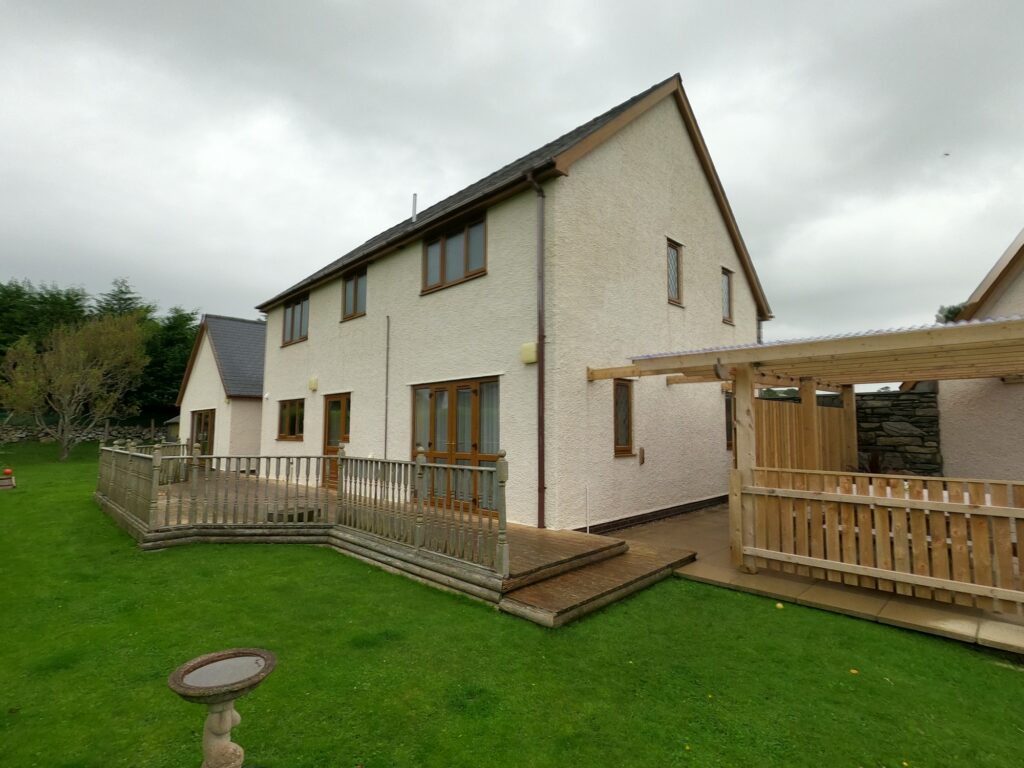
What Is Algae?
Algae are simple organisms that require moisture, light and nutrients to survive. Unlike plants, they do not have roots or complex structures, making them capable of growing on almost any damp outdoor surface.
Although many people refer to all coloured staining as “green algae”, rendered walls can also suffer from red algae, which is becoming increasingly common across the UK. Both forms thrive in similar conditions but produce different visual effects.
| Algae Type | Typical Appearance | Common Location |
|---|---|---|
| Green algae | Green film or patches | Shaded, damp render |
| Red algae | Pink, orange or reddish streaks | South and west-facing walls, rendered surfaces |
| Mixed biological growth | Combination of colours | Older rendered buildings |
Both green algae and red algae should be treated correctly to prevent continued spread across the surface.
Why Modern Render Is Different
Many modern render systems are designed to be highly water resistant while remaining breathable.
This sounds ideal, but it creates an interesting situation.
Instead of absorbing water deeply like older masonry, moisture often remains close to the outer surface. This provides exactly the damp environment algae prefer.
The smoother finish of modern render also allows rainwater to spread across the wall in a thin film rather than soaking away immediately.
This prolonged surface moisture creates ideal growing conditions.
The Role of Surface Moisture
Moisture is by far the biggest factor influencing algae growth.
After rainfall, condensation or morning dew, render often stays damp for many hours.
Several factors affect drying time:
- Wall orientation
- Air movement
- Temperature
- Surface texture
- Nearby vegetation
- Building design
The longer moisture remains, the more opportunity algae have to multiply.
Typical Drying Times
| Surface | Average Drying Speed |
|---|---|
| Brick | Moderate |
| Natural stone | Moderate |
| Timber cladding | Fast to moderate |
| Modern render | Often slow |
| North-facing render | Slowest |
Even if a wall looks dry, microscopic moisture can still remain within the outer surface.
Tiny Surface Pores Matter
Render may look perfectly smooth, but under magnification it contains countless microscopic pores.
These tiny openings trap:
- Dust
- Airborne pollen
- Organic particles
- Moisture
- Pollution
These deposits create food sources for algae.
As more material accumulates over time, biological growth becomes increasingly established.
Air Pollution Makes It Worse
Many people assume algae simply grow because of rain.
In reality, airborne pollution plays an important role.
Particles from:
- Vehicle emissions
- Agricultural activity
- Tree pollen
- Dust
- Organic debris
gradually settle onto rendered walls.
When combined with moisture, these particles provide nutrients that support algae growth.
Properties near busy roads often experience faster staining.
Shade Creates the Perfect Environment
Sunlight naturally dries external walls.
Areas that receive little sunlight remain damp for longer periods.
This explains why algae usually begins in shaded areas before spreading elsewhere.
Common sources of shade include:
- Trees
- Fences
- Garages
- Extensions
- Neighbouring buildings
- High garden walls
The combination of shade and moisture creates ideal growing conditions throughout much of the year.
| Environmental Factor | Effect on Algae |
|---|---|
| Heavy shade | Very high growth |
| Poor airflow | High growth |
| Frequent rainfall | High growth |
| Direct sunshine | Lower growth |
| Strong winds | Reduced moisture |
Why North-Facing Walls Are Usually First
In the UK, north-facing walls receive the least direct sunlight.
As a result they often remain damp significantly longer than south-facing elevations.
Morning dew may remain until the afternoon during cooler months.
This extended dampness allows algae colonies to develop much faster.
However, red algae are increasingly being found on brighter elevations too, particularly where driving rain regularly wets rendered surfaces.
This is why every elevation should be inspected regularly.
Rain Doesn’t Wash Algae Away
Many homeowners expect heavy rain to clean their walls naturally.
Unfortunately, algae attach themselves firmly to render.
Rainwater actually benefits them by supplying the moisture they need.
Instead of removing algae, repeated wetting often helps colonies expand further across the wall.
Temperature Plays an Important Role
Algae are surprisingly resilient.
Although growth slows during very cold weather, they rarely disappear completely.
Instead, colonies become active again when temperatures rise.
The UK’s climate provides ideal conditions because it offers:
- Regular rainfall
- Mild winters
- Humid autumns
- Warm springs
- Frequent overnight condensation
Unlike extremely hot or extremely cold climates, Britain provides long periods where algae can grow steadily.
| Season | Likelihood of Growth |
|---|---|
| Spring | High |
| Summer | Moderate to high |
| Autumn | Very high |
| Winter | Moderate |
Condensation Is Often Overlooked
Rain is not the only source of moisture.
Condensation regularly forms overnight when walls cool.
During calm evenings, moisture from the air settles onto rendered surfaces.
Many rendered homes become damp every single morning even after several dry days.
This repeated cycle provides continual hydration for algae.
Trees Increase Biological Growth
Trees provide welcome shade during summer, but they also contribute to algae problems.
Nearby trees:
- Block sunlight
- Reduce airflow
- Drop leaves
- Release pollen
- Increase humidity
- Deposit organic material
Every one of these factors encourages biological growth.
Properties surrounded by mature gardens often require more frequent render cleaning.
Surface Texture Influences Growth
Not all render finishes behave identically.
Rougher finishes provide additional surface area where algae can attach.
Fine textured render generally accumulates dirt more slowly than heavily textured finishes.
However, all render types can eventually support algae if moisture remains present.
| Render Finish | Likelihood of Dirt Retention |
|---|---|
| Smooth silicone render | Lower |
| Fine textured render | Moderate |
| Rough textured render | Higher |
| Older weathered render | Highest |
Why Cleaning Methods Matter
Once algae become established, simply washing the wall rarely solves the problem.
Visible staining is only part of the issue.
Microscopic organisms often remain attached to the surface even after it appears clean.
Without appropriate treatment, colonies quickly regrow.
Professional soft washing removes visible contamination while applying specialist biocidal treatments that continue working after the cleaning process.
This approach targets the biological organisms rather than simply improving appearance for a short time.
The Difference Between Dirt and Biological Growth
Homeowners often mistake algae for ordinary dirt.
The two behave very differently.
| Dirt | Algae |
|---|---|
| Inorganic particles | Living organism |
| Can often be rinsed away | Continues growing |
| Doesn’t spread | Expands across surfaces |
| Doesn’t require moisture | Needs moisture to survive |
| Usually cosmetic | Can become progressively worse |
Understanding this distinction explains why biological treatments are often recommended alongside cleaning.
Can Certain Colours Make It More Noticeable?
Algae grow on virtually every render colour.
However, lighter colours make staining far more obvious.
White, cream and pale grey render often reveal green algae and red algae much sooner than darker finishes.
Dark coloured render may hide early growth for longer, allowing colonies to become well established before homeowners notice them.
This is one reason regular inspections are worthwhile regardless of render colour.
How Building Design Influences Algae
The way a property is designed also affects moisture retention.
Features that commonly contribute include:
- Deep roof overhangs
- Narrow side passages
- Recessed walls
- Poor drainage
- Overflowing gutters
- Leaking downpipes
Water repeatedly running across rendered surfaces creates ideal conditions for algae colonisation.
Fixing drainage problems can significantly reduce future staining.
| Building Feature | Impact |
|---|---|
| Overflowing gutter | Constant moisture |
| Broken downpipe | Localised algae growth |
| Poor drainage | Increased dampness |
| Sheltered alcoves | Reduced drying |
| Narrow passageways | Limited airflow |
Preventing Future Algae Growth
Although algae cannot be eliminated permanently, homeowners can reduce the conditions that encourage it.
Helpful measures include:
- Keeping gutters clear
- Repairing leaking pipework
- Trimming overhanging vegetation
- Improving airflow around walls
- Cleaning render before staining becomes severe
- Applying professional biocidal treatments after cleaning
Professional maintenance helps interrupt the algae life cycle before colonies become firmly established.
Early treatment is generally easier and more cost-effective than leaving extensive biological growth for many years.
While some homeowners focus solely on finding the cheapest cleaning service, quality treatments often involve specialist products, trained technicians and careful application methods that provide better long-term value. Investing in professional render cleaning may cost more initially, but it can reduce the frequency of repeat treatments and help preserve the appearance of your property for longer.
For homeowners looking to protect their investment, arranging professional maintenance through Softwashing UK helps ensure render is cleaned using methods specifically designed for delicate rendered surfaces while tackling both green algae and red algae at their source.
Why Some Homes Stay Cleaner Than Others
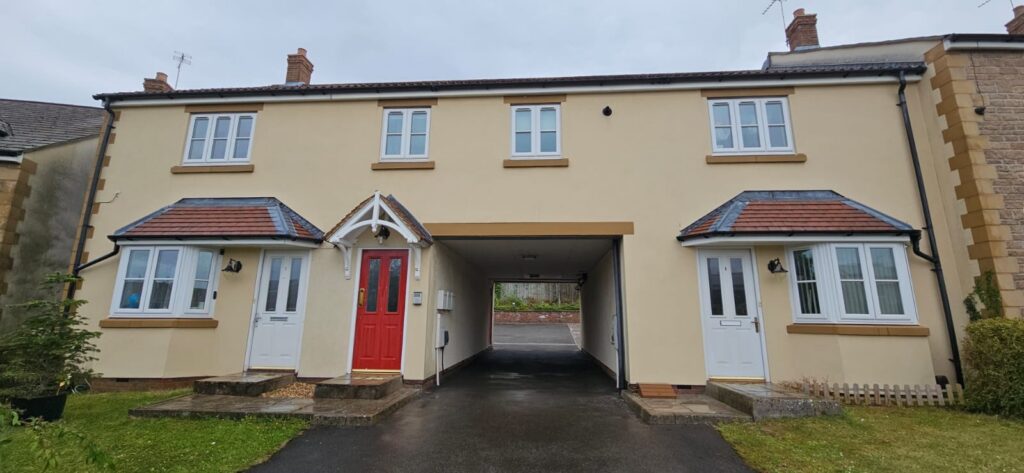
Have you ever noticed two neighbouring properties with the same type of render, yet one remains clean while the other is covered in green algae and red algae? This is because biological growth depends on a combination of microclimates rather than just the render itself.
Even small differences can have a significant impact, including:
- A wall that receives an extra hour of sunlight each day.
- Better airflow because of a wider driveway.
- Fewer overhanging trees.
- Slightly steeper ground that drains water away more effectively.
- A property that’s more exposed to drying winds.
These seemingly minor variations affect how long moisture remains on the surface, directly influencing how quickly algae can establish itself.
| Property Feature | Likely Effect on Algae Growth |
|---|---|
| Open, windy location | Lower risk |
| Sheltered cul-de-sac | Higher risk |
| Surrounded by mature trees | Higher risk |
| Elevated position | Lower risk |
| Dense planting close to walls | Higher risk |
The Importance of Relative Humidity
Rainfall often receives all the attention, but humidity plays an equally important role.
Relative humidity measures the amount of moisture already present in the air. When humidity is high, render dries much more slowly because evaporation becomes less efficient.
In many parts of the UK, humidity remains high for much of the year, especially during autumn and winter. Coastal areas, river valleys and heavily wooded locations often experience particularly humid conditions.
High humidity means that even if it hasn’t rained for several days, rendered walls can still retain enough surface moisture to support algae growth.
This explains why some homeowners are surprised to see algae continuing to spread during what appears to be dry weather.
Why Silicone Render Can Still Develop Algae
Silicone render is often marketed as self-cleaning because it is designed to repel water and allow rain to wash away dirt.
While this technology certainly offers advantages, it doesn’t make render immune to algae.
Rainwater can remove loose dust and debris, but it cannot always remove living biological organisms that have already attached themselves to the surface.
If conditions remain damp, algae continue to multiply despite the water-repellent properties of the coating.
Self-cleaning should therefore be viewed as reducing maintenance rather than eliminating it altogether.
Microscopic Growth Starts Long Before You Can See It
One of the biggest misconceptions about algae is that it suddenly appears overnight.
In reality, colonies begin developing long before visible staining becomes noticeable.
Initially, microscopic organisms settle onto the render.
They then begin reproducing in tiny numbers.
Over weeks or months, the colonies expand until enough cells are present for the human eye to detect.
By the time homeowners notice green or red staining, the biological growth has often been established for quite some time.
This is why preventative maintenance is usually more effective than waiting until the render looks heavily stained.
Wind Carries Algae Everywhere
Many people assume algae somehow originate from the wall itself.
In reality, algae spores are constantly travelling through the air.
Wind carries microscopic spores over surprisingly large distances.
These spores settle on roofs, fences, patios, windows and rendered walls every day.
Whether they survive depends entirely on the conditions they encounter after landing.
If the surface dries quickly, they often fail to establish themselves.
If moisture remains, colonies begin to grow.
This is one reason no property is completely immune from algae.
Why Newly Rendered Homes Can Develop Staining Quickly
Some homeowners are disappointed when newly rendered walls begin showing signs of algae after only a few years.
This doesn’t necessarily indicate poor workmanship.
Fresh render is still exposed to exactly the same environmental conditions as older render.
In fact, many newly built estates contain:
- Young landscaping that is regularly watered.
- Closely spaced houses reducing airflow.
- Modern render systems with smooth finishes.
- High levels of surrounding construction dust.
Combined with Britain’s climate, these factors can encourage biological growth relatively quickly.
How Dirt Accelerates Biological Growth
Render doesn’t become stained purely because algae arrive.
The surface first collects airborne contamination.
This includes:
- Road dust
- Soot
- Pollen
- Bird droppings
- Insect residue
- Organic debris
These contaminants trap additional moisture while also supplying nutrients.
Over time, they create an increasingly favourable environment for algae to flourish.
Regular professional cleaning removes these deposits before they contribute to widespread biological growth.
Why Pressure Washing Isn’t Always the Answer
Many homeowners assume a pressure washer will solve the problem.
While pressure washing may remove some visible staining, it isn’t always suitable for render.
High-pressure water can potentially:
- Damage delicate finishes.
- Remove protective coatings.
- Force water deeper into small defects.
- Leave surviving algae behind.
- Produce uneven cleaning results.
Professional soft washing is specifically designed for sensitive rendered surfaces.
Rather than relying on force alone, it uses carefully selected cleaning solutions and specialist application methods to treat the biological growth itself.
The Long-Term Effects of Ignoring Algae
Although algae are primarily viewed as a cosmetic issue, leaving them untreated for years can create additional maintenance challenges.
Heavy biological growth can:
- Make properties appear older than they are.
- Reduce kerb appeal.
- Increase the amount of trapped surface moisture.
- Encourage other biological organisms such as mosses and lichens.
- Make future cleaning more difficult.
Addressing algae before it becomes extensive generally results in a simpler restoration process.
Why Professional Biocides Make Such a Difference
The visible staining is only one part of the problem.
The microscopic organisms responsible for the staining often extend beyond what can be seen.
Professional-grade biocides are designed to penetrate these colonies, helping destroy the organisms responsible for continued growth.
Following treatment, weathering gradually removes the dead organic material while helping the render return to its original appearance.
This approach focuses on treating the cause rather than simply masking the symptoms.
Seasonal Maintenance Can Reduce Future Costs
Routine inspections throughout the year allow homeowners to identify early signs of biological growth before extensive staining develops.
A simple maintenance schedule may include:
| Time of Year | Recommended Checks |
|---|---|
| Spring | Inspect for winter algae growth and check gutters. |
| Summer | Trim vegetation and monitor shaded elevations. |
| Autumn | Remove fallen leaves and ensure drainage remains clear. |
| Winter | Check for overflowing gutters and prolonged damp areas. |
Keeping gutters flowing freely, maintaining nearby planting and arranging professional cleaning when required can significantly reduce the conditions that algae depend upon.
Although professional render cleaning is a premium service, investing in specialist treatment often proves more economical over the life of the property than repeatedly attempting ineffective DIY solutions or allowing biological growth to become heavily established.
Regular maintenance from specialists such as Softwashing UK helps protect the appearance of rendered homes while targeting both green algae and red algae using methods specifically designed for modern render systems.