


External surfaces are constantly exposed to the British weather. Rain, wind, pollution, biological growth and organic debris all contribute to the gradual deterioration of a property’s appearance. Over time, walls, roofs, patios, driveways and render can become covered in algae, moss, lichen and other contaminants that not only affect kerb appeal but may also shorten the lifespan of building materials.
Many homeowners have heard of pressure washing, but fewer are familiar with soft washing. As awareness grows regarding the risks associated with high-pressure cleaning, soft washing has become one of the most popular and effective methods for cleaning delicate exterior surfaces.
Soft washing is a specialist cleaning process designed to remove biological growth safely and effectively while providing long-lasting protection against future contamination.
For professional soft washing services throughout the UK, visit Soft Washing UK.
What Is Soft Washing?
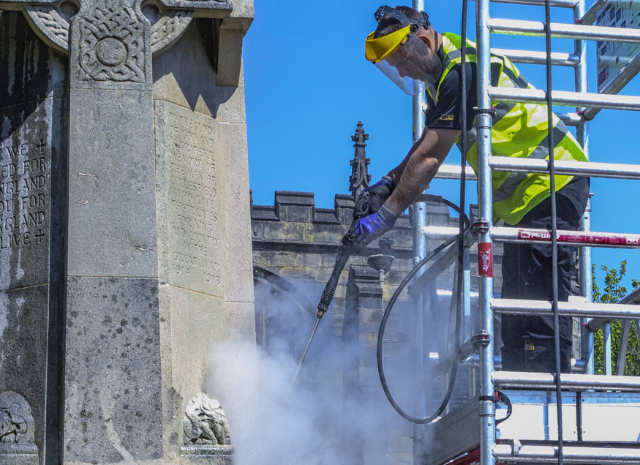
Soft washing is a low-pressure exterior cleaning method that uses specialist cleaning solutions to remove organic contamination from surfaces.
Unlike pressure washing, which relies primarily on the force of water, soft washing focuses on treating and eliminating the root cause of staining and biological growth.
The process is commonly used to clean:
- Render
- Roofs
- Pebbledash
- Cladding
- Brickwork
- Stonework
- Fencing
- Decking
- Patios
- Commercial buildings
Soft washing not only removes visible contamination but also targets microscopic spores and organisms that would otherwise remain on the surface.
How Soft Washing Works
The soft washing process typically involves several stages.
Step 1: Inspection
Every project begins with a detailed assessment of the surface.
The technician identifies:
- Type of contamination
- Surface material
- Existing damage
- Moisture issues
- Accessibility requirements
Step 2: Preparation
Loose debris may be removed before treatment begins.
This can include:
- Leaves
- Moss deposits
- Soil build-up
- Organic matter
Step 3: Application of Cleaning Solution
A specialist cleaning solution is applied using low-pressure equipment.
The solution penetrates biological growth and begins breaking down contaminants.
Step 4: Dwell Time
The treatment is left to work on the surface.
This allows the cleaning agents to reach deep into pores, cracks and microscopic surface imperfections.
Step 5: Rinse or Weathering Process
Depending on the surface and treatment used, the area may be rinsed or allowed to weather naturally over time.
Step 6: Ongoing Protection
Biocidal treatment continues working after application, helping to reduce future regrowth.
Soft Washing vs Pressure Washing
Many people confuse soft washing with pressure washing.
Although both are exterior cleaning methods, they operate very differently.
| Feature | Soft Washing | Pressure Washing |
|---|---|---|
| Water Pressure | Low | High |
| Biological Treatment | Yes | Limited |
| Surface Risk | Low | Higher |
| Long-Term Results | Excellent | Often Short-Term |
| Suitable for Render | Yes | Often Not Recommended |
| Suitable for Roofs | Yes | Yes, with caution |
| Spore Elimination | Yes | Usually No |
Soft washing focuses on cleaning and treatment, while pressure washing primarily focuses on surface removal.
Why Biological Growth Appears on Buildings
Buildings are continually exposed to airborne spores and organic matter.
When moisture is present, microorganisms begin colonising surfaces.
Common biological contaminants include:
| Contaminant | Description |
|---|---|
| Moss | Thick green growth often found on roofs |
| Lichen | Crust-like growth attached to surfaces |
| Green Algae | Green staining and streaking |
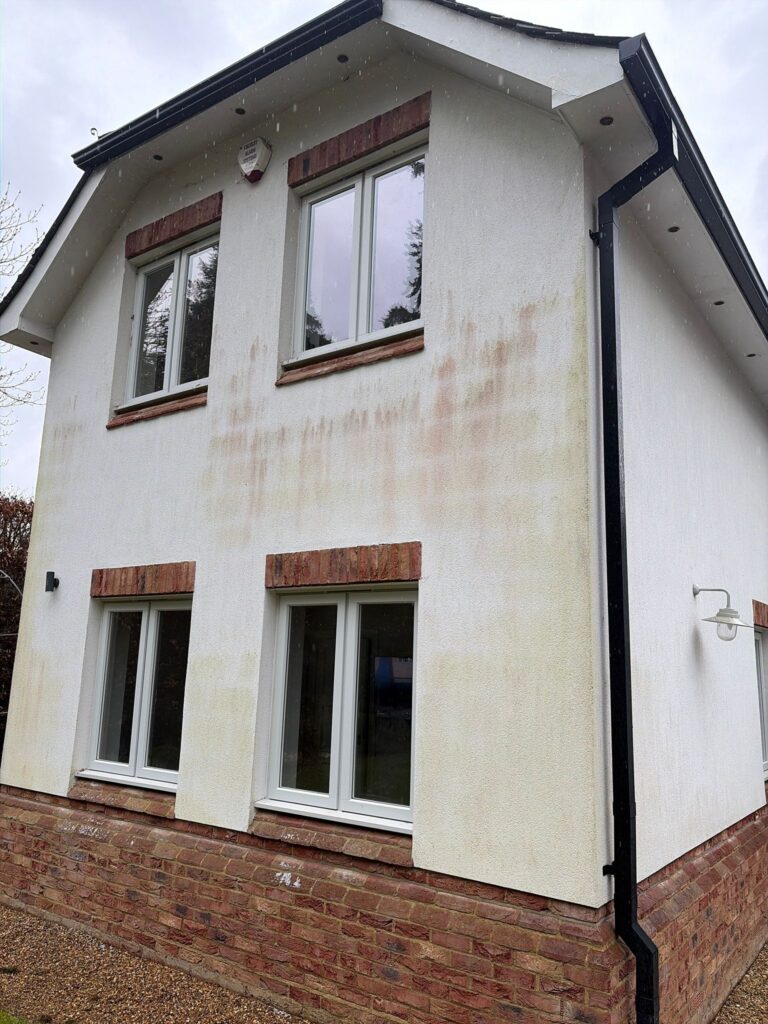
| Red Algae | Red or pink discolouration |
| Fungi | Various forms of organic growth |
| Mould | Damp-related biological contamination |
If green algae are present, red algae can often develop in similar environmental conditions, particularly on damp and shaded surfaces.
Why Soft Washing Is Growing in Popularity
Several factors have contributed to the rise of soft washing across the UK.
Property owners increasingly seek cleaning methods that:
- Deliver long-lasting results
- Protect building materials
- Improve kerb appeal
- Reduce maintenance costs
- Remove biological contamination effectively
Soft washing satisfies all of these requirements while minimising the risk of surface damage.
Surfaces Suitable for Soft Washing
One of the greatest advantages of soft washing is its versatility.
Render
Modern render systems can be sensitive to high-pressure cleaning.
Soft washing safely removes algae, dirt and staining without damaging the finish.
Roof Tiles
Roofs often suffer from moss, lichen and algae growth.
Soft washing can restore appearance while helping to extend roof lifespan.
Brickwork
Brick surfaces can accumulate staining and biological contamination over time.
Soft washing provides deep cleaning without excessive abrasion.
Natural Stone
Many stone surfaces benefit from low-pressure cleaning methods that preserve their appearance.
Cladding
Commercial and domestic cladding can become heavily stained by pollution and biological growth.
Soft washing offers a highly effective cleaning solution.
Common Signs That Soft Washing Is Needed
Many homeowners delay cleaning because contamination develops gradually.
Warning signs include:
- Green staining
- Red staining
- Black spots
- Moss growth
- Lichen deposits
- Dirty render
- Streaking on walls
- Roof discolouration
Addressing these issues early often prevents more extensive contamination later.
The Benefits of Soft Washing
Soft washing offers numerous advantages compared to traditional cleaning methods.
Improved Appearance
One of the most immediate benefits is the restoration of the property’s appearance.
Stained surfaces often look dramatically cleaner following treatment.
Longer-Lasting Results
Because soft washing kills spores rather than simply removing visible growth, results generally last longer.
Reduced Maintenance
Surfaces remain cleaner for extended periods, reducing the need for frequent cleaning.
Surface Protection
Low-pressure application helps preserve delicate materials.
Better Property Presentation
Clean external surfaces can significantly enhance kerb appeal.
| Benefit | Impact |
|---|---|
| Improved Appearance | High |
| Reduced Regrowth | High |
| Surface Protection | High |
| Increased Kerb Appeal | High |
| Reduced Maintenance | Medium to High |
Why Soft Washing Is Ideal for Render Cleaning
Render cleaning represents one of the most common applications of soft washing.
Modern render systems often develop:
- Green algae
- Red algae
- Black staining
- Atmospheric pollution deposits
Pressure washing can damage certain render finishes.
Soft washing provides a safer alternative that addresses contamination without excessive force.
Soft Washing for Roof Cleaning
Roofs are among the most heavily contaminated areas of any property.
Moisture retention creates ideal conditions for:
- Moss
- Lichen
- Green algae
- Red algae
Professional soft washing removes contamination while reducing the likelihood of rapid regrowth.
Common Roof Issues
| Roof Problem | Impact |
|---|---|
| Moss Growth | Moisture retention |
| Lichen Colonisation | Surface deterioration |
| Algae Growth | Unsightly appearance |
| Debris Build-Up | Drainage problems |
Regular roof maintenance helps protect roofing materials and improve overall property appearance.
Understanding Biocides in Soft Washing
Biocides are a key component of professional soft washing.
They help eliminate:
- Algae spores
- Moss spores
- Fungal growth
- Organic contamination
Without biocidal treatment, many cleaning methods simply remove visible growth while leaving microscopic contamination behind.
This often results in rapid regrowth.
Residential Soft Washing Applications
Soft washing is suitable for a wide range of residential projects.
Examples include:
- Detached houses
- Semi-detached homes
- Terraced properties
- Bungalows
- Apartment buildings
Homeowners often use soft washing as part of a wider property maintenance programme.
Commercial Soft Washing Applications
Commercial properties also benefit from professional soft washing.
Typical projects include:
- Office buildings
- Retail units
- Schools
- Care homes
- Hotels
- Industrial premises
Maintaining clean external surfaces can contribute to a professional image and improve customer perception.
Environmental Considerations
Many property owners are concerned about environmental responsibility.
Professional soft washing focuses on targeted treatment rather than excessive water consumption.
Compared to some high-pressure cleaning methods, soft washing often uses significantly less water.
Responsible application procedures help ensure treatments are used safely and effectively.
Factors Affecting How Long Results Last
Several variables influence treatment longevity.
These include:
| Factor | Effect on Longevity |
|---|---|
| Shade | Reduced lifespan |
| Tree Coverage | Increased regrowth |
| Humidity | Faster contamination |
| Sunlight Exposure | Longer-lasting results |
| Property Location | Variable |
| Surface Type | Variable |
Properties surrounded by trees or located in damp environments may require more frequent maintenance.
How Often Should Soft Washing Be Carried Out?
There is no universal schedule because every property experiences different environmental conditions.
Factors influencing frequency include:
- Local climate
- Vegetation levels
- Building orientation
- Surface type
- Previous contamination
Some surfaces may remain clean for years, while others benefit from periodic maintenance treatments.
Common Myths About Soft Washing
Myth 1: It Is Just Low-Pressure Washing
Soft washing involves specialist treatments, not simply reduced pressure.
Myth 2: Results Are Immediate Only
Many treatments continue working after application, providing ongoing benefits.
Myth 3: It Damages Surfaces
When carried out correctly, soft washing is specifically designed to protect surfaces.
Myth 4: Pressure Washing Is Always Better
Different surfaces require different cleaning approaches.
In many situations, soft washing provides superior long-term results.
Myth 5: Only Older Buildings Need Soft Washing
New properties can develop algae and staining just as quickly as older buildings.
The Cost of Ignoring Biological Growth
Neglecting external contamination can lead to increased maintenance costs over time.
Potential expenses may include:
| Issue | Potential Cost Impact |
|---|---|
| Render Repairs | £Hundreds to £Thousands |
| Roof Repairs | £Hundreds to £Thousands |
| Repainting | Significant |
| Reduced Kerb Appeal | Property Value Impact |
| Increased Cleaning Requirements | Ongoing Costs |
Preventative maintenance is often considerably more affordable than major restoration work.
Choosing a Professional Soft Washing Service
Soft washing requires specialist knowledge and equipment.
An experienced provider will assess:
- Surface type
- Contamination levels
- Appropriate treatment methods
- Safety requirements
- Long-term protection options
Every property is different, making tailored treatment plans essential for achieving the best results.
The Future of Exterior Cleaning
As property owners become increasingly aware of the limitations of traditional high-pressure cleaning, demand for soft washing continues to grow.
Modern building materials, particularly render systems and decorative finishes, often require gentler cleaning methods that preserve appearance while delivering effective biological treatment.
Soft washing combines cleaning, restoration and preventative maintenance into a single process, making it one of the most effective exterior cleaning solutions available for residential and commercial properties throughout the UK.
The Science Behind Soft Washing
To understand why soft washing is so effective, it helps to understand how biological growth attaches itself to external surfaces.
Many contaminants do not simply sit on top of a wall, roof tile or render finish. Algae, moss, lichen and fungi often establish microscopic root-like structures that penetrate tiny pores and imperfections within the material. This is one of the reasons why staining frequently returns shortly after conventional cleaning methods have been used.
When a surface is pressure washed, the visible contamination may disappear temporarily, but the microscopic spores and biological remnants often remain. These surviving organisms can rapidly recolonise the area, particularly during periods of wet weather.
Soft washing takes a different approach by targeting the organisms themselves. Specialist treatments work at a biological level to destroy contamination and inhibit future growth. This means surfaces are not simply cleaned; they are sanitised and protected.
How Biological Growth Develops
The growth cycle of algae and other contaminants generally follows a predictable pattern.
| Stage | Description |
|---|---|
| Spore Settlement | Airborne spores land on a surface |
| Moisture Retention | Water allows growth to begin |
| Colonisation | Organisms establish themselves |
| Expansion | Growth spreads across the surface |
| Maturity | Heavy staining and contamination develop |
Breaking this cycle early helps prevent extensive staining and costly maintenance.
Soft Washing and Property Value
First impressions matter, particularly when selling or letting a property.
External surfaces are among the first things prospective buyers, tenants and visitors notice. Dirty render, stained roofs and algae-covered walls can create the impression that a property has not been properly maintained.
Professional soft washing can significantly improve:
- Kerb appeal
- Visual presentation
- Marketability
- Customer perception
- Tenant satisfaction
For landlords and commercial property owners, maintaining clean external surfaces can contribute to a more professional image and help attract prospective occupants.
Areas That Create the Biggest Visual Impact
| Surface | Visual Importance |
|---|---|
| Front Render | Very High |
| Roof | Very High |
| Driveway | High |
| Entrance Areas | High |
| Boundary Walls | Medium |
| Fencing | Medium |
Even modest improvements to these areas can transform the overall appearance of a property.
Seasonal Challenges for Exterior Surfaces
Every season presents different challenges for building exteriors.
Spring
Warmer temperatures combined with residual winter moisture often encourage rapid algae growth. Green algae and red algae may become increasingly visible as daylight hours increase.
Summer
Although surfaces dry more quickly, shaded areas can still retain sufficient moisture for biological growth to thrive.
Autumn
Falling leaves and organic debris create additional nutrients that support algae, moss and fungal development.
Winter
Frequent rainfall, lower temperatures and reduced sunlight can significantly increase moisture retention on roofs, render and walls.
Understanding these seasonal patterns allows homeowners and property managers to plan maintenance more effectively and address contamination before it becomes widespread.
Regular inspections throughout the year can identify early signs of growth and ensure exterior surfaces remain clean, attractive and protected against long-term deterioration.