


Modern rendered homes look clean, contemporary and attractive, but they also require regular maintenance to stay that way. Over time, render is exposed to rain, pollution, airborne spores, dust and biological growth that gradually change its appearance. While some staining is purely cosmetic, other contamination can begin to affect the surface if left untreated.
Many homeowners wonder whether render cleaning is genuinely necessary or simply something companies recommend. The truth is that not every property requires immediate cleaning, but there are several situations where professional cleaning becomes the best option for protecting both appearance and the render itself.
If you’re unsure whether your property needs attention, speaking with the specialists at Softwashing UK can help you determine whether cleaning is appropriate or whether monitoring the condition is the better choice.
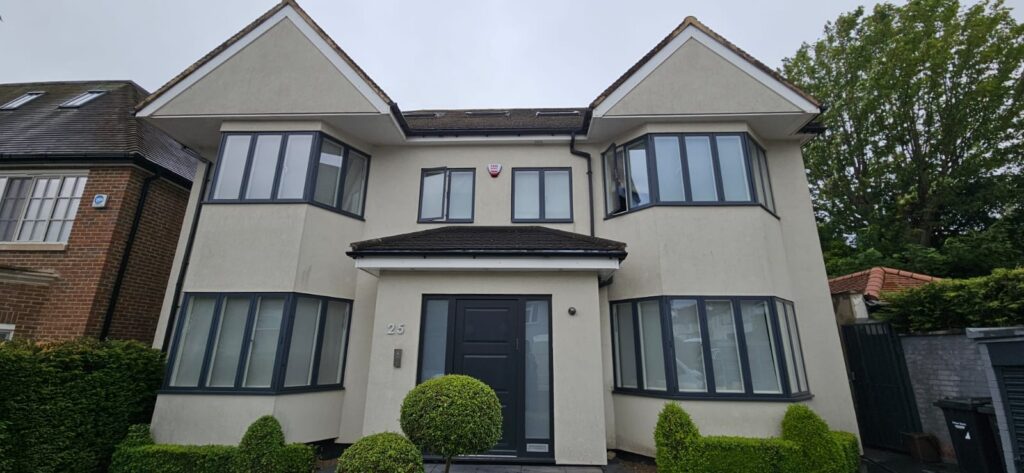
What Causes Render to Become Dirty?
Render is designed to withstand the British weather, but its textured surface naturally traps moisture, dirt and airborne particles.
Common causes include:
| Cause | Effect on Render |
|---|---|
| Air pollution | Grey or black staining |
| Dust and dirt | General dull appearance |
| Tree pollen | Yellow or brown discolouration |
| Green algae | Green patches on shaded areas |
| Red algae | Red, orange or pink staining that can become stubborn |
| Moss | Holds moisture against the surface |
| Lichen | Hard, crust-like growth that’s difficult to remove |
| Traffic pollution | Dark staining on roadside properties |
One important point is that green algae and red algae often appear together on UK properties. While green algae is usually the first noticeable growth, red algae is becoming increasingly common and can be considerably harder to remove without specialist treatment.
Does Dirty Render Mean It Needs Cleaning?
Not always.
Some light dirt or weathering is perfectly normal, particularly on older properties.
Professional cleaning usually becomes worthwhile when:
- Biological growth is spreading
- The render has noticeably changed colour
- The appearance affects kerb appeal
- You’re preparing to sell the property
- Staining continues getting worse
- Previous DIY cleaning hasn’t worked
Cleaning too early isn’t always necessary, but waiting too long can make contamination much more difficult to remove.
Signs Render Cleaning Is Becoming Necessary
1. Green Algae Starts Spreading
Small green patches often appear on north-facing walls where sunlight is limited.
Although initially cosmetic, green algae traps moisture and provides ideal conditions for additional biological growth.
It’s also common to find red algae developing alongside green algae, particularly on modern white or coloured render.
Early treatment is usually much easier than allowing both organisms to spread.
2. Red Algae Appears
Red algae has become one of the biggest issues affecting rendered properties throughout the UK.
Unlike green algae, it:
- Penetrates deeper into the render surface
- Produces red or orange staining
- Can become permanent if ignored
- Often survives ordinary pressure washing
Many homeowners mistake red algae for rust or brick dust when it’s actually biological contamination.
3. Black Streaks Develop
Black streaks are normally caused by pollution, airborne particles and long-term moisture.
These often appear:
- Beneath windows
- Under rooflines
- Around guttering
- On exposed elevations
Although not usually harmful, they significantly reduce the appearance of the property.
4. Your Home Looks Older Than It Is
Render should enhance a property’s appearance.
Dirty render can make even relatively new homes appear neglected.
If you’ve recently cleaned:
- Windows
- Roof
- Driveway
- Gutters
…the render often becomes the only remaining dirty surface.
Areas That Usually Need Cleaning First
Not every wall deteriorates at the same rate.
| Location | Why It Gets Dirty Faster |
|---|---|
| North-facing walls | Less sunlight allows algae growth |
| Under trees | Increased shade and organic debris |
| Near busy roads | Pollution and traffic deposits |
| Coastal properties | Salt and moisture exposure |
| Around guttering | Water runoff causes staining |
| Garden walls | Splashback from soil and rain |
Often only one elevation requires attention rather than the entire property.
How Long Does Render Stay Clean?
There isn’t a universal answer because every property experiences different conditions.
Factors include:
- Tree cover
- Weather exposure
- Orientation
- Local pollution
- Humidity
- Nearby vegetation
A professionally softwashed property often remains noticeably cleaner for several years because specialist treatments remove biological growth rather than simply washing the surface.
Can You Leave Dirty Render Alone?
Sometimes yes.
If staining is very light and purely cosmetic, there may be no urgency.
However, leaving biological growth for years can allow:
- Green algae to spread
- Red algae to establish itself
- Moss to retain moisture
- Lichen to become harder to remove
Early intervention is generally quicker, easier and more cost-effective.
Should You Pressure Wash Render?
This is one of the biggest misconceptions surrounding render maintenance.
High-pressure washing may appear effective initially but can create problems.
Potential risks include:
| High Pressure Risk | Why It Matters |
|---|---|
| Surface damage | Can erode protective finish |
| Water penetration | Moisture enters tiny cracks |
| Patchy cleaning | Uneven appearance |
| Short-term results | Growth often returns quickly |
| Reduced coating life | Protective finishes may wear prematurely |
Professional soft washing is designed to clean render safely using low pressure and specialist cleaning solutions.
Is Professional Cleaning Worth It?
For many homeowners, yes.
Professional cleaning focuses on:
- Correct treatment selection
- Safe application
- Removing biological growth
- Protecting the render finish
- Improving appearance
This is especially important on coloured render or specialist finishes that require more careful cleaning methods.
Typical Signs You Should Book a Clean
| Symptom | Cleaning Recommended? |
|---|---|
| Light dust | Usually no |
| Green algae spreading | Yes |
| Red algae visible | Yes |
| Heavy black staining | Usually yes |
| Moss developing | Yes |
| Preparing house for sale | Yes |
| Fresh render under five years old with no staining | Usually no |
Does Cleaning Add Value?
While cleaning doesn’t directly increase property value in the same way as an extension, it can dramatically improve first impressions.
Estate agents often discuss kerb appeal because buyers make decisions within seconds of viewing a property.
Fresh render can make the whole property appear:
- Better maintained
- Newer
- Cleaner
- More valuable
- Easier to care for
Compared with repainting, cleaning is usually significantly less expensive while restoring much of the original appearance.
Is Repainting Always Necessary?
Many homeowners assume dirty render means it needs repainting.
Often, this isn’t true.
Professional cleaning can remove years of contamination without changing the render itself.
Repainting may only become necessary if:
- The coating has failed
- Large cracks exist
- Previous paint is peeling
- Permanent staining remains after cleaning
Cleaning first often avoids unnecessary decorating costs.
Typical Cleaning Costs
Every property is different, depending on:
- House size
- Number of elevations
- Access requirements
- Amount of contamination
- Type of render
Typical guide prices might include:
| Property | Typical Professional Cleaning Cost |
|---|---|
| Small bungalow | £350–£600 |
| Semi-detached house | £500–£900 |
| Detached property | £700–£1,500+ |
| Large executive home | £1,500+ |
Properties suffering from extensive green algae and red algae may require additional specialist treatment due to the level of biological growth present.
Can You Clean Render Yourself?
Many DIY products promise instant results, but render is more delicate than many homeowners realise.
DIY attempts often involve:
- Household bleach
- Patio cleaner
- Pressure washers
- Stiff brushes
These methods may:
- Leave patchy cleaning
- Damage coloured finishes
- Fail to kill biological growth
- Cause uneven colouring
Because different render systems react differently, professional assessment is often the safest option.
Why Timing Matters
Many homeowners wait until render looks extremely dirty before acting.
However, cleaning earlier offers several advantages:
| Early Cleaning | Late Cleaning |
|---|---|
| Easier removal | More stubborn staining |
| Less biological growth | Heavier contamination |
| Lower risk of permanent marks | Greater chance of lasting discolouration |
| Better kerb appeal year-round | Property looks neglected for longer |
| Faster cleaning process | May require multiple treatments |
Keeping on top of contamination helps preserve the appearance of modern render without allowing algae and staining to become deeply established.
Seasonal Considerations
Although render can be cleaned throughout much of the year, some seasons are more favourable depending on weather conditions.
| Season | Benefits |
|---|---|
| Spring | Removes winter algae and prepares the property for summer |
| Summer | Dry weather often allows efficient treatment and drying |
| Autumn | Clears biological growth before wetter months arrive |
| Winter | Possible in suitable weather, though scheduling depends on temperature and conditions |
Many homeowners choose spring or early autumn to maintain the appearance of their property before periods of heavier rainfall or increased outdoor use.
Choosing the Right Time for Your Property
Every rendered home ages differently depending on its surroundings. A south-facing property in an open location may stay cleaner for much longer than a shaded home surrounded by mature trees. Likewise, homes close to busy roads may experience pollution staining more quickly than those in rural settings.
Rather than cleaning on a fixed schedule, it’s better to monitor your render for early signs of contamination. If you notice green algae developing alongside red algae, black streaks becoming more obvious or the overall finish losing its original brightness, it’s usually the right time to arrange a professional assessment.
The team at Softwashing UK specialises in safely restoring rendered surfaces using professional soft washing methods that remove biological growth while protecting the finish. Whether your render only needs a light clean or has developed widespread algae and staining, an expert inspection can determine when cleaning is genuinely necessary rather than carrying out unnecessary work.
Why Some Render Gets Dirty Faster Than Others
It can be frustrating when your neighbour’s render still looks bright while yours has become stained after only a few years. In reality, the quality of the render is only one part of the equation. Environmental conditions have a huge influence on how quickly contamination develops.
Factors that accelerate staining include:
- Overhanging trees creating constant shade.
- North-facing elevations that receive very little direct sunlight.
- Nearby rivers, lakes or woodland that increase humidity.
- Busy roads producing traffic pollution.
- Roofs or gutters that regularly overflow.
- Poor airflow around the building.
Even two houses built next to each other can age very differently if one side receives more sunlight or has better ventilation.
| Environmental Factor | Impact on Render |
|---|---|
| Dense tree cover | Higher moisture levels encourage algae growth |
| Heavy rainfall | More frequent wetting of the surface |
| Coastal air | Salt deposits and increased moisture |
| Urban pollution | Dark staining and airborne particles |
| Poor drainage | Water marks and biological growth |
Does Render Type Make a Difference?
Yes. Different render systems have different finishes, textures and coatings, all of which influence how dirt and algae accumulate.
Common render types include:
- Silicone render
- Monocouche render
- Acrylic render
- Mineral render
- Traditional cement render
Silicone render is often marketed as “self-cleaning” because rainwater helps wash away some surface dirt. However, this does not make it immune to biological growth. Green algae and red algae can still develop if conditions are suitable.
Likewise, monocouche render remains highly durable but will still collect dirt over time, particularly in shaded locations.
Professional cleaning methods should always be tailored to the specific render system to avoid unnecessary damage.
The Difference Between Dirt and Biological Growth
Not every stain is the same, which is why professional assessment is valuable.
Dirt
Surface dirt usually consists of:
- Dust
- Pollution
- Mud splashes
- Airborne debris
This tends to sit on the surface and is often easier to remove.
Biological Growth
Biological contamination includes:
- Green algae
- Red algae
- Moss
- Lichen
These organisms actively grow on the render, feeding from moisture and microscopic nutrients. Simply washing the surface rarely removes the underlying spores, meaning growth often returns quickly without specialist treatment.
Why Soft Washing Is So Effective
Soft washing isn’t simply “low-pressure cleaning.”
It combines carefully selected cleaning solutions with gentle application methods that target biological contamination rather than blasting the surface.
Benefits include:
| Soft Washing Benefit | Why It Matters |
|---|---|
| Low pressure | Protects delicate render finishes |
| Kills spores | Helps slow regrowth |
| Removes staining | Restores original appearance |
| Suitable for coloured render | Minimises risk of damage |
| Longer-lasting results | Growth takes longer to return |
This is particularly important where red algae has penetrated the surface, as physical washing alone may leave visible staining behind.
Can Dirty Render Cause Structural Problems?
In most cases, dirty render itself will not damage the structure of your property.
However, long-term biological growth can contribute to conditions that are less than ideal.
Persistent moisture retained by moss and algae may:
- Keep the render damp for longer.
- Increase freeze-thaw cycles during winter.
- Encourage further biological growth.
- Highlight areas where water drainage needs improving.
Cleaning should therefore be viewed as part of an overall property maintenance programme rather than simply an aesthetic improvement.
Preparing Your Home for Sale
One of the most common reasons homeowners arrange render cleaning is before putting their property on the market.
Buyers often judge a home within moments of arriving.
Fresh, clean render helps create the impression that the property has been well maintained throughout.
Compared with larger renovation projects, professional render cleaning often provides a strong visual improvement without major disruption.
Estate photographs also benefit from cleaner external walls, helping online listings attract more interest.
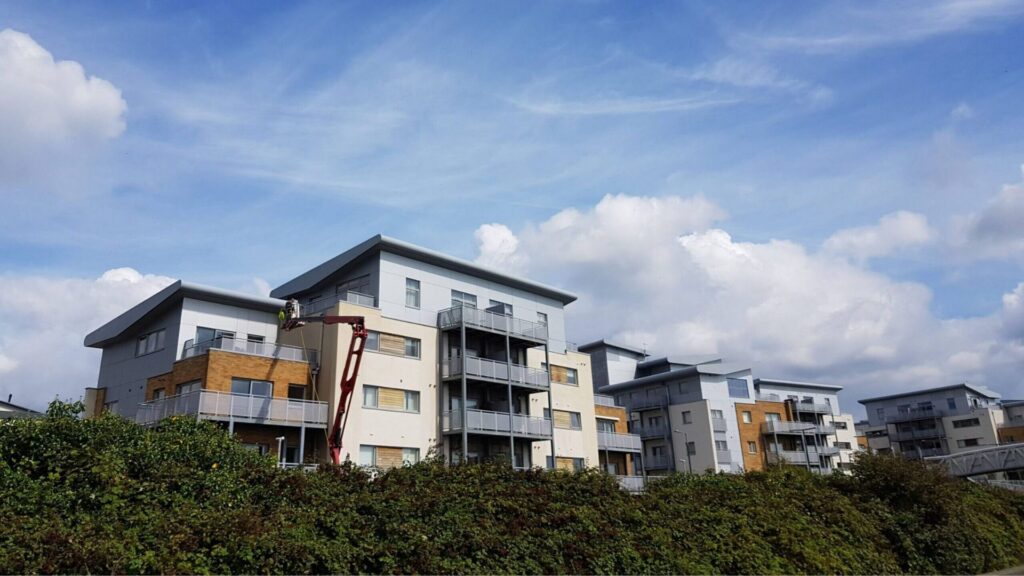
Commercial Buildings Need Cleaning Too
Render cleaning isn’t limited to houses.
Commercial properties frequently require maintenance to preserve a professional image.
Examples include:
- Offices
- Schools
- Medical centres
- Retail units
- Hotels
- Apartment buildings
For businesses, stained render can influence customer perception before anyone even walks through the door.
Routine cleaning helps maintain a welcoming appearance while protecting exterior finishes.
Common Myths About Render Cleaning
There are several misconceptions that often prevent homeowners from arranging cleaning at the right time.
| Myth | Reality |
|---|---|
| Rain will clean the render | Rain often encourages algae growth rather than removing it |
| Pressure washing is always best | High pressure can damage render finishes |
| New render never needs cleaning | All render can become contaminated over time |
| Green stains are just dirt | They are often living algae colonies |
| Red stains will disappear naturally | Red algae usually requires specialist treatment |
Understanding these myths helps homeowners make informed maintenance decisions rather than relying on guesswork.
How Often Should Render Be Inspected?
Even if cleaning isn’t currently necessary, it’s sensible to inspect your render once or twice each year.
Look for:
- New green patches.
- Red algae beginning to appear.
- Dark streaking.
- Moss growth.
- Hairline cracks.
- Overflowing gutters causing staining.
Early identification allows problems to be addressed before they become widespread and more costly to resolve.
Preventing Future Build-Up
While no render can stay spotless forever, there are several steps that may help reduce the rate of contamination.
Maintenance tips include:
- Keep gutters clear so water doesn’t run down walls.
- Trim back overhanging trees to increase sunlight.
- Repair leaking downpipes promptly.
- Remove nearby vegetation touching the walls.
- Check drainage around the property.
- Arrange professional cleaning before contamination becomes severe.
These simple measures won’t eliminate algae completely, but they can slow its development and help the render remain cleaner for longer.
Investing in Professional Maintenance
Many homeowners view render cleaning as an occasional expense, but it’s often more accurate to think of it as preventative maintenance.
Regular inspections and timely cleaning can help avoid:
- Permanent staining.
- More extensive biological growth.
- Premature repainting.
- Costly restoration work.
For higher-value homes, maintaining the exterior finish also protects the property’s overall presentation and helps preserve its kerb appeal throughout the year.
When carried out by experienced specialists using the correct soft washing techniques, render cleaning restores the appearance of the surface while treating the underlying biological growth, including both green algae and red algae, helping your home remain cleaner for longer. If you’re unsure whether your render has reached the stage where cleaning is genuinely necessary, the experts at Softwashing UK can assess its condition and recommend the most appropriate solution based on the level of contamination rather than a one-size-fits-all approach.