


If your property’s render is looking tired, stained or discoloured, it can be tempting to simply apply a fresh coat of masonry paint and hope for the best. Unfortunately, painting over dirty render rarely solves the problem. In many cases, it actually makes things worse, leading to peeling paint, trapped moisture, ongoing biological growth and expensive repairs.
Before investing in repainting your property, it’s essential to ensure the render has been professionally cleaned and treated. At Soft Washing UK, specialist render cleaning removes biological contamination safely, creating the ideal surface for painting while helping your new finish last significantly longer.
Why Render Gets Dirty
Render is constantly exposed to the British weather. Over time, airborne pollution, dirt and organic growth build up across the surface.
Common contaminants include:
- Green algae
- Red algae
- Black mould
- Lichen
- Moss
- Atmospheric pollution
- Dust
- Bird droppings
- Tree sap
- Organic staining
These contaminants don’t simply sit on the surface—they often penetrate microscopic pores within the render.
Common Types of Render Contamination
| Contaminant | Appearance | Effect on Paint |
|---|---|---|
| Green algae | Green streaks | Prevents adhesion |
| Red algae | Red or pink staining | Continues growing beneath paint |
| Black mould | Black spots | Causes staining through paint |
| Lichen | White, grey or yellow patches | Creates uneven surface |
| Moss | Thick green clumps | Holds moisture |
| Pollution | Grey or black film | Weakens paint bond |
| Dust | Fine coating | Stops proper adhesion |
Paint Needs a Clean Surface to Bond
Modern masonry paints rely on direct contact with the render itself.
If contaminants sit between the render and the paint, the paint cannot properly bond.
Instead of gripping the render, the paint sticks to:
- Dirt
- Algae
- Mould
- Pollution
- Dust
Eventually these contaminants loosen from the wall, taking the paint with them.
The Biggest Problems Caused by Painting Dirty Render
Ignoring proper preparation usually creates several issues.
Poor Adhesion
Paint cannot stick properly.
Symptoms include:
- Bubbling
- Peeling
- Flaking
- Blistering
- Cracking
Sometimes these problems appear within only a few months.
Biological Growth Continues
Painting over algae doesn’t kill it.
Green algae and red algae remain alive beneath many paint coatings.
Over time they continue to:
- Spread
- Retain moisture
- Lift paint
- Create discolouration
Eventually the staining begins to show through.
Moisture Gets Trapped
Render naturally allows moisture to evaporate.
When paint is applied over contamination, trapped moisture struggles to escape.
This can lead to:
- Damp patches
- Blistered paint
- Efflorescence
- Frost damage
- Internal damp
Uneven Finish
Dirt creates texture differences.
After painting you may notice:
- Patchy colours
- Visible stains
- Raised areas
- Roller marks
- Uneven sheen
The finished appearance often looks far less professional.
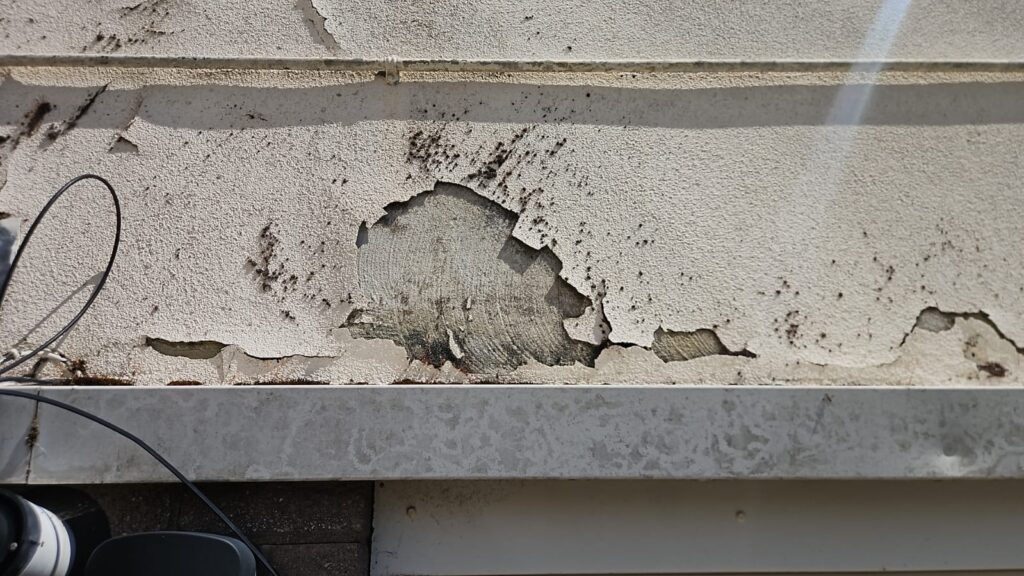
What Happens Beneath the Paint?
One of the biggest misconceptions is that paint “seals everything in.”
In reality, biological contamination continues underneath.
Green algae and red algae remain active whenever moisture is present.
Meanwhile:
- Mould spores multiply
- Organic staining spreads
- Moisture stays trapped
- Microscopic roots continue penetrating the render
Eventually the coating begins to fail.
Paint Failure Timeline
| Time After Painting | What Typically Happens |
|---|---|
| Immediately | Surface appears fresh |
| 3–6 months | Small stains begin appearing |
| 6–12 months | Bubbling or blistering develops |
| 1–2 years | Paint begins peeling |
| 2–5 years | Significant repainting required |
Dirt Reduces Paint Lifespan
Good quality masonry paint can last many years.
However, painting contaminated render often reduces its lifespan dramatically.
Instead of lasting as intended, you may find yourself repainting much sooner.
Professional preparation protects your investment.
Professional Cleaning Costs Less Than Repainting Twice
Many homeowners skip cleaning to save money.
Unfortunately, failed paint usually means paying for:
- Paint removal
- Additional labour
- More paint
- Further scaffold hire
- Extra decorating costs
Cleaning first is usually far more economical.
Typical Cost Comparison
| Approach | Initial Cost | Long-Term Cost |
|---|---|---|
| Paint dirty render | Lower | Often much higher |
| Professionally clean then paint | Higher initially | Better long-term value |
Premium preparation generally produces significantly longer-lasting results.
Soft Washing Removes the Cause, Not Just the Symptoms
Professional soft washing doesn’t simply wash the surface.
It removes:
- Green algae
- Red algae
- Mould
- Lichen
- Organic staining
- Surface dirt
- Atmospheric contamination
This creates a clean, sound surface ready for decoration.
At Soft Washing UK, specialist treatments are designed specifically for delicate rendered surfaces.
Different Render Types Need Different Cleaning Methods
Not every render should be cleaned the same way.
Different systems have different textures, porosity and durability.
Common UK Render Types
| Render Type | Cleaning Considerations |
|---|---|
| Silicone render | Low-pressure soft washing |
| Monocouche render | Gentle chemical treatment |
| Acrylic render | Careful biocide application |
| Mineral render | Controlled cleaning process |
| Cement render | Professional assessment before treatment |
Using incorrect methods can permanently damage the finish.
Pressure Washing Isn’t Always the Answer
Many homeowners assume pressure washing solves everything.
On render, excessive pressure can:
- Remove surface coatings
- Damage textured finishes
- Force water behind render
- Open cracks
- Create patchy colouring
Professional soft washing uses specialist cleaning solutions and controlled application instead.
Signs Your Render Needs Cleaning Before Painting
Look for:
- Green staining
- Red staining
- Black spots
- Patchy discolouration
- White lichen
- Dark water marks
- Uneven colouring
- Chalky deposits
Even if contamination appears light, microscopic growth may still be widespread.
Inspection Checklist
| Visible Sign | Paint Immediately? |
|---|---|
| Green algae | No |
| Red algae | No |
| Black mould | No |
| Lichen | No |
| Heavy pollution | No |
| Fresh clean render | Usually suitable after inspection |
Biological Growth Often Returns Quickly
If contaminants aren’t removed correctly, they frequently reappear.
Painting alone doesn’t stop future growth.
Professional treatment helps remove spores and reduce regrowth, giving painted render a much better chance of staying clean for longer.
Paint Cannot Hide Surface Defects
Fresh paint often highlights imperfections rather than hiding them.
These include:
- Hairline cracks
- Filled repairs
- Surface staining
- Old patch repairs
- Uneven textures
Cleaning first allows these issues to be identified and repaired before painting begins.
The Importance of Dry Render
Even clean render should be allowed to dry properly before decorating.
Painting damp render may result in:
- Blistering
- Loss of adhesion
- Damp patches
- White salt deposits
- Premature paint failure
Professional cleaning contractors understand the appropriate drying times before repainting begins.
Why Biological Staining Bleeds Through Paint
Certain biological stains contain pigments that gradually migrate through paint coatings.
This is especially common with:
- Black mould
- Red algae
- Organic tannins
Without removing the contamination properly beforehand, these stains may become visible again surprisingly quickly.
Property Value and Kerb Appeal
Freshly painted render should improve kerb appeal.
However, failed paint often creates the opposite impression.
Potential buyers may notice:
- Peeling walls
- Bubbling paint
- Damp staining
- Uneven colours
- Poor maintenance
Professional cleaning before decorating helps achieve a far more durable finish.
Benefits of Cleaning Before Painting
| Benefit | Why It Matters |
|---|---|
| Better adhesion | Longer-lasting paint |
| Cleaner appearance | Improved kerb appeal |
| Removes biological growth | Reduces future staining |
| Identifies defects | Easier repairs |
| Better paint coverage | Fewer coats may be required |
| Improved durability | Lower maintenance costs |
How Professionals Prepare Render
Preparation normally involves several stages rather than simply washing the wall.
Typical professional preparation includes:
- Full render inspection
- Identification of contamination
- Appropriate soft wash treatment
- Removal of organic growth
- Rinsing where required
- Drying period
- Final inspection
- Painting once suitable
This systematic approach helps maximise the lifespan of the finished coating.
Why Premium Preparation Is Worth the Investment
Quality masonry paint can represent a significant investment, particularly on larger homes where access equipment and labour increase overall costs.
Applying premium paint to a contaminated surface dramatically reduces the chances of achieving the manufacturer’s expected lifespan. Spending slightly more on professional cleaning beforehand often protects a much larger decorating investment.
Many homeowners focus solely on the price of paint, overlooking the preparation that determines how long that paint will actually last. A properly cleaned render provides the stable, contamination-free surface needed for reliable adhesion and an even finish.
Professional render cleaning also gives decorators a clearer view of the substrate beneath. Small cracks, failed repairs and areas of damaged render can be identified and rectified before painting begins, preventing defects from being hidden temporarily only to reappear months later.
For larger detached homes, apartment buildings and commercial premises, repainting due to poor preparation can become extremely expensive. Access equipment, labour and premium exterior paints quickly add up, making proper cleaning a worthwhile investment from the outset.
Where green algae, red algae, mould or lichen have established themselves over many years, specialist soft washing treatments remove the contamination far more effectively than ordinary household cleaning methods. This leaves the render in the best possible condition before any decorative coating is applied.
By preparing render correctly first, homeowners can achieve a cleaner appearance, a longer-lasting paint finish and greater value from their decorating budget, while helping to preserve the overall appearance of the property for years to come.
Common Mistakes Homeowners Make Before Painting Render
Even with the best intentions, it’s easy to make mistakes that compromise the final result. Many issues arise because the render appears dry and solid from a distance, when in reality it is covered in microscopic contamination.
Some of the most common mistakes include:
- Painting immediately after pressure washing without allowing sufficient drying time.
- Using household bleach instead of specialist render cleaning treatments.
- Assuming dirt is simply cosmetic and won’t affect paint adhesion.
- Painting over small areas of algae instead of treating the entire elevation.
- Ignoring shaded walls because they “don’t look too bad”.
- Applying expensive paint in the hope that it will cover stains permanently.
- Skipping repairs to hairline cracks before decorating.
Each of these shortcuts increases the likelihood of premature paint failure.
Why North-Facing Walls Usually Suffer the Most
Not every side of a property weathers at the same rate.
North-facing elevations often receive very little direct sunlight throughout the year, meaning moisture remains on the render for longer after rainfall. These damp conditions create the ideal environment for biological growth.
Common problems found on north-facing walls include:
| Issue | Reason |
|---|---|
| Green algae | Constant moisture |
| Red algae | Damp, shaded conditions |
| Black mould | Poor drying |
| Lichen | Long-term surface dampness |
| Heavy staining | Lack of sunlight |
These elevations nearly always benefit from thorough cleaning before any repainting takes place.
Why Premium Paint Cannot Fix Poor Preparation
A common misconception is that buying the most expensive masonry paint will compensate for inadequate preparation.
In reality, premium paint still relies on proper adhesion to the render surface.
Even high-end paints cannot permanently bond to:
- Algae
- Mould
- Surface dust
- Pollution deposits
- Loose particles
- Organic residue
The quality of the paint is only one part of the overall system. Surface preparation remains the most important factor affecting durability.
Fresh Paint Can Trap Existing Problems
Painting over contaminated render often hides issues temporarily rather than solving them.
For example, small areas of dampness may no longer be visible after painting, but the underlying moisture can continue affecting both the render and the paint film.
This may eventually lead to:
- Paint blistering
- Localised peeling
- Hairline cracking
- Persistent damp patches
- Staining reappearing through the coating
Treating the underlying cause before painting is always preferable to simply covering it.
Preparing Render for the Best Possible Finish
Professional decorators generally achieve the longest-lasting results because they spend considerable time preparing the surface before opening a tin of paint.
Good preparation typically includes:
- Inspecting all elevations.
- Identifying biological contamination.
- Cleaning the render using an appropriate soft washing process.
- Allowing sufficient drying time.
- Repairing cracks or damaged sections.
- Removing loose material.
- Applying paint under suitable weather conditions.
Each stage contributes to a stronger bond between the render and the paint.
Weather Conditions Matter Too
Even perfectly cleaned render can produce disappointing results if painted in unsuitable weather.
Painting should generally be avoided during:
- Heavy rain.
- High humidity.
- Extremely hot sunshine.
- Frost.
- Very cold temperatures.
- Strong winds carrying dust and debris.
Stable weather allows the paint to cure correctly and achieve its intended performance.
Investing in Proper Preparation Protects Your Property
Exterior decorating is one of the largest maintenance expenses many homeowners face. On larger detached houses, repainting can easily cost several thousand pounds once labour, access equipment and premium materials are taken into account.
Choosing professional render cleaning beforehand helps protect that investment.
At Soft Washing UK, render cleaning focuses on removing contamination safely rather than simply improving appearance. By eliminating green algae, red algae, mould, lichen and accumulated dirt before painting begins, homeowners give their new coating the best possible chance of delivering a clean, uniform and long-lasting finish.
Taking the time to prepare render correctly doesn’t just improve how the property looks on the day the paint is applied—it can also reduce ongoing maintenance, extend repainting intervals and help preserve the appearance of the building for many years.