


Few things improve the appearance of a property quite like fresh, clean render. Whether your home has modern silicone render, monocouche render, acrylic render or traditional cement render, a clean exterior gives your property instant kerb appeal.
However, many homeowners become frustrated when their render starts looking dirty again only months after it has been cleaned or installed. Black streaks begin to appear, patches of both green algae and red algae develop, and areas that once looked bright gradually become discoloured.
The good news is that this doesn’t usually mean there’s anything wrong with your render. In most cases, it’s simply reacting to the environment around your property.
At Soft Washing UK, professional render cleaning removes the organic contamination responsible for these stains using specialist soft washing techniques designed specifically for delicate rendered surfaces.

Why Does Render Get Dirty?
Render is constantly exposed to the weather.
Every day it comes into contact with:
- Rain
- Wind
- Airborne dust
- Pollution
- Organic spores
- Moisture
Over time these contaminants settle onto the surface, creating the perfect environment for biological growth.
Moisture Is the Biggest Cause
One of the main reasons render becomes dirty is moisture.
When walls stay damp for extended periods, they create ideal growing conditions for:
- Green algae
- Red algae
- Black mould
- Moss
- Lichen
The longer moisture remains on the surface, the faster these organisms can develop.
North-Facing Walls Stay Wetter
Not every side of your home receives the same amount of sunlight.
North-facing elevations often receive very little direct sun, meaning they dry much more slowly after rain.
This makes them particularly vulnerable to:
| Common Issue | Reason |
|---|---|
| Green algae | Damp conditions |
| Red algae | Persistent moisture |
| Black mould | Poor drying |
| Organic staining | Reduced sunlight |
Many homeowners notice one side of their property becoming dirty far sooner than the others.
Trees Encourage Biological Growth
Large trees are excellent for privacy and shade, but they can also contribute to dirty render.
Trees increase:
- Shade
- Moisture retention
- Falling debris
- Pollen
- Bird activity
Together these factors create an ideal environment for biological contamination.
Properties surrounded by mature trees generally require more frequent maintenance.
Air Pollution
Even in relatively rural areas, airborne pollution gradually settles on rendered walls.
Sources include:
- Vehicle emissions
- Industrial activity
- Agricultural dust
- Construction work
- General atmospheric particles
This fine layer of contamination allows organic growth to establish more easily.
Weather Plays a Huge Role
The British climate provides ideal conditions for render staining.
Frequent rainfall combined with relatively mild temperatures allows biological growth to remain active for much of the year.
Periods of prolonged damp weather often result in faster growth of:
- Green algae
- Red algae
- Mould
This explains why render often appears much dirtier after autumn and winter.
Poor Air Circulation
Some parts of a property dry much slower than others.
Areas with restricted airflow include:
| Location | Why It Gets Dirtier |
|---|---|
| Behind fences | Limited ventilation |
| Between neighbouring houses | Reduced sunlight |
| Sheltered corners | Moisture trapped |
| Narrow side passages | Slow drying |
These locations often develop biological growth first.
Nearby Plants and Shrubs
Garden planting close to rendered walls can increase moisture levels.
Examples include:
- Climbing plants
- Large shrubs
- Dense hedges
- Ivy
- Flower beds
These can reduce airflow while increasing humidity around the wall.
Keeping vegetation trimmed back often helps walls dry more quickly.
Leaking Gutters
Overflowing gutters are one of the most common causes of localised staining.
Signs include:
- Vertical streaks
- Dark patches
- Green algae
- Red algae
- Moss growth
Repairing leaking gutters promptly can prevent recurring staining.
Blocked Downpipes
Blocked drainage systems allow water to overflow repeatedly onto rendered walls.
This constant moisture encourages biological growth and can quickly spoil the appearance of otherwise clean render.
Routine gutter maintenance helps minimise this problem.
Different Render Types React Differently
Not all render finishes behave in exactly the same way.
| Render Type | General Characteristics |
|---|---|
| Silicone render | Water repellent |
| Monocouche render | Through-coloured finish |
| Acrylic render | Flexible decorative coating |
| Mineral render | Breathable |
| Cement render | Traditional appearance |
Although some finishes resist moisture better than others, all render will eventually accumulate dirt if left untreated.
New Render Can Still Become Dirty
Many homeowners assume newly installed render will remain spotless for years.
Unfortunately, even brand-new render is exposed to the same environmental conditions.
Within months, biological growth may begin developing, particularly on shaded elevations.
Regular maintenance helps preserve its fresh appearance.
Coastal Locations
Homes near the sea often experience faster surface contamination.
Contributing factors include:
- Salt spray
- Strong winds
- High humidity
- Moisture
- Airborne particles
These conditions can leave render looking weathered more quickly than inland properties.
Rural Properties
Living in the countryside has many advantages, but rural homes often experience additional biological growth.
Agricultural areas generate:
| Source | Effect |
|---|---|
| Crop dust | Surface contamination |
| Organic spores | Increased algae growth |
| Tree cover | More shade |
| High moisture | Slower drying |
These environmental factors contribute to faster staining.
Bird Activity
Birds regularly perch on roofs, gutters and nearby trees.
This results in:
- Droppings
- Organic matter
- Additional nutrients for algae
Cleaning these deposits promptly helps prevent permanent staining.
Why Pressure Washing Doesn’t Solve the Problem
Some homeowners believe pressure washing will permanently fix dirty render.
Unfortunately, pressure washing often removes only the visible contamination.
It may leave behind microscopic biological organisms that quickly begin growing again.
Professional soft washing targets the organisms responsible for staining rather than simply removing surface dirt.
Dirt Can Make Render Look Older
Heavy staining can dramatically affect the appearance of a property.
Dirty render often appears:
- Older
- Poorly maintained
- Patchy
- Weathered
- Neglected
Professional cleaning can restore much of the original appearance without repainting.
Why Some Houses Stay Cleaner Than Others
Two neighbouring homes with the same render can look completely different after just a few years.
Environmental differences often explain why.
| Factor | Cleaner Property | Dirtier Property |
|---|---|---|
| Sunlight | More | Less |
| Tree cover | Minimal | Heavy |
| Airflow | Good | Restricted |
| Moisture | Dries quickly | Remains damp |
| Gutter condition | Well maintained | Overflowing |
Even small differences can have a noticeable impact over time.
How Soft Washing Helps
Soft washing removes both visible contamination and the biological growth causing the staining.
This process is designed to tackle:
- Green algae
- Red algae
- Black mould
- Organic staining
- Surface dirt
Because it addresses the underlying cause rather than just the symptoms, results generally last considerably longer than pressure washing alone.
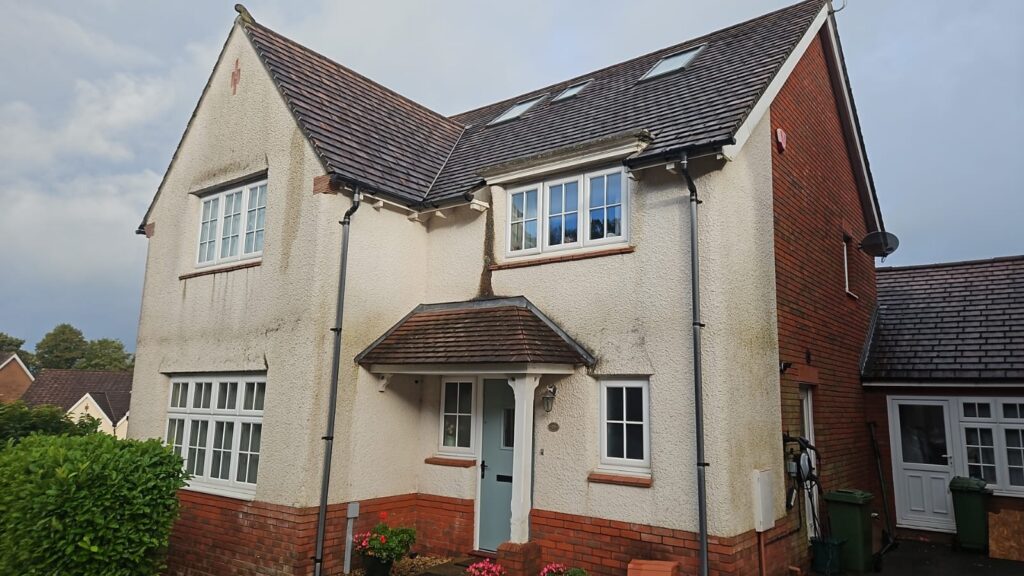
Can You Prevent Render Getting Dirty?
Although no property can remain perfectly clean forever, there are several steps homeowners can take to slow the build-up of contamination.
Helpful maintenance includes:
- Keeping gutters clean and free-flowing.
- Repairing leaking downpipes promptly.
- Trimming trees and shrubs away from the walls.
- Removing moss from nearby roofs where appropriate.
- Arranging professional cleaning before heavy staining develops.
- Inspecting shaded elevations regularly for early signs of green algae and red algae.
Preventative maintenance is often simpler and more cost-effective than waiting until staining becomes severe.
How Often Should Render Be Cleaned?
There is no single timetable that suits every property. The frequency depends on the surrounding environment and how quickly contamination develops.
| Environment | Typical Cleaning Frequency |
|---|---|
| Open countryside | Every 4–6 years |
| Urban areas | Every 3–5 years |
| Heavily shaded gardens | Every 2–4 years |
| Coastal properties | Every 2–3 years |
| North-facing elevations | As required based on biological growth |
Regular inspections help identify when cleaning is needed rather than waiting until the render becomes heavily stained.
Why Early Cleaning Produces Better Results
Allowing biological growth to build up over many years makes restoration more difficult.
Cleaning the render while contamination is still relatively light offers several advantages:
- Easier removal of staining.
- More consistent appearance.
- Reduced biological build-up.
- Lower risk of long-term discolouration.
- Improved kerb appeal throughout the year.
For homeowners looking to restore and maintain the appearance of rendered walls, specialist soft washing provides a safe and effective solution that removes contamination while protecting the finish.
To learn more about professional render cleaning and ongoing maintenance, visit the Soft Washing UK homepage for information on specialist soft washing services designed to keep rendered properties looking their best.
The Age of Your Property Can Make a Difference
Older homes often experience different staining patterns compared to newly built properties.
This may be due to:
- Mature surrounding trees
- Older guttering systems
- Historic landscaping
- Changes in drainage
- Years of accumulated environmental exposure
While the age of the building itself doesn’t necessarily cause render to become dirty, the surrounding environment often changes over time, increasing the likelihood of biological growth.
Nearby Water Increases Moisture
Properties located close to rivers, lakes, streams or ponds often experience higher humidity.
Higher moisture levels mean rendered walls stay damp for longer after rainfall.
This encourages the growth of:
- Green algae
- Red algae
- Black mould
- Moss
Although living near water can provide attractive surroundings, it often means exterior surfaces require more frequent maintenance.
Roof Run-Off Can Affect Render
Rainwater doesn’t always fall directly onto the ground.
Water flowing from roofs can repeatedly wet sections of render, particularly around:
| Area | Possible Effect |
|---|---|
| Roof edges | Localised staining |
| Valleys | Concentrated water flow |
| Gutter joints | Overflow marks |
| Downpipes | Vertical streaking |
If these areas remain damp, biological growth often develops much faster than elsewhere on the property.
Different Colours Show Dirt Differently
One reason some homes appear dirtier than others is simply because of the render colour.
Lighter shades often make contamination easier to see.
| Render Colour | Visibility of Dirt |
|---|---|
| White | Very noticeable |
| Cream | Highly visible |
| Light grey | Moderate |
| Dark grey | Less noticeable |
| Charcoal | Least noticeable |
The contamination may be present on every colour, but lighter finishes generally reveal staining much sooner.
Seasonal Changes Affect Render
Many homeowners notice their render changes appearance throughout the year.
Spring
Warmer temperatures encourage biological growth following the wetter winter months.
Summer
Sunlight helps walls dry more quickly, although shaded areas can still remain damp.
Autumn
Leaves, rainfall and falling organic debris increase contamination.
Winter
Frequent rain and reduced daylight slow drying times, creating ideal conditions for algae and mould to spread.
Condensation Around the Property
Condensation isn’t limited to windows.
Areas around kitchens, bathrooms and utility rooms can create localised humidity outside the property through extractor vents.
Over time this additional moisture may contribute to staining on nearby render.
Why Some Walls Never Fully Dry
Even after several dry days, certain parts of a property may still retain moisture.
This commonly occurs where:
- Roof overhangs reduce airflow.
- Trees block sunlight.
- Tall neighbouring buildings create shade.
- Dense planting traps humidity.
Persistent dampness allows biological growth to establish much more quickly than on exposed elevations.
Airborne Organic Spores Are Everywhere
Many homeowners assume algae appears because something has gone wrong with the render.
In reality, airborne spores are naturally present almost everywhere.
These microscopic organisms settle on exterior surfaces every day.
Given enough moisture, they begin to grow.
Professional soft washing removes these organisms rather than simply washing away the visible staining.
The Difference Between Dirt and Biological Growth
Not all discolouration has the same cause.
| Type of Staining | Likely Cause |
|---|---|
| Grey film | Dust and pollution |
| Green patches | Green algae |
| Red streaks | Red algae |
| Black spots | Mould |
| Brown marks | Organic staining |
Identifying the cause helps determine the most appropriate cleaning method.
Modern Homes Can Still Develop Algae
Some people assume that only older houses suffer from dirty render.
Modern developments are equally susceptible.
New estates often contain:
- Fresh landscaping
- Young trees
- High insulation levels
- Modern render systems
Once the surrounding environment becomes established, the same biological growth can develop regardless of how new the property is.
Why DIY Cleaning Often Doesn’t Last
Homeowners sometimes try to remove staining using a garden hose or domestic pressure washer.
While this may improve the appearance temporarily, it rarely deals with the underlying cause.
Without treating the biological growth itself:
- Green algae often returns.
- Red algae can quickly reappear.
- Black mould may continue spreading.
- Surface staining develops again within a relatively short period.
This is why specialist soft washing generally provides much longer-lasting results.
Regular Maintenance Saves Money
Waiting until render becomes heavily stained can make restoration more time-consuming.
A preventative maintenance programme often helps reduce long-term costs.
Benefits include:
| Preventative Maintenance | Long-Term Benefit |
|---|---|
| Early cleaning | Easier stain removal |
| Annual inspections | Problems spotted sooner |
| Gutter maintenance | Less water staining |
| Vegetation management | Improved airflow |
| Prompt repairs | Reduced moisture issues |
Looking after the render consistently helps preserve its appearance throughout its lifespan.
Improving Airflow Around Your Home
One simple way to slow down future contamination is to improve air circulation wherever possible.
This might involve:
- Trimming overgrown shrubs.
- Pruning low tree branches.
- Removing climbing plants from walls.
- Allowing sunlight to reach shaded elevations.
Walls that dry more quickly are generally less attractive to biological growth.
Why Professional Cleaning Is Different
Professional render cleaning isn’t simply about making the walls look clean on the day.
Specialist soft washing is designed to:
- Remove biological contamination.
- Treat the underlying organisms.
- Restore a more even appearance.
- Help slow future regrowth.
This provides a more comprehensive solution than cleaning with water alone.
Don’t Ignore Small Patches
One of the most common mistakes homeowners make is assuming a small green patch will remain small.
In reality, biological growth tends to spread gradually across damp surfaces.
Treating contamination early often means:
- Faster cleaning.
- Better cosmetic results.
- Less extensive staining.
- Easier long-term maintenance.
Small problems are usually much simpler to deal with than widespread contamination.
Every Property Is Unique
Even neighbouring homes can experience completely different levels of staining.
Factors influencing how quickly render becomes dirty include:
- The direction the property faces.
- Local weather patterns.
- Nearby vegetation.
- Drainage.
- Building design.
- Amount of direct sunlight.
Because every property has its own combination of these factors, there is no universal timetable for when render will need cleaning.
Protecting Your Render for the Future
Although it isn’t possible to stop render becoming dirty forever, understanding why contamination develops allows homeowners to manage it far more effectively.
By maintaining gutters, improving airflow, monitoring shaded elevations and arranging professional cleaning when biological growth first appears, you can significantly reduce the speed at which staining returns.
Professional soft washing provides a safe and effective way of removing dirt, pollution, green algae, red algae and other organic contamination while protecting the decorative finish of modern render systems.
For expert advice on maintaining clean, attractive rendered walls throughout the year, visit the Soft Washing UK homepage to learn more about its specialist render cleaning services and ongoing maintenance solutions.