Contact us today
At Softwashing UK, we specialise in removing all algae staining from render and exterior walls. Over time, rendered surfaces can develop unsightly staining caused by organic growth, particularly algae. These stains often appear as green, red, or dark patches across the surface of the render, leaving buildings looking dirty and poorly maintained.
Render is a highly popular building material used across the UK to finish and protect exterior walls. It offers excellent durability, weather resistance, and insulation properties. Many modern renders are designed to last 25 years or more, maintaining their colour thanks to through-colour technology that helps the surface look fresh long after installation.
Popular render systems include well-known brands such as K-Rend, Weber, Sto, and other modern silicone or acrylic render finishes. While render is extremely durable, it still requires occasional maintenance to keep it clean and free from organic growth.
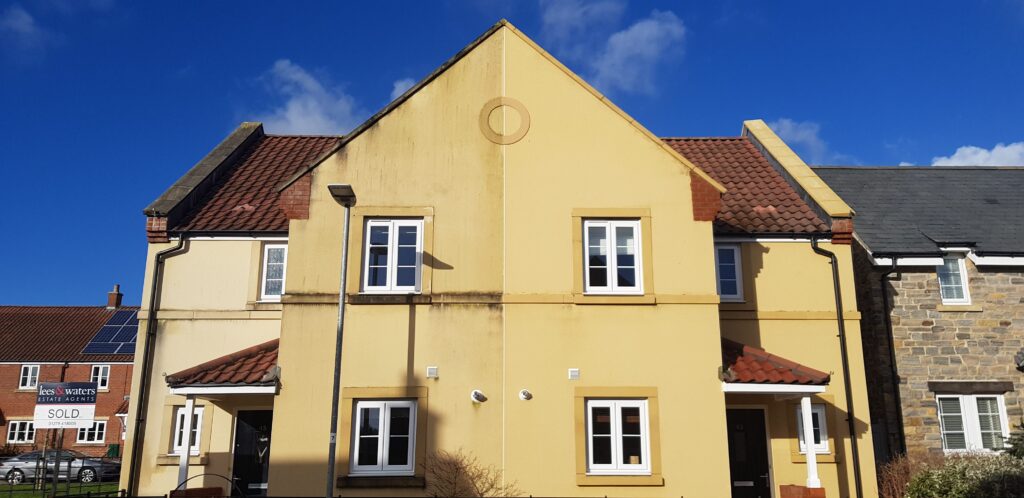
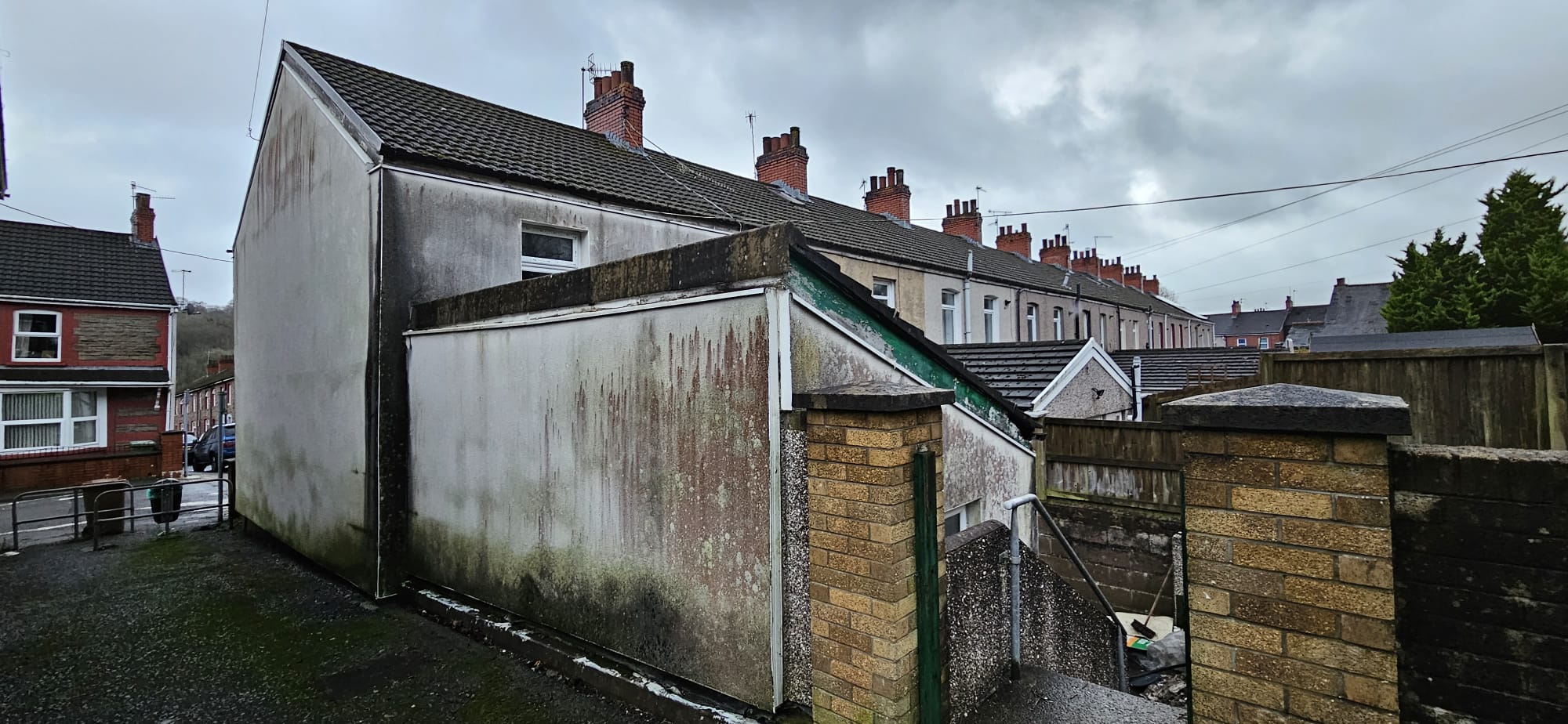
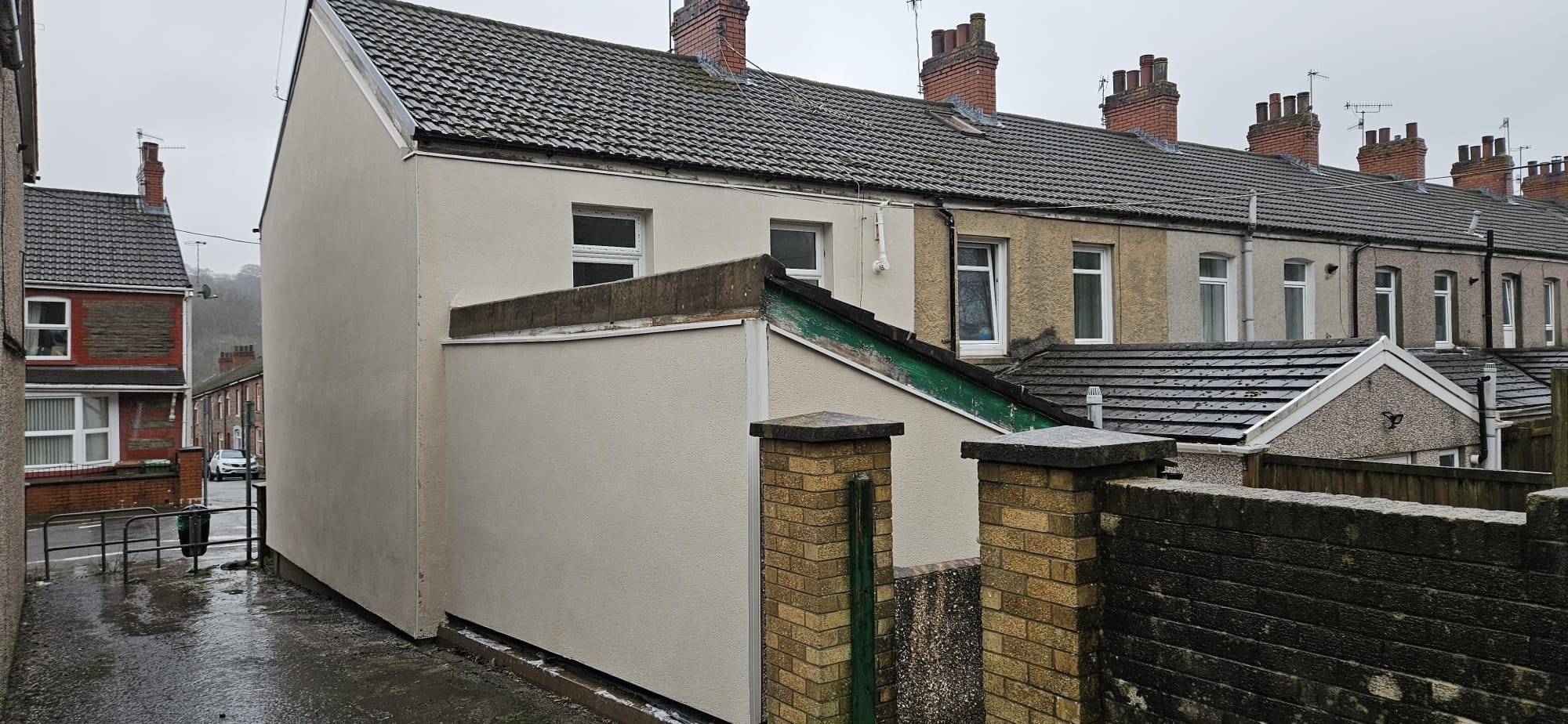
Red algae (often Trentepohlia) appears as pink, red, or orange staining on light-coloured render. It commonly develops because of:
Once established, red algae roots into the microscopic pores of the render surface, which is why normal washing rarely removes it.
Properties located near coastal areas, particularly along the western coast of the UK, are more susceptible to algae growth. Salt and mineral-rich sea air can provide nutrients that encourage organic growth. Winds can also carry airborne algae spores inland.
Organic growth thrives in damp conditions. Areas that experience frequent rainfall or high humidity provide the moisture required for algae and lichen to develop on render surfaces.
Poor drainage, overhanging roofs, or poorly designed guttering can cause water to run down exterior walls. This constant moisture creates ideal conditions for algae to grow.
Nearby plants, trees, and vegetation release spores that can attach to rendered surfaces, allowing organic growth to establish itself.
Green algae is usually the first organic growth to appear. It feeds on moisture and minerals present on the render surface and spreads quickly in damp environments.
Red staining is often caused by airborne algae spores that settle on render and thrive in humid conditions. This type of staining can be particularly stubborn and often requires professional treatment to remove safely.
Once these organisms establish themselves on render, they will continue to spread unless properly treated.
Leaving organic growth on render—such as algae, moss, lichen, and mould—can cause several problems over time. While it may start as a cosmetic issue, prolonged growth can lead to moisture retention, staining, and gradual surface deterioration.
Below are the main effects of leaving organic growth untreated on render.
Render is a popular exterior finish across the UK for its smooth appearance and weather resistance. However, over time, it can become stained and discoloured by algae, moss, lichen, and other organic contaminants.
Organic growth like algae and lichen can penetrate the surface pores of render. As it develops, it produces pigments that create green, red, black, or dark stains.
If left untreated for long periods, these stains can become:
This constant moisture can lead to:
Over time, moisture retention can weaken the surface and allow further contamination to develop.
This can gradually cause:
While this process is slow, years of untreated growth can shorten the lifespan of the render.
When moisture remains trapped in render for long periods, it can lead to:
These small cracks can allow more water penetration and accelerate deterioration.
Organic growth spreads through airborne spores.
If left untreated, algae and lichen will:
Early cleaning prevents the problem from becoming more severe.
Even when structural damage is minimal, organic growth can make buildings appear:
For homeowners and property managers, clean render significantly improves kerb appeal and property value.












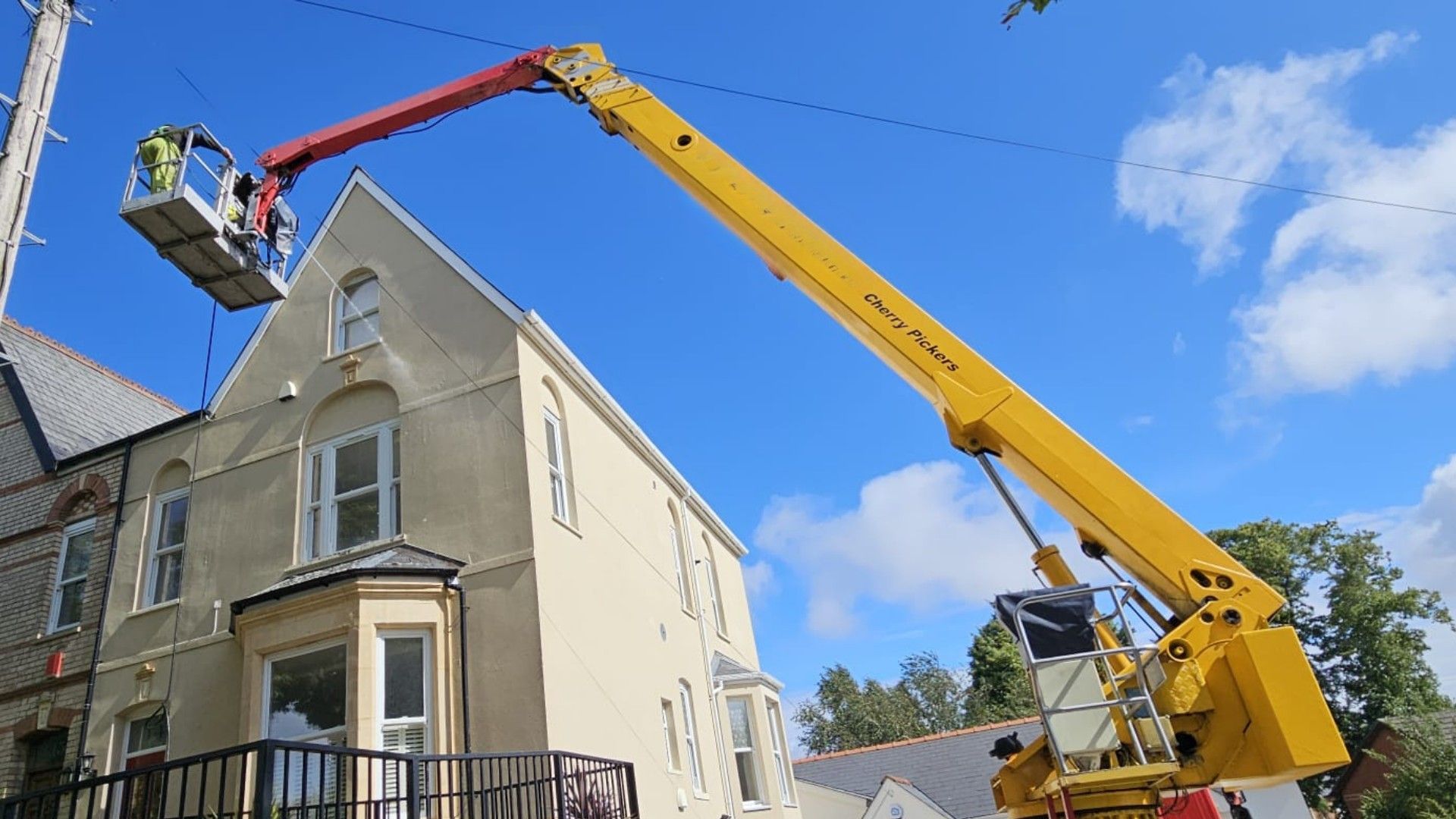

At Softwashing UK, we provide comprehensive residential exterior cleaning services, from expert render cleaning to roof, driveway, patio, and brick cleaning.
Using eco-friendly soft wash methods, we safely remove dirt, algae, and moss, restoring surfaces without damage. Trusted nationwide, we deliver outstanding results that protect your home’s exterior.

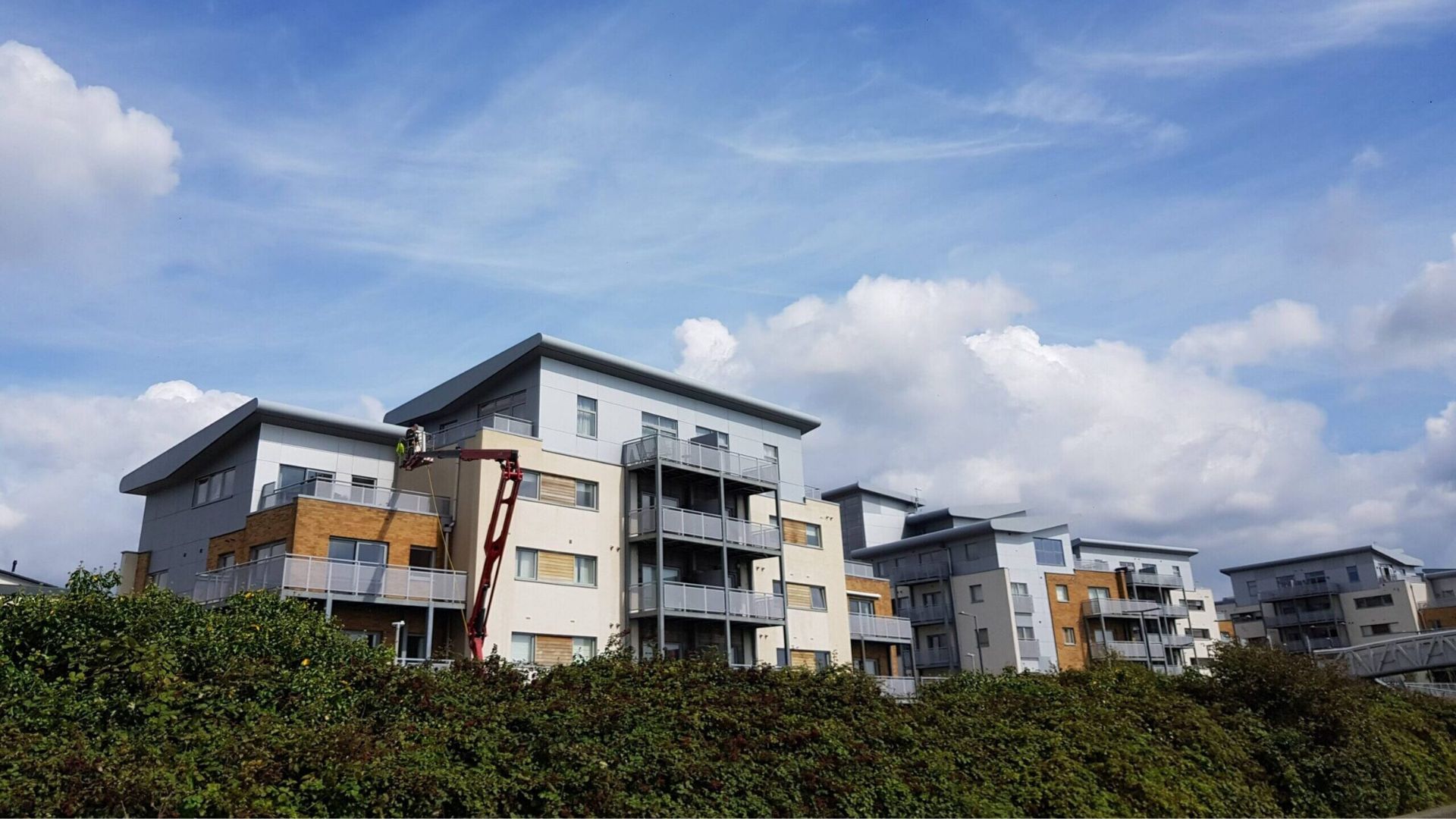
At Softwashing UK, we offer professional commercial exterior cleaning services tailored to businesses of all sizes.
From render and roof cleaning to cladding, signage, and pathways, we use safe, low-pressure soft wash systems to maintain your property’s appearance. Our reliable service ensures a clean, welcoming environment for staff and visitors.

















WhatsApp us